Categories
Uncategorized

Apple to launch new store in Hyderabad

Apple is expanding its retail presence in India with a new store in Hyderabad, as seen from job postings for roles like Store Leader and Genius on its careers portal.

The recruitment suggests the store could open in early 2027. This follows its Noida store launch in December 2025 and plans for a Mumbai outlet.

Apple’s India expansion reflects its growing market share, where it ranks among the top five smartphone brands by volume.

Categories
Technology

AI tools set to transform software jobs

The rapid evolution of AI-driven development tools is poised to transform the software industry, changing how applications are created and challenging traditional coding roles. Generative AI models, such as Anthropic’s Claude, are now capable of handling tasks that once required experienced programmers, from writing code to building entire software systems.

A striking example comes from a recent app development scenario: a non-technical investor, using AI tools, built a fully functional iOS app on the Bhagavad Gita without writing a single line of code. The app, 10 Minute Gita, includes daily readings, translations, searchable content, and customization — all generated through AI prompts. This highlights the growing ability of AI to automate complex software engineering tasks.

Advanced models like Claude have even achieved technical milestones such as creating a complete C compiler, demonstrating that AI can now handle core programming functions traditionally reserved for trained engineers. These capabilities signal a shift in the software landscape, where productivity and application development are increasingly augmented or even replaced by AI.

Industry experts warn that this could have profound implications for IT professionals. Developers who have relied on coding as a primary career skill may find traditional roles shrinking as AI takes over routine and even advanced tasks. While this shift poses challenges, it also opens avenues for human creativity, innovation, and oversight in AI-driven workflows.

The broader tech community is observing these trends closely, as generative AI continues to influence IT strategies, investment decisions, and employment patterns globally. Companies are exploring ways to integrate AI tools into their development pipelines, emphasizing efficiency and faster product delivery, which could redefine career expectations for software engineers.

In this changing environment, the message is clear: IT professionals must adapt and diversify their skill sets to remain relevant. Embracing AI as a collaborator rather than a competitor, learning AI integration, and focusing on creative or managerial roles could help coders navigate the future of work.

Also Read: Tim Cook talks succession, denies retirement plans

Categories
1 Minute-Read

Cognizant Q4 profit rises 18% to $648 mn

Cognizant Technology Solutions reported an 18% jump in net profit to $648 million for the fourth quarter, with revenue rising 4.9% to $5.3 billion compared to last year.

On a constant currency basis, revenue increased 3.8%. Growth was driven mainly by financial services, while other sectors and regions showed steady performance.

The company added employees and continued investing in strategic areas, including AI-driven services. For the first quarter of 2026, Cognizant expects revenue growth between 4.8% and 6.3%, with full-year revenue projected at $22.14–$22.66 billion, signaling confidence in continued expansion.


Categories
Corporate

RBI approves Blackstone’s 9.99% stake in Federal bank

The Reserve Bank of India (RBI) has approved global private equity major Blackstone to acquire up to a 9.99% stake in Federal Bank, paving the way for one of the largest foreign investments in an Indian mid-sized private bank.

Blackstone will invest around ₹6,196 crore through its Singapore-based arm, Asia II Topco XIII Pte Ltd. The investment will be made through a preferential allotment of convertible warrants, subject to shareholder approval and other statutory clearances.

As part of the transaction, Federal Bank will issue up to 27.29 crore warrants to Blackstone at an issue price of ₹227 per share, which includes a premium over the market price. Each warrant can be converted into one fully paid equity share. Once fully converted, Blackstone’s holding will stand just under the 10% regulatory threshold for promoter classification.

The deal had earlier received clearance from the Competition Commission of India (CCI), removing a key regulatory hurdle before the RBI’s final approval.

Under the agreement, Blackstone will also have the right to nominate one non-executive director to Federal Bank’s board, provided its shareholding remains at 5% or more. This gives the investor a limited but meaningful role in the bank’s governance while maintaining its status as a minority shareholder.

Federal Bank is a professionally managed private lender with no single promoter, and its shareholding is widely dispersed among institutional and public investors. Analysts say Blackstone’s entry highlights growing global confidence in India’s banking sector, especially in lenders with strong retail and digital growth potential.

The fresh capital is expected to strengthen Federal Bank’s balance sheet, support future expansion plans, and improve its ability to grow its loan book across retail, MSME, and digital banking segments.

Also Read: Walmart raises pharmacy pay, top roles hit $42 an hour

Categories
Corporate

Walmart raises pharmacy pay, top roles hit $42 an hour

Walmart has announced a significant pay hike for employees working in its pharmacy operations across the United States, offering a welcome boost to thousands of frontline healthcare workers. The move reflects the retail giant’s growing focus on strengthening in-store healthcare services and supporting staff who play a critical role in patient care.

As part of the new structure, around 3,000 pharmacy technician roles have been upgraded to pharmacy operations team lead positions. These roles now earn an average of $28 an hour, with top pay going as high as $42 an hour, depending on location, experience, and performance. For many workers, this marks a major step up in both responsibility and income.

Walmart has also expanded pay ranges for pharmacy technicians, who can now earn up to $40.50 an hour, compared with earlier average wages of about $22 an hour. Importantly, many of these roles do not require a college degree, making them accessible to workers seeking stable, well-paying jobs without formal higher education.

The company says the wage increase is part of a broader effort to attract, retain, and motivate skilled pharmacy staff at a time when healthcare workers across the US are facing heavier workloads and rising costs of living. Walmart also continues to invest in employee growth by covering certification expenses for pharmacy technicians. Since 2016, the retailer has helped more than 22,000 employees gain professional pharmacy certifications.

For workers on the ground, the changes translate into more than just higher pay. The new roles offer clearer career pathways, leadership opportunities, and a sense of recognition for the work they do daily, filling prescriptions, assisting patients, and supporting pharmacists in busy community settings.

Walmart’s pharmacy employees also receive benefits such as health insurance, paid time off, and retirement plans with company matching, adding to the overall value of the compensation package.

Also Read: ElevenLabs raises $500 mn, valuation jumps to $11 bn

Categories
Corporate

Airtel Q3 profit falls 55% to ₹6,631 cr

Bharti Airtel reported a mixed set of results for the third quarter, with strong growth in revenue and operating performance, even as net profit dropped sharply compared with last year.

For the quarter ended December, the telecom major’s consolidated net profit fell 55% year-on-year to ₹6,631 crore, down from a high base in the same period last year. The decline was mainly due to one-time gains recorded in Q3 last year, including benefits from the Indus Towers consolidation, and a one-off provision related to labour law compliance during the current quarter.

Despite the fall in profit, Airtel’s core business showed solid momentum. Consolidated revenue rose nearly 20% year-on-year to ₹53,982 crore, driven by steady growth in India operations and continued expansion in Africa. Higher data usage, premium plans, and postpaid customer additions supported the topline.

A key highlight of the quarter was the improvement in Average Revenue Per User (ARPU), which increased to ₹259, up from ₹245 a year ago. The rise in ARPU reflects better customer monetisation, tariff discipline, and higher adoption of data-heavy plans. Airtel continues to maintain one of the highest ARPUs in the Indian telecom sector.

Operating profitability also strengthened. EBITDA grew over 25% year-on-year to around ₹31,144 crore, with margins improving to nearly 58%, indicating better cost control and operating leverage. Sequentially, both revenue and EBITDA showed growth, underlining stable quarter-on-quarter performance.

During the quarter, Airtel continued to invest in its network, expanding 4G and 5G coverage, adding new towers, and strengthening its fibre footprint. The company also added more smartphone and postpaid users, supporting long-term revenue visibility.

Management said the underlying business remains strong, with improving cash flows and a healthier balance sheet, even though headline profit numbers were impacted by exceptional items and accounting factors.

Also Read: RBI says most ₹2,000 notes returned, still legal tender

Categories
1 Minute-Read

RBI says most ₹2,000 notes returned, still legal tender
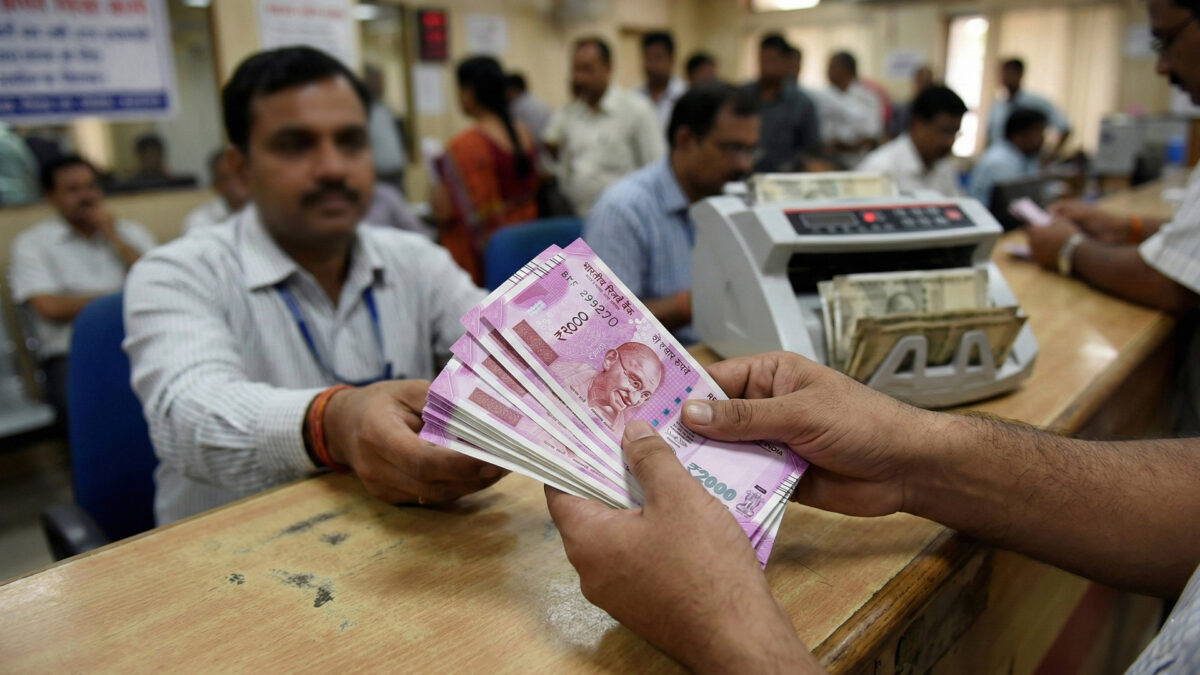
The Reserve Bank of India has said that most ₹2,000 currency notes withdrawn from circulation have already come back to the banking system.

As per RBI’s latest update, over 98 per cent of these high-value notes have been deposited or exchanged, with only a small amount still held by the public. The central bank clarified that ₹2,000 notes continue to be legal tender and can still be deposited at RBI issue offices or sent through India Post.

The note was withdrawn in May 2023 to improve currency circulation, not due to demonetisation.

Categories
Beyond

RBI projects 4.2% inflation in FY27

India’s inflation is expected to gradually rise toward more normal levels over the next year, but without causing stress to the economy, according to the Reserve Bank of India (RBI). The central bank’s latest projections show that consumer price inflation is likely to hover around 4% in FY2026–27, a level the RBI considers ideal for sustainable growth.

Speaking after the Monetary Policy Committee’s recent review, RBI Governor Sanjay Malhotra said the modest rise in inflation reflects improving economic activity rather than runaway price pressures. For the current financial year, inflation is expected to remain low at about 2.1% on average, before inching up to around 3.2% in the final quarter as demand strengthens.

Looking ahead, the RBI expects inflation to average about 4.0% in the first quarter of FY27 and 4.2% in the second quarter. This upward revision, the central bank explained, is driven by normalisation in food prices, steady domestic demand, and global commodity trends. Importantly, inflation is still projected to stay well within the RBI’s comfort band of 2% to 6%.

Against this backdrop, the RBI chose to keep the repo rate unchanged at 5.25% and maintain a neutral policy stance. This decision is aimed at supporting economic growth while remaining alert to any risks to price stability. Stable interest rates help keep borrowing costs predictable for households and businesses.

For consumers, this means prices of everyday essentials are likely to rise slowly and steadily, rather than sharply. For businesses, steady inflation and unchanged rates provide confidence to plan investments, expand operations, and hire more people. Economists say this environment supports sustained growth without overheating the economy.

The RBI also said it will closely monitor food prices, global oil markets, precious metals, and geopolitical developments that could affect inflation going forward.

Also Read: Gold above ₹1.50 lakh, Silver dips to ₹2.35 lakh

Categories
Corporate

Sensex slips 300+ points, Nifty dips below 25,550

Indian markets opened on a weak note on Friday, with the BSE Sensex falling over 350 points and the Nifty50 slipping below 25,550. Investors stayed cautious after the RBI kept interest rates unchanged at 5.25%, while global tech sell-offs and profit-taking added to the downward pressure.

IT stocks led the losses, with TCS and Infosys falling nearly 2%, and all ten Nifty IT constituents trading in the red. Metals and energy stocks, including Tata Steel and NTPC, also saw declines, further weighing on the market.

On the upside, Pharma and FMCG stocks gained as investors sought safer bets amid volatility. Companies like Sun Pharma, Divi’s Labs, and Hindustan Unilever posted modest gains, helping to partially cushion the broader market’s fall.

Global markets influenced domestic trading. Technology shares faced selling pressure in the US and Asia, while futures tied to the S&P 500 were lower, reinforcing the risk-off sentiment. Precious metals like gold and silver extended losses due to a stronger US dollar and weaker global demand.

Market participants are now focusing on upcoming corporate earnings and economic data for fresh cues. While the RBI’s policy was neutral, continued weakness in IT and metals, alongside gains in Pharma and FMCG, is likely to keep trading cautious in the near term.

Also Read: IndiGo faces CCI probe after ₹22 cr flight disruptions

Categories
Technology

Anthropic’s AI Agents raise market concerns for Indian IT

US AI startup Anthropic has introduced Claude Cowork, an advanced AI agent platform capable of automating complex business tasks. Using smart plugins, these AI agents can manage legal document review, data analysis, and marketing workflows, performing end-to-end processes that previously required human expertise and specialised software.

The launch has caused alarm among investors, raising fears of a significant disruption in the Software-as-a-Service (SaaS) sector — now being referred to as the “SaaSapocalypse.” Analysts are concerned that companies may increasingly bypass traditional software licences and human-driven IT services, potentially affecting revenues for major IT firms.

The market impact was immediate. Global software stocks experienced sharp declines following the announcement. In India, IT leaders such as TCS, Infosys, Wipro, HCLTech, and LTIMindtree saw significant share price drops, with the NIFTY IT index falling 6–7%, marking one of its steepest losses in recent years.

Experts warn that AI agents performing routine tasks could reduce demand for labour-intensive IT services, putting traditional revenue models based on headcount or SaaS subscriptions at risk. Software offerings may face pricing pressure or even obsolescence if companies rapidly adopt AI-driven alternatives.

Looking ahead, Indian IT companies are expected to pivot toward high-value, specialised services, including strategic advisory, complex system integration, and consulting projects where AI replacement is less immediate.

Also Read: BlackRock CEO says India should boost capital markets