Categories
Beyond

CNG, PNG prices raised again in Mumbai

Consumers in Mumbai will have to pay more for compressed natural gas (CNG) and piped natural gas (PNG) after city gas distributor Mahanagar Gas Limited announced another price increase, the second revision in just over two weeks.

With the latest hike, the retail price of CNG in Mumbai has increased by ₹2 per kilogram to ₹86 per kg. PNG, which is widely used by households for cooking, has also become costlier, with prices raised by ₹1.50 per standard cubic metre.

The revised rates came into effect immediately and are expected to impact both household budgets and transportation costs. CNG is a popular fuel among taxi operators, auto-rickshaw drivers and private vehicle owners due to its relatively lower cost compared to petrol and diesel.

This is the second price revision in around 15 days. Earlier in May, Mahanagar Gas had increased CNG and PNG prices following changes in input costs. This latest increase may add to operating expenses for commercial transport operators across the city. The company said the latest revision was necessary to partly offset higher gas procurement expenses.

Despite the increase, MGL stated that CNG continues to remain more economical than conventional fuels such as petrol and diesel. The company noted that natural gas remains a cleaner fuel option and continues to offer cost advantages for many consumers.

Also Read: Infosys CEO gets 2.5% pay hike

Categories
Leaders

Infosys CEO gets 2.5% pay hike

Salil Parekh, Chief Executive Officer of Infosys, received a total compensation of ₹82.6 crore in FY26, marking a 2.5 per cent increase compared to the previous financial year.

According to the company’s latest disclosures, the rise in Parekh’s pay package was largely due to stock-based incentives, which continued to make up the biggest portion of his overall earnings. His compensation included salary, retiral benefits, variable performance pay and gains from restricted stock units granted under the company’s long-term incentive plans.

The increase comes at a time when Infosys, one of India’s largest IT services firms, is navigating a challenging global business environment marked by cautious client spending and slower demand in key markets. Despite these pressures, the company maintained its focus on digital services, artificial intelligence and large transformation deals.

Parekh has led Infosys since 2018 and has overseen several strategic initiatives, including expansion in digital services, cloud technologies and AI-led business solutions. Under his leadership, the company has strengthened its presence in global markets while continuing investments in technology and workforce development.

Company filings showed that stock incentives accounted for a significant share of Parekh’s total earnings, reflecting the growing trend among major technology firms to link executive compensation with long-term company performance and shareholder value.

The compensation disclosure has also drawn attention because executive pay remains a closely watched topic across the corporate sector, particularly as companies balance business performance, employee costs and investor expectations.

Infosys stated that the CEO’s remuneration was determined in line with company policies and approved compensation structures. The company regularly discloses executive pay details as part of its annual governance and regulatory requirements.

Also Read: Blue Origin’s New Glenn rocket explodes during ground test

Categories
Corporate

Sensex slumps 1,000 points, Nifty falls below 23,600

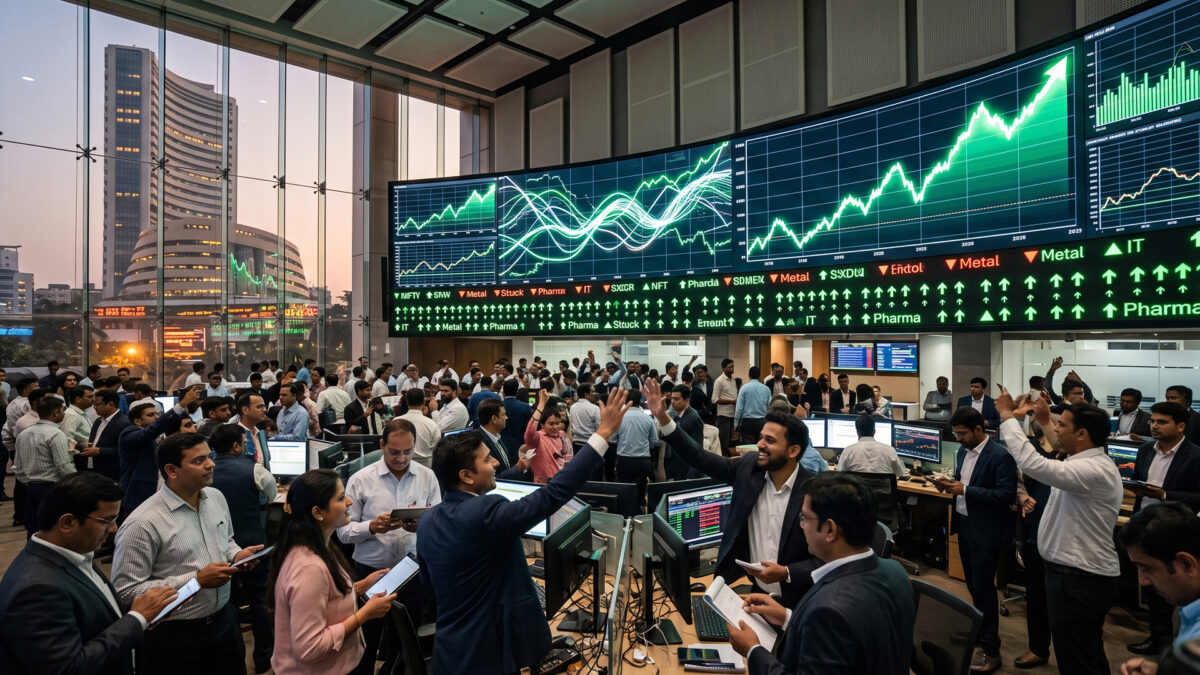
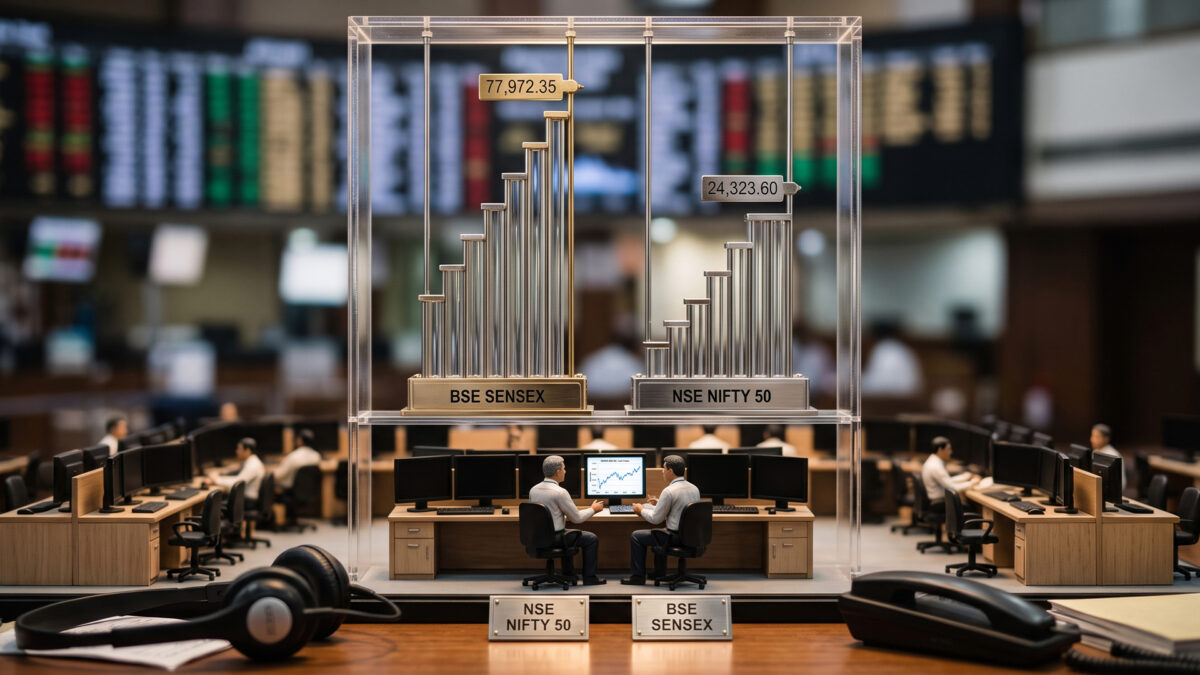
Indian equity markets ended sharply lower on 29 May, with the Sensex falling 1,092 points and the Nifty slipping below the 23,600 mark amid broad-based selling pressure and weak global cues.

The decline was driven by sustained caution in global markets, especially due to ongoing uncertainty around US–Iran tensions and their impact on crude oil prices. Energy price volatility remained a key concern, as traders worried about potential supply disruptions through critical shipping routes.

Sectorally, auto, energy, oil & gas, and metal stocks were among the worst hit, dragging benchmark indices lower. Banking and financial stocks also faced selling pressure, adding to the downside momentum.

However, IT stocks provided some cushion to the market. Tech Mahindra, HCL Technologies, Wipro, Infosys, and Larsen & Toubro ended among the top gainers on the Nifty, helping limit the extent of the fall.

On the losing side, InterGlobe Aviation, Eicher Motors, Bajaj Auto, Power Grid Corporation, ONGC, and NTPC were among the top laggards, falling between 2–4%, reflecting broad-based weakness across cyclical and energy-linked sectors.

Broader markets mirrored the weakness, with mid-cap and small-cap indices also ending lower as investors booked profits after recent gains. Market breadth remained firmly negative throughout the session.

Also Read: Ashok Leyland posts 14% rise in Q4 profit

Categories
1 Minute-Read

Blue Origin’s New Glenn rocket explodes during ground test

Blue Origin’s New Glenn rocket exploded during a routine prelaunch ground test in the United States. The blast occurred while engineers were conducting engine-related checks ahead of a future mission. A large fireball and smoke were seen at the test site, but the company confirmed that no injuries were reported. Emergency teams secured the area after the incident.

The company has launched an investigation to determine the cause of the failure. New Glenn is a heavy-lift rocket designed for satellite launches and deep-space missions. The setback may impact upcoming test schedules as engineers review technical data and safety systems.

Categories
Corporate

Ashok Leyland posts 14% rise in Q4 profit

Ashok Leyland reported a 14% rise in net profit for the fourth quarter of the financial year, driven by steady demand and improved business performance.

The company posted a consolidated net profit of ₹1,291 crore for the January–March quarter, compared to around ₹1,134 crore during the same period last year.

Ashok Leyland, one of India’s leading commercial vehicle manufacturers, also announced an interim dividend of ₹2.5 per share for shareholders following the strong quarterly results.

According to the company, revenue during the quarter remained healthy due to stable demand in the medium and heavy commercial vehicle segment, along with growth in exports and aftermarket business.

Company officials said the commercial vehicle industry continued to benefit from infrastructure activity, transport demand, and replacement purchases. The company also highlighted improvements in operational efficiency and cost management during the quarter.

Ashok Leyland stated that it remains focused on expanding its market presence, strengthening its product range, and investing in future mobility technologies including electric vehicles and alternative fuel solutions.

The company has been increasing efforts in the electric commercial vehicle segment through its EV business initiatives as demand for cleaner transportation solutions continues to grow.

Also Read: TCS partners Mistral for enterprise AI models

Categories
Technology

YouTube launches AI tools for podcast listeners

YouTube has rolled out new AI-powered features aimed at improving the podcast listening experience on its platform.

The update introduces smarter podcast recommendations, automatic playback speed adjustment, and a new “On-the-Go Mode” for users who listen while travelling or multitasking.

According to YouTube, the AI recommendation system will suggest podcasts and episodes based on users’ interests, watch history, and listening habits. The company says the feature is designed to help users discover new creators and content more easily.

One of the key additions is the “Auto Speed” feature, which automatically changes playback speed depending on how fast a speaker is talking. This is expected to make listening more comfortable and reduce the need for manual speed adjustments.

YouTube has also added “On-the-Go Mode,” a feature built for users who listen to podcasts during daily activities such as driving, walking, or exercising. The mode offers simpler controls and a cleaner interface for easier access while moving.

The company’s latest move highlights its growing focus on podcasts and digital audio content. YouTube has become a major platform for podcast consumption in recent years, especially for video podcasts and creator-led shows.

The platform is competing closely with streaming services like Spotify and Apple Podcasts, both of which are also investing heavily in AI-based recommendations and personalised audio experiences.

Technology experts say AI tools are becoming an important part of content platforms as companies try to improve user engagement and increase listening time. Personalised recommendations can help users find content faster while giving creators better visibility.

YouTube said the new features will be introduced gradually and may not be available to all users immediately.

Podcast creators are expected to benefit from the AI recommendation tool, which could help smaller channels reach larger audiences through personalised suggestions.

Also Read: TCS partners Mistral for enterprise AI models

Categories
Corporate

TCS partners Mistral for enterprise AI models

Tata Consultancy Services has partnered with French artificial intelligence startup Mistral AI to develop custom AI models and solutions for enterprise customers.

As part of the collaboration, TCS will help businesses use Mistral’s generative AI technology to build AI-powered applications tailored to specific industries and company needs. The partnership is aimed at supporting enterprises looking to adopt artificial intelligence in areas such as customer service, software development, automation, data analysis, and business operations.

TCS also announced the launch of a dedicated Centre of Excellence (CoE) focused on Mistral AI technologies. The centre will work on developing, testing, and deploying AI solutions for global clients across different sectors.

Mistral AI is one of Europe’s fastest-growing AI startups and is known for developing large language models that compete with global AI platforms. The company has gained international attention for building open and enterprise-focused AI systems.

According to TCS, the partnership will help clients create secure and scalable AI tools while maintaining greater control over enterprise data. The companies also plan to work on responsible AI practices and industry-specific use cases.

TCS executives said demand for generative AI solutions is growing rapidly among businesses worldwide. Companies are increasingly looking for AI systems that can improve productivity, reduce costs, and automate repetitive tasks.

The collaboration reflects the rising focus of Indian IT companies on artificial intelligence as global businesses accelerate digital transformation. Major technology firms are investing heavily in AI partnerships, cloud infrastructure, and custom AI development to stay competitive in the evolving technology market.

Also Read: Warner Bros. Discovery CEO earns $165 mn in 2025

Categories
Leaders

Warner Bros. CEO earns $165 mn in 2025

David Zaslav, CEO of Warner Bros. Discovery, has become the highest-paid media executive in the world in 2025 after receiving a compensation package worth nearly $165 million.

Zaslav leads Warner Bros. Discovery, one of the world’s biggest entertainment companies. The company owns major brands including HBO, CNN, Warner Bros., Discovery Channel, and the Max streaming platform.

Reports said most of Zaslav’s pay came from stock awards and performance-linked incentives. His package also included salary and bonuses. A large share of the amount reportedly came from special stock options connected to company restructuring plans.

The huge pay package has drawn attention because the media industry is currently facing financial challenges. Many companies are dealing with falling television revenues, strong competition in streaming, layoffs, and cost-cutting measures.

Warner Bros. Discovery itself has gone through major restructuring since the 2022 merger between WarnerMedia and Discovery. The company has reduced spending, cancelled some projects, and cut jobs as part of efforts to manage debt and improve profits.

Despite criticism, supporters say Zaslav has helped the company manage a difficult transition in the fast-changing entertainment business. Under his leadership, Warner Bros. Discovery has focused heavily on growing its streaming business and expanding global entertainment operations.

Zaslav joined Discovery in 2007 after working for nearly 20 years at NBCUniversal. He became head of Warner Bros. Discovery after the merger that combined Discovery and WarnerMedia into a single company.

Even with the criticism, Zaslav remains one of the most influential figures in the global entertainment industry and continues to play a key role in shaping the future of streaming and media worldwide.

Also Read: Anthropic hits $965 bn valuation, overtakes OpenAI

Categories
Beyond

Rupee edges higher to 95.53 against dollar

The Indian rupee strengthened slightly by 5 paise to 95.53 against the US dollar in early trade, indicating a broadly stable but constrained currency environment.

The move reflects limited volatility in the forex market, with the rupee largely influenced by global dollar trends rather than strong domestic drivers. Traders noted that the currency continues to move within a narrow band, suggesting a lack of strong directional momentum.

While the marginal appreciation offers short-term stability, the broader picture highlights ongoing external pressures on the Indian economy. A weaker or range-bound rupee keeps import costs elevated, particularly for crude oil and other essential commodities, which are priced in dollars.

India remains heavily dependent on imports for energy, making the currency sensitive to global crude price movements. Even small depreciations over time can increase the country’s import bill, contributing to inflationary pressure in the domestic economy.

On the other hand, a stable rupee supports foreign investor confidence by reducing currency volatility risk, which is important for capital inflows into equities and debt markets. Foreign fund participation continues to provide some cushion to the currency.

However, sustained strength in the US dollar and expectations around US Federal Reserve policy continue to limit upside for the rupee. Higher global interest rates tend to strengthen the dollar, putting pressure on emerging market currencies.

From a macroeconomic perspective, a range-bound rupee signals a balancing act between growth support and inflation control. While exporters benefit from a weaker currency, import-heavy sectors face higher input costs.

Also Read: RBI plans pilot for polymer banknotes

Categories
Beyond

RBI plans pilot for polymer banknotes

The Reserve Bank of India (RBI) is preparing to introduce a pilot project for polymer-based banknotes as part of efforts to modernise India’s currency system and reduce long-term printing costs.

According to reports, the central bank is evaluating the use of plastic or polymer notes for select denominations to test their durability, security features, and public acceptance. The move comes at a time when demand for physical cash remains strong despite rapid digital payment growth.

Polymer banknotes are already used in several countries and are known for lasting significantly longer than traditional paper notes. They are more resistant to wear and tear, water damage, and counterfeiting, which can reduce replacement frequency and printing expenses for central banks.

In India, currency printing costs have been rising due to high circulation demand and the frequent replacement of soiled or damaged notes. RBI’s pilot is expected to assess whether polymer notes can offer a cost-efficient alternative over the long term.

Officials are also examining how such notes would integrate with India’s existing currency infrastructure, including ATM compatibility, vending machines, and cash-handling systems used by banks and businesses.

While digital payments continue to grow rapidly through platforms like UPI, cash still plays a major role in everyday transactions, particularly in semi-urban and rural areas. This sustained demand has kept pressure on currency management systems.

The proposed pilot is seen as a cautious step rather than an immediate nationwide rollout. The RBI is expected to study feedback from users and financial institutions before making any broader decision.

Also Read: Gold dips to ₹1.57 lakh, Silver slides to ₹2.69 lakh