Categories
Beyond

Gold up ₹1,53,940, Silver slips to ₹2,79,900

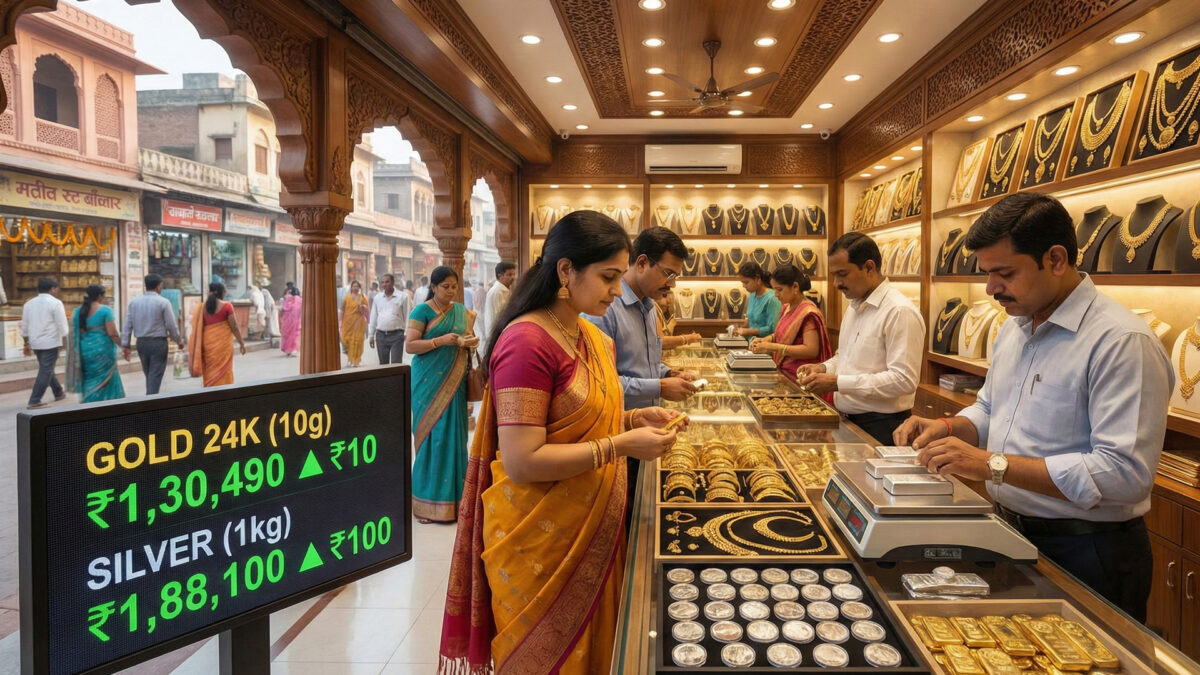
Gold prices in India edged higher on Wednesday, while silver saw a marginal decline, reflecting continued volatility in the precious metals market. According to latest market data, 24-carat gold rose by ₹10 to ₹1,53,940 per 10 grams, while silver prices fell by ₹100 to ₹2,79,900 per kilogram.

The modest rise in gold comes after a period of intense price fluctuations. In recent weeks, gold prices surged to record highs, driven by strong safe-haven demand amid global uncertainty. However, those gains were followed by bouts of profit-booking, leading to sharp intraday corrections. Despite these swings, gold continues to trade at historically elevated levels, signalling sustained investor interest.

Market participants said gold’s resilience is linked to ongoing concerns around global economic growth, currency movements, and geopolitical tensions. When uncertainty rises, investors often turn to gold to protect value, helping the metal recover quickly even after short-term corrections. Traders noted that buying interest remains intact, especially on dips, keeping prices supported above the ₹1.5-lakh mark.

Silver, meanwhile, showed mild weakness in today’s trade. After witnessing steep rallies earlier this year, at times nearing ₹3 lakh per kilogram, silver prices have been more volatile than gold. Analysts attributed the latest dip to profit-taking by traders and cautious sentiment after recent sharp moves. Changes in global trading margins and reduced speculative positions have also added pressure on silver prices.

On the Multi Commodity Exchange (MCX), both metals have seen wide intraday movements over the past few sessions, underlining nervous market conditions. Experts say silver, being both a precious and industrial metal, tends to react more sharply to changes in global demand outlook, making it more prone to sudden price swings.

Also Read: Sensex swings in range, Nifty breaches 25,750 mark
Categories
Corporate

Sensex swings in range, Nifty breaches 25,750 mark
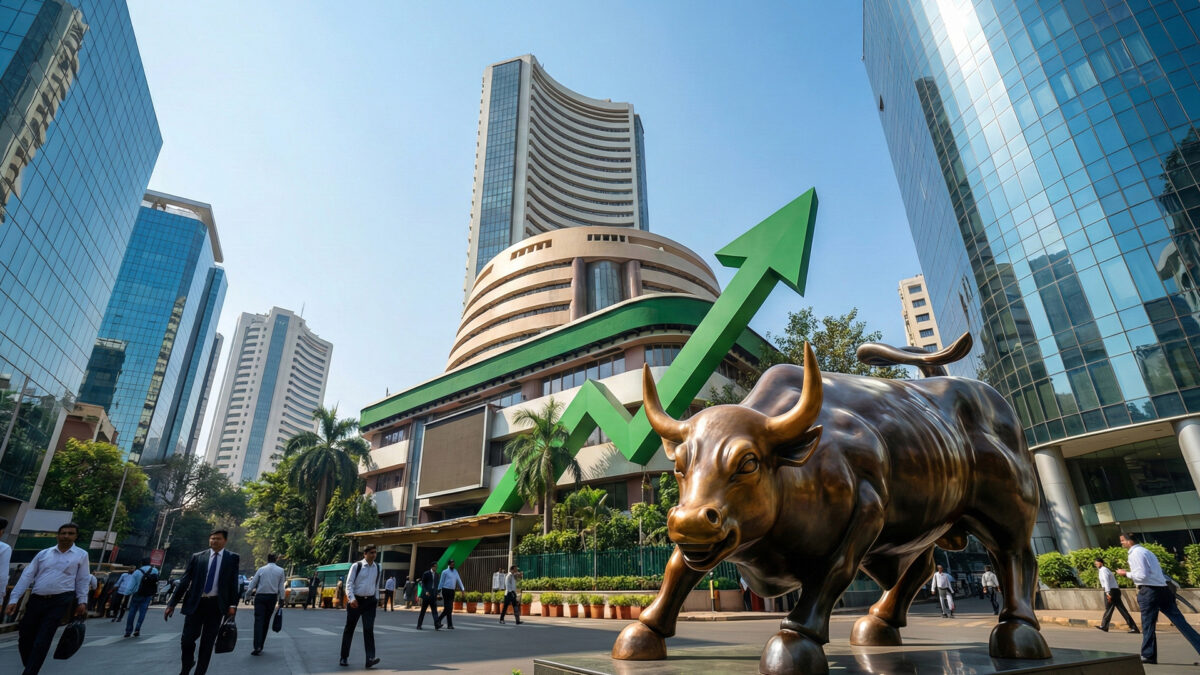
Markets traded with high volatility on Wednesday, as the BSE Sensex swung between gains and losses through the session, while the Nifty 50 slipped below the crucial 25,750 mark, signalling cautious investor sentiment.

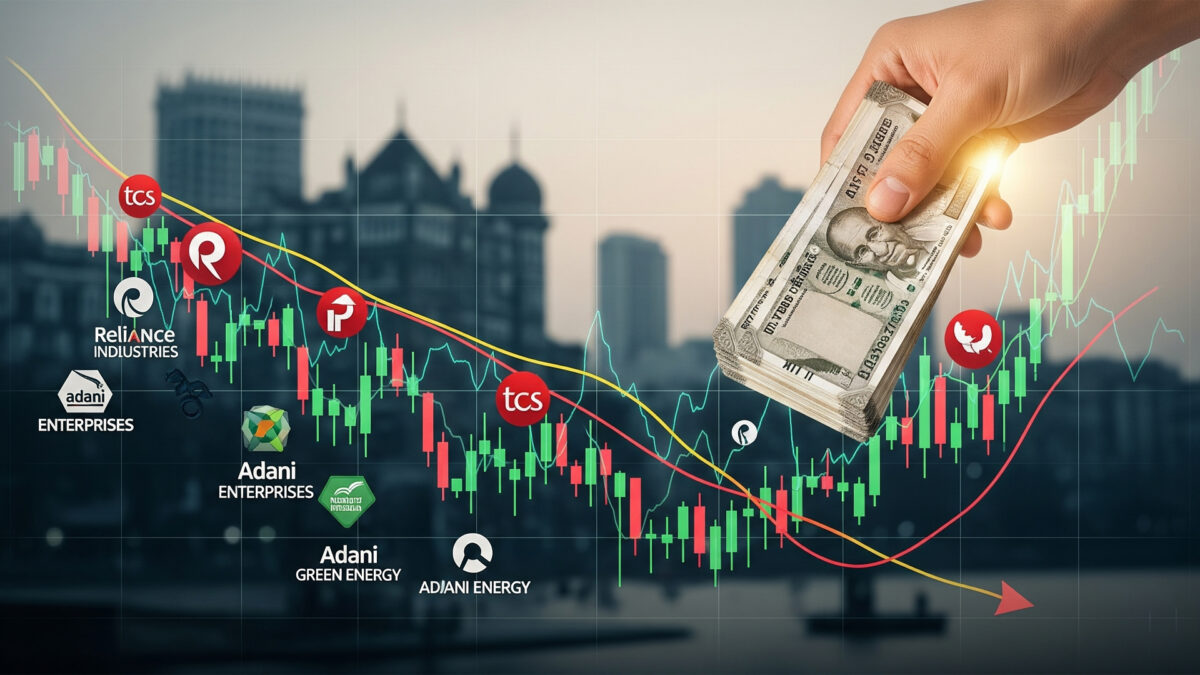
 Selling pressure intensified as the session progressed, led by sharp losses in IT stocks. The Nifty IT index fell nearly 6%, making it the worst-performing sector of the day. Major IT stocks such as Infosys, TCS, Wipro and HCL Tech were among the top losers, hurt by weakness in US technology stocks and concerns over near-term demand outlook.

Auto and metal stocks also witnessed selling pressure, adding to the weakness in benchmarks. Stocks like Tata Motors, JSW Steel and Hindalco traded lower as investors stayed cautious on global growth prospects. Broader markets mirrored the weak sentiment, with mid-cap and small-cap indices trading in the red amid heightened volatility.

On the positive side, select FMCG and banking stocks helped limit deeper losses. Hindustan Unilever, ITC and Nestlé India were among the key gainers, supported by defensive buying. In the banking space, heavyweight stocks such as HDFC Bank and ICICI Bank showed mild gains, providing some stability to the indices.

Global cues remained mixed, with Asian markets trading unevenly after overnight weakness in US tech stocks. While optimism over recent international trade developments had lifted markets earlier, investors chose to book profits in the absence of fresh triggers. Ongoing uncertainty around global interest rates and geopolitical tensions also weighed on sentiment.

Investors are closely watching developments related to the Union Budget, corporate earnings announcements and global macro signals for further cues. Market experts said near-term movement is likely to remain range-bound, with stock-specific action and sector rotation driving trade.

Also Read: Sensex rallies 2,073 points, Nifty tops 25,700

Categories
Leaders

Ex-RBI Director joins Bajaj Housing finance board

Bajaj Housing Finance Limited has appointed Ajay Kumar Choudhary as an Independent Director on its board, the company announced on February 2, 2026. His appointment will take effect from March 1, 2026, and will continue for five years, subject to approval by the company’s shareholders.

Choudhary brings over three decades of experience in central banking and financial regulation. He retired as an Executive Director of the Reserve Bank of India (RBI) and has played key roles in areas such as payments, regulatory operations, and financial policy. His expertise is expected to strengthen the company’s governance, risk management, and compliance framework.

The decision to nominate Choudhary was made following the recommendation of the company’s Nomination and Remuneration Committee, which evaluates candidates for their experience, independence, and ability to contribute to board-level decisions. Once approved by shareholders, Choudhary will serve a full term of five years and will not be subject to retirement by rotation.

This appointment is part of Bajaj Housing Finance’s broader effort to enhance its board quality and governance as the company expands in India’s housing finance sector. Since its IPO in 2024, the company has been actively growing its lending portfolio and strengthening its regulatory compliance practices.

By bringing in a seasoned central banker like Choudhary, Bajaj Housing Finance signals its focus on strong corporate governance and strategic oversight, especially in a market where regulatory expectations and operational complexities are increasing.

Also Read: India eyes higher 49% FDI in public banks

Categories
1 Minute-Read

Capgemini to exit US unit linked to migrant tracking

French IT major Capgemini has decided to sell its US-based subsidiary, Capgemini Government Solutions, after concerns were raised about its role in supporting migrant tracking and deportation systems for US immigration agencies.

The move comes amid political and public scrutiny in France over ethical issues linked to such contracts. Capgemini said legal constraints limited its control over the unit’s operations, prompting the decision to divest.

The company clarified that the subsidiary contributes only a small portion to its overall revenue and that the sale process will begin immediately.

Categories
Beyond

US plans $12 bn critical minerals

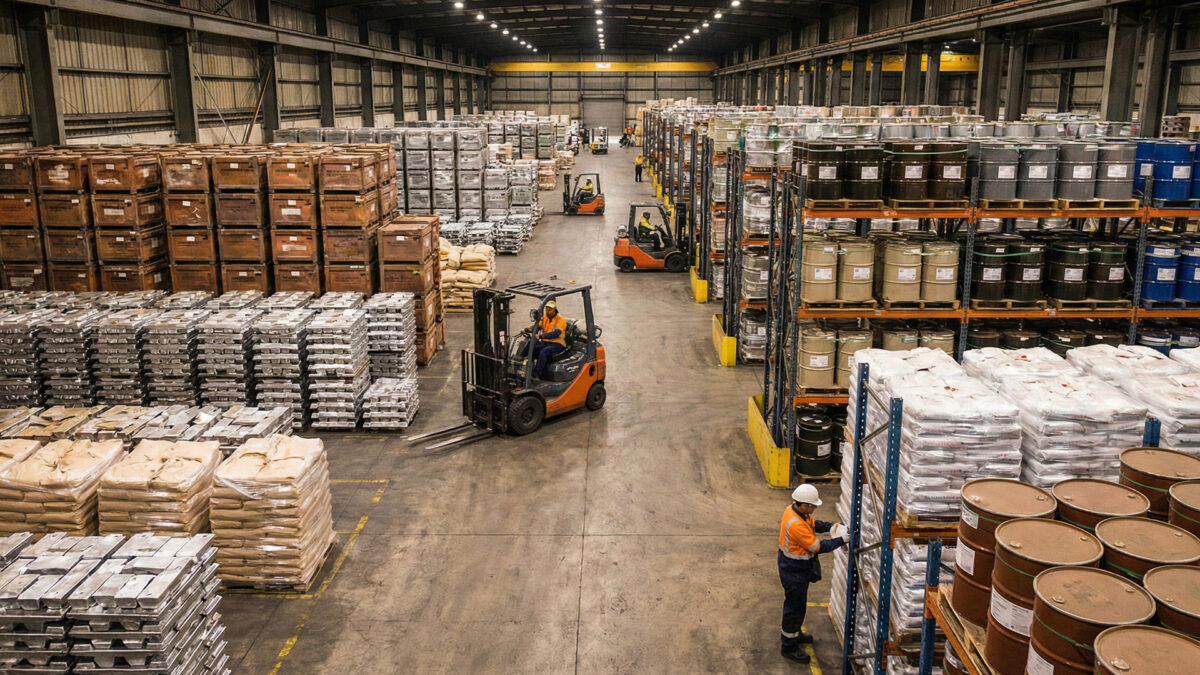
The United States has announced plans to create a $12 billion strategic stockpile of critical minerals, as President Donald Trump moves to reduce the country’s heavy dependence on China for materials essential to modern industry, clean energy, and national security.

The initiative, unveiled on February 2, will function on the lines of the Strategic Petroleum Reserve but will focus on minerals instead of oil. It is designed to protect American companies from supply disruptions, price shocks, and geopolitical risks linked to China’s dominance in the global minerals market.

Under the plan, funding will come from a mix of government-backed financing and private investment. The US Export-Import Bank is expected to provide the bulk of the support, while private companies will participate by committing to buy minerals from the reserve. The stockpile will include materials such as rare earth elements, lithium, nickel, cobalt, gallium, and graphite, all of which are critical for manufacturing electric vehicles, semiconductors, renewable energy equipment, electronics, and defence systems.

China currently controls a large share of the world’s mining and, more importantly, processing capacity for many of these minerals. Recent Chinese export controls and trade tensions have raised concerns in Washington about supply security. US officials say the new reserve is meant to ensure that American manufacturers are not left vulnerable during political disputes or global supply chain disruptions.

Several major US companies, including firms from the automotive, aerospace, technology, and energy sectors, have expressed interest in participating in the programme. Commodities trading firms will help procure, store, and manage the materials, ensuring they are available when needed.

According to officials, the stockpile is expected to hold around two months’ supply of selected critical minerals. While the move is seen as an important step, experts note that stockpiling alone will not solve long-term challenges. Expanding domestic mining, improving processing capacity, and building reliable supply partnerships with allied countries will remain crucial.

Also Read: Elon Musk’s SpaceX buys xAI in $1.25 trillion merger

Categories
Leaders

Elon Musk’s SpaceX buys xAI in $1.25 trillion merger

Elon Musk has brought his two biggest futuristic bets closer together. His space exploration company SpaceX has acquired his artificial intelligence firm xAI in a deal that values the combined private entity at around $1.25 trillion, according to reports.

The merger brings xAI, the company behind the AI chatbot Grok, fully under SpaceX, creating a single organisation that blends space technology, satellite networks and advanced artificial intelligence. While SpaceX is estimated to be worth about $1 trillion, xAI’s valuation is pegged at roughly $250 billion.

Musk said the deal is aimed at solving one of the biggest challenges facing AI today: infrastructure. Modern AI systems rely on massive data centres that consume huge amounts of electricity and water for cooling. Musk has argued that this model is unsustainable in the long run.

His solution is ambitious, move AI data centres into space.

By placing large-scale computing infrastructure in orbit, Musk believes AI systems could run on near-constant solar energy, reduce strain on Earth’s power grids and avoid many land-based environmental constraints. Space-based data centres could also operate at scale without competing with cities and industries for electricity and water.

As part of this broader vision, SpaceX has reportedly applied to US regulators for permission to launch up to one million additional satellites in the coming years. These satellites could form a vast network capable of supporting AI processing, data transfer and global connectivity from space.

The merger also strengthens the link between xAI and Musk’s social media platform X, which already uses AI tools such as Grok for content analysis and real-time information. Integrating these systems with SpaceX’s satellite and launch capabilities could give Musk an edge in building a global AI-powered communications ecosystem.

The deal comes at a time when SpaceX is preparing for a potential initial public offering (IPO), expected later in 2026. Analysts say combining AI and space infrastructure under one roof could significantly boost investor interest, while also positioning the company as a competitor to major cloud and AI firms.

Also Read: Snowflake, OpenAI seal $200 million AI deal

Categories
Beyond

Gold up at ₹1,53,160, Silver stands at ₹2,99,900

Gold and silver prices in India eased slightly on Tuesday after a week of sharp swings in domestic and global markets.

Gold for 10 grams slipped ₹10, trading near ₹1,53,160, while silver fell ₹100 to ₹2,99,900 per kilogram, according to market sources. The modest decline comes after both metals reached record highs earlier this week, followed by a sharp correction. Tuesday saw a small rebound as investors looked for buying opportunities at lower price levels.

Analysts said the current trend reflects a mix of domestic and international factors. The Union Budget 2026 has been a key driver, with traders cautious about possible changes in gold import duties and other policy measures affecting bullion demand. At the same time, international markets remain volatile, influenced by a stronger US dollar, changes in US interest rate expectations, and ongoing geopolitical developments.

Investor sentiment is mixed. Some market participants see the recent dip as an entry point for long-term buying, while others prefer a wait-and-watch approach, waiting for more clarity on both domestic and global cues.

City-wise, gold and silver prices showed minor variations, but the overall trend was a small decline from recent highs. Traders expect volatility to continue in the near term, as domestic investors digest the Budget announcements and international markets respond to global economic developments.

Also Read: Trump announces India–US trade deal

Categories
Corporate

Trump announces India–US trade deal

US President Donald Trump has said that the United States and India have agreed on a new trade deal that would change how goods move between the two countries. As per Trump’s statement, American products would be allowed into India without paying any tariffs, while Indian exports to the US would attract an 18% charge.

Trump said the move is aimed at making trade more balanced and fair for American businesses. He claimed that US companies have long faced higher duties in India and that the new arrangement would open up greater opportunities for American manufacturers, farmers, and technology firms.

Under the proposed deal, India would continue to export to the US, but at a fixed tariff rate of 18%. Trump described this as a reasonable level that still allows Indian goods access to the American market while offering better protection to US industries and jobs.

The announcement comes amid ongoing global trade uncertainty and renewed focus on protecting domestic industries. India and the US are among each other’s key trading partners, with strong links in sectors such as IT services, pharmaceuticals, energy, defence, and manufacturing.

However, no official confirmation or detailed response has yet come from the Indian government. Trade analysts say the impact of the deal, if finalised, could be uneven. While US exporters may gain from duty-free access to India, Indian exporters, especially in labour-intensive sectors, could see higher costs and tighter margins in the US market.

Also Read: India–US deal cheer lifts Sensex 2,250 points, Nifty above 25,750

Categories
Corporate

India–US deal cheer lifts Sensex 2,250 points, Nifty above 25,750

markets surged on Tuesday as investors welcomed the long-awaited India–US trade agreement, sparking strong buying across most sectors and lifting overall market sentiment.

The BSE Sensex jumped over 2,000 points, while the Nifty 50 climbed close to 3%, supported by broad-based participation. Early signals from Gift Nifty had indicated a positive opening, but the rally gathered pace as the session progressed, driven by heavyweight stocks and renewed foreign inflows.

Export-linked sectors emerged as the biggest winners. Stocks in metals, engineering, automobiles and information technology rallied sharply, benefiting from the announcement that the US will cut tariffs on Indian goods to 18% from earlier levels of around 50%. Banking stocks also saw strong buying, with large private lenders and PSU banks gaining as improved trade prospects lifted growth expectations.

Among index heavyweights, oil and gas majors and infrastructure stocks advanced on hopes of higher global demand and improved investment sentiment. The positive momentum was further supported by a stronger rupee, which appreciated more than 1% against the US dollar, signalling renewed confidence among overseas investors.

However, not all stocks joined the rally. FMCG and pharmaceutical stocks underperformed, with investors turning cautious on defensive sectors amid the risk-on mood. Select consumer staples and healthcare counters slipped or remained range-bound as traders rotated funds into cyclical and export-oriented names. A few mid-cap pharma exporters also faced pressure due to concerns over pricing and regulatory costs.

Market analysts said the trade deal helped remove a key uncertainty that had weighed on Indian equities in recent weeks, encouraging foreign institutional investors to return to the market. Improved clarity on tariffs and trade rules is expected to support corporate earnings, particularly for export-driven industries.

Also Read: Viksit Bharat banking panel proposed in Union Budget

Categories
Corporate

Sensex jumps 944 points, Nifty above 25,050

Indian stock markets staged a strong recovery on Monday as the BSE Sensex rose about 944 points to close near 81,666, while the Nifty 50 climbed over 260 points to settle above the 25,000 level.

The rebound came as investors digested the Union Budget proposals more calmly after an initial negative reaction on Sunday. Concerns over higher taxes on derivatives trading had triggered sharp selling earlier, but bargain buying and improved sentiment helped markets recover.

Infrastructure and energy stocks led the gains. Power Grid Corporation emerged as the top gainer, jumping over 7%. Other key stocks that supported the rally included Larsen & Toubro (L&T), Adani Ports, and Reliance Industries, all of which saw healthy buying. Pharma major Dr Reddy’s also ended the session higher.

On the losing side, Shriram Finance was the biggest drag on the index, falling more than 3%. Stocks such as Max Healthcare, Trent, Bajaj Auto, Cipla, Infosys, ITC, and Titan also closed lower as investors booked profits and rotated funds into sectors showing stronger recovery.

Sector-wise, infrastructure stocks outperformed, reflecting optimism around government spending and long-term projects. IT stocks lagged, slipping slightly due to weak global cues and cautious outlook for technology spending.

Global markets remained mixed, with some pressure seen in US and European indices. Despite this, Indian equities outperformed on the back of strong domestic buying and a mild rise in the rupee against the US dollar.

Also Read: Bitcoin faces sharp fall during market chaos