Categories
Beyond

Defence budget nears 2% of GDP, gets ₹7.85 lakh cr

The Union Budget 2026-27 has delivered a strong push to India’s defence preparedness, with Finance Minister Nirmala Sitharaman announcing an allocation of ₹7.85 lakh crore for the Ministry of Defence. The outlay marks a 15 per cent increase over the previous year and brings defence spending close to 2 per cent of the country’s GDP, a level long recommended by strategic and military experts.

Defence continues to remain the single largest item in the Union Budget, accounting for nearly 15 per cent of total government expenditure. The increase reflects India’s intent to strengthen its armed forces amid evolving regional security challenges and rising geopolitical uncertainties.

A major highlight of the allocation is the sharp rise in capital expenditure, which is aimed at acquiring new platforms, weapons and military infrastructure. Around ₹2.19 lakh crore has been earmarked for modernisation, supporting purchases of fighter aircraft, aero engines, naval vessels and advanced equipment for the Army, Navy and Air Force.

The budget also reinforces the government’s commitment to Atmanirbhar Bharat in defence. Nearly three-fourths of the capital procurement budget has been reserved for domestic manufacturers, providing a strong boost to India’s defence industry and reducing reliance on imports. This move is expected to encourage private sector participation and strengthen defence exports.

Support for research and innovation has also been enhanced. Funding for the Defence Research and Development Organisation (DRDO) has been increased by about 9 per cent, underlining the focus on indigenous technology development and next-generation defence systems.

Apart from capital spending, a significant portion of the defence allocation will go towards revenue expenditure, including salaries, pensions, training, operations and maintenance, ensuring operational readiness and troop welfare.

Also Read: FedEx CEO warns of global trade shift

Categories
1 Minute-Read

EV scheme funding slashed in budget 2026

The Union Budget 2026‑27 has significantly reduced funding for India’s electric mobility programs, with a total cut of over ₹3,700 crore compared to previous allocations.

Key schemes affected include the PM Electric Drive (PM E‑DRIVE) and the PM e‑Bus Sewa Scheme, aimed at boosting electric vehicle adoption and charging infrastructure.

Analysts say the cuts may slow the pace of EV adoption, even as the government continues to support manufacturing and long-term sustainable transport goals. This marks a notable shift in budgetary focus for the transport sector.

Categories
Corporate

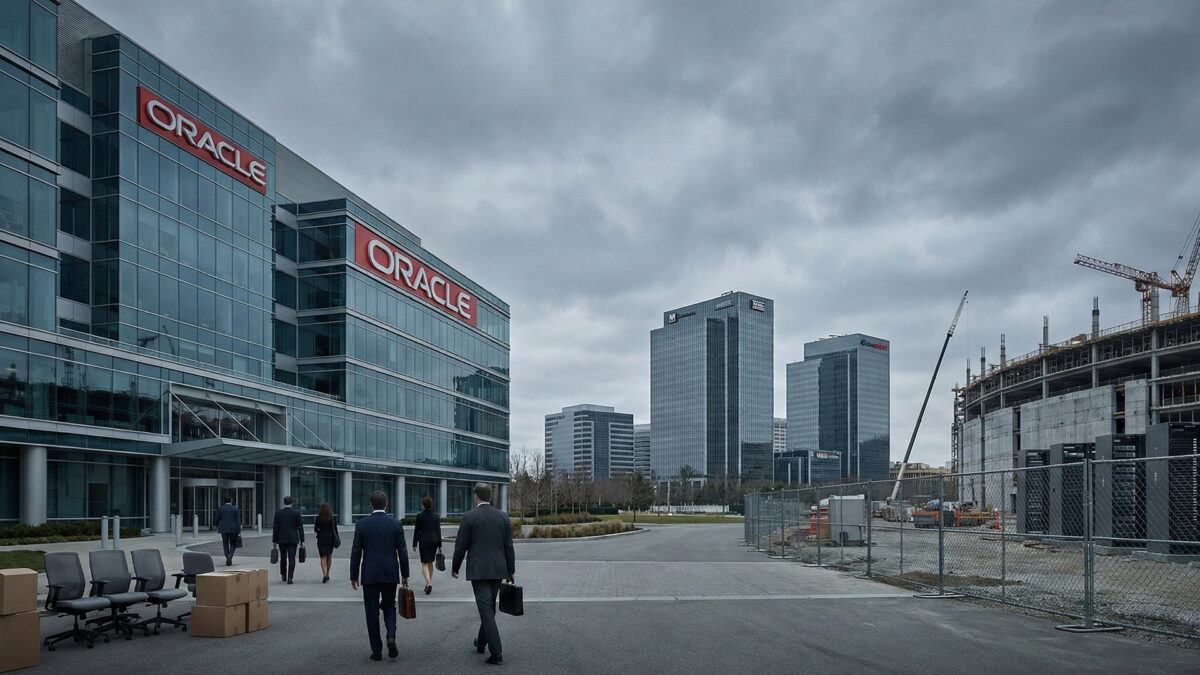
Oracle plans massive layoffs through AI funding crunch

US technology company Oracle is reportedly planning to cut 20,000 to 30,000 jobs as part of efforts to manage costs while expanding its AI-focused data‑centre network, according to industry sources. This would be one of the largest layoffs in the company’s history.

The job reductions are part of a broader plan to free up $8 billion to $10 billion in cash flow, which Oracle intends to use for building and operating large-scale data centres that can handle advanced AI workloads. The company’s AI push involves collaboration with major partners, including OpenAI.

Oracle’s ambitious expansion comes with a significant price tag. Analysts estimate that the company may need more than $150 billion over several years to fund the new AI infrastructure. Several US banks have reportedly pulled back from lending, citing concerns about the high capital requirements and rising debt levels. This has increased the company’s borrowing costs and created uncertainty around financing its AI data‑centre projects.

To manage these challenges, Oracle is exploring alternative strategies beyond workforce reductions. This includes the potential sale of its Cerner healthcare software unit, acquired for $28.3 billion in 2022, and adopting new models like “bring your own chip” (BYOC), where customers provide their own hardware, reducing Oracle’s capital burden.

The tech giant has already tapped debt markets and raised billions to fund data centres in states such as Texas, Wisconsin, and New Mexico, but these funds cover only a fraction of the total investment needed for AI infrastructure.

If confirmed, these layoffs would surpass Oracle’s previous workforce cuts in late 2025, when about 10,000 employees were let go as part of a $1.6-billion restructuring plan.

Also Read: New Income Tax law from April to ease compliance

Categories
Beyond

Gold at ₹1,60,570, Silver slides to ₹3,49,900

Gold and silver prices remained weak on 2 February 2026, extending losses after a sharp correction from recent record levels amid volatile market conditions.

On the Multi Commodity Exchange (MCX), gold traded lower at ₹1,60,570 per 10 grams, slipping further as investors continued to book profits. Silver prices also declined to ₹3,49,900 per kilogram, reflecting sustained selling pressure following last week’s steep rally.

The decline comes after both metals touched historic highs, driven by strong global cues and safe-haven demand. However, the rapid rise was followed by an equally sharp pullback as traders chose to lock in gains, triggering heavy volatility across commodity markets.

The sell-off spilled over into the equity segment as well. Gold and silver exchange-traded funds (ETFs) extended their losses, with silver ETFs bearing the brunt of the fall. Some silver-linked funds dropped close to 20 per cent, while gold ETFs fell by up to 10–11 per cent, mirroring the sharp correction in underlying prices.

Market analysts attributed the weakness to profit-taking, global uncertainty and movements in the US dollar, which tends to influence prices of dollar-denominated commodities. They noted that prices had risen sharply in a short period, making a correction unavoidable.

Also Read: Sensex up over 100 points, Nifty above 24,800

Categories
Corporate

Sensex up over 100 points, Nifty above 24,800

The markets traded cautiously on Monday investors continued to digest the sharp sell-off triggered by the Union Budget 2026–27. Benchmark indices Sensex and Nifty 50 struggled to regain momentum after recording heavy losses during Sunday’s special budget trading session.

In the previous session, the Sensex had dropped over 1,500 points, while the Nifty declined by nearly 500 points, marking one of the steepest Budget-day corrections in recent years. Volatility remained high on Monday, with markets moving between marginal gains and losses as investor confidence stayed fragile.

The sell-off was largely driven by the government’s decision to raise the Securities Transaction Tax (STT) on futures and options, which increased trading costs and dampened appetite for high-volume derivative trades. Market participants said the move came as a surprise and led to broad-based selling across sectors.

Some pockets of the market, however, showed resilience. IT majors such as TCS and Wipro traded higher, supported by defensive buying, while select healthcare stocks also saw limited gains amid uncertainty.

On the downside, heavyweights continued to face pressure. Larsen & Toubro (L&T) slipped as capital goods stocks saw profit-taking, while Adani group companies remained among the key drags on the indices. PSU banks, metal stocks and defence shares, including Bharat Electronics (BEL), also traded lower, reflecting caution over valuations and policy impact.

Global cues remained mixed, with Asian markets subdued and commodity prices easing.

Categories
Leaders

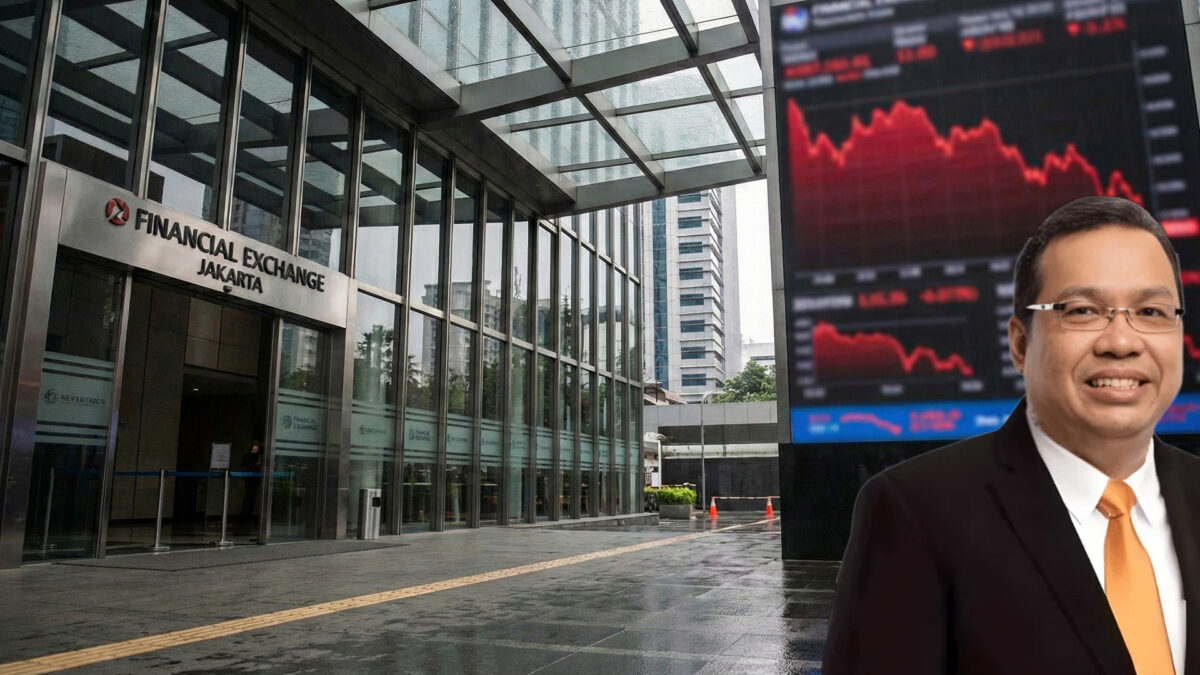
Indonesia Stock Exchange CEO steps down after market crash

The President Director of the Indonesia Stock Exchange (IDX), Iman Rachman, resigned on Thursday, following a sudden market collapse that erased over US$84 billion from the country’s stock market in just two days. His resignation comes amid growing concerns about market governance and transparency, and is seen as an attempt to stabilize investor confidence.

Speaking to reporters, Rachman said he was taking responsibility for the turmoil and hoped his resignation would help pave the way for reforms. “This decision is about accountability and giving the market a chance to recover,” he said. Analysts believe the move may help restore investor trust in Indonesia’s financial system.

The shake-up extends beyond the stock exchange. The Financial Services Authority (OJK) also saw resignations from key officials, including its chairman, who cited similar accountability for the market downturn.

Finance Minister Purbaya Yudhi Sadewa welcomed Rachman’s resignation, describing it as a “strong signal of responsibility and commitment to market stability.” The government has promised a series of reforms to improve transparency, increase share liquidity, and attract more institutional investors.

The sharp decline was triggered after MSCI, a global index compiler, warned that Indonesia’s stock market risked being downgraded from an emerging market to a frontier market. This warning sparked panic selling, with the Jakarta Composite Index (IHSG) losing more than 8% over two sessions. Some trading was temporarily halted as authorities tried to curb the sell-off.

Also Read: Samsung India creates Guinness-winning photo mosaic

Categories
Technology

Samsung India creates Guinness World Record

Samsung India has turned everyday moments into a world record. Its India #WithGalaxy photography campaign, which invited people across the country to click and share pictures using Galaxy S smartphones, has earned two Guinness World Records. What began as a fun challenge quickly became a nationwide celebration of India’s people, places, and stories.

Running from 30 December 2025 to 26 January 2026, the campaign received 31,331 photo submissions, making it one of the largest smartphone photography contests ever. Participants of all ages. from students and professionals to hobbyist photographers. shared glimpses of their daily lives, family moments, local festivals, and scenic landscapes.

Acclaimed filmmaker Kabir Khan and more than 30 regional photographers guided participants, helping them bring local culture, traditions, and personal stories to life. The photos reflected different aspects of India, from vibrant festivals and historic landmarks to the everyday smiles and struggles of ordinary people. Themes like “Faces of India” and “Colours of India” allowed participants to share their unique perspective while connecting with the larger story of the nation.

The campaign set records for the largest smartphone photography contest and the most contributions to an online photo mosaic, which combined all the submitted pictures into a single, massive digital artwork. The mosaic, now a visual celebration of India’s diversity, brings together the country’s stories in one collective frame.

Raju Pullan, Senior Vice President of MX Business at Samsung India, said the campaign was more than a contest. “It showed how people across India can connect and express themselves through photography,” he said. The records were officially certified at a ceremony attended by Samsung executives and a Guinness World Records adjudicator.

The campaign not only highlighted Samsung Galaxy devices as tools for creativity but also celebrated the shared human experience. By turning personal moments into a national mosaic, Samsung encouraged people to see the beauty in the ordinary and the extraordinary in the everyday.

Also Read: US offers Venezuelan oil as India cuts Russia

Categories
Corporate

Peloton announces 11% job cuts as cost-saving push

Peloton Interactive Inc. has announced that it is laying off about 11% of its global workforce as part of a renewed effort to cut costs and streamline operations. The decision, made public on January 30, affects nearly 300 employees and is one of the most significant steps taken by the company under its new leadership.

The layoffs will have a notable impact on engineering teams, particularly those working on long-term technology and internal development projects. Peloton said the move is aimed at improving efficiency and ensuring resources are focused on areas that directly support customers and revenue growth.

In an internal message to employees, CEO Peter Stern said the company needs to operate with greater discipline as it works through a challenging business environment. He acknowledged the difficulty of the decision and thanked departing employees for their contributions, adding that Peloton will provide support during their transition.

The job cuts are part of a broader plan to reduce at least $100 million in annual expenses. Along with workforce reductions, Peloton has been reviewing its real estate footprint and internal processes to lower fixed costs. The company said these changes are necessary to create a more sustainable operating model.

Peloton’s announcement comes just days before it is due to report its latest quarterly earnings, a period that has kept investors cautious. Demand for connected fitness equipment has remained uneven after the pandemic boom, and newer products — including AI-enabled features and redesigned hardware — have yet to deliver a strong turnaround in sales.

The company has also raised prices for some of its bikes, treadmills and subscription services in recent months, a move aimed at improving margins but one that has drawn mixed reactions from consumers.

Peloton has gone through several rounds of restructuring in recent years as it adjusts to changing consumer behaviour and tougher competition in the fitness and technology space. The latest layoffs highlight the ongoing pressure on consumer tech companies to balance innovation with profitability.

Also Read: Google India profit ₹1,437 cr as revenue falls 3.2%

Categories
Corporate

Google India profit ₹1,437 cr as revenue falls 3.2%

Google India reported a nearly flat net profit of ₹1,437 crore for the financial year ending March 31, 2025, staying close to the ₹1,425 crore recorded in FY24. The company’s revenue from core operations fell 3.2% to ₹5,340 crore, primarily due to softer advertising income, which kept overall profit growth in check.

Despite this, total revenue rose slightly to ₹6,116 crore, helped by “other income” of ₹776 crore. However, the net profit margin slipped to 23.5% from 24.1%, reflecting the impact of lower operational earnings combined with rising expenses.

On the cost side, total expenditure reached ₹4,136 crore. Employee benefits increased by 7.8% to ₹2,146 crore, while tax expenses rose sharply by 22.6% to ₹543 crore, both putting pressure on profitability.

A spokesperson for Google India noted that FY25 results are not directly comparable to FY24, as the previous year included earnings from the company’s IT division, which was spun off into Google IT Services, and adjustments from an earlier Bilateral Advance Pricing Agreement (BAPA) with the tax authorities. These factors had boosted FY24 numbers.

The slight revenue decline comes amid shifts in digital advertising trends and market conditions, prompting the company to manage costs carefully. Analysts say the numbers indicate that while Google India’s bottom line remains stable, operational growth faces headwinds, and margins are under pressure from rising expenses.

Also Read: Rupee up 9 paise after record low ₹92

Categories
Corporate

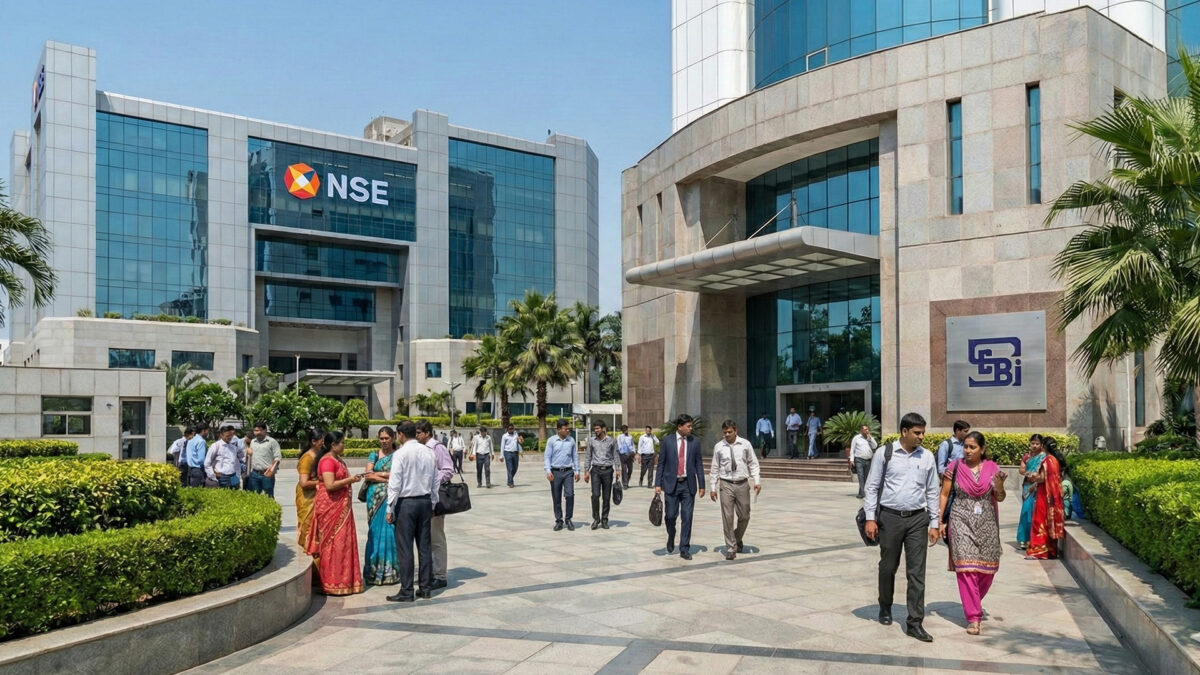
NSE receives SEBI approval for IPO launch

The National Stock Exchange of India (NSE) has finally received approval from the Securities and Exchange Board of India (SEBI) to proceed with its initial public offering (IPO), ending almost ten years of delays. This clearance allows the exchange to submit its draft prospectus and move toward listing, a significant milestone for India’s capital markets.

NSE first filed for an IPO in 2016, but its plans were stalled amid regulatory scrutiny and legal challenges. The exchange faced allegations regarding co-location facilities and dark fibre services, which reportedly gave select brokers faster access to trading data. Over the years, these issues delayed NSE’s path to listing, even as other Indian exchanges, like BSE, successfully went public.

The recent SEBI approval follows settlement applications submitted by NSE to resolve these long-standing cases. Officials from the regulator had indicated that the NOC would likely be granted after these matters were addressed. With the nod now in hand, NSE is expected to submit the IPO draft prospectus by end of March 2026, with the listing process projected to take six to eight months, potentially making NSE a publicly listed company by late 2026.

Unlike conventional IPOs, NSE’s offering is expected to be an offer-for-sale (OFS). Existing shareholders, including LIC, SBI, and other financial institutions, will sell part of their holdings to the public, meaning the exchange itself will not raise fresh capital from the IPO. This approach allows existing investors to realize part of their gains while introducing NSE shares to retail and institutional investors.

NSE chairperson Srinivas Injeti described SEBI’s approval as “a significant milestone in our growth journey,” highlighting the exchange’s commitment to transparency and market development. Market experts say the IPO will not only enhance NSE’s public profile but also boost investor confidence in India’s capital markets.

Also Read: Dixon Technologies rallies 5% after Q3 profit jump