Categories
Beyond

Saudi Arabia slashes crude prices

Saudi Arabia has announced its biggest crude oil price cut for Asian buyers in more than two decades, signalling growing pressure in global oil markets amid rising supplies and uncertain demand.

State-owned oil giant Saudi Aramco has reduced the official selling price (OSP) of its flagship Arab Light crude for August deliveries to Asia by around $1.10 per barrel. The cut brings the premium over the regional benchmark to its lowest level in years and marks one of the sharpest price reductions since the early 2000s.

The move comes as oil-producing countries face a changing market environment, with global supply increasing and demand growth showing signs of slowing. Higher output from major producers, including members of the OPEC+ alliance, has added pressure on prices, forcing Saudi Arabia to adjust pricing to remain competitive in key Asian markets.

Asia remains the largest market for Saudi crude, with countries such as China, India, Japan and South Korea among its biggest customers. The latest reduction is seen as an effort to protect market share while responding to shifting supply-demand dynamics.

The price cut reflects Saudi Arabia’s attempt to balance two competing priorities, maintaining revenues while ensuring its crude remains attractive to buyers. The kingdom has traditionally used official selling prices as a tool to influence market sentiment and manage competition among oil suppliers.

The reduction also comes despite efforts by OPEC+ producers to manage output and support crude prices. However, increasing production levels and concerns over economic growth have limited the effectiveness of supply controls.

For major oil-importing countries such as India, lower crude prices could provide some relief by reducing import costs and easing pressure on inflation. Cheaper crude can also help lower fuel-related expenses for businesses and consumers.

Also Read: Trent reports 19% revenue growth in first quarter

Categories
1 Minute-Read

India, Japan unite for UNICORN naval project

India and Japan have launched their first joint defence technology project by agreeing to co-develop the UNICORN (Unified Complex Radio Antenna) system for Indian Navy warships.

The advanced antenna combines multiple communication and surveillance systems into a single integrated mast, helping ships become harder to detect on enemy radar while improving operational efficiency.

The project will be jointly developed with Japanese technology and manufactured in India, marking a major step in defence cooperation between the two countries. Announced during the India-Japan summit in New Delhi, the agreement reflects growing strategic trust and supports a shared vision for a secure, stable and rules-based Indo-Pacific.

The partnership also signals closer collaboration in advanced defence technologies and maritime security.

Categories
Uncategorized

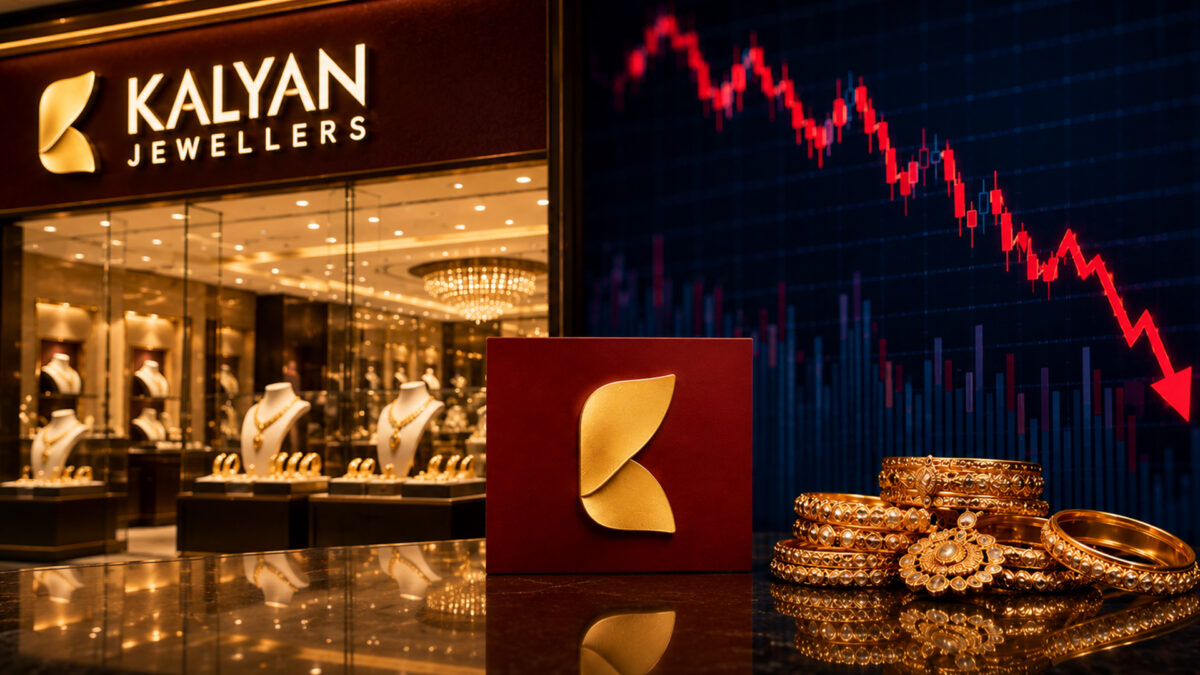
Kalyan Jewellers stock falls despite growth

Shares of Kalyan Jewellers India came under sharp selling pressure on Tuesday, falling nearly 7% despite the company reporting a strong business update for the first quarter of FY27. The decline surprised investors, as the jewellery retailer posted robust growth across its domestic and international operations.

The company reported a 38% year-on-year increase in consolidated revenue for the April–June quarter, driven by healthy consumer demand and strong festive and wedding-related purchases. Its India business delivered solid growth, while international operations also recorded steady expansion, contributing around 14% of consolidated revenue.

Despite the upbeat operational performance, investors chose to book profits after the stock’s recent rally. Analysts said the market may have been expecting even stronger growth, particularly after competitor Titan reported a higher business growth rate for the same period. Comparisons with peers and concerns over the stock’s valuation also weighed on sentiment.

The company continued to expand its retail footprint during the quarter by opening new showrooms in India and overseas. Management said demand remained resilient despite elevated gold prices, with customer interest supported by wedding purchases and festive buying. The franchise-led expansion strategy also continued to strengthen Kalyan Jewellers’ presence across key markets.

Also Read: Telecom tariffs may rise up to 15% soon

Categories
Beyond

Telecom tariffs may rise up to 15% soon

Mobile phone users may have to brace for another increase in their monthly bills, with telecom operators reportedly preparing to raise tariffs by 12–15% over the next three to four months. Industry reports suggest that the country’s leading telecom companies—Reliance Jio, Bharti Airtel and Vodafone Idea (Vi)—are considering another round of price revisions as they look to improve revenues and support network expansion.

If implemented, the proposed hike would come after the tariff increases introduced in mid-2025, which had already pushed up the cost of prepaid and postpaid plans. Analysts believe telecom companies are now focusing on improving the average revenue per user (ARPU), a key metric that reflects earnings from each subscriber.

The expected price increase is also linked to the industry’s growing investment needs. Telecom operators continue to spend heavily on expanding 5G services, strengthening network infrastructure and improving service quality across urban and rural markets. Higher tariffs are expected to help companies recover these investments while maintaining profitability.

The impact on subscribers could vary depending on the plan they use. Customers on entry-level prepaid plans may see relatively smaller increases, while users of premium plans could face higher monthly bills. However, telecom companies are also expected to continue offering bundled benefits such as increased data limits, OTT subscriptions and additional calling features to retain customers.

Among the major players, Bharti Airtel has consistently advocated for higher tariffs to improve the financial health of the telecom sector. Industry observers expect other operators to follow a similar pricing strategy to maintain competitive parity.

Despite the expected increase, analysts note that India’s mobile tariffs remain among the lowest globally. They believe gradual price hikes are necessary to support continued investment in digital infrastructure and meet the rising demand for high-speed data services.

No telecom operator has officially announced a fresh tariff revision so far. However, reports indicate that a decision could be taken in the coming months, depending on market conditions and competitive developments.

Also Read: Cochin Shipyard OFS opens today, shares slip 4%

Categories
Corporate

Sensex climbs 300 points, Nifty trades above 24,500

Equity indices traded with modest gains on Tuesday as investors remained optimistic amid easing crude oil prices, sustained foreign institutional buying and positive global cues. The upbeat sentiment helped extend the market’s recent winning streak, with both the Sensex and Nifty staying comfortably in positive territory through the session.

The BSE Sensex climbed over 250 points during morning trade to reclaim the 78,500 level, while the NSE Nifty moved above 24,500. Buying interest was largely concentrated in information technology, financial and select metal stocks, although profit booking in a few heavyweight counters capped sharper gains.

IT shares emerged as the biggest support for the market after recent underperformance. Infosys and TCS featured among the top gainers, supported by fresh buying ahead of the earnings season. Other notable gainers included HCLTech, Tech Mahindra and Hindalco, reflecting improved investor confidence in technology and metals.

On the losing side, Trent came under sharp selling pressure after disappointing investors with its latest business update. Kotak Mahindra Bank also remained under pressure, while Bajaj Finserv, Coal India and Max Healthcare traded lower, limiting broader market gains.

Market participants continued to monitor foreign institutional investor (FII) activity, which has remained supportive in recent sessions. Softer crude oil prices also boosted sentiment by easing concerns over inflation and India’s import bill. Analysts believe stable global markets and improving domestic liquidity have encouraged investors to selectively accumulate quality stocks.

Also Read: HDFC Bank rises over 2% on Q1 update

Categories
Corporate

HDFC Bank rises over 2% on Q1 update

Shares of HDFC Bank climbed more than 2% on Monday after the country’s largest private sector lender reported a stronger-than-expected business update for the April-June quarter of FY27. The upbeat numbers reassured investors about the bank’s steady growth, helping the stock outperform the broader market.

HDFC Bank reported gross advances of around ₹27.3 lakh crore as of June 30, marking a 12.7% year-on-year increase. On a sequential basis, loans grew by about 2.5%, reflecting healthy credit demand across segments.

The bank also posted strong growth in deposits. Total deposits rose 16.2% from a year ago to nearly ₹28.1 lakh crore, while quarterly growth stood at around 5.1%. The improvement was driven by higher customer deposits and continued focus on strengthening the bank’s funding base.

One of the biggest positives was the rise in CASA (Current Account and Savings Account) deposits, which increased to about ₹9.8 lakh crore. Although the CASA ratio remained under pressure at around 34.9%, analysts said the steady improvement in low-cost deposits was encouraging.

Investors welcomed the update as it suggested that HDFC Bank continues to deliver stable growth despite a challenging interest rate environment and intense competition in the banking sector. The strong deposit growth also eased concerns over funding costs following the bank’s merger with HDFC Ltd.

The positive business update lifted market sentiment, with HDFC Bank emerging among the top gainers on the benchmark indices during Monday’s trading session. Banking stocks also received support after several private lenders reported healthy quarterly business numbers.

Also Read: Centre orders Meta to remove CSAM Ads

Categories
Technology

Centre orders Meta to remove CSAM Ads

The Centre has issued a notice to Meta after reports found Instagram carrying advertisements linked to child sexual abuse material (CSAM). The government has directed the company to remove the content immediately and strengthen its systems to prevent such violations.

The action follows an investigation that uncovered advertisements promoting AI-generated nude images of children and directing users to platforms allegedly hosting illegal child abuse content. The findings raised serious concerns over the effectiveness of Meta’s ad review process.

The Ministry of Electronics and Information Technology (MeitY) has sought an explanation from Meta and warned the company to comply with Indian laws governing online safety. Officials said social media platforms are responsible for preventing the spread of illegal content and must act swiftly against such material.

Meta said it has strict policies against child exploitation and is investigating the issue. The company said it removes content that violates its rules and continues to invest in technology and human review to detect harmful material.

The incident has renewed concerns over online child safety and increased pressure on technology companies to strengthen content moderation and advertising checks.

Also Read: Sensex gains 521 points, Nifty tops 24,400

Categories
Leaders

Advertising veteran Jishnu Sen passes away

Jishnu Sen, a well-known advertising and marketing professional and former CEO of Grey India, has passed away after a prolonged illness. He was widely respected in the industry for his leadership, experience and support for young talent.

Sen worked in advertising and marketing for more than 30 years. He started his career at JWT and later joined Young & Rubicam, where he held important roles in India, Singapore, Hong Kong and the United States. During his career, he worked with several leading national and international brands.

He is best remembered for his time at Grey India. After joining the agency, he became Chief Operating Officer and later President and CEO. Under his leadership, the company expanded its business and strengthened its reputation for creative excellence.

After leaving Grey India in 2014, Sen moved into senior marketing and advisory roles with companies including Essar Telecom Retail, Big Bazaar, Porter, Bergner India and DealShare. In his later years, he worked closely with startups, helping them build brands and grow their businesses.

The news of his passing was shared by his cousin, who said Sen remained full of energy and optimism despite battling illness for the past few years. Soon after, tributes poured in from across the advertising and marketing industry. Former colleagues and friends remembered him as a kind leader, a trusted mentor and someone who always encouraged fresh ideas and young talent.

Jishnu Sen’s contribution to Indian advertising will be remembered for years to come. Beyond the brands and businesses he helped build, he leaves behind a legacy of leadership, mentorship and creativity that inspired an entire generation of advertising professionals.

Also Read: OPEC+ approves higher August oil output increase

Categories
Beyond

Maharashtra bans 3 toxic beauty products

The Maharashtra Food and Drug Administration (FDA) has banned the sale and distribution of three cosmetic products after laboratory tests detected dangerous levels of toxic heavy metals, including mercury and lead. Officials said the products were being sold illegally and posed a serious health risk to consumers.

Among the banned products is a Pakistan-made fairness cream, which was found to contain high levels of mercury, a toxic substance that can cause severe health complications with prolonged use. The FDA also detected unsafe levels of lead in two other beauty products during routine testing.

The action follows an inspection and sampling drive carried out by the state regulator to ensure the safety and quality of cosmetic products available in the market. Officials said the products were not authorised for sale in Maharashtra and had entered the market through illegal channels.

According to the FDA, prolonged exposure to mercury through cosmetic products can damage the skin, kidneys and nervous system. Lead exposure, meanwhile, may affect the brain, liver and other vital organs, particularly in children and pregnant women. Health experts warn that repeated use of products containing these toxic metals can lead to long-term health problems.

The regulator has directed manufacturers, distributors and retailers to immediately stop selling the identified products and remove existing stocks from the market. Enforcement teams have also intensified inspections to identify shops and suppliers dealing in unauthorised cosmetics.

Consumers have been advised to avoid purchasing fairness creams and other beauty products from unverified sources or without proper labelling. Officials urged buyers to check whether products carry valid manufacturing details and regulatory approvals before use.

The FDA said it will continue market surveillance and testing to prevent the circulation of unsafe cosmetic products. Authorities have also appealed to the public to report suspicious or unlabelled beauty products being sold in local markets.

Also Read: Sanand emerges with ₹7,600-cr chip plant

Categories
Beyond

Gold holds at ₹1,47,830, Silver near ₹2,37,250

MCX gold futures were down 0.01% at ₹1,47,830 per 10 grams, while MCX silver futures slipped 0.19% to ₹2,37,250 per kilogram. The marginal decline reflects cautious trading as investors await fresh global economic cues before taking fresh positions.

In the retail market, gold prices remained largely unchanged. The 22K gold was available at ₹1,34,490 per 10 grams. Eighteen-carat (18K) gold was retailing at ₹1,10,040 per 10 grams, offering buyers a relatively affordable option compared with higher-purity variants.

Retail silver prices also remained broadly stable across major markets, although prices varied slightly from one city to another depending on local taxes and logistics costs.

Bullion prices continue to be influenced by global economic developments, including expectations surrounding interest rate decisions by major central banks, movements in the US dollar and ongoing geopolitical uncertainties. While gold remains a preferred safe-haven asset during periods of market volatility, a stronger dollar and higher bond yields have capped sharp gains in recent sessions.

Jewellers say customer enquiries have remained steady despite elevated prices. While some buyers are delaying large purchases in anticipation of a price correction, demand for lightweight jewellery and investment-grade coins continues to remain healthy. The upcoming festive and wedding season is also expected to provide further support to physical demand.

Also Read: Sensex gains over 300 points, Nifty tops 24,300