Categories
1 Minute-Read

Parle Industries shares jump on viral “Melody” confusion

Parle Industries shares surged to the upper circuit after a viral video of Prime Minister Narendra Modi gifting “Melody” toffees to Italian PM Giorgia Meloni triggered confusion among retail investors.

The buzz around the “Melodi” meme led some traders to mistakenly associate Parle Industries with Parle Products, the actual maker of Melody candies. The stock jumped despite having no business link to the FMCG brand.

Parle Products is privately held and not listed, while Parle Industries operates in infrastructure and recycling. The incident highlights how social media trends can sometimes drive irrational movements in stock markets.

Categories
1 Minute-Read

Meta lays off 8,000 employees after WFH notice

Meta has started laying off around 8,000 employees globally, about 10% of its workforce, as part of a major restructuring focused on artificial intelligence.

Reports say employees were first told to work from home before termination emails were sent, with the earliest notices arriving around 4 AM in some regions. The cuts affect multiple teams, including engineering and product roles.

The move is part of Meta’s shift toward leaner AI-driven operations under CEO Mark Zuckerberg, who has prioritised heavy investment in AI infrastructure and development. Further restructuring is expected in the coming months.

Categories
Beyond

DGCA flags Air India Boeing 787 fuel switch

The Directorate General of Civil Aviation (DGCA) has ordered a fresh inspection of the fuel control switch system on an Air India Boeing 787 aircraft after a reported technical anomaly during operations earlier this year.

According to reports, the decision follows concerns raised after pilots on a London–Bengaluru flight observed unusual behaviour in the fuel control switch mechanism during engine start procedures. The switch is a critical component that regulates fuel flow to aircraft engines.

As part of the new safety review, DGCA officials will travel to Boeing’s facility in Seattle, United States, to oversee testing of the removed fuel control switch panel. The regulator has termed the matter “sensitive” and has insisted that the inspection be conducted in the presence of its officers to ensure a thorough evaluation.

The move comes after earlier precautionary inspections across Air India’s Boeing 787 fleet, which had not found any systemic defects in the fuel switch locking mechanism. However, the latest incident has prompted renewed scrutiny of the component, which has been under observation in global aviation safety discussions.

Fuel control switches on the Boeing 787 have been closely monitored by regulators worldwide following past safety concerns and investigations into rare incidents involving engine shutdowns. While previous checks did not confirm a design fault, authorities continue to review isolated reports of abnormal behaviour.

Air India has supported the latest inspection process, stating that the component has already been sent to the original equipment manufacturer (OEM) for detailed examination. The airline has reiterated that safety remains its top priority and has cooperated fully with DGCA directives.

The broader investigation is also linked to ongoing reviews of earlier incidents involving Boeing 787 aircraft, including a fatal crash in 2025 in which fuel supply interruption was identified as a critical factor under investigation.

A final report on the overall safety review is expected once the OEM testing and DGCA-supervised analysis are completed.

Also Read: Airtel launches Priority Postpaid plans with 5G slicing

Categories
Technology

Airtel launches Priority Postpaid plans with 5G slicing

Bharti Airtel has launched its new Priority Postpaid plans in India, introducing 5G network slicing to enhance mobile connectivity for users. The new service aims to provide better speed, lower latency, and more stable network performance, especially during peak usage hours.

5G slicing allows Airtel to divide its network into multiple virtual segments and allocate dedicated capacity to specific user groups. With this system, Priority Postpaid customers receive higher network priority, ensuring smoother data usage even in crowded locations such as business districts, events, and transport hubs.

The telecom operator said the new plans are designed for customers who rely heavily on mobile internet for work, streaming, and daily communication. Existing Airtel postpaid users will automatically be eligible for the priority benefits, while others can upgrade to postpaid plans through Airtel’s app or retail outlets.

The Priority Postpaid plans start at around ₹449 per month and go up depending on features and benefits. Higher-tier plans include additional perks such as unlimited calling, data rollover, international roaming options, and bundled OTT subscriptions like Netflix, Amazon Prime Video, and Apple TV+.

Airtel said the rollout is part of its strategy to monetise its 5G standalone network and improve user experience through advanced technology. The company said the priority service will be especially useful in high-traffic situations where networks often slow down due to heavy usage.

Also Read: OpenAI co-founder joins Anthropic

Categories
Leaders

OpenAI co-founder joins Anthropic

Artificial intelligence researcher and OpenAI co-founding member Andrej Karpathy has joined AI company Anthropic, marking one of the most high-profile talent moves in the sector this year.

Karpathy announced the development in a post on X, saying he was excited to return to research and work on large language models. He will be part of Anthropic’s pre-training team, which focuses on building and training the core foundation models that power its AI assistant Claude.

Karpathy is widely known in the AI community for his work at OpenAI and Tesla, where he previously led AI and computer vision efforts, including contributions to Tesla’s Autopilot system. He is also a respected educator and public voice in AI, with a large following for his technical insights and commentary on machine learning and model development.

At Anthropic, Karpathy is expected to work closely on large-scale model training and help strengthen the company’s research direction as it competes with leading players like OpenAI, Google DeepMind, and Meta in developing advanced AI systems.

The move comes at a time when competition for top AI talent has intensified significantly, with major firms investing heavily in both infrastructure and researchers capable of advancing frontier models. Anthropic has been rapidly expanding its Claude ecosystem and positioning itself as a strong alternative in the enterprise AI and agent-based systems space.

Karpathy said he believes the next few years will be especially important for the evolution of large language models and expressed interest in focusing again on core research and development. He also indicated that he plans to continue his education-focused AI initiatives alongside his new role.

Also Read: Anthropic acquires stainless to boost Claude integrations

Categories
Corporate

Anthropic acquires stainless to boost Claude integrations

Anthropic has acquired developer tools startup Stainless in a move aimed at strengthening its Claude ecosystem, particularly its API infrastructure and agent-based integrations.

Stainless is a New York-based developer platform founded in 2022 that helps companies automatically generate and maintain software development kits (SDKs) from APIs. Its tools are widely used by major tech firms, including AI companies and API providers, to simplify how developers connect services across systems.

While financial details of the acquisition have not been officially disclosed, earlier reports indicated that the deal is valued at over $300 million. The acquisition marks another step in Anthropic’s broader strategy to deepen its developer ecosystem as competition intensifies in the AI space.

According to company statements and reports, Stainless will help improve how Claude connects with external tools, data sources, and third-party APIs. This is especially important as Anthropic shifts its focus toward building more capable AI agents that can perform complex tasks across multiple systems rather than just responding to prompts.

The company said the acquisition is intended to enhance developer experience and strengthen the “connections between agents and external systems.” Stainless’ technology will now be integrated more closely into Anthropic’s Claude platform, which is already used widely by developers building AI-powered applications.

As part of the deal, most of Stainless’ team, including its founder Alex Rattray, is expected to join Anthropic. The move is also expected to phase out Stainless’ standalone hosted product, with its core capabilities being absorbed into Anthropic’s internal tools.

Anthropic has been rapidly expanding its developer ecosystem in recent months, positioning Claude as a strong alternative to other AI platforms by improving coding tools, integrations, and enterprise readiness.

Also Read: Rupee slips to all-time low of 96.90

Categories
Leaders

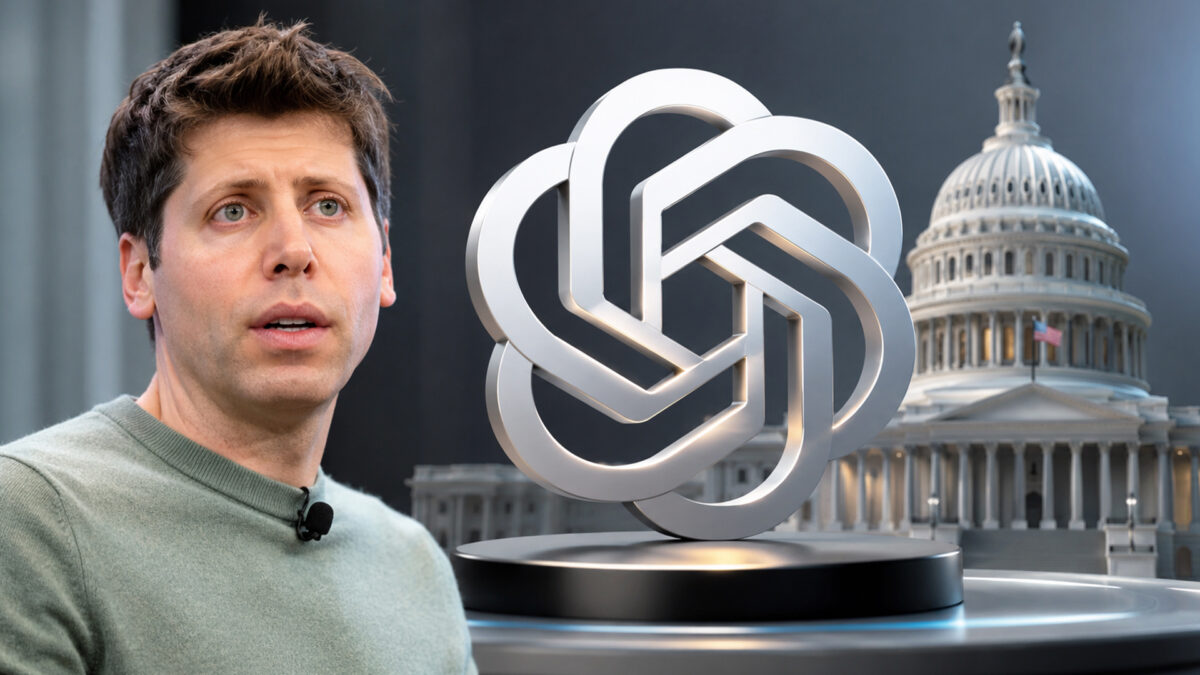
Elon Musk loses case against OpenAI

Elon Musk has lost his lawsuit against OpenAI after a US jury ruled in favour of the artificial intelligence company, bringing an end to the trial at this stage.

The jury found that Musk’s case could not proceed because it was filed beyond the permitted legal time limit. As a result, the court did not examine the broader claims raised in the lawsuit.

Musk had alleged that OpenAI moved away from its original non-profit mission and shifted towards a profit-driven model, arguing that this change went against its founding principles. He also claimed he was misled during the early development of the organisation.

OpenAI, led by CEO Sam Altman, argued that Musk was aware of the company’s direction over time and that the lawsuit was filed too late. The company also said its shift to a commercial structure was necessary to support the growing cost of AI development.

The verdict is a major win for OpenAI, which has become one of the leading players in the global artificial intelligence industry. The decision removes a key legal challenge as the company continues to expand its operations and infrastructure.

Musk, a co-founder of OpenAI who later parted ways with the company, has since criticised its direction and launched rival AI ventures.

With the verdict now delivered, OpenAI is expected to continue its expansion plans, while Musk is likely to explore further legal options, including an appeal.

Also Read: Reliance talks with CATL on battery parts

Categories
Corporate

Sensex falls 114 points, Nifty ends below 23,650

Indian stock markets ended a volatile session on Tuesday, with benchmark indices closing in the red amid mixed global cues, currency pressure, and cautious investor sentiment.

The Sensex slipped around 114 points to close near 75,201, while the Nifty 50 fell about 32 points to end below the 23,650 mark, according to market data. The session saw sharp intraday swings, with early stability giving way to selling pressure in key sectors.

Weakness in banking and select heavyweights dragged the indices lower, even as gains in select IT and auto stocks helped limit losses. Broader markets showed relatively mixed performance, with stock-specific action dominating trade.

Among the top gainers, Infosys, Tech Mahindra, Tata Motors, HCL Technologies and Eternal saw strong buying interest, supported by optimism in IT and selective auto demand.

On the other hand, Kotak Mahindra Bank, UltraTech Cement, Titan, and other financial and consumption-linked stocks were among the major laggards, weighing on overall sentiment.

Market participants said sentiment remained cautious due to global uncertainties, including fluctuating crude oil prices, geopolitical tensions, and continued pressure on the Indian rupee, which recently hit record lows against the US dollar. These factors kept investors on edge and limited strong directional momentum.

The market is currently in a consolidation phase, with traders reacting more to global triggers than domestic cues. As a result, sector rotation and stock-specific moves dominated the trading session rather than a broad-based rally or decline.

Despite the weakness in benchmarks, volatility indicators eased slightly, suggesting that extreme fear levels were not present. However, the lack of strong domestic triggers continues to keep markets range-bound.

Also Read: ANSR CEO says AI slows GCC hiring in India

Categories
Leaders

ANSR CEO says AI slows GCC hiring in India

Global capability centres (GCCs) in India are slowing hiring as artificial intelligence reshapes job roles and companies adopt a more cautious approach to expansion, according to ANSR CEO Lalit Ahuja.

India hosts more than half of the world’s GCCs, serving as a major hub for global firms in technology, finance and engineering due to its large skilled workforce and lower operating costs. However, that hiring momentum is now easing as companies reassess staffing needs.

Ahuja said firms are becoming more conservative in recruitment as AI reduces the need for certain roles and automates parts of traditional workflows. He noted that some companies have cut hiring plans by 30% to 50%, with earlier projections for centres employing over 5,000 people now being scaled down to around 2,000.

He added that the change is not driven only by cost concerns but also by uncertainty in global markets and the rapid adoption of AI tools, which are reshaping how work is distributed across teams. Many organisations are now adopting a “wait and test” approach, expanding more slowly rather than committing to large-scale hiring upfront.

Despite the slowdown in hiring, India continues to remain a key destination for global companies setting up capability centres. Industry estimates still project growth in the overall number of GCCs, but with a shift in focus from large headcount expansion to smaller, more agile teams.

The nature of work inside these centres is also changing. Instead of large volumes of routine tasks, companies are increasingly moving toward higher-value work supported by automation and AI-driven systems.

Ahuja said the long-term outlook remains positive for India, but the structure of employment is evolving. Future GCC growth, he noted, will likely depend less on scale alone and more on specialised skills, digital capabilities and AI integration across operations.

Also Read: Copilot key on Windows can now be remapped

Categories
Beyond

US clears India defence support deal

The United States has approved possible support service agreements for India’s Apache attack helicopters and M777A2 ultra-light howitzers, further strengthening defence cooperation between the two countries. The proposed deals, valued at more than $428 million, are aimed at improving operational readiness and ensuring that key military equipment continues to function efficiently.

Unlike conventional defence deals involving the purchase of new weapons or systems, the latest proposal focuses on maintaining and supporting equipment already being used by the Indian armed forces. The package includes engineering support, repair services, spare parts, logistics assistance, training programmes and technical support.

Apache helicopters are among India’s important combat assets and are used for a range of military operations, including surveillance and battlefield support. Similarly, M777A2 ultra-light howitzers play a key role in strengthening India’s artillery capabilities, especially in mountainous and difficult terrains due to their mobility and lighter design.

Defence experts say that modern military systems require continuous maintenance and technical support to remain effective. Regular servicing and timely availability of spare components help ensure that such systems are always ready when required. Long-term support agreements also reduce operational disruptions and improve efficiency.

The move reflects the strengthening defence relationship between India and the United States. Over the past few years, the two countries have expanded cooperation across several areas, including security, technology and military partnerships.

US officials have also described India as an important strategic partner in the Indo-Pacific region. The growing partnership is seen as part of broader efforts to enhance regional security and stability.

The latest approval is expected to further deepen military cooperation between the two nations. Defence analysts believe such agreements are important because they focus not only on acquiring equipment but also on ensuring long-term capability and preparedness.

Also Read: US closes Adani fraud case, SEC settles for $18 mn