Categories
Corporate

Adani Ports profit rises 10% on overseas growth

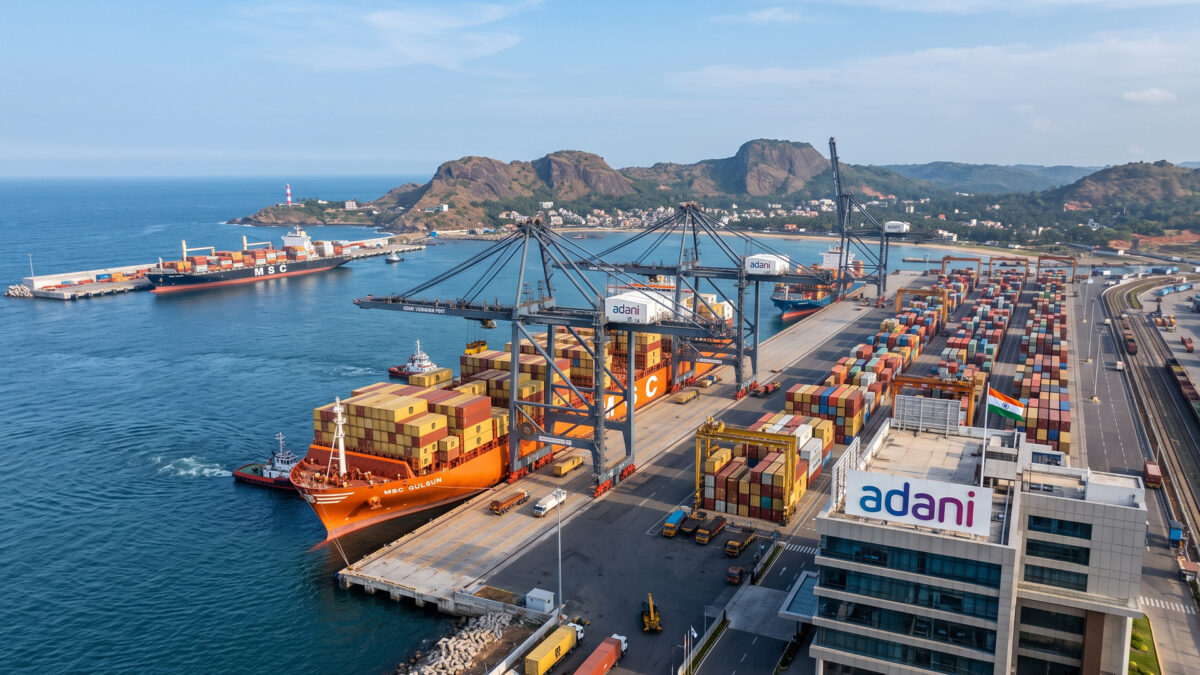
Adani Ports and Special Economic Zone (APSEZ) has started the financial year on a strong note, with its overseas operations emerging as a major driver of growth in the June quarter. The company reported a 10% year-on-year rise in consolidated net profit for the first quarter of FY27, while revenue and EBITDA increased by 19% each.

APSEZ reported a consolidated net profit of ₹3,650 crore for the quarter ended June 30, 2026, compared with ₹3,311 crore in the same period last year. Revenue rose to ₹10,821 crore from ₹9,126 crore, while EBITDA, or earnings before interest, taxes, depreciation and amortisation, increased to ₹6,541 crore from ₹5,495 crore.

The numbers show that APSEZ is increasingly benefiting from its transformation from a largely India-focused port operator into an integrated transport and logistics company with a growing international presence.

The strongest growth came from its international ports business. Revenue from international ports jumped 80% year-on-year to ₹1,747 crore, while EBITDA more than tripled to ₹730 crore, marking a 256% increase. The performance was led by the company’s operations in Australia and Colombo.

Australia played an important role in the increase after NQXT Australia was consolidated into APSEZ from the fourth quarter of FY26. International port volumes rose sharply to 22.8 million tonnes in the June quarter from 7.7 million tonnes a year earlier. Australia contributed 10 million tonnes, Colombo 6.9 million tonnes, Tanzania 3.7 million tonnes and Israel 2.2 million tonnes.

The stronger contribution from international operations also improved profitability. The EBITDA margin for international ports increased to 41.8% from 21.1% a year earlier. Colombo, in particular, recorded a sharp improvement, with revenue rising five times year-on-year as the terminal continued to scale up.

The domestic ports business, however, remains the backbone of APSEZ’s earnings. Revenue from domestic ports rose 12% to ₹6,964 crore, while EBITDA increased 11% to ₹5,152 crore. Cargo volumes handled by domestic ports increased to 115.3 million tonnes from 112.9 million tonnes in the corresponding quarter last year.

The company attributed the domestic performance to higher cargo volumes, a better product mix and improved realisations. Its domestic ports EBITDA margin stood at 74%, highlighting the strong profitability of the core business. APSEZ’s all-India cargo market share was 27.6%, while its container cargo market share stood at 44.8%.

APSEZ is also expanding its capacity to prepare for future cargo growth. Its domestic port capacity stood at 653 million tonnes as of June 30, and the company plans to increase this to 1,000 million tonnes by December 2030. The expansion is expected to support its longer-term growth strategy and strengthen its position in India’s ports and logistics sector.

Another part of the business that performed well was marine services. Revenue from the marine segment increased 67% year-on-year to ₹901 crore, while EBITDA rose 36% to ₹404 crore. The improvement was supported by the addition of vessels, with the fleet increasing to 135 vessels from 118 a year earlier.

APSEZ is also trying to build a wider international marine business. Recent initiatives include a partnership with Oceaneering International for deepwater engineering and offshore capabilities in Europe and a 10-year marine services contract connected with Argentina’s first LNG exports to India.

The logistics business was comparatively steady during the quarter. Revenue was broadly unchanged at ₹1,173 crore, while EBITDA increased 3% to ₹219 crore. The company said rail volumes were affected by the continuing Middle East crisis, although its asset-light trucking business continued to grow. Trucking revenue increased 26% year-on-year, while International Freight Network revenue rose 28% sequentially.

The strong quarterly performance comes as APSEZ continues to diversify beyond traditional port operations. The company now combines port handling with rail transport, logistics parks, warehousing, trucking and marine services. Its integrated model is designed to provide customers with a broader “shore-to-door” logistics network.

APSEZ also maintained its FY27 guidance. The company is targeting revenue of ₹43,000-45,000 crore and EBITDA of ₹25,000-26,000 crore for the full financial year. Its net debt-to-EBITDA ratio stood at 1.9 times at the end of June, below its stated ceiling of 2.5 times.

The company’s balance sheet also received a boost from ratings agencies. S&P Global Ratings upgraded APSEZ’s long-term issuer credit rating to BBB from BBB-, with a stable outlook. CARE Ratings and ICRA also reaffirmed the company’s domestic AAA ratings.

Despite the healthy earnings, APSEZ shares came under pressure after the results. The stock fell around 3% on the BSE following the announcement, even as analysts pointed to the company’s strong operating performance and international expansion.

For APSEZ, the June quarter offers an encouraging start to FY27. Domestic ports continue to provide a stable earnings base, while international ports, marine services and logistics are gradually becoming meaningful sources of growth. Adani Ports challenge now will be to maintain that momentum while managing its expansion, debt and exposure to global trade disruptions.

With overseas assets gaining scale and domestic capacity continuing to expand, APSEZ is positioning itself as more than a port operator. Its latest results suggest that the company’s broader integrated transport and logistics strategy is beginning to translate into stronger and more diversified earnings.
Categories
Uncategorized

Adani Ports explores landmark stake in UK’s ABP

Adani Ports and Special Economic Zone (APSEZ), India’s largest private port operator, is exploring a controlling stake in Associated British Ports (ABP), the United Kingdom’s largest port operator, in what could become one of the biggest overseas acquisitions by an Indian infrastructure company. Although discussions are still at an early stage and no formal agreement has been reached, the proposed deal reflects Adani Ports’ growing ambition to build a stronger global presence in ports, logistics and maritime infrastructure.

According to people familiar with the matter, APSEZ has initiated preliminary discussions with stakeholders connected to ABP to evaluate the possibility of acquiring a majority stake. The talks are currently exploratory, and there is no certainty that they will result in a transaction. However, if the deal goes through, it would mark Adani Ports’ largest international acquisition to date and its first major investment in the United Kingdom.

Associated British Ports is one of Britain’s most strategically significant infrastructure companies. The operator manages 21 commercial ports across England, Scotland and Wales and handles nearly a quarter of the UK’s seaborne trade. Its extensive network includes major ports such as Immingham, Britain’s largest port by cargo volume, Southampton, Hull, Cardiff, Newport and Teesport. These ports play a vital role in supporting industries ranging from manufacturing and automotive exports to agriculture, energy and consumer goods.

Apart from handling millions of tonnes of cargo every year, ABP has become a key player in Britain’s renewable energy sector. More than half of the UK’s offshore wind projects rely on ABP’s ports for construction, maintenance and logistics support. This diversified business model has made the company an attractive long-term infrastructure asset for global investors.

The ownership structure of ABP has also created an opportunity for potential buyers. The company is currently owned by a consortium of international institutional investors. Canadian pension funds, including the Canada Pension Plan Investment Board (CPPIB) and Ontario Municipal Employees Retirement System (OMERS), together hold a majority stake. Other shareholders include Singapore’s sovereign wealth fund GIC and Kuwait’s Wren House Infrastructure. Reports suggest that some investors are considering monetising their holdings, opening the door for a possible change in ownership.

While the financial details are yet to emerge, industry estimates value Associated British Ports at over £10 billion, making it one of Europe’s largest privately owned port operators. Any acquisition would therefore represent a significant investment and could become one of the largest cross-border infrastructure deals involving an Indian company.

For Adani Ports, acquiring ABP would be about much more than adding another overseas asset. It would provide the company with an operational foothold in one of Europe’s most developed logistics markets while expanding access to major international shipping routes. A presence in the UK would also strengthen APSEZ’s ability to serve global customers across Asia, Europe, the Middle East and Africa through an integrated port and logistics network.

The proposed acquisition aligns with Adani Ports’ long-term strategy of becoming one of the world’s leading integrated transport and logistics companies. Over the past few years, the company has steadily expanded beyond India through investments in ports and terminals overseas. It already has operations in countries including Israel, Sri Lanka, Australia and Tanzania, while continuing to strengthen its domestic network of ports and logistics parks.

The company’s overseas expansion has gathered pace as international trade patterns continue to evolve. By investing in strategic maritime assets across different regions, APSEZ aims to reduce dependence on any single market while creating a diversified revenue base. Industry experts believe that adding a major European port operator like ABP would significantly enhance the company’s global competitiveness.

Analysts also point out that ABP’s business complements APSEZ’s existing operations. Besides cargo handling, the British operator generates stable revenue through marine services, pilotage, property development and logistics support. Such diversified earnings could provide greater resilience during fluctuations in global trade and shipping activity.

The timing of the reported acquisition talks also coincides with Adani Ports’ strong financial performance. The company recently reported robust quarterly results, driven by higher cargo volumes, improved operational efficiency and growing contributions from its international assets. Healthy cash flows and a strong balance sheet have strengthened APSEZ’s ability to pursue large global acquisitions while continuing investments in India.

The proposed deal, however, is expected to face detailed scrutiny if negotiations advance. Acquisitions involving critical infrastructure assets in the United Kingdom generally require multiple regulatory approvals, including reviews related to national security, competition and foreign investment. Given ABP’s importance to Britain’s economy and supply chains, any ownership change is likely to undergo extensive examination before receiving clearance.

Market experts caution that infrastructure transactions of this scale often take several months to complete. Due diligence, financial negotiations, regulatory assessments and shareholder approvals could all influence the timeline. There is also the possibility that discussions may not culminate in a final agreement.

Neither Adani Ports nor Associated British Ports has officially commented on the reported negotiations. People familiar with the discussions have maintained that talks remain preliminary, and several options are still under evaluation.

Even so, the development highlights APSEZ’s determination to transform itself into a truly global ports and logistics company. From managing India’s busiest private ports to expanding across international markets, the company has consistently pursued opportunities that strengthen its position in global maritime trade.

If the acquisition is eventually completed, it would not only expand Adani Ports’ international portfolio but also mark one of the most significant overseas infrastructure investments by an Indian company in recent years. It would further cement APSEZ’s position among the world’s leading private port operators and reinforce its vision of building an integrated global maritime and logistics network connecting key trade corridors across continents.

Categories
1 Minute-Read

Kerala moves SEBI over Vizhinjam port stake sale

The Kerala government has approached the Securities and Exchange Board of India (SEBI) over the proposed transfer of Adani Ports and Special Economic Zone‘s stake in the Vizhinjam International Seaport project.

Chief Minister Pinarayi Vijayan has sought regulatory clarity on whether the transaction complies with the concession agreement signed with the state. The government maintains that the move is aimed at safeguarding Kerala’s interests and ensuring contractual obligations are upheld.

While the issue has sparked political debate, industry observers believe the dispute is unlikely to significantly impact the port’s ongoing operations or future expansion plans.

Categories
Corporate

Adani sells 49% Vizhinjam port stake to MSC

Kerala’s Vizhinjam International Seaport is set to get a major global partner, with Adani Ports and Special Economic Zone (APSEZ) agreeing to sell a 49% stake in the project to Terminal Investment Limited (TiL), the port-operating arm of MSC Mediterranean Shipping Company. Valued at around $1.4 billion (about ₹12,000 crore), the deal is expected to accelerate the port’s growth as a global transshipment hub while bringing one of the world’s largest shipping companies into the project.

Adani Ports will continue to hold a 51% stake, retaining management control of the strategically important deep-water port. The partnership is expected to strengthen Vizhinjam’s role in global shipping while attracting fresh investment for its next phase of development.

Located close to one of the world’s busiest east-west shipping routes, Vizhinjam is India’s first deep-water transshipment port. Its natural depth allows some of the world’s largest container vessels to dock without extensive dredging, making it a strategically important asset for the country’s maritime sector.

The collaboration combines Adani Ports’ infrastructure expertise with MSC’s vast global shipping network. The companies expect the partnership to increase container traffic, improve operational efficiency and attract more international shipping services to the Kerala port.

The fresh investment will support the expansion of terminals, cargo-handling facilities and supporting infrastructure. Industry experts believe this will help India reduce its dependence on foreign ports such as Colombo, Singapore and Dubai for transshipment services while strengthening the country’s logistics network.

The deal is also expected to benefit Kerala by creating jobs, boosting trade and increasing economic activity around the port. As cargo volumes grow, Vizhinjam is likely to emerge as a key gateway for international maritime trade in the region.

The transaction will take effect after receiving the necessary regulatory approvals. Industry observers believe the partnership will not only strengthen Vizhinjam’s position on global shipping routes but also enhance India’s maritime infrastructure, helping the country handle a larger share of international container traffic through its own ports.

Also Read: Rupee falls 7 paise to 94.58 against dollar

Categories
Corporate

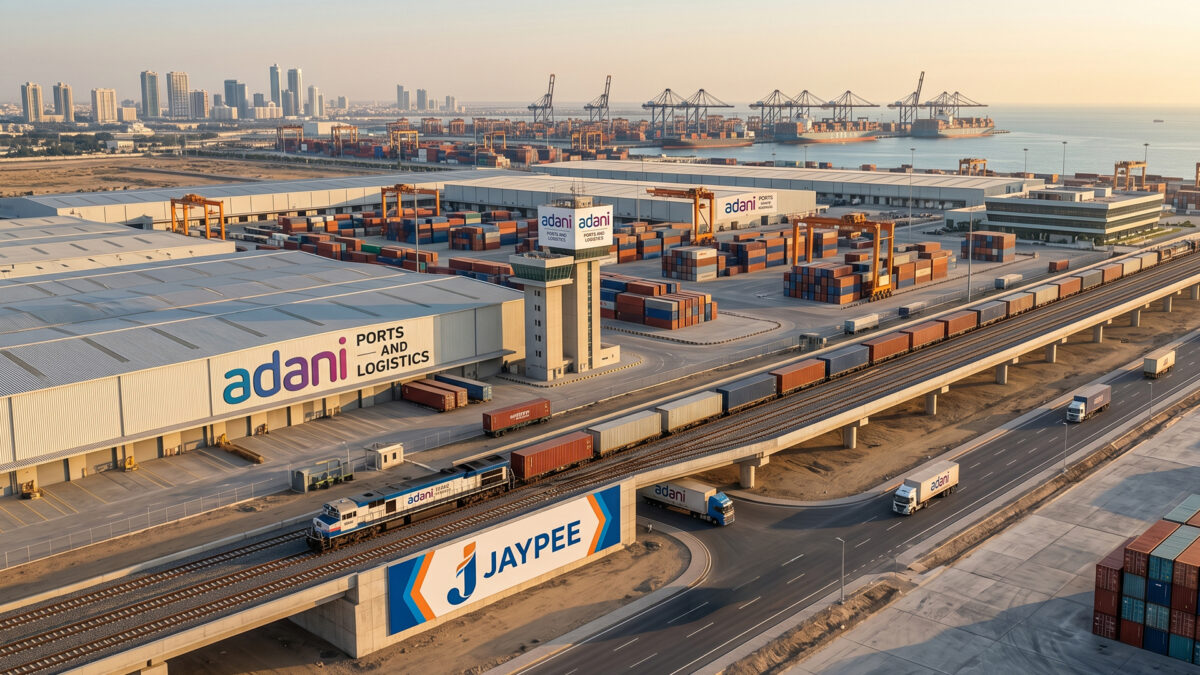
Adani Ports to buy Jaypee fertilizers for ₹1,500 cr

Adani Ports and SEZ is set to acquire Jaypee Fertilizers and Industries for about ₹1,500 crore through the insolvency resolution process, according to reports. The acquisition is part of ongoing efforts to resolve stressed assets under India’s bankruptcy framework.

The deal involves taking over the fertilizer assets of the Jaypee Group, which have been under insolvency proceedings due to financial stress. The transaction has been approved through the formal bidding and resolution mechanism under the Insolvency and Bankruptcy Code.

The acquisition is expected to strengthen Adani Ports’ diversification into industrial and logistics-linked businesses beyond its core port operations. The group has been steadily expanding its presence across infrastructure, energy, and manufacturing sectors through strategic acquisitions.

Jaypee Fertilizers operates facilities that are important for chemical and fertilizer production, which are closely linked to agricultural supply chains. The acquisition could help improve operational efficiency and bring in stronger financial backing for the assets.

Industry observers say the deal reflects the continued consolidation of stressed assets in India, with large conglomerates stepping in to acquire and restructure struggling companies. The insolvency framework has enabled faster resolution of such assets, helping revive operations and protect value.

For Adani Ports, the move is seen as part of a broader strategy to build an integrated infrastructure and industrial ecosystem. The group has been actively acquiring assets that complement its logistics, energy, and manufacturing ambitions.

Also Read: Dalmia Bharat buys JAL cement assets for ₹2,850 cr

Categories
1 Minute-Read

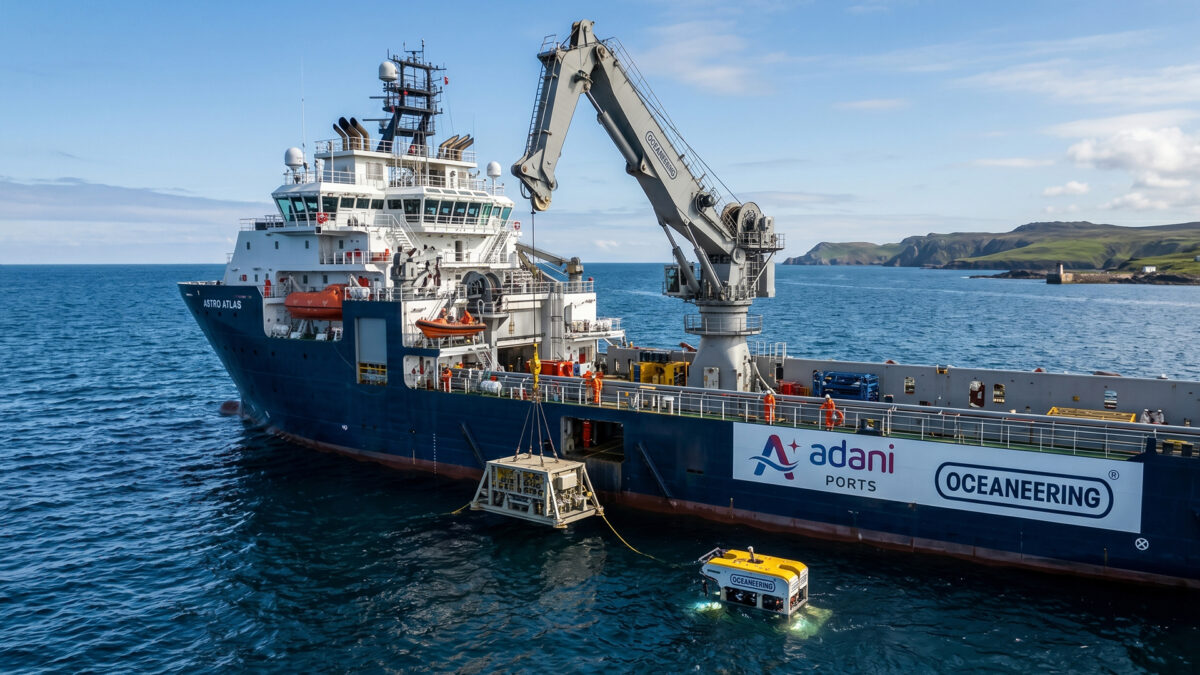
Adani Ports partners Oceaneering for Europe expansion

Adani Ports has partnered with US-based Oceaneering International to expand its offshore and subsea operations in Europe. The collaboration will be led through Adani’s marine arm, Astro Offshore, as the company strengthens its global presence beyond traditional port operations.

As part of the expansion, Adani Ports has added its first ultra-deepwater vessel, which will support offshore energy and underwater infrastructure projects. The company plans major investments in its marine business over the coming years.

The partnership is expected to help Adani Ports strengthen its position in the global offshore services market and support its long-term plans to build a larger international marine and logistics network.

Categories
Corporate

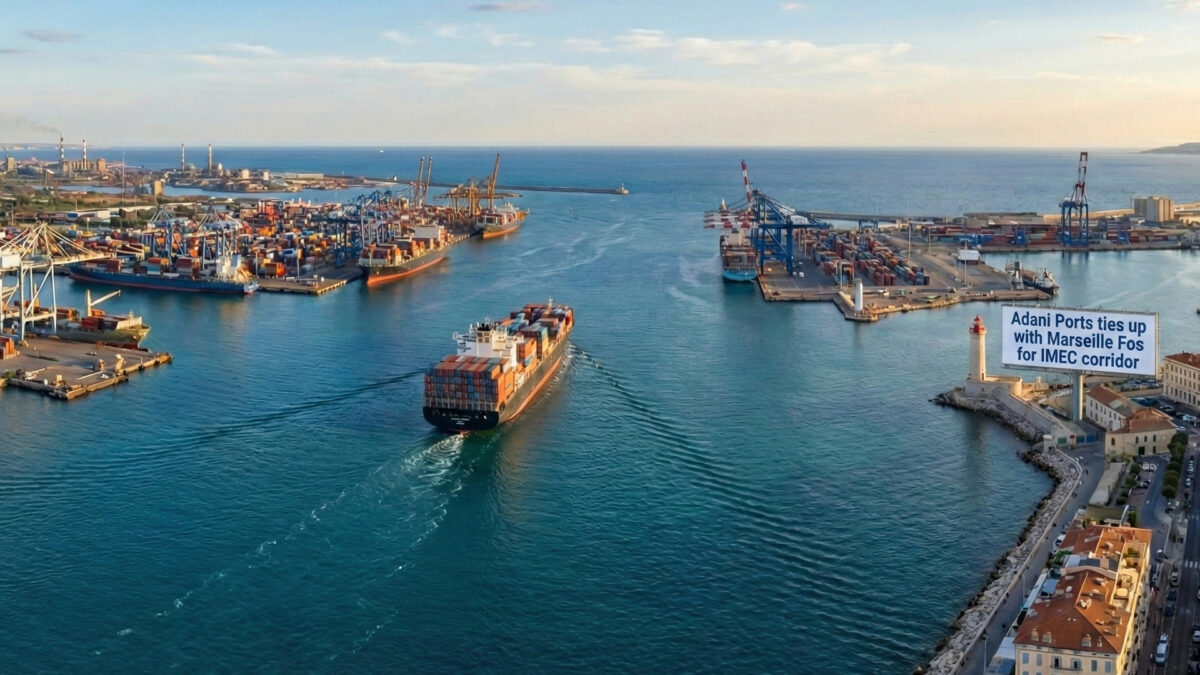
Adani Ports ties up with Marseille Fos for IMEC corridor

Adani Ports and Special Economic Zone Ltd has signed an MoU with Port of Marseille Fos to strengthen cargo connectivity between India and Europe and support the India–Middle East–Europe Economic Corridor (IMEC).

The partnership links India’s largest private port operator with France’s biggest maritime gateway and is aimed at creating faster, more reliable supply chains for bilateral and global trade. By improving port-to-port coordination, the two sides plan to reduce transit time and enhance cargo movement for Indian exporters entering European markets.

The agreement covers logistics integration, digital port solutions, knowledge exchange and joint efforts in sustainable shipping. Both ports will also explore projects in decarbonisation, alternative fuels and energy-efficient operations as the global maritime sector moves towards greener standards.

For Adani Ports, the pact strengthens its international network and positions it as a key player in the emerging IMEC trade route, which will connect India to Europe through the Middle East using a mix of sea, rail and logistics infrastructure. The corridor is expected to diversify supply chains and offer an alternative to traditional trade routes.

Marseille Fos, a major Mediterranean hub, provides direct access to southern and central Europe, making it a strategic entry point for Indian cargo. The collaboration is also seen as part of the broader India–France push to deepen cooperation in infrastructure, clean energy and resilient trade systems.

Also Read: Adani Group unveils $100 bn plan for AI data centres

Categories
Corporate

Adani Ports completes Australia NQXT deal

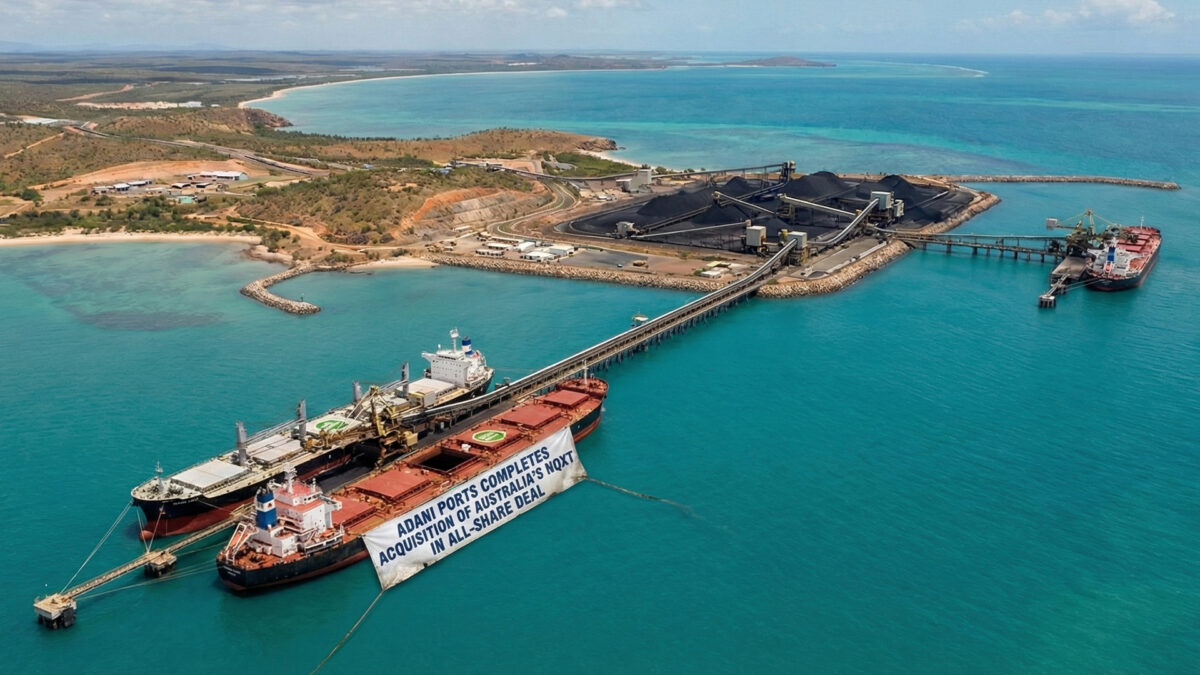
Adani Ports and Special Economic Zone Ltd (APSEZ) has completed the acquisition of North Queensland Export Terminal (NQXT) in Australia, strengthening its global ports portfolio and expanding its presence in the Asia-Pacific region.

The deal was executed as an all-share transaction, under which APSEZ acquired 100 per cent ownership of Abbot Point Port Holdings, the company that owns and operates NQXT. In return, APSEZ issued over 14.38 crore equity shares to Carmichael Rail and Port Singapore Holdings. The acquisition received all required regulatory and shareholder approvals in India and Australia.

NQXT is a deep-water, multi-user export terminal located at Abbot Point in Queensland. It currently has a handling capacity of 50 million tonnes per year and primarily supports bulk exports. A large part of its volumes is secured under long-term take-or-pay contracts, ensuring steady and predictable revenue. For FY25, the terminal reported strong operating performance with healthy earnings.

With this acquisition, APSEZ gains a strategically located asset close to key Asian trade routes. The company expects NQXT to play an important role in its long-term growth plans, including its goal of handling one billion tonnes of cargo annually by 2030. APSEZ also sees scope to expand the terminal’s capacity over time, supported by contract renewals and operational improvements.

Following the completion of the transaction, APSEZ has upgraded its financial guidance. The company now expects higher cargo volumes and improved earnings for the coming financial year, reflecting the addition of NQXT to its portfolio. The Australian terminal also brings foreign currency earnings, adding stability and diversification to APSEZ’s revenue base.

Company management described the acquisition as a key milestone in APSEZ’s international expansion strategy. They highlighted NQXT’s strong fundamentals, long asset life and potential for future growth, along with its location in a stable and developed market.

The NQXT deal adds to APSEZ’s growing list of overseas assets, which includes ports and terminals in Israel, Sri Lanka and Africa. With this move, Adani Ports continues to position itself as a global port and logistics player, focused on scale, long-term contracts and steady cash flows.

Also Read: Cholamandalam shares up 8% after rejecting claims

Categories
Corporate

Adani’s Dighi port to export 2 lakh cars annually with Motherson

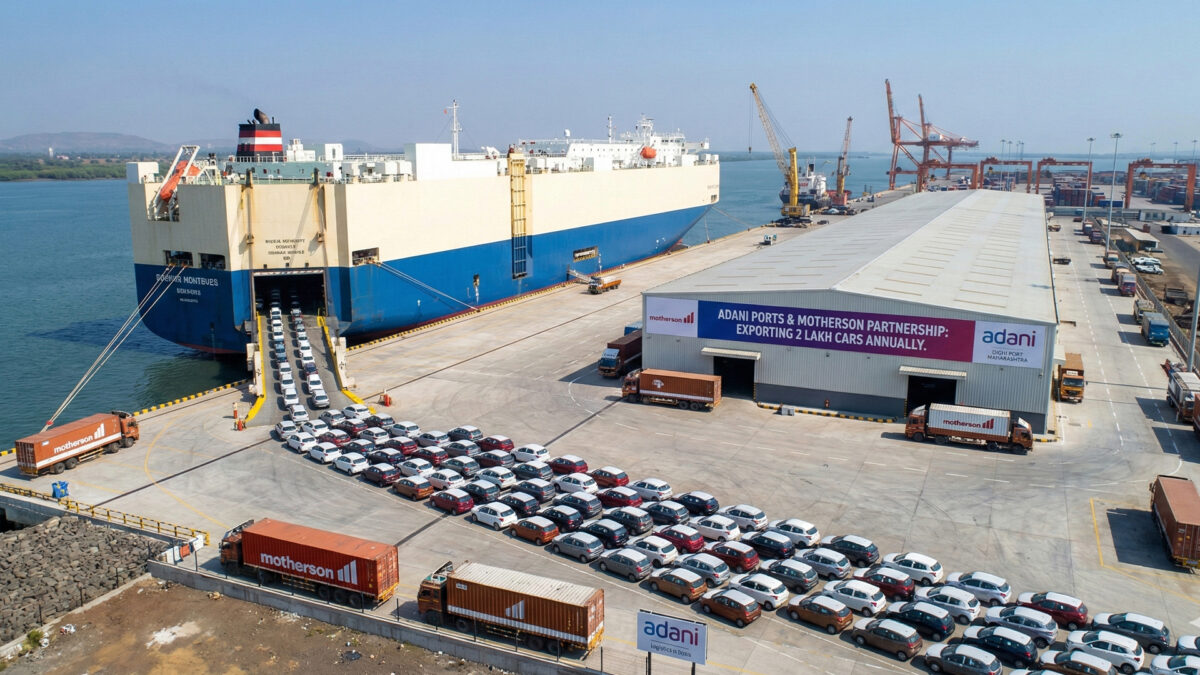
Dighi Port, part of Adani Ports and Special Economic Zone Limited (APSEZ), is set to handle 200,000 cars annually following a strategic partnership with Motherson. The collaboration, through Motherson’s joint venture Samvardhana Motherson Hamakyorex Engineered Logistics Limited (SAMRX), will establish a dedicated RoRo (Roll-on/Roll-off) terminal at the port in Maharashtra.

The new facility will serve as a key automobile exports hub for the Mumbai-Pune auto belt, supporting India’s “Make in India” initiative by enabling smooth import and export of vehicles to global markets.

Mr. Ashwani Gupta, CEO of APSEZ, said the partnership aims to redefine automotive logistics in India. “Combining APSEZ’s infrastructure with Motherson’s expertise creates a seamless and resilient network for vehicle movement, accelerating trade and enhancing supply chain efficiency,” he added.

Mr. Laksh Vaaman Sehgal, Vice Chairman of Motherson Group, emphasized that the terminal will reduce logistics costs for OEMs while strengthening India’s automotive supply chain.

The RoRo terminal will feature end-to-end vehicle logistics, including single-window operations, AI-driven yard optimization for real-time vehicle tracking, and fast OEM evacuation via NH-66. The port will also support electric vehicle exports with EV-ready infrastructure and provide integrated dashboards for live tracking of cargo volumes.

Dighi Port, strategically located on India’s west coast, is already equipped to handle various cargo types with excellent road connectivity and direct berthing facilities. Its expansion into RoRo operations aligns with APSEZ’s vision of building future-ready logistics hubs.

Also Read: Reliance starts Jio IPO process targeting record valuation

Categories
Corporate

Adani Ports becomes first Indian transport firm to join TNFD

Adani Ports and Special Economic Zone Ltd (APSEZ) has joined the Taskforce on Nature-related Financial Disclosures (TNFD) as an adopter, committing to begin nature-related risk and impact disclosures from FY26.

With this move, APSEZ, which is India’s largest integrated transport utility, has become the first Indian integrated transport utility to embrace the TNFD framework.

TNFD is an initiative backed by the United Nations Environment Programme Finance Initiative (UNEP FI), UNDP, WWF and Global Canopy. It is aimed at helping companies identify, manage and disclose nature-related dependencies, risks and opportunities.

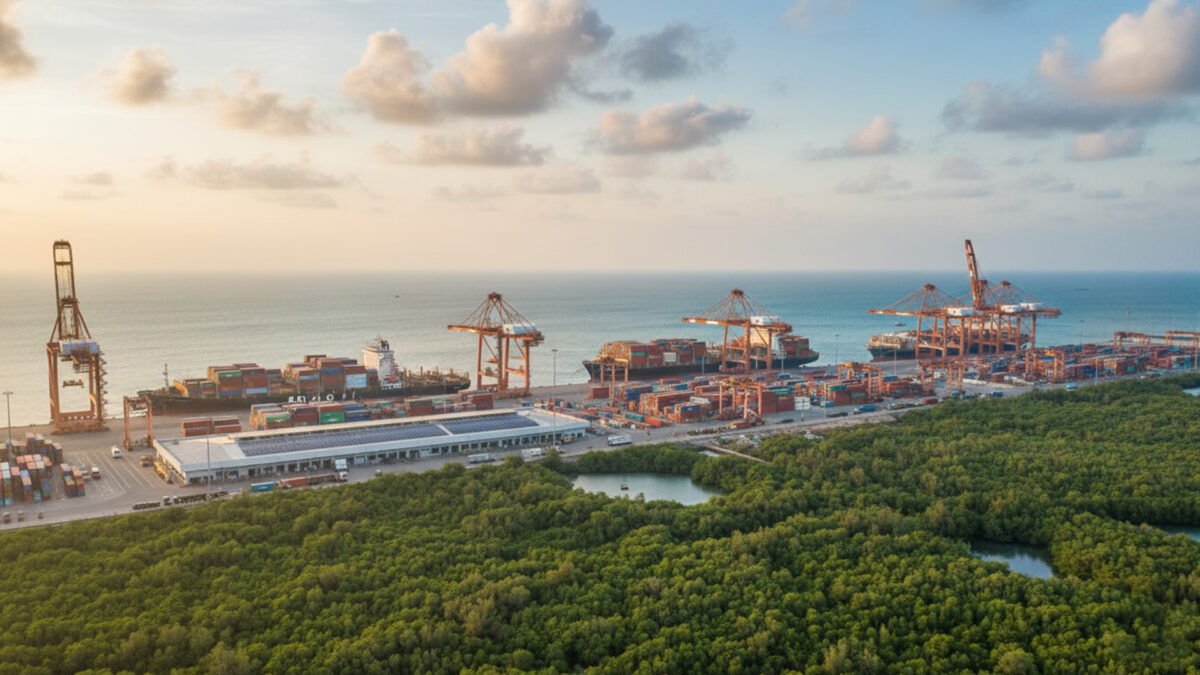
The company said it will align its future corporate reporting with TNFD recommendations as part of its broader ESG strategy. The initiative builds on APSEZ’s existing environmental practices, including climate-risk assessments and large-scale mangrove restoration. The firm has afforested over 4,200 hectares and is conserving an additional 3,000 hectares, making it India’s largest private-sector contributor to mangrove ecosystem restoration.

“As we advance towards COP30, we firmly believe that responsible business practices drive long-term success. Our adoption of the TNFD framework reflects our commitment to integrate nature into corporate decision-making and to enhance our contribution to biodiversity conservation,” said Ashwani Gupta, Whole-Time Director & CEO of APSEZ.

APSEZ joins a small global league of port operators prioritising biodiversity and marine ecosystem protection. The company said adopting the TNFD framework would strengthen its position as a sustainability leader in maritime logistics.

APSEZ, part of the Adani Group, operates 15 ports and terminals across India, handling about 28% of the country’s total port volumes. It plans to expand its cargo handling capacity from the current 633 million tonnes per annum to 1 billion tonnes by 2030.

According to TNFD’s official announcement, APSEZ is among the latest adopters committing to science-based, transparent nature-related reporting.

Also Read: India supports Bhutan’s Gelephu City, provides ₹4,000 cr for hydropower