Categories
1 Minute-Read

Reliance silent after Trump’s $300bn refinery claim

Donald Trump has announced a proposed $300-billion oil refinery project in Texas, saying India’s Reliance Industries would support the investment. The refinery is planned at the Port of Brownsville and would be built by America First Refining. Trump described it as a major energy project that could boost US oil refining capacity.

However, Reliance has remained silent about the announcement and has not confirmed any involvement in the project. The company has not responded to media queries, creating uncertainty about the deal. Analysts say the lack of official confirmation has raised questions about the scale and details of the proposed investment.


Categories
Corporate

Reliance backs first new US oil refinery in 50 years

US President Donald Trump has announced plans to build a new oil refinery in Texas with investment support from Reliance Industries. The refinery, planned at the Port of Brownsville, could be the first new oil refinery built in the United States in nearly 50 years.

The project is expected to have a long-term economic impact of about $300 billion. It will be developed by a company called America First Refining, with financial backing from Reliance, India’s largest private sector company.

According to Trump, the refinery will strengthen the country’s energy sector and increase domestic fuel production. He also thanked India and Reliance for their participation in the project, describing it as a major step in boosting energy cooperation between the two countries.

The facility will mainly process US shale oil and is expected to increase the country’s refining capacity. Once operational, it could help meet domestic fuel demand and also support exports.

Officials say the project could create thousands of jobs during construction and operation while also bringing economic growth to South Texas.

The announcement comes at a time when global energy markets are facing uncertainty due to geopolitical tensions and supply concerns. Expanding refining capacity is seen as an important step toward strengthening energy security.

If completed, the refinery would mark a major development for the US energy industry and highlight growing business ties between American companies and Indian firms such as Reliance Industries.

Also Read: Reliance steps up LPG output to support domestic supply

Categories
Corporate

OpenAI wins Pentagon deal as Donald Trump clashes with Anthropic

OpenAI has taken a big step into government work by signing a deal with the US Department of Defense, bringing its artificial intelligence tools closer to national defence applications. The move comes just days after President Donald Trump publicly criticised Anthropic, a rival AI company founded by former OpenAI employees, highlighting the growing tensions in the AI industry.

The agreement with the Pentagon will allow OpenAI to provide advanced AI technology and expertise for various defence projects. While the exact financial terms are not public, sources say the deal is broad in scope and emphasizes safe, responsible use of AI in government operations. It’s one of OpenAI’s largest collaborations with the US government to date.

CEO Sam Altman has been meeting with defence officials over the past months, pushing for a model where AI development and government oversight go hand in hand. “We need collaboration to make sure AI is used safely and ethically,” Altman has said, reflecting his vision of responsible innovation. This partnership aims to put those principles into practice by embedding OpenAI’s technology in programmes with strict ethical and safety standards.

The announcement comes amid a public clash between Trump and Anthropic. Trump criticised Anthropic’s leadership and suggested it was slowing down AI progress, stirring debate about competition, safety, and the government’s role in shaping the industry. OpenAI’s Pentagon deal, by contrast, signals a move toward cooperation with authorities rather than confrontation.

Also Read: Block lays off 4,000 employees due to AI shift


Categories
Beyond

Supreme Court blocks Trump’s global tariffs

The U.S. Supreme Court has struck down the bulk of former President Donald Trump’s global tariffs, ruling that he overstepped his authority by imposing wide-ranging import taxes without Congress’s consent. The 6–3 decision, announced on February 20, 2026, marks a significant setback for Trump-era trade policies that affected goods from countries across the globe.

The dispute centered on the International Emergency Economic Powers Act (IEEPA), a law meant to give the president authority in national emergencies. The court found that using it to levy broad tariffs on imports from multiple countries went beyond the law’s intent, since the US Constitution grants Congress the power to impose taxes and tariffs.

Trump’s “reciprocal tariffs” had targeted goods from major trading partners, including China, Mexico, Canada, and India, aiming to protect U.S. industries and reduce trade deficits. While the administration viewed them as essential tools for negotiating fair trade, critics challenged them as unconstitutional and disruptive to businesses and global markets.

Chief Justice John Roberts, writing for the majority, emphasized that significant economic decisions require clear congressional authorization. The court’s ruling leaves sector-specific tariffs under other trade laws, such as duties on steel and aluminum for national security, intact. Justices Thomas, Alito, and Kavanaugh dissented, believing the tariffs were within presidential authority.

The decision has major financial implications. Billions of dollars collected under the invalidated tariffs could be eligible for refunds, though the Supreme Court left details to lower courts. Businesses and exporters now face a clearer legal framework for US trade, while the White House may explore other statutory avenues to enforce parts of its trade agenda.

Also Read: OpenAI–Tata partner for 100mw AI data centre in India

Categories
Beyond

Trump’s first Japanese investments under $550 bn trade pact

US President Donald Trump has unveiled the first set of Japanese investments in the United States under the recently signed bilateral trade pact, marking the operational rollout of Tokyo’s massive $550-billion financial commitment to the American economy.

The opening tranche, estimated at about $36 billion, is centred on energy, critical minerals and high-technology manufacturing—sectors that both countries consider crucial for economic security and resilient supply chains. The projects are expected to generate employment, strengthen industrial capacity and reduce dependence on imports in strategically important areas.

The largest investment is a $33-billion natural-gas-based power project in Ohio. The plant, to be developed by SB Energy, a unit backed by SoftBank Group, is designed to produce around 9.2 gigawatts of electricity. It is expected to support the fast-growing power demand from data centres and artificial-intelligence infrastructure in the United States.

Another key project is a $2.1-billion deep-water oil export terminal off the coast of Texas, which will expand the country’s energy export capability. In addition, a $600-million synthetic industrial diamond manufacturing facility will be set up in Georgia. The unit will produce critical materials used in semiconductors and advanced electronics, helping to cut reliance on overseas supplies.

Under the broader agreement, Washington has agreed to reduce tariffs on Japanese imports, while Japan will fund industrial and infrastructure projects through a combination of equity investments, loans and financial guarantees. The initiative is also aimed at giving Japanese companies greater access to the US market while reinforcing the strategic alliance between the two nations.

Japanese Prime Minister Sanae Takaichi said the investments would deepen economic cooperation and enhance long-term security for both countries. More projects are expected to be announced in phases as the two sides move to implement the full investment framework.

Also Read: Sarvam Kaze, India’s multilingual answer to Meta ray-ban

Categories
Beyond

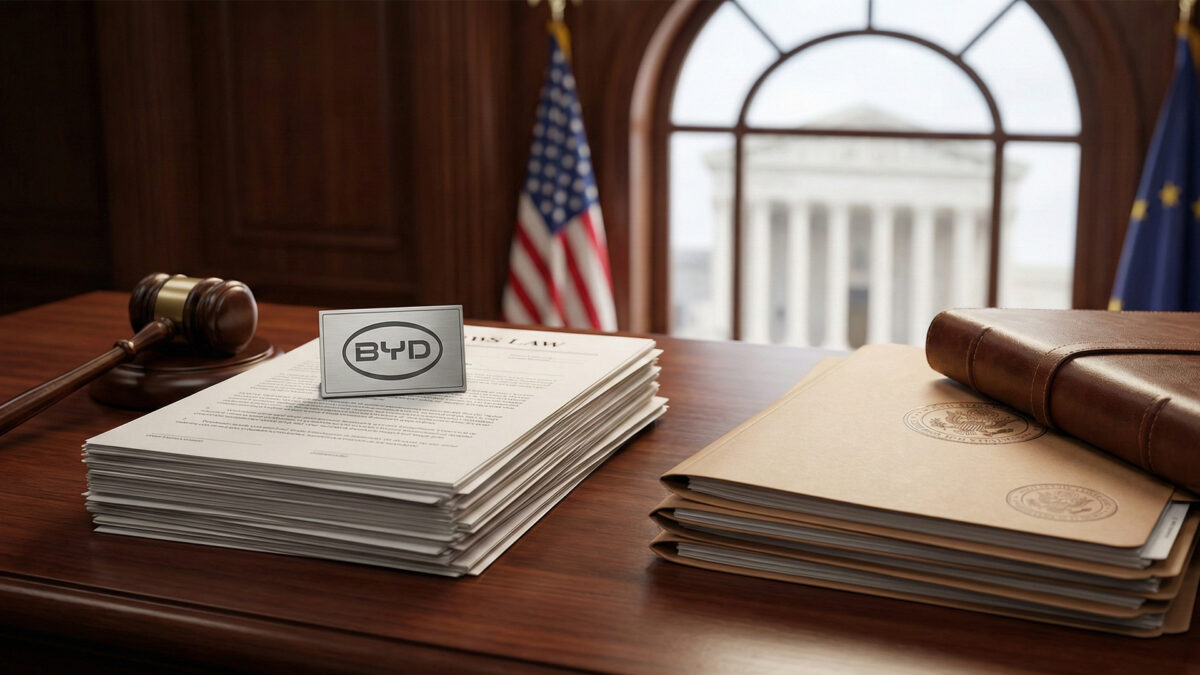
China’s BYD challenges Trump’s tariffs at US court

Chinese electric vehicle and clean-energy major BYD has taken a significant legal step in the United States, filing a lawsuit against the federal government to challenge tariffs imposed by President Donald Trump.

The case, filed in the US Court of International Trade in New York, seeks refunds for import duties paid since April and questions the legal basis used to impose the levies. BYD’s US subsidiaries argue that the tariffs were introduced under the International Emergency Economic Powers Act (IEEPA), a law meant for national security emergencies, not for imposing broad trade barriers.

The emergency law does not explicitly allow the government to levy import tariffs. BYD is asking the court to order the repayment of duties already paid and to safeguard its right to future refunds if the tariffs are ruled invalid.

While BYD does not sell passenger cars in the US, it has a growing footprint in the country through its electric buses, trucks, batteries, energy storage systems and solar products. Its manufacturing facility in Lancaster, California, employs around 750 workers, making the company an active contributor to local jobs and clean-energy infrastructure.

The legal move places BYD among a rising number of global companies challenging Trump’s trade policies. The dispute also comes as the US Supreme Court considers a separate case that could ultimately decide whether emergency powers can be used to justify such tariffs.

For Washington, the case revives a sensitive debate around trade protectionism and executive authority. For BYD, it is both a financial and strategic decision, aimed at recovering costs while seeking clarity on the rules governing global trade.

Also Read: Balaji Krishnamurthy named Uber CFO

Categories
Corporate

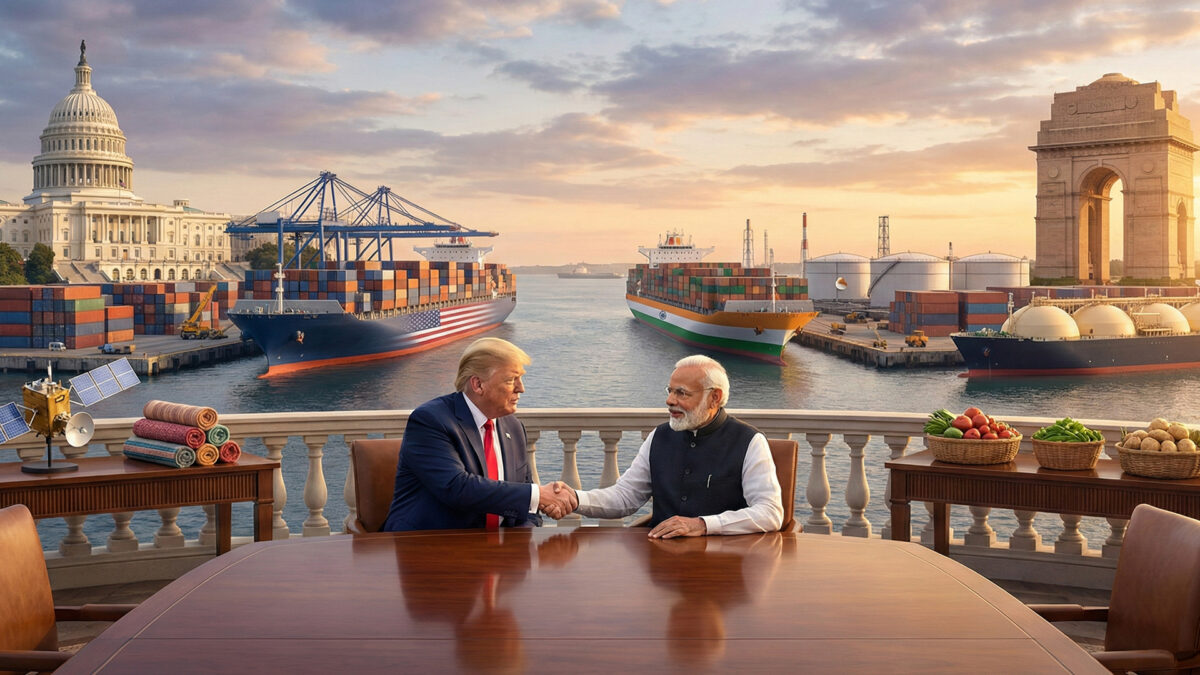
Trump announces India–US trade deal

US President Donald Trump has said that the United States and India have agreed on a new trade deal that would change how goods move between the two countries. As per Trump’s statement, American products would be allowed into India without paying any tariffs, while Indian exports to the US would attract an 18% charge.

Trump said the move is aimed at making trade more balanced and fair for American businesses. He claimed that US companies have long faced higher duties in India and that the new arrangement would open up greater opportunities for American manufacturers, farmers, and technology firms.

Under the proposed deal, India would continue to export to the US, but at a fixed tariff rate of 18%. Trump described this as a reasonable level that still allows Indian goods access to the American market while offering better protection to US industries and jobs.

The announcement comes amid ongoing global trade uncertainty and renewed focus on protecting domestic industries. India and the US are among each other’s key trading partners, with strong links in sectors such as IT services, pharmaceuticals, energy, defence, and manufacturing.

However, no official confirmation or detailed response has yet come from the Indian government. Trade analysts say the impact of the deal, if finalised, could be uneven. While US exporters may gain from duty-free access to India, Indian exporters, especially in labour-intensive sectors, could see higher costs and tighter margins in the US market.

Also Read: India–US deal cheer lifts Sensex 2,250 points, Nifty above 25,750

Categories
Beyond

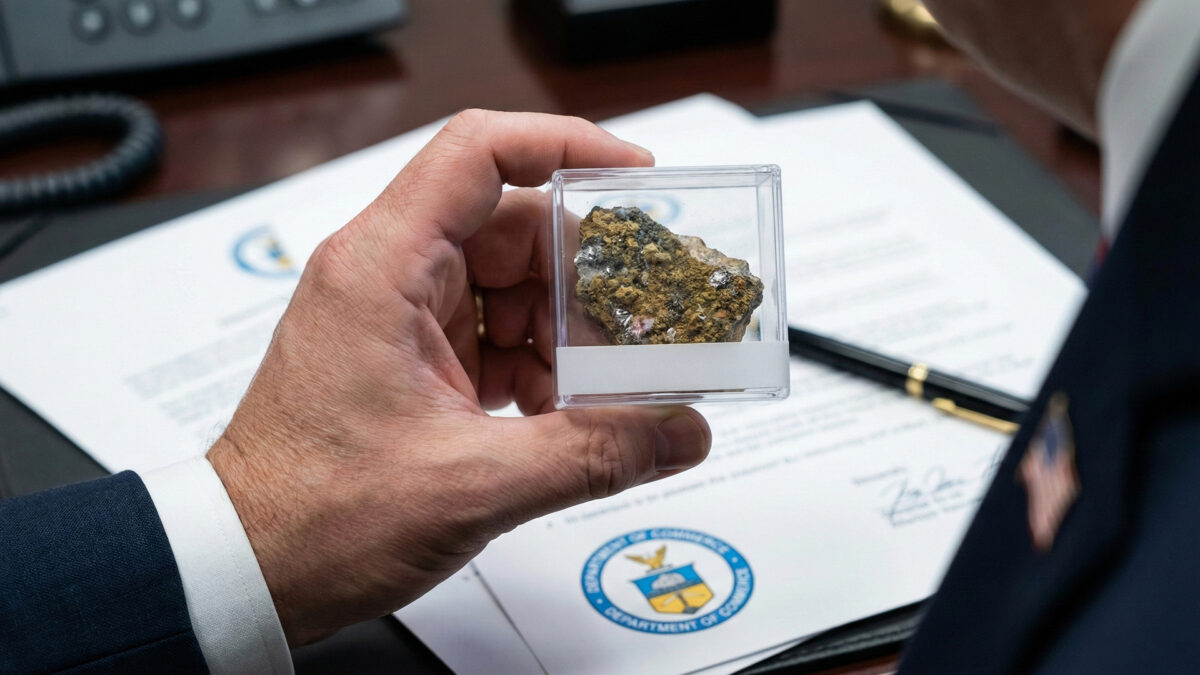
US takes 10% stake in rare earth miner $1.6 bn deal

The Trump administration has moved to strengthen domestic supply chains for critical minerals by agreeing to acquire a 10 per cent stake in USA Rare Earth in a deal valued at $1.6 billion, according to media reports.

The investment is part of a broader push to expand US-based rare earth mining and processing, reduce dependence on China, and secure materials vital for defence, clean energy, electric vehicles and advanced electronics.

Under the proposed arrangement, the US government will receive equity and warrants in USA Rare Earth, alongside providing significant debt financing. Reports indicate that the funding package includes about $1.3 billion in federal loans, with the remaining amount coming through direct equity participation. The financing is expected to be supported by federal programmes aimed at strengthening strategic industries.

USA Rare Earth is developing a rare earth mine at Sierra Blanca in Texas, in partnership with Texas Mineral Resources. The project is expected to begin production by 2028 and will focus on heavy rare earth elements, which are especially important for defence and high-performance technologies.

In parallel, the company is setting up a magnet manufacturing facility in Stillwater, Oklahoma, scheduled to start operations later this year. The plant will produce permanent magnets used in electric motors, wind turbines, military equipment and consumer electronics. Together, the mine and magnet facility are designed to create a fully domestic “mine-to-magnet” supply chain.

Rare earth elements consist of 17 minerals that are critical to modern technology but are largely processed and refined in China, which currently dominates global supply. US officials have repeatedly warned that this concentration poses economic and national security risks.

The investment in USA Rare Earth marks one of the largest federal interventions in the rare earth sector so far. It follows similar government actions aimed at supporting critical mineral producers and ensuring long-term supply security.

Also Read: Samsung nears Nvidia approval for HBM4 AI chips

Categories
Beyond

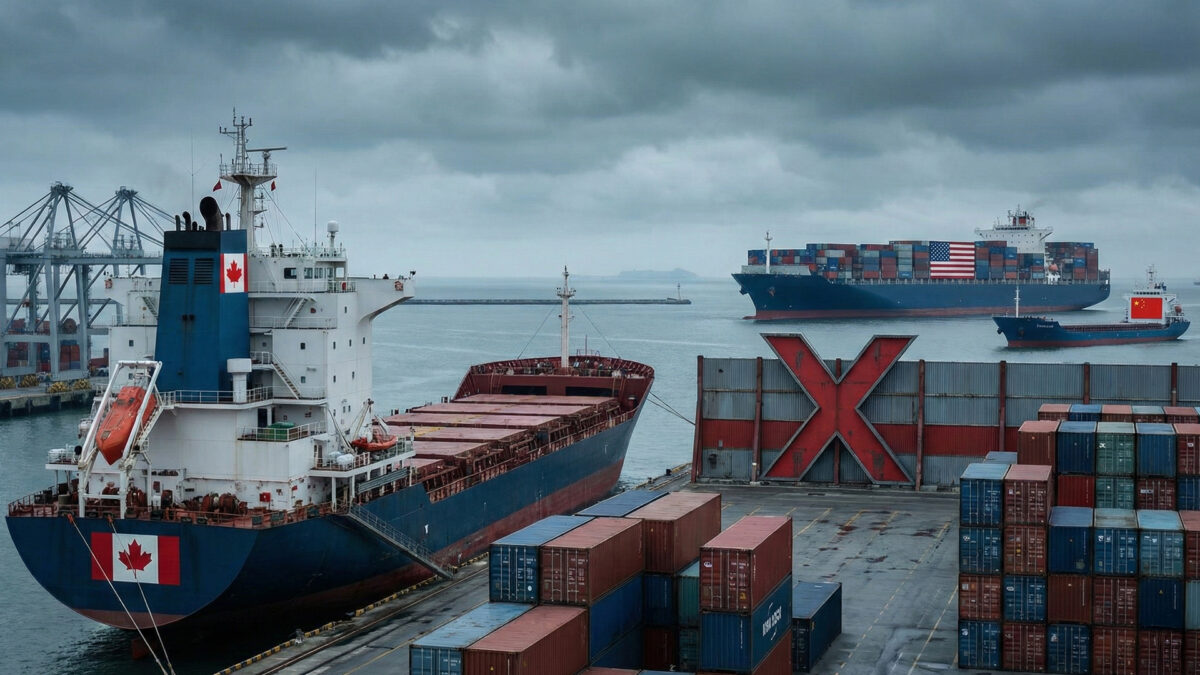
Canada rejects China deal after 100% tariff threat

Canada has ruled out any free trade agreement with China, after US President Donald Trump threatened to impose 100 per cent tariffs on Canadian goods if Ottawa went ahead. Prime Minister Mark Carney clarified that Canada remains committed to its North American trade agreements and has no intention of pursuing a broad pact with Beijing.

Speaking on Sunday, January 25, Carney emphasised that Canada’s limited engagement with China has focused only on resolving specific tariff disputes, not on negotiating a full-fledged trade deal. “We respect our commitments under the USMCA. We are not planning any free trade agreements with China or other non-market economies,” he said.

The remarks follow a week of tense exchanges between Washington and Ottawa. Trump’s warnings came after reports that Canada was exploring closer trade ties with China, prompting fears in the US that Chinese goods could gain easier access to North American markets through Canada.

Recent agreements with China have been narrow and targeted. Canada reduced tariffs on a small number of Chinese electric vehicles, while Beijing agreed to ease duties on some Canadian exports, including canola and seafood. These measures, Carney stressed, are far from a comprehensive trade deal.

The US threat has added strain to Canada-US trade relations, but Carney’s firm stance sends a clear message: Ottawa seeks to balance global economic ties while honouring obligations to its North American partners. Analysts say the move highlights Canada’s careful approach to diplomacy, ensuring it can engage with global markets without triggering conflicts with the US.

Also Read: India to cut EU car import duties

Categories
Beyond

Oil drops 3% after Trump remarks on Iran

Global oil prices dropped by about 3 per cent on Thursday after US President Donald Trump’s remarks suggested a reduced risk of military conflict with Iran. The fall came after oil had risen in recent days due to concerns that unrest in Iran could threaten regional oil exports.

Brent crude, the international benchmark, slipped roughly 2.9 per cent to $64.5 per barrel, while West Texas Intermediate (WTI), the US benchmark, declined to around $60 per barrel. The decline reversed the previous day’s gains, which had been driven by fears that escalating tensions in Iran might disrupt global oil supply.

Trump said that reports indicated the killings of protesters in Iran had stopped and that plans for mass executions were no longer moving forward. Speaking from the White House, he added that he would “watch and see” before taking any further action, signaling a cautious approach rather than immediate military involvement. Market participants saw this as a sign that the risk of a major conflict affecting oil supply had lessened.

Analysts said that the president’s comments removed part of the “risk premium” built into oil prices due to geopolitical uncertainty. Rising crude inventories in the United States and potential increases in Venezuelan oil exports also added downward pressure on prices.

Iran produces a significant share of the world’s crude oil, so any disruption there can sharply influence market sentiment. With tensions easing temporarily, even slightly, investors quickly adjusted their expectations, triggering the drop in prices.

While geopolitical risks in the Middle East remain complex, Thursday’s market reaction highlighted how political statements can strongly impact oil prices. Traders continue to monitor developments in Iran and other key oil-producing regions, aware that shifts in risk perception can quickly move global crude markets.

Also Read: Windows 10 & 11 users alerted to security flaw