Categories
Corporate

Sensex dips beyond 100 points, Nifty slips below 23,400

Indian benchmark stock indices opened lower on Thursday as the BSE Sensex fell by more than 100 points, while the NSE Nifty slipped below the 23,400 mark during volatile trading.

Among individual stocks, Tata Steel and ONGC were among the notable gainers, supported by sector-specific buying and strength in commodity-linked counters. On the other hand, Infosys, HCLTech and Tech Mahindra were among the major laggards, dragging the indices lower amid weakness in information technology stocks.

Higher crude oil prices are a major concern for India, which imports most of its energy needs. Rising oil costs can increase inflationary pressures and impact corporate earnings. Brent crude remained elevated, keeping investors on edge. At the same time, the Indian rupee came under pressure against the US dollar, adding to market worries.

Foreign institutional investors (FIIs) continued to remain cautious, with persistent selling activity affecting market sentiment. Traders also preferred to stay on the sidelines ahead of the RBI’s policy announcement, where the central bank is expected to provide guidance on interest rates, inflation, liquidity and economic growth. Most economists expect the RBI to keep the repo rate unchanged.

Sector-wise, weakness was seen in several heavyweight stocks, particularly in information technology and other rate-sensitive sectors. However, broader markets showed some resilience, with select mid-cap and small-cap stocks attracting buying interest.

Market sentiment remained weak as concerns over the escalating conflict between the United States and Iran continued to affect global financial markets. Investors feared that further tensions could disrupt oil supplies and push crude oil prices higher.

Global markets also remained under pressure as investors shifted towards safer assets amid uncertainty surrounding the Middle East conflict.

Also Read: HUL launches Unilever Fragrance Hub in Mumbai

Categories
Corporate

South Korea tops India as World’s sixth-largest stock market

South Korea has overtaken India to become the world’s sixth-largest stock market by market capitalisation, driven by a strong rally in technology and semiconductor stocks.

Statistical reports show the combined value of companies listed in South Korea has crossed $5 trillion, ahead of India’s market capitalisation of about $4.8 trillion. The shift has pushed India to seventh place in global stock market rankings.

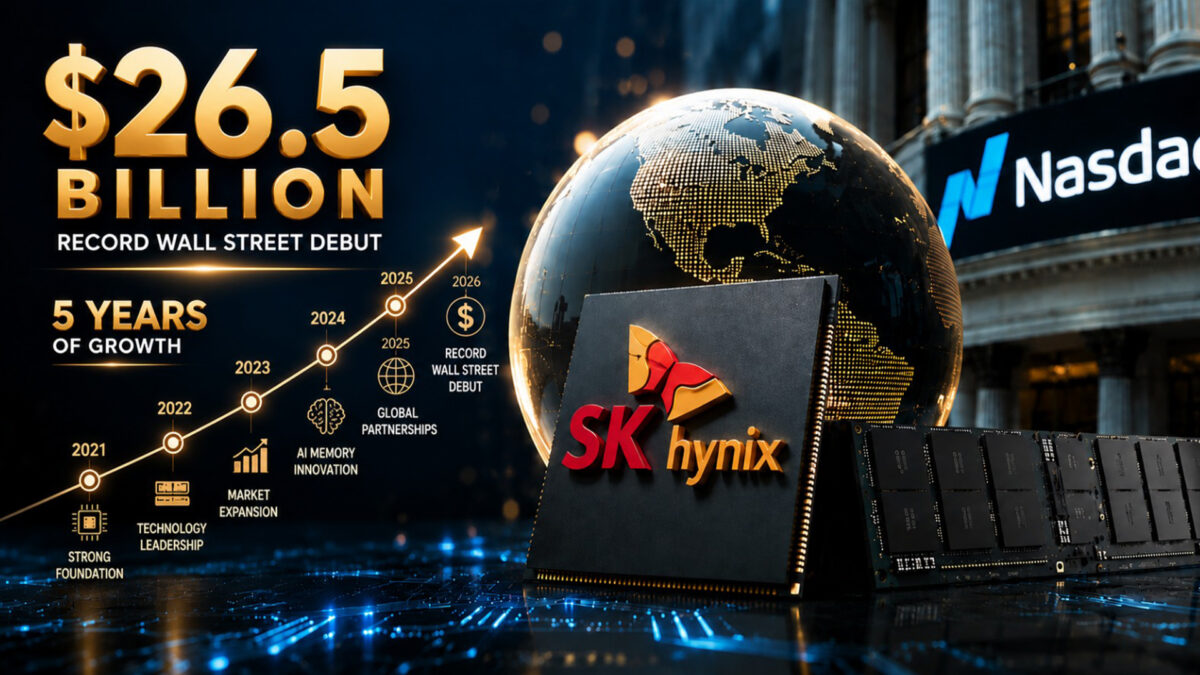
The rise has largely been powered by the global artificial intelligence boom. South Korean chipmakers such as Samsung Electronics and SK Hynix have attracted strong investor interest as demand for AI-related chips and data-centre infrastructure continues to grow.

Indian markets, meanwhile, have faced pressure from weaker corporate earnings, foreign investor outflows and a weaker rupee. The absence of major AI-focused companies in benchmark indices has also limited gains compared with technology-heavy markets.

The latest development comes shortly after Taiwan moved ahead of India in global market rankings, causing India to slip from fifth to seventh position within a relatively short period.

The rankings underline the growing impact of AI-driven investments on global markets, with countries that have strong semiconductor industries benefiting the most from the ongoing technology boom.

Despite the decline, analysts remain positive about India’s long-term outlook. They point to strong economic growth, rising domestic participation in equities and continued infrastructure investment as key strengths supporting future market expansion.

Also Read: OYO parent gets SEBI approval for ₹6,500 cr IPO

Categories
Corporate

Sensex settles 300 points lower, Nifty slips to 23,450

Indian equity markets ended lower on Wednesday, with the benchmark Sensex falling 304 points and the Nifty 50 closing below the 23,450 mark. Broad-based selling across financial, metal and large-cap stocks weighed on investor sentiment throughout the trading session.

The BSE Sensex remained under pressure for most of the day, while the NSE Nifty 50 slipped below a key psychological level. Market participants remained cautious amid mixed global cues and concerns over economic and geopolitical developments.

Financial stocks were among the biggest drags on the market, with investors trimming positions in major banking and financial companies. Metal stocks also witnessed selling pressure as concerns over global demand and commodity price fluctuations impacted sentiment.

Among the major losers on the Sensex were Tata Steel, JSW Steel, HDFC Bank and ICICI Bank, which declined due to profit-booking and weak market sentiment. A few defensive stocks managed to limit losses, but their gains were not enough to offset the broader market weakness.

Broader markets also reflected the negative trend, with several mid-cap and small-cap stocks ending in the red. Analysts noted that investors remained cautious and preferred to stay on the sidelines ahead of key economic data and global developments.

Among individual stocks, investors tracked developments related to companies including Alkem Laboratories and Vedanta, which remained in focus during trading. Market participants also monitored corporate announcements, sector-specific news and institutional investment activity for directional cues.

Foreign and domestic institutional investor flows continued to influence market direction. Traders closely watched movements in crude oil prices, the rupee and global equity markets, all of which played a role in shaping investor decisions.

The decline came amid lingering concerns over global economic growth, interest rate expectations and geopolitical uncertainties. While India’s economic fundamentals remain relatively strong, investors adopted a cautious approach due to external headwinds.

Market experts said volatility is likely to persist in the near term as investors assess corporate earnings, economic indicators and policy developments. They added that stock-specific action could continue despite broader market weakness.

Also Read: Senior diplomat Vipul named India’s envoy to Saudi Arabia

Categories
Corporate

Anthropic enhances cybersecurity portfolio with Mythos AI

Artificial intelligence company Anthropic has launched a new cybersecurity-focused AI model called Mythos, designed to help organisations strengthen their defences against increasingly sophisticated cyber threats.

The company said Mythos has been developed specifically for cybersecurity applications and is capable of assisting security teams with threat detection, vulnerability analysis, incident response and risk assessment. The model is expected to help organisations identify potential cyberattacks more quickly and improve their ability to respond to security incidents.

According to Anthropic, Mythos is designed to understand complex cybersecurity data and provide actionable insights to analysts and security professionals. By automating time-consuming tasks and analysing large volumes of information, the AI model aims to reduce the workload on cybersecurity teams while improving operational efficiency.

The launch comes at a time when cyberattacks are becoming more frequent and complex across industries worldwide. Organisations are increasingly turning to artificial intelligence to strengthen their security infrastructure and keep pace with evolving digital threats. Anthropic believes specialised AI systems such as Mythos can play a crucial role in helping enterprises manage growing cybersecurity challenges.

One of the key features of the model is its ability to assist in identifying vulnerabilities and suspicious activities across networks and digital systems. It can also help security teams prioritise risks, investigate incidents and support decision-making during cyber emergencies.

India is among the countries that will gain access to the new AI model. The launch also highlights the growing competition among AI companies to develop specialised models for enterprise use cases.

While many AI systems focus on general-purpose applications, firms are increasingly building domain-specific models tailored to industries such as healthcare, finance and cybersecurity.

Also Read: CMR Green IPO subscribed 183% on day one

Categories
Corporate

CMR Green IPO subscribed 183% on day one

CMR Green Technologies’ initial public offering (IPO) received a strong response from investors on the very first day of bidding, becoming the first IPO in nearly a month to be fully subscribed on its opening day.

The public issue was subscribed 183% (1.83 times) on Day 1, with non-institutional investors (NIIs) emerging as the biggest contributors to demand. The NII portion was subscribed over 300%, while the retail investor category saw healthy participation with subscriptions crossing 100%. Qualified institutional buyers (QIBs) also showed interest in the offering, reflecting broad demand across investor categories.

CMR Green Technologies, one of India’s leading metal recycling companies, is seeking to raise funds through the IPO to support business expansion, repay debt and meet general corporate requirements. The company is known for recycling non-ferrous metals such as aluminium and producing value-added products for industries including automotive and engineering.

Market sentiment around the issue has remained positive. Ahead of the subscription opening, the company’s shares were reportedly commanding a grey market premium (GMP) of around ₹63 per share, indicating a potential listing gain of nearly 32% over the upper end of the IPO price band. However, grey market trends are unofficial and may change before listing.

CMR Green has built its business around converting metal scrap into reusable industrial materials, helping reduce dependence on primary metal production while supporting environmental goals. The company operates multiple recycling facilities across the country and supplies products to several major manufacturing industries.

The enthusiastic response comes at a time when investor interest in primary market offerings is gradually recovering after a relatively quiet period.

Also Read: Godrej enters wealth management business

Categories
Corporate

Godrej enters wealth management business

Godrej Industries has announced its entry into the wealth management business, marking a significant expansion of the group’s presence in financial services. The company has set an ambitious goal of managing assets worth ₹1 lakh crore over the next five years, reflecting its confidence in the growing demand for professional wealth advisory services in India.

The newly launched venture will cater primarily to high-net-worth individuals (HNIs), ultra-high-net-worth individuals (UHNIs), family offices and institutional investors. It will offer a range of services, including investment planning, portfolio management, estate planning and wealth preservation strategies.

The move comes at a time when India’s wealth creation story is gathering pace. Rising incomes, a booming startup ecosystem, increasing participation in financial markets and a growing number of wealthy individuals have created strong demand for personalised financial advice and investment solutions.

Godrej Industries believes its trusted brand name and long-standing reputation will help it build a strong position in the competitive wealth management sector. The company plans to combine technology-driven investment tools with personalised advisory services to provide tailored solutions for clients.

A dedicated team of experienced professionals will lead the business, focusing on long-term wealth creation and helping clients navigate increasingly complex financial markets. The company expects demand for sophisticated wealth management services to grow steadily as more Indians seek professional guidance to manage and preserve their wealth.

For Godrej Industries, the new venture represents more than just business diversification. It signals the group’s intent to participate in India’s evolving financial landscape and tap into a market that is expected to expand significantly in the coming years.

Also Read: COMPUTEX 2026 shows Taiwan’s growing AI leadership

Categories
Corporate

Maharashtra buys Air India building for ₹1,601 cr

The Maharashtra government has acquired Mumbai’s iconic Air India Building at Nariman Point for ₹1,601 crore in a major property transaction aimed at strengthening administrative infrastructure and reducing long-term operational costs.

The purchase, cleared by the state cabinet, will enable the government to relocate several departments currently functioning from rented premises across Mumbai. Officials said the move is expected to improve coordination between departments, streamline administrative processes and generate substantial savings on office rentals over the coming years.

Located in one of India’s most expensive commercial districts, the Air India Building is a 23-storey landmark overlooking Marine Drive. The property was owned by Air India Assets Holding Ltd (AIAHL), which manages the airline’s non-core assets following the privatisation of Air India.

According to the state government, the building’s strategic location and large office space make it suitable for accommodating multiple departments under a single roof. The move is expected to ease logistical challenges faced by government offices operating from different locations across the city.

Officials said Mumbai’s high commercial rentals were a key factor behind the decision. By purchasing the property outright, the government aims to create a permanent administrative centre while reducing recurring expenditure on leased office spaces.

The acquisition is also expected to give a new purpose to one of Mumbai’s most recognised buildings. The Air India Building has been a prominent part of the city’s skyline for decades and remains one of the most valuable properties in the Nariman Point business district.

Before government offices begin shifting to the premises, the building is expected to undergo renovations and infrastructure upgrades. Authorities are likely to prepare a phased transition plan to ensure smooth relocation of departments.

Also Read: Gold slides to ₹1,59,730, Silver at ₹2,68,170

Categories
Corporate

Sensex tumbles over 1000 points, Nifty slips to 23,250

Indian stock markets opened sharply lower on Wednesday, June 3, with the Sensex plunging over 1000 points and the Nifty slipping below the 23,250 mark as investors reacted to escalating geopolitical tensions in the Middle East and a sharp rise in global crude oil prices.

Market sentiment remained weak after reports of fresh escalation in the conflict involving Iran and the United States. Concerns over possible disruptions to global oil supplies pushed crude prices closer to the $100-per-barrel mark, raising fears of higher inflation and increased import costs for India, a major oil-importing nation.

The sell-off was broad-based, with information technology stocks emerging as the biggest losers in early trade. Shares of major IT companies, including Infosys, TCS, HCLTech, Tech Mahindra and Wipro, came under pressure after recent gains, dragging benchmark indices lower. Banking, financial services, auto and other rate-sensitive sectors also witnessed significant selling as investors reduced exposure to riskier assets.

Among the Nifty stocks, Infosys, TCS, HCLTech, Tech Mahindra and Wipro figured among the top losers, reflecting concerns over global growth and technology spending. Financial and banking counters also traded weak, adding to the market decline.

In contrast, a handful of stocks bucked the broader trend. Vedanta and Alkem Laboratories emerged among the top gainers in early trade, supported by stock-specific developments and buying interest. Other defensive and commodity-linked counters also witnessed selective buying as investors sought shelter from the broader market weakness.

Broader markets mirrored the weakness on Dalal Street, with mid-cap and small-cap indices trading in the red. Analysts said rising oil prices, geopolitical uncertainty and concerns over inflation could continue to keep markets volatile in the near term.

Foreign institutional investors remained cautious and continued their selling activity amid global uncertainty. A weaker rupee and rising bond yields further dampened sentiment, prompting traders to book profits and move to safer investments.

Reliance Industries remained in focus amid ongoing corporate developments, while investors also tracked updates from companies such as Vedanta and Alkem Laboratories. Market participants are closely monitoring corporate announcements and sector-specific developments for fresh trading cues during the session.

Also Read: Anthropic files confidential IPO papers

Categories
Corporate

Coca-Cola prepares for India bottling business in 2027

The Coca-Cola Company is exploring a potential initial public offering (IPO) of its India bottling business, Hindustan Coca-Cola Holdings (HCCH), as early as 2027, according to reports. The move could unlock value from one of the company’s most important growth markets and provide investors with exposure to India’s expanding beverage sector.

HCCH serves as Coca-Cola’s key bottling and distribution arm in India. Through its subsidiary, Hindustan Coca-Cola Beverages (HCCB), the company manufactures, bottles and distributes a wide range of products, including Coca-Cola, Thums Up, Sprite, Fanta, Maaza, Limca and Minute Maid. The business operates an extensive production and distribution network across the country.

Reports suggest Coca-Cola has begun preliminary discussions with advisers regarding a possible listing. While no final decision has been taken, the company is evaluating various options, including an IPO that could be launched in 2027. The timing and structure of the offering will depend on market conditions and strategic considerations.

India has emerged as one of Coca-Cola’s fastest-growing markets, driven by rising disposable incomes, urbanisation and increasing consumption of packaged beverages. The country has become a key focus area for the global beverage giant as it seeks growth beyond mature markets in North America and Europe.

Industry experts believe an IPO could help unlock significant value from the India operations. It may also provide greater financial flexibility for future investments in manufacturing, distribution and product innovation. The listing would come at a time when investor interest in consumer-facing businesses remains strong.

The development follows Coca-Cola’s ongoing efforts to streamline and optimise its bottling operations globally. In recent years, the company has pursued a strategy of refranchising bottling assets in several markets while maintaining strategic oversight of key businesses.

Also Read: Apple readies biggest Siri AI upgrade yet

Categories
Corporate

SoftBank emerges as Japan’s most valuable company

SoftBank Group has overtaken Toyota Motor Corp. to become Japan’s most valuable listed company, driven by strong investor optimism surrounding artificial intelligence and the company’s growing role in the global AI ecosystem.

The milestone comes after a sharp rally in SoftBank shares, which have surged on expectations that the company will be a major beneficiary of the AI boom. Investors have increasingly focused on SoftBank’s extensive investments in artificial intelligence, semiconductor technology and data infrastructure, helping push its market capitalisation above that of Toyota, long regarded as Japan’s corporate heavyweight.

At the centre of investor enthusiasm is SoftBank founder and CEO Masayoshi Son’s renewed focus on AI. Son has repeatedly described artificial intelligence as the most significant technological shift of the century and has positioned SoftBank to capitalise on the trend through investments in chip design, AI infrastructure and next-generation computing technologies.

One of the key drivers behind the company’s rising valuation is its stake in British chip designer Arm Holdings. Since Arm’s successful public listing, its market value has climbed significantly as demand for AI-related semiconductor technology has accelerated worldwide. Arm’s processor designs are widely used across smartphones, data centres and emerging AI applications.

SoftBank has also announced ambitious plans to expand its presence in AI infrastructure. The group is investing in data centres, advanced computing facilities and partnerships aimed at supporting the growing demand for artificial intelligence services. Investors view these initiatives as positioning the company at the heart of the AI supply chain.

The development marks a significant turnaround for SoftBank, which faced challenges in recent years due to losses at its Vision Fund investment unit and declining valuations among several technology startups. The resurgence of AI-related investments has helped restore market confidence in the conglomerate’s long-term strategy.

Toyota remains one of the world’s largest automakers and continues to command strong investor support, but market attention has increasingly shifted toward companies linked to artificial intelligence and advanced technology.

Also Read: HCLTech-Xerox contract end may impact 200 jobs