Categories
Beyond

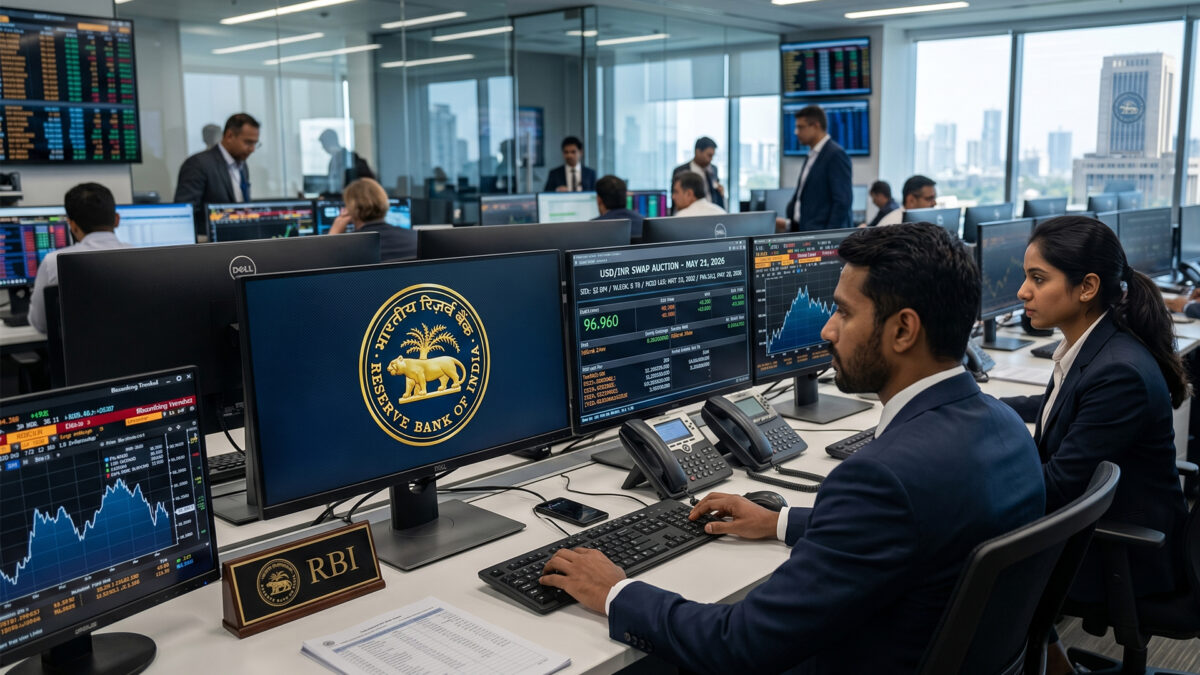
Rupee rebounds to 92.85 per dollar

Rupee strengthened on April 6, 2026, rising by 33 paise to 92.85 against the US dollar in early trading. The recovery was largely driven by intervention from the Reserve Bank of India (RBI), which has stepped in to contain volatility in the foreign exchange market.

The central bank recently introduced measures aimed at curbing speculative activity. These include tighter limits on banks’ currency positions and steps to reduce excessive trading in offshore markets. Such actions are intended to stabilise the rupee after a period of sustained pressure.

Market participants noted that the rupee had been weakening due to multiple global factors. Rising crude oil prices, a strong US dollar, and continued foreign capital outflows have all contributed to the currency’s decline in recent weeks. Ongoing geopolitical tensions in the Middle East have added to investor uncertainty.

Despite the latest gains, analysts remain cautious about the rupee’s near-term outlook. India’s dependence on imported crude oil makes the currency particularly sensitive to rising energy prices. Higher import costs could widen the trade deficit and put renewed pressure on the rupee.

Attention is now focused on the RBI’s upcoming monetary policy announcement. The central bank is widely expected to keep interest rates unchanged while ensuring adequate liquidity in the system. Its stance on currency management will also be closely watched by investors.

Also Read: Gold falls to ₹1.50 lakh, Silver drops ₹2.49 lakh

Categories
Beyond

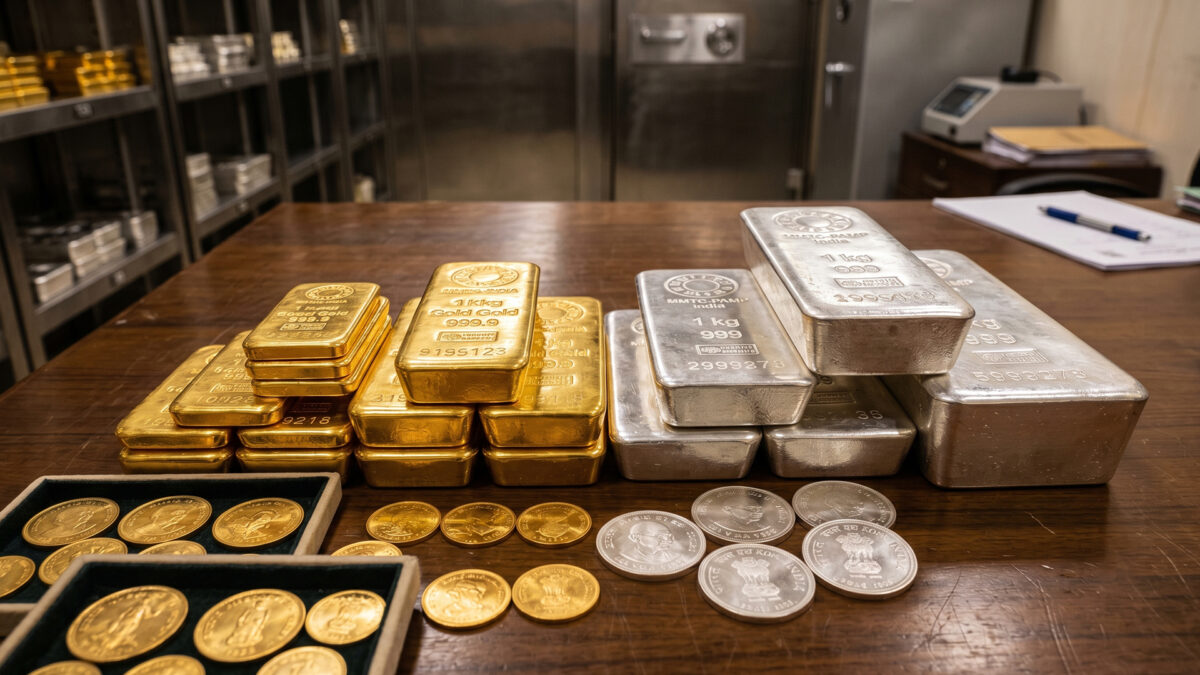
Gold falls to ₹1.50 lakh, Silver drops ₹2.49 lakh

Gold and silver prices declined on April 6, 2026, following weak global cues and a stronger US dollar, with rates falling across major Indian cities including Delhi, Mumbai, Chennai, and Kolkata.

Gold prices dropped by around ₹1,000, bringing the rate of 24K gold close to ₹1,50,920 per 10 grams. Similarly, 22K and 18K gold prices also edged lower across cities, reflecting a broad-based decline in the bullion market.

Silver prices saw a sharper fall, declining by about ₹100 to trade near ₹2,49,900 per kilogram. The drop in both gold and silver comes amid ongoing volatility in global markets and changing investor preferences.

The weakness in bullion prices is largely attributed to a stronger US dollar and rising bond yields, which tend to reduce the attractiveness of gold as an investment. Since gold does not offer interest, investors often shift towards higher-yielding assets when interest rates remain elevated.

Global economic signals have also played a role. Strong US economic data has reduced expectations of early interest rate cuts by the Federal Reserve, putting additional pressure on precious metal prices.

Despite ongoing geopolitical tensions, particularly in the Middle East, gold has not seen strong safe-haven demand. Instead, the focus has shifted toward currency strength and interest rate outlook, both of which have weighed on prices.

Across major Indian cities, gold rates remained largely aligned, with slight variations depending on local taxes and demand. The decline was visible in 24K, 22K, and 18K categories, making gold slightly more affordable for buyers compared to previous sessions.

Also Read: Sensex slides over 300 points, Nifty below 22,650

Categories
Beyond

India adds new nuclear submarine INS Aridhaman

India has added a new nuclear-powered submarine, INS Aridhaman, to its navy, boosting its defence strength. The submarine was officially commissioned in Visakhapatnam on Friday in the presence of Defence Minister Rajnath Singh.

INS Aridhaman is India’s third nuclear-powered ballistic missile submarine, after INS Arihant and INS Arighaat. It has been built in India under a secret defence programme, showing the country’s growing ability to develop advanced military technology on its own.

The submarine is bigger, quieter, and more advanced than the earlier ones. Because it runs on nuclear power, it can stay underwater for long periods without coming up, making it difficult for enemies to detect.

INS Aridhaman can carry nuclear-capable missiles like K-15 and K-4, which can strike targets from long distances. This adds to India’s nuclear triad — the ability to launch nuclear weapons from land, air, and sea.

This submarine plays an important role in India’s second-strike capability. This means that even if the country is attacked first, it can still respond with a strong counterattack. Submarines like INS Aridhaman are hard to find underwater, making them a reliable part of this defence system.

The project also highlights India’s push for self-reliance in defence manufacturing. Much of the submarine was built in the country, especially at the Ship Building Centre in Visakhapatnam.

This strengthens India’s position in the Indian Ocean region, where strategic competition is increasing. With three such submarines, India is moving closer to maintaining continuous patrols at sea for better security.

Also Read: US proposes $1.5 trillion defence budget

Categories
Beyond

US proposes $1.5 trillion defence budget

The White House has asked Congress to approve a $1.5 trillion defence budget for the US fiscal year 2027. This is one of the largest proposed increases in US military spending ever and comes while the country is involved in war with Iran and handling other global security issues.

If approved, the new budget would be more than 40% higher than last year’s defence spending. The administration says the increase is needed to support ongoing military operations, rebuild weapons stockpiles, and strengthen the country’s armed forces.

The proposed plan includes expanding the navy, producing more ammunition, and improving missile defence systems. Some of the spending would be included as “supplemental” funds that can be passed through separate congressional procedures.

To balance part of the increased defence costs, the White House plans to cut about $73 billion from non-defence programs, around 10% of domestic spending. These cuts would affect areas like education, climate initiatives, housing, and other federal services. Officials say these reductions are necessary to prioritize wartime needs.

The plan still needs Congress’s approval. Lawmakers are expected to debate the budget, make changes, and decide the final amount. Republicans generally support higher defence spending but may argue over how much, while Democrats have raised concerns about cuts to domestic programs.

Experts also warn that such a large defence budget could increase the federal debt, which is already over $39 trillion. Supporters argue, however, that the increase is important to ensure US national security and support allies during a time of global instability.

Also Read: Emami to take over Axiom Ayurveda in ₹200 cr deal

Categories
Beyond

Trump announces 100% tariffs on imported drugs

President Donald Trump has unveiled a bold plan to slap up to 100% tariffs on imported pharmaceutical products. The move is intended to pressure drugmakers to cut prices and invest in US manufacturing.

The policy primarily targets branded and patented medicines, along with essential ingredients. Generic drugs, which account for most prescriptions, are expected to be largely exempt initially to avoid supply disruptions.

Under the plan, companies can escape the full 100% duty by joining government pricing programs or relocating production to the United States. A transitional tariff of around 20% could apply while companies build domestic facilities, but duties could jump if deadlines aren’t met.

Officials say the tariffs aim to address high US drug prices, which are far above global averages, and to reduce reliance on foreign supply chains that could threaten medicine access in emergencies.

Several major pharmaceutical firms have already negotiated temporary exemptions, agreeing to lower prices or expand US operations to avoid penalties.

The announcement coincides with adjustments to tariffs on metals, reflecting a broader push to reshape US trade policy and support local industries.

Also Read: Russia offers more oil, gas to India

Categories
Beyond

Russia offers more oil, gas to India

India and Russia have held high-level talks to strengthen their partnership, with a key focus on increasing the supply of oil and natural gas. The discussions took place in New Delhi between Russian Deputy Prime Minister Denis Manturov and Prime Minister Narendra Modi, along with other senior officials.

During the meeting, Russia предложed to expand its supply of crude oil and liquefied natural gas (LNG) to India. The move is aimed at supporting India’s growing energy demand at a time when global markets are facing uncertainty due to geopolitical tensions, particularly in West Asia.

India relies heavily on imports to meet its energy needs, making stable supply arrangements crucial. In recent years, Russia has emerged as one of India’s top suppliers of oil, and both countries are now looking to deepen this relationship further.

The talks were not limited to energy alone. Both sides discussed ways to improve cooperation in trade, fertilisers, and technology. Russia has been increasing its fertiliser exports to India and has expressed its willingness to continue meeting the country’s requirements.

Progress on ongoing nuclear energy projects, including the Kudankulam Nuclear Power Plant, was also reviewed. In addition, both nations explored opportunities for collaboration in areas such as innovation, critical minerals, and industrial development.

The discussions also covered broader economic ties and ways to expand bilateral trade. Leaders подчеркнули the importance of maintaining strong cooperation in a rapidly changing global environment.

Russia’s offer to supply more oil and gas is expected to help India secure its energy needs and manage price fluctuations. At the same time, it allows Russia to strengthen trade ties with one of its key partners.

Also Read: Google expands AI video tools

Categories
Beyond

Karnataka to charge lifetime road tax on EVs

In a major policy shift, the Karnataka government has decided to introduce a lifetime road tax on electric vehicles (EVs), including electric cars, by withdrawing the tax exemptions that were earlier in place. The move is expected to increase the cost of owning an electric car in the state.

Under the new rules, electric two-wheelers will continue to remain exempt from road tax, offering some relief to buyers in that segment. However, electric cars and other larger EVs will now attract a one-time tax at the time of registration.

The tax will depend on the price of the vehicle. Electric cars priced up to ₹10 lakh are likely to be taxed at around 5%, those between ₹10 lakh and ₹25 lakh may face an 8% tax, and vehicles above ₹25 lakh could attract up to 10%. This means buyers will have to pay more upfront when purchasing an electric car.

The decision marks a change in Karnataka’s earlier approach, where incentives and tax exemptions were used to encourage people to switch to cleaner, electric mobility. The state had been considered one of the early supporters of EV adoption in India.

While the government is expected to gain additional revenue from this move, the decision has raised concerns among industry experts and buyers. Many believe that higher costs could discourage people from choosing electric cars, especially at a time when the shift to greener transport is being actively promoted.

At the same time, keeping tax exemptions for electric two-wheelers suggests that the government still wants to support more affordable and widely used EV options. Two-wheelers make up a large share of vehicle sales, and this relief could help maintain momentum in that segment.

The decision has also sparked debate, with some questioning whether reducing incentives for electric cars could slow down the transition to environmentally friendly vehicles.

Also Read: Google unveils ‘Vids’ AI video Tool

Categories
Beyond

Gold slips to ₹1,48,960, Silver at ₹2,49,900

Gold and silver prices saw a slight decline across India on April 3, with small variations observed in different cities. The fall comes amid ongoing fluctuations in the global bullion market and cautious investor sentiment.

According to the latest data, gold prices dropped marginally by about ₹10 to ₹1,48,960 per 10 grams in the futures market. Silver prices also slipped by ₹100, trading around ₹2,49,900 per kilogram. While the decline is minor, it reflects the current unstable trend in precious metal prices.

In retail markets, gold prices differ across major cities due to local taxes, transportation costs, and demand. In Chennai, 24-carat gold is priced at around ₹7,350 per gram, while 22-carat gold is near ₹6,740 per gram. In Mumbai and Delhi, 24-carat gold is slightly lower, hovering around ₹7,200–₹7,300 per gram, with 22-carat gold priced between ₹6,600 and ₹6,700 per gram. Similar trends are seen in cities like Kolkata and Bengaluru, where prices remain close to these levels with minor differences.

Silver prices also vary regionally but remain broadly aligned with national trends. In most major cities, silver is trading close to ₹75,000–₹76,000 per kilogram in retail markets, depending on local demand and supply conditions.

The recent dip in prices is mainly linked to global factors such as a stronger US dollar and uncertainty around interest rates. When the dollar strengthens, gold becomes more expensive for buyers using other currencies, which can reduce demand and push prices down.

Despite the small decline, gold continues to trade at relatively high levels, supported by steady demand from investors and jewellers. Silver, which is influenced by both industrial use and investment demand, is also experiencing price swings.

Also Read: Centre puts 60% free airline seat rule on hold

Categories
Beyond

Government shifts 16.68 lakh emails to Zoho cloud

The Central government has transitioned 16.68 lakh official email accounts to a cloud platform developed by Zoho Corporation, spending approximately ₹180 crore to upgrade its digital communication infrastructure.

The migration, carried out by the National Informatics Centre (NIC), marks a shift from the older email system to a more advanced and scalable cloud-based solution. The initiative is intended to strengthen security, improve efficiency, and support the government’s growing digital needs.

A key objective behind the move is to enhance control over official data. By adopting a domestically developed platform hosted within India, the government aims to ensure that sensitive information remains secure and under national jurisdiction. This aligns with broader efforts to promote digital self-reliance and reduce dependence on global technology providers.

The new system goes beyond basic email services, offering integrated tools such as file sharing, collaboration features, and communication support. These additions are expected to help government departments work more efficiently and coordinate better across functions.

To avoid disruptions, the migration was implemented in phases. A significant number of accounts had already been transferred earlier, and the latest figures indicate the continued expansion of the project across departments.

The initiative is part of a larger plan to modernise government IT systems through secure cloud adoption. Zoho was chosen as the technology partner following a formal selection process, while NIC continues to manage and oversee the platform’s operations.

Also Read: Centre puts 60% free airline seat rule on hold

Categories
Beyond

Centre puts 60% free airline seat rule on hold

The Centre has put on hold its directive that required airlines to offer at least 60% of seats for free selection, following strong objections from the aviation industry. The rule, which was expected to come into effect later this month, aimed to make air travel more affordable and transparent for passengers.

The policy was introduced to reduce additional charges levied on travellers for choosing seats. Under the proposed rule, a majority of seats on every flight would have been available at no extra cost, limiting airlines’ ability to charge for seat selection except for premium options.

However, airlines pushed back against the move, arguing that seat selection fees are an important part of their ancillary revenue. They warned that restricting this income stream could disrupt their pricing strategies and financial stability. According to industry players, such a mandate could eventually lead to higher base fares, shifting the burden back onto passengers in a different way.

Airlines also highlighted that India follows a deregulated aviation market, where ticket pricing and related services are largely determined by market forces. They expressed concerns that imposing such rules could interfere with this system and create operational challenges.

In response, the government decided to suspend the order for now and review the proposal in detail. Officials indicated that the decision was taken to balance passenger interests with the financial health of airlines, especially at a time when the sector is dealing with rising fuel costs and other expenses.

While the pause brings relief to airlines, it means passengers will continue to pay for preferred seat selection under existing practices. The anticipated benefit of wider access to free seats will have to wait until a final decision is made.

Also Read: India’s GST crosses ₹2 lakh cr in March