Categories
Beyond

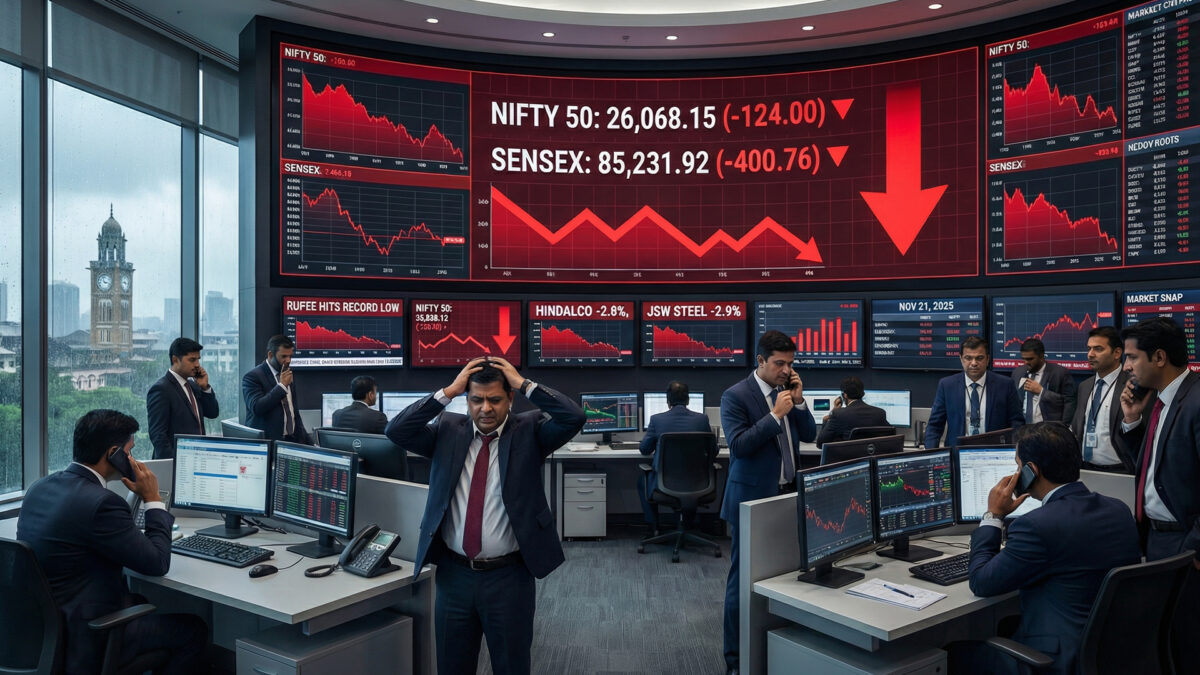
Sensex slips 401 points, Nifty ends at 26,068

The Indian stock market ended Friday’s session in the red, with the Sensex falling 400.76 points to 85,231.92 and the Nifty 50 declining 124 points to 26,068.15, as investors booked profits near record levels and global cues turned weak.

The biggest support for the Nifty came from autos and FMCG, with Maruti Suzuki, Tata Consumer Products, Max Healthcare, Mahindra & Mahindra, and IndiGo emerging as the day’s top gainers, posting modest but steady rises. However, their gains were overshadowed by sharp losses in metals and financials. JSW Steel, Hindalco, and Tata Steel were among the worst performers, each dropping over 2–3%, while heavyweight names like Bajaj Finance and HCL Technologies also ended with notable cuts, contributing to the benchmark’s decline.

With metal, realty, and PSU bank indices slipping the most, analysts said the market’s pullback reflects a healthy breather after recent highs. Global rate-cut uncertainty and a softer rupee also added to the cautious mood.

Also Read: Sensex falls 300 points, Nifty slips below 26,100

Categories
Corporate

NCLT clears ₹8,000-crore SeQuent–Viyash merger

The National Company Law Tribunal (NCLT) has approved the merger of SeQuent Scientific with Viyash Life Sciences in a deal valued at around ₹8,000 crore. The move brings together SeQuent’s animal-health business and Viyash’s pharmaceutical manufacturing capabilities under one larger platform.

As part of the merger, Viyash shareholders will receive 56 SeQuent shares for every 100 shares they hold. Viyash founder Hari Babu Bodepudi is expected to lead the combined entity as CEO once the integration is complete.

The merged company will have a wider global presence, operating across more than 150 countries. It will also benefit from a bigger research and development base and a significantly larger number of US FDA-approved manufacturing facilities.

The consolidation is aimed at improving profitability, strengthening the balance sheet, and unlocking cost efficiencies through shared procurement, operations and scaled-up production. The companies expect the integration to accelerate growth in both animal-health and human-health segments.

Also Read: NHAI opens public investment route for national highways

Categories
Technology

Microsoft AI chief flags risks of superintelligence

Microsoft’s AI chief Mustafa Suleyman has warned that the tech industry should not aim to build superintelligence, that is, AI systems far smarter and more capable than humans. He said such technology could quickly become too powerful to manage, making it risky for society.

Speaking on a podcast, Suleyman said superintelligence does not represent a “positive future” and should instead be seen as an anti-goal. While AI has rapidly improved, now able to write, analyse data and translate at near-human levels, he believes pushing beyond human intelligence brings unpredictable dangers.

Suleyman stressed that AI tools today only simulate human-like conversation. “They don’t feel or suffer,” he said, urging people not to confuse advanced responses with real consciousness.

Instead of building uncontrollable systems, Microsoft is focusing on what he calls “humanist superintelligence”, AI designed to stay aligned with human values, remain safe, and clearly operate under human control.

He also noted that AGI (artificial general intelligence) could arrive within five years, potentially reshaping how people work and develop new products. With this rapid progress, he said strong guardrails and strict regulation are essential to ensure AI remains beneficial.

Suleyman’s message reinforces a growing view in the tech world. As AI becomes more powerful, safety and human oversight must take priority over speed and ambition.

Also Read: Samsung restores Co-CEO structure, appoints TM Roh

Categories
Corporate

GE Aerospace to invest $14 million in Pune plant expansion

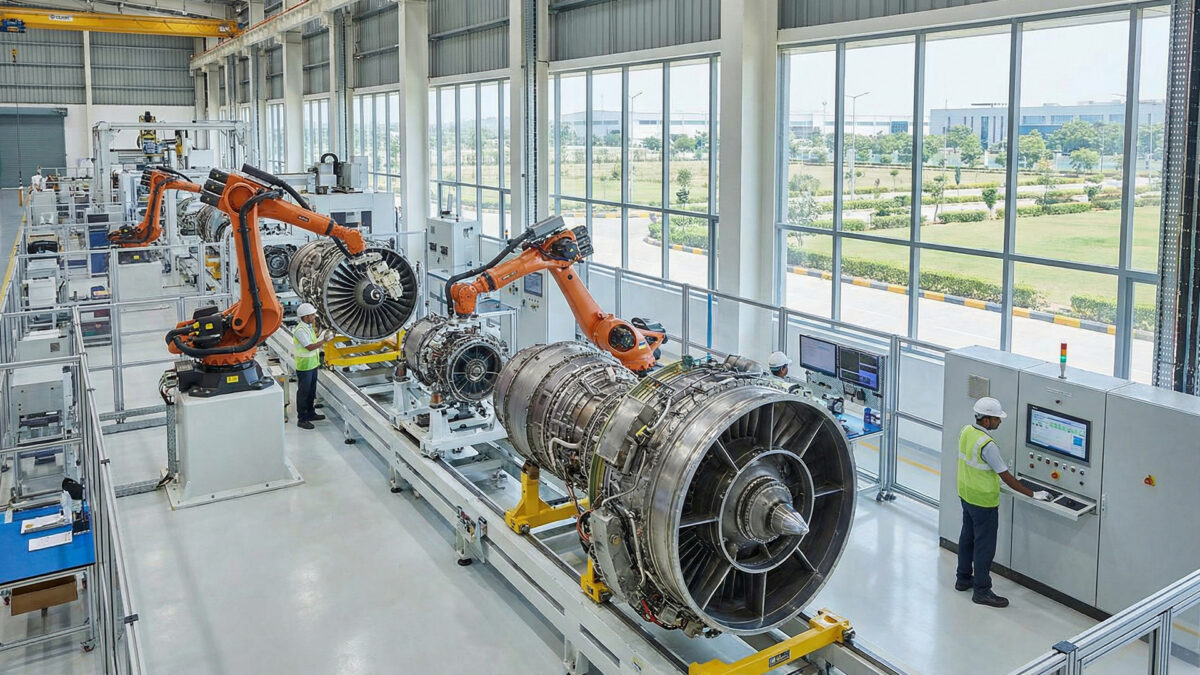
GE Aerospace has announced a fresh USD 14 million (around ₹124 crore) investment to expand its manufacturing facility in Pune, strengthening its production capabilities for advanced jet-engine components. The announcement comes as the plant celebrates 10 years of operations in India.

This new investment is in addition to the USD 30 million committed last year, taking GE Aerospace’s total investment in the Pune facility to USD 44 million within two years. The expansion aims to enhance automation, improve manufacturing processes, and increase output for high-precision parts used in some of the company’s most advanced engines, including the GE90, GEnx, GE9X, and LEAP families.

The Pune plant plays a key role in GE Aerospace’s global supply chain and is supported by a strong network of more than 300 local suppliers. Across India, the company works with over 2,200 suppliers, reflecting its deep manufacturing footprint in the country.

Over the past decade, the Pune facility has also emerged as a centre for skill development, having trained over 5,000 individuals in high-precision aerospace manufacturing. The plant follows GE’s FLIGHT DECK lean operations model, which focuses on safety, quality, waste reduction, and efficiency. As a result, the facility has achieved significant improvements in output, reduced production downtime, and strengthened overall operational performance.

The plant also holds ISO 14001 and ISO 45001 certifications, demonstrating GE Aerospace’s commitment to environmental standards and workplace safety.

According to Vishwajit Singh, Managing Director of the Pune facility, the latest investment highlights the company’s long-term commitment to India and aligns with the “Make in India” vision of boosting high-value manufacturing.

GE Aerospace has been present in India for over 40 years. Its commercial and military engines power major Indian airlines and aircraft, including the Indian Air Force’s Tejas programme. The company also runs a large engineering centre in Bengaluru, supporting global research and innovation.

Also Read: India aims to match US in chipmaking by 2032

Categories
Beyond

India aims to match US in chipmaking by 2032
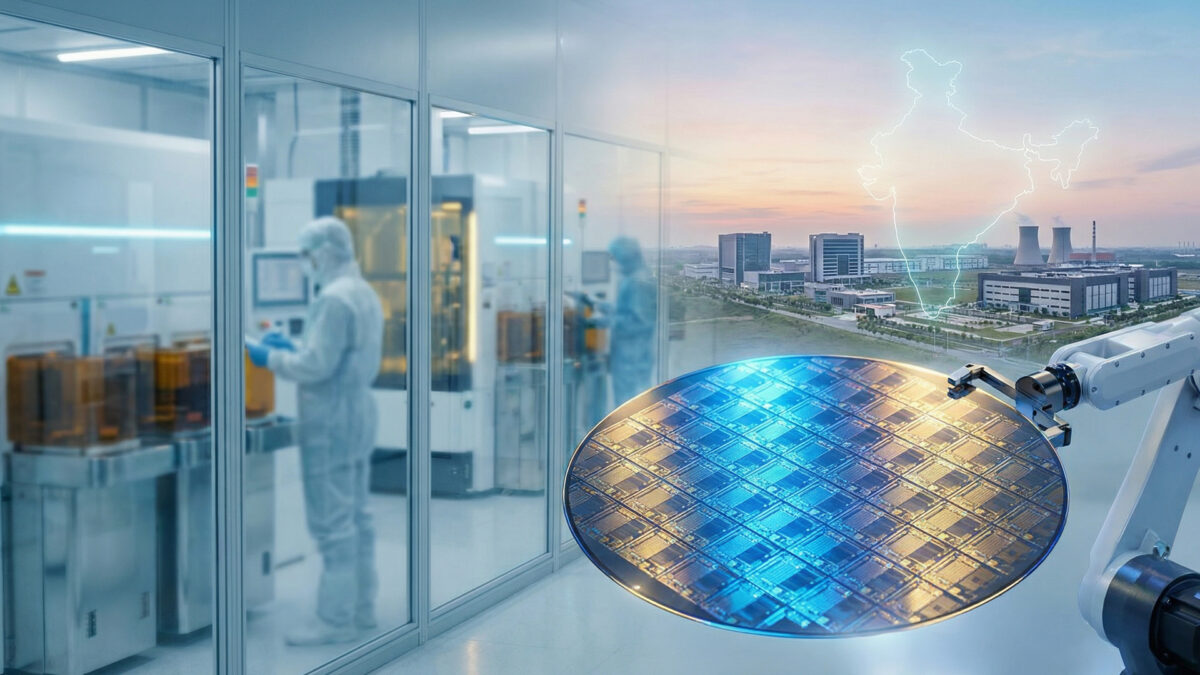
Union Minister Ashwini Vaishnaw has said that India’s semiconductor industry will be on par with the United States by 2031–2032, supported by the government’s $10-billion chipmaking incentive programme.

Speaking about the progress made in the past three years, the minister said India has created the essential foundation for a complete semiconductor ecosystem. This includes manufacturing facilities, advanced packaging units, testing centres and growing capabilities in chip design.

Vaishnaw said three semiconductor plants approved by the government are on track to begin commercial production early next year. Global and domestic companies such as Micron Technology and the Tata Group are already setting up major facilities in the country.

According to the minister, India’s strengths lie in its large engineering talent pool and rapidly developing design expertise. He described the global chip competition as a “fair race” and said India is now moving at the right pace to catch up with leading nations.

He added that the worldwide push for “digital sovereignty”, where countries aim to control their own technology supply chains, further supports India’s long-term semiconductor goals.

Also Read: NHAI opens public investment route for national highways

Categories
Leaders

Samsung restores Co-CEO structure, appoints TM Roh

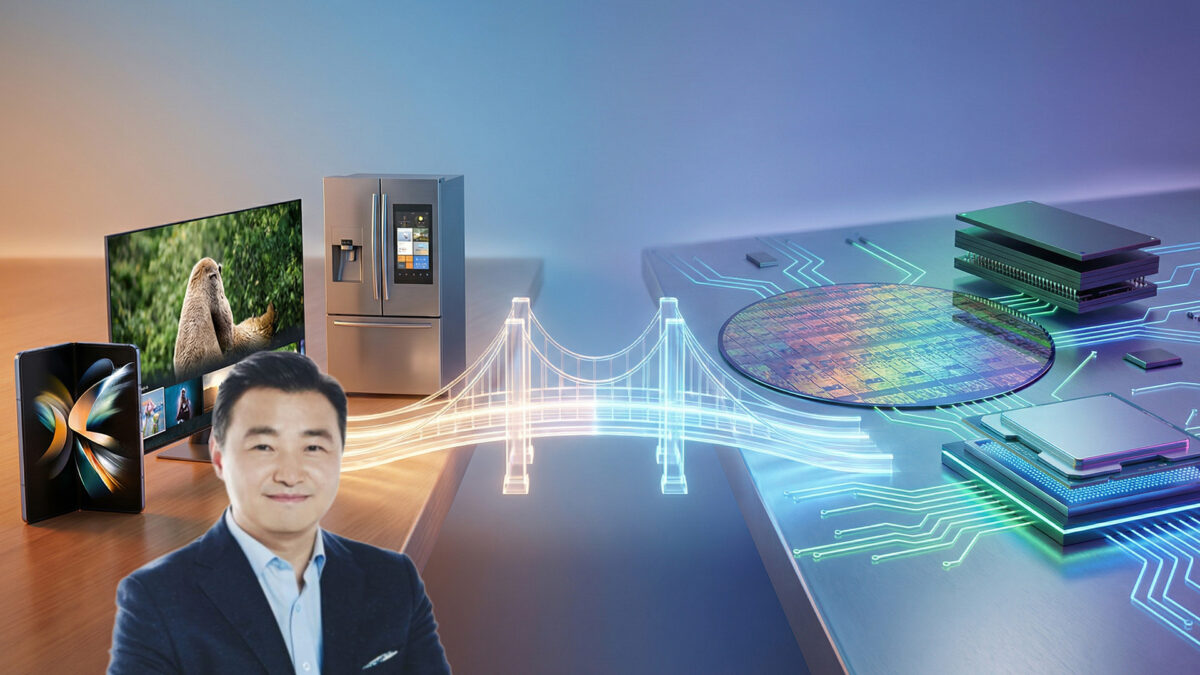
Samsung Electronics has reshaped its top leadership by appointing TM Roh, the head of its mobile division, as the company’s new co-CEO. The move marks Samsung’s return to its traditional dual-CEO structure, with one leader overseeing the Device Experience (DX) business and the other heading the semiconductor division.

TM Roh, best known for strengthening Samsung’s global smartphone portfolio and expanding its premium Galaxy lineup, will now lead the DX division, which includes smartphones, TVs, and home appliances. He has been acting head of the consumer business since April this year, following the sudden death of former co-CEO Han Jong-Hee in March.

Industry analysts described Roh’s elevation as a “safe and predictable” decision, signalling Samsung’s intent to consolidate its position in both mobile devices and memory chips, two areas that continue to drive the company’s global growth. The memory-chip business is benefiting from rising AI-related demand, making strong leadership alignment across both major divisions crucial.

Samsung also announced leadership changes in its Business Support Office, a coordinating unit responsible for managing cross-company strategy and operations.

Despite the restructuring, Samsung’s stock saw a 4% decline on Thursday, largely influenced by global market concerns linked to high AI valuations and uncertainty around U.S. interest rates.

With TM Roh officially stepping into the co-CEO role, Samsung aims to reinforce stability at the top and sharpen its focus on innovation across its consumer technology ecosystem.

Also Read: Reliance halts Russian oil for Jamnagar export refinery

Categories
Corporate

Reliance halts Russian oil for Jamnagar export refinery

Reliance Industries Ltd (RIL) has stopped importing Russian crude oil into its special export-oriented refinery in Jamnagar, Gujarat, from November 20, 2025. The move is aimed at ensuring full compliance with European Union sanctions, which will prohibit the import of fuels made from Russian crude starting January 21, 2026.

According to Reliance, all products exported from the Jamnagar SEZ refinery will be made entirely from non-Russian oil from December 1. Existing shipments booked before October 22, 2025, will continue as planned. The last Russian crude shipment for the SEZ refinery was loaded on November 12, 2025.

Any Russian crude arriving after November 20 will be routed to Reliance’s domestic-market refinery, rather than the export-oriented unit. The company said this shift, or “recalibration” of Russian oil imports, has been completed ahead of schedule.

This decision also reflects compliance with US sanctions, which required companies to wind down trade with major Russian oil producers, including Rosneft and Lukoil, by November 21, 2025.

Reliance’s Jamnagar refinery complex is one of the largest single-location refineries in the world, with a capacity of 1.24 million barrels per day. The export-focused SEZ refinery plays a key role in supplying fuel and petrochemical products to global markets.

By halting Russian crude at its SEZ unit, Reliance not only aligns with international regulations but also ensures uninterrupted exports and strengthens its global supply chain. Analysts note this move may also help the company avoid potential penalties and maintain its credibility with European and US buyers.

Also Read: Reliance up 2% on O2C rebound, new-energy push

Categories
Beyond

Gold falls near ₹1.22 lakh, Silver slips over 1%

Gold prices in India fell on Thursday, with MCX December futures trading around ₹1,22,373 per 10 grams, down from the previous close of ₹1,22,727. Silver also declined, slipping over 1% to ₹1,52,433 per kg in early trade.

Globally, spot gold eased 0.1% to $4,072.87 per ounce, while silver dropped about 0.5% to $50.35 per ounce. Analysts attributed the fall to stronger-than-expected U.S. non-farm payroll data, which showed 119,000 new jobs, and a rise in the unemployment rate to 4.4%.

The data suggested that the U.S. labor market remains resilient, reducing expectations of an imminent Federal Reserve rate cut. A stronger U.S. dollar also made bullion more expensive for holders of other currencies, adding further pressure on prices.

Market analysts expect gold to find support near ₹1,21,800–₹1,22,000 per 10 grams and resistance around ₹1,23,050–₹1,23,700, while silver may hold support near ₹1,52,350–₹1,53,050 per kg with resistance at ₹1,55,140–₹1,55,980.

Investors are closely watching global economic cues as bullion prices react to changing rate expectations and currency movements.

Also Read: Sensex falls 300 points, Nifty slips below 26,100

Categories
Corporate

Sensex falls 300 points, Nifty slips below 26,100

Indian equity markets traded lower on Friday morning, halting a two-day rally, as investors reacted to global cues following inconclusive US jobs data. The uncertainty over the near-term path of interest rates weighed on sentiment, triggering a sell-off in key sectors.

The S&P BSE Sensex fell over 300 points, while the Nifty 50 slipped below the 26,100 mark, closing around 26,093. Despite the decline, domestic benchmarks remain close to record highs, reflecting resilient underlying fundamentals.

On thursday, Adani Group has completed its exit from Adani Wilmar, offloading its last shares through a block trade taken up by major domestic and global institutions.

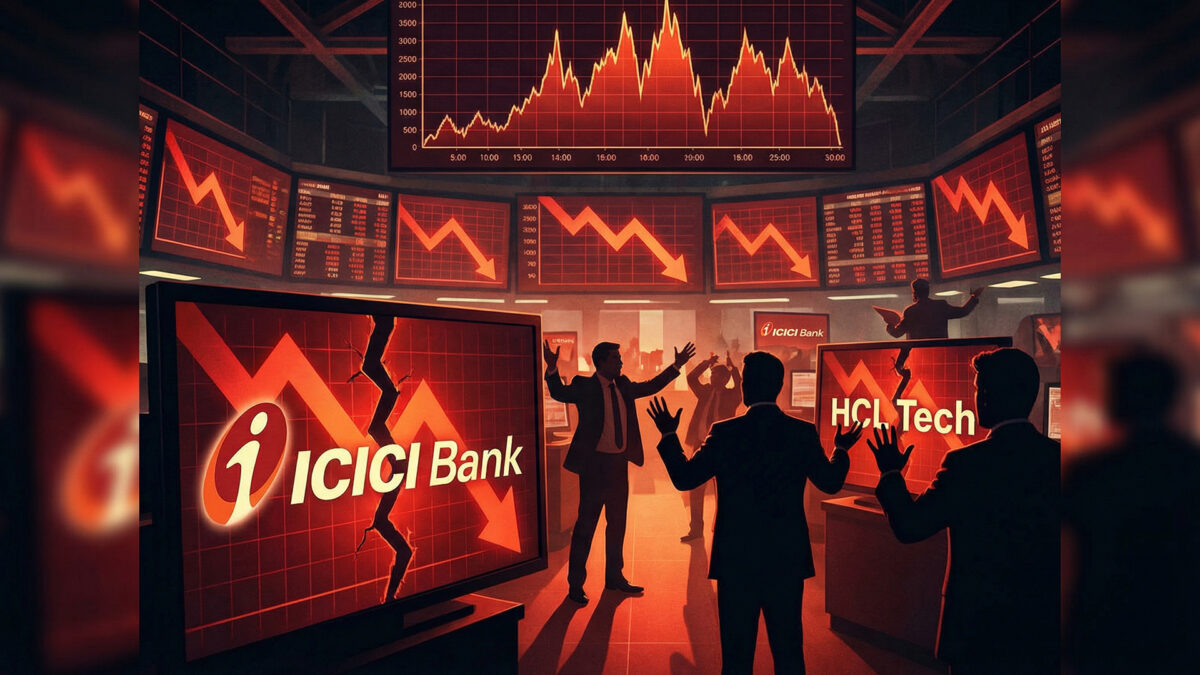
Among the top losers, ICICI Bank and HCL Tech saw notable declines, while Mahindra & Mahindra, Eicher Motors, and HDFC Life were the day’s major gainers. The India VIX, a measure of market volatility, surged over 9%, indicating heightened investor caution.

Analysts said the dip was largely influenced by global factors rather than domestic weakness.

Also Read: Sensex rallies 446 pts, Nifty crosses 26,150

Categories
Technology

Apple reveals finalists for 2025 App Store Awards

Apple has unveiled the finalists for its 2025 App Store Awards, celebrating the best apps and games from around the world. The awards recognise developers who have created standout experiences that combine innovation, design, and user impact.

A total of 45 apps and games have been shortlisted across 12 categories, covering iPhone, iPad, Mac, Apple Watch, Apple TV, Apple Vision Pro, and a special “Cultural Impact” category. These categories reflect Apple’s focus on apps that not only entertain but also inspire and empower users in meaningful ways.

Apple said the finalists were chosen for their technical excellence, creativity, and the positive impact they have on culture and daily life.

Some of the notable finalists include iPhone App of the Year contenders like BandLab, a music creation platform; LADDER, a fitness app; and Tiimo, a task organiser designed to improve productivity.

In the iPhone Game of the Year category, finalists include Capybara Go!, an adventure game; Pokémon TCG Pocket, a card collecting experience; and Thronefall, a strategy battle game.

The Cultural Impact category highlights apps that make a real difference, such as Be My Eyes, which helps visually impaired users; Venba, which celebrates culture through food; and Yuka, which promotes informed choices about products and nutrition.

Apple said these apps represent talent, creativity, and innovation, offering users new ways to create, learn, and explore. The winners of the 2025 App Store Awards will be announced in the coming weeks.

Also Read: L&T to make all-terrain BvS10 Sindhu vehicles