Categories
1 Minute-Read

Maruti Suzuki invests ₹2 crore in Ravity startup

Maruti Suzuki has invested ₹2 crore in Bengaluru-based Ravity Software Solutions, acquiring a 7.84% stake through its Innovation Fund.

Ravity focuses on connected mobility intelligence, leveraging AI and analytics to convert vehicle data into actionable insights for automakers and fleet operators. The startup’s solutions aim to enhance operational efficiency, vehicle performance, and the overall customer experience.

Maruti Suzuki’s CEO, Hisashi Takeuchi, said the investment reflects the company’s commitment to innovation and improving vehicle ownership through smart, data-driven solutions.

This deal also signals Maruti’s growing focus on digital transformation and connected mobility in India’s automotive sector.

Categories
Corporate

TotalEnergies eyes ₹10,200 crore stake sale in Adani Green

French energy major TotalEnergies is reportedly considering selling part of its stake in Adani Green Energy Ltd (AGEL), one of India’s leading renewable energy companies. The proposed divestment, estimated at around ₹10,200 crore, could involve up to 6% of the company.

TotalEnergies currently holds nearly 19% in AGEL through two subsidiaries. The investment, made in 2021 for about $2.5 billion, has grown substantially in value, reflecting the rising interest in India’s renewable energy sector. Analysts see this as an opportunity for TotalEnergies to monetise some of its gains while still retaining influence over the company’s future direction.

Industry insiders suggest that TotalEnergies may offer the shares to AGEL itself, giving the company a chance to buy back part of its own stock. Neither TotalEnergies nor AGEL have confirmed these reports yet, but the news has already captured investor attention.

This potential sale comes as TotalEnergies looks to manage its capital spending and reduce debt. The company has indicated plans to cut annual investments by about $1 billion between 2027 and 2030, making this stake sale a strategic move in line with its global financial goals.

For AGEL, the timing is interesting. The company continues to expand aggressively, with projects like the massive renewable energy park in Khavda, Gujarat — one of the largest in the world. Such developments underline AGEL’s long-term commitment to India’s clean energy growth.

While the final decision is pending, the potential stake sale highlights the growing importance of renewable energy investments and the dynamic shifts happening in this sector.

Also Read: TCS faces $194 million penalty in US trade-secrets case

Categories
Corporate

Excelsoft IPO sees massive demand, subscribed 43×

Excelsoft Technologies’ public issue has turned out to be a major attraction for investors of all kinds, with the IPO receiving an impressive 43 times more bids than the shares available. The response reflects the market’s growing appetite for mid-sized tech companies that show steady growth and reliable business fundamentals.

By the time bidding closed, Excelsoft had collected requests for over 1.32 billion shares, though only 3.07 crore shares were up for grabs. Most of the excitement came from institutional and wealthy investors, but retail investors, too, put in strong numbers.

The Qualified Institutional Buyers (QIBs) segment led the charts with bids at 47.55 times the quota, signalling strong confidence from professional funds. The non-institutional investor (NII) category, often dominated by high-net-worth individuals, showed even higher enthusiasm with a massive 101.69 times subscription. Retail investors also played their part, offering a healthy 15.62 times subscription for their portion.

Now that the rush of applications is over, attention has shifted to the allotment process, which determines who actually secures shares. Applicants can check their allotment on the BSE website or through the registrar, MUFG Intime India, by using their application number, PAN, or Demat details.

While the company awaits official listing, the activity in the grey market offers early hints about investor expectations. Unlisted shares of Excelsoft were trading at around ₹128, suggesting a premium of about ₹8 over the issue’s upper price band of ₹120. Though the GMP is modest, it does reflect positive sentiment and the possibility of a stable debut.

The IPO, open from November 19 to 21, will now move through the final steps,  refunds and share credits are scheduled for November 25, followed by the long-awaited listing on both BSE and NSE on November 26.

Also Read: Apple, Amazon, Meta oppose 6 GHz auction for mobile

Categories
Corporate

Apple, Amazon, Meta oppose Jio-Vi 6 GHz auction

A new fault line has emerged in India’s digital landscape, with some of the world’s biggest technology companies urging caution just as Indian telecom operators push ahead. Apple, Amazon, Meta, Cisco and others have told TRAI that the 6 GHz band should not be handed over to mobile networks yet, arguing it is better used to strengthen India’s expanding Wi-Fi ecosystem.

Global tech majors submitted a joint response to TRAI’s spectrum consultation, challenging Reliance Jio and Vodafone Idea’s push to auction the 6 GHz band for future 5G and 6G use. According to these companies, the upper portion of the band is not technically ready for mobile services and is still under evaluation internationally.

They want regulators to keep the 6425–7125 MHz range unlicensed for now, allowing wider, faster and more affordable Wi-Fi, something they say benefits consumers, small businesses and India’s digital economy more immediately than reallocating it to telecom operators.

Global players have also urged the government to revisit the band only after 2027, when the next World Radiocommunication Conference is expected to lay down clearer global norms for upper-6 GHz usage.

India has already delicensed 500 MHz in the lower 6 GHz band, while about 400 MHz is likely to be auctioned soon. However, Jio wants the entire 1,200 MHz opened for IMT services to support future network growth.

Telecom operators, represented by COAI, argue that delicensing more spectrum will weaken mobile network capacity, hurt long-term planning and reduce government auction revenues.

Chipmaker Qualcomm has echoed Big Tech’s stance, saying India should wait for global clarity before moving the upper 6 GHz band into mobile services.

With both sides presenting sharply different priorities, telcos pushing for future mobile capacity and tech giants backing robust public Wi-Fi, TRAI now faces the challenge of balancing immediate connectivity needs with longer-term spectrum strategy.

Also Read: Lakshmi Mittal leaves UK as tax fears rise

Categories
Leaders

Lakshmi Mittal leaves UK as tax fears rise

Steel tycoon Lakshmi Mittal, one of Britain’s richest residents for decades, has quietly begun moving his financial base out of the United Kingdom, a shift that reflects growing anxiety among the country’s wealthiest families as the Labour government prepares a major tax overhaul.

According to people familiar with his plans, Mittal is relocating his tax residency to Switzerland and is expected to spend more time in Dubai, a city that has increasingly become a haven for global billionaires. While the UK has long been his primary home, the changing tax climate appears to have accelerated his decision to look elsewhere.

The Labour government’s proposal to tighten tax rules for the super-rich,  including a potential exit tax and stricter treatment of global assets has unsettled several high-net-worth individuals. For many, the biggest worry is not the immediate wealth tax but the broader reach of inheritance tax, which can apply to worldwide assets if an individual is deemed UK-domiciled.

For families with complex international holdings, this has raised difficult questions about how much control the government may eventually have over future wealth transfers. Advisors say the Mittals, like many other affluent families, have been assessing the long-term implications of these changes for years, but the new political climate appears to have tipped the scales.

Mittal’s departure is especially symbolic. He has been more than just a wealthy resident,  he built ArcelorMittal, the world’s largest steel company, while living in London, and once owned some of the city’s most expensive homes. His long association with the UK made him a fixture in business circles, and he has even been a donor to the Labour Party in the past.

His exit now raises broader questions: Will others follow? Can the UK maintain its appeal for global entrepreneurs if tax rules become less favourable? Economists warn that a high-profile billionaire leaving the country could send the wrong signal at a time when Britain is trying to attract investment and rebuild post-pandemic growth.

For Mittal, however, the decision appears practical rather than political. Switzerland and Dubai both offer predictable, inheritance-tax-free environments, a financial stability that contrasts sharply with the uncertainty now defining Britain’s tax landscape.

Also Read: 14,000 Amazon employees laid off, engineers bear brunt

Categories
Corporate

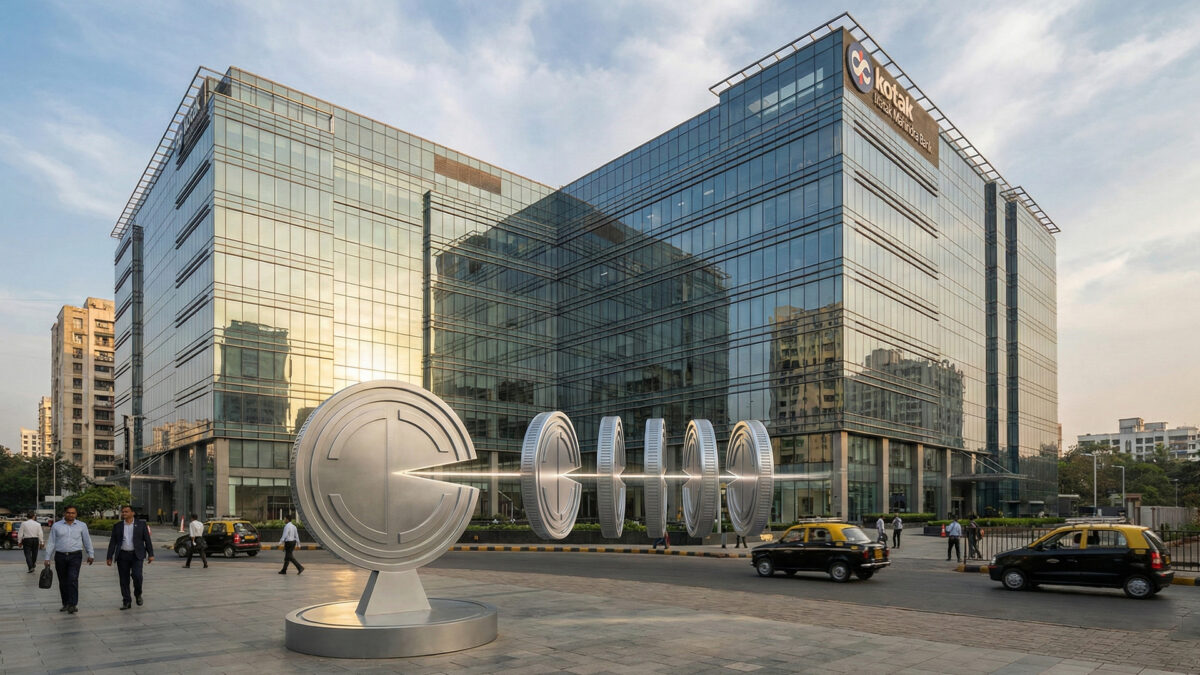
Kotak Bank approves 5‑for‑1 stock split, first since 2010

Kotak Mahindra Bank has announced a stock split in the ratio of 1:5, the first such move by the bank since 2010. Under this plan, each existing share with a face value of ₹5 will be split into five shares of ₹1 each. The move is aimed at making the bank’s shares more affordable and accessible to a wider group of investors.

The announcement comes as the bank celebrates its 40th anniversary, marking an important milestone in its growth journey. Kotak Mahindra Bank said the stock split is part of its efforts to increase liquidity in its shares and encourage more participation from retail investors, who can now buy smaller units of the stock at a lower price.

The board’s decision is subject to approvals from regulators and shareholders. The bank has not yet announced a record date, which will determine which shareholders are eligible to receive the split shares.

Kotak Mahindra Bank has grown steadily over the years and is among India’s leading private sector banks. Analysts say that a stock split does not affect the overall value of an investor’s holdings but makes trading more convenient by reducing the per‑share price.

On the day of the announcement, Kotak Mahindra Bank’s shares saw minor fluctuations, reflecting investor interest in the news. Financial experts note that stock splits can often attract more retail investors and improve market liquidity, as more people can afford to buy shares at a lower face value.

Also Read: M&M becomes top Nifty gainer, auto revenue hits ₹90,825 crore

Categories
Corporate

M&M becomes top Nifty gainer, auto revenue hits ₹90,825 cr

Mahindra & Mahindra (M&M) emerged as the top gainer on the Nifty 50 on Friday, driven by investor enthusiasm over its ambitious growth strategy.

The company outlined plans to expand its auto business revenue eight‑fold by FY2030 compared with FY2020. Its auto division already grew around 3.2 times over five years, reaching ₹90,825 crore in FY2025.

Brokerages welcomed the update. Emkay Global highlighted that electric vehicles remain central to M&M’s growth and profitability roadmap. PhillipCapital described the targets as “ambitious but largely achievable,” raising earnings estimates for FY26–FY28. Motilal Oswal maintained a “buy” rating, setting a target price of ₹4,275 for September 2027.

Strong guidance, clear strategic priorities, and the EV push helped lift investor confidence, making M&M the top performer among large-cap stocks.

M&M also aims to become the world’s fastest-growing SUV brand, focusing on both domestic and global markets, including the UK, Australia, New Zealand, South Africa, and select European countries. The company plans to put 1 million EVs on Indian roads by 2031 and expand electric commercial vehicle exports to over 10 countries.

Also Read: Eli Lilly becomes first pharma company to reach $1 trillion value

Categories
1 Minute-Read

14,000 Amazon employees laid off, engineers bear brunt

Amazon is cutting 14,000 corporate jobs, its largest layoff ever, with engineers hit hardest, accounting for nearly 40% of cuts in key states like New York, California, and Washington.

Mid-level software developers (SDE II) were the most affected, playing a critical role in building and delivering products.

The cuts follow strategic shifts, including scaling back gaming projects and visual-search AI initiatives, as CEO Andy Jassy pushes for faster, leaner operations. Impacted employees get 90 days to apply internally, with severance, career support, and continued health benefits.

This reflects a broader tech trend of AI-driven workforce optimization in 2025.

Categories
Corporate

Eli Lilly becomes first pharma company to reach $1 trillion value

Eli Lilly, the US based pharmaceutical company, has made history by becoming the first drugmaker to reach a market value of $1 trillion.

The company’s stock has climbed steadily this year, rising more than 35%, largely driven by strong demand for its diabetes and obesity treatments, including Mounjaro and Zepbound. These drugs have made Eli Lilly a leader in the growing global market for metabolic health treatments.

Analysts say this milestone reflects investor confidence in Eli Lilly’s focus on innovative therapies for diabetes and weight management, a market expected to grow significantly in the coming years.

This achievement also signals a shift in investor attention toward healthcare companies with strong growth potential, showing that pharma can deliver growth comparable to technology giants.

While the milestone is historic, maintaining such a high valuation will require continued innovation, regulatory approvals, and effective management of competition and pricing pressures.

Eli Lilly’s entry into the $1 trillion club marks a turning point for the pharmaceutical industry, highlighting the value of innovative treatments in reshaping healthcare growth.

Also Read: GE Aerospace to invest $14 million in Pune plant expansion

Categories
Beyond

RBI, ECB to link UPI with Europe’s instant payments

India’s Reserve Bank (RBI) is teaming up with the European Central Bank (ECB) to connect the country’s Unified Payments Interface (UPI) with Europe’s instant payment system, TARGET Instant Payment Settlement (TIPS). The partnership aims to make sending money between India and the euro‑zone quicker, cheaper, and more convenient.

The project is being implemented through NPCI International Payments Ltd (NIPL), the global arm of India’s National Payments Corporation (NPCI). Once operational, the link will benefit Indian travellers, exporters, fintech companies, and businesses by streamlining international payments and reducing transaction costs.

The initiative is part of a wider global push, backed by the G20, to make cross‑border payments faster, more transparent, and affordable. India has already extended UPI to countries like Singapore and is now exploring Europe as the next major market for its digital payments network.

Officials say that technical integration, settlement arrangements, and risk management systems are still being finalised. The rollout will be phased, ensuring compliance with regulatory, currency conversion, and cross-border payment rules.

Also Read: Rupee hits record low above ₹89