
Categories
Technology

Cisco lunches AI cybersecurity platform

Cisco has launched a new AI-powered platform designed to help businesses and governments manage and protect critical IT infrastructure as cyber threats become increasingly sophisticated. The announcement reflects the growing role of artificial intelligence in cybersecurity and enterprise technology.

Called Cloud Control, the platform enables organisations to build, deploy and manage AI agents that can monitor networks, detect threats and respond to cyberattacks automatically. Cisco says the technology is designed to help security teams operate at machine speed as hackers increasingly use AI tools to carry out attacks.

The company believes traditional security approaches are no longer sufficient in an era where cybercriminals can use AI agents to scan systems, identify vulnerabilities and launch attacks at scale. By using AI-powered defenders, businesses can automate many routine security tasks and respond more quickly to emerging threats.

Cisco executives said the platform marks a shift from human-scale cybersecurity operations to machine-scale defence. The AI agents can continuously monitor infrastructure, analyse suspicious activity and take action to neutralise threats before they cause significant damage.

To support the development of these AI agents, Cisco is integrating AI coding tools into the platform, beginning with OpenAI’s Codex. The company also plans to launch a marketplace later this year where third-party developers can offer AI-powered applications and security tools.

Initially available in North America, the platform is expected to become an important part of Cisco’s broader AI and cybersecurity strategy. The company has been investing heavily in technologies that help organisations secure increasingly complex digital environments.

Also Read: FirstClub valuation doubles to $255 mn
Categories
Technology

Cisco launches AI networking chip

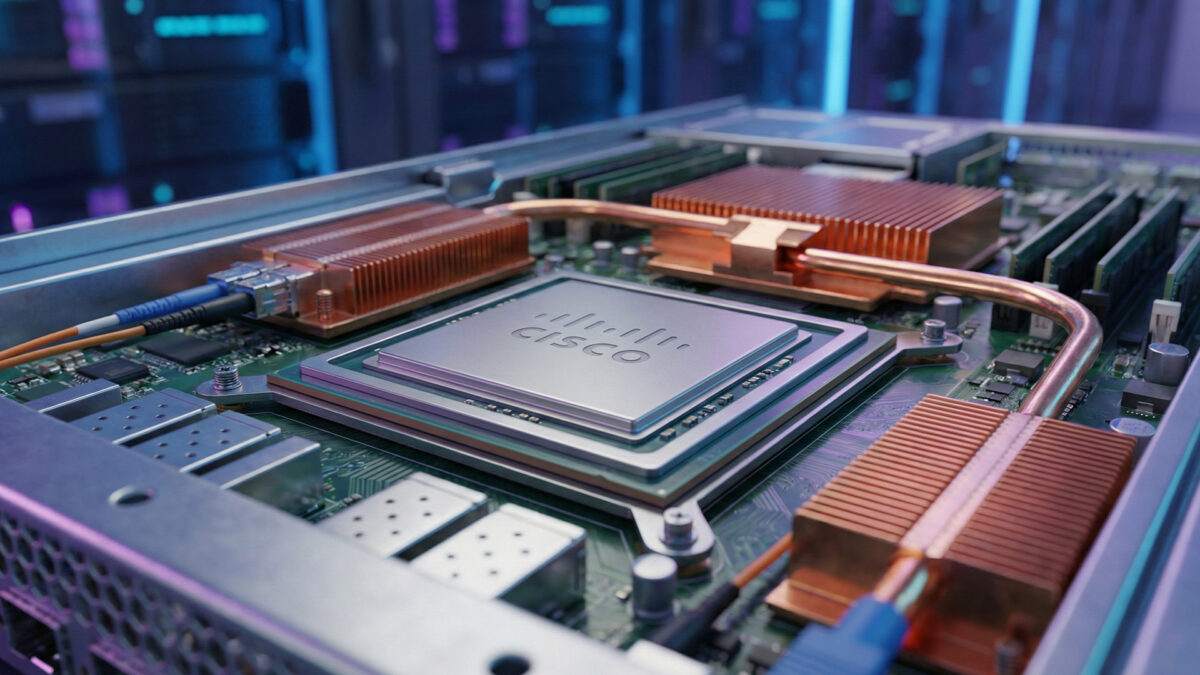
Cisco Systems has introduced a new networking chip and router designed to meet the growing demands of artificial intelligence workloads, positioning itself against rivals Nvidia and Broadcom.

The new chip, called Silicon One G300, is a high‑capacity switch chip that helps move massive amounts of data quickly and efficiently inside AI data centres. These environments require seamless communication between thousands of AI processors, and delays can slow down training and inference tasks.

Manufactured using 3‑nanometer technology by TSMC, the G300 is expected to be commercially available in the second half of 2026. Cisco says the chip includes built-in features to handle sudden spikes in network traffic, which it calls “shock absorber” capabilities. These features can automatically reroute data to prevent bottlenecks, improving performance for some AI tasks by up to 28%.

Cisco’s move highlights the growing importance of networking technology in the AI industry. While GPUs and AI accelerators get most of the attention, efficient data movement between devices is critical for large-scale AI systems to work effectively.

The G300 competes directly with Broadcom’s Tomahawk series and Nvidia’s AI networking chips. Cisco is targeting both large cloud providers and enterprises building their own AI clusters, betting that better network performance will be a key advantage as demand for AI infrastructure grows.

It is said that AI workloads are driving a surge in demand for faster, more reliable networking solutions. By focusing on high-speed chip design and intelligent traffic management, Cisco aims to capture a share of the $600 billion AI infrastructure market.

Also Read: Eicher Motors rises to ₹7,200 after Q3 profit jump

Categories
Corporate

Apple, Amazon, Meta oppose Jio-Vi 6 GHz auction

A new fault line has emerged in India’s digital landscape, with some of the world’s biggest technology companies urging caution just as Indian telecom operators push ahead. Apple, Amazon, Meta, Cisco and others have told TRAI that the 6 GHz band should not be handed over to mobile networks yet, arguing it is better used to strengthen India’s expanding Wi-Fi ecosystem.

Global tech majors submitted a joint response to TRAI’s spectrum consultation, challenging Reliance Jio and Vodafone Idea’s push to auction the 6 GHz band for future 5G and 6G use. According to these companies, the upper portion of the band is not technically ready for mobile services and is still under evaluation internationally.

They want regulators to keep the 6425–7125 MHz range unlicensed for now, allowing wider, faster and more affordable Wi-Fi, something they say benefits consumers, small businesses and India’s digital economy more immediately than reallocating it to telecom operators.

Global players have also urged the government to revisit the band only after 2027, when the next World Radiocommunication Conference is expected to lay down clearer global norms for upper-6 GHz usage.

India has already delicensed 500 MHz in the lower 6 GHz band, while about 400 MHz is likely to be auctioned soon. However, Jio wants the entire 1,200 MHz opened for IMT services to support future network growth.

Telecom operators, represented by COAI, argue that delicensing more spectrum will weaken mobile network capacity, hurt long-term planning and reduce government auction revenues.

Chipmaker Qualcomm has echoed Big Tech’s stance, saying India should wait for global clarity before moving the upper 6 GHz band into mobile services.

With both sides presenting sharply different priorities, telcos pushing for future mobile capacity and tech giants backing robust public Wi-Fi, TRAI now faces the challenge of balancing immediate connectivity needs with longer-term spectrum strategy.

Also Read: Lakshmi Mittal leaves UK as tax fears rise