Categories
Beyond

SEBI proposes changes to basic demat accounts

The Securities and Exchange Board of India (SEBI) has proposed changes to the framework governing Basic Services Demat Accounts (BSDA), a low-cost demat facility designed for small investors. The draft regulations aim to make account eligibility assessment fairer, more transparent, and easier to manage.

Under the proposed changes, delisted securities, shares removed from stock exchange trading will no longer be considered when calculating BSDA holdings. SEBI noted that delisted shares often lack a market price, making it difficult to assess their real value. Similarly, Zero Coupon Zero Principal (ZCZP) bonds, which are non-transferable and do not provide any principal or interest return, will be excluded from valuation. Including these instruments previously inflated an investor’s account value artificially, potentially disqualifying them from BSDA benefits.

For listed but illiquid securities, SEBI proposes using their last traded price for BSDA eligibility purposes. Promoter individuals holding securities will not be subject to these valuation changes.

Another key recommendation is to replace the current billing-cycle-based reassessment of BSDA eligibility with a uniform quarterly system-driven review, standardizing the process across investors. Additionally, SEBI has suggested allowing investors to provide required consents through authenticated methods beyond registered email IDs, making the process more convenient.

SEBI said these measures aim to simplify account management, improve financial inclusion, and ensure that low-cost demat services benefit genuine small investors. The regulator has invited public comments on the draft proposal until 15 December 2025.

With these changes, SEBI hopes to ensure that BSDA holders are evaluated based on active and real investments, rather than on securities that are non-tradable, illiquid, or have no market value, thereby improving transparency and usability of the system for retail investors.

Also Read: Bitcoin slides 21% in November, sparks concern

Categories
Beyond

Bitcoin slides 21% in November, sparks concern

Bitcoin, the world’s largest cryptocurrency, has plunged 21% in November, recording its steepest monthly decline since June 2022. The digital currency fell from around US$126,000 in early October to below US$81,000 by late November, shedding nearly a third of its value in just over a month.

The sell-off has been driven by several factors. Large outflows from crypto exchange-traded funds (ETFs) contributed heavily to the decline, with one fund alone seeing close to US$3 billion withdrawn this month. Such withdrawals signal reduced investor confidence and have added pressure on prices.

Forced liquidations of leveraged positions also played a major role. Many traders who had bet on Bitcoin’s rise with borrowed funds were forced to sell as prices dropped, triggering a cascade of selling across the market. Analysts note that this has intensified volatility, especially in a market where large holders, often called “whales,” can sway prices significantly.

Global economic uncertainty, particularly concerns about interest rates and regulatory policies, has further contributed to investor caution. High-risk assets such as cryptocurrencies are being sold off in favor of safer investments, adding to the downward pressure.

Despite strong gains over the past two years,  153% in 2023 and 122% in 2024,  this sudden correction underscores the volatile nature of the crypto market. Market experts suggest that while short-term losses may continue, long-term investors could view the current dip as a potential buying opportunity, provided they can tolerate high levels of risk.

Also Read: Trump’s “Gold Card” lets wealthy buy US residency

Categories
Beyond

RBI may cut interest rates in December

The Reserve Bank of India (RBI) sees room to lower its key policy rate, the repo rate, in its December meeting. This comes as inflation is very low and the economy is growing steadily.

RBI Governor Sanjay Malhotra said recent data shows the central bank could consider a rate cut. Retail inflation rose just 0.25% in October, the lowest in years. Food prices are falling, and both manufacturing and services are showing growth.

Good rainfall this year has filled reservoirs, supporting crop sowing and keeping supply strong. The rupee has weakened slightly against the US dollar, but the RBI is focused on controlling volatility rather than targeting a specific level.

While the central bank sees space to cut rates, the final decision will be taken by the Monetary Policy Committee (MPC) in December. If rates are reduced, borrowing could become cheaper for businesses and individuals, supporting investment and economic growth.

Also Read: Google and Accel partner to boost India’s AI startups

Categories
Corporate

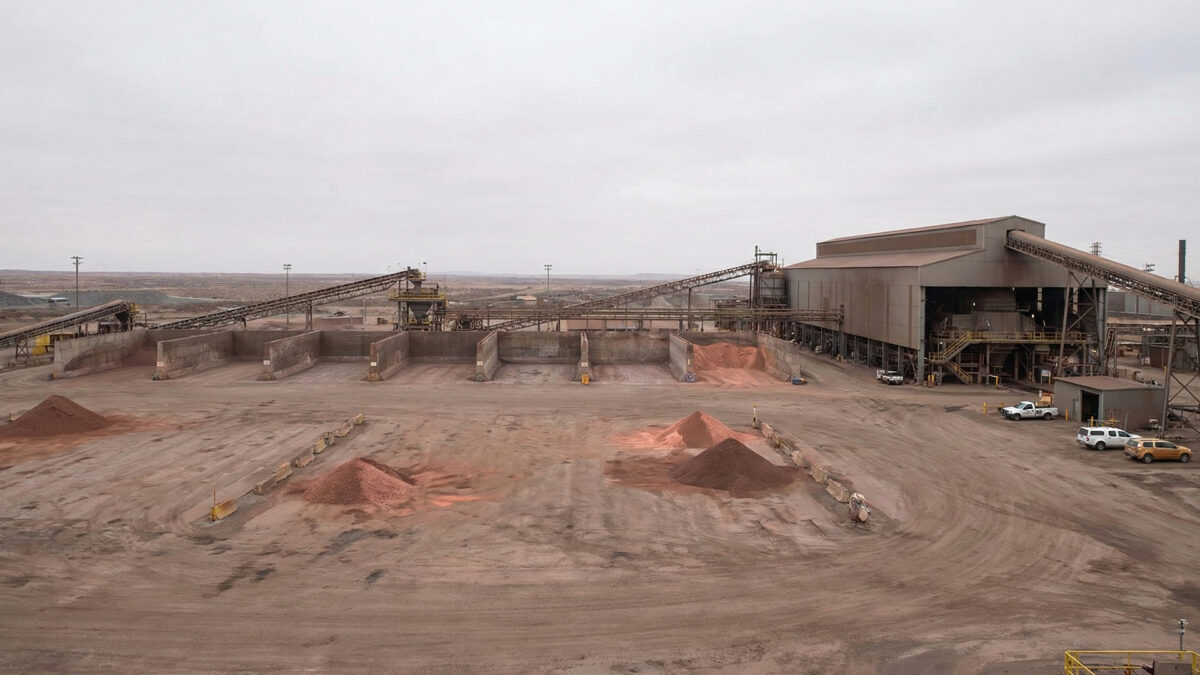
Adani’s $1.2 billion copper plant hit by ore shortage

Adani’s new copper smelter in Gujarat is unable to run at full strength because there isn’t enough copper ore available in the global market.

The Kutch Copper plant can produce 500,000 tonnes of copper a year, but to do that, it needs about 1.6 million tonnes of copper concentrate. Since starting operations, the smelter has received only around 147,000 tonnes, much less than required. As a result, the plant is running at a very low capacity.

This problem isn’t unique to Adani. The world is facing a shortage of copper concentrate due to production cuts and disruptions at major mines. At the same time, smelting capacity has increased in countries like China, creating more competition for limited ore.

Because of the shortage, the fees that smelters charge miners  which is the treatment and refining charges, have dropped to record lows, making operations less profitable.

Some suppliers like BHP, Glencore, and Hudbay have sent ore to the Kutch plant, but the volumes are still too small to support full production.

India’s demand for copper is rising quickly for construction, power, and renewable energy. But since the country has limited copper ore reserves, local smelters depend heavily on imports, making them vulnerable to global shortages like this one.

For now, Adani’s smelter will take longer to ramp up, and may operate at a loss until global ore supply improves.

Also Read: Google and Accel partner to boost India’s AI startups

Categories
Leaders

Google and Accel partner to boost India’s AI startups

Google and global venture capital firm Accel have come together to support a new wave of early-stage AI startups in India. Their partnership is designed to help young founders who are still at the idea or prototype stage but have the passion and potential to build meaningful AI products.

Under this initiative, selected startups can receive up to $2 million in funding, shared between Google’s AI Futures Fund and Accel’s Atoms programme. For many first-time entrepreneurs, this kind of early backing can be the difference between a dream that stays on paper and a product that reaches the market.

But the help goes far beyond money. Young founders often struggle with access to powerful computing resources, which are essential for training and testing AI models. To bridge this gap, Google will offer $350,000 worth of compute credits, along with access to its newest AI technologies, including Gemini and DeepMind models. This gives small teams the same high-end tools used by global AI companies.

The selected startups will also receive close mentorship from Google engineers, product leaders and Accel’s investment team. This support will help founders refine their ideas, build stronger products and learn how to take them to market. For many entrepreneurs, this kind of guidance can be more valuable than the funding itself.

This partnership comes at a time when India’s AI ecosystem is rapidly expanding. Google for Startups recently launched a hands-on programme called “Prompt to Prototype” to help early-stage founders learn to build with AI. More than 150 young companies also participated in Google’s AI Day for Startups, showing the excitement and hunger among India’s new generation of builders.

Global tech giants are also paying attention. Nvidia has joined India’s Deep Tech Alliance, and companies like OpenAI, Anthropic and Perplexity are strengthening their presence in the country. They see India not just as a big market, but as a place where talented engineers and creative problem-solvers can build world-class AI products.

Through this collaboration, Google and Accel hope to inspire India’s youngest AI minds to think big, experiment boldly and build solutions that can impact millions, both in India and around the world.

Also Read: AdaniConneX buys Trade Castle Tech Park for ₹231 crore

Categories
Beyond

Gold up ₹1,070, Silver jumps ₹1,900

Gold and silver prices in India rose sharply on Tuesday as global markets increasingly bet on a possible US Federal Reserve rate cut in December. On the Multi Commodity Exchange (MCX), gold futures gained about ₹1,070 to reach ₹1,24,924 per 10 grams, marking a strong upward move. Silver futures also surged, rising nearly ₹1,900 to about ₹1,56,380 per kilogram.

In the international market, spot gold slipped slightly after a strong rally the previous day, but overall sentiment remains positive. A firm U.S. dollar, currently near six-month highs, acted as a mild drag, yet investors continued to show preference for precious metals on expectations of lower interest rates ahead.

Investor confidence in a December rate cut has strengthened significantly. Market indicators now reflect an estimated 81% probability of the Federal Reserve trimming rates, up from about 40% just a week earlier. Lower interest rates typically boost demand for gold, as they reduce the opportunity cost of holding non-yielding assets.

However, some US Federal Reserve officials remain cautious. A few policymakers have suggested that it may be premature to ease monetary policy, warning that cutting rates too soon could pose risks to economic stability.

In India’s physical bullion market, prices also moved higher across major cities. In Delhi, 22-carat gold is trading around ₹93,176 per 8 grams, while 24-carat gold is priced at roughly ₹1,00,224 per 8 grams. Mumbai, Chennai and Hyderabad reported similar firming in rates.

Also Read: Sensex up 110 pts, Nifty nears 26,000

Categories
Corporate

Sensex up 110 pts, Nifty nears 26,000

The Indian stock market opened slightly higher on Tuesday, with the Sensex rising about 110 points and the Nifty 50 hovering close to the 26,000 mark. Early trade sentiment was mildly positive as investors tracked global cues and waited for key domestic data expected later this week.

Metal and realty shares lifted the mood, with both sectors gaining nearly 1%. On the other hand, IT, telecom and FMCG stocks saw some early selling pressure, slipping around 0.5%. Market watchers noted that foreign institutional investors have continued to pull out money over the past few sessions, keeping overall sentiment cautious.

In stock-specific action, Hindalco led the metal pack with over 1% gains, supported by firm global commodity trends. Dr Reddy’s Laboratories also traded higher after receiving approval for a biosimilar product in Europe, boosting investor confidence. Jio Financial Services was another notable gainer in morning trade.

Among the key laggards were FMCG names, with Tata Consumer Products and Nestlé India slipping due to sectoral weakness. Auto major Eicher Motors also traded lower as the broader auto pack showed signs of pressure.

Analysts say that the approaching F&O expiry and upcoming macroeconomic numbers could influence movement in the next few days. Despite the mixed cues, frontline indices stayed in the green through the early session as select heavyweights posted gains.

Also Read: Sensex falls 331 points, Nifty slips below 25,950

Categories
Corporate

Sensex falls 331 points, Nifty slips below 25,950

Indian stock markets fell on Monday, November 24, 2025, with the Sensex dropping 331 points to end at 84,900 and the Nifty 50 slipping below 25,950 to close at 25,959.

Most sectors fell, except for IT stocks which managed small gains. Shares of Bharat Electronics (BEL) and Mahindra & Mahindra (M&M) saw sharp losses of 3% and 2% respectively, pulling the indices down.

Other heavyweights like JSW Steel, Grasim, and Max Healthcare also saw declines. Mid‑cap and small‑cap stocks were weak, reflecting cautious investor sentiment ahead of global cues and the monthly derivatives expiry.

Analysts said Nifty falling below key support levels could lead to further declines unless it bounces back soon. Overall, Monday’s market session ended in red as investors stayed cautious amid mixed signals.

Also Read: Sensex rises 100 points, Nifty tops 26,100

Categories
Beyond

India’s GDP to grow 6.5% in FY26

India’s economy is on track for a healthy growth of 6.5% in the next fiscal year (FY26), according to ratings agency S&P Global, which expects growth to rise slightly to 6.7% in FY27. The agency says a mix of government policies, strong household demand, and a good monsoon are helping keep the economy on a steady path.

S&P highlighted that recent tax relief has given middle-class households more money to spend. The government raised the income tax rebate ceiling from ₹7 lakh to ₹12 lakh, freeing up roughly ₹1 lakh crore in extra spending power. Along with cuts in GST on many goods and a lower interest rate, these steps are encouraging people to buy more and businesses to invest.

The monsoon has also helped, boosting farm incomes and rural spending, which are important for the broader economy. At the same time, inflation is expected to stay low, around 3.2%, meaning people’s money retains its value, supporting further consumption.

While domestic demand is strong, S&P warns that India faces challenges from global trade uncertainties. Rising U.S. tariffs and slow demand from some major economies could affect Indian exporters. Companies that rely heavily on foreign markets might feel the impact if global conditions don’t improve.

S&P also noted that, to maintain long-term growth, India needs to revive investment in infrastructure and industry. Trade deals with major economies, especially the U.S., could help by attracting investment and creating jobs in sectors that export goods and services.

Overall, S&P’s outlook paints a positive picture of India’s economy. Growth is being driven mainly by people spending more at home, supported by government policies and favorable weather. But experts say that keeping the momentum will require a balance between domestic demand and global competitiveness.

Also Read: Apple, Amazon, Meta oppose Jio-Vi 6 GHz auction

Categories
Corporate

Adani’s H1 FY26 EBITDA hits ₹47,375 cr, capex surges

The Adani Group, India’s leading infrastructure and utilities conglomerate, reported strong financial performance for the first half of FY26, with record earnings and robust growth across its core businesses.

The portfolio’s half-year EBITDA reached an all-time high of ₹47,375 crore (USD 5.3 billion), pushing the trailing twelve months (TTM) EBITDA to ₹92,943 crore (USD 10.4 billion), up 11.2% year-on-year.

The Group’s infrastructure businesses, including utilities, ports, and incubated infrastructure projects under Adani Enterprises, accounted for 83% of H1 FY26 EBITDA, reflecting stable and long-term cash flows. Utilities like Adani Green Energy, Adani Power, Adani Total Gas, and Adani Energy Solutions, along with Adani Ports & SEZ, continued to perform strongly, demonstrating resilience amid a major capital expansion.

Adani’s H1 FY26 capex soared to ₹67,870 crore (USD 7.6 billion), bringing the total asset base to ₹6.77 lakh crore (USD 76 billion). The Group remains on track to achieve its FY26 capex target of ₹1.5 lakh crore, a figure equal to the portfolio’s total assets in FY19. Key expansions include the inauguration of the greenfield Navi Mumbai International Airport, new road projects in Bihar, and ropeway developments in Kedarnath.

The company maintained healthy financial discipline despite accelerated investments. Net debt-to-EBITDA stood at 3x, below the guided 3.5x–4.5x range, while cash reserves remained strong at ₹57,157 crore (USD 6.4 billion). Importantly, 52% of EBITDA now comes from AAA-rated domestic assets, highlighting the portfolio’s credit strength and investor appeal.

Operational highlights included a 49% year-on-year increase in Adani Green Energy’s capacity to 16.7 GW, a rise in port volumes at Adani Ports & SEZ to 244 MMT, and a 20% jump in Ambuja Cement’s sales to 35 MT. Adani Power added 4.5 GW of new power purchase agreements, targeting 42 GW capacity by 2032.

Commenting on the results, Group CFO Jugeshinder Singh said, “Our focus on disciplined execution, world-class operations, and strategic investments has delivered record performance. With rising AAA domestic ratings and strong cash generation, our infrastructure assets are increasingly attractive to global institutions.”

The Adani Group continues to emphasize sustainable growth, operational excellence, and long-term financial resilience, consolidating its position as a leader in India’s infrastructure landscape.

Also Read: TotalEnergies eyes ₹10,200 crore stake sale in Adani Green