Categories
Corporate

Sensex slides nearly 1850 points, Nifty dips to 22,550

Markets plunged sharply on Monday, March 23, 2026, as global uncertainties and rising crude oil prices triggered widespread selling. The BSE Sensex closed at 72,696, down nearly 1,850 points, while the Nifty 50 fell to 22,512, a loss of around 600 points, wiping out about ₹14 lakh crore in market capitalization.

Despite the broad weakness, a few stocks bucked the trend. Vedanta, Tata Capital, Tata Motors, Godrej Properties, and Dr. Reddy’s attracted investor attention, posting modest gains due to company-specific developments and active trading interest.

Market breadth was weak, with realty, metals, banking, consumer durables, and telecom stocks bearing the brunt of the sell-off. Large-cap banks such as HDFC Bank and conglomerates like ITC retreated sharply. Mid- and small-cap stocks were even more affected, with several hitting 52-week lows as risk-off sentiment dominated trading.

Analysts said the downturn was driven by escalating geopolitical tensions in the Middle East, involving the US, Iran, and allied nations, which spurred fears of higher crude prices and energy inflation. The India VIX, a gauge of market volatility, surged, reflecting elevated uncertainty.

Foreign institutional investors continued net selling, while the Indian rupee weakened against the US dollar, adding to bearish sentiment. Rising crude oil prices and higher US bond yields further dampened risk appetite, prompting investors to prioritize capital preservation over fresh buying.

Also Read: Sensex tanks 1,500 points, Nifty below 23,000

Categories
Corporate

NSE IX offers US stocks via GIFT City

The NSE International Exchange (NSE IX) has launched a new platform at GIFT City, Gujarat, allowing Indian investors to buy U.S. stocks and ETFs directly. Now, investors can access major companies like Apple, Microsoft, and Tesla without opening an overseas brokerage account.

The service, called Global Access, operates under the RBI’s Liberalised Remittance Scheme (LRS), which permits individuals to invest up to $250,000 per year in foreign markets. The sign-up process is fully digital, requiring Aadhaar, PAN, and DigiLocker verification, enabling users to start trading in minutes.

Currently, the platform offers U.S. equities, but NSE IX plans to expand to over 30 international markets within the next few months. Investors can also purchase fractional shares, making it easier to invest in high-priced stocks.

The platform has seen strong early interest, with about 2,000 users enrolling during the soft launch. Funds are remitted in Indian rupees and converted to dollars for overseas transactions, and trading includes equities, ETFs, and debt instruments, though derivatives are not yet available.

Also Read: Kotak nears ₹4,500 cr deal for Deutsche unit

Categories
1 Minute-Read

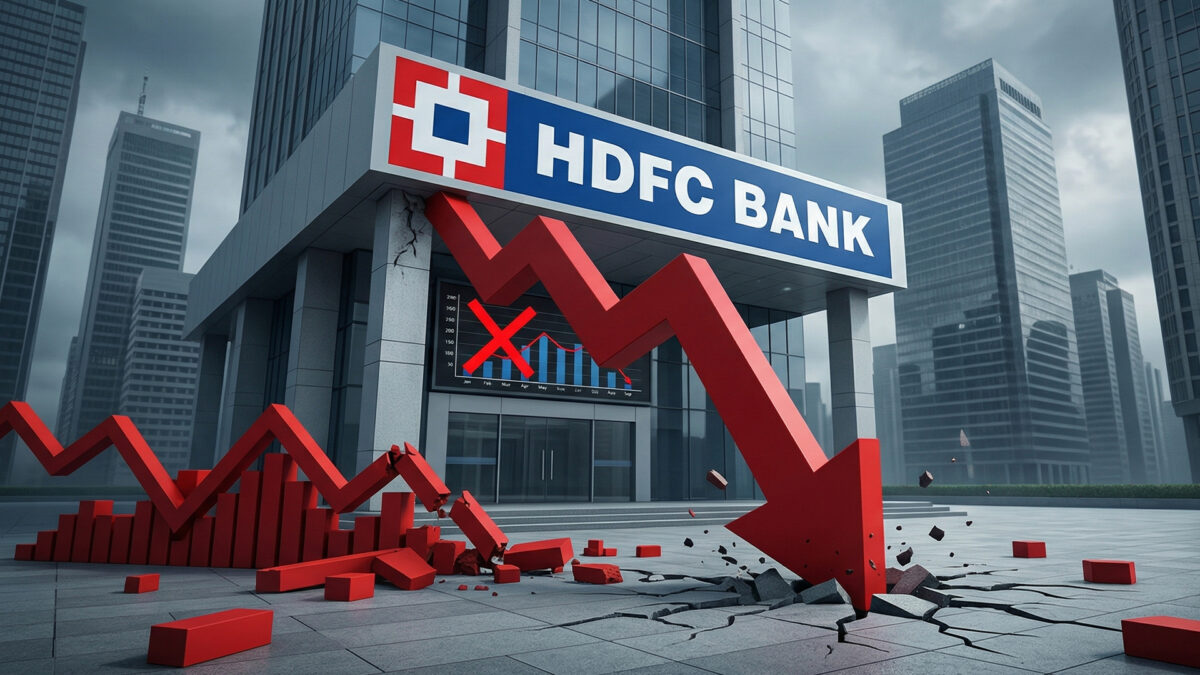
HDFC Bank shares fall further as HSBC cuts target

Shares of HDFC Bank fell for a fourth consecutive session, losing about 10 % over four days, as investor caution grew. The slide follows the recent resignation of the bank’s part‑time chairman and ongoing market pressures linked to global uncertainties.

Adding to the concerns, HSBC lowered its 12‑month price target for the bank from ₹1,070 to ₹990, citing valuation compression risks, though it maintained a ‘Buy’ rating.

Experts say the stock’s performance in upcoming quarters will be crucial for restoring investor confidence and stabilizing the market sentiment around India’s largest private lender.

Categories
Corporate

CoinDCX co‑founders arrested in fraud case

Two co‑founders of India’s crypto exchange CoinDCX, Sumit Gupta and Neeraj Khandelwal, have been arrested in Bengaluru over an alleged fraud involving ₹71.6 lakh, police said. The case was registered on March 16 under sections related to cheating, breach of trust, and fraud.

Along with the co‑founders, four other individuals have also been taken into custody as police continue investigating the matter. Authorities are examining how the alleged scam was carried out and are gathering evidence to understand the role of all involved.

CoinDCX has denied any wrongdoing, stating that the FIR is based on a conspiracy involving impersonators who misused the company’s name and fake websites to carry out fraud. The exchange said it has reported hundreds of fake websites to authorities to prevent further misuse.

The arrests have raised concerns among crypto users and investors, highlighting the risks of scams and impersonation in digital asset platforms. Authorities have urged caution and emphasized the importance of cybersecurity and vigilance.

Also Read: Sebi to review FPI rules, settlement changes

Categories
Corporate

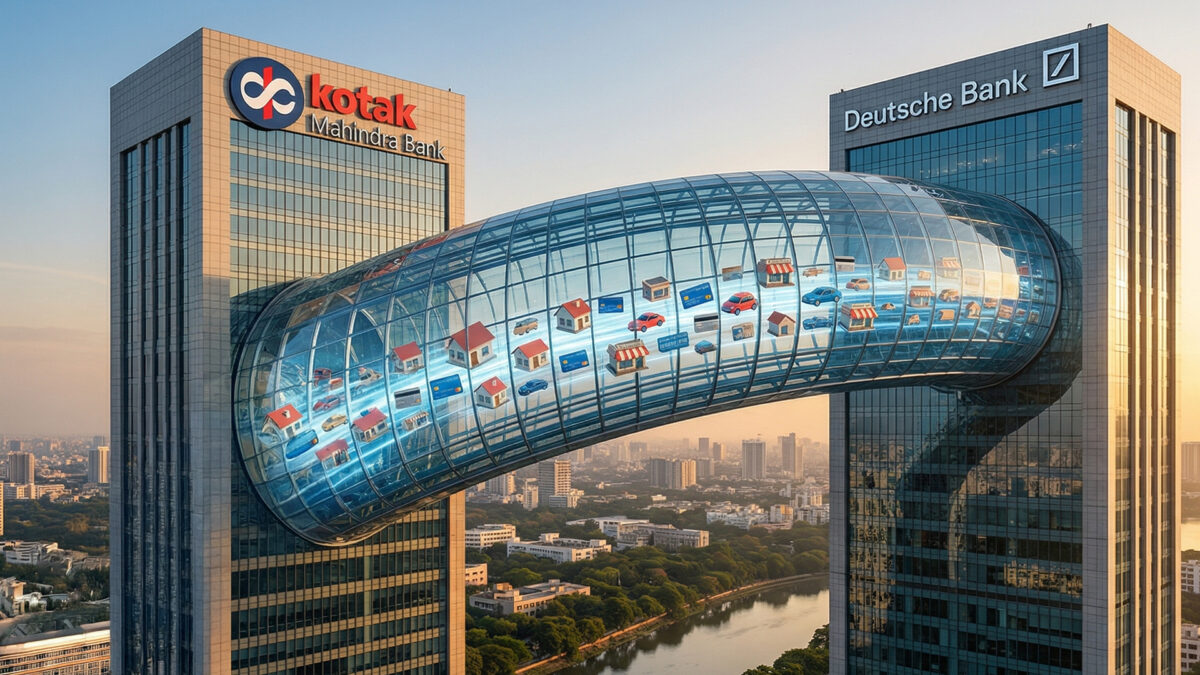
Kotak nears ₹4,500 cr deal for Deutsche unit

Kotak Mahindra Bank is set to acquire the India retail business of Deutsche Bank in a deal valued at around ₹4,500 crore, according to reports.

Kotak has emerged as the frontrunner for the acquisition, which is expected to be finalised soon. The deal will include Deutsche Bank’s retail operations in India, comprising its branch network, customer accounts, deposits and loan portfolio.

The acquisition is seen as a strategic move by Kotak to expand its retail footprint. By taking over an established business, the bank is likely to gain immediate scale in segments such as personal banking, home loans and wealth management.

For Deutsche Bank, the proposed sale is part of a broader strategy to streamline its operations and focus on core areas like corporate and investment banking. The German lender, like several other global banks, has been reducing its presence in India’s retail banking space.

The deal reflects an ongoing trend in the sector, where foreign banks are exiting or scaling down retail operations, while domestic lenders are stepping in to acquire these assets and grow their market share.

Market participants say the acquisition could help Kotak strengthen its customer base, improve deposit growth and enhance its position in the competitive retail banking segment.

The transaction is also expected to support Kotak’s long-term growth strategy by expanding its reach without the time and cost involved in organic expansion.

If completed, the deal will mark another instance of consolidation in India’s banking sector, highlighting the growing dominance of local players and the shifting strategies of global banks operating in the country.

Also Read: Sebi to review FPI rules, settlement changes

Categories
Beyond

Sebi to review FPI rules, settlement changes

Securities and Exchange Board of India (Sebi) is set to discuss key reforms aimed at making trading easier for foreign investors and improving overall market efficiency.

At its upcoming board meeting, Sebi will consider a proposal to simplify settlement rules for foreign portfolio investors (FPIs). At present, FPIs must settle each transaction separately, even if they buy and sell shares on the same day. This often requires them to arrange large amounts of funds for multiple trades.

The proposed change would allow a “net settlement” system, where investors can offset their buy and sell positions within the same trading cycle. This means they would only need to pay or receive the net difference, reducing the need for excess funds and lowering transaction costs.

Experts say this move could ease liquidity pressure on foreign investors, especially during periods of high trading activity such as index rebalancing. It may also help cut foreign exchange costs that arise due to timing differences between inflows and outflows.

Alongside this, Sebi will also review rules related to market intermediaries, including brokers and other financial entities. The board is expected to examine governance norms and eligibility criteria, often referred to as “fit and proper” rules, to ensure stronger oversight and accountability.

These proposals are part of Sebi’s ongoing efforts to make India’s capital markets more investor-friendly while maintaining safeguards for transparency and risk management. Simplifying processes for FPIs is seen as an important step in attracting more global investment into Indian markets.

Also Read: OpenAI plans to double workforce to 8,000

Categories
Corporate

OpenAI plans to double workforce to 8,000

OpenAI is planning a major hiring expansion, aiming to nearly double its workforce to around 8,000 employees by 2026 as competition in the artificial intelligence sector intensifies.

The company currently has about 4,500 employees and is rapidly scaling up recruitment across teams, including engineering, research, product development and sales. The move is part of a broader effort to strengthen its capabilities and meet growing global demand for AI tools.

A key focus of the hiring drive is the addition of roles that help businesses adopt AI technologies more effectively. These include specialists who can work closely with enterprise clients, helping them integrate OpenAI’s products into real-world applications. This signals a stronger push toward expanding its enterprise business.

The expansion comes at a time when the AI industry is witnessing intense competition, with major technology firms investing heavily in new models and platforms. OpenAI, known for developing ChatGPT, is looking to maintain its leadership position by accelerating innovation and scaling its operations.

Reports indicate that the company is also increasing its physical infrastructure, including office space, to support the growing workforce. Hiring has picked up pace in recent months as OpenAI looks to build capacity quickly.

The strategy highlights a shift toward long-term growth, with the company focusing not just on research but also on commercial adoption. As more businesses adopt AI tools, demand for support, customization and integration services is rising.

At the same time, OpenAI continues to face challenges such as high operating costs and the need to convert its popularity into sustainable revenue. Expanding its workforce is seen as a way to address these challenges while strengthening its position in the market.

Also Read: Samsung Galaxy S26 now works with AirDrop

Categories
Technology

Samsung Galaxy S26 now works with AirDrop

Samsung has introduced a new feature that allows Galaxy smartphone users to share files with Apple devices, bringing an AirDrop-like experience to its ecosystem.

The feature is part of an upgraded Quick Share system and is being rolled out starting with the Galaxy S26 series. It enables users to transfer photos, videos and documents wirelessly to nearby devices, including iPhones, iPads and Mac computers, without relying on third-party apps or cloud services.

To use the feature, Galaxy users need to turn on Quick Share, while Apple users must set their AirDrop visibility to “Everyone.” Once both devices are discoverable, files can be sent instantly over a wireless connection, similar to Apple’s native sharing system.

For years, transferring files between Android and Apple devices has been inconvenient, often requiring messaging apps, email or cloud storage. Samsung’s latest update aims to simplify this process and improve the overall user experience.

The rollout began on March 23 in select countries and is expected to expand gradually to more regions. Samsung is also likely to extend the feature to older Galaxy devices through future software updates.

The new feature reflects a broader push in the tech industry toward better cross-platform compatibility. By enabling smoother interaction between Android and iOS devices, Samsung is addressing a long-standing gap in connectivity.

Also Read: Saudi Aramco CEO opts out of Houston Meet

Categories
Beyond

Gold falls ₹10 ₹1,45,960, Silver drops ₹2,44,900

Gold and silver prices witnessed a decline on March 23, 2026, with both precious metals trading lower in domestic markets. Gold slipped marginally while silver also recorded a drop, reflecting subdued demand and global economic pressures.

In India, gold prices fell by ₹10 to ₹1,45,960 per 10 grams, touching a near four-month low. Silver prices also declined by ₹100 to trade at ₹2,44,900 per kilogram, continuing the downward trend seen in recent sessions.

The fall in bullion prices comes despite ongoing geopolitical tensions in the Middle East, which usually support safe-haven assets like gold. However, market dynamics have shifted due to macroeconomic factors, limiting any upward movement in prices.

One of the key reasons behind the decline is the strength of the US dollar. A stronger dollar makes gold more expensive for buyers using other currencies, thereby reducing demand globally. At the same time, rising bond yields have further pressured prices, as investors shift towards interest-bearing assets.

Interest rate expectations have also played a major role. With central banks expected to maintain a tight monetary policy stance to control inflation, gold’s appeal has weakened. Since gold does not provide regular returns like bonds or deposits, higher interest rates tend to reduce its attractiveness.

Silver prices, which are more closely linked to industrial demand, have also come under pressure. Concerns over global economic growth and weaker industrial outlook have weighed on silver, leading to sharper corrections compared to gold.

Additionally, some investors have engaged in profit booking amid market volatility. Selling in bullion markets has also been influenced by losses in equities, prompting investors to rebalance their portfolios.

Also Read: Sensex tanks 1,500 points, Nifty below 23,000

Categories
Corporate

Sensex tanks 1,500 points, Nifty below 23,000

The sell-off was broad-based, with major sectors trading in the red. Banking and financial stocks were among the biggest losers. Shares of HDFC Bank, ICICI Bank, and State Bank of India declined significantly, dragging the indices lower.

Metal stocks also witnessed heavy selling pressure due to global growth concerns. Companies such as Tata Steel and JSW Steel were among the top laggards of the session.

In addition, oil-sensitive and infrastructure-linked stocks like Reliance Industries and Larsen & Toubro traded lower as rising crude prices raised cost concerns.

The market downturn was triggered by escalating geopolitical tensions in the Middle East, which pushed crude oil prices above $110 per barrel. This sparked fears of higher inflation and increased import costs for India, putting pressure on both equities and the currency.

Foreign institutional investors (FIIs) continued their selling streak, further weighing on market sentiment. The outflow of foreign funds has been a key factor behind the sustained weakness in Indian equities in recent sessions.

However, some defensive stocks managed to hold ground. FMCG and pharmaceutical companies showed relative resilience, with names like Hindustan Unilever and Sun Pharmaceutical Industries trading with mild gains or limited losses. These sectors typically perform better during uncertain market conditions.

Broader markets also mirrored the weakness, with mid-cap and small-cap stocks declining sharply, indicating widespread selling pressure across the board.