Categories
Corporate

Adani Enterprises’ ₹25,000 cr rights issue exceeds expectations

Adani Enterprises Limited (AEL) has successfully completed its ₹25,000 crore rights issue, which closed on December 10, 2025, achieving 108 percent overall subscription. The oversubscription underscores strong investor confidence in the company’s strategic initiatives and financial positioning.

Under the rights issue, eligible shareholders were offered new equity at ₹1,800 per share, with an entitlement of three new shares for every 25 shares held. Payment for the subscription was structured in three tranches, with the initial installment collected at the time of application and subsequent payments scheduled in January and March 2026.

The public portion of the issue was oversubscribed by approximately 130 percent, reflecting robust participation from retail and institutional investors. The promoter group, holding approximately 74 percent stake, fully subscribed to its entitlement, demonstrating strong internal support for the capital raise.

Proceeds from the rights issue are earmarked for debt reduction, repayment of shareholder loans, and capital expenditure across key business segments, including energy, infrastructure, airports, data centers, green hydrogen initiatives, and metals manufacturing. The capital infusion will enhance financial flexibility, reduce leverage, and support the company’s long-term growth strategy.

Adani Enterprises’ share price recorded a marginal decline on the closing day of the rights issue, reflecting market adjustments following the capital raise.

This successful rights issue represents one of the largest capital-raising exercises in the Indian market in 2025 and reaffirms investor confidence in Adani Enterprises’ diversified business model. The company remains committed to leveraging the strengthened balance sheet to execute its strategic priorities, drive sustainable growth, and enhance shareholder value.

Adani Enterprises continues to focus on delivering long-term value to all stakeholders while advancing projects that contribute to India’s infrastructure and energy landscape.
Also Read: Mexico hikes tariffs up to 50% on Asian imports

Categories
1 Minute-Read

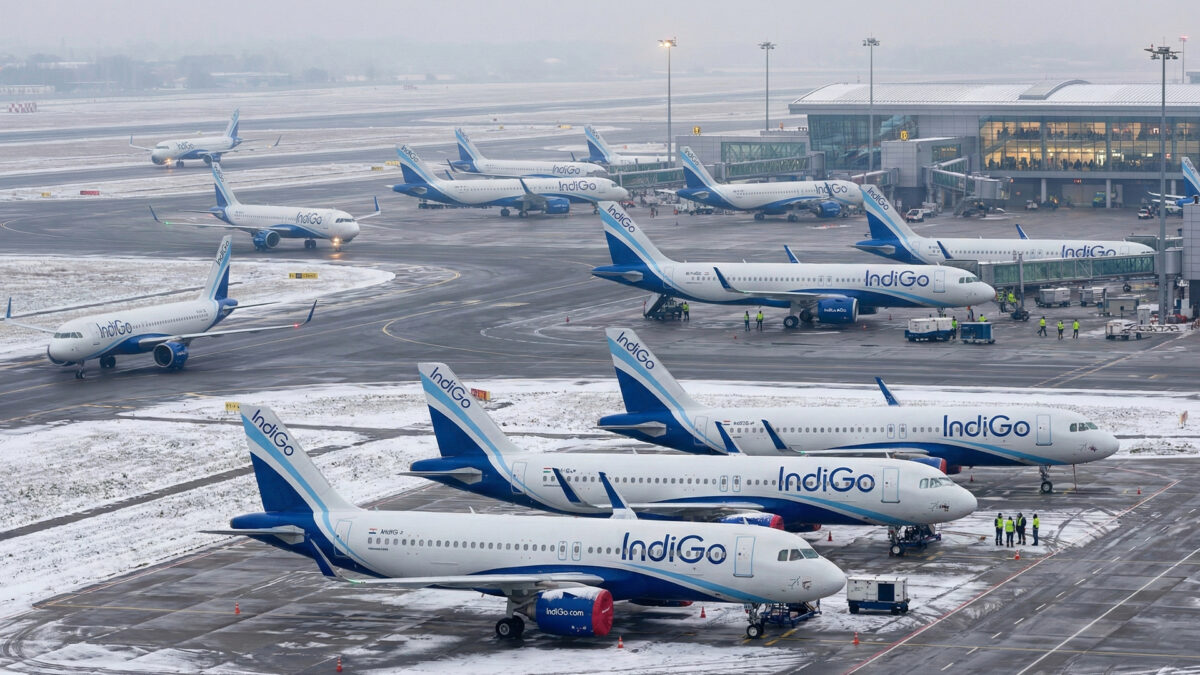
IndiGo’s 10% cut barely trims flights

IndiGo’s planned 10% reduction in its winter schedule results in only a 2.35% drop in actual flights because the airline had not been using its full permitted capacity.

The DGCA had allowed IndiGo around 2,145 daily departures, but it consistently operated below 2,000 flights per day over the past year.

This means the mandated cut brings daily flights down only slightly, to about 1,931. Analysts estimate a revenue impact of ₹1,200–1,400 crore, or roughly 1.3–1.7% of annual earnings.

Overall, the headline cut appears steep, but its operational impact around IndiGo is limited.

Categories
Beyond

Mexico hikes tariffs up to 50% on Asian imports

Mexico has approved higher import tariffs on products from several Asian countries, including India and China. The move is meant to protect local industries and increase government revenue. The new duties will come into effect in 2026 and will cover products such as vehicles, auto parts, textiles, plastics, steel, footwear, and clothing.

The bill was passed in the Mexican Senate with 76 votes in favour, five against, and 35 abstentions, after it was approved by the lower house. Most products will face tariffs of up to 35%, while some could see increases as high as 50%. The first version of the proposal included higher tariffs on around 1,400 products, but the final plan reduced duties for nearly two-thirds of them.

Officials say the tariff hike is needed to help Mexican manufacturers compete with cheaper imports from Asia. They believe the new duties will protect jobs, strengthen domestic production, and improve Mexico’s role in global supply chains.

The tariff increase is also expected to boost government revenue, with experts estimating an extra $3.76 billion next year. This is seen as an important step to reduce Mexico’s fiscal deficit.

The decision comes as global trade tensions rise and ahead of a review of the United States-Mexico-Canada Agreement (USMCA). Some trade analysts and business groups have warned that higher tariffs could disrupt supply chains, increase production costs, and raise prices for consumers.

Countries without free-trade agreements with Mexico, including India and China, are likely to feel the biggest impact, as higher duties could make their exports less competitive.

Overall, the move is considered one of the most significant changes in Mexico’s trade policy in recent years. It shows the government’s focus on protecting local industries while managing international trade. Businesses and exporters are now closely watching the changes and preparing for the impact of the new tariffs.

Also Read: Vi Business rolls out smart gas metering for CGD companies

Categories
Corporate

Vi Business rolls out smart gas metering for CGD companies

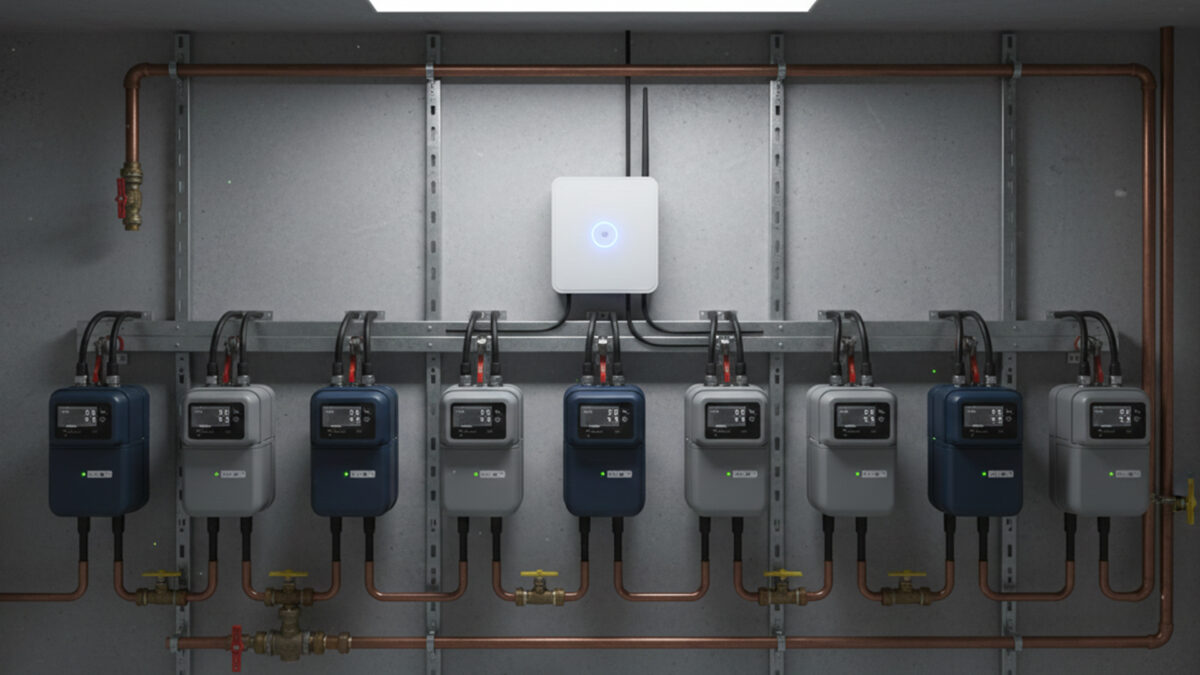
Vi Business, the enterprise division of Vodafone Idea, has launched smart gas meters for City Gas Distribution (CGD) companies. The new solution uses digital technology to help gas companies manage usage more efficiently and reduce losses.

The meters are powered by Narrowband IoT (NB-IoT), a technology that allows them to send data reliably, even from hard-to-reach areas. This means gas companies can now track usage in real-time, quickly detect leaks or theft, and ensure accurate billing. It also reduces the errors that happen with manual meter readings.

‘Lost and Unaccounted Gas’ (LUAG) is a major problem in the gas industry. It happens when gas is lost due to leaks, theft, or incorrect readings. Smart meters can help fix this problem by giving accurate information instantly.

The CGD sector in India is growing fast and is expected to use nearly one-third of the country’s total natural gas in the next few years, according to the Petroleum and Natural Gas Regulatory Board (PNGRB). As the industry grows, digital tools like smart meters are becoming essential to make operations smoother and more reliable.

Arvind Nevatia, Chief Enterprise Business Officer at Vi Business, said, “Smart gas meters are changing the way utilities operate. Our solution helps gas companies save costs, reduce losses, and make billing more accurate for consumers.”

The new smart meters are part of Vi Business’s larger effort to bring digital solutions to India’s energy sector. They are designed to grow with the company’s needs, making it easy for gas operators to upgrade their systems in the future.

With these meters, CGD companies can improve safety, reliability, and customer trust. By combining technology with practical insights, Vi Business aims to support India’s gas sector as it becomes more digital and efficient.

Also Read: Fed cuts rates again, benchmarks at three‑year low

Categories
Beyond

Fed cuts rates again, benchmarks at three‑year low

On December 10, 2025, the Federal Reserve (Fed), under chair Jerome Powell, reduced its benchmark interest rate by 25 basis points, bringing the federal funds rate down to a range of 3.50 %–3.75 %,  the lowest level in nearly three years.

This marks the third consecutive rate cut this year, following similar reductions in September and October. The move comes against a backdrop of persistent inflation and a softening job market, with Fed officials noting “downside risks to employment” alongside still‑elevated prices.

Inside the policy‑making committee, the decision was not unanimous. Out of 12 members, nine voted for the cut, while three preferred either no change or a deeper 50‑basis‑point cut, highlighting divisions over how aggressively to stimulate growth versus guard against inflation.

Importantly, Powell cautioned that future cuts are not guaranteed. He suggested that rates may now be near a neutral point, signaling a potential pause, or at least a slower pace, in further easing.

Beyond rates, the Fed also committed to resuming short-term Treasury bill purchases to bolster liquidity in US money markets, a step not seen since previous crises.

Markets responded quickly. Major US stock indices rallied on the news, the Dow Jones Industrial Average surged nearly 1.3%, while the S&P 500 and Nasdaq Composite also posted strong gains.

That said, global sentiment remained cautious. The Fed’s mixed signals, an uncertain labour‑market outlook, and persistent inflation left many unsure about what comes next, making 2026 a year of close watching for investors.

Also Read: ICICI Prudential AMC IPO opens December 12

Categories
1 Minute-Read

ICICI Prudential AMC IPO opens December 12

India’s largest asset management company, ICICI Prudential AMC, is launching its IPO on December 12, 2025, with anchor bidding on December 11.

The ₹10,602.65 crore offer is fully structured as an offer-for-sale, with Prudential Corporation Holdings offloading up to 4.9 crore shares. The price band is set at ₹2,061–₹2,165 per share, with retail investors allowed a minimum investment of ₹12,990 (6 shares per lot).

Allotment is expected by December 17, and listing on BSE and NSE is tentatively scheduled for December 19. The IPO’s GMP is reported at ₹119 over the issue price.

Categories
Beyond

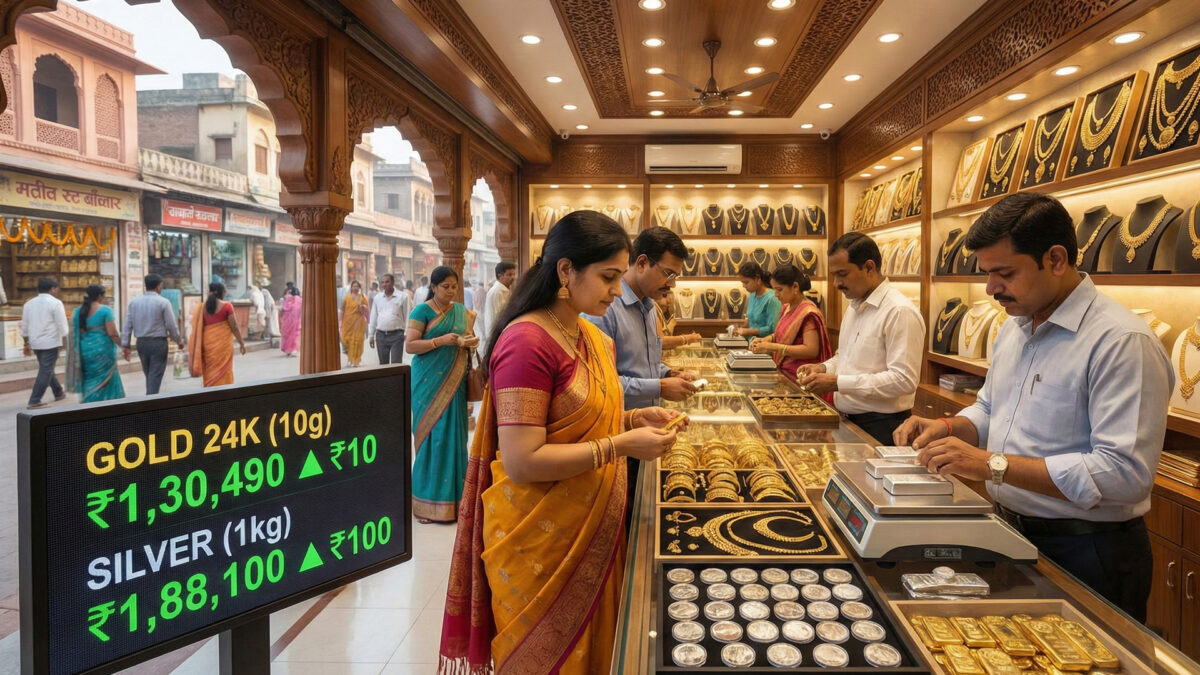
Gold at ₹1.30 lakh, Silver near ₹1.92 lakh, per 10 grams

Gold and silver prices climbed across India on December 11, with both metals continuing their steady upward run driven by strong investor demand. In most major cities, 24-carat gold traded at around ₹1,30,480 per 10 grams, marking a modest but steady daily gain. The 22-carat variant hovered near ₹1,19,000 per 10 grams, reinforcing the broad rise across bullion categories.

Silver saw an even sharper jump. Rates reached ₹1,92,160 per kilogram, inching closer to the ₹2-lakh mark that analysts say may soon be tested if current global trends persist. Across cities such as Delhi, Mumbai, Chennai, Bengaluru and Kolkata, silver remained in the ₹1.91–1.92 lakh range, reflecting uniform upward momentum in retail markets.

The surge in precious-metal prices comes amid continued global uncertainty. With financial markets fluctuating and currencies facing pressure, investors are once again gravitating towards traditional safe-haven assets. Analysts note that gold and silver often gain in periods when risk appetite weakens, and the latest price action reflects that sentiment clearly.

Bullion dealers say footfall has remained steady despite the higher rates. However, jewellery buyers, especially those planning wedding purchases, are beginning to feel the pinch. Many are shifting to lighter designs or lower-karat options to manage rising costs. Traders also report that some customers are postponing major purchases, hoping for a correction later in the month.

For investors, the uptick reinforces gold and silver’s role as hedges against volatility. Experts advise monitoring price movements closely, as international developments could continue to influence domestic markets.

Prices are expected to remain elevated in the near term, with global cues, interest-rate trends, and currency movements likely to shape the next leg of the rally.

Also Read: Sensex advances 100 points, Nifty edges above 25,800

Categories
Corporate

Sensex advances 100 points, Nifty edges above 25,800

The equities opened higher on Thursday, where the Sensex rose over 100 points in early trade, while the Nifty moved nearly 40 points higher to stay above the 25,800 mark. It tracked the positive global sentiment after the US Federal Reserve cut interest rates by 25 basis points. Buying was visible across metals, auto, banking, IT and real estate stocks, with traders noting that the market, though cautious at the open, strengthened as expectations of improved global liquidity took hold.

Metals led the early advance, supported by firm global commodity prices. Among the key gainers at 9:30 AM were DCM Shriram, which climbed 5.70 percent, JSW Holdings, BSE, Kaynes Technology India and ACME Solar Holdings, all rising between 2 and 3 percent.

On the other hand, pressure persisted in select counters. Tata Teleservices (Maharashtra) fell 4.08 percent at 9:34 AM, followed by declines in Godfrey Phillips India, Transformers & Rectifiers (India), Balrampur Chini Mills and Go Digit General Insurance.

Profit-booking in consumer-focused and midcap stocks capped the market’s overall upside. IndiGo also slipped more than 2 percent after the airline lowered its quarterly capacity and revenue guidance.

Analysts said volatility is likely to continue through the session, with global cues remaining the key driver. They added that while the Fed’s rate cut offers short-term relief, domestic triggers will be essential to sustain further gains in the broader market.

Also Read: Sensex slips 275 points, Nifty closes near 25,750

Categories
Corporate

Sensex slips 275 points, Nifty closes near 25,750

Indian stock markets closed lower on Wednesday wherein the BSE Sensex fell by about 275 points, while the Nifty 50 ended below 25,800. Mid-cap and small-cap stocks also slipped, showing weakness in the broader market.

Among the Nifty 50 stocks, Eicher Motors, Hindalco, Tata Steel, HDFC Life, and Adani Ports emerged as the top gainers. Metal stocks outperformed the broader market on the back of firm global commodity prices and bargain buying.

On the losing side, InterGlobe Aviation (IndiGo) saw strong selling pressure and ended among the top losers. Zomato (Eternal), Trent, Bharti Airtel, and Apollo Hospitals also declined, dragging the benchmark indices lower.

Sector-wise, IT, banking, realty, capital goods and consumer durables stocks recorded losses of 0.5–1%. The metal sector bucked the trend and ended higher, while oil and gas and pharma stocks closed with modest gains.

Analysts said market sentiment remains fragile amid uncertainty over global interest rate trends and foreign fund flows. Investors are expected to stay cautious in the near term, tracking global cues, currency movement and upcoming central bank decisions.

Also Read: Sensex jumps 250 points, Nifty crosses 25,900

Categories
Technology

Microsoft to invest $17.5 billion for India’s AI future

Microsoft has announced a massive $17.5 billion investment in India, aiming to make the country a global hub for artificial intelligence (AI) and cloud technology. Spread over 2026–2029, this is the company’s largest-ever investment in Asia and a clear signal of India’s growing importance in the global tech landscape.

This commitment comes on top of a $3 billion investment earlier this year, bringing Microsoft’s total funding in India to $20.5 billion. CEO Satya Nadella expressed gratitude to Prime Minister Narendra Modi, calling India a “land of immense AI opportunity.”

The investment will focus on several key areas. Microsoft plans to set up state-of-the-art hyperscale data-centres, including a new cloud region in Hyderabad, expected to go live by mid-2026. These will provide faster, reliable cloud access to businesses, startups, and government agencies across the country.

A significant part of the plan is the rollout of sovereign cloud services — secure, locally managed public and private clouds tailored to India’s compliance and security requirements.

Microsoft also aims to train 20 million Indians in AI and digital skills by 2030, partnering with governments and industry groups. AI will also be integrated into public platforms like e-Shram and the National Career Service, potentially benefiting over 310 million informal workers with job matching, skill forecasting, résumé-building, and multilingual support.

The investment has drawn praise from government officials. IT Minister Ashwini Vaishnaw said it reflects India’s growing stature as a trusted technology partner. Puneet Chandok, Microsoft President for India & South Asia, said the move will “build infrastructure, spark innovation, and empower a billion dreams.”

Experts say the funding could accelerate India’s digital transformation, create new jobs, and strengthen the country’s position as a hub for AI and cloud technology. By combining infrastructure, skills development, and public services, Microsoft’s plan could reshape India’s tech ecosystem and make AI accessible at a population scale.

Also Read: Swiggy raises ₹10,000 crore through fresh share sale