Categories
Corporate

Zepto plans Rs 11,000 cr IPO, files confidential papers

Zepto, the quick-commerce startup is gearing up for its initial public offering (IPO), planning to raise up to Rs 11,000 crore through the public issue. The company has filed its draft IPO papers confidentially with the Securities and Exchange Board of India (Sebi), a process that allows it to receive regulator feedback before making the IPO public.

This marks a key step in Zepto’s plans to list on the stock exchange in 2026, potentially making it one of India’s youngest startups to go public.

Founded by Aadit Palicha and Kaivalya Vohra, Zepto has carved a niche in the rapid grocery delivery sector, promising essentials delivered in minutes. The company operates through a network of dark stores in major Indian cities and has expanded rapidly, attracting strong interest from investors. Over the years, Zepto has grown its revenues significantly, although it continues to report losses as it invests heavily in market expansion and customer acquisition.

The planned IPO will include fresh shares issued by the company, along with stake sales by existing investors. This combination allows Zepto to raise fresh capital for growth while providing liquidity for early backers. To streamline operations and improve profitability ahead of listing, Zepto has implemented cost-reduction measures, including optimizing workforce and tightening customer-acquisition spending.

A consortium of investment banks, including Morgan Stanley, Axis Capital, HSBC, Goldman Sachs, JM Financial, IIFL Securities, and Motilal Oswal, has been appointed to manage the IPO. Subject to market conditions and regulatory approvals, Zepto aims to debut on the stock market in the July–September 2026 quarter.

The IPO comes amid a surge in Indian startup listings, particularly in technology, e-commerce, and delivery sectors. Zepto’s public debut is expected to join the ranks of firms like Zomato and Swiggy, showcasing investor confidence in the quick-commerce sector, despite intense competition and high operational costs. Analysts say Zepto’s rapid growth, strong market presence, and focus on operational efficiency make it an attractive opportunity for investors, signaling a new phase for India’s fast-growing on-demand delivery market.

Also Read: IndiGo cancels 67 flights as fog disrupts operations

Categories
Beyond

Gold at ₹1,39,260, Silver at ₹2,34,100 after fresh gains

Gold and silver prices moved slightly higher in Indian markets on Friday, December 26, continuing their steady upward trend. According to market data, the price of 24-carat gold increased by ₹10, taking the rate to ₹1,39,260 per 10 grams. 22-carat gold also rose by ₹10 and was priced at ₹1,27,660 per 10 grams.

Gold prices showed small variations across major cities. In Mumbai and Kolkata, 24-carat gold was quoted at ₹1,39,260 per 10 grams. Prices were slightly higher in Delhi at ₹1,39,410, while Chennai recorded the highest rate at ₹1,39,870 per 10 grams. For 22-carat gold, most metros such as Mumbai, Kolkata, Bengaluru, and Hyderabad reported prices around ₹1,27,660 per 10 grams, with marginally higher rates in Delhi and Chennai.

Silver prices also moved up during early trade. The metal gained ₹100 per kg, taking the price to ₹2,34,100 per kg in markets such as Delhi, Mumbai, and Kolkata. In Chennai, silver was trading higher at ₹2,45,100 per kg, reflecting regional demand differences.

The mild rise in gold and silver prices follows firm trends in global bullion markets, where precious metals have remained strong due to investor interest and expectations around interest rates. Gold continues to be seen as a safe investment option, while silver has also attracted demand because of its industrial use and investment appeal.

Also Read: Sensex down 200 points, Nifty slips under 26,100

Categories
Technology

Microsoft speeds up Windows encryption

Microsoft has rolled out a major upgrade to BitLocker, its built-in drive encryption tool for Windows, promising faster performance and better efficiency for users. The new feature, called hardware-accelerated BitLocker, is being introduced with the latest Windows 11 updates and is designed to make encryption less demanding on the system.

Traditionally, BitLocker relied mainly on the computer’s central processing unit (CPU) to encrypt and decrypt data stored on a device. While secure, this software-based approach could slow down performance, especially on laptops or systems handling large amounts of data. With the new update, Microsoft is shifting much of this work to specialised cryptographic hardware built directly into modern processors.

By using dedicated hardware for encryption, Windows can now secure data more quickly and with far less strain on the CPU. According to Microsoft, this change can deliver significantly faster read and write speeds on encrypted drives, bringing performance closer to that of unencrypted storage. It also reduces overall power consumption, which can help improve battery life on portable devices.

The hardware-accelerated BitLocker feature will automatically turn on for devices that meet the required hardware standards. These include newer processors and system-on-chips (SoCs) that support built-in encryption engines. Systems without compatible hardware will continue using the existing software-based BitLocker, ensuring no loss of functionality or security.

Security remains a key focus of the update. By handling encryption keys at the hardware level, the new approach adds an extra layer of protection. This reduces the risk of certain attacks that target encryption keys stored in system memory, complementing existing safeguards such as the Trusted Platform Module (TPM).

The rollout has begun with Windows 11 Insider Preview builds, including upcoming versions like 24H2 and 25H2. Microsoft is expected to make the feature more widely available as part of future stable releases, with support gradually expanding across more devices and hardware platforms.

Also Read: Russia eyes moon nuclear power by 2036

Categories
1 Minute-Read

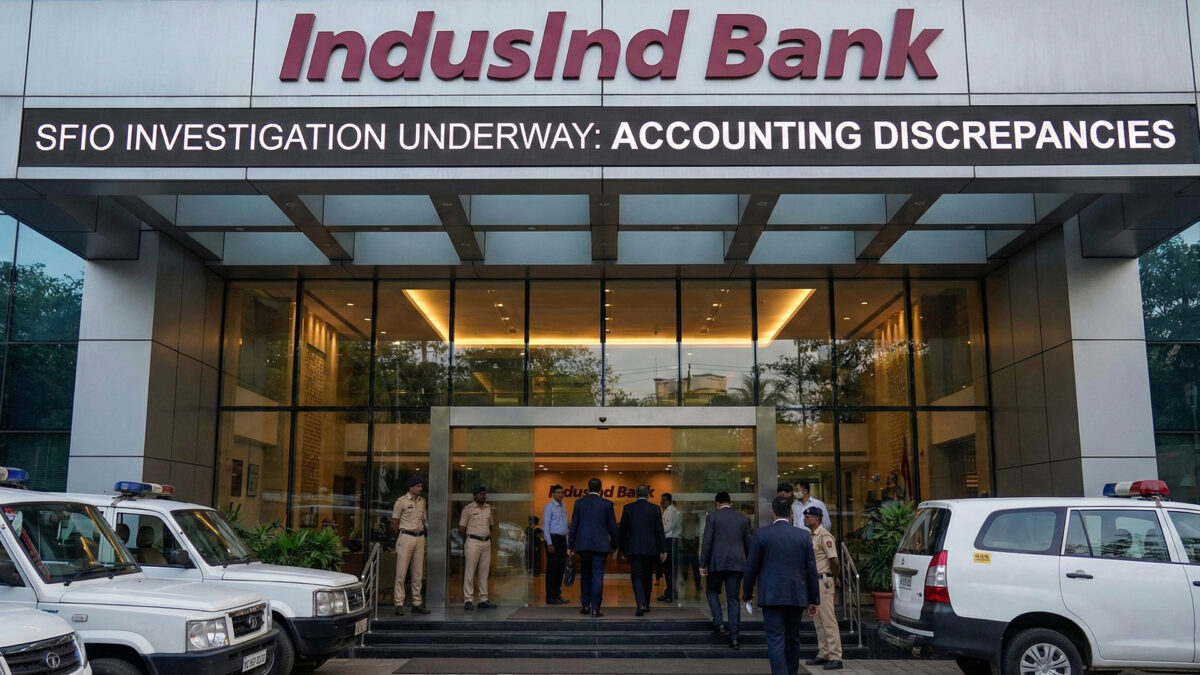
SFIO probes IndusInd Bank over derivatives accounting irregularities

The Serious Fraud Investigation Office (SFIO) has launched an investigation into IndusInd Bank following alleged accounting discrepancies in its derivatives portfolio.

The bank informed stock exchanges that it received a notice under Section 212 of the Companies Act, 2013, and is cooperating fully. Audits and internal reviews flagged irregular accounting of derivative trades, overstated microfinance income, and unexplained “other assets” and “other liabilities.”

These irregularities led to major adjustments in the bank’s financial statements. SFIO’s probe will examine the nature and extent of these discrepancies and whether they involve deliberate misreporting or lapses in compliance.

Categories
Beyond

Russia eyes moon nuclear power by 2036

Russia is setting its sights on the Moon with a bold plan: to build a nuclear-powered energy station on the lunar surface by 2036. The initiative, led by the Russian space agency Roscosmos in partnership with aerospace firm Lavochkin Association, aims to provide a reliable, long-term power source for lunar missions and research.

The lunar power station is expected to support rovers, scientific instruments, and the International Lunar Research Station (ILRS), a joint project with China. While Roscosmos has not officially confirmed the use of nuclear technology, Russia’s involvement of its top nuclear agencies strongly suggests that nuclear energy will be at the heart of the project. Unlike solar panels, nuclear power can operate continuously, including during the Moon’s two-week-long nights, ensuring uninterrupted exploration.

According to Roscosmos chief Dmitry Bakanov, the project signals a move from short-term lunar visits to sustained operations. “This station will enable longer missions, more research, and eventually human presence on the Moon,” he said. The plan also positions Russia alongside global space powers like the United States, which is developing its own lunar nuclear reactor for 2030.

This announcement follows earlier setbacks, including the failed Luna‑25 mission in 2023. Despite these challenges, Russia is determined to strengthen its role in international space exploration and secure a foothold on the Moon.

Over the next decade, the project will involve spacecraft design, testing, and deployment of infrastructure on the lunar surface. Experts say the nuclear power station could be a game-changer, allowing more ambitious missions and laying the foundation for future human settlements.

Also Read: Bharti, Warburg Pincus take 49% in Haier India

Categories
Beyond

RBI delays Jan 3 faster cheque clearance

The Reserve Bank of India (RBI) has indefinitely postponed the January 3, 2026 launch of the second phase of its faster cheque clearance system, which was expected to allow cheques to clear within three hours. The central bank cited the need to give banks more time to prepare for the tighter timelines.

The faster clearing system, known as the Cheque Truncation System (CTS) with Continuous Clearing and Settlement (CCS), began its Phase 1 rollout in October 2025. This phase already allows banks to scan, exchange, and settle cheque images electronically, cutting the traditional one- to two-day clearing period to just a few hours.

Phase 2 was designed to speed this up even further. Under the new rules, banks would need to approve or reject cheques within three hours of receiving them. If a bank did not respond within this window, the system would automatically clear the cheque. The goal was to make funds available to account holders faster and more reliably, benefiting both individuals and businesses.

However, implementing such a system across all banks proved challenging. Many banks needed additional time to streamline processes and ensure smooth integration with the new timelines. The RBI, acknowledging these practical difficulties, chose to postpone the rollout until further notice.

Meanwhile, the timings for cheque processing have been slightly adjusted. The presentation window now runs from 9 a.m. to 3 p.m., while the confirmation window is from 9 a.m. to 7 p.m. This gives banks more flexibility to manage cheque settlements under the existing Phase 1 system.

For everyday customers and businesses, there is no immediate change to the current clearing speed. The improvements from Phase 1 remain in effect, while the more ambitious three-hour settlement plan will be implemented only once banks are fully ready.

The RBI’s move highlights the delicate balance between speed and operational readiness in banking, ensuring that customers can enjoy faster payments without risking errors or delays during the transition.

Also Read: Navi Mumbai Airport opens with first flights

Categories
Beyond

Navi Mumbai Airport opens with first flights

Navi Mumbai International Airport (NMIA) marked a historic moment this week as it moved closer to full operations, celebrating the milestone with a grand drone show and the start of commercial flights. The new airport is expected to significantly reduce the burden on Mumbai’s existing Chhatrapati Shivaji Maharaj International Airport, which has been operating at near full capacity for several years.


Ahead of its operational launch, NMIA hosted a spectacular mega drone show, with more than 1,500 drones lighting up the night sky. The coordinated aerial display showcased visuals symbolising India’s progress, sustainability, aviation growth and the future of Mumbai’s connectivity. Images of aircraft, green energy themes and the airport logo were formed in the sky, drawing large crowds and creating excitement around the launch.

Commercial operations officially began on December 25, making it a landmark Christmas Day for Indian aviation. The first flight to land at the airport was an IndiGo service from Bengaluru, which was welcomed with a traditional water cannon salute. Soon after, the airport saw its first departure, with a flight heading to Hyderabad. These inaugural flights marked the start of regular passenger services at the long-awaited airport.

Speaking on the occasion, Adani Group Chairman Gautam Adani said Mumbai had been struggling with airport congestion for nearly a decade. He noted that the new airport would provide much-needed relief to passengers and airlines, while also supporting the city’s growing economic and travel needs. He described the launch as a proud moment for Mumbai and Maharashtra.

The Navi Mumbai International Airport is being developed under a public-private partnership, with Adani Airports Holdings Limited as the majority stakeholder and CIDCO, a Maharashtra government body, as the public partner. Once fully completed, the airport is planned to handle up to 90 million passengers annually, making it one of the largest airports in the country.

Airport officials highlighted that passenger comfort, smooth operations and accessibility have been key priorities in planning. Facilities have been designed to cater to both domestic and international travellers, with a focus on efficiency and affordability.

With flights now operational, NMIA is expected to play a major role in strengthening air connectivity, boosting regional development and supporting India’s fast-growing aviation sector in the years ahead.

Also Read: Gold near ₹1.39 lakh, Silver at ₹2.33 lakh

Categories
Beyond

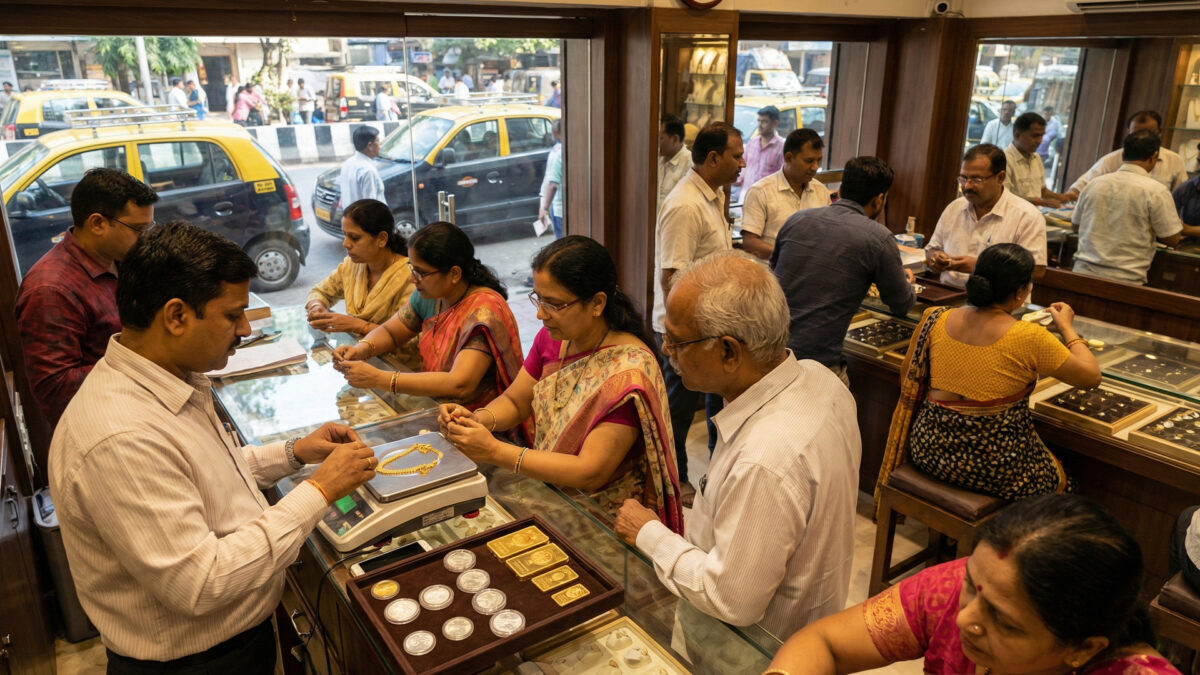
Gold near ₹1.39 lakh, Silver at ₹2.33 lakh

Gold and silver prices stayed mostly stable across Indian markets on Wednesday, December 25, with rates holding near recent highs. The steady trend reflects continued demand and supportive global market conditions.

On Christmas Day, 24-carat gold was priced close to ₹1.39 lakh per 10 grams in major cities such as Delhi, Mumbai, Chennai, and Kolkata. 22-carat gold, which is widely used for jewellery making, was selling at around ₹1.27 lakh per 10 grams. Prices showed small differences across cities due to local taxes, transportation costs, and jewellers’ margins.

Among the metros, Chennai and other southern cities recorded slightly higher gold prices, while Delhi and Mumbai saw marginally lower rates. Despite these minor variations, gold prices remained firm nationwide.

Silver prices also showed strength. On December 25, silver was trading at around ₹2.33 lakh per kilogram in most major markets. In cities like Chennai, silver prices were quoted even higher. Strong industrial demand and positive global cues have supported silver prices in recent weeks.

Market experts say the firmness in prices is due to global economic uncertainty, inflation worries, and expectations of lower interest rates in key economies. These factors usually increase demand for gold and silver, which are considered safe investment options during volatile periods. Domestic demand from the festive and wedding season has also helped keep prices elevated.

Over the past few weeks, gold prices have moved up gradually, with December seeing sustained buying interest. Silver, meanwhile, has recorded sharper gains during the month, benefiting from both investment and industrial demand.

Analysts caution that while prices are currently high, short-term fluctuations are possible depending on global economic data, currency movements, and central bank decisions. Still, the overall outlook for precious metals remains positive towards the end of the year.

Also Read: Reliance gets one-month US nod for Russian oil

Categories
Corporate

India clears 2 new airlines to boost competition

The Indian government has given initial approval to two new airlines, Al Hind Air and FlyExpress, allowing them to move closer to starting flight operations. The decision is aimed at increasing competition in the domestic aviation sector, which is currently dominated by a few large players.

The approvals were granted by the Ministry of Civil Aviation through the issuance of No Objection Certificates (NOCs). Civil Aviation Minister K. Rammohan Naidu said the move reflects the government’s effort to strengthen the aviation sector and offer passengers more choices.

The decision comes shortly after a major disruption at IndiGo earlier this month, when the airline cancelled thousands of flights due to staffing and operational issues. The incident affected a large number of passengers and highlighted the risks of depending heavily on one airline. At present, IndiGo controls about 65 per cent of India’s domestic air travel market, while the Air India Group accounts for around 27 per cent. Smaller airlines share the remaining portion.

Al Hind Air is promoted by the Kerala-based alhind Group. The airline plans to start operations with smaller aircraft and focus on regional routes, especially in southern India. Its aim is to improve connectivity between smaller cities and towns. The airline will now work on completing regulatory requirements, including getting an Air Operator Certificate.

FlyExpress, the second airline to receive approval, has indicated that it plans to begin operations soon. While detailed plans about its routes and fleet have not yet been shared publicly, the airline is expected to serve domestic passengers and add capacity to the market.

In addition, another airline, Shankh Air, has already received its NOC earlier and is expected to start flying in 2026.

The government believes that the entry of new airlines will improve services, reduce the impact of disruptions, and encourage competitive pricing. It also supports broader goals such as expanding regional air connectivity under existing aviation policies.

With passenger demand continuing to grow, the addition of new airlines is expected to make India’s aviation sector more balanced, competitive, and resilient.

Also Read: Satya Nadella skips managers to hear engineers on AI

Categories
Technology

Apple raises privacy concerns over Chrome

Apple has urged iPhone users to reconsider their use of Google Chrome, warning that the browser does not provide the same level of privacy protection as Apple’s Safari. The concern centres on how Chrome manages user tracking on iPhones, with Apple suggesting that certain forms of data collection may continue even when users believe they have limited tracking.

According to Apple, Safari is designed to block sophisticated tracking tools by default, including covert fingerprinting techniques that can quietly follow users across multiple websites. Chrome, by contrast, does not automatically prevent all such methods, raising questions about how much personal data may be shared without users being fully aware.

The warning comes as independent research adds weight to Apple’s claims. A recent global browser security study ranked Google Chrome as the second-poorest performer among major browsers when it comes to privacy and security. Researchers evaluated browsers on key parameters such as tracker blocking, resistance to fingerprinting and secure connections. Chrome’s high risk score indicates a greater likelihood of user data being tracked or exposed.

Despite being the most widely used browser worldwide, Chrome’s popularity has not translated into stronger privacy protections. The study found that Safari offered better safeguards straight out of the box, although it did not emerge as the best-performing browser overall.

The research also highlighted growing concerns around AI-powered browsers. One such browser ranked last for privacy after failing several basic tracking and security tests, fuelling worries that rapid innovation in AI-driven browsing may be outpacing essential privacy protections.

Also Read: Satya Nadella skips managers to hear engineers on AI