Categories
Beyond

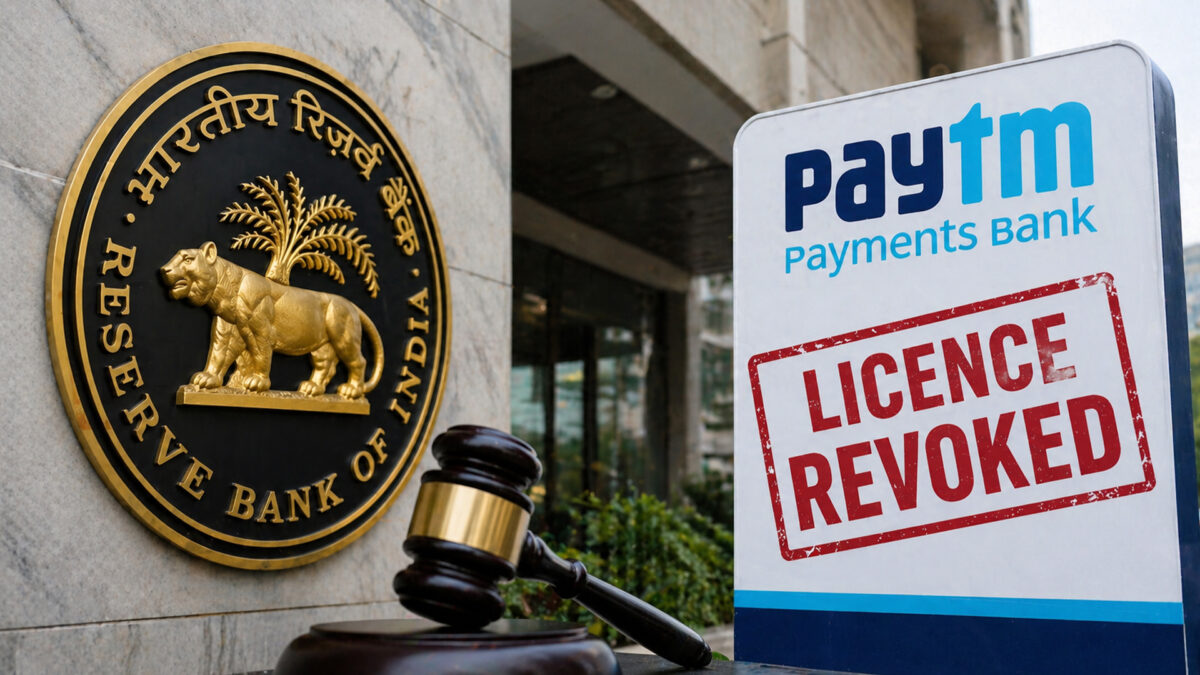
RBI cancels Paytm payments bank licence

The Reserve Bank of India (RBI) has cancelled the licence of Paytm Payments Bank and said it will move ahead with winding up the bank through legal process. The decision follows long-standing regulatory concerns over compliance and operations.

The RBI said the bank had repeatedly failed to meet required norms and its functioning was not in line with banking rules. Because of these issues, the central bank said continuing operations was no longer appropriate and ordered closure proceedings.

Paytm Payments Bank has already been under restrictions for a long time. It was first stopped from adding new customers, and later faced limits on deposits and account activity.

For customers, the RBI has assured that their money is safe. The bank has been told to repay all deposits during the winding-up process, and it is expected to have enough funds to do so.

The bigger concern for users is what happens to everyday services like wallets and payments. Paytm has clarified that its main app will continue to work. Services such as UPI payments, QR code scanning, mobile recharges, and payment systems used by merchants are expected to remain active.

Also Read: Noida airport gets interim CEO
 

Categories
Corporate

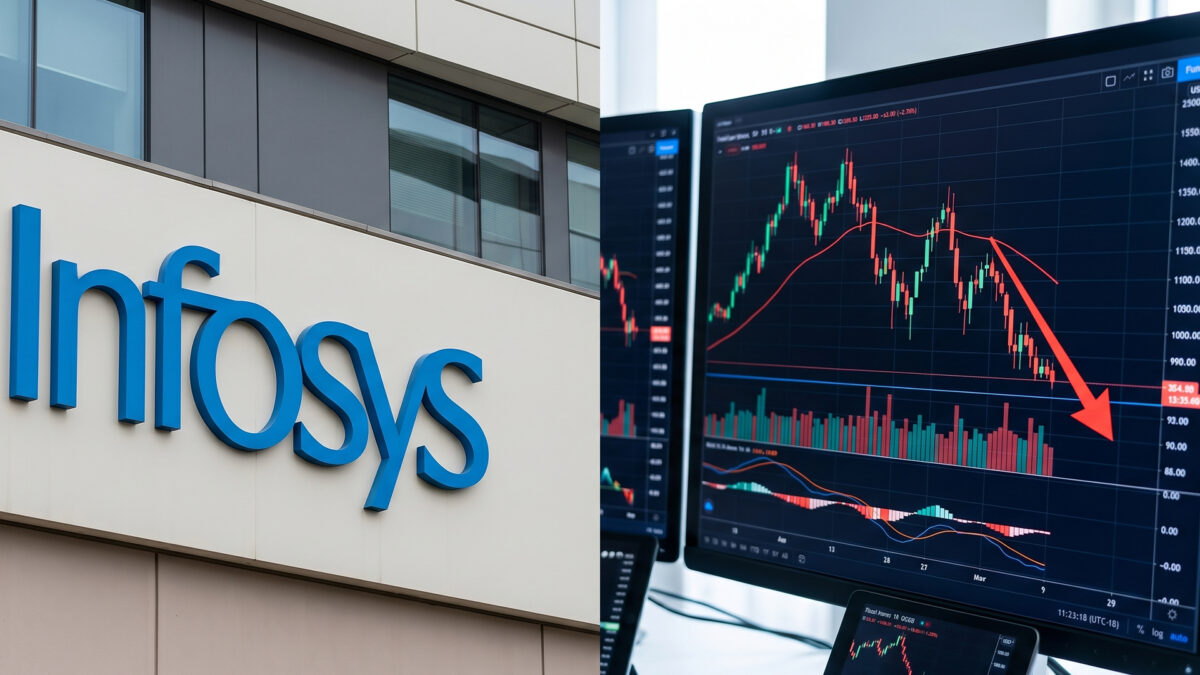
₹56,000 cr value wiped out as Infosys shares slide

Infosys shares saw a sharp fall on Friday, wiping out nearly ₹56,000 crore in market value, after investors reacted negatively to the company’s cautious growth outlook for the next financial year.

Despite reporting healthy quarterly earnings, the IT major came under heavy selling pressure as the market focused on future concerns rather than past performance. The stock dropped around 6–7 per cent during the session, making Infosys one of the biggest losers on Dalal Street.

Infosys reported a strong March quarter, with consolidated net profit rising around 21 per cent year-on-year to ₹8,501 crore. Revenue also posted steady growth, showing resilience in a challenging global business environment.

However, investors were disappointed by the company’s FY27 revenue growth guidance of 1.5 per cent to 3.5 per cent in constant currency terms. Analysts said the forecast suggests that global demand remains weak and clients are still cautious about spending on technology projects.

The company said business decisions by clients continue to be slower because of macroeconomic uncertainty and geopolitical tensions. While demand for artificial intelligence and digital transformation services remains encouraging, overall market visibility is still mixed.

The fall in Infosys shares also dragged the broader IT sector lower. Other technology stocks came under pressure as investors worried that slower growth could continue across the industry. The Nifty IT index has already seen losses this week after mixed earnings and cautious commentary from several companies.

Brokerages gave mixed reactions after the results. Some maintained confidence in Infosys’ long-term strengths, citing its strong balance sheet, global client base and leadership in digital services. Others turned more cautious, warning that near-term growth may remain under pressure.

Also Read: Infosys gives ₹51.75 cr stock grant to CEO Salil Parekh

Categories
Corporate

Zerodha closes Zero1 creator platform

Zerodha has shut down Zero1, its creator-focused content platform, bringing an end to a unique venture that worked with digital creators to produce educational content on finance and other subjects. The company said the move was driven by regulatory uncertainty.

Zero1 was launched as an effort to build meaningful, long-form content in areas such as investing, money management, health and climate. Unlike many short-form influencer channels, the platform aimed to create well-researched content through partnerships with creators who already had strong online audiences.

The initiative had attracted attention for trying a different model — giving creators access to Zerodha’s resources, production support and distribution network while allowing them creative freedom. It was seen as a fresh attempt to combine content creation with education.

However, Zerodha has now decided to discontinue the platform. The company said Zero1 had performed well and reached a wide audience, but changing regulations and uncertainty around creator-led financial content made the model difficult to continue.

The closure comes at a time when regulators are increasing scrutiny of online financial advice, influencer promotions and unregistered investment recommendations. Fintech companies and creators are facing growing pressure to ensure that content does not cross into misleading or unauthorised advice.

Going forward, Zerodha plans to focus on producing content internally rather than through outside creator partnerships. This means the company will continue its education efforts, but with tighter editorial control and direct oversight.

The move is significant because Zero1 had emerged as a rare example of a structured creator network backed by a major financial company. It also reflected how brands were beginning to treat creators as long-term partners rather than just marketing channels.

For creators who were part of the network, the shutdown closes a platform that offered funding, professional support and credibility. For the wider industry, it raises questions about how future partnerships between finance companies and influencers will evolve.

Also Read: Tamil Nadu sees record 84% voting in assembly polls

Categories
Beyond

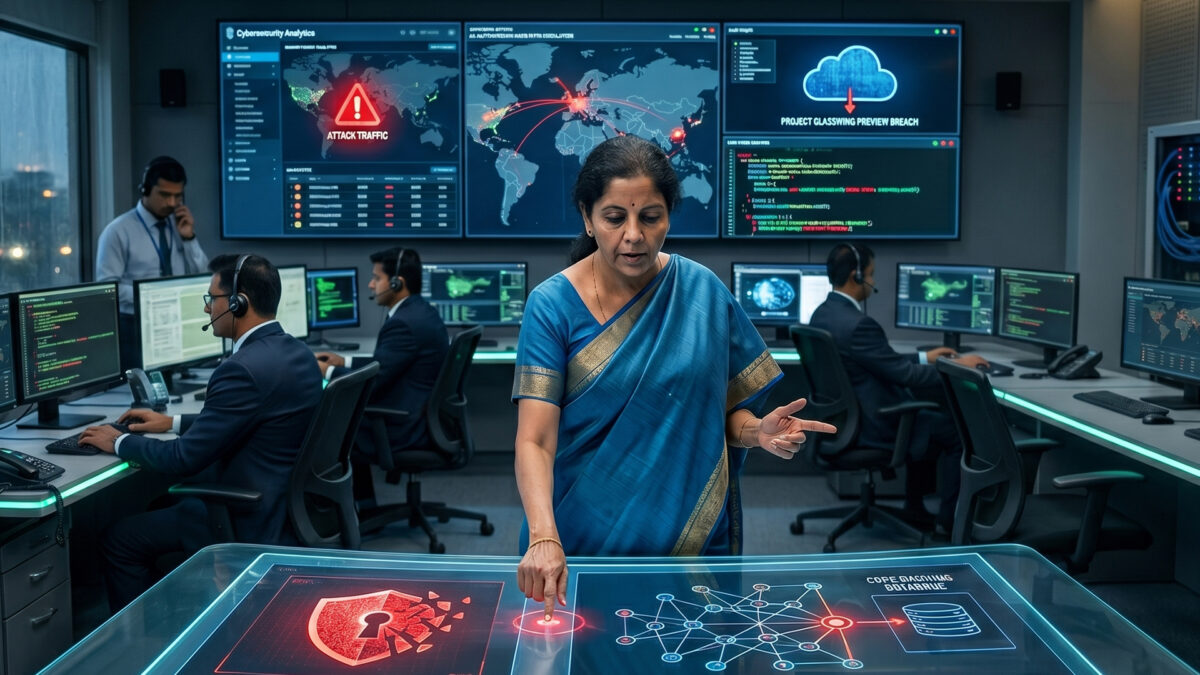
Finance Minister flags AI threat to banks

Union Finance Minister Nirmala Sitharaman has warned India’s banking sector about rising cybersecurity risks linked to advanced artificial intelligence tools, urging lenders to upgrade their security systems and prepare for new digital threats.

At the centre of the concern is “Claude Mythos,” an AI model developed by Anthropic. Reports suggest the tool has advanced capabilities to detect software weaknesses across computer systems and browsers. Officials fear such technology, if misused, could be exploited for fraud, hacking, theft of customer information and disruption of banking services.

The warning came during a high-level review meeting attended by senior officials from public and private sector banks, regulators and technology agencies. Discussions focused on how powerful AI systems could be misused to target financial institutions.

Sitharaman said Indian banks have managed cyber risks well so far through digitisation, regular software upgrades, firewalls and fraud monitoring systems. However, she cautioned that traditional safeguards may not be enough to tackle AI-driven attacks in the future.

She called for stronger and more flexible security systems to counter evolving risks. The Finance Minister also stressed the need for closer coordination among banks, regulators and cyber agencies to improve preparedness.

Banks were asked to create a real-time intelligence-sharing mechanism so suspicious activity or attempted breaches can be reported quickly across the sector. Officials said a coordinated industry-led system would be developed to monitor threats and improve response capabilities.

Also Read: Microsoft launches voluntary retirement scheme for US employees

Categories
Corporate

Microsoft launches voluntary retirement scheme for US employees

Microsoft has introduced its first-ever voluntary retirement (buyout) programme in its 51-year history, offering eligible US employees an option to leave the company with a financial package. The move is expected to affect up to 7% of Microsoft’s US workforce, or roughly 8,000–8,750 employees.

According to internal communications, the programme is aimed at employees at the senior director level and below whose age and years of service combined equal 70 or more. For example, an employee aged 55 with 15 years at the company would qualify. Certain roles, including some sales positions, are excluded.

The company said the initiative is intended to give long-serving employees a voluntary and supported exit option, rather than relying on traditional layoffs. Eligible staff and managers will receive full details in early May.

The move comes at a time when Microsoft, like several other major tech firms, is undergoing structural changes driven by heavy investment in artificial intelligence and cloud infrastructure. The company has been spending billions to expand data centre capacity and AI capabilities, while also tightening operational costs elsewhere.

In recent years, Microsoft has already gone through multiple rounds of job cuts. This new buyout programme is seen as another step in reorganising its workforce to better align with long-term strategic priorities, especially AI-focused growth.

At the same time, Microsoft is also adjusting its compensation structure, including changes to how stock awards are distributed and giving managers more flexibility in rewarding performance.

Also Read: Warner Bros Discovery shareholders approve Paramount merger

Categories
Corporate

Warner Bros Discovery shareholders approve Paramount merger

Warner Bros Discovery shareholders have approved a $110–111 billion takeover by Paramount Skydance, moving the blockbuster media merger a major step closer to completion.

The deal brings together two entertainment giants, combining Warner Bros’ portfolio, which includes HBO, CNN, DC Comics and Harry Potter, with Paramount assets like CBS, MTV and Paramount Pictures. If completed, it will create one of the largest media companies in the world.

Shareholders backed the offer in a formal vote, accepting a cash deal worth around $31 per share, which is higher than recent market levels. The approval reflects investor confidence in the value of the transaction.

However, the merger still needs approval from regulators in the US and other regions. Authorities are expected to closely examine the deal due to its size and potential impact on competition in the media industry.

While investors have welcomed the move, the deal has sparked debate within Hollywood. Critics are concerned it could lead to job cuts, restructuring, and reduced opportunities for smaller creators, as control becomes more centralised under a single large company.

Some shareholders also raised concerns about executive pay linked to the transaction, adding to the discussion around corporate governance.

Supporters argue the merger is a strategic response to a fast-changing entertainment landscape, where streaming competition and rising production costs are forcing companies to scale up.

Also Read: Rupee slips 24 paise to 94.25 against US dollar

Categories
Beyond

Rupee slips 24 paise to 94.25 against US dollar

The Indian rupee continued its downward trend in early trade, depreciating by 24 paise to 94.25 against the US dollar, tracking weak global sentiment and sustained pressure from foreign capital outflows.

According to reports, the domestic currency opened at 94.25 and remained at the same level in early deals, marking another session of weakness against the greenback. The fall comes amid a broader risk-off mood in financial markets, with investors reacting to global uncertainties and a strong US dollar.

Forex traders noted that volatility in crude oil prices and geopolitical tensions in West Asia have added to pressure on emerging market currencies, including the rupee. Higher oil prices tend to hurt India’s import bill, which in turn weighs on the currency.

Another key factor behind the decline is continued foreign institutional investor (FII) selling in domestic equity markets. Outflows from Indian equities have reduced dollar supply in the local market, further weakening the rupee. Market participants also pointed to a stronger dollar index, which has been gaining against a basket of global currencies, making emerging market currencies less attractive.

The rupee has now extended its losing streak for several sessions, reflecting persistent pressure from external factors rather than domestic fundamentals alone. Traders say sentiment remains cautious, with global risk appetite fluctuating due to macroeconomic uncertainty and interest rate expectations in major economies.

Also Read: Sensex crashes over 1,000 points, Nifty slips below 23,900

Categories
Corporate

Sensex crashes over 1,000 points, Nifty slips below 23,900

Indian stock markets witnessed a sharp downturn today, with benchmark indices ending deep in the red amid widespread selling pressure and weak investor sentiment. The Sensex plunged over 1,000 points, while the Nifty 50 slipped below the 23,900 mark, reflecting a clear risk-off mood across Dalal Street.

The sell-off was broad-based, with heavyweights from key sectors such as banking, information technology, and financial services leading the decline. Investors appeared to be booking profits after recent gains, while global cues also weighed on sentiment. Concerns over inflation trends, interest rate expectations, and foreign fund outflows added to the negative tone throughout the session.

Mid- and small-cap stocks also came under pressure, showing that the weakness was not limited to large-cap counters alone. Market breadth remained firmly negative, with far more stocks declining than advancing, indicating widespread selling across sectors.

Despite the overall bearish trend, a few stocks managed to buck the trend and end in positive territory, driven by stock-specific triggers such as strong earnings updates, order wins, or defensive buying. However, these gainers were limited in number and were not enough to offset the broader market losses.

On the losing side, several frontline banking and IT names were among the biggest drags on the indices, along with select auto and metal stocks that faced selling pressure due to global demand concerns and commodity price fluctuations.

Market experts suggest that such volatility is not unusual after strong rallies, and investors are likely reacting to both global uncertainty and domestic valuation concerns. The focus now shifts to upcoming economic data, central bank commentary, and corporate earnings, which could set the tone for the next market direction.

For retail investors, analysts advise caution and discipline rather than panic selling, highlighting that short-term corrections are a normal part of market cycles. Long-term fundamentals remain intact, but volatility may continue in the near term.

Categories
Corporate

HCL Tech shares slide after weak Q4 show

Shares of HCL Technologies plunged more than 10 per cent after the company reported weaker fourth-quarter results and gave a cautious outlook for the coming year. The sharp fall erased nearly ₹38,000 crore from the company’s market value.

The stock was among the biggest losers in the market as investors reacted negatively to lower-than-expected earnings and slower growth guidance. It also dragged other IT shares lower during the session.

For the January-March quarter, HCL Tech posted a net profit of ₹4,488 crore. While the figure was higher than the same period last year, it was more than 6 per cent lower compared to the previous quarter. Revenue growth also came in below market expectations.

Analysts said investors were mainly concerned about the company’s outlook for FY27, which appeared weaker than expected. Several brokerages downgraded the stock and cut their target prices after the results.

Market experts said global uncertainty, cautious client spending and delays in decision-making by customers continue to weigh on the IT services sector. Some large overseas clients are reportedly reducing project sizes or postponing new contracts.

HCL Tech management said near-term demand remains mixed, especially in key markets like the United States. However, the company said long-term demand for digital transformation, cloud services and artificial intelligence remains strong.

The weak update from HCL Tech also raised concerns about the broader Indian IT industry, which has been facing slower growth due to reduced technology spending by global clients. Shares of other major IT companies also came under pressure following the announcement.

Despite the disappointing market reaction, HCL Tech declared an interim dividend of ₹24 per share for shareholders.

Also Read: Google Cloud, CVC partner to speed up AI adoption

Categories
Beyond

Government brings new online gaming rules

The Centre has notified new online gaming rules that will come into effect from May 1, bringing stricter regulation to India’s rapidly growing gaming industry.

Under the new framework, online money gaming has been banned. Platforms that allow users to wager money for prizes or winnings will not be permitted to operate. The government said the move is aimed at protecting users from fraud, addiction and heavy financial losses.

A new national regulator, the Online Gaming Authority of India, will be created to oversee the sector. The body will classify games, monitor compliance, handle complaints and publish a list of banned platforms. It will also work with banks and agencies to stop illegal transactions linked to prohibited apps.

The rules also introduce stronger user safety measures. Approved platforms must ensure age verification, parental controls, grievance systems and clear disclosures for users.

Casual games and platforms that do not involve money will face fewer restrictions. Esports and skill-based gaming platforms are expected to benefit from clearer rules and easier registration.

Also Read: Trump’s Fed Chair nominee Warsh promises independence