
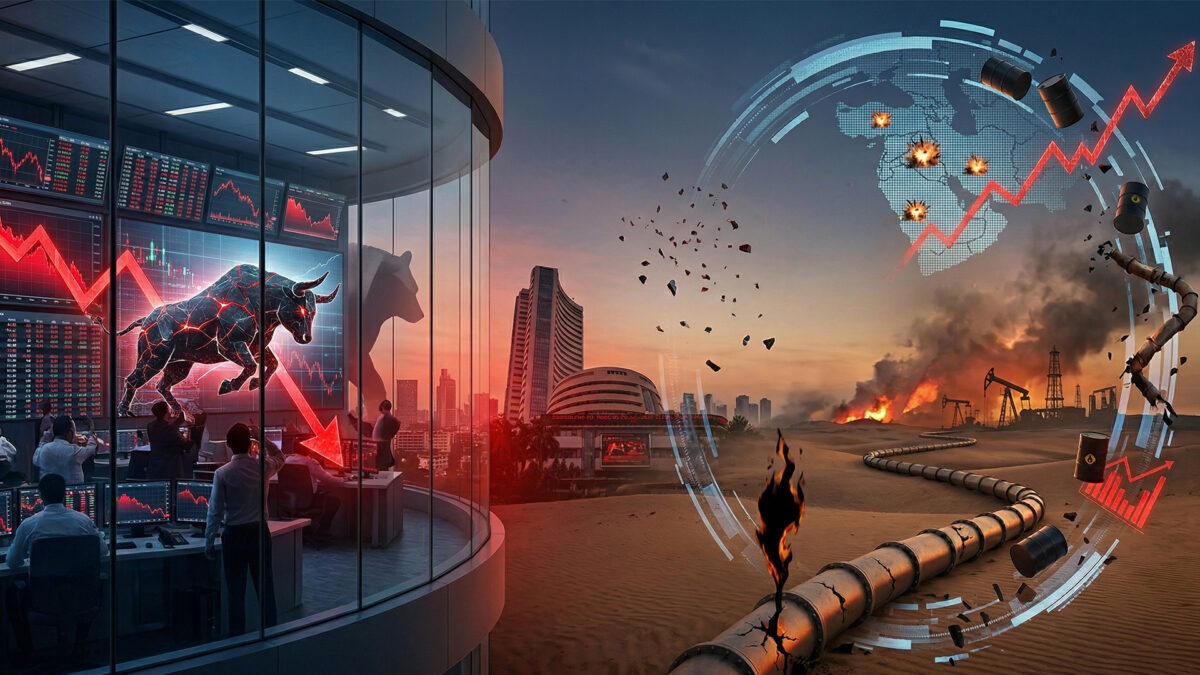
Indian stock markets witnessed a sharp downturn today, with benchmark indices ending deep in the red amid widespread selling pressure and weak investor sentiment. The Sensex plunged over 1,000 points, while the Nifty 50 slipped below the 23,900 mark, reflecting a clear risk-off mood across Dalal Street.
The sell-off was broad-based, with heavyweights from key sectors such as banking, information technology, and financial services leading the decline. Investors appeared to be booking profits after recent gains, while global cues also weighed on sentiment. Concerns over inflation trends, interest rate expectations, and foreign fund outflows added to the negative tone throughout the session.
Mid- and small-cap stocks also came under pressure, showing that the weakness was not limited to large-cap counters alone. Market breadth remained firmly negative, with far more stocks declining than advancing, indicating widespread selling across sectors.
Despite the overall bearish trend, a few stocks managed to buck the trend and end in positive territory, driven by stock-specific triggers such as strong earnings updates, order wins, or defensive buying. However, these gainers were limited in number and were not enough to offset the broader market losses.
On the losing side, several frontline banking and IT names were among the biggest drags on the indices, along with select auto and metal stocks that faced selling pressure due to global demand concerns and commodity price fluctuations.
Market experts suggest that such volatility is not unusual after strong rallies, and investors are likely reacting to both global uncertainty and domestic valuation concerns. The focus now shifts to upcoming economic data, central bank commentary, and corporate earnings, which could set the tone for the next market direction.
For retail investors, analysts advise caution and discipline rather than panic selling, highlighting that short-term corrections are a normal part of market cycles. Long-term fundamentals remain intact, but volatility may continue in the near term.