Categories
Beyond

Paytm Payments Bank faces final closure

The Delhi High Court has ordered the winding up of Paytm Payments Bank Limited (PPBL), bringing the troubled banking entity closer to its final closure after years of regulatory scrutiny and compliance concerns.

The Reserve Bank of India (RBI) said the High Court, through orders dated July 8 and July 22, 2026, directed that PPBL be wound up under the Banking Regulation Act, 1949, read with the Companies Act, 2013. The court has appointed Girikumar M Nair, a former Chief General Manager of the State Bank of India, as the Official Liquidator.

The liquidator will oversee the winding-up process and exercise the powers assigned under the relevant banking and company laws. According to the RBI, those powers will include taking charge of the affairs of the bank and handling the process of settling its remaining obligations.

The latest court order follows the RBI’s decision on April 24, 2026, to cancel the banking licence of Paytm Payments Bank under Section 22(4) of the Banking Regulation Act.

The RBI said the licence was cancelled because PPBL had failed to comply with regulatory requirements and that its affairs had been conducted in a manner detrimental to the interests of the bank and its depositors. The cancellation took effect from the close of business on April 24.

The central bank had also announced that it would approach the High Court to initiate winding-up proceedings.

At the time, the RBI said PPBL had sufficient liquidity to repay its entire deposit liabilities during the winding-up process. This was an important assurance for customers who still had money associated with the payments bank.

The closure is the culmination of a regulatory process that began several years ago.

In March 2022, the RBI directed Paytm Payments Bank to stop onboarding new customers, citing material supervisory concerns. Restrictions were subsequently tightened after further examinations and compliance reviews.

In January 2024, the RBI ordered PPBL to stop accepting fresh deposits, credit transactions and top-ups in customer accounts, prepaid instruments, wallets, FASTags and National Common Mobility Cards. The deadline for these restrictions was later extended to March 15, 2024.

The RBI’s action effectively separated many of the services customers associated with Paytm from the banking entity itself.

The winding up of Paytm Payments Bank does not mean that the Paytm app itself is being shut down. One 97 Communications, which operates Paytm, has said that its digital payment services continue to operate and that Paytm UPI works through a multi-bank arrangement with other partner banks.

This distinction is important. Paytm and Paytm Payments Bank are separate entities. The RBI’s action is directed at PPBL’s banking licence and does not cancel Paytm’s ability to operate as a digital payments platform.

Paytm has said that services including Paytm UPI, QR payments, Soundbox, card machines, payment gateway, bill payments, recharges, Paytm Gold and Paytm Money remain operational.

For users making UPI payments through Paytm, the money is routed through the bank account linked to their UPI service rather than being held by Paytm Payments Bank.

Customers who still have balances or claims connected to PPBL will have their interests handled through the liquidation process.

The RBI had earlier stated that the bank had adequate liquidity to meet its entire deposit liability while being wound up. The appointment of an official liquidator now provides a formal mechanism for dealing with the bank’s assets, liabilities and customer claims.

The Deposit Insurance and Credit Guarantee Corporation (DICGC) had also cancelled PPBL’s registration as an insured bank following the RBI’s licence cancellation on April 24, 2026.

Customers should therefore distinguish between money held with Paytm Payments Bank and money held in another bank account linked to the Paytm app for UPI transactions.

Paytm Payments Bank was once a major part of India’s fast-growing digital payments ecosystem. Its licence and subsequent restrictions had already forced Paytm to move much of its payments infrastructure away from the bank.

The latest High Court order therefore represents the formal end of the banking entity rather than the end of Paytm‘s broader digital payments business.

For ordinary users, the practical message is relatively simple: Paytm UPI and the Paytm app continue to function, but Paytm Payments Bank itself is being wound up. Customers with old PPBL accounts, wallets or other balances should follow communications from the official liquidator and the RBI regarding settlement and withdrawals.

The case also serves as a reminder that rapid growth in fintech and digital payments does not reduce the importance of KYC compliance, banking regulations, corporate governance and depositor protection. For Paytm, the winding-up order closes one of the most consequential chapters in its evolution from a digital wallet pioneer into a broader financial-services platform.
Categories
Corporate

Paytm delivers record EBITDA, profit climbs 79%

One97 Communications, the parent company of Paytm, has reported a strong start to FY27, posting a sharp rise in quarterly profit as its payments and financial services businesses continued to expand. The latest results reflect the fintech company’s growing operational strength and improving profitability in India’s rapidly evolving digital payments market.

For the quarter ended June 2026, Paytm reported a consolidated net profit of ₹185 crore, a 79 per cent increase from ₹103 crore recorded in the corresponding quarter last year. The company also posted revenue from operations of ₹2,060 crore, up 28 per cent year-on-year from ₹1,614 crore, driven by strong growth across its core businesses.

Paytm also achieved its highest-ever adjusted EBITDA, underlining its focus on sustainable and profitable growth. The company attributed the strong performance to higher merchant subscriptions, expanding financial services and improved operating efficiency.

The payments business remained the biggest contributor to growth during the quarter. Merchant payment devices, QR code services and subscription revenues continued to grow steadily, strengthening Paytm’s presence among millions of small businesses and retailers across India. The company said its expanding merchant ecosystem is helping generate recurring income while creating opportunities to offer additional financial products.

Another key growth engine was financial services distribution, including loans, insurance and wealth management products offered through partner financial institutions. Over the past few years, Paytm has steadily diversified its business beyond digital payments, positioning itself as a broader financial technology platform.

The company said the strategy of integrating payments, commerce and financial services is delivering positive results. Growth in higher-margin businesses, along with disciplined cost management, helped improve profitability despite continued investments in technology and customer acquisition.

Market analysts described the quarterly performance as another important milestone in Paytm’s turnaround journey. After facing regulatory challenges and restructuring its operations over the past year, the company has focused on strengthening compliance, improving efficiency and building more diversified revenue streams.

Brokerages responded positively to the earnings announcement, with several maintaining optimistic outlooks on the stock. Analysts highlighted the combination of strong revenue growth, expanding margins and improving earnings visibility as key reasons for their confidence. Many believe Paytm is entering a more stable growth phase backed by stronger business fundamentals.

The results also reflect the continued expansion of India’s digital payments ecosystem. Growing smartphone penetration, wider internet access and increasing adoption of Unified Payments Interface (UPI) transactions have accelerated the country’s shift towards cashless payments. As one of India’s leading fintech platforms, Paytm continues to benefit from these long-term structural trends.

Industry experts say the company’s merchant business remains one of its biggest strengths. Millions of merchants now rely on Paytm’s payment devices, QR codes and software solutions to manage daily transactions. These relationships also enable the company to cross-sell services such as credit, insurance and financial products, increasing customer engagement and revenue opportunities.

Despite the encouraging performance, analysts caution that competition in the fintech sector remains intense. Banks, payment companies and emerging fintech startups continue to invest aggressively in digital financial services. In addition, regulatory developments and evolving customer expectations will remain important factors shaping the industry.

Even so, Paytm’s latest results suggest the company is successfully balancing growth with profitability. Higher revenues, stronger operating margins and disciplined spending indicate that the business is becoming more resilient while continuing to invest in future opportunities.

As India’s digital economy continues to expand, Paytm appears well positioned to benefit from rising demand for digital payments, merchant solutions, financial services and fintech innovation. Its latest quarterly performance not only reflects stronger financial numbers but also signals increasing maturity in one of India’s leading digital financial platforms.

Also Read: Millions of WordPress sites under fresh cyber threat

Categories
Beyond

RBI cancels Paytm payments bank licence

The Reserve Bank of India (RBI) has cancelled the licence of Paytm Payments Bank and said it will move ahead with winding up the bank through legal process. The decision follows long-standing regulatory concerns over compliance and operations.

The RBI said the bank had repeatedly failed to meet required norms and its functioning was not in line with banking rules. Because of these issues, the central bank said continuing operations was no longer appropriate and ordered closure proceedings.

Paytm Payments Bank has already been under restrictions for a long time. It was first stopped from adding new customers, and later faced limits on deposits and account activity.

For customers, the RBI has assured that their money is safe. The bank has been told to repay all deposits during the winding-up process, and it is expected to have enough funds to do so.

The bigger concern for users is what happens to everyday services like wallets and payments. Paytm has clarified that its main app will continue to work. Services such as UPI payments, QR code scanning, mobile recharges, and payment systems used by merchants are expected to remain active.

Also Read: Noida airport gets interim CEO


Categories
Corporate

Paytm to restart physical gold delivery in April

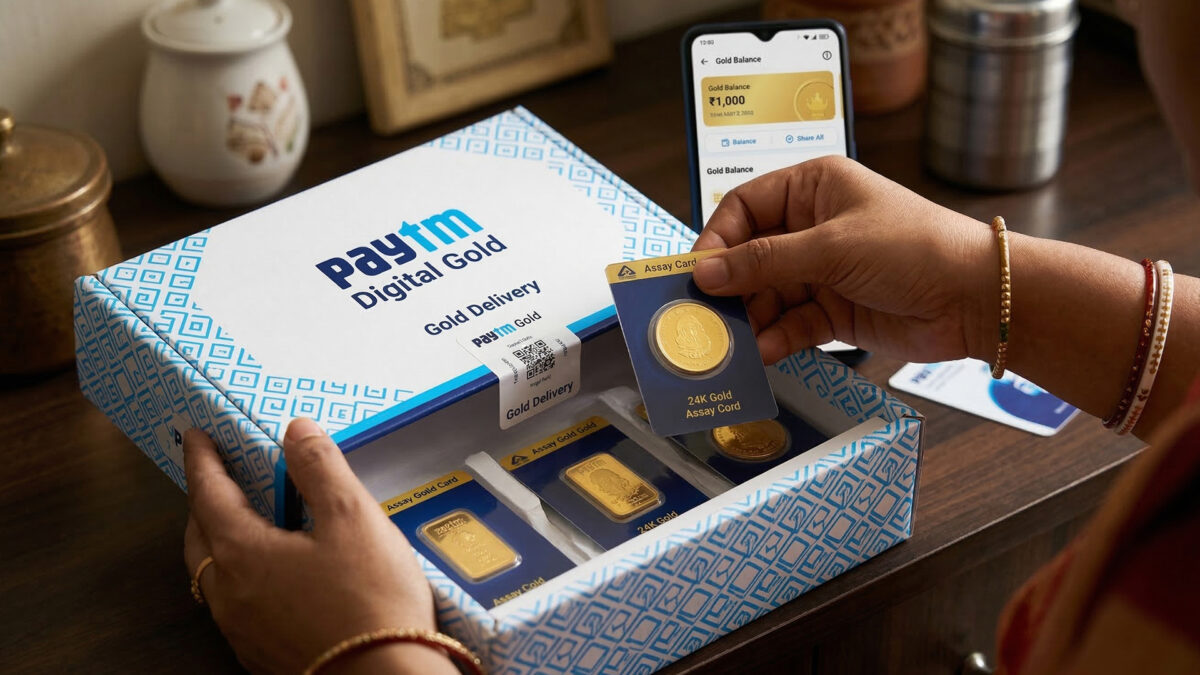
Paytm has announced that it will start delivering physical gold to its digital gold customers again from mid‑April. The service had been paused since August 2025, but will now return just in time for Akshaya Tritiya, a popular occasion for buying gold in India.

During the pause, investors could still buy and sell digital gold on Paytm, but they could not receive actual gold coins or bars. The company says the break was needed to upgrade its technology and delivery system, making it easier for customers across the country to get their gold.

When the service resumes, customers in more than 12,000 pin codes will be able to order physical gold. Paytm says that while delivery was paused, all other digital gold options like buying, selling, or cashing out remained available.

Digital gold has become popular because people can buy even tiny amounts, sometimes as low as Re 1, using easy payment options like UPI. In January 2026 alone, digital gold transactions in India reached ₹3,926 crore, with 219 million purchases recorded.

With digital gold on Paytm, the gold you buy is stored in secure vaults managed by partners like MMTC‑PAMP. Audits make sure the digital gold you own matches the actual gold stored safely.

Paytm isn’t the only platform offering digital gold. Others like PhonePe, Google Pay, and Jar also provide similar services, including the option to get physical gold. Delivery charges, GST, and minimum purchase amounts may differ across platforms.

By restarting physical delivery, Paytm aims to strengthen trust in its digital gold service and make it easier for customers to access real gold whenever they want.

Also Read: Inflation hits India by 3.21% in February