Categories
Corporate

SoftBank completes $40 bn investment in OpenAI

SoftBank has completed its $40 billion investment in OpenAI, making it one of the largest private tech deals in history. The Japanese conglomerate, led by CEO Masayoshi Son, finalized the last part of the investment in December, completing a multi-stage funding plan announced earlier in 2025.

The investment was made in phases. SoftBank first contributed about $7.5 billion in April through its Vision Fund 2. Later, it raised around $10 billion from co-investors. The final payment of roughly $22–22.5 billion now completes the deal, giving SoftBank an ownership of around 11 percent in OpenAI.

This $40 billion deal initially valued OpenAI at about $300 billion, although secondary transactions have increased its broader market value closer to $500 billion. SoftBank funded part of this investment by selling $5.8 billion in Nvidia shares to free up cash.

OpenAI, known for developing ChatGPT and other leading AI tools, has become a major focus for investors amid the global AI boom. SoftBank’s backing is expected to support the company’s expansion in AI research and infrastructure.

Some of the investment will fund a long-term project called “Stargate,” a partnership with Oracle and other stakeholders to build AI infrastructure and data centers. This will help OpenAI handle more advanced AI applications in the future.

SoftBank’s completed investment shows its strong commitment to AI and positions the company as a key player in the growing artificial intelligence sector. It also reflects the increasing interest from global investors in AI technologies and the infrastructure needed to support them.

With this deal, SoftBank is betting on AI as a strategic area for growth, signaling confidence in the future of the technology and its potential impact on businesses and society.

This investment highlights the rapid rise of AI and the large-scale funding that companies like OpenAI are attracting to drive innovation worldwide.

Also Read: India slaps 3 year safeguard duty on steel imports

Categories
Beyond

India moves up to 4th spot in global economy rankings

India has climbed to fourth place among the world’s largest economies, overtaking Japan in terms of nominal Gross Domestic Product (GDP), according to the government’s latest assessment. With its economy now valued at around USD 4.18 trillion, India stands behind only the United States, China, and Germany, marking a key moment in the country’s growth story.

The government attributed this rise to strong and steady economic expansion despite global challenges such as slowing trade, high inflation in advanced economies, and geopolitical uncertainties. India continues to be the fastest-growing major economy, supported mainly by robust domestic demand, higher consumer spending, and sustained public investment.

Recent economic data shows a sharp improvement in growth during the second quarter of the current financial year. Strong performance in manufacturing, services, and infrastructure activity has helped accelerate overall output. Policy reforms, digital transformation, and efforts to improve the ease of doing business have also played an important role in strengthening economic activity.

International agencies have responded positively to India’s progress. Institutions such as the International Monetary Fund and the World Bank have projected that India’s economy will grow at over 6 per cent annually in the coming years, well ahead of most large economies. These forecasts underline India’s growing role as a major contributor to global growth.

Looking ahead, the government said India is expected to surpass Germany and move into third place within the next two to three years if current growth trends continue. By the end of the decade, India’s economy is projected to expand significantly, driven by a young population, a rising middle class, and increased investment in manufacturing, technology, and infrastructure.

Economists, however, note that challenges remain. While the economy’s overall size has increased rapidly, per capita income levels remain relatively low, pointing to the need for inclusive growth, job creation, and stronger outcomes in health, education, and skills.

Still, India’s rise in the global economic rankings highlights its growing influence and long-term potential on the world stage.

Also Read: Gold at ₹1,36,190 per 10g, Silver slips to ₹2,39,900/kg

Categories
Corporate

Sensex gains 250 points, Nifty ends above 26000

The markets opened for the final trading session of 2025 on a cautious but steady note, with the Sensex and Nifty 50 ending near flat after recovering from early losses. The benchmarks managed to snap a four-day losing streak, supported by selective buying in metal, PSU banking, and energy stocks, even as foreign fund outflows continued to cap gains.

Markets opened marginally higher, tracking positive cues from GIFT Nifty, but volatility persisted through the session as investors engaged in year-end portfolio adjustments. Buying interest was seen in metal stocks on hopes of stable global demand, while PSU banks gained on expectations of improved balance sheets and steady credit growth. FMCG and IT stocks, however, traded mixed, reflecting concerns over valuations and global growth uncertainty.

Broader markets showed mild strength, with midcap and smallcap stocks outperforming the frontline indices. Several individual stocks witnessed sharp moves on company-specific developments, indicating active participation despite thin year-end volumes.

On the commodities front, gold and silver, which delivered strong returns in 2025, saw some profit booking in the final session of the year. Crude oil prices remained range-bound, offering limited direction to energy stocks.

Market sentiment was also influenced by macro signals, including the Reserve Bank of India’s assessment pointing to improved asset quality and profitability in the banking sector. Analysts remain cautiously optimistic about 2026, citing expectations of stable earnings growth, policy support, and lower inflation, while flagging risks from global slowdown and continued FII selling.

Overall, the last trading day of 2025 reflects a market balancing caution with selective optimism as investors look ahead to key triggers in the new year.

Also Read: Sensex slips 20 points, Nifty ends below 25,950 on year-end caution

Categories
1 Minute-Read

India’s industrial output jumps 6.7% in November

India’s industrial production rose sharply by 6.7% in November, recording its fastest growth in over two years, according to official data.

The surge was mainly driven by a strong recovery in manufacturing output, which grew around 8%, supported by higher production of automobiles, pharmaceuticals, metals and consumer goods.

Mining activity also showed improvement, reflecting steady demand. However, electricity generation remained weak, showing a slight contraction during the month.

The sharp rise in the Index of Industrial Production (IIP) marks a significant rebound from October’s muted performance and signals improving economic momentum amid festive demand and rising consumption.

Categories
Corporate

Sensex slips 20 points, Nifty ends below 25,950 on year-end caution

The markets closed almost flat on Tuesday, with BSE Sensex slipping 20 points to close at 84,675, while the NSE Nifty 50 ending marginally lower at 25,938, staying below the 25,950 mark. Thin volumes and profit-booking marked the session, typical of year-end trade.

Market sentiment remained muted through the day as participants avoided taking fresh positions ahead of the new calendar year. Persistent selling by foreign institutional investors (FIIs) also weighed on benchmarks, even as domestic investors provided some support at lower levels.

Sectoral performance was mixed. Auto and select financial stocks showed resilience, helping limit losses in the headline indices. Mahindra & Mahindra gained around 2 per cent, emerging as one of the top Sensex gainers, supported by positive outlook on demand and margins. Bajaj Finserv also advanced, outperforming the broader market despite weak overall sentiment.

On the downside, IT and cement stocks faced selling pressure. Infosys and HCL Technologies declined, tracking weakness in global technology stocks and cautious guidance expectations. UltraTech Cement also ended lower, adding to the drag on the Sensex. Losses in these heavyweights offset gains seen in autos and select financials.

The broader market reflected similar caution. Mid-cap and small-cap indices closed marginally lower, indicating a lack of strong risk appetite. Traders largely stayed on the sidelines, with many opting to lock in gains after a strong performance in earlier parts of the year.

Global cues offered limited direction. Asian markets were largely flat, while US futures traded mixed, providing no clear trigger for Indian equities. European markets also remained subdued during Indian trading hours.

Meanwhile, stock-specific activity remained in focus due to quarterly Nifty index rebalancing, which led to adjustments in select stocks. In the debt market, a few corporate bond issuances were reported, though overall activity was muted.

Market experts said Indian equities may remain range-bound in the near term, with investors awaiting fresh triggers such as corporate earnings, macroeconomic data and global policy signals in early 2026.

Also Read: Sensex drops 346 points, Nifty 25,942

Categories
Technology

OpenAI offers Rs 5 crore AI safety job

OpenAI CEO Sam Altman has raised concerns about the safety of advanced AI models, saying that AI systems are becoming more capable and could cause problems if not carefully managed. He highlighted that some AI models are now starting to find weaknesses in systems, which could potentially be misused.

To tackle these challenges, OpenAI is hiring a “Head of Preparedness”, a top-level role aimed at making AI safer. The company is offering around Rs 5 crore (USD 555,000) plus equity for this position. Altman himself described it as a “stressful job,” given the high responsibility involved.

The person chosen for this role will look for risks in AI systems, plan ways to reduce those risks, and make sure AI behaves safely as it becomes more powerful. They will also track potential threats, like AI being misused in cyber attacks or other dangerous scenarios. This role will be part of OpenAI’s broader Safety Systems team.

Altman stressed that while it is relatively easy to measure what AI can do, it is much harder to predict how AI could be misused. The role will require careful planning, monitoring, and quick decision-making to prevent possible harm.

This move shows that OpenAI is taking AI safety seriously, not just focusing on creating new technologies. As AI grows more advanced, experts like this will be crucial to ensure the technology is used responsibly.

Altman’s public statements also reflect a wider concern in the tech industry: as AI becomes more capable, companies need to balance innovation with safety to avoid unintended consequences.

OpenAI’s job opening and Altman’s warnings highlight that keeping AI safe is now as important as developing it, and the company is looking for top talent to take on this challenge.

Also Read: Reliance rejects $30bn government claim over KG-D6 gas

Categories
Corporate

Reliance rejects $30bn government claim over KG-D6 gas

Reliance Industries Limited (RIL) has rejected recent media reports claiming that the Government of India is seeking $30 billion in compensation from it and partner BP over underproduction from the KG‑D6 deepwater gas field in the Krishna Godavari basin. RIL described these reports as “factually incorrect, inappropriate, and irresponsible” in a statement to stock exchanges.

The company clarified that no $30 billion claim exists against it or BP. The actual claim relates to about $247 million, a figure that has been fully disclosed in audited financial statements, consistent with disclosure requirements.

The dispute traces back over a decade and concerns costs the government allegedly disallowed for recovery during development and production of the KG‑D6 block’s D1 and D3 gas fields. Under the production sharing contract, companies can recover specific costs before profit sharing with the government. Media reports had suggested that lower gas output due to operational choices, including fewer wells, prompted the government to demand large compensation.

RIL and BP maintain they complied with all contractual and legal obligations, and geological factors limited field output. They stressed that the matter is sub judice, meaning it is under active judicial review, and any resolution will follow India’s legal process, including potential appeals up to the Supreme Court.

The company criticised reports relying on unnamed sources and misrepresenting facts. RIL reiterated its confidence in transparency and compliance with legal and contractual standards, asserting that the exaggerated claim misleads the public and investors.

Also Read: RBI flags rising bank competition

Categories
1 Minute-Read

RBI flags rising bank competition

The Reserve Bank of India (RBI) warned that banks face increasing competition from equity markets and technology-driven solutions.

Its ‘Trend and Progress of Banking in India 2024‑25’ report noted that while traditional bank credit growth is moderating, corporate funding via equity and non-bank sources is rising. Digital transformation offers convenience but also exposes banks to cybersecurity and operational risks.

The RBI emphasized the importance of robust risk management, responsible technology adoption, and financial inclusion to stay competitive. Banks must adapt quickly to evolving customer expectations and emerging funding alternatives to maintain resilience.

Categories
Beyond

DAC clears Rs 79,000 cr defence upgrade

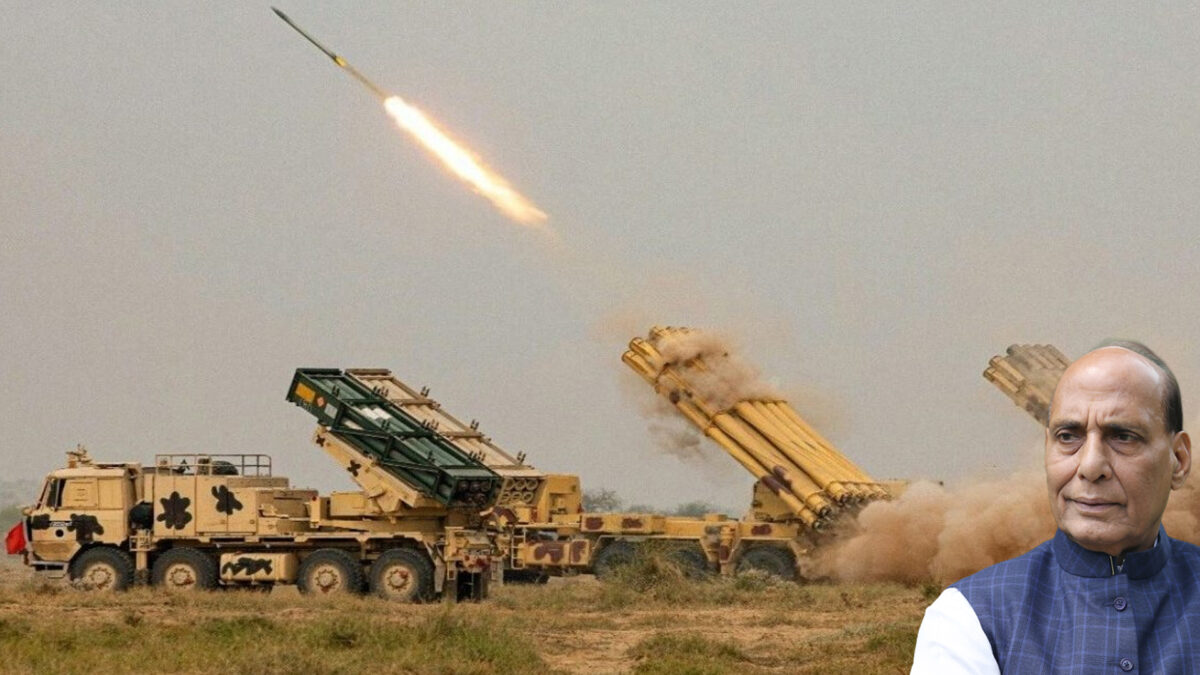
The Defence Acquisition Council (DAC), headed by Defence Minister Rajnath Singh, has cleared proposals worth Rs 79,000 crore for modernising India’s military forces. The approvals, given on December 29, 2025, cover a wide range of advanced equipment for the Army, Navy, and Air Force, boosting precision strike, surveillance, air defence, and counter‑drone capabilities.

For the Indian Army, key procurements include loiter munition systems to conduct targeted strikes, low‑level lightweight radars to detect small drones, long-range guided rockets for the Pinaka missile system, and the Integrated Drone Detection & Interdiction System Mk‑II to secure strategic areas.

The Indian Air Force will receive Astra Mk‑II beyond‑visual-range air-to-air missiles with extended reach, SPICE‑1000 precision guidance kits, as well as full mission simulators and automatic take-off and landing recording systems to enhance pilot training and safety.

The Indian Navy will benefit from bollard pull tugs for port operations, high-frequency software-defined manpack radios for secure communication, and lease extensions for high-altitude long-endurance drones to maintain maritime surveillance.

While the DAC’s Acceptance of Necessity (AoN) approval marks the first step in procurement, final contracts will follow detailed negotiations. These acquisitions are part of India’s broader defence modernisation drive, aimed at strengthening operational readiness and technological edge amid evolving regional security challenges.

Defence analysts say the move demonstrates India’s intent to equip its forces with state-of-the-art technology, reduce dependence on imports over time, and enhance both offensive and defensive capabilities across land, air, and sea domains.

The Rs 79,000 crore package reflects the government’s push for a balanced mix of indigenous and imported systems, ensuring quicker deployment and strategic flexibility. This marks one of the largest single approvals for defence hardware in recent years, underlining the country’s commitment to modernising its armed forces and addressing emerging threats efficiently.

Also Read: Geoffrey Hinton warns 2026 could trigger major AI job shock

Categories
Leaders

Geoffrey Hinton warns 2026 could trigger major AI job shock

Geoffrey Hinton, widely known as the “Godfather of AI,” has cautioned that 2026 could become a turning point for global employment as artificial intelligence systems rapidly grow more powerful. Speaking in recent interviews, Hinton said the speed at which AI is advancing has surprised even experts and could lead to large-scale job displacement across multiple sectors within the next year.

Hinton explained that AI tools are no longer limited to handling simple, repetitive tasks. Systems that once completed work taking a few minutes can now manage tasks lasting an hour or more. At this pace, he believes AI could soon take on complex assignments, such as advanced programming, analysis, and problem-solving, that traditionally require months of human effort. As a result, many existing roles could become redundant.

According to Hinton, this technological shift is fundamentally different from earlier industrial changes. Past revolutions mainly reduced the need for physical labour, while creating new types of work. The current AI wave, however, targets cognitive and knowledge-based jobs, including clerical work, customer support, data analysis, and some professional roles. This raises the risk of a “jobless productivity boom,” where companies grow more efficient without increasing their workforce.

The warning has sparked debate among economists and business leaders. Some agree that AI-driven productivity gains could weaken the traditional link between economic growth and job creation. Others argue that while certain jobs will disappear, new roles will emerge, especially in AI development, engineering, oversight, and leadership. Surveys of global CEOs suggest many expect hiring to continue in specialised and entry-level positions, even as job profiles change.

Hinton has also stressed that society is not fully prepared for the scale or speed of this transformation. He believes governments and institutions need to rethink education, reskilling, and social safety nets to help workers adapt. Without timely policy responses, the benefits of AI could be unevenly distributed, widening income inequality and social divides.

While acknowledging AI’s potential to transform healthcare, science, and education positively, Hinton maintains that ignoring its impact on jobs would be a serious mistake. His 2026 warning adds urgency to discussions on how economies and workers should prepare for an AI-driven future.

Also Read: India’s rare earth reserves high, production still low