Categories
Technology

Google brings Gemini 3.7 Flash for coding, agents

Google has launched Gemini 3.7 Flash, its latest artificial intelligence model aimed at making software development, coding and AI-agent workflows faster, more accurate and less expensive. The new model, unveiled on August 13, arrives only three weeks after Gemini 3.6 Flash and is positioned as Google’s most capable “workhorse” model so far for coding and agent-based tasks.

The release reflects Google‘s growing focus on AI agents that can do more than simply generate text or answer questions. Gemini 3.7 Flash is designed to handle multi-step tasks, use software tools, work through complex instructions and assist with workflows that previously required substantial human intervention.

Google said the model brings improvements across software engineering, web development and knowledge-intensive work, including areas such as finance, law and biosciences. The company also highlighted better debugging, issue resolution, code generation and instruction-following.

One of the biggest changes is the model’s ability to produce better code on the first attempt. Google said Gemini 3.7 Flash achieved a 43.6% score on the FrontierCode 1.1 Main benchmark, compared with 34.4% for Gemini 3.6 Flash. On DeepSWE v1.1, which measures software-engineering capabilities, the new model scored 65.3%, up from 49% for its predecessor.

For developers, that improvement could mean fewer rounds of prompting, debugging and manual correction. Google said Gemini 3.7 Flash is better at dealing with roadblocks, understanding when clarification is required and following instructions more closely. It also puts more effort into multi-step planning and tool calls, potentially reducing failed attempts when an AI agent is working through a complicated software task.

Web development is another major focus. Google said Gemini 3.7 Flash can create more functional layouts and feature-complete applications with fewer prompts. It can also work from screenshots, images or complete design systems and produce interfaces that more closely follow the original design.

The model recorded an Elo score of 1,588 on Arena.ai’s WebDev Arena, compared with 1,538 for Gemini 3.6 Flash. That improvement is significant for developers using generative AI to create websites and applications, where producing working code is only part of the challenge. Matching the intended user interface and visual design has become equally important.

Google is also pitching Gemini 3.7 Flash as a model for knowledge work and business automation. On the GDP.pdf benchmark for complex document understanding, it scored 34%, compared with 22% for Gemini 3.6 Flash. On AutomationBench, which tests real-world business workflows, the new model achieved 30.4%, compared with 17% previously.

The pricing is another important part of the launch. Google has introduced Gemini 3.7 Flash at $0.75 per million input tokens and $3.75 per million output tokens until the end of 2026. From January 1, 2027, those prices are scheduled to rise to $1.50 per million input tokens and $7.50 per million output tokens.

The lower introductory price is significant because running AI agents can consume large amounts of tokens. Agents often require repeated model calls as they plan tasks, access tools, inspect results and make corrections. Lower inference costs can therefore make autonomous AI systems more practical for businesses and developers operating them at scale.

Gemini 3.7 Flash is available through several Google platforms, including the Gemini API, Google AI Studio, Google Antigravity and Android Studio. Enterprise customers can access it through the Gemini Enterprise Agent Platform and Gemini Enterprise app. The model is also being incorporated into Google’s consumer-facing Gemini Spark service for eligible Google AI Pro and Ultra subscribers.

Gemini Spark, described by Google as a personal AI agent, can use the new model to perform multi-step knowledge-work tasks. Google said the upgrade improves its use of Google Workspace applications, allowing Spark to consolidate files, draft emails and update status documents while working under user direction.

The launch also underlines how quickly the generative AI market is evolving, with technology companies competing across AI models, coding tools and autonomous agents. Google’s three-week gap between Gemini 3.6 Flash and Gemini 3.7 Flash shows the pressure on AI companies to improve models rapidly while keeping inference costs under control.

Google is competing in an increasingly crowded market that includes OpenAI and Anthropic, particularly in coding assistants and autonomous AI workflows. The company is simultaneously developing its premium Gemini models, with its next flagship Pro release still being closely watched by the industry.

Google has also included updated safeguards covering cyber misuse and chemical, biological, radiological and nuclear-related risks. The company said the new model was developed with these protections in mind as it expands the capabilities of AI agents.

With Gemini 3.7 Flash, Google’s message is clear: the next stage of AI competition will not be judged only by how intelligently a model answers a prompt, but by how reliably, affordably and independently it can turn that prompt into completed work.


Categories
Beyond

Petrol export tax goes zero, diesel levy cut

The government has eased the windfall tax burden on petroleum exports, cutting levies on diesel and aviation turbine fuel (ATF) while removing the charge on petrol exports altogether.

The changes took effect on August 15, with the government bringing the export levy on petrol down to zero from ₹3.5 per litre. The duty on diesel has been reduced to ₹24 per litre from ₹25.5, while the levy on ATF has been lowered to ₹19.5 per litre from ₹22 per litre.

The latest move comes less than two weeks after the government sharply raised these levies, highlighting how quickly its petroleum tax policy is responding to movements in the global oil market.

The windfall tax was introduced as a way to capture unusually high earnings from the oil sector when international crude prices surge. For refiners and producers, the levy effectively reduces the gains they can make from exporting petroleum products when global prices and refining margins rise sharply.

The government has been reviewing the tax every fortnight, giving it flexibility to change the rates depending on international crude prices, fuel margins and domestic market conditions.

The latest reduction is particularly significant for petrol exporters. The government has completely removed the ₹3.5-per-litre levy imposed earlier this month. This could improve export realisations for refiners selling petrol into overseas markets, although the actual impact will depend on global fuel prices, freight costs and the rupee-dollar exchange rate.

Diesel exporters will also see a smaller tax burden, with the levy reduced by ₹1.50 per litre. The ATF export duty has been cut by ₹2.50 per litre.

The changes come at a time when international energy markets remain highly sensitive to geopolitical developments. Crude prices have faced repeated swings because of concerns over supply disruptions, shipping routes and tensions in the Middle East.

India, as one of Asia’s largest refining centres, is closely exposed to these global movements. Indian refiners import crude, process it into products such as petrol, diesel and ATF, and sell a portion of those products in international markets.

That makes the level of export taxation important for refinery economics. When duties rise, overseas sales become less attractive. When they fall, refiners have greater flexibility to take advantage of international demand and favourable refining margins.

The government’s decision also comes after a substantial increase announced earlier in August. On August 3, the petrol export levy was raised to ₹3.5 per litre from ₹2.5. The diesel levy jumped to ₹25.5 per litre from ₹15.5, while the ATF levy increased to ₹22 per litre from ₹14.5.

The reversal now gives exporters some relief and reflects the government’s willingness to recalibrate the tax as market conditions change.

The windfall tax itself has been used intermittently in response to international oil prices. It was first introduced in July 2022, when crude prices surged following disruptions in global energy markets. As prices subsequently moderated, the levy was withdrawn.

It returned in March 2026 amid another sharp rise in global oil prices and concerns over disruptions linked to tensions involving Iran and the Strait of Hormuz.

At that time, the government was also focused on protecting the domestic market from the impact of expensive crude. The tax structure was adjusted alongside measures aimed at limiting the impact of higher international energy prices on Indian consumers.

The latest decision, however, is more favourable to the refining and export side of the industry. Lower duties mean companies retain a larger share of the revenue generated from overseas sales.

That does not necessarily translate into cheaper petrol or diesel for Indian consumers. The latest notification concerns export taxation and does not directly change the retail prices of petrol, diesel or ATF in the domestic market.

Domestic fuel prices depend on several factors, including international crude prices, refining costs, taxes, margins and the pricing policies followed by oil marketing companies.

The broader significance lies in the government’s approach to managing the petroleum sector during a period of considerable uncertainty. Such changes in economic policy and global market conditions can affect government revenue, export competitiveness and the earnings of refiners and producers. A high windfall tax can increase government revenue when refiners and producers benefit from elevated international prices, but it can also reduce export competitiveness.

A lower levy, on the other hand, can support the economics of exports while potentially reducing revenue collected through the tax.

For Indian refiners, the latest move therefore provides some breathing room. Companies will now be able to export petrol without the additional ₹3.5-per-litre charge and will face lower levies on diesel and ATF.

The reduction in petrol export duty, along with lower diesel and ATF export levies, is likely to be watched closely by refiners and traders as they assess export economics for the weeks ahead.

Categories
Corporate

Reliance Rolls-Royce join hands for AMCA fighter engine

Reliance Industries and British aerospace major Rolls-Royce have announced a strategic partnership to jointly develop and manufacture a combat aircraft engine for India’s Advanced Medium Combat Aircraft (AMCA) programme, potentially giving a major boost to the country’s efforts to build critical defence technology at home.

The proposed collaboration will combine Rolls-Royce’s expertise in aircraft propulsion with Reliance’s manufacturing capabilities. The companies also plan to explore setting up an Aerospace Gas Turbine Complex in India, which could create an industrial base for developing and manufacturing advanced aero engines.

The announcement comes as India accelerates its flagship fifth-generation fighter aircraft programme. The AMCA is being developed by the Aeronautical Development Agency (ADA) under the Defence Research and Development Organisation (DRDO), with the Indian Air Force expected to be its primary user.

India’s Fighter Engine Challenge

For India, the engine remains one of the most difficult parts of the AMCA programme.

The country has developed sophisticated fighter airframes, missiles, radars and avionics, but has remained dependent on foreign suppliers for high-performance military engines. The proposed Reliance-Rolls-Royce partnership therefore focuses on one of the biggest gaps in India’s defence self-reliance strategy.

The companies intend to work towards designing, developing, manufacturing and delivering a combat engine in India. However, they have not disclosed the proposed investment, precise engine specifications or a detailed development schedule.

The partnership also does not automatically amount to a government contract for the AMCA engine. The Indian government will ultimately decide which engine proposal best fits the aircraft programme.

Rolls-Royce already has a long association with India’s defence sector. Its engines have powered several Indian military aircraft, while the company has also supported licensed engine manufacturing in the country. The new proposal aims to take that relationship further towards co-development and deeper domestic manufacturing.

Why AMCA’s Engine Matters

The AMCA is designed to become India’s first indigenous fifth-generation fighter jet, featuring stealth characteristics, internal weapons bays, advanced sensors and network-centric capabilities.

The programme is moving into a crucial development phase, with India seeking greater participation from private industry alongside its traditional defence companies. The first prototype is targeted for around 2028, while serial production is expected in the 2030s.

That makes the choice and development of the aircraft’s engine one of the most important decisions facing the programme.

India’s previous experience shows why the challenge is significant. The DRDO’s Kaveri engine programme was originally intended to power the Light Combat Aircraft but struggled to meet the required thrust and performance parameters.

As a result, Indian fighter aircraft have continued to rely heavily on imported engines. The Tejas, for instance, uses engines supplied by GE Aerospace. Delays in imported engine supplies have also affected aircraft production.

The AMCA is intended to break that cycle by developing a more secure and technologically advanced domestic propulsion capability.

Competition And A Bigger Industrial Push

The Reliance-Rolls-Royce proposal is likely to intensify competition among international engine manufacturers seeking a role in India’s next-generation fighter programme.

Safran of France has separately been discussing cooperation with India on a high-thrust fighter engine, while GE Aerospace already has a significant role in India’s military aviation ecosystem.

The objective is ultimately bigger than selecting an engine supplier. India wants to develop the ability to design, manufacture, maintain and eventually export advanced aircraft engines.

The partnership also underlines the growing role of India’s private sector in defence manufacturing. Reliance has a major presence across energy, telecommunications and retail, while its expanding defence interests are taking it into increasingly sophisticated areas of aerospace and military production.

Reliance’s growing presence across sectors is part of a wider trend of major Indian companies expanding into new businesses and strategic partnerships. More such corporate developments are covered in our Corporate News section.

An aero-engine project would require investment in precision manufacturing, specialised materials, testing infrastructure, engineering talent and a domestic supplier network. The proposed Aerospace Gas Turbine Complex could become an important part of that ecosystem if the project moves forward.

The proposed collaboration does not immediately solve India’s fighter-engine problem. Developing, testing and certifying a modern combat engine can take years and involves substantial technical and financial risks.

But it represents an important shift in India’s approach to defence manufacturing and aerospace self-reliance. For decades, the country has built fighter aircraft around imported propulsion systems. The AMCA offers an opportunity to change that model.

If the Reliance-Rolls-Royce effort succeeds, its impact could extend well beyond one aircraft. It could help India build the engineering, manufacturing and technology ecosystem needed for future combat aircraft.

For the AMCA, an advanced stealth airframe is only as capable as the engine that powers it. Developing that capability in India could become one of the defining tests of the country’s ambition to emerge as a major aerospace power.

Categories
Leaders

OpenAI Revenue Chief Dresser exits after 8 months

OpenAI is facing another high-profile leadership change, with Chief Revenue Officer Denise Dresser leaving the artificial intelligence company after just eight months in the role. Her exit comes at a crucial stage for OpenAI, as the ChatGPT maker expands its enterprise business, reorganises its leadership team and prepares for a potential initial public offering (IPO).

OpenAI said Dresser is stepping down to pursue other opportunities. She will remain involved during the transition and work with the business team to ensure continuity for customers. Dali Rajic, who previously served as president and chief operating officer of cybersecurity company Wiz, will take over as chief revenue officer.

Dresser joined OpenAI in December 2025 after more than a decade at Salesforce. Her relatively short tenure makes the departure notable, particularly because the chief revenue officer is responsible for driving one of the company’s most important priorities: turning the growing demand for generative AI into sustained commercial revenue.

The change also comes only days after another major executive departure. Brad Lightcap, OpenAI’s longtime chief operating officer and a key figure in the company’s business operations, announced his departure earlier this week. The succession of exits has put OpenAI’s leadership structure under renewed scrutiny as the company moves into a more commercially focused phase.

Dali Rajic takes over revenue role

Rajic arrives with experience in scaling enterprise technology businesses. Before joining OpenAI, he was president and COO of Wiz, the cybersecurity company that Google acquired for $32 billion this year.

OpenAI said Rajic will lead its global revenue organisation at a time when businesses are increasingly adopting AI tools across workplaces. The company expects him to help build a more repeatable sales and distribution system as AI becomes part of everyday business operations.

OpenAI President and co-founder Greg Brockman said Dresser had helped develop the revenue organisation during an important period for the company. He said Rajic would now focus on turning those lessons into a more scalable business operation.

The appointment reflects the growing importance of enterprise AI for OpenAI. While ChatGPT remains the company’s best-known product, OpenAI is increasingly competing for corporate customers that want AI systems for coding, customer service, research, productivity and other workplace functions.

That market is becoming more competitive. Anthropic has expanded rapidly in enterprise AI, putting additional pressure on OpenAI to convert its technological lead into long-term commercial relationships.

More than one executive exit

Dresser’s departure is not an isolated change at OpenAI. The company has seen a series of senior executives leave or shift responsibilities in recent months.

Lightcap, who had been one of CEO Sam Altman‘s closest senior executives, is leaving after years at OpenAI. His departure follows changes involving other senior leaders, including Fidji Simo, the former CEO of OpenAI’s applications business, as well as executives overseeing product, marketing and other functions.

The turnover has created a significant leadership reshuffle at OpenAI, reflecting the kind of executive and leadership changes shaping major companies as they respond to rapid growth and changing business priorities. The company is simultaneously trying to increase revenue, develop increasingly powerful AI models and manage growing scrutiny around AI safety.

OpenAI has presented the changes as part of a broader organisational refresh rather than evidence of a crisis. Recent reporting suggests that co-founder Greg Brockman is taking a more active role in operations, particularly around customers and enterprise growth.

The timing, however, has attracted attention because OpenAI is preparing for a possible public listing.

IPO preparations add pressure

OpenAI has reportedly been moving closer to an IPO after years of operating as a private AI company. The company confidentially filed a draft registration statement with US regulators in June, according to reports, although the timing of any public offering remains uncertain.

An IPO would mark a major transformation for OpenAI. The company has grown from a research-focused organisation into one of the world’s most valuable AI businesses, with ChatGPT becoming a widely used consumer and enterprise product.

That growth has also brought much higher financial expectations. Recent reports have put OpenAI’s annualised revenue run rate above $40 billion, roughly double the level reported at the end of 2025. The company has been expanding revenue through ChatGPT subscriptions, enterprise services, coding products and other AI offerings.

For investors, that makes the stability of OpenAI’s leadership particularly important. A chief revenue officer leaving after eight months, followed closely by the departure of another senior executive, inevitably raises questions about the company’s organisational direction even if the changes are part of a planned restructuring.

Commercial growth takes centre stage

OpenAI’s latest leadership changes also show how quickly the AI industry is evolving. As the technology moves from experimentation into mainstream business use, companies such as OpenAI need executives who can build large-scale sales organisations and convert AI adoption into predictable revenue.

Rajic’s background at Wiz could be particularly relevant as OpenAI expands its enterprise operations. Cybersecurity companies typically work with large organisations and complex sales cycles, giving Rajic experience in selling technology to corporate customers.

OpenAI is also expanding partnerships and strengthening its go-to-market organisation. The company said it has formed a strategic partnership with Chad Peets and RPT Partners to support the development of its sales organisation.


Categories
Beyond

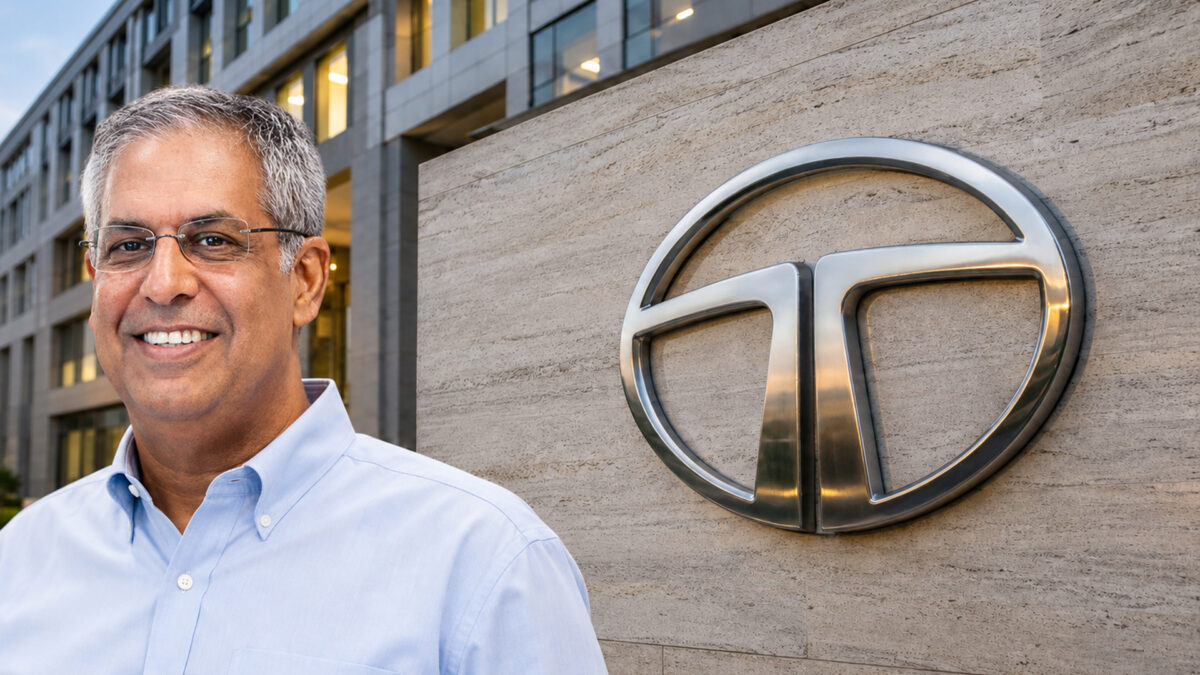
Tata Sons AGM faces quorum hurdle amid Trust dispute

The Tata Sons annual general meeting (AGM) scheduled for August 18 is facing a fresh procedural hurdle, with restrictions on the Sir Ratan Tata Trust (SRTT) raising serious questions over whether the meeting can meet the required quorum.

The issue comes at a particularly sensitive moment for the Tata Group. N Chandrasekaran, who has led Tata Sons since 2017, has decided not to seek reappointment when his current term ends on February 20, 2027. The Tata Trusts have begun the process of finding his successor, but the same regulatory restrictions affecting the AGM are also complicating the formation of the selection committee.

The immediate problem stems from an order by the Maharashtra Charity Commissioner restricting SRTT from convening trustee meetings. The directive was issued in May following complaints concerning the composition of the trust’s board and alleged non-compliance with provisions of the Maharashtra Public Trusts Act.

SRTT has sought relief from the Charity Commissioner, but the restrictions had not been lifted as of August 14. With the AGM only days away, the trust has little time to resolve the issue. It could also approach the Bombay High Court if regulatory relief does not come through.

SRTT and the Sir Dorabji Tata Trust (SDTT) are the two principal Tata trusts and together hold about 51.5% of Tata Sons. SRTT owns roughly 23.5%, while SDTT holds about 28%.

The problem is not simply that SRTT cannot attend the meeting. Under the Tata Sons Articles of Association, the two trusts have to jointly nominate a representative for the AGM. Article 86 sets out the quorum requirement and includes a jointly nominated representative of SDTT and SRTT.

Since SRTT cannot currently hold a trustee meeting, it cannot formally participate in that nomination process.

SDTT has now informed Tata Sons that the required quorum may not be available. Tata Sons, however, is expected to proceed with the AGM as scheduled. If the required quorum is not present, the meeting could be adjourned. The complication is that the adjourned meeting would still require the joint nominee, leaving the basic problem unresolved unless SRTT receives regulatory relief.

This has created an unusual situation for one of India’s most closely watched corporate groups. The AGM is not merely a routine annual meeting; it comes amid a leadership transition and could determine how quickly the Tata Group moves towards choosing Chandrasekaran’s successor.

The quorum dispute also affects Chandrasekaran’s immediate position.

Chandrasekaran is liable to retire by rotation as a director of Tata Sons. His continuation as chairman is legally linked to his position on the Tata Sons board. If the AGM cannot be validly constituted, however, officials familiar with the Articles of Association say he could continue as a director until a valid AGM is held, when his reappointment can be considered.

Chandrasekaran has already made clear that he does not intend to seek another term as chairman after February 2027. His decision followed months of uncertainty around his reappointment and differences within the Tata leadership structure.

That means the August 18 meeting could still be important even if it does not immediately settle the succession question. A delay could simply push the formal decision-making process further down the road.

The SRTT restrictions have created a second problem for Tata Sons: the selection committee for Chandrasekaran’s successor.

SDTT has already passed a resolution to initiate the setting up of a selection committee as soon as possible, in accordance with the Articles of Association of Tata Sons. The committee will recommend a candidate for appointment as the company’s next chairman.

However, the full process requires participation from both principal trusts. The two trusts are expected to jointly nominate three members to the selection committee.

With SRTT unable to hold a meeting, it cannot make the necessary nominations. As a result, SDTT’s resolution has started the process, but cannot by itself complete the succession mechanism.

The timing is significant. Chandrasekaran’s term ends in February 2027, giving Tata Sons roughly six months to complete the search, evaluate candidates and secure the necessary corporate approvals.

The Charity Commissioner’s action against SRTT is linked to an inquiry into the trust’s governance. The regulator directed the trust to postpone a May 16 meeting and refrain from convening similar meetings until an Inspector’s report is submitted.

The dispute also involves questions about the number of perpetual or life trustees on the SRTT board following changes to Maharashtra’s public trust law. The regulator has powers under Section 36A(1) of the Maharashtra Public Trusts Act to issue directions to a trust.

Separately, the Charity Commissioner’s office is examining allegations concerning the transfer of 833 Tata Sons shares in 1989 from the Navajbai Ratan Tata Trust to Naval H Tata. Former SRTT trustee Vijay Singh had sought an inquiry into the matter. Noel Tata, who is chairman of Tata Trusts and a trustee of the Navajbai Ratan Tata Trust, has denied the allegations, and the regulator is examining his response.

The restrictions have also affected the functioning of SRTT beyond Tata Sons. Accounts have reportedly not been finalised and grants of around ₹400 crore have been held up, while several decisions requiring trustee resolutions remain pending.

.

Categories
Corporate

LG Electronics India Q1 profit rises 27.2%

LG Electronics India reported a strong performance for the April-June quarter, with net profit rising 27.2% year-on-year to ₹652.9 crore in the first quarter of FY27. Revenue from operations increased 15.5% to ₹7,233.4 crore, while improved margins helped the consumer electronics maker deliver faster profit growth than revenue.

The results reflect strong demand for home appliances and consumer electronics during the summer season, particularly air conditioners and refrigerators. The company also benefited from a shift towards premium products, higher volumes and better operating leverage. The combination helped LG Electronics India strengthen profitability despite continuing cost pressures in the consumer durables market.

Earnings before interest, taxes, depreciation and amortisation (EBITDA) rose 26.2% year-on-year to ₹904 crore from about ₹716 crore in the corresponding quarter last year. EBITDA margin expanded to 12.5% from 11.4%, marking an improvement of around 106 basis points. The expansion was supported by a better product mix, higher volumes and strong performance in home entertainment.

The June quarter is traditionally important for LG Electronics India because of summer demand for cooling products. Air conditioners and refrigerators saw strong traction, helping the company’s Home Appliances and Air Solutions business. The company has been focusing on premium air conditioners and other higher-value products as consumers increasingly move towards feature-rich appliances.

Premiumisation has become an important growth driver for LG Electronics India. Customers are increasingly opting for larger televisions, premium refrigerators, front-load washing machines and higher-end air conditioners. This trend allows the company to improve its average selling prices while protecting margins, rather than depending only on higher unit volumes.

Home entertainment also provided support during the quarter. Strong demand for premium televisions and larger screens helped the segment contribute to the improvement in profitability. The company has been expanding its premium television portfolio, including large-screen and OLED models, while maintaining its position in India’s competitive television market.

The sharp rise in the share price shows that investors were encouraged by the combination of revenue growth and margin expansion. The company had faced profitability pressure in earlier quarters because of higher commodity costs, currency movements and promotional spending. The latest results suggest that better product mix and operating leverage are beginning to offset some of those pressures.

LG Electronics India has also reaffirmed its growth outlook for FY27. The company expects continued momentum from premium home appliances, larger television screens, exports and the upcoming festive season. It has maintained its target of revenue growth for the financial year and expects to sustain a double-digit EBITDA margin.

The company’s growth strategy is not limited to domestic consumption. LG Electronics India is increasingly positioning India as a manufacturing and export hub under its broader “Make in India” and export strategy. Higher exports can help the company improve capacity utilisation and strengthen its role within LG’s global supply chain.

Manufacturing capacity is another important part of the company’s medium-term plans. LG is expanding its Sri City facility in Andhra Pradesh, with a significant investment planned to increase production capacity. The facility is expected to strengthen supply-chain efficiency and support the company’s export ambitions. Earlier company plans indicated that the expansion would include air-conditioner and compressor production.

The company is also working to increase localisation in its manufacturing operations. Greater localisation can reduce dependence on imported components and help cushion the business against currency fluctuations and supply-chain disruptions. LG has indicated that it wants to steadily increase the domestic component of its manufacturing base.

LG’s expansion and manufacturing plans also highlight how corporate earnings are increasingly tied to broader business strategies and investment decisions. For more coverage of such corporate developments, visit our Corporate News section.

Analysts have responded positively to the latest results. ICICI Securities highlighted broad-based double-digit growth and said premiumisation helped improve margins. Other brokerages, including Jefferies, Nuvama and Motilal Oswal, have also maintained a positive view following the strong quarterly performance.

For LG Electronics India, the challenge now is to maintain this momentum through the rest of FY27. Summer demand provided a strong start to the year, but the company will need to sustain growth beyond seasonal categories. Festive demand, premium product sales, exports and cost management will therefore remain important for the coming quarters.

The broader consumer durables market is also becoming increasingly competitive, with brands competing aggressively on pricing, technology and product features. LG’s strategy of focusing on premiumisation while retaining a broad product portfolio is aimed at protecting both market share and profitability.

The first-quarter performance nevertheless gives the company a strong foundation for FY27. With revenue growing in double digits, profit rising faster than sales and EBITDA margins improving, LG Electronics India has demonstrated that higher volumes and a premium product mix can translate into stronger earnings.

Categories
Leaders

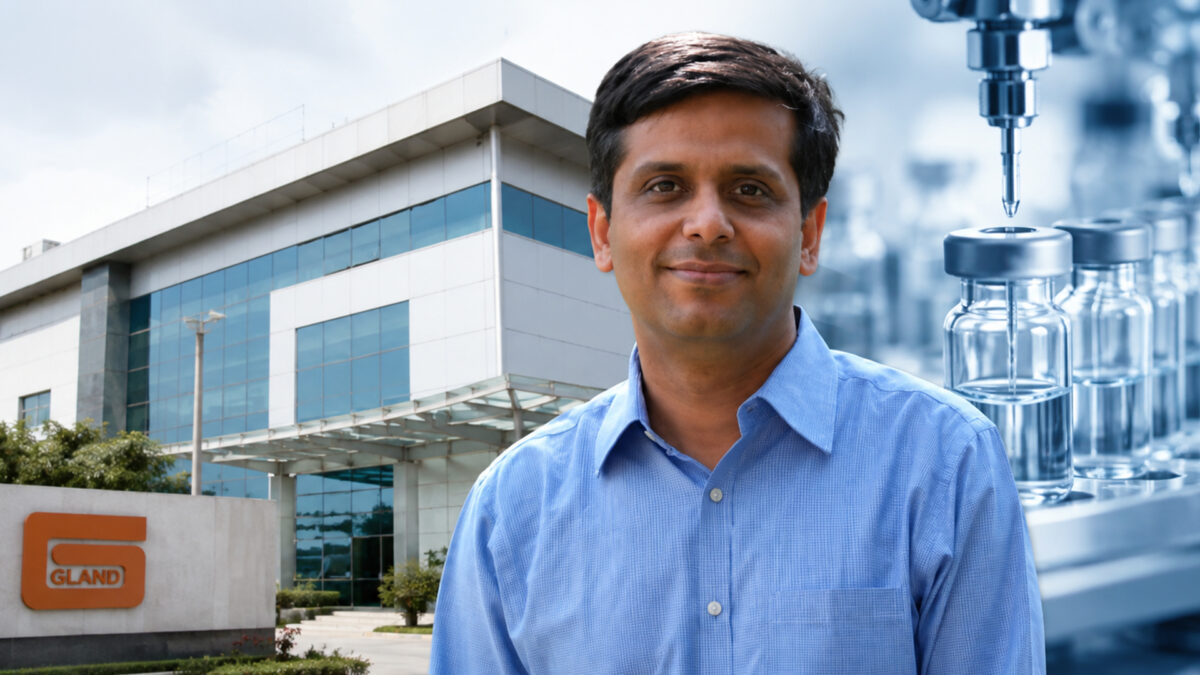
Gland Pharma appoints Deepak Sapra as CEO

Gland Pharma has appointed Deepak Sapra, a senior executive at Dr Reddy’s Laboratories, as its new Chief Executive Officer, marking a significant leadership change at the Hyderabad-based pharmaceutical company. Sapra will take charge as CEO on November 16, 2026, subject to his acceptance of the offer, the company said in a stock exchange filing.

The appointment comes at an important stage for Gland Pharma, which is looking to build on improving financial performance while expanding its presence in complex injectables, contract development and manufacturing services, or CDMO, and international markets. The company’s board approved Sapra’s appointment following the recommendation of its Nomination and Remuneration Committee.

Sapra brings nearly three decades of pharmaceutical industry experience to the role. Digital Health News reported that he has 27 years of executive experience, including more than 23 years in the pharmaceutical sector. His career has covered active pharmaceutical ingredients, generic medicines, CDMO operations, business development, licensing, portfolio management and international expansion.

At Dr Reddy’s, Sapra currently serves as Chief Executive Officer of the API and Services business. He has been responsible for an integrated portfolio covering APIs, generic pharmaceuticals, CDMO services and strategic collaborations. His experience spans major pharmaceutical markets including the US, Europe, Japan, Latin America, Africa and the Asia-Pacific region.

One of the most relevant parts of Sapra’s background for Gland Pharma is his experience in contract manufacturing. Earlier in his career, he headed Dr Reddy’s Custom Pharmaceutical Services business, where he led global CDMO operations serving innovator pharmaceutical companies in the US, Europe and Japan. He has also handled global generics business development and portfolio management.

That experience could be particularly useful as Gland Pharma seeks to expand its CDMO business. Earlier this month, the company announced a strategic manufacturing and supply agreement with a global pharmaceutical company covering technology transfer, production and supply of sterile injectable products for worldwide markets. Gland Pharma expects the agreement to generate annual revenue of about $90 million to $100 million once fully operational.

The appointment also follows a period of strong financial performance for Gland Pharma. The company reported a 47% year-on-year increase in consolidated profit in the first quarter of FY27, while revenue rose 20%. Its strong results had already lifted investor interest in the stock, with Gland Pharma shares gaining more than 12% after the earnings announcement.

Gland Pharma’s official investor data also shows that the company has reported Q1 FY27 results and earnings-related disclosures as part of its current financial year. The stronger quarterly performance gives Sapra a relatively favourable starting point, although maintaining that momentum will be one of his immediate challenges.

The company operates primarily in the pharmaceutical manufacturing space, with a strong focus on injectable products. Its business includes the development, manufacture, sale and distribution of pharmaceuticals. Gland Pharma has also built an international footprint through subsidiaries and operations serving markets outside India.

Sapra’s appointment is also notable as Gland Pharma joins a broader wave of leadership changes across Indian companies. Shyamakant Giri had joined the company as CEO in January 2025, after Srinivas Sadu was redesignated as Executive Chairman. Gland Pharma’s corporate disclosures subsequently recorded Giri’s resignation as CEO in March 2026.

The company’s leadership structure currently includes Executive Chairman Srinivas Sadu, along with an experienced board that includes independent directors such as Naina Lal Kidwai and William Robert Keller.

For Sapra, the new role will involve balancing Gland Pharma’s established injectable business with opportunities in higher-value pharmaceutical manufacturing. The global CDMO market, complex injectables and specialised pharmaceutical products offer opportunities for Indian manufacturers with regulatory capabilities and established international customer relationships.

His background in APIs and services could also help Gland Pharma strengthen the connection between product development, manufacturing and global commercial opportunities. His experience in mergers and acquisitions, licensing and portfolio strategy may further support the company as it evaluates new partnerships and expansion opportunities.

The focus for investors is likely to remain on whether the leadership change translates into sustained revenue growth, stronger margins and greater visibility for Gland Pharma’s international business. The company has already demonstrated improving earnings, while its recent CDMO agreement points to an effort to secure larger and more integrated global contracts.

Sapra will therefore take over at a time when the company has both momentum and clear opportunities ahead. His experience at Dr Reddy’s gives him familiarity with global pharmaceutical markets, regulatory requirements and complex manufacturing operations. The challenge will be to convert that experience into faster growth while maintaining operational discipline and quality standards.

With his appointment scheduled for November 16, the transition will take place over the coming months. Until then, investors and the pharmaceutical industry will be watching how Gland Pharma prepares for the change and whether Sapra’s arrival signals a broader push into high-value injectables, CDMO services and global expansion.

Categories
Corporate

Sensex closes 70 points down, Nifty settles below 24,400

Indian benchmark equity indices ended lower on Friday, August 14, as investors remained cautious amid rising crude oil prices, geopolitical uncertainty and continued selling pressure in several heavyweight stocks. The BSE Sensex fell 70.71 points, or 0.09%, to close at 78,009.25, while the NSE Nifty50 declined 29.85 points, or 0.12%, to settle at 24,366. The two indices extended their losing run to a fourth straight session.

The session was volatile. The Sensex had fallen more than 300 points in early trade, while the Nifty slipped below 24,300 at one point. However, buying in select heavyweight stocks helped the benchmarks recover much of their early losses before they gave up some gains towards the close. The Nifty touched an intraday low of 24,296.80.

The broader market was comparatively resilient. The Nifty Bank gained 144 points to 57,491, while the Nifty Midcap index rose 339 points to 63,782. Market breadth remained broadly balanced, although the overall tone stayed cautious.

Among the top gainers, Apollo Hospitals, Bharti Airtel, Adani Ports, Hindustan Aeronautics, Eternal and Titan were among the stronger performers in the Sensex basket. Apollo Hospitals emerged as the top Nifty gainer, rising more than 3%, while LG Electronics India gained more than 9% after reporting strong first-quarter results. The company reported a 27.2% year-on-year rise in profit after tax to ₹653 crore and a 15% increase in revenue.

Honasa Consumer was another stock in focus, gaining more than 4% after reporting its highest-ever consolidated quarterly profit. Its profit after tax rose 116.5% year-on-year to ₹90 crore in the first quarter of FY27. Galaxy Surfactants also surged 20% after raising its earnings guidance.

On the other hand, Tata Motors Passenger Vehicles, Jio Financial Services, Asian Paints, ONGC, NTPC and InterGlobe Aviation were among the key laggards. Tata Motors PV was the biggest drag on the Nifty after its shares fell more than 4%. The stock had dropped sharply after the company reported an 80% year-on-year decline in consolidated net profit for the April-June quarter.

Tata Motors PV’s quarterly performance was weighed down by weakness at Jaguar Land Rover (JLR), which accounts for a significant share of the company’s revenue. The company also flagged continued margin pressures, adding to investor concerns about its near-term earnings outlook.

Metal stocks also faced heavy selling. National Aluminium Company, or NALCO, fell around 6%, while Hindalco Industries declined nearly 2%. The weakness came as investors reacted to increased production at Alunorte and softer global commodity prices. The Nifty Metal index fell nearly 2% during the week, making metals one of the weakest-performing sectors.

Crude oil remained a key concern for investors. Oil prices moved higher after the United States threatened to maintain its naval blockade of Iran indefinitely, reviving worries about disruptions to global crude supplies. Brent crude rose 4.6% during the session to around $87 a barrel. For India, which imports a large share of its crude requirements, sustained higher oil prices can raise import costs and put pressure on inflation and corporate margins.

The rise in oil prices came despite supportive global cues. US stocks had closed at record highs on Thursday after softer inflation-related data strengthened expectations that the US Federal Reserve could keep interest rates unchanged at its next meeting. Asian markets also traded largely higher on Friday, with Japan’s Nikkei gaining 0.59%. However, these positive cues were not enough to offset domestic concerns.

Sector-wise, the weakness was fairly widespread. Metals were among the biggest laggards, followed by information technology, consumer, cement and financial stocks. Oil and gas, pharmaceuticals and healthcare also declined. Consumer durables stood out as a notable outperformer, while private banks and realty stocks showed relative resilience.

The week’s performance was also disappointing for investors. The Sensex and Nifty both fell nearly 1% over the week, snapping their second consecutive weekly gaining streak. More than 35 Nifty stocks ended the week lower. Metals, FMCG and auto stocks were among the biggest sectoral decliners.

Despite the weakness in headline indices, stock-specific action remained strong as companies continued to announce their first-quarter FY27 results. Investors are likely to track corporate earnings, crude oil prices, foreign institutional investor flows and global market cues in the coming sessions. The direction of oil prices and developments around the Strait of Hormuz will remain particularly important for the Indian stock market.

With the Sensex settling at 78,009 and the Nifty at 24,366, investors are entering the next week with a cautious approach. While selective buying continues to support individual stocks, elevated crude prices and geopolitical uncertainty could keep the broader market volatile in the near term.

Categories
Beyond

India gets 20 bids for rare earth magnet plan

The Centre has received 20 bids from companies seeking to set up integrated rare earth permanent magnet manufacturing facilities in India, marking a major step in the government’s effort to build a domestic supply chain for a strategically important industrial component. Larsen & Toubro (L&T), Coal India and ReNew are among the prominent companies that have submitted bids under the ₹7,280-crore scheme.

The Ministry of Heavy Industries received the bids through a global tender floated on the Central Public Procurement portal. The technical bids were opened on Thursday, August 13, in the presence of participating companies. The bidding process is aimed at selecting manufacturers for integrated sintered NdFeB rare earth permanent magnets, which are widely used in modern energy, transport and technology industries.

Apart from L&T, Coal India and ReNew, the bidders include Attero Recycling, 20 Microns, Lohum Magnets & Energy Solutions, NEO Performance Materials of Singapore, Proterial India and Prozeal Green Energy. Other companies and consortia have also expressed interest, indicating that the government’s push to develop a domestic rare earth magnet industry has attracted participants from mining, metals, recycling, energy and advanced materials sectors.

The scheme seeks to create a total domestic manufacturing capacity of 6,000 metric tonnes per annum (MTPA). The capacity will be divided among five beneficiaries selected through a competitive bidding process. Each successful beneficiary can receive an allocation of up to 1,200 MTPA.

The Centre approved the scheme in November 2025 with a financial outlay of ₹7,280 crore. The Ministry of Heavy Industries subsequently issued the request for proposal in March 2026, inviting companies to establish integrated manufacturing facilities in the country. The deadline for submitting bids was August 12, with the technical bids opened a day later.

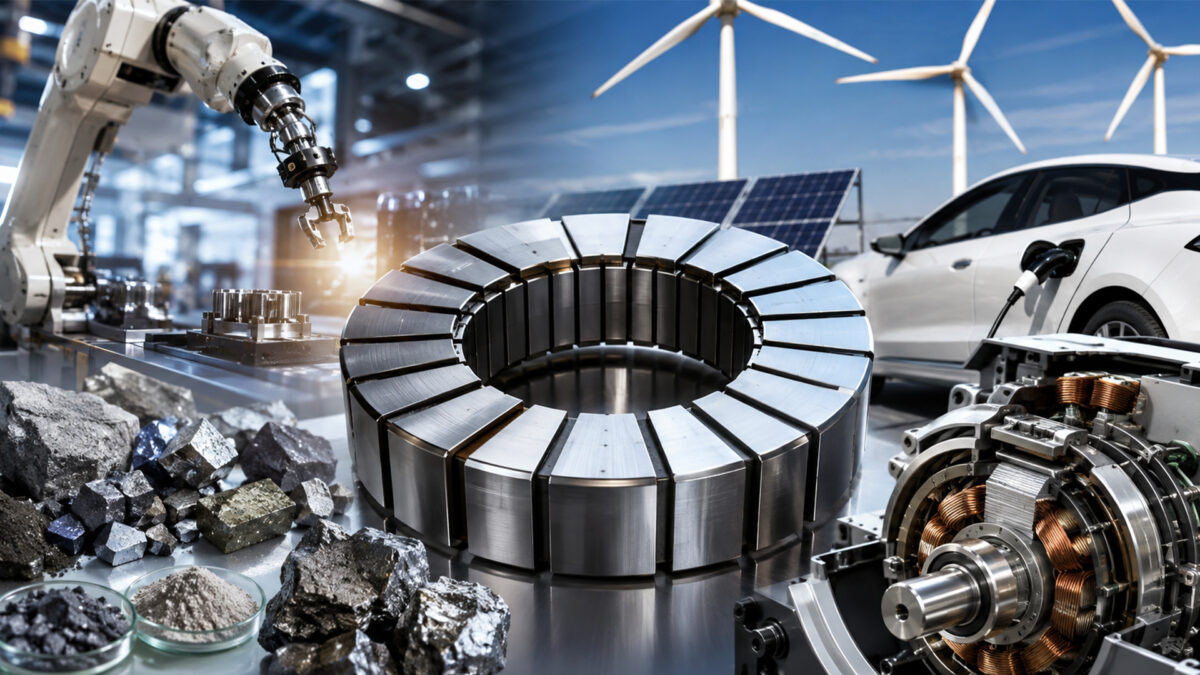
The initiative is aimed at addressing one of India’s key vulnerabilities in the critical minerals supply chain. Rare earth permanent magnets are essential components in products where powerful magnets are required in compact sizes. They are used in electric vehicles, wind turbines, electronics, industrial equipment, aerospace and defence applications.

These magnets are particularly important for traction motors. In renewable energy, they are used in generators for certain types of wind turbines. Their use also extends to consumer electronics, industrial automation, drones and other advanced technologies.

India currently depends significantly on imports for rare earth permanent magnets, making domestic production an important part of the government’s broader self-reliance and supply-chain diversification strategy. The scheme is designed not merely to assemble finished magnets but to develop an integrated manufacturing chain, beginning with neodymium-praseodymium (NdPr) oxide and extending to finished magnets.

Building this complete value chain is important because access to raw materials alone does not automatically translate into manufacturing capability. Processing rare earth elements into high-performance magnetic materials requires specialised technology, equipment and technical expertise. The government hopes the new facilities will help develop these capabilities within India and reduce exposure to overseas suppliers.

The programme will operate for seven years from the date of award. This includes a two-year period for setting up the manufacturing facilities, followed by five years during which incentives will be provided based on the sale of rare earth permanent magnets.

The government had earlier indicated that the scheme would combine capital support with sales-linked incentives to encourage companies to build capacity and achieve commercial-scale production. The objective is to make domestic manufacturing economically viable while creating an ecosystem that can eventually compete in global markets.

The strong response to the tender comes after significant interest was recorded even before the final bidding stage. More than 25 companies participated in a pre-bid conference in April, including JSW Group and NLC India, underlining the industry’s interest in the proposed rare earth manufacturing ecosystem.

The government has also been taking wider steps to strengthen India’s rare earth and critical minerals capabilities. In the Union Budget for 2026-27, it proposed dedicated rare earth corridors in Odisha, Kerala, Andhra Pradesh and Tamil Nadu to support processing and manufacturing. These initiatives are intended to connect India’s mineral resources with downstream industrial capacity.

The latest bidding process therefore represents more than an individual manufacturing programme. It forms part of a larger effort to strengthen India’s position in critical minerals, advanced manufacturing and clean-energy supply chains.

For companies such as L&T, Coal India and ReNew, participation also opens the possibility of entering or expanding in a sector expected to become increasingly important as electric mobility, renewable energy and advanced electronics grow.

The immediate next step will be evaluation of the technical bids, followed by the selection of up to five beneficiaries. Successful companies will then have to establish their integrated manufacturing facilities and meet the capacity and performance requirements under the scheme.

The government’s target is clear: create 6,000 MTPA of domestic sintered NdFeB magnet capacity and reduce India’s dependence on imported magnets. If the programme progresses as planned, it could provide a stronger domestic base for electric vehicles, renewable energy, electronics and defence while giving Indian manufacturers a larger role in a strategically important global supply chain.

The 20 bids received so far suggest that industry is willing to participate in that transition. The challenge now will be to turn the strong initial interest into commercially viable manufacturing capacity and a reliable rare earth supply chain in India.

Categories
Beyond

Gold lower at ₹1,52,750, silver at ₹2,34,480

Gold and silver prices declined in India on Friday, August 14, as investors booked profits after a recent rally in precious metals. The retreat came even as geopolitical tensions surrounding Iran continued to support demand for bullion as a safe-haven asset. Domestic gold and silver rates also reflected weakness in international markets, with both metals trading lower during the morning session.

According to the latest retail rates, 24-karat gold in New Delhi was priced at ₹1,52,100 per 10 grams, while 22-karat gold stood at ₹1,39,425 per 10 grams. In Mumbai, 24K gold was available at ₹1,52,360 per 10 grams and 22K gold at ₹1,39,663. Kolkata recorded 24K gold at ₹1,52,160 and 22K gold at ₹1,39,480 per 10 grams.

Silver prices also moved lower. The 999-fine silver rate in New Delhi was ₹2,33,360 per kilogram, while Mumbai recorded ₹2,33,770 per kg. In Kolkata, silver was priced at ₹2,33,460 per kg. The rates vary across cities because of local taxes, transportation costs, dealer margins and other market factors.

Among other major cities, Bengaluru’s 24K gold rate stood at ₹1,52,480 per 10 grams, while Chennai recorded ₹1,52,880. Hyderabad was at ₹1,52,600. For 22K gold, rates were ₹1,36,950 in Bengaluru, ₹1,40,140 in Chennai and ₹1,39,883 in Hyderabad. Silver was quoted at ₹2,33,950 per kg in Bengaluru, ₹2,34,450 in Chennai and ₹2,34,140 in Hyderabad.

In the futures market, MCX gold was trading about 0.55% lower at ₹1,52,750 per 10 grams around 9:13 am on Friday. MCX silver futures were down nearly 0.98% at ₹2,34,480 per kg at the same time. The movement indicates that domestic bullion markets were following the softer global trend.

Internationally, spot gold fell 0.5% to $4,330.37 an ounce in early trading on Friday, while US gold futures for December delivery declined 0.8% to $4,386.80. Gold had reached its highest level since June 5 during the previous session before ending Thursday 1.3% lower. The sharp reversal prompted investors to lock in profits after the recent gains.

Silver followed the same direction. Spot silver declined 0.8% to $63.92 an ounce. Platinum fell 1% to $1,700.60 an ounce, while palladium slipped 0.3% to $1,303.25. The weakness across the broader precious-metals market reflects a period of consolidation following recent gains.

The outlook for gold remains closely linked to expectations surrounding US interest rates. Recent US economic data have complicated the Federal Reserve’s policy outlook. Producer prices in the US were unchanged in July, following relatively mild consumer inflation data. These readings have strengthened expectations that the Federal Reserve could leave interest rates unchanged at its September meeting. Lower interest rates generally support gold because they reduce the opportunity cost of holding a non-yielding asset such as bullion.

At the same time, Cleveland Federal Reserve President Beth Hammack has maintained that interest rates should be raised immediately to contain economic growth and persistent inflation. Her comments highlight the uncertainty among policymakers and could contribute to volatility in gold prices as markets reassess the likely path of US monetary policy.

Geopolitical developments are another important factor for the gold price today. Tensions between the US and Iran remain elevated, with Washington threatening to maintain its naval blockade of Iran indefinitely as ceasefire negotiations have stalled. Such uncertainty can encourage investors to move money into traditional safe-haven assets such as gold.

However, safe-haven demand is currently competing with profit booking. Gold’s strong run earlier in the week pushed prices to a two-month high, encouraging traders to realise gains. This explains why bullion prices can fall even when geopolitical risks remain elevated.

Silver’s longer-term movement also remains significant for investors because the metal has both investment and industrial demand. Prices are influenced not only by financial-market sentiment but also by demand from industries such as electronics and solar energy. According to Mint’s latest data, silver was around ₹2,33,121 per kg on August 14, down from ₹2,35,656 a day earlier. Despite the daily decline, silver remained higher than its level at the beginning of August.

For buyers, retail gold prices are different from quoted international or futures prices. Jewellery prices can also be higher because of GST, making charges and other levies. Consumers should therefore compare the final bill rather than relying only on the headline gold rate.

For investors, the current movement underlines the volatility in the precious-metals market. Gold continues to receive support from geopolitical uncertainty, central-bank demand and expectations around US monetary policy, while silver is influenced by both investment flows and industrial consumption. With these factors pulling prices in different directions, gold and silver rates may remain volatile in the near term.