Categories
Corporate

Sensex advances over 500 points, Nifty reclaims 24,050 mark

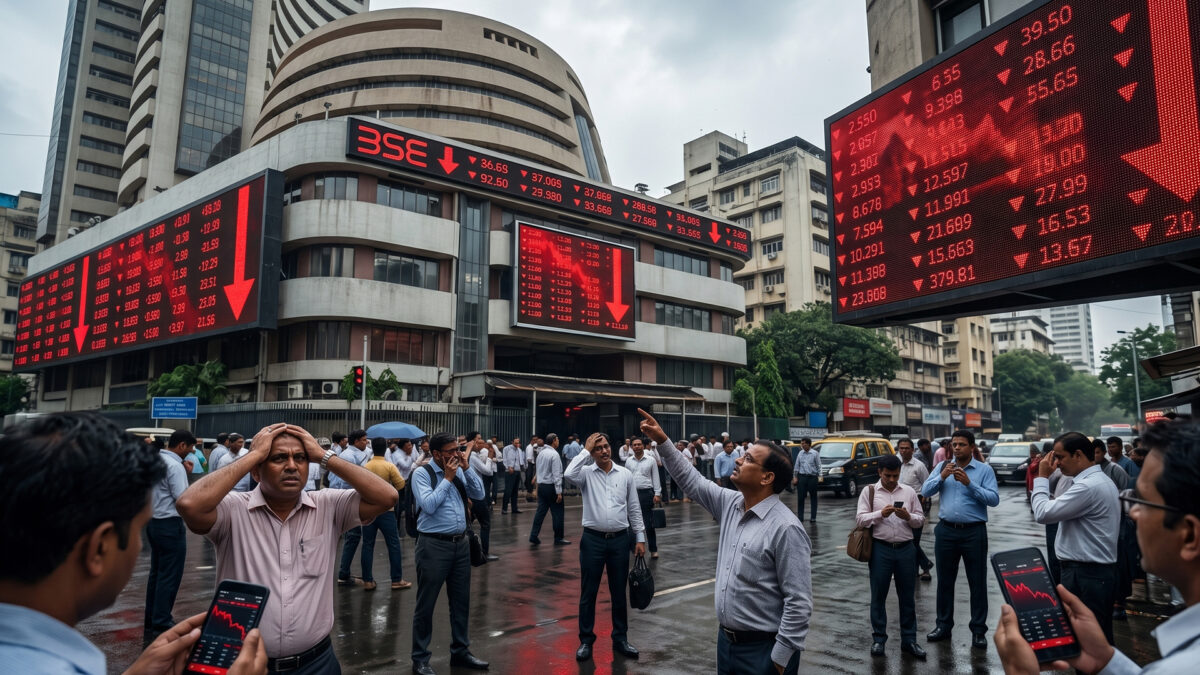
Indian equities recovered strongly on Thursday as investors returned to the market after the previous session’s sharp correction, helping benchmark indices erase a significant portion of Wednesday’s losses. Supported by value buying and positive global cues, the Sensex rose more than 450 points in early trade, while the Nifty climbed back above the psychologically important 24,000 level.

The recovery was driven by renewed buying in consumer-focused, pharmaceutical and automobile stocks, with investors taking advantage of lower valuations after the recent sell-off. Broader market sentiment also improved as Asian markets traded higher, encouraging participants to add positions in quality stocks.

Consumer giant Titan emerged among the top performers, joined by Sun Pharma, Maruti Suzuki, Mahindra & Mahindra and Bajaj Finance, all of which witnessed healthy buying interest. In contrast, information technology stocks continued to face pressure, with TCS, Infosys, HCLTech, Tech Mahindra and Wipro featuring among the day’s major laggards as investors remained cautious ahead of the sector’s quarterly earnings announcements.

Market experts attributed Thursday’s rebound to four key factors. The biggest trigger was value buying after Wednesday’s steep decline, which had pushed several fundamentally strong stocks to attractive levels. Positive cues from Asian peers further lifted sentiment, while buying in domestic-oriented sectors such as automobiles, healthcare and financials provided additional support. Optimism ahead of the corporate earnings season also helped improve investor confidence.

The previous trading session had seen Dalal Street register its steepest fall in over two months, weighed down by concerns over elevated crude oil prices, persistent geopolitical tensions and weak global sentiment.

Also Read: India hosts 180 retail GCCs, leads globally

Categories
Beyond

India hosts 180 retail GCCs, leads globally

India has strengthened its position as the world’s largest retail and FMCG Global Capability Centre (GCC) hub, with more than 180 centres employing over 2.7 lakh professionals, according to a new industry report. The milestone reflects the country’s growing importance in global business operations and digital transformation.

Retail and FMCG companies are increasingly setting up GCCs in India to manage technology, artificial intelligence (AI), analytics, finance, supply chain operations, customer experience and product development. These centres, once focused mainly on back-office work, are now playing a strategic role in driving innovation and supporting global decision-making.

The report highlights that India’s large pool of skilled professionals, competitive operating costs and mature digital ecosystem continue to attract multinational companies. Businesses are expanding their India operations to accelerate AI adoption, improve operational efficiency and build advanced technology solutions for global markets.

Bengaluru remains the country’s leading GCC destination, accounting for 30.6% of India’s retail AI talent. The city benefits from a strong technology ecosystem, world-class engineering talent and an active startup community, making it the preferred location for global retailers.

GCCs are creating thousands of high-value jobs in software engineering, cybersecurity, cloud computing, machine learning and data science. Demand for specialised digital skills is expected to increase further as companies invest more in automation and AI-powered business solutions.

The report also notes that India’s GCC ecosystem is moving beyond traditional support services. Many centres are now leading global product innovation, research and development, digital commerce and customer engagement initiatives, making India an integral part of multinational companies’ long-term growth strategies.

Experts believe the sector will continue to expand as global businesses seek resilient and cost-effective operating models. Government initiatives supporting digital infrastructure and manufacturing, combined with India’s deep talent base, are expected to strengthen the country’s leadership.

With more than 180 retail GCCs already operational and new investments on the horizon, India is well positioned to remain the preferred global destination for retail and FMCG companies looking to build future-ready technology and innovation capabilities.

Also Read: Meta says child abuse ads removed

Categories
Beyond

Meta says child abuse ads removed

Meta Platforms has rejected allegations that it knowingly allowed or targeted advertisements linked to child sexual abuse material on its platforms, saying it has strengthened enforcement after receiving a notice from the Centre over reports involving Instagram ads.

In a detailed statement, the company described child exploitation as a “horrific crime” and reiterated its zero-tolerance policy. Meta said it had already identified and removed several policy-violating advertisements and disabled the accounts behind them before the issue was flagged by authorities. A subsequent internal review led to more ads being removed, additional accounts being disabled and links associated with the content being blocked.

Highlighting its enforcement efforts, Meta said advances in its artificial intelligence systems enabled it to automatically remove more than four million suspicious accounts globally last year, along with 36 million pieces of child exploitation content. In India alone, the company said its AI-based detection systems helped remove around 1.6 lakh accounts in the past six months for suspected child exploitation-related activity.

The company also stressed that all advertisements undergo automated and manual reviews before publication and may be reviewed again after going live. It said advertisers found violating its policies can face restrictions or permanent removal from its platforms.

The clarification comes after the Ministry of Electronics and Information Technology (MeitY) directed Meta to immediately remove advertisements and content promoting or facilitating child sexual exploitative and abuse material, while seeking a detailed explanation from the company. The government has also asked Meta to strengthen safeguards to prevent similar incidents in the future.

Meta said it will continue working with law enforcement agencies and child safety organisations to improve detection systems and strengthen protections for children across its platforms.

Also Read: Titan rises 4% after strong Q1 update

Categories
Corporate

Sensex crashes 1,680 points, Nifty ends below 23,900

Equity markets suffered their steepest fall in over two months on Wednesday, with the BSE Sensex plunging 1,680 points and the Nifty 50 closing below the 23,900 mark as geopolitical tensions and soaring crude oil prices triggered widespread selling.

The sharp decline was driven by heavy selling in financial, banking, information technology and oil-linked stocks. Investors turned cautious after renewed tensions involving the US and Iran pushed Brent crude prices higher, raising concerns over inflation, corporate margins and India’s import bill.

Among the few gainers were Oil and Natural Gas Corporation (ONGC), Bajaj Auto and Wipro, supported by rising crude prices and selective defensive buying. Major losers included oil marketing companies such as Bharat Petroleum, Hindustan Petroleum and Indian Oil Corporation, along with aviation and financial stocks that came under pressure from higher fuel costs and profit booking.

Broader markets also ended sharply lower, with mid- and small-cap stocks extending losses as investors reduced exposure to riskier assets. Analysts attributed the sell-off to weak global cues, rising volatility, foreign institutional investor selling and caution ahead of the earnings season.

Despite the sharp correction, market experts believe India’s long-term fundamentals remain intact. They expect sentiment to stabilise once geopolitical concerns ease and investors shift their focus back to corporate earnings and domestic economic indicators.

Also Read: Titan rises 4% after strong Q1 update

Categories
Corporate

Titan rises 4% after strong Q1 update

Shares of Titan Company gained after the company reported a strong business update for the first quarter of FY27, driven by healthy growth in its jewellery business and steady demand across consumer segments.

The company’s domestic consumer business recorded a 41% year-on-year growth, supported by robust performance in its flagship jewellery division. Strong customer demand during festive occasions, wedding purchases and higher gold prices contributed to increased sales, helping the company deliver another solid quarter.

Titan also witnessed encouraging growth across its watches, wearables and eyecare businesses, reflecting resilient consumer spending despite an uncertain economic environment. The company said expanding retail presence, new product launches and a focus on premium offerings continued to attract customers.

Following the quarterly update, the stock climbed in early trade as investors welcomed the strong operational performance. Several brokerages retained their positive outlook on the company, citing sustained demand, healthy execution and long-term growth prospects. Some analysts also see further upside in the stock, supported by Titan’s leadership in the organised jewellery market and consistent financial performance.

Market experts believe Titan remains well positioned to benefit from rising disposable incomes, formalisation of the jewellery sector and growing preference for trusted brands. Continued store expansion and investments in digital channels are also expected to support future growth.

While fluctuations in gold prices and broader consumer sentiment remain key factors to watch, analysts said the company’s diversified business portfolio and strong brand presence provide resilience against short-term challenges.

Also Read: NBFC Gold loan growth surges 70% in May

Categories
Beyond

NBFC Gold loan growth surges 70% in May

Gold loans extended by non-banking financial companies (NBFCs) witnessed a sharp rise in May, with outstanding loans growing nearly 70% year-on-year, making it the fastest-growing segment in the country’s retail lending market.

According to the latest data released by the Reserve Bank of India (RBI), strong demand for loans against gold jewellery has been driven by record-high gold prices and the quick availability of credit. As the value of pledged gold has increased, borrowers have been able to secure larger loan amounts without needing additional collateral.

Industry experts said households, small traders and self-employed individuals are increasingly turning to gold loans to meet short-term financial needs. Compared with unsecured personal loans, gold loans are processed faster, carry lower interest rates and require minimal documentation, making them an attractive financing option.

The rapid expansion has also been supported by aggressive branch expansion by leading gold loan companies and NBFCs, particularly in semi-urban and rural areas where gold remains a preferred household asset. Lenders have strengthened their distribution networks and digital services to attract more borrowers.

The surge comes at a time when the RBI is closely monitoring lending practices in the sector. Earlier this year, the central bank proposed tighter guidelines on gold-backed lending to ensure prudent risk management, improve transparency and strengthen customer protection. Industry participants, however, have sought clarity on certain provisions, saying overly restrictive norms could affect access to formal credit.

Despite regulatory scrutiny, the outlook for the segment remains positive. With gold continuing to be one of the most trusted financial assets in Indian households, lenders expect sustained demand for loans backed by jewellery, reinforcing the importance of gold finance in the country’s retail credit ecosystem.

Analysts believe demand for gold loans is likely to remain healthy as long as gold prices stay elevated and consumers continue to seek quick, secured financing. The festive season and higher rural borrowing requirements could further support growth in the coming months.

Also Read: Indian auto component industry climbs 12.7% in FY26

Categories
Beyond

Indian auto component industry climbs 12.7% in FY26

ndia’s auto component industry recorded a healthy 12.7% growth in FY26, with turnover rising to ₹7.6 lakh crore, highlighting the sector’s resilience amid strong domestic demand and improving export performance.

According to industry data, higher vehicle production across passenger vehicles, commercial vehicles, two-wheelers and tractors supported the industry’s expansion during the financial year. Robust replacement demand and increased localisation of components also contributed to the sector’s steady growth.

Exports remained an important growth driver, supported by rising global demand for high-quality, cost-competitive components manufactured in India. At the same time, imports increased as manufacturers sourced specialised parts and raw materials to meet rising production requirements.

Industry leaders said investments in advanced manufacturing technologies, electric vehicle (EV) components and supply chain capabilities have strengthened India’s position as a global automotive manufacturing hub. The sector has also benefited from government initiatives promoting domestic manufacturing, localisation and exports under the ‘Make in India’ programme.

The auto component industry currently supplies a wide range of products to vehicle manufacturers in India and overseas, while also catering to the aftermarket segment. Companies have continued to invest in automation, research and development, and digital manufacturing to improve quality and competitiveness.

However, manufacturers continue to monitor challenges such as fluctuating raw material prices, global supply chain disruptions and changing trade policies, which could affect margins and production costs.

Despite these headwinds, industry representatives remain optimistic that India’s growing manufacturing capabilities, skilled workforce and expanding domestic market will help the auto component sector maintain its growth momentum.

This sector is well placed for sustained growth, driven by increasing vehicle ownership, rising exports and the rapid transition towards electric mobility. Demand for EV-related components, including battery systems, power electronics and lightweight materials, is expected to create new business opportunities over the coming years.

Also Read: Bombay HC denies interim relief against Cognizant logo

Categories
Leaders

Integral Ad Science appoints Lidiane Jones as CEO

Digital media measurement and advertising technology company Integral Ad Science (IAS) has appointed Lidiane Jones as its new Chief Executive Officer, marking a significant leadership change as the company looks to strengthen its position in the fast-growing digital advertising industry.

Jones succeeds Lisa Utzschneider, who stepped down after leading the company through a period of expansion and strategic growth. The board said Jones was selected for her extensive experience in scaling global technology businesses and driving product innovation.

Before joining IAS, Jones held senior leadership roles at several leading technology companies, where she built a strong reputation for developing customer-focused products and leading large international teams. Her experience spans enterprise software, cloud services and artificial intelligence, making her well suited to guide IAS through the next phase of its growth.

In her first statement after the appointment, Jones said she was excited to lead the company at a time when advertisers are increasingly seeking trusted solutions to measure media quality, improve campaign performance and ensure brand safety across digital platforms. She said IAS would continue investing in technology and innovation to meet the evolving needs of customers worldwide.

The appointment comes as the digital advertising industry undergoes rapid transformation, driven by artificial intelligence, changing privacy regulations and growing demand for transparent advertising measurement. Companies like IAS play a crucial role in helping advertisers verify that their campaigns reach real audiences in suitable online environments.

Also Read: Anthropic brings Claude CoWork to mobile, web

Categories
Corporate

Cult.fit files IPO papers, targets ₹950 cr fresh issue

Fitness and wellness platform Cult.fit has taken a major step towards its stock market debut by filing draft papers with the Securities and Exchange Board of India (SEBI) for an initial public offering (IPO). The company plans to raise ₹950 crore through a fresh issue of equity shares, while several existing investors will partially exit through an offer for sale (OFS).

The proposed OFS will see early backers, including private equity and venture capital investors, sell part of their holdings. However, Cult.fit itself will not receive any proceeds from this portion of the issue. The funds raised through the fresh issue will be used to expand the company’s fitness centre network, invest in technology, strengthen its digital platform and support general corporate purposes.

Founded by Mukesh Bansal and Ankit Nagori, Cult.fit has evolved into one of India’s leading health and wellness platforms, offering gym memberships, group fitness classes, sports facilities, mental wellness services and nutrition products through both physical centres and its digital ecosystem.

The IPO comes as the company continues to improve its financial performance. Cult.fit has significantly reduced its losses over the past few years through tighter cost controls and improved operational efficiency, while maintaining steady revenue growth. The company has also expanded its offline presence across multiple Indian cities and strengthened its online offerings to attract a wider customer base.

India’s primary market has witnessed renewed momentum in recent months, with several consumer technology startups tapping public markets. Cult.fit’s proposed listing is expected to test investor appetite for businesses operating in the rapidly growing fitness and preventive healthcare segment.

Also Read: Gold at ₹145,350, silver futures slip To ₹230,160

Categories
Beyond

Gold at ₹145,350, silver futures slip To ₹230,160

Gold prices remained steady in the domestic retail market on Tuesday, while silver futures traded lower on the Multi Commodity Exchange (MCX), reflecting cautious investor sentiment amid mixed global cues.

According to the latest retail rates, 24-carat gold was priced at ₹145,350 per 10 grams, while 22-carat gold continued to trade above ₹133,000 in major cities. Silver (999 purity) was quoted at around ₹245,000 per kilogram in the physical market, with prices varying slightly across locations due to local taxes and jewellers’ margins.

On the MCX, gold futures witnessed limited movement during early trade, indicating a stable trend in the precious metals market. MCX silver futures, however, slipped about 0.39% to ₹230,160 per kg at around 9:13 am, as traders reacted to a firmer US dollar and expectations around the US Federal Reserve’s interest rate path.

In Maharashtra, silver prices remained largely unchanged across key cities, with jewellers reporting steady enquiries but measured buying activity. Market participants said many consumers are waiting for a clearer price trend before making fresh purchases, although demand for weddings and upcoming festive occasions continues to lend support to the bullion market.

Analysts believe precious metals are currently moving within a narrow range as investors assess global economic data, bond yields and currency movements. While higher interest rates typically reduce the appeal of non-yielding assets like gold, ongoing geopolitical uncertainties and economic concerns continue to underpin safe-haven demand.

Also Read: Sensex falls over 450 points, Nifty drops below 24,250