
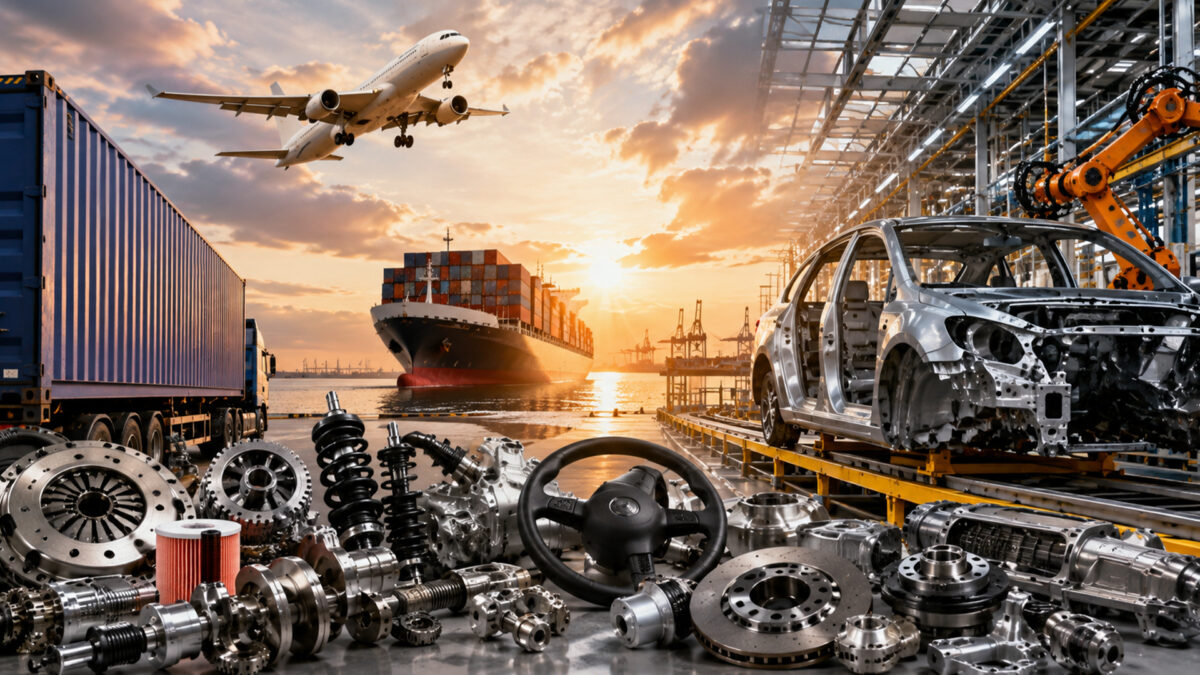
ndia’s auto component industry recorded a healthy 12.7% growth in FY26, with turnover rising to ₹7.6 lakh crore, highlighting the sector’s resilience amid strong domestic demand and improving export performance.
According to industry data, higher vehicle production across passenger vehicles, commercial vehicles, two-wheelers and tractors supported the industry’s expansion during the financial year. Robust replacement demand and increased localisation of components also contributed to the sector’s steady growth.
Exports remained an important growth driver, supported by rising global demand for high-quality, cost-competitive components manufactured in India. At the same time, imports increased as manufacturers sourced specialised parts and raw materials to meet rising production requirements.
Industry leaders said investments in advanced manufacturing technologies, electric vehicle (EV) components and supply chain capabilities have strengthened India’s position as a global automotive manufacturing hub. The sector has also benefited from government initiatives promoting domestic manufacturing, localisation and exports under the ‘Make in India’ programme.
The auto component industry currently supplies a wide range of products to vehicle manufacturers in India and overseas, while also catering to the aftermarket segment. Companies have continued to invest in automation, research and development, and digital manufacturing to improve quality and competitiveness.
However, manufacturers continue to monitor challenges such as fluctuating raw material prices, global supply chain disruptions and changing trade policies, which could affect margins and production costs.
Despite these headwinds, industry representatives remain optimistic that India’s growing manufacturing capabilities, skilled workforce and expanding domestic market will help the auto component sector maintain its growth momentum.
This sector is well placed for sustained growth, driven by increasing vehicle ownership, rising exports and the rapid transition towards electric mobility. Demand for EV-related components, including battery systems, power electronics and lightweight materials, is expected to create new business opportunities over the coming years.
Also Read: Bombay HC denies interim relief against Cognizant logo