Categories
Corporate

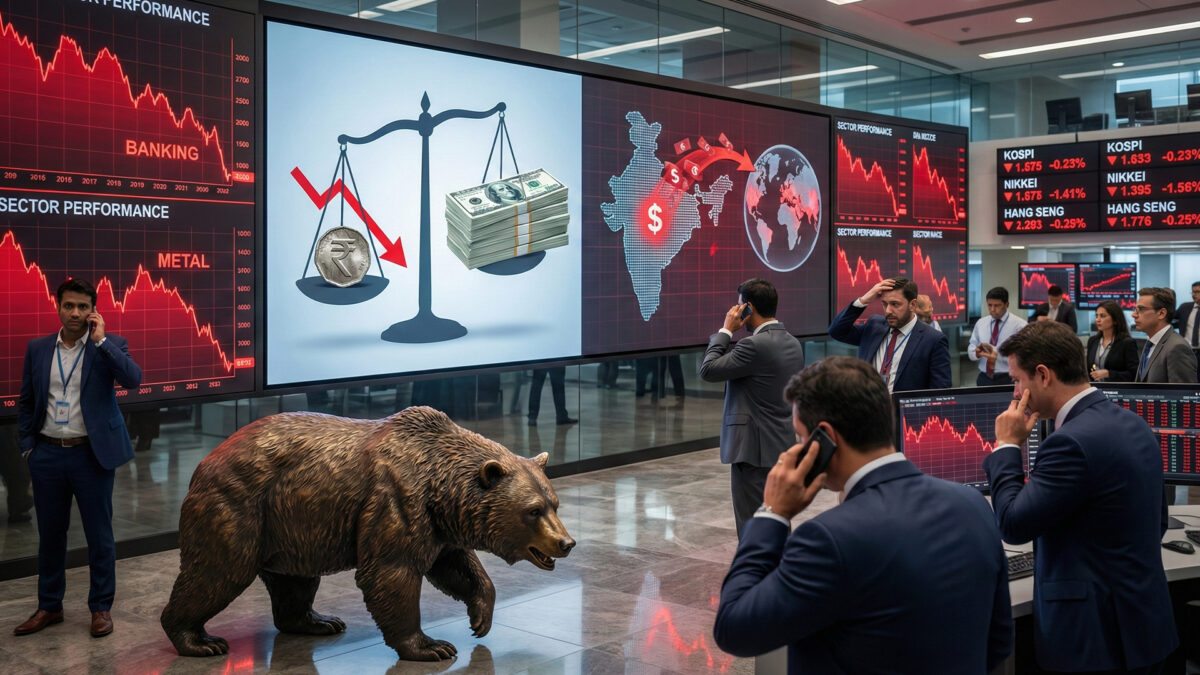
Sensex slips 100 points, Nifty below 25,850

On Wednesday the markets had a cautious start, as Sensex slipped by over 100 points, while the Nifty dropped below the key 25,850 level. Traders chose to stay careful in the midst of uncertain global cues.

The overall mood on Dalal Street was subdued, with selling pressure seen in several heavyweight stocks. IT and metal stocks emerged as the biggest losers, dragging the market lower. Shares of Infosys, TCS and Wipro declined amid concerns over slowing global tech spending, while Tata Steel and JSW Steel slipped due to weak commodity cues.

In contrast, public sector bank stocks provided some relief to the market. The Nifty PSU Bank index rose nearly 1%, supported by gains in State Bank of India, Bank of Baroda, Punjab National Bank and Canara Bank. Buying interest in these stocks was driven by value buying and expectations of stable earnings.

Other sectors such as FMCG and auto traded mixed, reflecting the market’s cautious tone. Broader indices also stayed under pressure, with mid-cap and small-cap stocks seeing mild losses.

Market experts said investors are adopting a wait-and-watch approach, closely tracking global developments and interest rate signals. While broader markets lacked direction, selective buying in PSU banks showed that investors are still willing to invest in pockets where valuations appear attractive.

Also Read: Sensex drops 533 points, Nifty slips below 25,900

Categories
Technology

Amazon AI books stir author rights concerns

Amazon has introduced new artificial intelligence features that aim to make reading on Kindle more interactive, but they are raising questions about authors’ control over their work. The company’s latest tool, “Ask This Book,” is now available on the Kindle app for iOS in the United States.

The feature allows readers to ask questions about the book they are reading, such as character details, plot explanations, or background information, and receive instant responses. Importantly, the AI provides spoiler‑free answers, drawing only on the portions of the book the reader has already accessed. Users can activate the tool from the in‑book menu or by highlighting a passage. Amazon says the feature currently works with thousands of popular English-language titles and plans to expand it to Kindle e-readers and Android devices in 2026.

Alongside “Ask This Book,” Amazon has been experimenting with a broader AI initiative called “Ask My Book.” This project can generate responses based directly on the text of a specific book. While the tools are designed to help readers, they have sparked concern among authors and publishers. Many writers worry about copyright and consent issues, questioning whether their work is being used without permission and what control they retain over how their words are processed by AI. Currently, authors and publishers have no option to opt out once their titles are included, which some critics argue could compromise intellectual property rights.

From a reader’s perspective, the new AI features provide convenience and interactivity. They allow quick clarification of confusing passages or exploration of details without leaving the Kindle app or encountering spoilers. Amazon has emphasized that these tools are meant to enhance the reading experience, offering a seamless way for users to engage with books digitally.

As AI becomes increasingly integrated into reading platforms, the tension between innovation and intellectual property rights is likely to grow. Amazon’s approach highlights the balancing act between providing enhanced user experiences and addressing authors’ rights in the age of AI.

Also Read: Elon Musk becomes first person worth $600 billion

Categories
Corporate

SEBI starts ₹18 cr recovery against finfluencer ‘Baap of Charts’

The Securities and Exchange Board of India (SEBI) has initiated recovery proceedings worth nearly ₹18 crore against stock market influencer Mohammad Nasiruddin Ansari, widely known as ‘Baap of Charts’, along with Rahul Rao Padamati and Golden Syndicate Ventures Pvt. Ltd. The move comes after the entities failed to comply with earlier regulatory orders and did not pay penalties imposed on them.

SEBI had earlier found that Ansari and his associates were offering investment advice and stock trading recommendations without mandatory registration. Through social media platforms, paid courses, and online groups, they allegedly promised high returns to investors, which is a violation of securities market regulations meant to protect retail participants.

According to the regulator, the recovery amount includes penalties, interest, and additional charges arising from earlier enforcement orders. As part of the recovery process, SEBI has directed banks and depositories to freeze accounts and assets linked to the defaulters. The regulator has also restricted them from selling or transferring any movable or immovable property until the full amount is recovered.

SEBI noted that the funds currently available in the bank accounts of the individuals and the company may not be sufficient to cover the total dues. Therefore, it has invoked recovery mechanisms similar to those used for tax arrears, including attachment of assets and possible sale if payments are not made.

This action is part of SEBI’s intensifying crackdown on unregulated finfluencers, who have gained popularity on social media by offering market tips without accountability or oversight. The regulator has repeatedly warned investors to be cautious of online personalities who are not registered investment advisers or research analysts.

Over the past year, SEBI has taken several steps to curb misleading financial content, including issuing advisories, imposing penalties, and tightening disclosure norms for social media influencers promoting financial products.

Market experts say such enforcement actions send a strong signal that regulatory compliance is non-negotiable, regardless of an individual’s online following or popularity. SEBI has reiterated that only registered entities are permitted to provide investment advice and that violations will attract strict action to safeguard investor interests.

The recovery proceedings underline SEBI’s message that financial influencers operating outside the regulatory framework will face serious consequences, especially when investor money and trust are at stake.

Also Read: Meesho shares soar 13%, market cap crosses ₹85,000 cr

Categories
Corporate

Sensex drops 533 points, Nifty slips below 25,900

The markets ended lower on Tuesday where the Sensex fell 533 points, while the Nifty closed below the 25,900 level, as investors remained cautious amid declines in US and Asian markets.

Markets opened on a weak note and continued to trade under pressure throughout the session, with limited buying interest at lower levels. Selling was seen across sectors such as banking, information technology, metals, realty and oil & gas, reflecting concerns over global growth and risk sentiment.

On the positive side, select stocks managed to attract buying interest. InterGlobe Aviation (IndiGo) emerged as one of the top gainers, supported by stock-specific demand. ITC and Tata Consumer Products also ended higher, with FMCG stocks showing relative resilience as investors turned to defensive names amid market volatility. Gains in these stocks, however, were not enough to offset losses in heavyweight sectors.

Among the major losers, ONGC, Mahindra & Mahindra, Cipla, Eicher Motors and JSW Steel declined sharply, weighing on the indices. Axis Bank and Eternal were also among the prominent laggards on the Nifty, contributing to the broader weakness in financial stocks. IT stocks remained under pressure as investors stayed cautious ahead of global economic signals, while metal shares slipped on weak international demand outlook.

Market breadth remained weak, with declining stocks outnumbering advancing ones on the exchanges. Midcap and smallcap indices underperformed the frontline benchmarks, indicating continued risk aversion among investors.

Also Read: Sensex slips over 350 pts at open, Nifty below 25,950

Categories
Leaders

Meesho founder Vidit Aatrey joins the billionaire club

Vidit Aatrey, co‑founder and CEO of social commerce platform Meesho, has joined the ranks of global billionaires following a sharp rise in the company’s share price after its initial public offering (IPO). The stock jumped significantly above its issue price, pushing Aatrey’s personal wealth into the billion‑dollar range.

Meesho’s shares climbed to around Rs 193, representing a 74 percent increase over the IPO issue price of Rs 111 per share. This surge translated into substantial gains for Aatrey, who holds roughly 47.25 crore shares, or an 11.1 percent stake in the company. At these levels, his holdings were valued at over Rs 9,000 crore (approximately USD 1.1 billion).

The company’s listing reflects strong investor interest in its mobile‑first, social‑commerce model, which enables small businesses and individual sellers to reach consumers across India. The IPO attracted significant attention from both retail and institutional investors, and the stock’s performance post‑listing underscores market confidence in Meesho’s growth potential.

Industry observers say the rally highlights optimism about India’s domestic e‑commerce sector, especially for companies with scalable, asset‑light business models. Meesho’s focus on affordable products and penetration into smaller cities and towns has helped it build a broad consumer base, contributing to its strong stock performance.

For Vidit Aatrey, this milestone marks the culmination of a decade-long journey from a startup founder to one of India’s newest billionaires. Together with co‑founder Sanjeev Barnwal, he has grown Meesho from a niche social reselling platform into a mainstream e‑commerce company, attracting major global and domestic investors along the way.

As Meesho expands its operations and works toward profitability, its successful IPO may serve as a benchmark for future listings in India’s technology sector, signaling continued investor enthusiasm for innovative, growth-oriented startups.

Also Read: SEBI to review key mutual fund, broker and IPO rules

Categories
1 Minute-Read

Urban Company shares fall 6% to record low

Urban Company shares slid nearly 6 percent to hit a record low after the three-month shareholder lock-in period ended. The expiry made around 4.15 crore shares, or about 3 percent of the company’s total equity, available for trading, leading to a sharp rise in supply.

This increase in tradable shares sparked selling pressure in the market. Urban Company, which provides home and personal care services through its app-based platform, had listed in September at a premium to its IPO price.

Since then, the stock has steadily lost ground as investor sentiment turned cautious following the lock-in expiry.

Categories
Beyond

Nepal lifts 10-year ban on Indian high-value notes

Nepal has finally lifted a decade-old restriction on high-value Indian currency notes, making life easier for travellers, traders, and migrant workers. From now on, people can carry ₹200 and ₹500 notes into Nepal, as long as the total does not exceed ₹25,000 per person.

The move comes after a recent cabinet decision, and the Nepal Rastra Bank will soon issue official guidelines to implement it. For many Nepalis working in India, this change means they no longer have to carry their earnings in countless smaller notes. Indian tourists will also find shopping, dining, and hotel payments much more convenient.

For the past ten years, only smaller notes of ₹100 or below were allowed in Nepal. The ban had made everyday transactions complicated, especially along busy border towns where trade and tourism are vital. With the new rules in place, cross-border business and travel are expected to flow more smoothly, benefiting both countries’ economies and easing daily life for those crossing the border.

Also Read: RBI clears HDFC Group to buy 9.5% in IndusInd

Categories
Corporate

Vedanta rallies to record ₹551, first time above ₹550

Shares of Vedanta Ltd surged to a record high of ₹551.50 on December 15, 2025, marking the first time the stock crossed the ₹550 mark. The stock gained around 1.5% from its previous close of ₹543.55, reflecting strong buying interest.

The company’s market capitalization rose above ₹2.15 lakh crore, highlighting growing investor confidence. Trading volumes were robust, with over 4 lakh shares changing hands and turnover crossing ₹23 crore.

Analysts point to strong technical indicators supporting the rally. The stock is trading above both short‑ and long‑term moving averages, and the RSI suggests it is not overbought, signaling further room for growth.

Brokerage firms remain bullish. Nuvama has set a target price of ₹686, citing expected earnings growth and lower debt, while Emkay Global recommends the stock with a ₹625 target. Market experts say that sustaining a close above the ₹553 resistance level could push Vedanta toward ₹589 in the near term.

Also Read: MUFG nears $3.2 billion deal for 20% of Shriram Finance

Categories
Corporate

Sensex slips over 350 pts at open, Nifty below 25,950

The markets opened lower on Tuesday, extending the cautious tone seen in recent sessions amid weak global cues and continued concerns around foreign fund outflows. At the opening bell, the BSE Sensex dropped over 350 points, while the NSE Nifty50 slipped below the 25,950 mark, indicating a risk-averse start to the trading day.

Early trade was marked by broad-based selling, with pressure visible across key sectors, particularly banking, financial services, and autos. Market breadth remained weak, with declines outpacing advances on both benchmark indices.

Among individual stocks, Eternal emerged as a major laggard in early deals, falling nearly 3 percent, weighed down by selling interest. Axis Bank also came under pressure, declining around 2.5 percent, dragging the banking index lower. Other frontline financial stocks traded subdued, reflecting investor caution toward the sector at the start of the session.

Auto and metal stocks also opened in the red, mirroring concerns over global growth and commodity demand. Export-oriented stocks showed mixed trends, tracking overnight movements in global markets and currency fluctuations.

On the positive side, gains were limited and stock-specific. Meesho and Adani Power opened higher, supported by selective buying and positive sentiment around company-specific developments. However, early gains in these stocks were insufficient to offset weakness in index heavyweights.

Investor sentiment at the open remained fragile amid continued foreign institutional investor selling, a soft rupee, and uncertainty surrounding global interest rate trajectories. Market participants are also cautious ahead of key economic data releases later in the week, which could influence near-term direction.

Also Read: Tesla Diner opens mini racetrack for kids in Hollywood

Categories
Corporate

Japanese bank Mizuho nears ₹5,900 cr Avendus acquisition

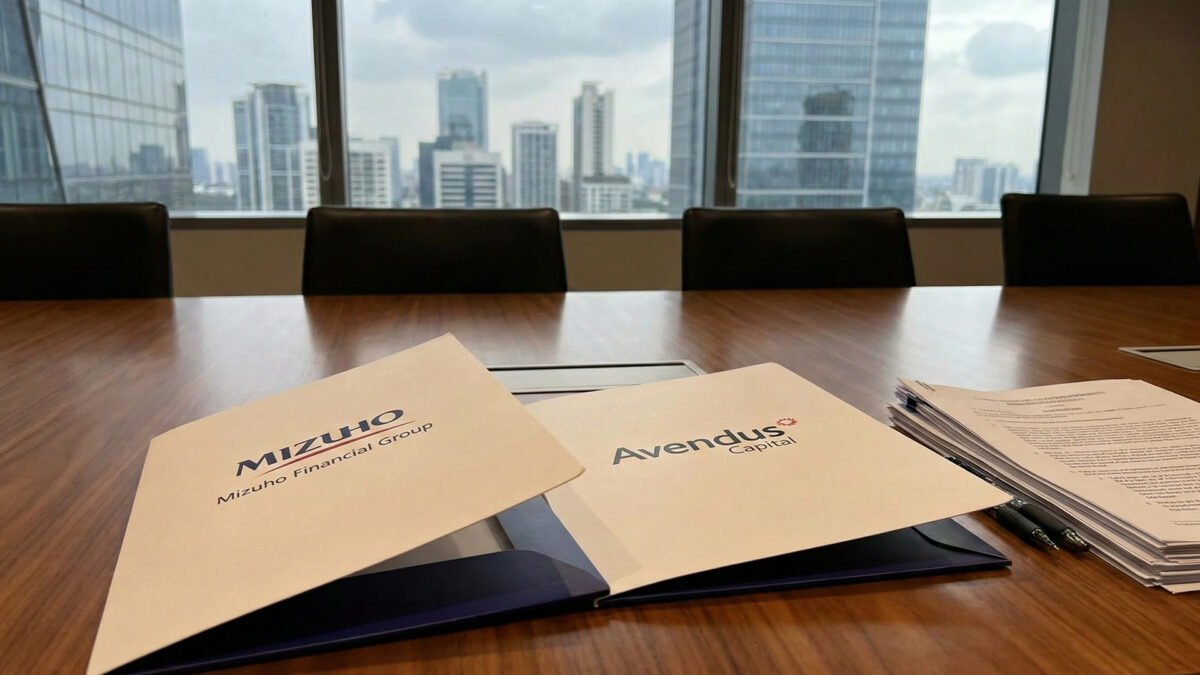
Japanese banking group Mizuho Financial is on the verge of completing its acquisition of a majority stake in Avendus Capital, one of India’s leading investment banks. The deal, valued at around ₹5,900 crore, is expected to be finalized this week, marking one of the largest foreign investments in India’s financial services sector.

The transaction involves KKR and other early investors exiting their holdings in Avendus. Post-acquisition, Mizuho is expected to hold approximately 65–70% of the company, while the remaining shares will stay with Avendus’ founders and a few local investors. Despite the change in majority ownership, the existing leadership at Avendus will continue managing day-to-day operations, ensuring business continuity. Mizuho will, however, gain significant influence through board representation and strategic input on the firm’s growth plans.

Discussions on the deal have been underway for several months, with both parties working closely to finalize terms, including valuation, governance, and management continuity. The Avendus board is expected to meet shortly to approve the transaction, clearing the final regulatory and corporate approvals needed for closure.

This acquisition forms a key part of Mizuho’s strategy to expand its footprint in India, a market it sees as high growth for investment banking, wealth management, and capital markets. By acquiring Avendus, Mizuho aims to strengthen its capabilities in advisory services, private equity, and asset management, leveraging the expertise and established client base of the Indian firm.

Industry experts note that the deal signals increasing confidence of foreign banks in India’s financial sector and reflects the growing trend of international investors seeking stakes in domestic investment banking firms. Once completed, this acquisition will not only enhance Mizuho’s presence in the country but also support Avendus’ growth ambitions, enabling it to compete more effectively with global and domestic peers.

Also Read: Prodocs Solutions lists at 4% premium on BSE SME