Categories
Beyond

Urban Company sues Kent RO over ads

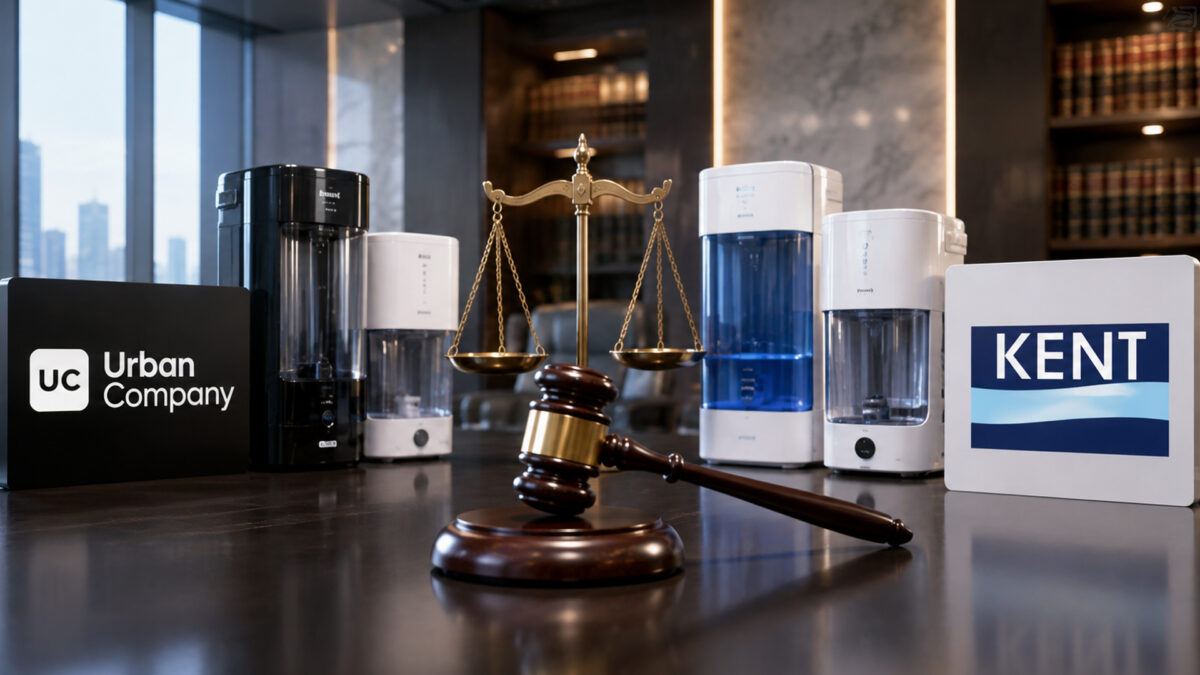
Urban Company has taken rival water purifier maker Kent RO Systems to the Delhi High Court over an advertising campaign targeting its Native range of water purifiers. The dispute centres on claims around the products’ two-year filter life and two-year no-servicing feature, with Urban Company alleging that Kent’s advertisements and social media posts were false, misleading and disparaging.

According to Urban Company’s regulatory disclosure, the company filed a defamation and disparagement suit against Kent RO on August 11, 2026. The matter came up before the Delhi High Court on August 12, when the court heard the case at length. The court order, although passed on August 12, was published on the court website on August 22. Urban Company subsequently disclosed the development to the stock exchanges under Regulation 30 of the SEBI Listing Obligations and Disclosure Requirements regulations.

The legal dispute is focused on Urban Company’s Native M0, M1, M2, M1 Pro and M2 Pro water purifier models. Urban Company said Kent RO had launched what it described as a concerted advertising campaign involving advertisements as well as social media content promoted through influencers.

Urban Company claims that its Native water purifiers can offer a two-year filter life and a two-year service-free period. Urban Company alleged that Kent’s campaign described these features as a “marketing gimmick” and suggested that using Native purifiers could be “unsafe” and “risky” for consumers.

Urban Company argued that such claims damaged the reputation of its brand and products, prompting it to approach the Delhi High Court with a defamation and product-disparagement case. The company’s allegations, however, remain claims made in the legal proceedings and do not by themselves establish that the advertising claims were factually false.

The immediate development in the case has gone in Urban Company’s favour. During the August 12 hearing, Kent RO told the Delhi High Court that it would withdraw the advertisements that were the subject of the lawsuit. It also undertook not to publish or run other advertising or promotional material making the same or similar claims about water purifiers offering a two-year filter life or a two-year no-servicing feature in a manner that disparages Urban Company.

The court directed Kent RO to remove the disputed advertisements and related social media content within 15 days from August 12. The undertaking covers the specific campaign as well as similar promotional material that could disparage Urban Company in connection with the two-year filter-life and no-servicing claims.

The development is significant for the consumer electronics and water purifier industry, where brands frequently compete through product comparisons and claims about maintenance, filter replacement, purification technology and long-term ownership costs. The dispute also highlights the legal risks companies can face when comparative advertising moves beyond highlighting product differences and begins making potentially damaging claims about a rival’s products.

For consumers, the controversy brings renewed attention to claims such as “two-year filter life” and “no servicing”. Such claims can influence purchasing decisions because filter replacement and annual maintenance are among the recurring costs associated with water purifiers. Consumers are likely to look closely at product specifications, warranty terms, filter-replacement conditions and the actual requirements for maintaining a purifier before making a purchase.

The court development does not, however, end the broader legal fight between the two companies. Urban Company said several other disputes between the parties remain sub judice. These include a patent infringement case filed by Kent RO, a counterclaim by Urban Company challenging Kent’s patent, and a separate tortious interference suit filed by Urban Company against Kent RO.

The advertising dispute has also drawn attention from investors. Urban Company’s shares had closed 8.19% higher at ₹157.41 on Friday, August 21, before the company’s exchange disclosure. On Monday, August 24, the stock extended its gains, rising as much as 7% and touching its highest level in nearly 11 months. The stock’s move was supported by both the Kent RO development and a bullish brokerage call, according to market reports.

Urban Company’s shares have gained nearly 20% so far in 2026, although they remained lower over the preceding 12-month period as of the latest reports. The market response suggests investors are also watching the legal dispute for its potential impact on the company’s Native business and brand positioning.

The case also puts the spotlight on how aggressively competing brands can market products in a market where consumers increasingly compare not only purification performance but also filter life, maintenance requirements and total ownership costs. As the legal proceedings continue, the claims made by both sides will remain under scrutiny, while consumers will ultimately be looking for clearer and independently verifiable information before choosing their next water purifier.

Categories
Beyond

InstaHelp, Snabbit cross 1 lakh daily orders

What started as a simple promise, getting someone to clean a house, wash dishes or help with laundry within minutes,  is quickly turning into one of India’s most closely watched startup categories.

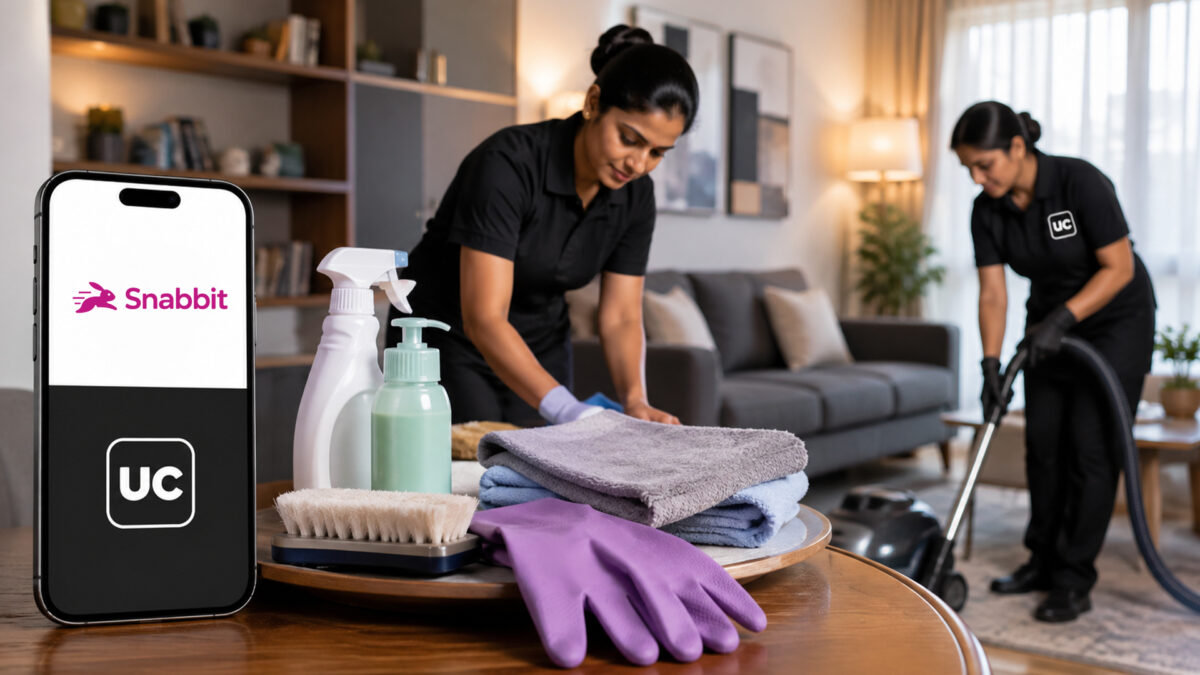
The country’s instant home services market has reached a new milestone, with Snabbit and Urban Company’s InstaHelp both crossing 100,000 daily orders. Snabbit said it is now completing more than 115,000 jobs a day, while InstaHelp crossed 100,000 delivered orders in a single day on August 2.

The latest numbers show how quickly consumer demand for on-demand home services has grown. They also explain why investors have been putting fresh money into companies such as Snabbit and Pronto, while Urban Company continues to spend aggressively on its InstaHelp vertical.

The scale-up has been particularly striking over the past few months. Urban Company’s InstaHelp completed about 1.9 million orders in July, reclaiming the top spot after briefly trailing Snabbit in June. Snabbit recorded around 1.85 million orders, while Pronto crossed 1.25 million monthly bookings for the first time. Together, the three platforms processed nearly 5 million orders in July.

That monthly race highlights an important change in the market. Instant home services are no longer just an experiment in a handful of neighbourhoods. Startups are building dense networks of service professionals and trying to turn occasional bookings into a regular habit for urban households.

Snabbit has emerged as one of the fastest-growing players. The company, founded in 2024, now operates across 10 cities and more than 150 micromarkets, supported by over 25,000 service professionals. It said it completed 4 million jobs in its core household-services category during the June quarter.

The company is also showing signs that its unit economics are improving. Snabbit said consolidated net order value, after customer discounts, has crossed ₹130, while its burn per job has fallen by more than ₹100 sequentially to below ₹250. It expects net order value to improve another 15-20% in the coming months.

That is important because the biggest question facing the instant home services business is no longer whether customers want the service. The question is whether companies can make the model financially sustainable while continuing to grow.

The funding market suggests investors believe there is a large opportunity. Earlier this year, Snabbit was in talks to raise as much as $70 million after already raising several rounds. Since then, the company has gone on to raise $56 million in a Series D round, taking its total capital raised to $112 million and valuing the startup at about $360 million.

Pronto has followed a similar path. The startup raised $25 million in March and added another $20 million in May, taking its Series B round to $45 million and doubling its valuation to $200 million. The fresh capital is being used largely to expand its workforce, reflecting a major constraint in the business: demand is growing faster than the supply of trained service professionals.

Pronto had earlier reported a sharp increase in bookings, from around 3,000 a day at the beginning of December to more than 26,000 a day by May. It has also been expanding beyond basic cleaning into services such as car washing, gardening and home-cook pilots.

Urban Company, meanwhile, has the advantage of an established consumer base and a much larger operating platform. Its InstaHelp service has expanded rapidly and crossed the 100,000-order daily mark barely five months after crossing 50,000. The company said the milestone reflected rising consumer demand as well as the strength of its operating model.

But rapid growth comes at a price.

The instant home services market remains heavily dependent on discounts, customer incentives and spending on worker acquisition. Earlier reports showed that all three major platforms had experimented with aggressive promotional offers, including limited ₹1 campaigns, to attract customers. These were not their standard prices, but they illustrate how fiercely the companies are competing for users.

Urban Company has also acknowledged that InstaHelp is still a significant investment. The vertical reported a loss of ₹61 crore in the December quarter even as revenue grew. The company has said that reducing loss per order will be critical to reaching sustainable break-even.

For startups, the challenge is similar. A platform can generate thousands of bookings, but profitability depends on keeping service professionals busy enough, while ensuring customers continue to book frequently.

This is where the idea of micromarket density becomes crucial. Instead of spreading workers thinly across an entire city, companies are concentrating supply and demand in specific neighbourhoods. Higher utilisation means professionals spend less time travelling between jobs and more time earning, improving the economics of every booking.

Snabbit has said its mature micromarkets are approaching profitability, while Pronto has reported utilisation above 60% in older clusters. The companies believe greater density will gradually reduce the cost of servicing each customer.

Still, changing consumer behaviour may be the hardest part. For many households, instant house help remains a backup option when their regular domestic worker is unavailable. Turning that occasional need into a high-frequency habit will determine whether the business can support the valuations and funding now flowing into the sector.

The latest numbers suggest the opportunity is real. Nearly 5 million monthly orders across InstaHelp, Snabbit and Pronto show that Indian consumers are increasingly willing to pay for convenience in household chores.

The next phase, however, will be less about simply chasing bookings. Investors will want to see better unit economics, customer retention, worker utilisation and lower cash burn.

That makes the competition between Urban Company, Snabbit and Pronto more than a race for market share. It is a test of whether instant home services can evolve from a heavily funded startup idea into a sustainable consumer business.

For now, the momentum is unmistakable. Millions of households are trying a service that promises to solve an everyday problem in minutes. The companies that can turn that convenience into a habit, without spending too much to make it happen,  are likely to shape the next big chapter of India’s startup economy.

Categories
1 Minute-Read

Urban Company shares fall 6% to record low

Urban Company shares slid nearly 6 percent to hit a record low after the three-month shareholder lock-in period ended. The expiry made around 4.15 crore shares, or about 3 percent of the company’s total equity, available for trading, leading to a sharp rise in supply.

This increase in tradable shares sparked selling pressure in the market. Urban Company, which provides home and personal care services through its app-based platform, had listed in September at a premium to its IPO price.

Since then, the stock has steadily lost ground as investor sentiment turned cautious following the lock-in expiry.

Categories
Corporate

Urban Company Shares Drop 6% as Q2 Loss Hits ₹59 Cr

Urban Company shares fell nearly 6% on Monday after the home-services marketplace reported a wider consolidated net loss of ₹59.33 crore for the second quarter ended September 2025 (Q2 FY26), compared to ₹1.82 crore a year earlier. The loss came despite robust revenue growth, as elevated spending on new verticals, partner onboarding, and marketing weighed on margins.

Revenue from operations rose 37% year-on-year to ₹380 crore, reflecting continued momentum across beauty, home repair, and cleaning segments. However, total expenses surged to ₹462 crore from ₹384 crore in the same quarter last year, leading to an adjusted EBITDA loss of ₹35 crore.

A major drag on profitability was the company’s newly launched Insta Help vertical, which reported an EBITDA loss of ₹44 crore in the quarter. Excluding Insta Help, Urban Company’s core business delivered an adjusted EBITDA profit of ₹10 crore, or 0.9% of net transaction value (NTV).

Within India’s consumer services segment, excluding Insta Help, NTV grew 19% to ₹762 crore, while revenue increased 24% to ₹262 crore. The segment reported an adjusted EBITDA of ₹18 crore, equivalent to 2.4% of NTV, compared with 3.1% a year ago.

The company’s Native product category, featuring appliances such as water purifiers and smart locks, continued to expand rapidly. NTV jumped 164% year-on-year to ₹97 crore, while revenue climbed 179% to ₹75 crore. Despite this, the segment posted a smaller loss of ₹9 crore, indicating improved efficiency.

Urban Company’s international business, operating in the UAE and Singapore, also showed encouraging progress, with NTV rising 73% and revenue up 66% year-on-year, achieving near breakeven levels.

The company, which debuted on the stock exchanges earlier this year, reiterated its focus on long-term value creation through technology, service quality, and category diversification. Management said near-term losses reflect ongoing investments in scaling operations and enhancing partner experience.

Also Read: Ambuja Cements Q2 Profit Rises 364% to ₹2,302 Crore