Categories
Technology

Pulitzer winner Carreyrou, 5 authors sue AI giants over copyright

A group of six authors, including Pulitzer Prize winner John Carreyrou, has filed new lawsuits against six major AI companies, saying their books were used without permission to train AI models. The lawsuits were filed on December 22, 2025, in California.

The companies named are Anthropic, OpenAI, Google, Meta, xAI, and Perplexity AI. The authors claim these companies copied their books from pirate sites like LibGen and Z‑Library to teach AI systems, then profited from the AI models without paying the writers.

Carreyrou, known for Bad Blood, and the other authors rejected a $1.5 billion class action settlement offered by Anthropic earlier this year, saying the payment of around $3,000 per book is far too low for the value of their work.

Instead of joining a class action, the authors are filing individual lawsuits, which allows them to seek the maximum $150,000 per book per company. Across the six companies, this could reach up to $900,000 per book.

The group includes writers from different fields, spiritual books, psychology, IT, and political science, showing concern from many types of authors about how AI uses their work.

The lawsuits focus on AI using pirated books, which the authors say is not fair use and should have stronger legal consequences. Some courts have allowed limited AI use of copyrighted works, but using pirated copies is more serious.

So far, the companies have not responded, and no court dates have been set.

Also Read: Copper hits record $12,000 per ton

Categories
Beyond

Copper hits record $12,000 per ton
Copper prices have soared to an all-time high, surpassing $12,000 per metric ton due to supply disruptions and concerns over potential US import tariffs. Benchmark three-month copper futures on the London Metal Exchange (LME) touched $12,159.50 before settling near $12,065, reflecting a sharp rally in industrial metals.

Year-to-date, copper has gained over 35%, marking its strongest annual increase since 2009. Analysts attribute the surge to tight global supply as major mines face production challenges. This has reduced available stock in the market, pushing prices higher.

Adding to the pressure are fears of US import tariffs on copper. Traders and buyers have been stockpiling in anticipation of higher costs, increasing demand in the United States while leaving less copper available elsewhere. This has intensified the upward price movement.

Global demand is also playing a role. Copper is widely used in electric vehicles, renewable energy projects, and data centers, all of which are expanding rapidly. These structural demand factors are adding stress to supply chains that are slow to expand.

Economic factors are supporting the rally as well. Expectations that the US Federal Reserve may cut interest rates could weaken the dollar, which typically boosts commodity prices. Traders are closely watching for changes in monetary policy that could further influence copper markets.

Market experts warn that if production issues continue and demand keeps rising, copper could remain in deficit. While gold and silver have also risen this year, copper’s industrial importance makes its price movement a key indicator for the global economy, particularly for technology, construction, and energy sectors.

Also Read: ISRO launches heaviest commercial satellite on LVM3

Categories
Beyond

ISRO launches heaviest commercial satellite on LVM3

ISRO added another major success to its record on December 24 with the launch of BlueBird Block-2, the heaviest commercial satellite ever carried by India’s LVM3 rocket. The mission, executed from Sriharikota, signals India’s steady rise as a trusted player in the global space market.

Weighing about 6,100 kg, the satellite was placed into low earth orbit using the LVM3-M6 launch vehicle. This was the rocket’s sixth operational flight and one of its most demanding missions so far, underlining ISRO’s growing capability to handle large and complex commercial payloads.

BlueBird Block-2 is designed to deliver direct-to-mobile broadband connectivity, allowing standard mobile phones to receive signals from space without special equipment. The technology is expected to help improve digital access, especially in remote and underserved regions, making the mission both commercially important and socially relevant.

The launch was carried out through NewSpace India Ltd, ISRO’s commercial arm, reflecting India’s increasing focus on monetising its space expertise. With global demand rising for low-earth-orbit satellites and cost-effective launch services, India is positioning itself as a reliable and competitive option.

Prime Minister Narendra Modi described the mission as a proud milestone, praising ISRO’s scientists and engineers for pushing India higher in advanced technology and innovation. His remarks echoed the wider national sentiment around India’s expanding footprint in space.

Beyond the technical achievement, the mission reinforces confidence in India’s space economy. Each successful commercial launch strengthens India’s reputation, attracts international partnerships, and opens new business opportunities across satellite services, manufacturing, and downstream applications.

The BlueBird Block-2 launch is another reminder that India’s space story adds so much to think beyond exploration by tapping on possibilities that create impact, trust, and global relevance.

Also Read: Nikhil Kamath, Kishore Biyani launch The Foundery for startups

Categories
Beyond

Gold at ₹1.36 lakh, Silver tops ₹2.23 lakh

Gold and silver prices surged to record highs on Wednesday, extending a strong rally driven by global uncertainty, expectations of interest rate cuts and tight supply conditions. Both metals have delivered exceptional gains this year, attracting strong investor interest.

In Indian markets, gold prices climbed above ₹1.36 lakh per 10 grams, with rates touching ₹1.40 lakh per 10 grams in some cities, marking the highest level ever recorded. The sharp rise reflects a strong global uptrend and a weaker dollar, which has made bullion more attractive as a safe investment.

Silver prices also hit historic levels. In spot markets, silver crossed ₹2.23 lakh per kilogram, setting a new all-time high. On commodity exchanges, silver futures saw sharp gains as buying intensified across industrial and investment segments. Silver has significantly outperformed gold this year, supported by strong demand from sectors such as renewable energy, electronics and electric vehicles.

Globally, precious metals are rallying on expectations that major central banks, including the US Federal Reserve, may cut interest rates in the coming months. Lower interest rates reduce the opportunity cost of holding non-yielding assets like gold and silver. Ongoing geopolitical tensions and concerns over global economic growth have also pushed investors towards safe-haven assets.

Market participants say supply constraints, particularly in silver, have added to the price surge. Limited mine output and steady industrial consumption have tightened availability, keeping prices elevated. Gold, meanwhile, continues to benefit from central bank buying and steady investor demand.

The sharp rise in bullion prices has also boosted shares of metal-linked companies, with stocks related to silver production gaining attention in the equity markets.

However, high prices have dampened jewellery demand, especially in the retail segment. Many buyers are postponing purchases or opting for lighter jewellery due to elevated costs. Traders also expect some volatility in the near term, as profit-taking may emerge after the steep rally.

Also Read: Sensex advances 150 points, Nifty holds above 26,200

Categories
Corporate

Sensex advances 150 points, Nifty holds above 26,200

Equity markets opened higher on Wednesday, tracking firm global cues and early buying in select financial and energy stocks. The BSE Sensex gained around 150 points in opening trade, while the NSE Nifty moved above the 26,200 level, signalling a positive start to the session.

Buying interest was seen in energy and finance counters. Coal India rose in early trade, leading gains on the Nifty. Bajaj Finance and Shriram Finance also opened higher, supported by demand for lending stocks. NTPC advanced as power sector stocks traded firm, while Jio Financial Services saw modest gains.

In contrast, information technology stocks opened weak. Tech Mahindra and HCL Technologies slipped in early trade, reflecting cautious sentiment around the IT sector. Tata Consumer Products also traded lower, while Tata Motors passenger vehicle arm faced mild selling pressure. Dr Reddy’s Laboratories opened in the red amid mixed action in pharma stocks.

Broader markets were marginally positive, with mid-cap and small-cap indices showing slight gains at the open. Market participants remain cautious due to thin year-end volumes, though positive global trends provided early support.

Investors will continue to track global cues, currency movement and sector-specific developments through the day, with stock-specific action expected to dominate.

Also Read: Sensex and Nifty ends flat during cautious trade

Categories
Technology

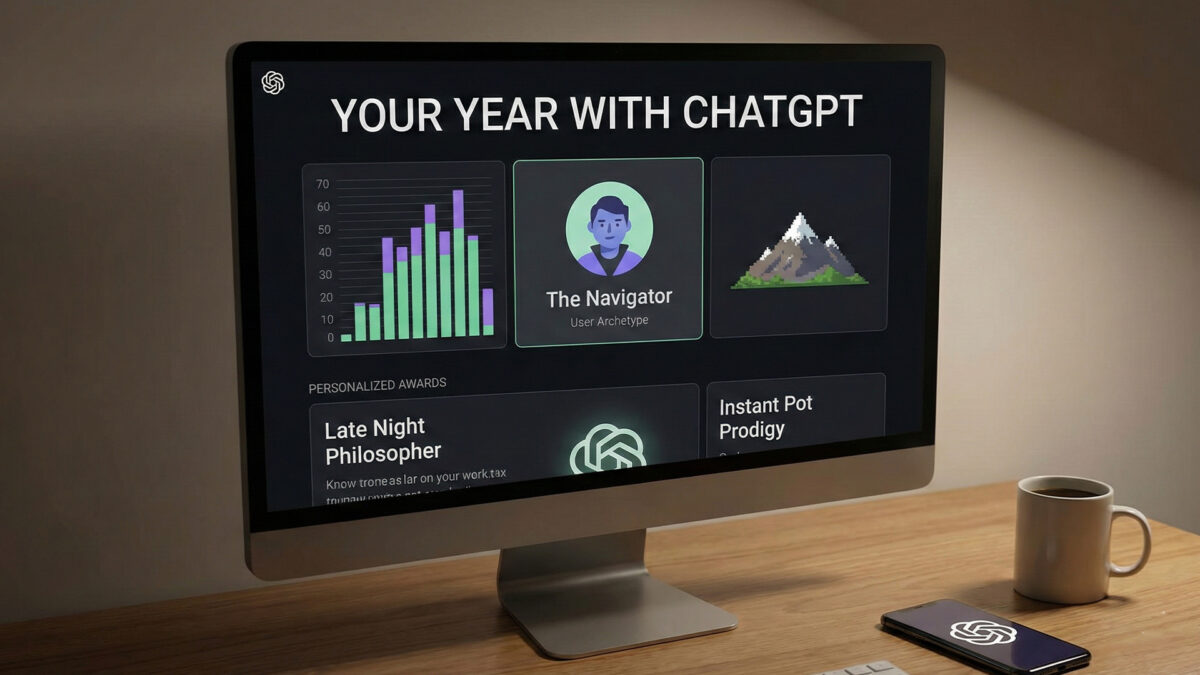
OpenAI’s ‘Your Year with ChatGPT’ makes 2025 personal

OpenAI has rolled out a new feature called “Your Year with ChatGPT”, offering users a personalised, year-end recap of their interactions with the AI throughout 2025. Similar to Spotify Wrapped, this recap blends stats, insights, and creative elements to show how users engaged with ChatGPT over the year.

The feature highlights key usage metrics such as total messages exchanged, number of chats, peak interaction days, and the most popular topics discussed. It also awards playful, personalised badges based on user behaviour, with titles like “Creative Debugger” or “Curious Explorer,” giving users a fun reflection of how they used ChatGPT.

Beyond numbers, OpenAI makes the recap visually engaging. Each summary begins with a short, AI-generated poem reflecting the user’s year and concludes with pixel art inspired by their most frequent conversation themes. This mix of stats, storytelling, and visuals creates an engaging and humanised experience rather than just a dry analytics report.

To access the recap, users need to have “reference saved memories” and “chat history” enabled. Once set up, they can trigger the feature directly in the ChatGPT app or by asking prompts like “Show me my year with ChatGPT.” The feature is available on Android, iOS, and web platforms for Go (India), Plus, and Pro users, while Team, Enterprise, and Education accounts are not supported.

OpenAI is gradually rolling out this feature across multiple regions, including India, the U.S., Canada, the U.K., Australia, and New Zealand. By providing a personalised summary of the year, the company encourages users to reflect on how they interacted with AI, highlighting both creativity and curiosity in their engagement.

Your Year with ChatGPT shows how AI can not only provide information but also create meaningful, fun experiences that celebrate the ways people use technology. With stats, creative visuals, and quirky awards, it’s a year-end gift from ChatGPT to its users, making 2025’s conversations memorable and personal.

Also Read: Apollo Micro gains access to DRDO’s advanced weapon tech

Categories
Corporate

Stock jumps 6% as GPT Infraprojects bags Jodhpur Highway deal

Shares of GPT Infraprojects Limited surged on Tuesday after the company was declared the lowest bidder (L1) for a ₹670 crore highway project by the National Highway Authority of India (NHAI). The project was secured in a consortium with ISCPPL, bidding under the name GPT‑ISCPPL (Consortium).

The contract involves the construction of a four‑lane elevated road in Jodhpur, Rajasthan, spanning from Mahamandir to Akhaliya Chouraha (7.633 km). The project will be executed under the Hybrid Annuity Model (HAM), a public-private partnership framework in which costs and risks are shared between the government and the contractor.

Following the announcement, GPT Infraprojects’ shares jumped about 6%, hitting an intraday high of ₹117 on the BSE, while on the NSE, the stock rose over 3%, reflecting strong market confidence. Analysts said that the contract win strengthens investor sentiment, given the company’s proven ability to execute large government infrastructure projects efficiently.

The highway project is expected to improve traffic flow and connectivity in Jodhpur, enhancing a key urban corridor. For GPT Infraprojects, the deal boosts its order book and reinforces its standing in the national highways sector, offering significant revenue potential over the coming years.

This new order comes shortly after GPT Infraprojects secured another major contract from the Municipal Corporation of Greater Mumbai, worth ₹1,804 crore, for constructing a flyover along LBS Marg, further expanding its infrastructure portfolio.

Industry observers note that winning high-value NHAI projects not only strengthens financial performance but also market perception, as reflected in the recent stock surge. The deal signals confidence in the company’s capability to handle large-scale projects under public-private models and contributes positively to its market valuation.

Also Read: Apollo Micro gains access to DRDO’s advanced weapon tech

Categories
1 Minute-Read

Apollo Micro gains access to DRDO’s advanced weapon tech

Apollo Micro Systems has secured access to two directed-energy weapon (DEW) technologies developed by India’s Defence Research and Development Organisation (DRDO).

This collaboration allows the private defence firm to further develop and potentially manufacture these advanced systems, aimed at enhancing India’s strategic defence capabilities. The technologies focus on precision targeting and high-energy applications, providing modern solutions for defence operations.

Apollo Micro Systems, known for its defence electronics expertise, will integrate DRDO’s innovations into practical, deployable platforms. The move is part of India’s broader push to involve private industry in high-tech defence development and self-reliance initiatives.

Categories
Leaders

Nikhil Kamath, Kishore Biyani launch The Foundery for startups

Entrepreneurs Nikhil Kamath and Kishore Biyani have launched The Foundery, a new programme to help aspiring startup founders turn ideas into real businesses. Unlike traditional courses, this is a 90‑day hands-on, residential programme where participants live and work together on building startups. The goal is to learn by doing, with guidance from experienced entrepreneurs, investors, and industry experts.

The Foundery is based in Alibaug, Maharashtra, where selected participants will focus on validating ideas, developing products, testing the market, and shaping business strategies. Instead of classroom lessons, the programme emphasizes practical work to prepare startups for real-world challenges.

A key feature is the equity structure: participants who help build startups can retain up to 25% ownership. Promising startups may also receive seed funding up to ₹4 crore and continued support after the programme.

Applications are open until mid‑January 2026, with a non-refundable ₹5,000 registration fee. The first batch will include around 30 co-founders, and roughly 20 business ideas will be selected for development.

The selection process focuses on creativity, problem-solving, resilience, and a founder mindset, rather than formal degrees or polished presentations. Participants can be aspiring founders, mid-career professionals, or early-stage entrepreneurs ready to relocate for the residential programme.

Mentors include notable names such as Vijay Shekhar Sharma (Paytm), Kunal Bahl (Snapdeal), Mithun Sacheti (CaratLane), and Varun Berry (Britannia), who will guide participants on idea design, execution, and growth.

Each cohort will end with a Demo Day, where startups pitch to investors and explore funding and partnership opportunities.

The Foundery aims to provide a supportive environment for founders to learn, experiment, and scale their ideas into successful startups, bridging the gap between vision and execution in India’s entrepreneurial ecosystem.

Also Read: Japan restarts world’s largest nuclear plant

Categories
Beyond

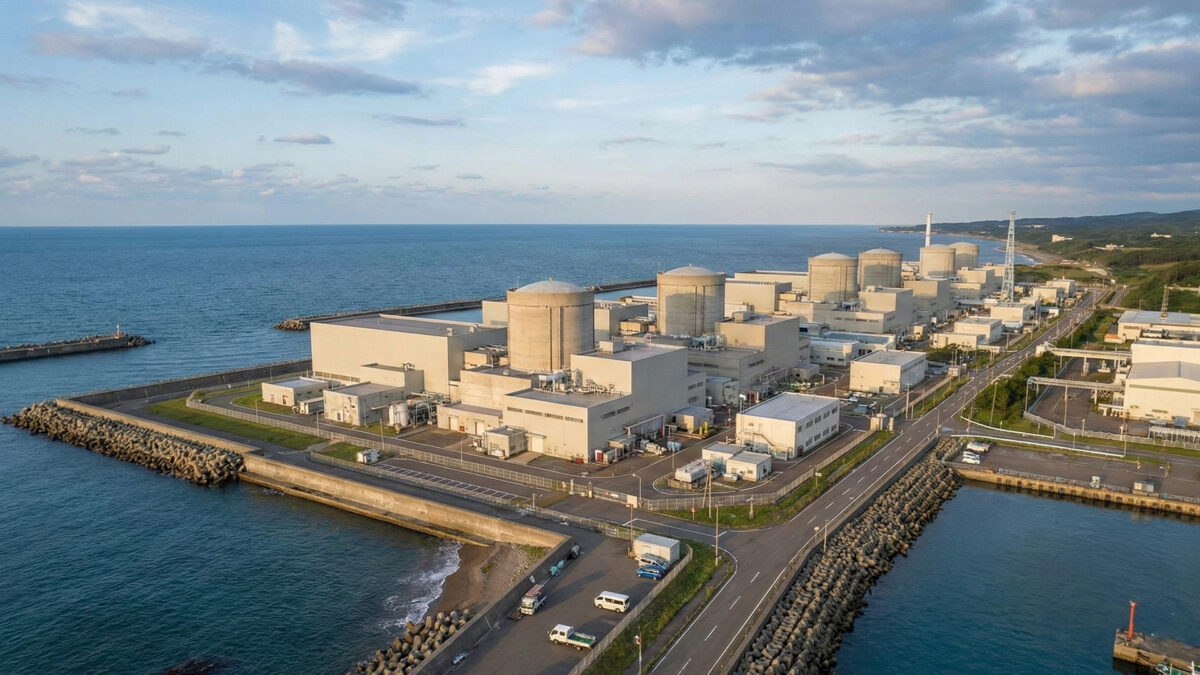
Japan restarts world’s largest nuclear plant

Japan has officially taken a major step toward restarting the Kashiwazaki-Kariwa nuclear power plant, the world’s largest in terms of electricity-generating capacity. The plant, located in Niigata Prefecture about 220 km northwest of Tokyo, has been idle since the 2011 Fukushima disaster, which led to the suspension of nearly all nuclear reactors in Japan.

On 22 December 2025, the Niigata Prefectural Assembly approved Governor Hideyo Hanazumi’s decision to allow the plant’s restart, effectively clearing the final local requirement needed for operations to resume. The decision enables Tokyo Electric Power Company (TEPCO), the plant’s operator, to move forward with safety inspections, operational checks, and preparation for restarting the reactors.

The facility has a total generating capacity of nearly 8,000 megawatts, making it a crucial source of electricity for Japan. TEPCO expects to bring at least one reactor online by early 2026, pending final regulatory and safety approvals. Restarting the plant could help the country reduce its reliance on imported fossil fuels and stabilize electricity costs, a pressing concern given Japan’s energy demands and global energy price volatility.

The restart comes amid Japan’s broader energy strategy, which aims to increase nuclear power’s share of electricity production to enhance energy security and meet climate goals. Since 2011, Japan has gradually restarted 14 of its 33 operable reactors under stringent safety protocols, but Kashiwazaki-Kariwa is the first major TEPCO plant to return to service.

Public opinion remains divided. Some residents and safety advocates continue to express concerns about nuclear risks, recalling the Fukushima accident’s devastating effects. Others, however, support the restart due to the potential economic and energy benefits, highlighting the importance of a reliable domestic power supply for households and industries.

In summary, the restart of Kashiwazaki-Kariwa represents both a milestone in Japan’s post-Fukushima nuclear journey and a critical step in its efforts to secure stable, sustainable energy. With local backing and careful planning, the plant is poised to play a central role in meeting the country’s future electricity needs while balancing public safety concerns.

Also Read: KSH International IPO lists 4% below issue price