Categories
Beyond

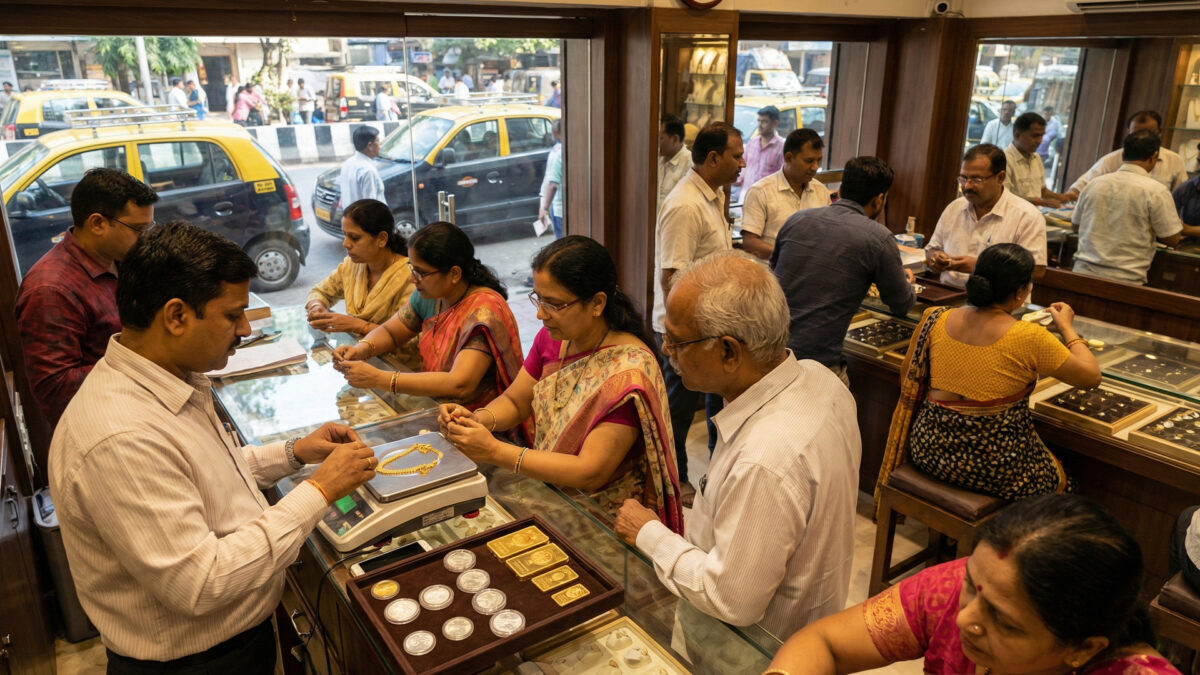
Gold near ₹1.39 lakh, Silver at ₹2.33 lakh

Gold and silver prices stayed mostly stable across Indian markets on Wednesday, December 25, with rates holding near recent highs. The steady trend reflects continued demand and supportive global market conditions.

On Christmas Day, 24-carat gold was priced close to ₹1.39 lakh per 10 grams in major cities such as Delhi, Mumbai, Chennai, and Kolkata. 22-carat gold, which is widely used for jewellery making, was selling at around ₹1.27 lakh per 10 grams. Prices showed small differences across cities due to local taxes, transportation costs, and jewellers’ margins.

Among the metros, Chennai and other southern cities recorded slightly higher gold prices, while Delhi and Mumbai saw marginally lower rates. Despite these minor variations, gold prices remained firm nationwide.

Silver prices also showed strength. On December 25, silver was trading at around ₹2.33 lakh per kilogram in most major markets. In cities like Chennai, silver prices were quoted even higher. Strong industrial demand and positive global cues have supported silver prices in recent weeks.

Market experts say the firmness in prices is due to global economic uncertainty, inflation worries, and expectations of lower interest rates in key economies. These factors usually increase demand for gold and silver, which are considered safe investment options during volatile periods. Domestic demand from the festive and wedding season has also helped keep prices elevated.

Over the past few weeks, gold prices have moved up gradually, with December seeing sustained buying interest. Silver, meanwhile, has recorded sharper gains during the month, benefiting from both investment and industrial demand.

Analysts caution that while prices are currently high, short-term fluctuations are possible depending on global economic data, currency movements, and central bank decisions. Still, the overall outlook for precious metals remains positive towards the end of the year.

Also Read: Reliance gets one-month US nod for Russian oil

Categories
Corporate

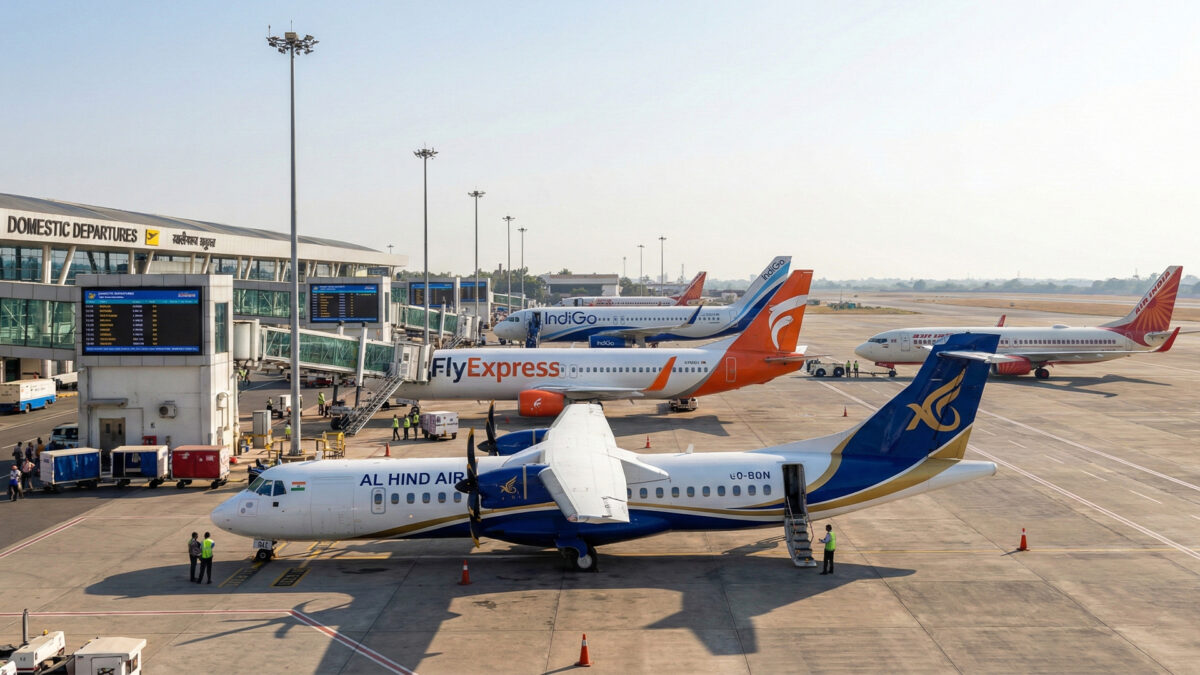
India clears 2 new airlines to boost competition

The Indian government has given initial approval to two new airlines, Al Hind Air and FlyExpress, allowing them to move closer to starting flight operations. The decision is aimed at increasing competition in the domestic aviation sector, which is currently dominated by a few large players.

The approvals were granted by the Ministry of Civil Aviation through the issuance of No Objection Certificates (NOCs). Civil Aviation Minister K. Rammohan Naidu said the move reflects the government’s effort to strengthen the aviation sector and offer passengers more choices.

The decision comes shortly after a major disruption at IndiGo earlier this month, when the airline cancelled thousands of flights due to staffing and operational issues. The incident affected a large number of passengers and highlighted the risks of depending heavily on one airline. At present, IndiGo controls about 65 per cent of India’s domestic air travel market, while the Air India Group accounts for around 27 per cent. Smaller airlines share the remaining portion.

Al Hind Air is promoted by the Kerala-based alhind Group. The airline plans to start operations with smaller aircraft and focus on regional routes, especially in southern India. Its aim is to improve connectivity between smaller cities and towns. The airline will now work on completing regulatory requirements, including getting an Air Operator Certificate.

FlyExpress, the second airline to receive approval, has indicated that it plans to begin operations soon. While detailed plans about its routes and fleet have not yet been shared publicly, the airline is expected to serve domestic passengers and add capacity to the market.

In addition, another airline, Shankh Air, has already received its NOC earlier and is expected to start flying in 2026.

The government believes that the entry of new airlines will improve services, reduce the impact of disruptions, and encourage competitive pricing. It also supports broader goals such as expanding regional air connectivity under existing aviation policies.

With passenger demand continuing to grow, the addition of new airlines is expected to make India’s aviation sector more balanced, competitive, and resilient.

Also Read: Satya Nadella skips managers to hear engineers on AI

Categories
Technology

Apple raises privacy concerns over Chrome

Apple has urged iPhone users to reconsider their use of Google Chrome, warning that the browser does not provide the same level of privacy protection as Apple’s Safari. The concern centres on how Chrome manages user tracking on iPhones, with Apple suggesting that certain forms of data collection may continue even when users believe they have limited tracking.

According to Apple, Safari is designed to block sophisticated tracking tools by default, including covert fingerprinting techniques that can quietly follow users across multiple websites. Chrome, by contrast, does not automatically prevent all such methods, raising questions about how much personal data may be shared without users being fully aware.

The warning comes as independent research adds weight to Apple’s claims. A recent global browser security study ranked Google Chrome as the second-poorest performer among major browsers when it comes to privacy and security. Researchers evaluated browsers on key parameters such as tracker blocking, resistance to fingerprinting and secure connections. Chrome’s high risk score indicates a greater likelihood of user data being tracked or exposed.

Despite being the most widely used browser worldwide, Chrome’s popularity has not translated into stronger privacy protections. The study found that Safari offered better safeguards straight out of the box, although it did not emerge as the best-performing browser overall.

The research also highlighted growing concerns around AI-powered browsers. One such browser ranked last for privacy after failing several basic tracking and security tests, fuelling worries that rapid innovation in AI-driven browsing may be outpacing essential privacy protections.

Also Read: Satya Nadella skips managers to hear engineers on AI

Categories
Corporate

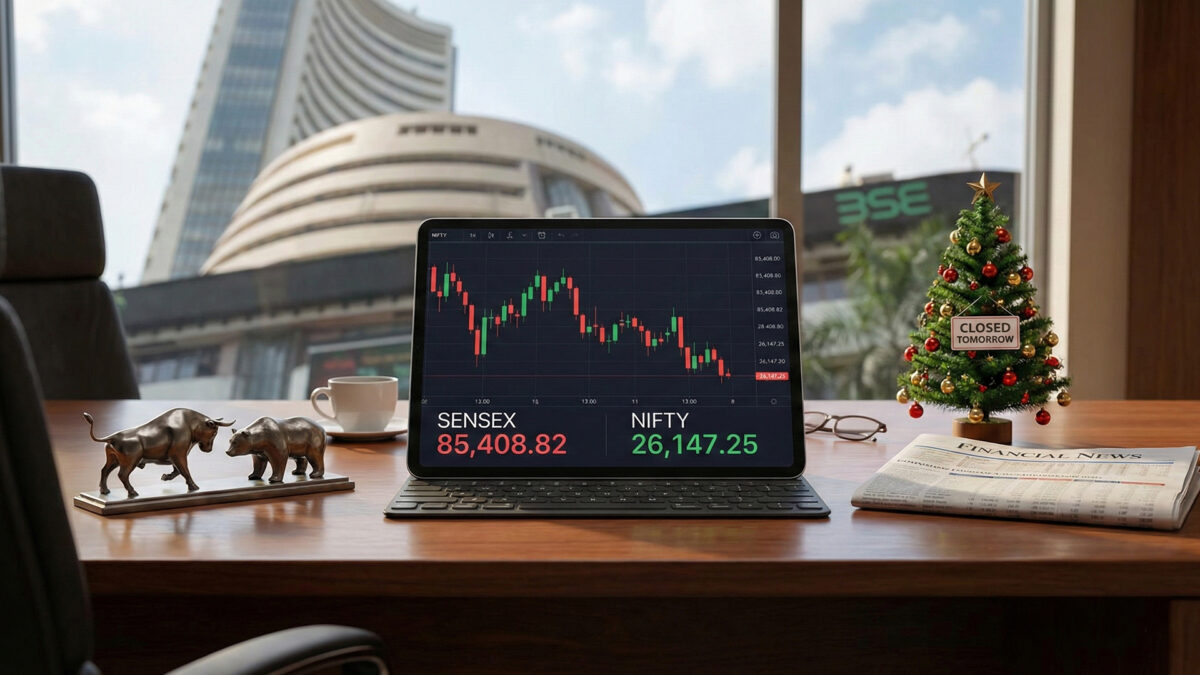
Sensex slips 116 points, Nifty ends below 26,150

On wednesday, the BSE Sensex fell 116 points to close at 85,409, while the Nifty 50 slipped 35 points to settle at 26,142. Markets traded in a narrow range throughout the session, reflecting consolidation after recent gains.

Early signals were positive, with GIFT Nifty indicating a firm start, supported by gains in US and Asian markets. However, the upbeat global cues failed to translate into sustained buying interest on Dalal Street. Traders preferred to stay on the sidelines ahead of the year-end holidays, leading to subdued activity.

Sector-wise, performance was mixed. Media and metal stocks posted modest gains, while selling pressure was seen in IT, pharma, oil and gas, and PSU banking stocks. The IT sector was among the key drags due to weakness in select large-cap names. Broader markets underperformed the benchmarks, with the midcap index falling about 0.4 percent, while smallcap stocks ended largely flat.

Among individual stocks, Trent, Shriram Finance, Apollo Hospitals, UltraTech Cement and Adani Ports were the top gainers, supported by stock-specific buying. On the losing side, Wipro, Sun Pharma, Dr Reddy’s Laboratories, InterGlobe Aviation (IndiGo) and Tata Motors Passenger Vehicles weighed on the indices.

Market experts said the session reflected a pause in momentum, with investors adopting a selective approach rather than aggressive buying. Technical analysts noted that both Sensex and Nifty are consolidating near record-high levels, with key support and resistance zones likely to guide near-term movement.

In the currency market, the Indian rupee weakened and closed at 89.78 against the US dollar, adding to cautious sentiment.

Also Read: US bans new foreign drone imports including DJI

Categories
1 Minute-Read

Canon wins TSMC 2025 production support award

Canon Inc. has been awarded the 2025 Excellent Performance Award by Taiwan Semiconductor Manufacturing Co. Ltd. (TSMC) for its exceptional contribution to semiconductor production.

The recognition highlights Canon’s timely delivery of equipment, high-quality support, and development of customer-focused functions that helped boost TSMC’s operations. This is the third time Canon has received this award, reflecting its ongoing commitment to innovation and excellence in semiconductor lithography.

The company aims to continue advancing its technology and services to support the semiconductor industry and contribute to broader technological progress.

Categories
Corporate

Reliance tops India’s wealth creation in 2025

Reliance Industries Ltd (RIL) emerged as India’s largest wealth creator in 2025, leading corporate value gains amid a strong year for equities driven by banking, financial services and automobile stocks. The Mukesh Ambani-led conglomerate delivered the highest addition to investor wealth, reinforcing its dominant position in India’s corporate landscape.

RIL’s shares rose close to 30 per cent during the year, adding about ₹4.6 lakh crore to investor wealth. This pushed the combined market capitalisation of the Reliance Group to around ₹23.44 lakh crore, making it the single biggest contributor to wealth creation among Indian companies. Analysts attributed the strong performance to steady earnings growth, improving margins and positive expectations around the group’s digital, retail and new energy businesses.

The broader wealth creation story in 2025 was shaped by strong performances in autos, banks and financial services. Companies such as Bharti Airtel, Bajaj Finance, State Bank of India (SBI), Maruti Suzuki and HDFC Bank each added more than ₹1.5 lakh crore to their market value. These stocks benefited from healthy demand, stable asset quality, improving profitability and sustained investor confidence in India’s economic growth.

Overall, the top seven business groups — Reliance, Bharti, HDFC, Bajaj, Adani, ICICI and Tata — together added nearly ₹10 lakh crore in market capitalisation during the year. Their combined value now stands at about ₹122 lakh crore, accounting for nearly 60 per cent of the total market capitalisation of the Nifty 50 index. Reliance alone contributed almost half of this wealth creation, followed by the Bharti Group.

In contrast, the Tata Group emerged as an outlier in 2025, lagging behind its peers. Its flagship company, Tata Consultancy Services (TCS), saw its market capitalisation fall by nearly ₹3 lakh crore. Investor concerns over slower revenue growth, margin pressures and delayed benefits from emerging technologies such as artificial intelligence and cloud services weighed on the stock. Several other Tata companies, including Tata Elxsi, Trent, Voltas and Tata Technologies, also faced sharp corrections.

Market experts expect wealth creation trends to remain selective, with investors continuing to favour companies and sectors that demonstrate strong earnings visibility, balance sheet strength and long-term growth potential. Reliance, banks and auto majors are seen as well positioned to benefit from these themes in the coming years.

Also Read:  BP close to $10 bn sale of Castrol stake

Categories
Corporate

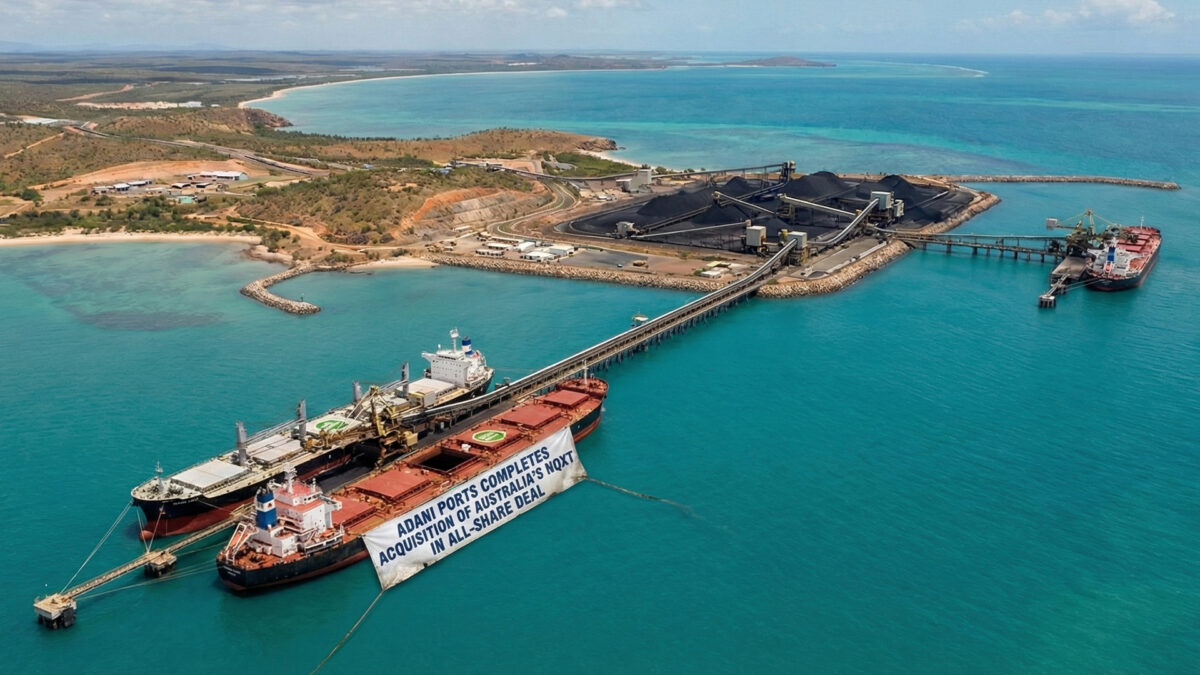
Adani Ports completes Australia NQXT deal

Adani Ports and Special Economic Zone Ltd (APSEZ) has completed the acquisition of North Queensland Export Terminal (NQXT) in Australia, strengthening its global ports portfolio and expanding its presence in the Asia-Pacific region.

The deal was executed as an all-share transaction, under which APSEZ acquired 100 per cent ownership of Abbot Point Port Holdings, the company that owns and operates NQXT. In return, APSEZ issued over 14.38 crore equity shares to Carmichael Rail and Port Singapore Holdings. The acquisition received all required regulatory and shareholder approvals in India and Australia.

NQXT is a deep-water, multi-user export terminal located at Abbot Point in Queensland. It currently has a handling capacity of 50 million tonnes per year and primarily supports bulk exports. A large part of its volumes is secured under long-term take-or-pay contracts, ensuring steady and predictable revenue. For FY25, the terminal reported strong operating performance with healthy earnings.

With this acquisition, APSEZ gains a strategically located asset close to key Asian trade routes. The company expects NQXT to play an important role in its long-term growth plans, including its goal of handling one billion tonnes of cargo annually by 2030. APSEZ also sees scope to expand the terminal’s capacity over time, supported by contract renewals and operational improvements.

Following the completion of the transaction, APSEZ has upgraded its financial guidance. The company now expects higher cargo volumes and improved earnings for the coming financial year, reflecting the addition of NQXT to its portfolio. The Australian terminal also brings foreign currency earnings, adding stability and diversification to APSEZ’s revenue base.

Company management described the acquisition as a key milestone in APSEZ’s international expansion strategy. They highlighted NQXT’s strong fundamentals, long asset life and potential for future growth, along with its location in a stable and developed market.

The NQXT deal adds to APSEZ’s growing list of overseas assets, which includes ports and terminals in Israel, Sri Lanka and Africa. With this move, Adani Ports continues to position itself as a global port and logistics player, focused on scale, long-term contracts and steady cash flows.

Also Read: Cholamandalam shares up 8% after rejecting claims

Categories
1 Minute-Read

Navi Mumbai Airport opens on Dec 25 with road-only access

The Navi Mumbai International Airport (NMIA) will begin operations on December 25, but access will initially be limited to road-based travel.

Dedicated metro and direct rail connections are still under development and will be introduced in later phases. Passengers can reach the airport via private vehicles, taxis and buses, with the Mumbai Trans Harbour Link offering the fastest route, though with tolls.

Suburban train users can travel up to Targhar station and complete the last stretch by road. Authorities advise travellers to plan journeys carefully and allow extra travel time.

Categories
1 Minute-Read

Cholamandalam shares up 8% after rejecting claims

Shares of Cholamandalam Investment and Finance Company jumped 8% after the firm dismissed a Cobrapost report alleging large related‑party transactions, cash irregularities, and governance lapses.

The company clarified the claims were “malicious and baseless” and reaffirmed that its asset quality, liquidity, and business guidance remain unchanged, with no revision to its board-approved plans.

Cholamandalam emphasized robust financials, including strong cash balances and adherence to reporting standards. Analysts maintained their “Buy” ratings, signaling confidence in the firm’s fundamentals despite the controversy. The stock’s reaction reflects investor reassurance following the firm’s clarification.

Categories
1 Minute-Read

OYO Parent Prism clears ₹6,650 cr IPO plan

OYO’s parent company, Prism, has received shareholder approval to raise ₹6,650 crore through an initial public offering (IPO).

The approval came during an Extraordinary General Meeting (EGM) held on December 20, 2025, where shareholders also cleared a bonus share issue.

The IPO is now set to move forward, pending regulatory approvals and market conditions. Prism aims to use the funds to strengthen its balance sheet and support growth initiatives.

Analysts say the listing could be a milestone for the company as it expands its hospitality and technology offerings.