Categories
Leaders

Zerodha CEO slams market closure on BMC poll day

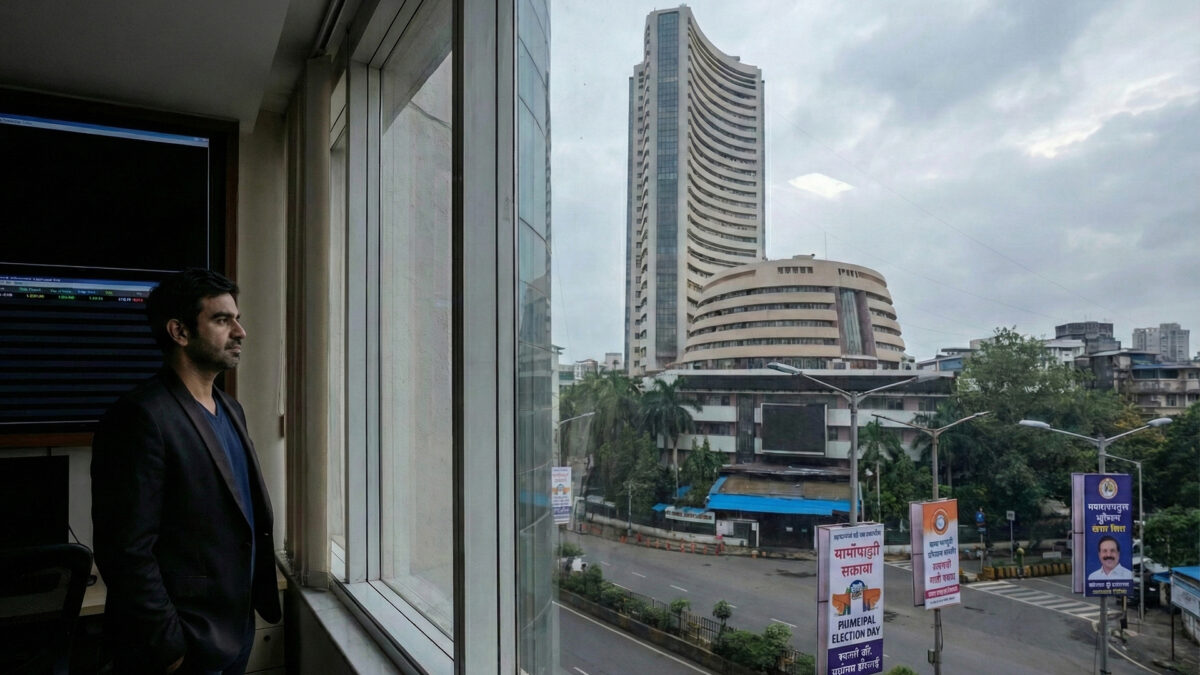
Zerodha CEO Nithin Kamath has criticised the closure of India’s stock markets on January 15, calling it a case of poor planning and a lack of understanding of global market linkages. Trading on the Bombay Stock Exchange (BSE) and National Stock Exchange (NSE) was suspended for the day as Maharashtra declared a public holiday for the Brihanmumbai Municipal Corporation (BMC) elections.

In a post on social media platform X, Kamath questioned why a city-level civic election should halt national stock market operations. He highlighted that Indian markets are deeply connected to global financial systems, with significant participation from foreign investors. Shutting exchanges, he said, sends the wrong signal to international markets and disrupts trading continuity.

Kamath warned that such decisions fail to account for “second-order effects” — broader consequences like lost trading opportunities, market inefficiency, and inconvenience to domestic and global investors. Quoting legendary investor Charlie Munger, he added, “Show me the incentive and I will show you the outcome,” suggesting that outdated practices persist because there is little motivation to change them.

Market analysts echoed Kamath’s concerns, noting that frequent or unnecessary market holidays can affect investor confidence at a time when India aims to attract long-term global capital. They said consistency in market operations is critical for both domestic and international investors.

The market shutdown came amid a volatile start to 2026 for Indian equities, following a challenging 2025 marked by global uncertainties. Trading resumed on January 16, with investors hoping markets quickly regain momentum after the brief disruption.

Also Read: Soumith Chintala named CTO of Thinking Machines Lab

Categories
Corporate

Moody’s improves outlook for 3 key Adani firms

Global credit rating agency Moody’s Investors Service has improved the outlook for three major Adani Group companies, changing it from negative to stable. The companies covered under the upgrade are Adani Ports and Special Economic Zone (APSEZ), Adani Transmission Step-One Limited, and Adani Electricity Mumbai Limited. Moody’s has also reaffirmed their investment-grade credit rating at Baa3.

The outlook upgrade comes after Moody’s reviewed the companies’ financial position and found improvements in liquidity, cash flow management, and overall financial stability. According to the agency, these companies are now better placed to meet their debt obligations over the next 12 to 18 months, supported by adequate access to funding.

Moody’s said Adani Ports, one of India’s largest port operators, benefits from flexible capital expenditure plans, diversified operations, and strong access to capital markets. These factors provide comfort on its ability to manage debt while continuing expansion plans.

For Adani Transmission Step-One and Adani Electricity Mumbai, the rating agency highlighted the stable and predictable nature of their revenues. As regulated utility businesses, both companies enjoy steady cash flows, which support their credit strength and liquidity position.

Reacting to the development, the Adani Group said the improved outlook reflects confidence in its financial discipline, governance standards, and long-term business strategy. The group added that the rating action underlines its continued focus on infrastructure development and nation-building, which remain central to its operations.

The upgrade is seen as a positive signal for the Adani Group, especially after a period of heightened scrutiny and cautious sentiment from global investors. A stable outlook suggests that Moody’s does not expect any immediate deterioration in the financial health of these companies.

However, Moody’s also noted that it will continue to closely monitor the group’s financial policies, debt levels, and execution of expansion plans. Any significant weakening in liquidity, aggressive debt-funded growth, or adverse regulatory developments could impact future ratings.

Also Read: Gates Foundation announces $9 billion spending plan

Categories
Beyond

Asian markets rise for fourth week on tech boost

Asian stock markets are heading for their fourth straight week of gains, supported mainly by strong performance in technology and semiconductor stocks. Investors have shown renewed confidence in tech shares after encouraging earnings and positive outlooks linked to artificial intelligence (AI) demand.

A key driver of the rally has been Taiwan Semiconductor Manufacturing Company (TSMC), the world’s largest contract chipmaker. The company reported better-than-expected results and gave an optimistic outlook, pointing to continued strong demand for advanced chips used in AI applications. This lifted TSMC’s shares sharply and boosted confidence across global chip and technology stocks.

Following TSMC’s results, tech stocks in several Asian markets moved higher. South Korean shares, which have a large exposure to semiconductor companies, saw notable gains. Technology-heavy indices across the region also advanced, reflecting strong investor interest in AI-linked businesses.

The positive mood in Asia followed a recovery on Wall Street, where US markets stabilised after recent volatility. Gains in major U.S. technology stocks helped improve overall global sentiment, encouraging investors to take on more risk.

Other asset classes showed mixed movement. Bond markets were largely steady, while US Treasury yields eased slightly after data showed fewer Americans filing for unemployment benefits, suggesting resilience in the US labour market. Oil prices stabilised after recent declines, while traditional safe-haven assets such as gold edged lower as investors moved towards equities.

Despite the recent rally, market participants remain cautious about potential risks, including global economic uncertainty, interest-rate expectations, and geopolitical developments. However, strong earnings from major technology companies have helped offset some of these concerns.

Analysts note that technology stocks, which had faced pressure earlier due to profit-taking and sector rotation, are once again attracting buyers. The renewed focus on AI growth and solid corporate earnings has strengthened the case for further gains, at least in the near term.

Also Read: Jio financial Q3 profit at ₹269 crore

Categories
Corporate

Jio financial Q3 profit at ₹269 crore

Jio Financial Services Ltd reported a net profit of ₹269 crore for the third quarter ended December 31, 2025, supported by strong growth across its core businesses such as lending, payments and asset management.

The company’s total income more than doubled year-on-year to about ₹901 crore, reflecting higher activity in its operating segments. Income from core businesses now accounts for over half of total net income, a sharp rise from around one-fifth in the same period last year, showing improved diversification beyond treasury income.

The lending business continued to expand rapidly. Assets under management rose to ₹19,049 crore, nearly 4.5 times higher than a year ago, while loan disbursements almost doubled. This led to a strong increase in interest income and operating profit before provisions.

In the payments segment, transaction volumes and customer activity grew steadily, resulting in a sharp rise in fee and commission income. The company’s payments ecosystem also benefited from a wider user base.

Jio Payments Bank posted significant growth, with income rising multiple times compared to last year. Customer deposits and the number of active users also increased, reflecting higher adoption of digital banking services.

Also Read: Angel One Q3 profit dips to ₹269 crore

Categories
Corporate

Angel One Q3 profit dips to ₹269 crore

Angel One, one of India’s leading retail brokerage firms, reported a decline in net profit for the third quarter ending December 31, 2025. The company’s consolidated profit after tax (PAT) fell 4.5 per cent to ₹269 crore, compared with ₹281.5 crore in the same period last year. The drop was mainly due to rising operating costs, including higher employee expenses and charges from employee stock ownership plans (ESOPs).

Despite the dip in profit, Angel One posted growth in its overall revenue. Total income for the quarter rose about 5.8 per cent to ₹1,338 crore from ₹1,264 crore a year earlier. The revenue increase was driven by higher interest income as well as fees and commission earnings from its brokerage and related services.

Sequentially, the company showed strong performance. Compared with the previous quarter, PAT rose by around 27 per cent, reflecting improved operational efficiency and better cost management. Earnings before depreciation, amortisation, and taxes (EBDAT) also increased to ₹405 crore, signalling the company’s underlying business strength.

In addition to the quarterly results, the board approved key measures aimed at benefiting shareholders. Angel One announced an interim dividend of ₹23 per share. It also sanctioned a stock split in a 1:10 ratio, meaning each existing equity share of ₹10 face value will be divided into ten shares of ₹1 each. These steps are intended to make shares more affordable and improve liquidity, helping attract a wider base of investors.

Following the announcements, Angel One’s stock saw positive movement in the market, as investors welcomed the combination of revenue growth, sequential profit improvement, and shareholder-friendly corporate actions.

The company continues to expand its client base while strengthening its non-broking businesses, which are expected to support long-term growth. Analysts say Angel One’s efforts to diversify its services, combined with strong market presence, could help the firm navigate challenges in India’s financial markets and maintain steady growth in the coming quarters.

Also Read: Oil drops 3% after Trump remarks on Iran

Categories
Beyond

Oil drops 3% after Trump remarks on Iran

Global oil prices dropped by about 3 per cent on Thursday after US President Donald Trump’s remarks suggested a reduced risk of military conflict with Iran. The fall came after oil had risen in recent days due to concerns that unrest in Iran could threaten regional oil exports.

Brent crude, the international benchmark, slipped roughly 2.9 per cent to $64.5 per barrel, while West Texas Intermediate (WTI), the US benchmark, declined to around $60 per barrel. The decline reversed the previous day’s gains, which had been driven by fears that escalating tensions in Iran might disrupt global oil supply.

Trump said that reports indicated the killings of protesters in Iran had stopped and that plans for mass executions were no longer moving forward. Speaking from the White House, he added that he would “watch and see” before taking any further action, signaling a cautious approach rather than immediate military involvement. Market participants saw this as a sign that the risk of a major conflict affecting oil supply had lessened.

Analysts said that the president’s comments removed part of the “risk premium” built into oil prices due to geopolitical uncertainty. Rising crude inventories in the United States and potential increases in Venezuelan oil exports also added downward pressure on prices.

Iran produces a significant share of the world’s crude oil, so any disruption there can sharply influence market sentiment. With tensions easing temporarily, even slightly, investors quickly adjusted their expectations, triggering the drop in prices.

While geopolitical risks in the Middle East remain complex, Thursday’s market reaction highlighted how political statements can strongly impact oil prices. Traders continue to monitor developments in Iran and other key oil-producing regions, aware that shifts in risk perception can quickly move global crude markets.

Also Read: Windows 10 & 11 users alerted to security flaw

Categories
Technology

Windows 10 & 11 users alerted to security flaw

The Indian government has raised an alert for Windows 10 and 11 users following the discovery of a security vulnerability that could compromise sensitive system information. CERT‑In, the national cybersecurity agency, has flagged the issue as a potential risk even for devices with standard security settings.

The flaw is located in the Desktop Window Manager (DWM), the component responsible for managing the Windows graphical interface. CERT‑In has identified that improper memory handling in this module may allow a local attacker with minimal access to retrieve sensitive system information. While the vulnerability does not directly allow remote hacking, it could be exploited in combination with other techniques to escalate attacks.

Affected systems include multiple Windows 10 versions (1607, 1809, 21H2, 22H2) and Windows 11 editions (23H2, 24H2, 25H2), along with several Windows Server versions from 2012 through 2025. CERT‑In has rated the risk medium, highlighting that exposure of memory data could bypass security protections like Address Space Layout Randomisation (ASLR).

The advisory emphasizes that users should install the latest Microsoft security updates immediately via Windows Update. Enterprises and individual users are urged to maintain proper system hygiene, avoid untrusted software, and use accounts with limited privileges where possible.

Although no major exploit of this vulnerability has been reported yet, CERT‑In stresses that prompt patching is critical to protect data and maintain system security. Ignoring the update could leave systems vulnerable to future attacks, especially in enterprise environments where sensitive data is processed daily.

Also Read: Gold at ₹1.43 lakh , Silver rises ₹2.95 lakh

Categories
Beyond

Gold at ₹1.43 lakh , Silver rises ₹2.95 lakh

Gold and silver prices showed mixed movement in the domestic market on Friday, with gold edging lower and silver recording a small gain in early trade.

The price of 24-carat gold slipped by ₹10 to ₹1,43,610 per 10 grams. Similarly, 22-carat gold declined by ₹10 and was quoted at ₹1,31,640 per 10 grams. Prices remained largely stable across major Indian cities, with only minor variations. In Delhi, 24-carat gold was priced at around ₹1,43,760 per 10 grams, while Chennai saw slightly higher rates at close to ₹1,44,990.

Silver prices, however, moved in the opposite direction. The white metal gained ₹100 to trade at ₹2,95,100 per kilogram in major markets such as Mumbai, Delhi, and Kolkata. Chennai continued to quote higher silver prices at around ₹3,10,100 per kilogram.

Market analysts said the mild fall in gold prices was largely due to profit booking after recent record levels. The strength of the US dollar and strong economic data from the United States also weighed on sentiment. These factors have lowered expectations of an early interest rate cut by the US Federal Reserve, making gold less attractive in the short term.

In the international market, spot gold prices eased slightly in early Asian trade but continued to stay near recent highs. Silver prices overseas remained volatile but held firm after strong gains earlier in the week, supported by industrial demand and safe-haven buying.

Other precious metals also saw some pressure. Platinum prices declined by nearly 2 per cent, while palladium slipped by about 1 per cent, indicating a broader correction in metal prices.

Looking ahead, experts expect gold and silver prices to remain range-bound in the near term. Global economic data, movements in the US dollar, and signals from central banks will continue to influence the direction of precious metal prices.

Also Read: Sensex surges over 700 points, Nifty tops 25,850

Categories
1 Minute-Read

Shadowfax technologies IPO to raise ₹1,907 crore

Shadowfax Technologies, a major Indian logistics and delivery platform, is set to launch its IPO on January 20, closing on January 22, 2026.

The price band is ₹118–₹124 per share, aiming to raise around ₹1,907 crore through a mix of fresh issue and offer-for-sale shares. The company recently turned profitable and has seen significant revenue growth.

Proceeds will fund network expansion, marketing, lease payments, and strategic initiatives. Share allotment is expected by January 23, with BSE and NSE listings planned for January 28.

Categories
Leaders

Zuckerberg–Wang rift surfaces at Meta

Meta Platforms’ ambitious artificial intelligence push is facing internal strain, with reports of growing differences between CEO Mark Zuckerberg and the company’s top AI executive, Alexandr Wang. The friction comes barely months after Meta made one of its biggest bets in the sector, investing over $14 billion to acquire a 49 percent stake in Scale AI and bringing its founder Wang on board as Meta’s Chief AI Officer.

According to reports, the disagreement centres on leadership style, decision-making control, and the long-term direction of Meta’s AI investments. Wang is said to be unhappy with Zuckerberg’s close involvement in day-to-day AI decisions, viewing it as excessive micromanagement that limits autonomy and slows innovation. Zuckerberg, however, is known for taking direct charge of strategic priorities, especially in areas he sees as existential to Meta’s future.

At the heart of the dispute is a difference in vision. Wang and parts of the AI research team reportedly want Meta to focus on building cutting-edge “foundation models” that can compete directly with leading AI developers such as OpenAI and Google. This approach prioritises long-term breakthroughs over immediate commercial returns. In contrast, several long-serving Meta executives prefer a faster rollout of AI tools across products like Facebook, Instagram, and WhatsApp to strengthen advertising and user engagement.

These contrasting priorities have reportedly created an “us versus them” atmosphere inside Meta’s AI division. Some senior leaders are said to question whether Wang, despite his technical credentials, has sufficient experience managing AI initiatives at Meta’s massive scale, where investments are estimated to run into hundreds of billions of dollars over the coming years.

In response to the internal tensions, Zuckerberg has moved to tighten oversight of Meta’s AI operations. A recent organisational reshuffle placed key AI infrastructure and compute resources under direct reporting lines closer to the CEO. While not officially framed as a response to the disagreement, the change effectively reduces Wang’s independent control over critical parts of the AI stack.

The developments come at a crucial time for Meta, which has positioned AI as central to its future growth after years of heavy spending on the metaverse. Industry observers say the situation highlights a broader challenge faced by big tech companies: balancing visionary founders, high-value external hires, and the pressure to deliver both innovation and near-term business results in an intensely competitive AI race.

Also Read: RBI approves Japan’s SMBC India Bank subsidiary