Categories
Beyond

Oil prices drop on Iran negotiation talks

Global oil prices declined after Donald Trump signalled possible progress in negotiation talks with Iran, raising hopes of easing tensions in West Asia.

Trump indicated that discussions were moving in a positive direction, leading markets to expect a potential reduction in risks to oil supply. The remarks triggered a drop in crude prices, which had recently surged due to fears of prolonged conflict in the region.

Key benchmarks such as Brent crude and US West Texas Intermediate fell following the comments. Prices had earlier climbed sharply amid concerns that tensions could disrupt shipments through critical routes like the Strait of Hormuz, a major artery for global oil transport.

The decline was further supported by indications that immediate military escalation may be avoided. Reports suggested that potential strikes on Iranian energy infrastructure were delayed, easing fears of sudden supply shocks. Oil markets, which are highly sensitive to geopolitical developments, responded quickly to these signals.

However, uncertainty continues to cloud the outlook. Iranian officials have denied that formal negotiations are underway, raising questions about the likelihood of a quick resolution. This has kept volatility high, with traders remaining cautious.

Recent trends highlight how rapidly oil prices can shift based on political developments. After reaching elevated levels due to supply concerns, prices have now retreated on hopes of diplomatic progress.

The fall in oil prices has also supported global financial markets, as lower energy costs help ease inflationary pressures and support economic growth.

Also Read: Rupee falls 20 paise to 93.76, nears 94

Categories
Technology

Apple WWDC 2026 set for June 8

Apple has announced that its Worldwide Developers Conference (WWDC) 2026 will take place from June 8 to June 12, with the opening keynote on June 8 at Apple Park in California. The event will also be streamed online, making it accessible to developers and Apple fans around the world.

WWDC is Apple’s flagship event for developers, where the company usually unveils updates for iOS, macOS, iPadOS, watchOS, and tvOS, alongside new tools and services for app makers. This year, the spotlight is expected to shine on artificial intelligence (AI) and a major refresh of Apple’s virtual assistant, Siri.

The upcoming iOS 27 is rumored to bring AI-powered features that will make iPhones smarter and more intuitive. A particularly exciting highlight is a significant upgrade to Siri, which Apple hopes will finally match or exceed competitors in conversational abilities. Reports suggest the new Siri will be more context-aware and capable of holding natural, flowing conversations, reflecting Apple’s push to integrate AI more deeply into its devices.

Beyond software, WWDC may also showcase updates for macOS and other Apple platforms, along with new developer tools. While hardware announcements are always possible, the focus is expected to remain on software and AI-powered experiences.

Apple will continue its hybrid approach, allowing attendees to join both in-person and online, with free access to sessions via the Apple Developer app and website.

This year’s WWDC signals Apple’s growing commitment to AI-driven features across its ecosystem, balancing innovation with privacy-focused design, a hallmark of the company’s approach to emerging technology.

Also Read: Vedanta announces ₹11 dividend, ₹4,300 cr payout

Categories
Corporate

Vedanta announces ₹11 dividend, ₹4,300 cr payout

Vedanta Limited has announced an interim dividend of ₹11 per share, taking its total payout for the announcement to around ₹4,300 crore. The move marks the company’s third interim dividend for the financial year 2025–26, underlining its continued focus on returning cash to shareholders.

The decision was approved by the company’s board at its meeting held on March 23. Shareholders who hold the stock as of the record date, March 28, 2026, will be eligible to receive the dividend. The payout will be made in accordance with regulatory timelines.

This latest announcement adds to Vedanta’s consistent track record of rewarding investors. Earlier in the financial year, the company had declared two interim dividends—₹7 per share and ₹16 per share—bringing the total dividend declared so far this fiscal to ₹34 per share. With the latest ₹11 payout, the cumulative dividend for the year rises further.

Vedanta has long been known for its high dividend payouts, often making it a preferred choice for income-focused investors. The company’s ability to maintain such payouts is supported by its strong cash flows across its core businesses, which include metals, mining, and energy.

The announcement also comes at a time when the company’s stock remains in focus in the market. Dividend declarations of this scale typically attract investor interest, as they signal financial stability and a willingness to share profits.

For investors, dividends provide a steady income stream, especially during periods of market volatility. Companies like Vedanta, which regularly distribute earnings, tend to appeal to those looking for consistent returns alongside potential capital appreciation.

The latest payout reinforces Vedanta’s strategy of balancing shareholder returns with ongoing business needs.

Also Read: Global LNG exports drop to 6 month low

Categories
Corporate

IndiGo appoints ex-Air India Express head as CSO

India’s largest airline, IndiGo, has brought in seasoned aviation executive Aloke Singh as its new Chief Strategy Officer (CSO), as the carrier sharpens its focus on future growth and stability. Singh will take on the role from April 6, stepping into a key position at a time when the airline is navigating leadership changes and expansion plans.

Singh joins IndiGo after leading Air India Express, where he served as Managing Director and CEO for several years. During his tenure, he played a major role in strengthening the airline’s operations and guiding its integration with AirAsia India, helping build a more unified low-cost business within the Tata Group’s aviation portfolio.

At IndiGo, Singh’s role will revolve around shaping the airline’s long-term strategy. This includes identifying new growth opportunities, improving efficiency, and ensuring the airline remains competitive in an increasingly crowded aviation market. He will report to co-founder Rahul Bhatia for now, until a new chief executive officer is appointed.

The timing of the appointment is significant. IndiGo has been undergoing a transition phase, with changes in top leadership and an ambitious roadmap for expansion. The airline is looking to grow its international footprint, add more aircraft, including wide-body planes and strengthen its position in both domestic and global markets.

Singh brings with him over two decades of experience in aviation, having held leadership roles not just at Air India Express but also at Air India and Oman Air. His deep understanding of airline operations and strategy is expected to help IndiGo navigate its next phase of growth more smoothly.

With a dominant share of India’s aviation market, IndiGo is already the country’s leading carrier. However, increasing competition and evolving passenger expectations mean the airline must continuously adapt. Singh’s appointment signals a clear intent to stay ahead by focusing on long-term planning and strategic execution.

Also Read: Food delivery startup ‘Swish’ raises $38 mn

Categories
Leaders

Saudi Aramco CEO opts out of Houston Meet

Saudi Aramco CEO Amin Nasser has decided not to attend a major global energy conference in Houston as tensions rise in West Asia due to the ongoing Iran conflict. He chose to remain in Saudi Arabia to manage the situation, which is affecting oil supply and regional stability.

Nasser was expected to take part in CERAWeek, one of the world’s most important gatherings for the energy sector. His absence is seen as significant because he is a key voice in global oil discussions.

The decision comes at a time when the conflict involving Iran has created uncertainty in global oil markets. Tensions in the region have increased risks to oil production and transportation, especially in critical areas.

One major concern is the Strait of Hormuz, a key route through which a large portion of the world’s oil supply passes. Any disruption here can directly impact global oil prices and availability. Recent developments have raised fears of supply shortages.

Reports suggest that energy infrastructure in the Gulf region is under threat, forcing companies like Saudi Aramco to take precautionary steps. These include adjusting production levels and finding safer routes for oil shipments to avoid conflict zones.

The situation has already led to rising oil prices and increased volatility in global markets. If tensions continue, it could lead to a broader energy crisis affecting economies worldwide.

Other energy leaders are also changing their plans due to the situation. Some are attending international meetings virtually instead of traveling, showing the seriousness of the ongoing crisis.

Nasser’s decision highlights the growing pressure on major oil producers to respond quickly to geopolitical risks.

Also Read: Rupee falls to record low of ₹93.9/$


Categories
Beyond

Rupee falls to record low of ₹93.9/$

Rupee weakened sharply on monday, falling to an all-time low of ₹93.9 against the US dollar. The decline comes amid growing global uncertainty, particularly due to escalating tensions in the Middle East and a surge in crude oil prices.

The ongoing geopolitical situation has raised concerns about disruptions in oil supply, pushing crude prices higher. As India relies heavily on oil imports, rising prices increase demand for dollars, putting additional pressure on the rupee.

At the same time, a stronger US dollar has made emerging market currencies, including the rupee, less attractive to investors. Foreign investors have been pulling money out of Indian markets, adding to the downward pressure on the currency. Weak sentiment in equity markets has further reflected this cautious approach among investors.

While the currency market remained under stress, precious metals showed a different trend. Gold prices edged lower, slipping slightly in domestic markets, while silver prices also declined during the day. The fall in gold and silver prices is mainly linked to the strengthening dollar, which typically reduces the appeal of these safe-haven assets.

Market experts note that although geopolitical tensions usually support gold prices, the current rise in the dollar and bond yields has limited any gains, leading to a mild correction instead.

Also Read: Gold falls ₹10 ₹1,45,960, Silver drops ₹2,44,900

Categories
Beyond

RNFI, Jio Bank enable cardless cash via UPI

RNFI Services Ltd has partnered with Jio Payments Bank to roll out a cardless cash withdrawal service using UPI QR codes across India, offering a simpler way for users to access cash without debit cards or ATMs.

The service works through RNFI’s network of business correspondent (BC) outlets. Customers can visit a nearby outlet, scan a UPI QR code using any UPI app, enter the withdrawal amount, and confirm the transaction with their UPI PIN. Once the payment is authorised, the retailer hands over the cash, completing the process within minutes.

This initiative aims to connect digital payments with physical cash access, especially in rural and semi-urban regions where ATM availability is limited. By using the widely adopted UPI platform, the service ensures that users can withdraw cash easily using familiar apps without needing cards or additional tools.

The companies said the system is designed to be quick, secure, and user-friendly, reducing dependence on traditional banking infrastructure. It also removes the need for biometric authentication, making the process more convenient for users who may face issues with fingerprint-based systems.

To maintain safety and control, transaction limits have been set. Users can withdraw up to ₹5,000 per transaction, with a daily limit of ₹10,000 and a monthly cap of ₹50,000. These limits are intended to balance accessibility with security.

RNFI highlighted that despite the growth of digital payments, cash remains an important part of everyday transactions in many parts of India. This service is expected to improve last-mile financial access while also boosting activity across RNFI’s merchant network.

The feature, which was tested in select areas earlier, is now being expanded nationwide. Experts believe such innovations will play a key role in strengthening financial inclusion, allowing more people to access banking services easily.

Also Read: HDFC Bank sacks 3 executives over compliance lapses

Categories
Beyond

US may ease sanctions on Iranian oil

The United States is considering temporarily lifting sanctions on about 140 million barrels of Iranian oil stranded on tankers, aiming to ease sharply rising global energy prices. Treasury Secretary Scott Bessent said the plan could allow the oil to enter international markets for a limited period, providing a short-term supply boost.

The move comes after Iran disrupted shipping in the Strait of Hormuz, a critical route for global oil exports, contributing to surging crude prices. Analysts said releasing Iranian oil could help reduce Brent crude prices, which have remained above $100 per barrel, while attacks on regional infrastructure continue to strain markets.

The proposal would follow a precedent set with stranded Russian crude, allowing temporary sales without altering long-term sanctions policy. Alongside this, the US is considering additional releases from its Strategic Petroleum Reserve to stabilize supplies and manage market pressures.

Critics warn that easing sanctions, even temporarily, could inadvertently support Iran’s military programs. There are also concerns over how US allies, including Japan and other Asian nations, would respond, especially as some fuel exports, such as Chinese jet fuel, have already been halted, tightening regional supply further.

US officials emphasized that any release of Iranian oil would be tightly controlled and temporary, solely aimed at addressing urgent supply disruptions.

Also Read: L’Oréal plans to buy majority stake in Innovist

Categories
1 Minute-Read

Iran strikes cut Qatar LNG by 17%

Iranian attacks damaged two LNG units and a gas‑to‑liquids plant in Qatar, wiping out about 17 % of its LNG export capacity.

QatarEnergy CEO Saad al‑Kaabi said repairs could take three to five years, affecting roughly 12.8 million tonnes of annual output and $20 billion in revenue. The company may declare force majeure on long-term LNG contracts with buyers in Italy, Belgium, South Korea, and China.

The disruption adds pressure to global gas markets amid ongoing Middle East tensions.

Categories
Corporate

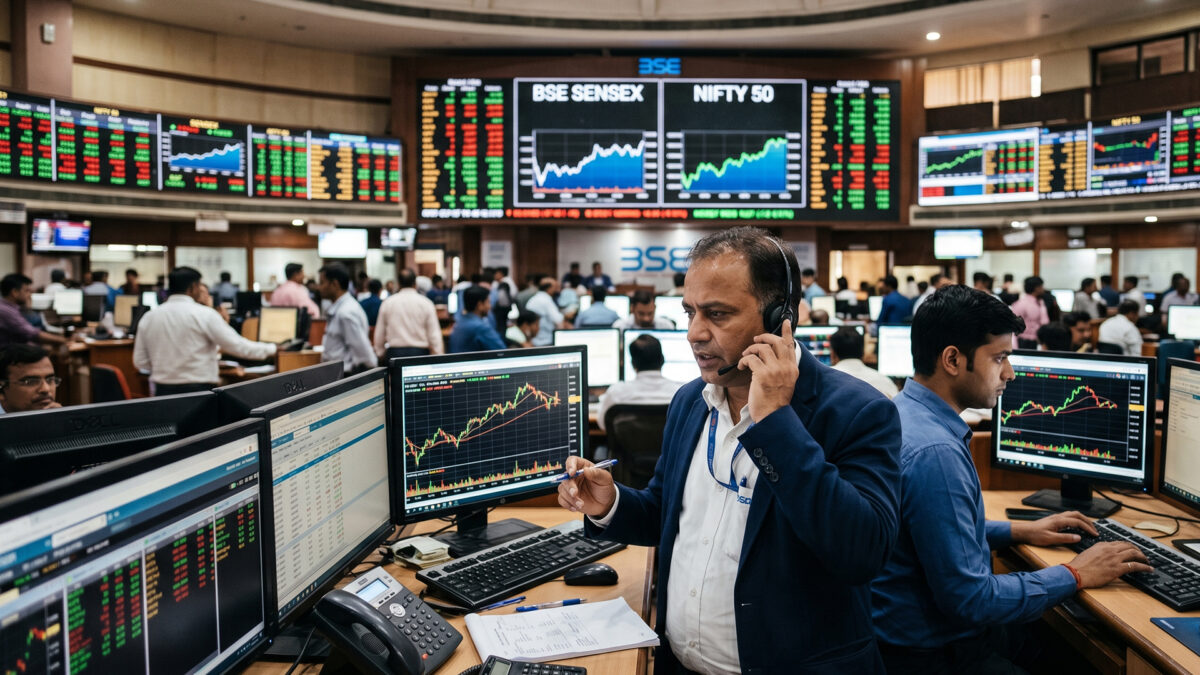
Sensex drops 2,500 points, Nifty falls to 23,000

Markets faced a sharp sell‑off, with both the BSE Sensex and Nifty50 closing deep in the red. The Sensex plunged 2,497 points to 74,207, while the Nifty50 fell 776 points to 23,002, marking one of the steepest single‑day declines in recent years. Market breadth was weak, with significantly more declining stocks than advancing ones.

The key trigger behind the downturn was a spike in crude oil prices following renewed geopolitical tensions in the Middle East. Higher energy costs raised inflation concerns, weighing on investor sentiment. Foreign portfolio investors also reduced exposure amid risk‑off global cues, adding to the selling pressure.

Financial and banking stocks bore the brunt of the decline. Shriram Finance, Bajaj Finance, and Eternal Ltd emerged as the top losers on the Nifty50, while HDFC Bank and Mahindra & Mahindra also registered sharp losses. The sell‑off reflected heightened caution in rate‑sensitive and cyclical sectors.

In contrast, energy and oil stocks outperformed. ONGC and Oil India were notable gainers, benefiting from elevated crude prices. These selective winners highlighted the defensive appeal of commodity-linked names during periods of volatility.

The midcap and smallcap segments also suffered steep declines, and the Sensex volatility index surged as investors adjusted to the sharp market movements. Analysts said the correction was primarily driven by external factors, including global crude prices and US monetary policy concerns.

Also Read: Brent oil nears $120 due to Middle East crisis