Categories
Leaders

OpenAI hires former JioStar CEO for Asia-Pacific

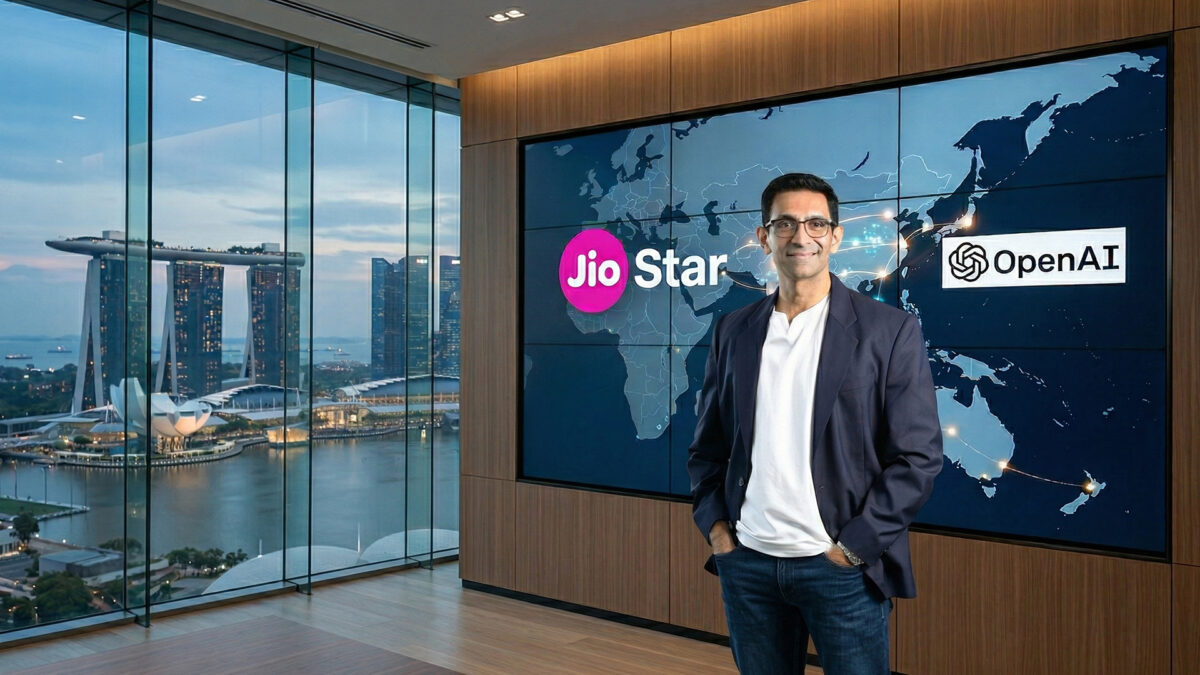
OpenAI has appointed Kiran Mani, former CEO of JioStar, to head its Asia-Pacific (APAC) operations, underlining the company’s growing focus on the region, especially India, as demand for artificial intelligence continues to rise.

Mani will join OpenAI as Managing Director for APAC in June and will be based in Singapore. In this role, he will oversee the company’s business growth, partnerships, and overall strategy across key Asian markets. His appointment reflects OpenAI’s intent to strengthen its presence closer to one of the fastest-growing digital user bases in the world.

With Asia emerging as a major battleground for AI companies, OpenAI is looking to expand beyond its stronghold in the United States. Countries like India, with a large and tech-savvy population, are becoming increasingly important for the adoption of AI tools across businesses and consumers.

Mani brings more than 20 years of experience in the technology and digital ecosystem. At JioStar, a joint venture between Reliance Industries and Disney, he played a key role in scaling the company’s streaming platform and expanding its reach to hundreds of millions of users. His work focused on building digital products and driving user engagement at scale.

Before that, Mani held senior roles at Google, where he worked on expanding Android and Google Play services across Asia-Pacific. He has also been associated with Microsoft and IBM earlier in his career, giving him a strong background in both enterprise and consumer technology.

OpenAI has been steadily building its footprint in Asia, setting up offices and teams in markets such as Japan, South Korea, Australia, and India. The company has also been exploring partnerships and investments in the region to support AI infrastructure and adoption.

Also Read: Infosys to buy Optimum Healthcare IT for $465 mn

Categories
Corporate

OpenAI plans to double workforce to 8,000

OpenAI is planning a major hiring expansion, aiming to nearly double its workforce to around 8,000 employees by 2026 as competition in the artificial intelligence sector intensifies.

The company currently has about 4,500 employees and is rapidly scaling up recruitment across teams, including engineering, research, product development and sales. The move is part of a broader effort to strengthen its capabilities and meet growing global demand for AI tools.

A key focus of the hiring drive is the addition of roles that help businesses adopt AI technologies more effectively. These include specialists who can work closely with enterprise clients, helping them integrate OpenAI’s products into real-world applications. This signals a stronger push toward expanding its enterprise business.

The expansion comes at a time when the AI industry is witnessing intense competition, with major technology firms investing heavily in new models and platforms. OpenAI, known for developing ChatGPT, is looking to maintain its leadership position by accelerating innovation and scaling its operations.

Reports indicate that the company is also increasing its physical infrastructure, including office space, to support the growing workforce. Hiring has picked up pace in recent months as OpenAI looks to build capacity quickly.

The strategy highlights a shift toward long-term growth, with the company focusing not just on research but also on commercial adoption. As more businesses adopt AI tools, demand for support, customization and integration services is rising.

At the same time, OpenAI continues to face challenges such as high operating costs and the need to convert its popularity into sustainable revenue. Expanding its workforce is seen as a way to address these challenges while strengthening its position in the market.

Also Read: Samsung Galaxy S26 now works with AirDrop

Categories
Technology

OpenAI merges ChatGPT, Codex, Atlas

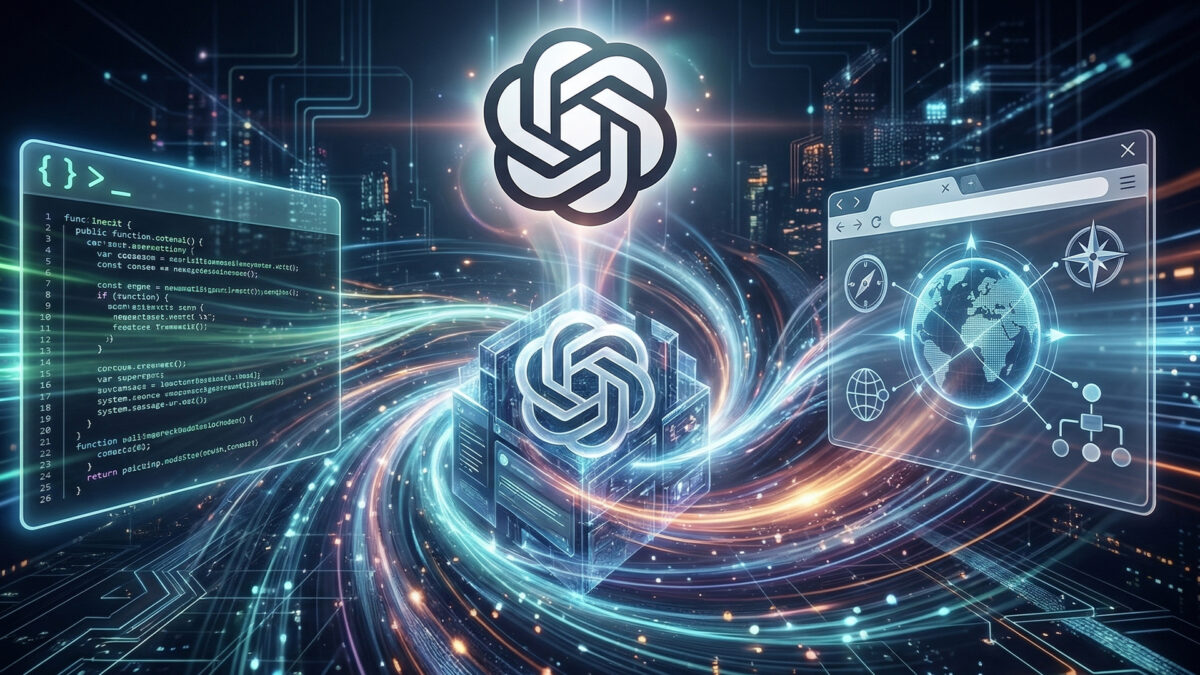
OpenAI is planning a major consolidation of its AI products into a single desktop “superapp” that will combine ChatGPT, the Codex coding assistant, and the Atlas AI‑powered browser into one integrated application. The goal is to simplify workflows, improve performance, and offer a more seamless experience for desktop users.

The company has been developing multiple standalone tools in parallel, but feedback from both users and internal teams highlighted that managing separate apps created fragmentation and slowed feature improvements. OpenAI leaders now believe a unified desktop platform will allow the AI to perform a wide range of tasks, from general conversation and productivity to coding, web research, and data analysis, without users having to switch between different apps.

The superapp will leverage agentic AI capabilities, meaning it can take autonomous actions on behalf of users, such as generating code, analysing data, and navigating complex workflows. According to insiders, the project is being led by Fidji Simo, OpenAI’s Chief of Applications, who explained that consolidating products is necessary to maintain quality and focus. Greg Brockman, OpenAI’s President, will oversee the product development and organisational changes required for the new platform.

Currently, the mobile ChatGPT app will remain unchanged. The superapp effort is focused solely on desktop users, where integrated workflows and multi-tasking capabilities are most beneficial. OpenAI has not announced a release date or pricing details for the app, and the name of the platform is also yet to be confirmed.

The initiative reflects a shift in OpenAI’s approach, moving from a portfolio of specialised tools toward a single, comprehensive platform aimed at improving user engagement, enhancing AI performance, and streamlining the overall experience for professional and personal desktop users alike.

The move is part of OpenAI’s strategy to stay competitive in the rapidly evolving AI market, where rivals like Anthropic and others are expanding enterprise-focused AI tools. Consolidating multiple AI products into one desktop platform could make it easier for developers, businesses, and everyday users to access advanced AI features without juggling different applications.

Also Read: SBI Mutual Fund to raise ₹13,000 cr via IPO

Categories
Leaders

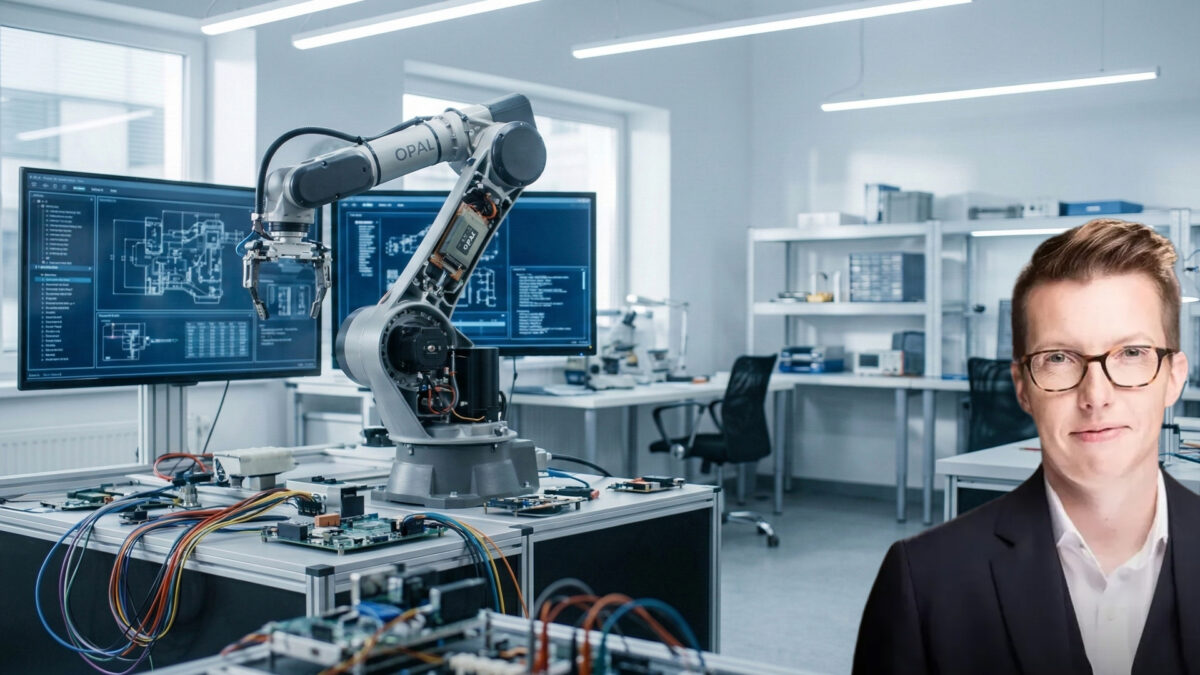
OpenAI robotics head quits over Pentagon AI deal

A senior robotics executive at OpenAI has stepped down after raising concerns about the company’s agreement to provide artificial intelligence technology to the United States Department of Defense.

Caitlin Kalinowski, who led OpenAI’s robotics and consumer hardware division, announced that she was leaving the company following the deal that allows OpenAI’s AI tools to be used within the Pentagon’s secure systems. Her resignation has brought renewed attention to the ethical debate surrounding the use of artificial intelligence in military operations.

In a message explaining her decision, Kalinowski said she believes artificial intelligence can be useful in many areas, including national security. However, she expressed concern about how such powerful technology might be used in warfare or surveillance if strict safeguards are not in place.

The partnership between OpenAI and the Pentagon is intended to help the US military use advanced AI systems for tasks such as analysing large amounts of data, improving decision-making and supporting defence operations. Supporters of the agreement say such technology can help the military respond more effectively to security challenges.

However, the deal has also sparked debate within the technology community. Some experts and industry professionals worry that partnerships between major AI companies and defence organisations could lead to the development of systems that may be used for surveillance or autonomous weapons in the future.

OpenAI has said that its agreement with the Pentagon includes clear restrictions. The company stated that its technology will not be used for domestic surveillance or to create fully autonomous weapons. It also said it remains committed to developing AI responsibly and ensuring that its systems are used safely.

Kalinowski joined OpenAI in 2024 after previously working at Meta Platforms, where she was involved in hardware development for augmented reality projects.

Also Read: Lok Sabha to take up motion against Om Birla

Categories
Corporate

OpenAI wins Pentagon deal as Donald Trump clashes with Anthropic

OpenAI has taken a big step into government work by signing a deal with the US Department of Defense, bringing its artificial intelligence tools closer to national defence applications. The move comes just days after President Donald Trump publicly criticised Anthropic, a rival AI company founded by former OpenAI employees, highlighting the growing tensions in the AI industry.

The agreement with the Pentagon will allow OpenAI to provide advanced AI technology and expertise for various defence projects. While the exact financial terms are not public, sources say the deal is broad in scope and emphasizes safe, responsible use of AI in government operations. It’s one of OpenAI’s largest collaborations with the US government to date.

CEO Sam Altman has been meeting with defence officials over the past months, pushing for a model where AI development and government oversight go hand in hand. “We need collaboration to make sure AI is used safely and ethically,” Altman has said, reflecting his vision of responsible innovation. This partnership aims to put those principles into practice by embedding OpenAI’s technology in programmes with strict ethical and safety standards.

The announcement comes amid a public clash between Trump and Anthropic. Trump criticised Anthropic’s leadership and suggested it was slowing down AI progress, stirring debate about competition, safety, and the government’s role in shaping the industry. OpenAI’s Pentagon deal, by contrast, signals a move toward cooperation with authorities rather than confrontation.

Also Read: Block lays off 4,000 employees due to AI shift


Categories
Corporate

OpenAI–Tata partner for 100mw AI data centre in India

OpenAI has entered into a major infrastructure partnership with the Tata Group to build artificial intelligence-ready data-centre capacity in India, starting with 100 megawatts (MW) and with a long-term goal of expanding it to 1 gigawatt (GW). The move is aimed at strengthening the company’s presence in one of its fastest-growing user markets and supporting the rising demand for AI services in the country.

Under the agreement, Tata Consultancy Services (TCS) will provide the data-centre infrastructure, making OpenAI the first customer for its new AI-focused hosting platform. The facilities will be designed to handle high-performance computing required for training and running advanced AI models. Having local compute capacity is expected to improve speed, reduce latency and help meet India’s data-storage and regulatory requirements.

The project is part of OpenAI’s broader global plan to develop large-scale AI infrastructure through its “Stargate” programme. By hosting computing power within India, the company aims to enable wider adoption of AI across sectors such as finance, healthcare, manufacturing and government services, where domestic data processing is often essential.

The partnership also extends beyond infrastructure. ChatGPT Enterprise and other OpenAI tools will be deployed across several Tata Group companies to improve productivity, software development and automation. TCS is expected to integrate these AI solutions into its delivery platforms, helping clients adopt AI-driven workflows more quickly.

India has emerged as one of the largest markets for ChatGPT in terms of users, making local infrastructure a strategic priority for OpenAI. For the Tata Group, the deal provides a high-profile customer for its expanding digital and data-centre business and supports its ambition to become a key player in AI infrastructure.

Also Read: Trump’s first Japanese investments under $550 bn trade pact

Categories
Leaders

OpenClaw creator Peter Steinberger joins OpenAI

In a move that reflects the fast-evolving priorities of the global artificial intelligence industry, OpenClaw creator Peter Steinberger has joined OpenAI to help build the next generation of personal AI agents — systems designed to independently manage digital tasks for users and enterprises.

Announcing the development, OpenAI CEO Sam Altman described the hiring as part of the organisation’s long-term vision to move AI from conversational support to real-world execution. These emerging “agentic” systems are expected to handle workflows such as scheduling, customer interactions, software operations and service coordination, areas that business leaders see as the next major productivity leap.

Steinberger’s open-source project OpenClaw has, in a short time, become one of the most talked-about innovations in the developer ecosystem, drawing massive global engagement and crossing the 100,000-star mark on GitHub. Its rapid adoption signals a clear market appetite for AI that does more than generate content, AI that can act.

As part of the transition, OpenClaw will move into an independent foundation model with continued support from OpenAI. This structure is seen as a strategic balance between community-driven innovation and enterprise-scale deployment , a model increasingly favoured in deep-tech ecosystems.

For Steinberger, the decision was mission-led. While the platform had the potential to evolve into a high-value standalone company, he chose to align with a larger AI vision to accelerate real-world impact. The move also brings his product-building experience , from his earlier success with PSPDFKit, into one of the world’s most influential AI organisations.

For business and technology leaders, the significance lies in what comes next. Multi-agent AI frameworks, where specialised systems collaborate to complete complex tasks, are now moving from research to application. This has implications for enterprise automation, digital workforce transformation and new operating models.

Also Read: Bengaluru gets Nothing’s first India flagship outlet

Categories
Technology

Snowflake, OpenAI seal $200 million AI deal

Snowflake has entered into a $200 million multi-year partnership with OpenAI to bring advanced generative AI capabilities directly to its enterprise data platform, marking a major push to capture the fast-growing corporate data intelligence market.

Under the agreement, OpenAI’s latest models, including GPT-5.2, will be embedded into Snowflake’s AI Data Cloud. This will allow businesses to analyse, query and act on their own data using natural language, without moving sensitive information outside Snowflake’s secure environment.

The integration will enable companies to build AI-powered applications and automated “AI agents” that can reason over enterprise data, generate insights, and support tasks such as reporting, forecasting and operational decision-making. Snowflake says the move is aimed at making advanced AI accessible to business users, not just data scientists.

A key aspect of the partnership is that OpenAI models will be available natively within Snowflake’s ecosystem, including its Cortex AI and Snowflake Intelligence products. This reduces reliance on third-party platforms and allows customers to deploy AI tools across major cloud providers such as Amazon Web Services, Microsoft Azure and Google Cloud.

Executives from both companies stressed that data security, governance and compliance remain central to the offering. Enterprise data will stay within Snowflake’s controlled environment, addressing concerns around privacy and regulatory requirements as companies scale AI adoption.

Several early users, including design platform Canva and fitness technology company WHOOP, have already begun using the integrated tools to speed up data analysis and automate internal workflows.

The announcement was welcomed by investors, with Snowflake shares rising after the deal was made public. Analysts view the partnership as a strategic move that strengthens Snowflake’s position against rivals in the enterprise data and AI space, as companies increasingly seek ways to combine trusted data platforms with powerful generative AI.

Also Read: SC tells WhatsApp to follow law or exit India

Categories
Technology

ChatGPT cites Elon Musk’s Grokipedia in responses

OpenAI’s latest AI language model, GPT‑5.2, has begun sourcing information from Grokipedia, the AI-generated encyclopedia developed by Elon Musk’s xAI, according to industry reports. Grokipedia, unlike traditional Wikipedia, relies entirely on AI for content creation and updates. While the platform aims to offer a fast, alternative knowledge base, experts caution that it may introduce factual inaccuracies and bias into AI outputs.

The move highlights how AI models are increasingly integrating proprietary or niche sources into their knowledge base. Tests have shown GPT‑5.2 referencing Grokipedia when responding to less widely known topics, including technical subjects and certain geopolitical histories. This reliance on a single, AI-authored source has drawn attention from analysts concerned about reliability, particularly in corporate and professional settings where data accuracy is critical.

Interestingly, GPT‑5.2 appears to avoid citing Grokipedia for high-profile or widely debated subjects, suggesting the model prioritizes perceived source credibility on mainstream topics. This selective integration indicates a strategic approach to information sourcing but underscores risks for business users relying on AI-generated insights for decision-making.

Industry observers note that while integrating multiple sources can enhance AI capabilities, including content from unverified AI platforms may impact trust and brand perception. OpenAI maintains that GPT‑5.2 draws from a broad range of publicly available sources and includes safety filters to mitigate misinformation. However, analysts say this development could influence competitive dynamics in AI knowledge services, particularly as other companies explore proprietary encyclopedias or curated datasets.

For enterprises and professionals leveraging AI, this development serves as a reminder to assess both the breadth and credibility of AI-sourced information. As AI increasingly shapes business research, communication, and decision-making, source transparency and verification will be crucial for maintaining reliability and trust.

Also Read: Canada rejects China deal after 100% tariff threat

Categories
Technology

OpenAI launches ChatGPT Health linking medical data

OpenAI has introduced ChatGPT Health, a new feature designed to help people better understand and manage their health. This feature is part of the ChatGPT app and provides a secure place for users to upload their medical records and connect data from popular health and fitness apps such as Apple Health, MyFitnessPal, Fitbit, and Peloton.

By linking this information, ChatGPT Health can give personalized explanations of lab results, highlight important health trends, and offer guidance for doctor visits, diet, exercise, and insurance options. The feature is intended to make it easier for users to interpret their health data without replacing professional medical advice. OpenAI emphasizes that ChatGPT Health is not a diagnostic tool and should not be relied on for medical decisions.

To ensure privacy and safety, ChatGPT Health keeps medical information separate from regular AI chats and applies extra security measures. The data users provide is not used to train OpenAI’s main AI models, giving users more control over sensitive information.

The feature is being rolled out gradually, starting with a limited number of users on iOS and web platforms. Over time, OpenAI plans to expand access to more users. The company hopes this tool will make it easier for people to track their health, understand test results, and manage wellness goals in one place.

Experts note that while AI can help organize and explain health information, it cannot replace professional medical care. Users should still consult doctors and healthcare providers for diagnoses and treatment decisions.

ChatGPT Health represents a growing trend of integrating AI with personal health management, giving people more ways to stay informed and proactive about their well-being. By combining data from multiple sources, it aims to provide a comprehensive view of health, making wellness management simpler and more personalized.

This step marks OpenAI’s first major foray into a health-focused AI application, signaling the potential for AI tools to play a larger role in day-to-day health monitoring in the future.

Also Read: Reliance may return to Venezuelan oil market