Categories
Corporate

SoftBank completes $40 bn investment in OpenAI

SoftBank has completed its $40 billion investment in OpenAI, making it one of the largest private tech deals in history. The Japanese conglomerate, led by CEO Masayoshi Son, finalized the last part of the investment in December, completing a multi-stage funding plan announced earlier in 2025.

The investment was made in phases. SoftBank first contributed about $7.5 billion in April through its Vision Fund 2. Later, it raised around $10 billion from co-investors. The final payment of roughly $22–22.5 billion now completes the deal, giving SoftBank an ownership of around 11 percent in OpenAI.

This $40 billion deal initially valued OpenAI at about $300 billion, although secondary transactions have increased its broader market value closer to $500 billion. SoftBank funded part of this investment by selling $5.8 billion in Nvidia shares to free up cash.

OpenAI, known for developing ChatGPT and other leading AI tools, has become a major focus for investors amid the global AI boom. SoftBank’s backing is expected to support the company’s expansion in AI research and infrastructure.

Some of the investment will fund a long-term project called “Stargate,” a partnership with Oracle and other stakeholders to build AI infrastructure and data centers. This will help OpenAI handle more advanced AI applications in the future.

SoftBank’s completed investment shows its strong commitment to AI and positions the company as a key player in the growing artificial intelligence sector. It also reflects the increasing interest from global investors in AI technologies and the infrastructure needed to support them.

With this deal, SoftBank is betting on AI as a strategic area for growth, signaling confidence in the future of the technology and its potential impact on businesses and society.

This investment highlights the rapid rise of AI and the large-scale funding that companies like OpenAI are attracting to drive innovation worldwide.

Also Read: India slaps 3 year safeguard duty on steel imports

Categories
Technology

OpenAI offers Rs 5 crore AI safety job

OpenAI CEO Sam Altman has raised concerns about the safety of advanced AI models, saying that AI systems are becoming more capable and could cause problems if not carefully managed. He highlighted that some AI models are now starting to find weaknesses in systems, which could potentially be misused.

To tackle these challenges, OpenAI is hiring a “Head of Preparedness”, a top-level role aimed at making AI safer. The company is offering around Rs 5 crore (USD 555,000) plus equity for this position. Altman himself described it as a “stressful job,” given the high responsibility involved.

The person chosen for this role will look for risks in AI systems, plan ways to reduce those risks, and make sure AI behaves safely as it becomes more powerful. They will also track potential threats, like AI being misused in cyber attacks or other dangerous scenarios. This role will be part of OpenAI’s broader Safety Systems team.

Altman stressed that while it is relatively easy to measure what AI can do, it is much harder to predict how AI could be misused. The role will require careful planning, monitoring, and quick decision-making to prevent possible harm.

This move shows that OpenAI is taking AI safety seriously, not just focusing on creating new technologies. As AI grows more advanced, experts like this will be crucial to ensure the technology is used responsibly.

Altman’s public statements also reflect a wider concern in the tech industry: as AI becomes more capable, companies need to balance innovation with safety to avoid unintended consequences.

OpenAI’s job opening and Altman’s warnings highlight that keeping AI safe is now as important as developing it, and the company is looking for top talent to take on this challenge.

Also Read: Reliance rejects $30bn government claim over KG-D6 gas

Categories
Technology

OpenAI’s ‘Your Year with ChatGPT’ makes 2025 personal

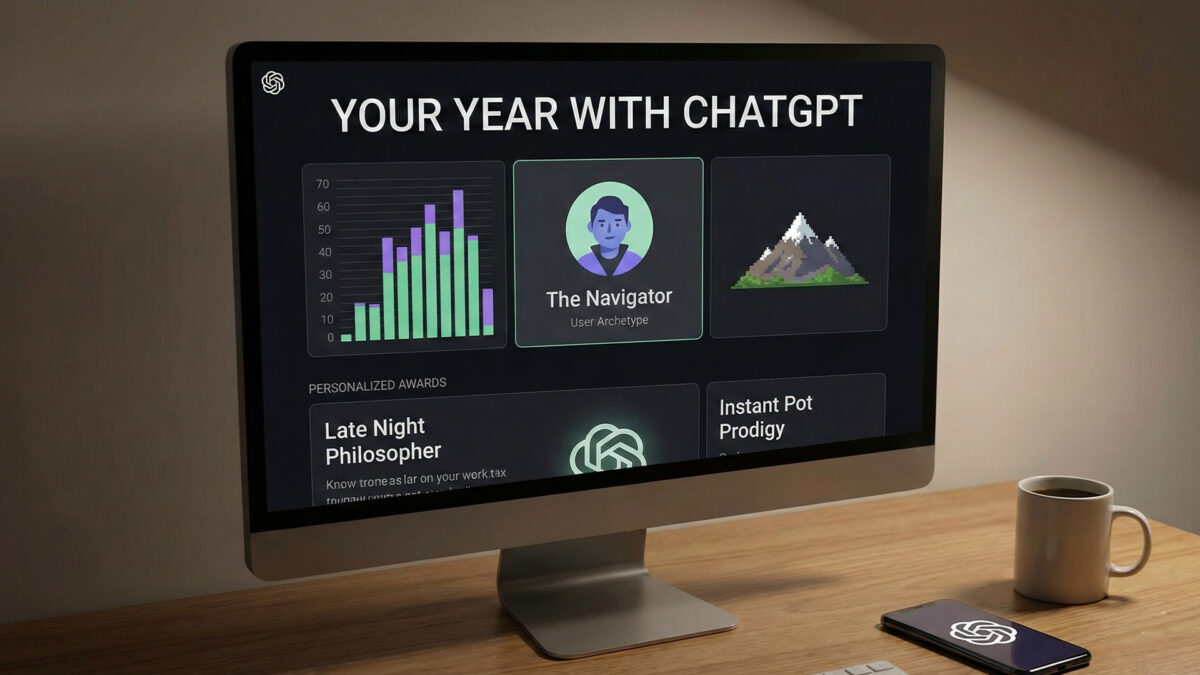
OpenAI has rolled out a new feature called “Your Year with ChatGPT”, offering users a personalised, year-end recap of their interactions with the AI throughout 2025. Similar to Spotify Wrapped, this recap blends stats, insights, and creative elements to show how users engaged with ChatGPT over the year.

The feature highlights key usage metrics such as total messages exchanged, number of chats, peak interaction days, and the most popular topics discussed. It also awards playful, personalised badges based on user behaviour, with titles like “Creative Debugger” or “Curious Explorer,” giving users a fun reflection of how they used ChatGPT.

Beyond numbers, OpenAI makes the recap visually engaging. Each summary begins with a short, AI-generated poem reflecting the user’s year and concludes with pixel art inspired by their most frequent conversation themes. This mix of stats, storytelling, and visuals creates an engaging and humanised experience rather than just a dry analytics report.

To access the recap, users need to have “reference saved memories” and “chat history” enabled. Once set up, they can trigger the feature directly in the ChatGPT app or by asking prompts like “Show me my year with ChatGPT.” The feature is available on Android, iOS, and web platforms for Go (India), Plus, and Pro users, while Team, Enterprise, and Education accounts are not supported.

OpenAI is gradually rolling out this feature across multiple regions, including India, the U.S., Canada, the U.K., Australia, and New Zealand. By providing a personalised summary of the year, the company encourages users to reflect on how they interacted with AI, highlighting both creativity and curiosity in their engagement.

Your Year with ChatGPT shows how AI can not only provide information but also create meaningful, fun experiences that celebrate the ways people use technology. With stats, creative visuals, and quirky awards, it’s a year-end gift from ChatGPT to its users, making 2025’s conversations memorable and personal.

Also Read: Apollo Micro gains access to DRDO’s advanced weapon tech

Categories
Technology

AI’s next leap will be memory, not reasoning, says Sam Altman

OpenAI CEO Sam Altman says the next big advance in artificial intelligence will focus on memory, rather than improving reasoning skills. Current AI systems, including the latest models, are good at solving problems but cannot remember past interactions, meaning users often have to repeat information each time they use them.

Altman envisions AI that can retain long-term memory of user interactions, preferences, emails, documents, and conversations. This would allow AI to learn from past experiences, anticipate user needs, and provide more helpful suggestions without needing repeated instructions.

This shift to memory-based AI aims to create a personalized assistant that truly understands each user over time. Altman believes such AI could become available as early as 2026, moving beyond simple question-answering to proactive support in daily tasks.

At the same time, Altman acknowledges privacy and security concerns. He suggests that advanced encryption and safeguards will be necessary to protect sensitive user data.

With this focus, AI could evolve from a reactive tool into a trusted digital companion, offering smarter, more intuitive help tailored to each individual user’s life and work.

Also Read: B P Kanungo appointed IIFL finance chairman

Categories
Corporate

Amazon in $10 billion investment talks with OpenAI

Amazon is in early discussions to invest more than $10 billion in OpenAI, the company behind the popular AI chatbot ChatGPT. If the deal goes through, OpenAI’s valuation could exceed $500 billion, reflecting the growing competition among tech giants to lead the fast-expanding artificial intelligence sector.

The potential investment would allow OpenAI to use Amazon’s cloud services and AI chips, strengthening its infrastructure for AI development. OpenAI already spends billions on Amazon Web Services (AWS) but also relies on other suppliers such as Nvidia for AI chips.

Despite the investment, Amazon would not gain the right to sell OpenAI’s most advanced AI models through its cloud platform. Microsoft, a major investor in OpenAI, holds exclusive rights to distribute these models via its Azure cloud services, giving it a significant strategic advantage.

Industry analysts say Amazon’s move is part of a broader trend where cloud providers invest directly in AI companies to gain access to cutting-edge technology. Other AI firms, like Anthropic, have also attracted investment from a mix of tech giants, including Google, Microsoft, and Amazon.

OpenAI has recently reshaped its partnership with Microsoft, allowing it to work with multiple infrastructure providers. This flexibility makes it easier for the company to raise funds and expand its AI offerings. Reports suggest OpenAI is preparing for a future initial public offering (IPO), which could value the company at up to $1 trillion.

No formal announcement has been made, and the terms of the investment are still being negotiated. If finalized, this deal would be among the largest in the AI industry, highlighting how cloud and technology companies are positioning themselves to dominate AI development, cloud infrastructure, and chip supply.

It is a known fact that artificial intelligence is reshaping the tech industry’s strategic partnerships and investment flows. Companies are not only competing to develop the most advanced AI but also to control the infrastructure and services that deliver it to businesses and consumers worldwide.

Also Read: World’s smallest robots sense, think and move

Categories
Technology

OpenAI introduces GPT‑5.2 to stay ahead of AI rivals

OpenAI has introduced its latest artificial intelligence model, GPT‑5.2, after CEO Sam Altman declared a “code red” to speed up development. The move comes as Google’s Gemini 3 poses strong competition in the AI space.

GPT‑5.2 comes in three versions, Instant, Thinking, and Pro, designed for tasks ranging from quick answers to complex reasoning and coding. OpenAI says the new model is faster, smarter, and more accurate than earlier versions. It can help with tasks like building spreadsheets, creating presentations, writing code, and managing multi-step projects.

The new model also performs better in tests that measure reasoning and problem-solving skills. It will be available first to paid ChatGPT users and developers via API, while older versions will remain accessible for some time.

OpenAI’s fast rollout follows Gemini 3 outperforming previous OpenAI models on some benchmarks, but the company noted that much of GPT‑5.2 had been in development for months.

In a related development, Disney is investing $1 billion in OpenAI and will allow its characters from Star Wars, Pixar, and Marvel to be used in new AI tools.

Also Read: 3 US lawmakers move to end 50% India tariffs

Categories
1 Minute-Read

Disney and OpenAI deal brings iconic characters to Sora

Disney and OpenAI have signed a major three-year agreement that will allow fans to create short AI-generated videos featuring more than 200 characters from Disney, Marvel, Pixar and Star Wars using OpenAI’s video model, Sora.

Disney will invest $1 billion in OpenAI and also use its technology to develop new products and improve Disney+ services. The partnership includes strict safeguards: no real actor voices or likenesses will be used.

Some user-created clips may be showcased on Disney+. The feature will launch in early 2026, marking one of the biggest collaborations between Hollywood and generative AI.

Categories
Technology

OpenAI goes ‘Code Red’ as Gemini gains edge

OpenAI CEO Sam Altman has declared a “code red,” redirecting the company’s focus entirely to strengthening ChatGPT. The decision comes as Google’s Gemini 3 gains rapid traction, outperforming ChatGPT in speed, reliability, and user engagement.

To respond, OpenAI is putting several projects on hold, including ad-driven features, AI shopping assistants, and its personal assistant “Pulse.” All resources are now being focused on improving ChatGPT’s performance, personalization, and overall user experience. The decision highlights the high-stakes competition in the AI space, where even leading companies must act fast to maintain their edge.

This is a role reversal from late 2022, when ChatGPT’s launch had triggered a “code red” at Google. At that time, Google scrambled to adjust its AI strategy in response to OpenAI’s breakthrough. Now, OpenAI faces similar pressure as a competitor pulls ahead.

Industry experts say such “code red” moves reflect the intensity of the generative AI race, where rapid innovation can quickly shift user preference and market position. Altman’s strategy shows OpenAI’s commitment to staying at the forefront of AI, ensuring ChatGPT continues to lead in performance and adoption.

With Gemini 3 raising the bar, OpenAI’s urgent pivot underlines the company’s focus on innovation, speed, and user satisfaction. By prioritizing ChatGPT over other initiatives, OpenAI aims to secure its place as a global leader in AI development while responding decisively to emerging competition.

Also Read: YouTube launches ‘2025 Recap’ featuring top trends

Categories
Technology

OpenAI API user data exposed in Mixpanel hack

OpenAI has confirmed that a security breach at Mixpanel, one of its third-party analytics partners, exposed personal details of some users who rely on the company’s paid API services. The incident took place on 9 November 2025, when hackers gained access to Mixpanel’s systems. Mixpanel later informed OpenAI about the intrusion and shared the compromised dataset for investigation.

According to OpenAI, the leaked information is limited but still sensitive. It includes names linked to API accounts, email addresses, user or organisation IDs, approximate location data based on browser information, and technical details such as the browser, operating system and referring website. This data was collected to track user analytics on OpenAI’s API platform.

Importantly, no confidential user content, passwords, API keys, payment information, billing details, or chat logs were exposed. OpenAI emphasised that the breach does not affect regular consumers using ChatGPT, as this dataset only involved analytics connected to the platform.openai.com API service. All OpenAI models and systems continue to operate normally.

Following the incident, OpenAI immediately removed Mixpanel from all its production environments and ended its use of the company’s analytics services. The company is now contacting all affected users directly through email. OpenAI has also launched a broader review of its security and vendor-management processes to reduce the risk of similar breaches in the future.

Security experts warn that the exposed information could still be used for phishing attempts. With names and email addresses now potentially outside OpenAI’s secure ecosystem, attackers may try to send convincing scam emails pretending to be from OpenAI or related platforms. Users are advised to be cautious about unexpected messages, avoid clicking suspicious links and ensure that multi-factor authentication (MFA) is enabled on all critical accounts.

The incident highlights the vulnerabilities that can arise from third-party service providers, even when a company’s own systems remain secure. As more businesses depend on cloud and AI services, the security of every partner in the chain becomes crucial. OpenAI has reassured customers that it is strengthening auditing practices and increasing oversight of external vendors to prevent similar issues.

Also Read: JP Morgan predicts Nifty50 could hit 30,000 by 2026

Categories
Technology

PhonePe brings ChatGPT into UPI payments

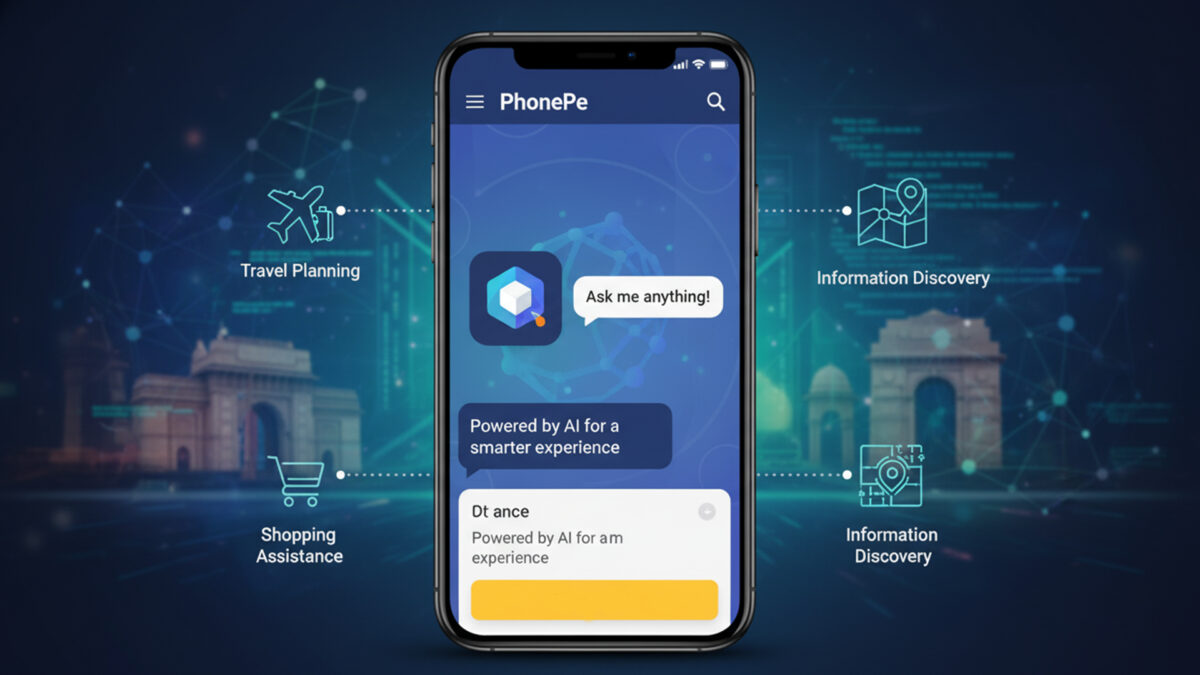
PhonePe has joined hands with OpenAI to bring ChatGPT directly into its app to offer AI-powered assistance into routine digital payments.

Users will be able to get help with tasks like travel planning, product searches, and comparing options without leaving the app. Rather than offering a full ChatGPT interface, PhonePe will weave specific AI tools that guide users during specific actions like for travel planning, shopping and general informative discovery.

With this, PhonePe became one of the first major UPI platforms in India to embed a conversational AI assistant within its consumer-facing services. The company plans to introduce these tools across both its consumer and merchant apps.

According to OpenAI, the collaboration aligns with its broader goal of expanding AI access throughout India. Oliver Jay, OpenAI’s Head of International, has highlighted that India is seeing rapid adoption of AI tools, and PhonePe’s extensive user base makes it a strategic partner for bringing these technologies to the mainstream.

The integration is especially focused on payment-related decisions. OpenAI will be available through the Indus Appstore. Users can ask for budget travel ideas, merchant details, or service comparisons before completing a UPI transaction, and the AI will offer relevant suggestions.

This partnership comes amid a string of OpenAI initiatives in India. The company recently opened its first local office in Mumbai and announced plans for a large-scale, 1GW data centre backed by an investment commitment of around Rs 20,000 crore. It has also worked with Razorpay and the National Payments Corporation of India (NPCI) on pilots that test AI-assisted UPI payments, enabling conversational interactions for completing transactions.

To encourage broader adoption, OpenAI is offering Indian users complimentary access to ChatGPT Go for 12 months. The company expects that early exposure to its AI tools will lead more users to explore advanced features and potentially transition to paid plans.

Also Read: Trump adds 50,000 federal workers