Categories
Corporate

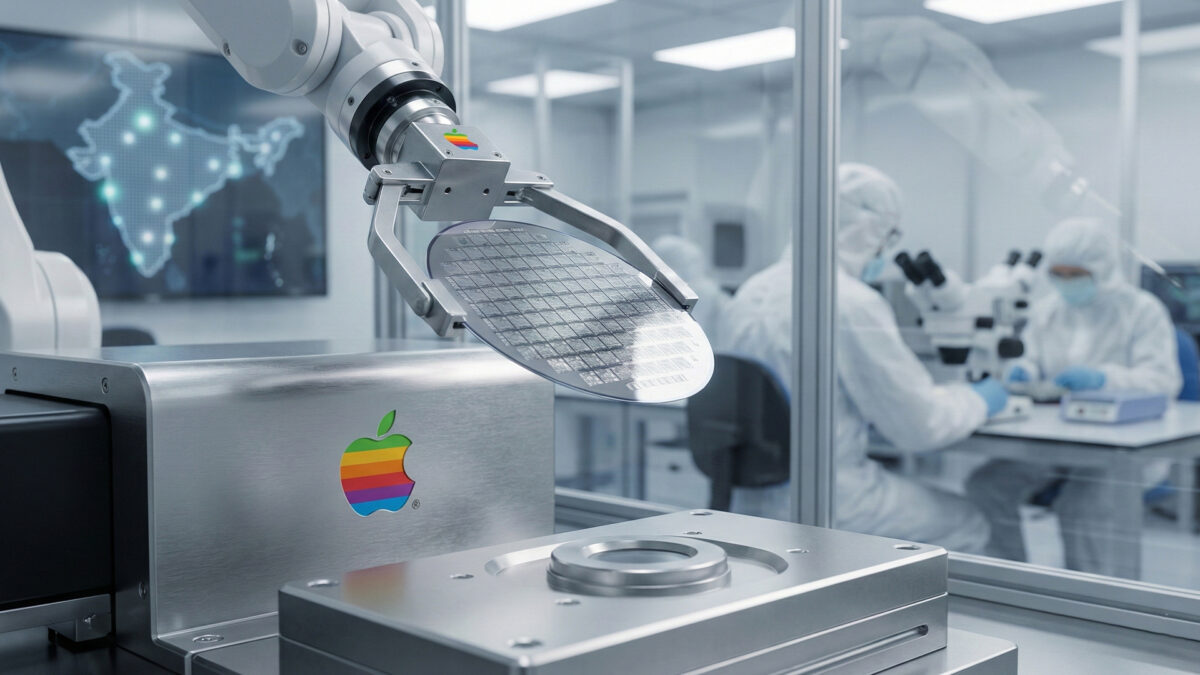
Apple explores chip assembly in India

Apple is taking a closer look at India’s semiconductor ecosystem as it explores the possibility of assembling and packaging select iPhone components locally, marking a potential shift in how deeply the company integrates India into its global supply chain.

According to reports, Apple has initiated early-stage discussions with Indian chipmakers, including CG Semi, a Murugappa Group company that is setting up an outsourced semiconductor assembly and test (OSAT) facility in Sanand, Gujarat. The focus of these talks is on backend chip processes such as assembly, testing and packaging — a critical but less complex stage compared to advanced chip fabrication.

If the plans move forward, this would be the first time Apple brings chip-level work for iPhones into India. Currently, India’s role in Apple’s manufacturing network is largely limited to final device assembly through partners like Foxconn, Tata Electronics and Pegatron. Adding semiconductor packaging would significantly raise India’s value contribution in the iPhone production chain.

Industry sources indicate that the discussions are still exploratory. Any partnership would require Indian suppliers to meet Apple’s strict benchmarks on quality, yield, reliability and scale. Neither Apple nor CG Semi has officially confirmed the talks.

From a technology and supply-chain perspective, the move fits squarely into Apple’s broader diversification strategy. The company has been steadily reducing dependence on China by expanding manufacturing in alternative locations, particularly India and Vietnam. Rising geopolitical risks, trade barriers and supply disruptions have accelerated this shift across the global tech industry.

India, meanwhile, is positioning itself as a semiconductor hub under government-backed incentive schemes aimed at attracting chip assembly, testing and fabrication investments. OSAT facilities are seen as a practical entry point, requiring lower capital and shorter timelines compared to full-scale chip fabs.

Apple’s interest could act as a catalyst for India’s semiconductor ambitions. Securing a global technology leader as a customer would not only validate local capabilities but also encourage further investments in chip design, materials and advanced packaging technologies.

While India is still years away from competing with established semiconductor hubs in Taiwan or South Korea, analysts say incremental steps like chip packaging for iPhones could steadily build expertise and confidence.

For Apple, deeper localisation offers greater supply-chain resilience. For India, it represents a meaningful step up the global technology value chain,  from assembling devices to handling core components that power them.

Also Read: US Tech Force set to boost AI and digital services

Categories
Technology

Apple launches film celebrating students with disabilities

Apple has unveiled a new short film, I’m Not Remarkable. It highlights how built-in accessibility features help students with disabilities take part fully in campus life. The film does not portray students as extraordinary or inspirational just because of their disabilities. Instead, it focuses on their everyday experiences. Students attend lectures, join group activities, socialize with friends, and enjoy college events. The film shows how technology can remove barriers and support independence.

The film is directed by Kim Gehrig, acclaimed for her Emmy-winning 2022 accessibility short, The Greatest. Gehrig transforms ordinary campus moments into a vibrant musical, featuring Deaf and disabled students performing a celebratory number, composed by Tim Minchin. This approach reframes accessibility not as a special accommodation, but as an integral part of inclusive design.

Apple highlights its range of accessibility tools, including VoiceOver, Magnifier, Braille Access, AssistiveTouch for iPad and Apple Watch, Live Captions, Sound & Name Recognition, and the Accessibility Reader. Each feature is designed to empower students with varying abilities, enabling them to learn, connect, and participate independently in daily campus life.

Through I’m Not Remarkable, Apple reinforces the importance of accessibility in technology and education. The company’s message is that inclusive design is not optional or auxiliary but it is essential for creating equal opportunities. By presenting students with disabilities as everyday college-goers rather than subjects of pity or inspiration, Apple demonstrates the real-world impact of accessible technology, emphasizing empowerment, independence, and confidence.

The film also reflects Apple’s ongoing commitment to diversity and inclusion, showcasing how accessibility features can enhance experiences not only for students with disabilities but for broader society as well. I’m Not Remarkable is available across Apple’s platforms, offering an inspiring perspective on how thoughtful design and technology can make education and social life fully accessible to all.

Also Read: NTT to spend ₹2,400 crore in Bengaluru data‑centre campus

Categories
Leaders

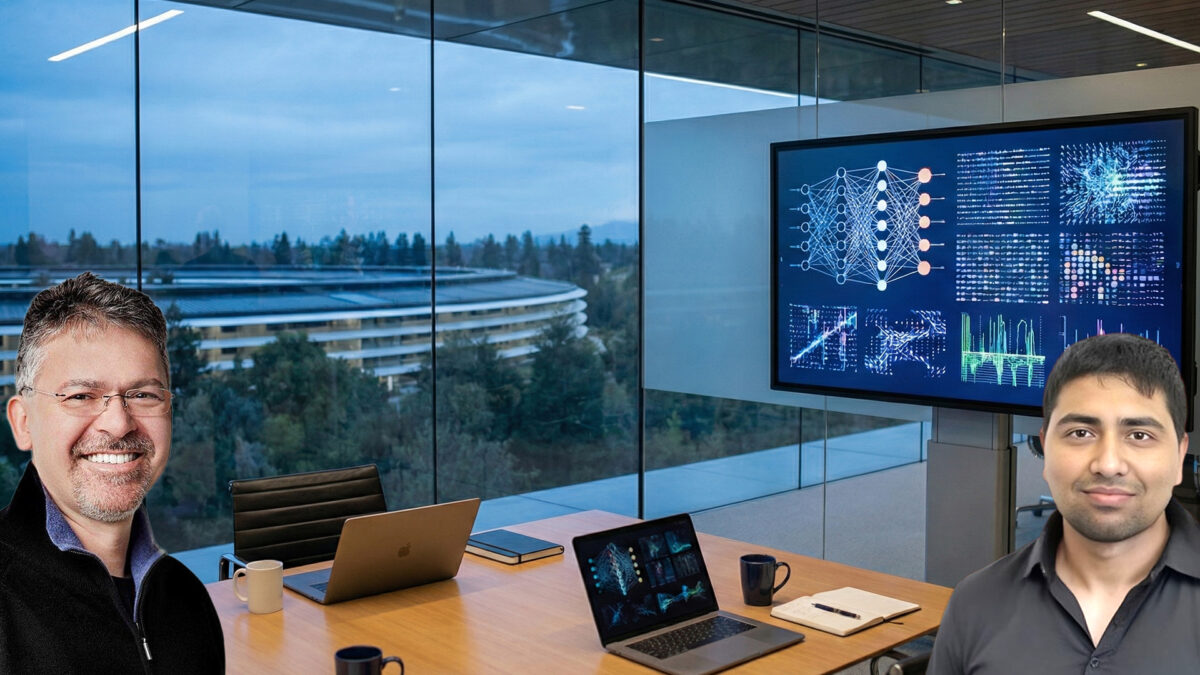
Apple names Amar Subramanya as new VP of AI

Apple has appointed Amar Subramanya as its new Vice President of Artificial Intelligence, marking a strategic step in the company’s efforts to strengthen its AI capabilities. John Giannandrea, Apple’s outgoing AI chief, will remain with the company as an advisor until his retirement in spring 2026.

Subramanya will report to Craig Federighi, Apple’s software-engineering head, and oversee key functions including Foundation Models, machine-learning research, and AI safety evaluation. Industry analysts say his appointment signals Apple’s intent to accelerate innovation in AI-powered products and services.

From Bengaluru to Silicon Valley

Amar Subramanya completed his Bachelor of Engineering in Electrical, Electronics, and Communications from Bangalore University before earning a PhD in Computer Science from the University of Washington. His research focused on machine learning, natural language processing, and large-scale AI systems.

Subramanya worked at IBM briefly before spending 16 years at Google, leading engineering for the company’s AI assistant, Gemini. Earlier this year, he joined Microsoft as Corporate Vice President of AI, developing foundation models for enterprise solutions such as Copilot. His shift to Apple underscores the company’s renewed focus on building cutting-edge AI technologies.

Apple’s AI ambitions

Apple has historically been cautious in rolling out AI features compared with peers like Google and Microsoft. Subramanya’s expertise in speech recognition, NLP, and multimodal AI is expected to accelerate Apple’s development of intelligent assistants and AI-driven applications.

CEO Tim Cook welcomed Subramanya, emphasizing that AI remains central to Apple’s future strategy. “Amar’s extraordinary AI expertise will help propel Apple forward,” Cook said.

With Subramanya at the helm, Apple aims to compete aggressively in the global AI race, enhancing Siri, machine learning across devices, and user experiences for millions worldwide.

Also Read: Bajaj Housing Finance shares drop 9% on promoter stake sale

Categories
Technology

Apple to open fifth India store at Noida on Dec. 11

Apple is all set to open its fifth official retail store in India at DLF Mall of India, Noida, on December 11, 2025. This will be the company’s second store in the Delhi‑NCR region, following its flagship outlet in Saket, New Delhi.

The new store features a peacock-inspired design, reflecting a modern and vibrant look similar to Apple’s recent stores in Bengaluru and Pune. Inside, customers will be able to explore the full range of Apple products, including the latest iPhone 17 series, the M5-powered iPad Pro, and the 14-inch MacBook Pro.

Apple will provide personalized support through its Apple Specialists and Geniuses, helping customers with product setup, troubleshooting, and advice. The store will also host “Today at Apple” sessions, offering workshops on photography, music, art, coding, and creative skills, allowing users to learn and create in an engaging environment.

The Noida store is part of Apple’s larger plan to expand its physical presence in India, where demand for its products has been steadily growing. This expansion comes alongside Apple’s ongoing efforts to increase local manufacturing and operations, strengthening its position in the Indian market.

With this launch, Apple now has stores in Mumbai, Bengaluru, Pune, Delhi, and Noida, giving Indian customers access to its full range of products, services, and educational sessions. The move demonstrates Apple’s commitment to providing a complete, hands-on retail experience in India, combining shopping, support, and creativity under one roof.

Also Read: Adani drops long legal fight against Australian activist

Categories
Corporate

Apple challenges $38 billion India antitrust penalty law

Apple Inc. has filed a petition in the Delhi High Court challenging India’s 2024 amendment to the Competition Act, which allows fines based on a company’s global turnover. The move could expose Apple to a potential penalty of up to $38 billion (around ₹3 lakh crore).

The legal dispute stems from a 2022 antitrust probe by the Competition Commission of India (CCI), which accused Apple of abusing its dominance on the iOS App Store by restricting third-party payment options. Apple denies any wrongdoing and says its Indian market share remains small compared to Android, despite significant user growth.

In a detailed 545-page petition, Apple described the law as “arbitrary, unconstitutional, grossly disproportionate and unjust,” arguing that any fine should be limited to revenue earned in India from the specific business under investigation. The company warned that retroactive application of the law could unfairly penalise past practices.

A hearing is scheduled for 3 December 2025, marking the first major test of India’s revised competition-law penalty system against a global technology company.

Also Read: Tesla plans deeper India push with full EV ecosystem

Categories
Technology

First foldable iPhone set for 2026 launch

Apple is reportedly preparing to launch its first foldable iPhone in September 2026, signaling its entry into the foldable smartphone market, which has so far been dominated by Samsung and other Android manufacturers.

The foldable iPhone is expected to feature a 7.8-inch inner display and a 5.5-inch cover screen, with design improvements aimed at delivering a nearly crease-free folding experience. Leaks indicate that the device’s thickness could be around 9–9.5 mm when closed, combining portability with a large, immersive screen.

The device is also expected to include an under-display selfie camera on the inner screen, while the rear camera setup may feature main and ultra-wide sensors, offering versatile photography options. Interestingly, the foldable iPhone may support Touch ID instead of Face ID, reflecting Apple’s continued experimentation with biometric options.

On the performance front, the foldable iPhone is likely to be powered by the next-generation A20 Pro chipset, similar to the iPhone 18 Pro models, promising high-speed performance and efficient power management. The battery is tipped to be around 5,400 mAh, making it the largest ever for an iPhone and likely offering extended usage compared to current models.

Price leaks suggest a premium tag of around $2,399 (approximately ₹2.15 lakh), making it the most expensive iPhone to date. In India, the price is expected to be higher after taxes and import duties. Apple plans to launch the foldable iPhone alongside iPhone 18 Pro models, with standard iPhone 18 devices expected to follow in early 2027.

With this new model, Apple aims to compete directly with Samsung’s Galaxy Z Fold series, offering a new form factor and advanced technology for iPhone users. The foldable iPhone represents Apple’s bold step into the foldable segment, combining a larger screen, premium features, and powerful performance, but at a high cost for early adopters.

Also Read: SEBI proposes changes to basic demat accounts

Categories
Corporate

Apple, Amazon, Meta oppose Jio-Vi 6 GHz auction

A new fault line has emerged in India’s digital landscape, with some of the world’s biggest technology companies urging caution just as Indian telecom operators push ahead. Apple, Amazon, Meta, Cisco and others have told TRAI that the 6 GHz band should not be handed over to mobile networks yet, arguing it is better used to strengthen India’s expanding Wi-Fi ecosystem.

Global tech majors submitted a joint response to TRAI’s spectrum consultation, challenging Reliance Jio and Vodafone Idea’s push to auction the 6 GHz band for future 5G and 6G use. According to these companies, the upper portion of the band is not technically ready for mobile services and is still under evaluation internationally.

They want regulators to keep the 6425–7125 MHz range unlicensed for now, allowing wider, faster and more affordable Wi-Fi, something they say benefits consumers, small businesses and India’s digital economy more immediately than reallocating it to telecom operators.

Global players have also urged the government to revisit the band only after 2027, when the next World Radiocommunication Conference is expected to lay down clearer global norms for upper-6 GHz usage.

India has already delicensed 500 MHz in the lower 6 GHz band, while about 400 MHz is likely to be auctioned soon. However, Jio wants the entire 1,200 MHz opened for IMT services to support future network growth.

Telecom operators, represented by COAI, argue that delicensing more spectrum will weaken mobile network capacity, hurt long-term planning and reduce government auction revenues.

Chipmaker Qualcomm has echoed Big Tech’s stance, saying India should wait for global clarity before moving the upper 6 GHz band into mobile services.

With both sides presenting sharply different priorities, telcos pushing for future mobile capacity and tech giants backing robust public Wi-Fi, TRAI now faces the challenge of balancing immediate connectivity needs with longer-term spectrum strategy.

Also Read: Lakshmi Mittal leaves UK as tax fears rise

Categories
Technology

Apple reveals finalists for 2025 App Store Awards

Apple has unveiled the finalists for its 2025 App Store Awards, celebrating the best apps and games from around the world. The awards recognise developers who have created standout experiences that combine innovation, design, and user impact.

A total of 45 apps and games have been shortlisted across 12 categories, covering iPhone, iPad, Mac, Apple Watch, Apple TV, Apple Vision Pro, and a special “Cultural Impact” category. These categories reflect Apple’s focus on apps that not only entertain but also inspire and empower users in meaningful ways.

Apple said the finalists were chosen for their technical excellence, creativity, and the positive impact they have on culture and daily life.

Some of the notable finalists include iPhone App of the Year contenders like BandLab, a music creation platform; LADDER, a fitness app; and Tiimo, a task organiser designed to improve productivity.

In the iPhone Game of the Year category, finalists include Capybara Go!, an adventure game; Pokémon TCG Pocket, a card collecting experience; and Thronefall, a strategy battle game.

The Cultural Impact category highlights apps that make a real difference, such as Be My Eyes, which helps visually impaired users; Venba, which celebrates culture through food; and Yuka, which promotes informed choices about products and nutrition.

Apple said these apps represent talent, creativity, and innovation, offering users new ways to create, learn, and explore. The winners of the 2025 App Store Awards will be announced in the coming weeks.

Also Read: L&T to make all-terrain BvS10 Sindhu vehicles