Categories
Beyond

Oil prices climb as OPEC+ keeps production steady

Oil prices jumped on Monday after OPEC+ announced it would maintain current production levels through early 2026. This cautious approach comes as the world watches supply and demand closely.

Brent crude rose to $63.32 per barrel, while West Texas Intermediate (WTI) edged up to $59.45 per barrel, both gaining around 1.5%. The move signals that OPEC+ is prioritizing market stability over boosting output.

Analysts say the decision reflects growing concerns about potential supply shortages and global uncertainties, including pipeline disruptions and geopolitical tensions affecting oil routes. Traders reacted quickly, pushing prices higher as the market adjusted to the news.

In simple terms, OPEC+ has hit the pause button on pumping more oil, and the market responded with a noticeable uptick in prices, showing just how sensitive oil markets are to production decisions.

Also Read: Meesho IPO opens ₹105–111 on December 3

Categories
Beyond

Gold gains ₹879, Silver soars to ₹1.78 lakh per kilogram

Domestic bullion prices surged sharply on Monday, with silver touching a fresh all-time high and gold extending gains in early trading.

Silver futures for March delivery jumped ₹3,639 to reach a record ₹1,78,620 per kilogram on the MCX. The rally followed strong global cues, where international silver prices climbed to around $57.59 per ounce, supported by a weaker U.S. dollar.

Gold futures also moved higher. The February contract rose ₹879 or 0.68%, trading at ₹1,30,383 per 10 grams. Though global gold prices showed a mild dip in early Asian trade, overall sentiment remained positive amid expectations of a US Federal Reserve rate cut.

Analysts said the sharp rise in bullion was driven by three key factors, a softening dollar, anticipation of monetary easing by the Fed, and the decline of the Indian rupee, which makes imported precious metals more expensive.

Market experts expect silver to remain highly volatile in the near term, while gold may continue to find support from global economic uncertainty and currency fluctuations.

Also Read: Sensex jumps 300 pts, Nifty crosses 26,300

Categories
Beyond

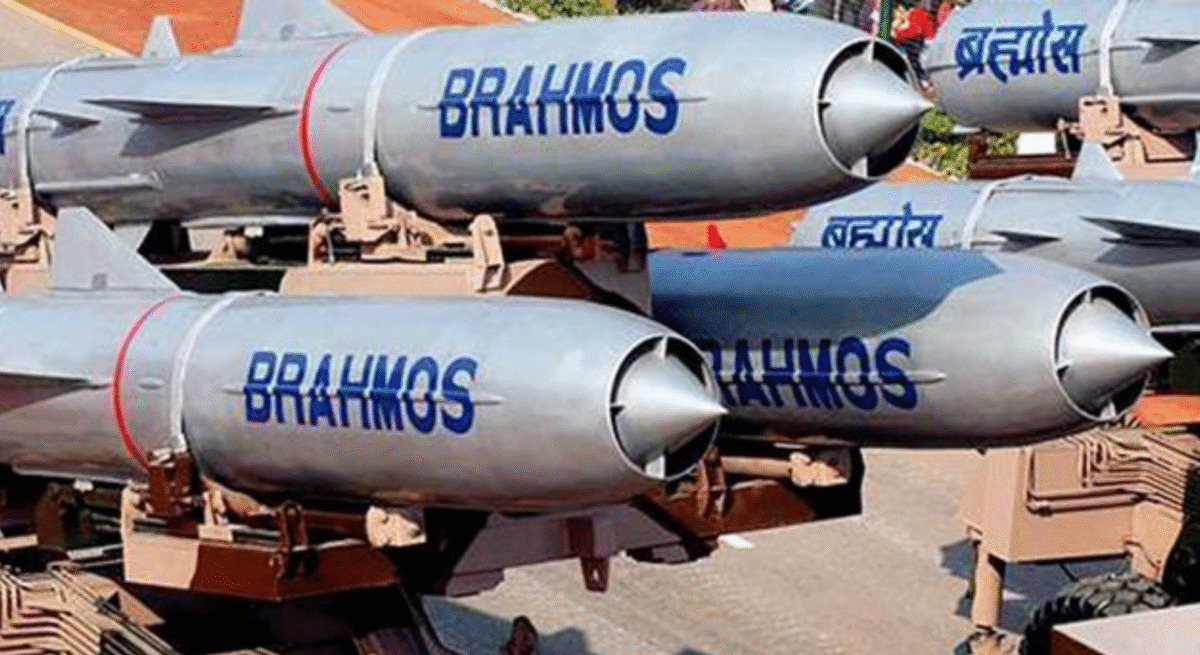
India, Indonesia near $450 mn BrahMos deal

India and Indonesia are moving a step closer to finalising a major defence deal involving the BrahMos supersonic cruise missile, following high-level talks in New Delhi on November 27. Defence Minister Rajnath Singh met Indonesia’s Defence Minister Sjafrie Sjamsoeddin, who was on an official visit to India, to review bilateral defence ties and discuss ongoing cooperation in the Indo-Pacific region.

According to officials, both sides have reached a “broad understanding” on the pricing of the proposed BrahMos sale, which is expected to be worth around $450 million. Singh also showed a model of the missile to the visiting minister as part of the discussions. If the deal is signed, Indonesia will become the second foreign customer of the BrahMos missile system after the Philippines, which secured a contract in 2022.

The talks reflect New Delhi’s growing emphasis on strengthening defence partnerships in the Indo-Pacific, especially with countries that share similar strategic concerns. India and Indonesia, both maritime nations with long coastlines and key sea lanes passing through their region, have been deepening military cooperation over the years.

During the meeting, the ministers reaffirmed their commitment to maintaining a free, open, stable and peaceful Indo-Pacific. They agreed to expand collaboration in several areas, including maritime security, cybersecurity, defence industry partnerships, and supply-chain resilience. Discussions also covered support for submarine maintenance, military healthcare collaboration, capability development, and logistics cooperation, areas seen as essential for long-term strategic alignment.

The BrahMos missile, jointly developed by India and Russia, is known for its precision, speed, and versatility. For Indonesia, acquiring BrahMos would significantly boost coastal defence and deterrence, particularly amid rising regional tensions.

The meeting marks an important step toward finalising the sale, though negotiations on technical and contractual details are expected to continue. Both governments view the potential deal as a symbol of growing trust and a shared vision for regional security.

Also Read: RBI tightens rules for safer digital banking

Categories
Beyond

India rises to ‘major power’ in Asia, 3rd globally

India has officially been recognised as a major power in the 2025 Asia Power Index released by the Lowy Institute, an Australia-based think tank that studies regional influence. This year, India achieved a score of 40, crossing the benchmark required to be classified as a major power for the first time. This is a significant milestone because India has hovered just below this threshold for several years.

In the overall rankings, India now stands at third place among 27 countries, behind only the United States and China. This places India firmly among the top regional players in terms of economic strength, military capability, diplomatic influence, and future potential. It also marks India’s strongest performance since the Index began.

One of the key reasons for India’s rise is its improving economy. The Index notes that India has become more attractive to foreign investors, benefitting from global shifts in supply chains. For the first time since 2018, India’s score for “economic relationships”, which measures trade and investment ties, showed a clear improvement. This growth helped strengthen India’s position across several economic categories.

India’s military capability also saw a notable boost this year. Analysts attribute part of this improvement to Operation Sindoor, a major operation conducted in 2025 that demonstrated India’s readiness and operational strength. The operation enhanced India’s defence credibility and contributed positively to its military score in the Index. Together with India’s growing defence technologies and modernisation efforts, this helped elevate its standing as a strategic power.

However, the report also highlights areas where India still lags behind. The biggest weakness is in defence networks, which measure a country’s alliances, partnerships, and military cooperation with other nations. In this category, India fell to 11th place, dropping two positions from the previous edition. This indicates that while India has strong capabilities, it has fewer formal defence partnerships compared to many other Asian countries.

The Index also points to India’s widening “power gap”, the difference between its potential capabilities and its actual influence on the world stage. Although India has improved across several indicators, its influence still does not fully reflect its economic and military strength. The gap with China remains especially large, showing that India has more work to do in translating its resources into global influence.

Also Read: India inks ₹8,000 cr US deal for MH-60R helicopters

Categories
Beyond

India inks ₹8,000 cr US deal for MH-60R helicopters

India has signed a major agreement with the United States to keep its fleet of MH-60R Seahawk naval helicopters in top shape. The deal, worth nearly ₹8,000 crore, will provide maintenance support, spare parts, training, and establish repair facilities in India over the next five years.

The arrangement comes under the US Foreign Military Sales programme and covers all technical and logistical support needed to keep the helicopters operational. By setting up domestic maintenance infrastructure, India will reduce reliance on overseas support and create opportunities for local businesses, including small and medium enterprises.

The MH-60R Seahawk is a highly capable, all-weather naval helicopter, designed for anti-submarine warfare and other critical missions. Defence experts say this pact will significantly enhance the readiness and efficiency of India’s naval aviation fleet.

This step reflects India’s focus on building self-reliance in defence while ensuring its military assets remain mission-ready, strengthening the Navy’s ability to respond swiftly in times of need.

Also Read: Andhra Pradesh clears LPS‑II, ₹7,500 cr for Amaravati

Categories
Beyond

RBI tightens rules for safer digital banking

The RBI has rolled out its final set of rules to make digital banking simpler, safer and more transparent for customers. One of the biggest changes is that banks can no longer sign up people for digital banking without asking them first.

This means no more automatic enrolment, no hidden clicks, and no pressure to join an app or platform just to get another service. From now on, banks must take clear, informed consent before onboarding a customer to any digital channel.

The RBI says this step will help customers feel more in control of their banking choices and reduce complaints about forced digital enrolment. The guidelines also aim to make digital banking more secure by ensuring customers know exactly what they’re opting into.

Overall, the new rules put the customer at the centre,  giving them the right to choose how they want to bank, without fear of being pushed into digital services they don’t want.

Also Read: Trump orders green card check for 19 countries

Categories
Beyond

India’s GDP rises 8.2% in Q2, six-quarter high

India’s GDP recorded a robust 8.2% growth in the second quarter (July–September) of FY 2025–26, marking the fastest expansion in six quarters and exceeding market expectations. The performance comes even before the full impact of the recently announced GST rate cuts has been reflected in the economy.

The secondary sector, which includes manufacturing and industry, grew by around 8.1%, while the tertiary sector, encompassing services such as trade, finance, and transport,  expanded by approximately 9.2%. The primary sector, which covers agriculture, forestry, and mining, posted a modest growth of 3.1%.

Analysts said the growth was supported by strong rural demand, increased government spending, and early export shipments. Consumption showed an uptick ahead of the festive season, partially driven by expectations of lower tax rates under the GST regime.

Despite the upbeat headline numbers, some areas of the economy remain subdued. Urban demand and private investment have yet to pick up significantly, suggesting that growth is currently more dependent on government-led and rural spending.

Economists said sustaining this momentum in the coming months will require a revival in private sector investment and broader consumption across both rural and urban areas.

The Q2 growth indicates that India’s economy continues to show resilience in the face of global uncertainties. If domestic consumption, private investment, and exports continue to strengthen, the country could maintain a healthy growth trajectory in the second half of the fiscal year.

Overall, the numbers reflect a combination of strong rural activity, government support, and industrial recovery, showing that the economy is well-positioned to benefit from policy measures such as GST cuts while navigating ongoing challenges in urban markets and private investment.

Also Read: Meesho IPO to open on Dec 3, plans to raise ₹5,421 cr

Categories
Beyond

Trump orders green card check for 19 countries

The US government has ordered a nationwide review of all green cards held by immigrants from 19 countries after a shooting near the White House left one National Guard member dead and another critically injured.

The accused shooter, Afghan national Rahmanullah Lakanwal, came to the US under the 2021 evacuation program. Former President Donald Trump directed a “full-scale, rigorous re-examination” of permanent residency permits for immigrants from Afghanistan, Burma (Myanmar), Burundi, Chad, Republic of the Congo, Cuba, Equatorial Guinea, Eritrea, Haiti, Iran, Laos, Libya, Sierra Leone, Somalia, Sudan, Togo, Turkmenistan, Venezuela, and Yemen.

US Citizenship and Immigration Services (USCIS) will oversee the review, which will cover current green card holders, as well as pending and new applications from these countries, effective November 27, 2025. Officials said the applicant’s country of origin will now be a key factor in eligibility, citing national security concerns.

Supporters say the move is necessary to protect US citizens, while critics argue it unfairly targets immigrants based solely on nationality.

The review reflects a stricter, security-focused approach to immigration, shifting away from broad humanitarian resettlement programs. Thousands of residents from the 19 countries may face renewed scrutiny, and applicants seeking residency or asylum could encounter stricter requirements and longer processing times.

Authorities maintain the review aims to balance safety with fairness, but the decision has sparked debates over civil liberties and the treatment of immigrants from the targeted nations.

Also Read: Adani buys India’s top pilot-training company for ₹820 cr

Categories
Beyond

Rupee slips to ₹89.43 against US dollar

The Indian rupee weakened by 7 paise on Thursday, trading at ₹89.43 against the US dollar in early market hours. This marks a continued period of volatility for the currency, which has been grappling with multiple domestic and global factors.

Rising crude oil prices are a major factor putting pressure on the rupee. India imports most of its oil needs, and higher global crude rates increase the demand for US dollars, pushing the local currency lower. Importers continue to buy dollars to pay for goods and raw materials, adding to the rupee’s downward pressure.

While foreign fund inflows into Indian markets have provided some support, they have not been strong enough to offset the impact of rising oil prices and steady import demand. Analysts suggest that the rupee is likely to trade in a narrow range over the near term, as there are no major catalysts expected to push it significantly higher.

Currency markets are also influenced by global developments, including the strength of the US dollar and international trade dynamics. Any sudden shifts in oil prices or dollar demand could create short-term fluctuations.

Investors and businesses dealing in foreign trade are advised to monitor the rupee closely. A weakening currency can affect import costs, inflation, and overseas investments, making careful planning essential.

Overall, the rupee’s movement reflects the delicate balance between domestic economic factors and global market trends, highlighting the challenges in maintaining currency stability in the current environment.

Also Read: Apple challenges $38 billion India antitrust penalty law

Categories
Beyond

Gold nears ₹1.26 lakh, silver climbs up ₹1.64 lakh

Gold and silver futures on the Multi Commodity Exchange of India (MCX) climbed on Friday, fueled by expectations of a U.S. Federal Reserve rate cut and strong domestic demand ahead of the wedding season.

MCX December gold contracts rose 0.39% to ₹1,25,999 per 10 grams, while silver December contracts gained 0.85% to ₹1,63,849 per kilogram in early trading.

Analysts said the rally was driven by a softer U.S. dollar, healthy spot-market demand, and a high probability of a Fed rate cut in December. Some profit-booking was also seen, reflecting caution amid global market volatility and currency fluctuations.

With both global cues and domestic buying supporting the market, bullion, particularly gold, remains in focus for investors.

Also Read: Sensex gains 100 Points, Nifty tops 26,200