Categories
Beyond

Economic Survey 2026 flags skill gaps, structural risks

The Economic Survey 2026, presented in Parliament ahead of the Union Budget 2026–27, offers a detailed assessment of India’s economic performance over the past year and outlines key challenges for the period ahead. The Survey indicates that the economy remains resilient, supported by strong domestic demand, steady investment, and controlled inflation, even as global uncertainties continue.

India has maintained growth faster than most major economies, driven largely by consumer spending and sustained investment across sectors. Economists note that the economy has stayed on a stable path despite geopolitical tensions, weaker global trade, and financial volatility in several regions.

A major highlight of the Survey is the sharp fall in inflation, which has declined to very low levels. Lower price pressures have helped improve household purchasing power and supported consumption. This positions India favourably at a time when many economies are still grappling with high inflation.

Prime Minister Narendra Modi said the Survey reflects India’s economic progress despite a challenging global environment. He highlighted strong fundamentals such as infrastructure development, innovation, and entrepreneurship as key drivers of long-term growth.

The Survey also draws attention to structural challenges, particularly in the labour market. The Chief Economic Adviser (CEA) has flagged significant skill gaps and structural risks emerging in the AI-driven economy. Limited access to formal vocational training and slow skill adaptation could constrain job creation and productivity if not addressed in time. The Survey stresses the need to align education and skilling systems with evolving industry and technology requirements.

Manufacturing growth and the creation of skilled employment are identified as crucial for sustaining high growth rates alongside the expanding services sector. Strengthening industrial capacity and improving workforce readiness are seen as essential policy priorities.

Overall, the Economic Survey paints a picture of a stable and resilient economy, underpinned by low inflation, strong domestic demand, and investment momentum. At the same time, it underlines the urgency of tackling skills shortages and preparing the workforce for technological change.

The Survey sets the analytical backdrop for the Finance Minister’s Budget 2026–27, helping policymakers, businesses, and investors evaluate both economic strengths and emerging risks before new policy measures and spending proposals are announced.

Also Read: Venezuela opens oil sector to foreign firms

Categories
Beyond

Venezuela opens oil sector to foreign firms

Venezuela’s government has approved a major overhaul of its oil sector, aiming to attract foreign investment and revive the country’s struggling energy industry. The law, signed by acting President Delcy Rodríguez, represents a significant shift from decades of strict state control under Petróleos de Venezuela (PDVSA).

Under the new framework, private and foreign companies can operate oil projects at their own cost and risk, while the state retains ownership of crude reserves. The law also allows independent arbitration for disputes, reducing legal uncertainties that have historically deterred foreign investors. Companies will now have greater operational autonomy, including decisions on production levels and investments, signaling a major policy pivot from the nationalisation policies introduced by Hugo Chávez in 2007.

Financial incentives have also been introduced to make Venezuela more competitive. The law caps royalties at 30% but allows authorities to set rates on a project-by-project basis. This flexibility is intended to attract large-scale international operators and encourage investment in technologically advanced extraction projects.

The legislative reform coincides with a partial easing of U.S. sanctions on Venezuela’s oil sector. Washington issued a general license permitting certain U.S. companies to engage in trade and transport of Venezuelan crude, providing a potential boost to foreign capital inflows. Analysts say the dual move, domestic reform and international sanction relief — is designed to restore investor confidence and reverse years of declining production.

Venezuela’s oil output has fallen sharply in recent years due to mismanagement, underinvestment, and economic sanctions, despite the country holding the world’s largest proven oil reserves. Industry experts believe the new law could jump-start production, create jobs, and increase government revenue, although political instability and past economic mismanagement remain key risks for investors.

Also Read: Microsoft sees Copilot AI boom, costs worry investors

Categories
Beyond

Gold at ₹1.78 lakh, Silver above ₹4.10 lakh

Gold and silver prices recorded marginal gains on Friday, reflecting steady demand for precious metals amid ongoing global uncertainties. According to market data, the price of 24-carat gold increased by ₹10 per 10 grams, taking it to ₹1,78,860 in major cities such as Mumbai and Kolkata. In the national capital, Delhi, 24-carat gold was quoted slightly higher at ₹1,79,010 per 10 grams.

Prices of 22-carat gold, which is commonly used for jewellery, also moved up by ₹10 per 10 grams. The yellow metal was priced at ₹1,63,960 per 10 grams in Mumbai, Kolkata, Bengaluru and Hyderabad. In Delhi, 22-carat gold was selling at ₹1,64,110 per 10 grams, while Chennai continued to command a premium, with prices hovering around ₹1,68,010 per 10 grams.

Silver prices followed a similar trend, rising by ₹100 per kilogram during early trade. One kilogram of silver was priced at ₹4,10,100 in key markets including Delhi, Mumbai and Kolkata. Chennai once again saw higher rates, with silver trading at around ₹4,25,100 per kilogram, reflecting regional demand patterns.

Market participants attribute the firm trend in bullion prices to sustained investor interest in safe-haven assets. Precious metals have remained in focus globally as investors seek protection against economic uncertainty, inflation concerns and geopolitical tensions. Recent movements in international gold and silver prices, along with fluctuations in the rupee against the US dollar, have also influenced domestic rates.

Despite the modest daily increase, gold and silver prices remain at elevated levels compared to historical averages. Analysts note that short-term price movements are likely to stay volatile, driven by global cues such as interest rate expectations, central bank policies and developments in international markets.

Also Read: Sensex slides 350 points, Nifty slips below 25,300

Categories
Beyond

Fed holds rates steady despite Trump pressure

The Federal Reserve has decided to keep interest rates unchanged, even as President Donald Trump urges rate cuts. The move shows the Fed is focused on controlling inflation while supporting economic growth.

The Fed’s main policy group, the Federal Open Market Committee, voted to keep rates at their current level after months of increases meant to slow rising prices. Officials said inflation has eased but is still above the Fed’s 2 percent target and cutting rates too soon could make prices rise again.

“Keeping rates steady gives us time to watch the economy and keep inflation under control,” a Fed spokesperson said Economists say the decision helps prevent market surprises and shows the central bank is acting based on data, not politics.

Trump has repeatedly called for lower rates, arguing that high borrowing costs hurt businesses and consumers. His comments have sparked debate about the Fed’s independence but officials insist decisions are guided by economic conditions rather than political pressure.

Some investors welcomed the steady rates while others hoped for cuts to boost growth. Stock prices moved slightly after the announcement as traders weighed the Fed’s outlook.

By keeping rates steady, the Federal Reserve signals caution and a focus on long-term stability. The central bank also said it will keep watching economic trends and adjust policy if needed to support growth and protect financial stability.

Economists say the decision balances the need to keep the economy growing with the need to control inflation. Consumer spending and jobs are holding up, but global market changes and political tensions could create challenges.

Also Read: India’s industrial growth rockets 7.8% in December

Categories
Beyond

Gold at ₹1,67,090, Silver trades at ₹3,80,100

Gold and silver prices in India registered marginal gains in early trade, reflecting stable demand and firm trends in global markets. According to market data, the price of 24-carat gold rose by ₹10 to trade at ₹1,67,090 per 10 grams. 22-carat gold also saw a similar increase and was priced at ₹1,53,160 per 10 grams.

Silver prices moved up slightly as well. The metal gained ₹100, taking the rate to ₹3,80,100 per kilogram in major Indian markets. The modest rise comes after recent volatility in precious metal prices, driven by global economic concerns and fluctuations in currency markets.

Market experts say gold and silver continue to attract investor interest as safe-haven assets amid uncertainty around global growth, interest rate outlooks, and geopolitical developments. Internationally, gold prices have remained near elevated levels, supported by steady demand from investors and central banks, while silver has also benefited from industrial demand alongside its role as a hedge asset.

Despite the gains, analysts note that price movements remain cautious, with traders closely tracking cues from global markets, including US economic data and movements in the dollar. Any sharp changes in interest rate expectations or global risk sentiment could influence prices in the near term.

In India, gold prices also factor in import duties, taxes, and local demand, which can cause variations across cities. Silver prices similarly vary based on industrial demand and global supply conditions.

Also Read: Sensex down 400 points, Nifty under 25,250

Categories
Beyond

India’s industrial growth rockets 7.8% in December

India’s industrial sector showed a strong revival in December 2025, with industrial output rising 7.8% year-on-year, marking the fastest growth in over two years, according to official data released on January 28. This growth rate exceeds analysts’ expectations and signals a broad-based improvement across industry.

The Index of Industrial Production (IIP), which measures the performance of manufacturing, mining, and electricity sectors, revealed that manufacturing led the expansion, growing by 8.1%. Key segments such as computers, electronics, optical products, and motor vehicles contributed significantly to the uptick.

Mining output also improved, rising 6.8%, while electricity production rebounded with a 6.3% increase, reversing the slight decline seen in November. Together, these sectors helped drive overall industrial growth and indicate robust industrial activity across the economy.

On a use-based basis, infrastructure and construction goods led the growth, supported by strong performance in consumer durables, capital goods, and intermediate goods. This indicates healthy domestic demand as well as ongoing investment activity in the industrial space.

Compared to November’s growth of 7.2%, December’s figures show a clear acceleration, underlining the momentum in factory production and industrial output toward the end of 2025. However, cumulative growth for the April–December period remains lower than the same period last year, reflecting uneven activity earlier in 2025.

Economists see December’s strong growth as a positive signal for India’s economic momentum in early 2026. The data suggest that industrial production is rebounding, supported by robust manufacturing and improving infrastructure-related activity, which could further boost employment and investment in the sector.

Also Read: Elon Musk hits back at Vinod Khosla over racism claims

Categories
Beyond

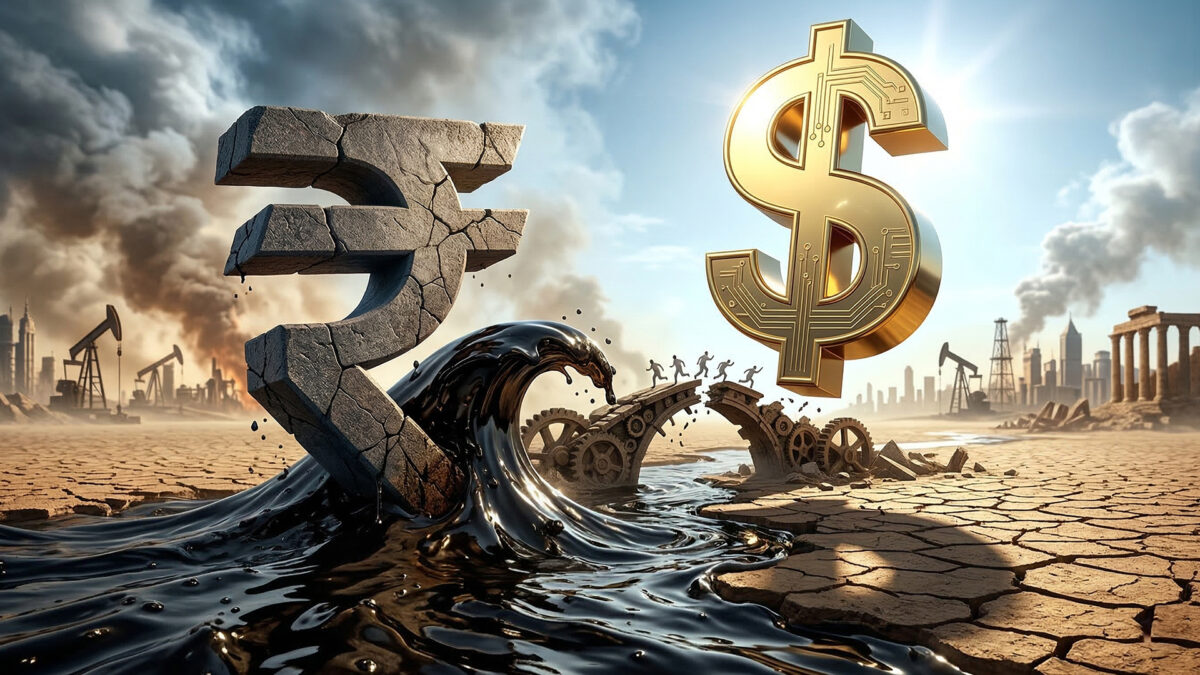
Rupee rises 11 paise to ₹91.57 against dollar

Indian rupee showed a positive sign as it rose by 11 paise to ₹91.57 per US dollar in early trade on Wednesday. This came as the US dollar weakened slightly and optimism grew after India and the EU agreed on a new trade deal. The rupee opened around ₹91.60 and recovered a little to ₹91.57. Stock markets also reacted positively in early trade.

However, the rupee’s overall trend remains weak and unstable. In recent days, it has hit record lows near ₹91–₹92 per dollar because of global uncertainties and foreign investors pulling out money from India.

Trade tensions with the United States are adding pressure. Threats of tariffs have made investors cautious, leading them to prefer the US dollar over emerging market currencies like the rupee.

Foreign investment flows also play a big role. Continuous selling by foreign investors increases demand for dollars, which weakens the rupee. Analysts warn that unless more foreign money comes in or global conditions improve, the rupee may continue to struggle.

High demand for dollars for imports like oil and capital goods is another factor keeping the rupee under pressure. A slight weakening of the US dollar gives only short-term relief.

Investors are now watching key factors, such as global interest rates, foreign investments, and trade talks with the US, to see where the rupee will go next. The Reserve Bank of India is expected to step in if the currency becomes too volatile.

Also Read: Gold falls to ₹1,61,940, Silver rises to ₹3,70,100

Categories
Beyond

Gold falls to ₹1,61,940, Silver rises to ₹3,70,100

Gold prices in India saw a slight dip on Wednesday, reflecting short-term profit booking after recent gains. The price of 24‑carat gold fell by ₹10 to ₹1,61,940 per 10 grams, while 22‑carat gold also dropped by ₹10, trading at ₹1,48,440 per 10 grams.

City-wise, Mumbai and Kolkata recorded 24‑carat gold at ₹1,61,940, while Chennai’s rate was marginally higher. For 22‑carat gold, Mumbai, Kolkata, Bengaluru, and Hyderabad matched the national benchmark, with Chennai and Delhi slightly above it.

Silver bucked the trend, rising by ₹100 to trade at ₹3,70,100 per kilogram in Delhi, Kolkata, and Mumbai, with other cities recording slightly higher prices. Analysts say silver’s gains are driven by sustained industrial demand and strong investor interest, even as gold consolidates.

On the international front, US gold prices eased slightly after hitting recent peaks, reflecting a phase of profit-taking and market consolidation. Analysts note that minor fluctuations in bullion prices are influenced by global economic conditions, currency movements, and safe-haven demand amid geopolitical uncertainties.

Also Read: Sensex up 300+ points, Nifty crosses 25,250

Categories
Beyond

India LNG buyers put long-term deals on hold

India’s liquefied natural gas (LNG) importers are deliberately slowing down long-term purchase agreements as they anticipate a sharp rise in global gas supply over the next few years. Key buyers, including state-run companies such as GAIL India and Bharat Petroleum, believe that waiting could help them secure better prices and more flexible contract terms once new LNG projects come online worldwide.

According to industry observers, global LNG supply is expected to expand significantly toward the end of this decade, driven by large projects in the United States, Qatar, and other major gas-producing regions. This surge could increase global capacity by nearly 50% by around 2030, potentially easing prices that have remained volatile since the energy shock triggered by the Russia-Ukraine conflict.

Indian buyers have been in discussions with LNG suppliers for more than a year but have avoided finalising long-term commitments. Instead, they are focusing on short-term and spot market purchases while keeping future options open. Many importers are reportedly looking at contracts that would begin closer to 2028, when the expected supply wave is likely to peak.

The cautious approach also reflects India’s struggle to raise the share of natural gas in its overall energy mix. Despite a government target of increasing gas usage to 15% by 2030, consumption has remained largely flat since 2020. High LNG prices have made gas less attractive compared to coal and other fuels, particularly for power generation and industrial use.

If LNG prices ease as expected, demand could pick up across city gas distribution networks, refineries, and petrochemical plants, helping India gradually expand gas usage. Until then, importers appear content to wait, betting that patience will strengthen their negotiating position in a rapidly changing global gas market.

In the near term, Indian companies are relatively comfortable, having secured enough LNG through contracts signed in 2024 and 2025 to meet immediate demand. This has reduced the urgency to lock in fresh long-term supply at current price levels.

Also Read: India-EU FTA sealed after 20 years

Categories
Beyond

India-EU FTA sealed after 20 years

India and the European Union have finally signed a Free Trade Agreement (FTA) on January 27, 2026, ending nearly 20 years of negotiations. The agreement was announced at the India-EU Summit in New Delhi by Prime Minister Narendra Modi and European Commission President Ursula von der Leyen, and is being seen as a major step forward in strengthening ties between the two sides.

The deal brings together two huge markets, India and the EU together account for about 2 billion people, nearly a quarter of the world’s economy, and around one-third of global trade. At a time when global trade is facing uncertainty and higher tariffs in many countries, the agreement is expected to create new opportunities for businesses and workers on both sides.

Under the FTA, import duties will be removed or sharply reduced on about 96–97% of goods traded between India and the EU over the coming years. This is expected to help Indian exporters, especially in sectors such as textiles, leather, gems and jewellery, chemicals, engineering goods, and marine products, by making it easier and cheaper to sell their products in Europe.

European companies will also benefit. The EU is expected to save around €4 billion every year as tariffs come down. One of the most talked-about decisions is India’s agreement to cut car import duties from as high as 110% to about 10%, in phases and within a fixed annual limit. Taxes on wines and spirits from Europe will also be reduced gradually.

At the same time, both sides have been careful to protect sensitive areas. Dairy products, cereals, and small cars have been kept out of full tariff cuts to protect local producers, especially in India.

Beyond goods, the agreement opens the door to closer cooperation in services, investment, supply chains, standards, and regulations. It also allows room for future discussions on professional mobility and people-to-people exchanges, which could benefit students, professionals, and businesses.

The agreement now needs to go through legal checks and approvals in India and the EU. Once cleared, it is expected to take effect in late 2026 or early 2027, setting the stage for closer economic cooperation and stronger trade ties between India and the European Union.

Also Read: China’s Anta Sports invests in Puma for $1.8 bn