Categories
Corporate

Sensex drops 533 points, Nifty slips below 25,900

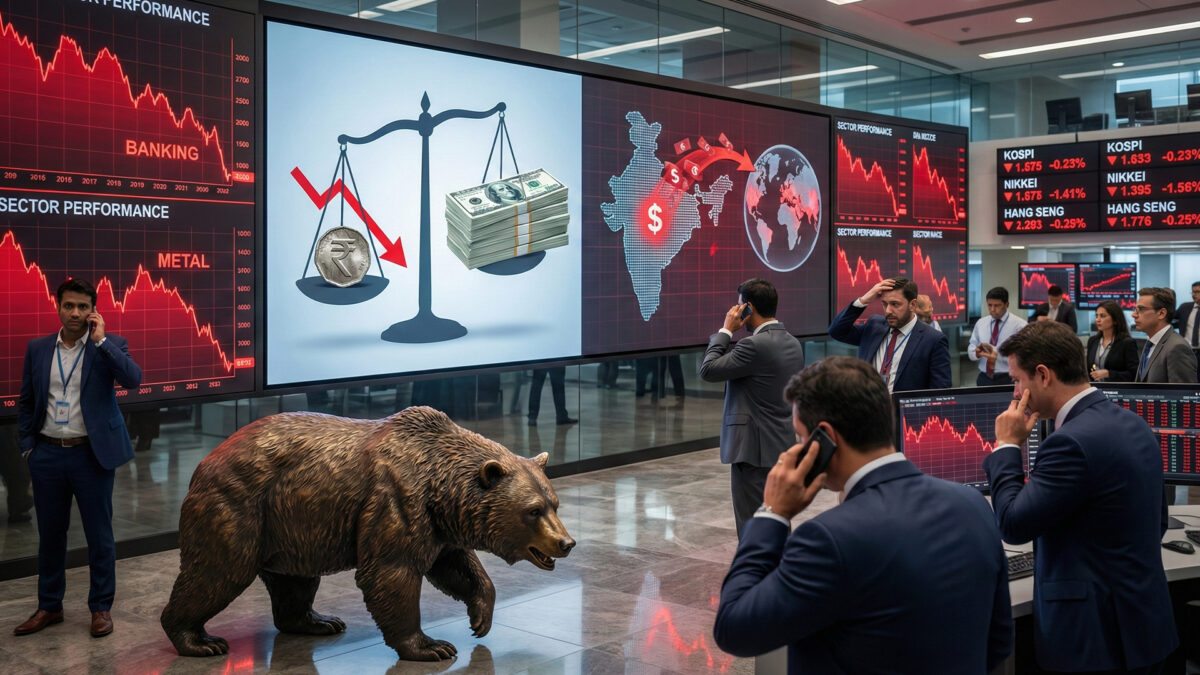
The markets ended lower on Tuesday where the Sensex fell 533 points, while the Nifty closed below the 25,900 level, as investors remained cautious amid declines in US and Asian markets.

Markets opened on a weak note and continued to trade under pressure throughout the session, with limited buying interest at lower levels. Selling was seen across sectors such as banking, information technology, metals, realty and oil & gas, reflecting concerns over global growth and risk sentiment.

On the positive side, select stocks managed to attract buying interest. InterGlobe Aviation (IndiGo) emerged as one of the top gainers, supported by stock-specific demand. ITC and Tata Consumer Products also ended higher, with FMCG stocks showing relative resilience as investors turned to defensive names amid market volatility. Gains in these stocks, however, were not enough to offset losses in heavyweight sectors.

Among the major losers, ONGC, Mahindra & Mahindra, Cipla, Eicher Motors and JSW Steel declined sharply, weighing on the indices. Axis Bank and Eternal were also among the prominent laggards on the Nifty, contributing to the broader weakness in financial stocks. IT stocks remained under pressure as investors stayed cautious ahead of global economic signals, while metal shares slipped on weak international demand outlook.

Market breadth remained weak, with declining stocks outnumbering advancing ones on the exchanges. Midcap and smallcap indices underperformed the frontline benchmarks, indicating continued risk aversion among investors.

Also Read: Sensex slips over 350 pts at open, Nifty below 25,950

Categories
Leaders

Meesho founder Vidit Aatrey joins the billionaire club

Vidit Aatrey, co‑founder and CEO of social commerce platform Meesho, has joined the ranks of global billionaires following a sharp rise in the company’s share price after its initial public offering (IPO). The stock jumped significantly above its issue price, pushing Aatrey’s personal wealth into the billion‑dollar range.

Meesho’s shares climbed to around Rs 193, representing a 74 percent increase over the IPO issue price of Rs 111 per share. This surge translated into substantial gains for Aatrey, who holds roughly 47.25 crore shares, or an 11.1 percent stake in the company. At these levels, his holdings were valued at over Rs 9,000 crore (approximately USD 1.1 billion).

The company’s listing reflects strong investor interest in its mobile‑first, social‑commerce model, which enables small businesses and individual sellers to reach consumers across India. The IPO attracted significant attention from both retail and institutional investors, and the stock’s performance post‑listing underscores market confidence in Meesho’s growth potential.

Industry observers say the rally highlights optimism about India’s domestic e‑commerce sector, especially for companies with scalable, asset‑light business models. Meesho’s focus on affordable products and penetration into smaller cities and towns has helped it build a broad consumer base, contributing to its strong stock performance.

For Vidit Aatrey, this milestone marks the culmination of a decade-long journey from a startup founder to one of India’s newest billionaires. Together with co‑founder Sanjeev Barnwal, he has grown Meesho from a niche social reselling platform into a mainstream e‑commerce company, attracting major global and domestic investors along the way.

As Meesho expands its operations and works toward profitability, its successful IPO may serve as a benchmark for future listings in India’s technology sector, signaling continued investor enthusiasm for innovative, growth-oriented startups.

Also Read: SEBI to review key mutual fund, broker and IPO rules

Categories
1 Minute-Read

Urban Company shares fall 6% to record low

Urban Company shares slid nearly 6 percent to hit a record low after the three-month shareholder lock-in period ended. The expiry made around 4.15 crore shares, or about 3 percent of the company’s total equity, available for trading, leading to a sharp rise in supply.

This increase in tradable shares sparked selling pressure in the market. Urban Company, which provides home and personal care services through its app-based platform, had listed in September at a premium to its IPO price.

Since then, the stock has steadily lost ground as investor sentiment turned cautious following the lock-in expiry.

Categories
Beyond

Nepal lifts 10-year ban on Indian high-value notes

Nepal has finally lifted a decade-old restriction on high-value Indian currency notes, making life easier for travellers, traders, and migrant workers. From now on, people can carry ₹200 and ₹500 notes into Nepal, as long as the total does not exceed ₹25,000 per person.

The move comes after a recent cabinet decision, and the Nepal Rastra Bank will soon issue official guidelines to implement it. For many Nepalis working in India, this change means they no longer have to carry their earnings in countless smaller notes. Indian tourists will also find shopping, dining, and hotel payments much more convenient.

For the past ten years, only smaller notes of ₹100 or below were allowed in Nepal. The ban had made everyday transactions complicated, especially along busy border towns where trade and tourism are vital. With the new rules in place, cross-border business and travel are expected to flow more smoothly, benefiting both countries’ economies and easing daily life for those crossing the border.

Also Read: RBI clears HDFC Group to buy 9.5% in IndusInd

Categories
Corporate

Vedanta rallies to record ₹551, first time above ₹550

Shares of Vedanta Ltd surged to a record high of ₹551.50 on December 15, 2025, marking the first time the stock crossed the ₹550 mark. The stock gained around 1.5% from its previous close of ₹543.55, reflecting strong buying interest.

The company’s market capitalization rose above ₹2.15 lakh crore, highlighting growing investor confidence. Trading volumes were robust, with over 4 lakh shares changing hands and turnover crossing ₹23 crore.

Analysts point to strong technical indicators supporting the rally. The stock is trading above both short‑ and long‑term moving averages, and the RSI suggests it is not overbought, signaling further room for growth.

Brokerage firms remain bullish. Nuvama has set a target price of ₹686, citing expected earnings growth and lower debt, while Emkay Global recommends the stock with a ₹625 target. Market experts say that sustaining a close above the ₹553 resistance level could push Vedanta toward ₹589 in the near term.

Also Read: MUFG nears $3.2 billion deal for 20% of Shriram Finance

Categories
Corporate

Sensex slips over 350 pts at open, Nifty below 25,950

The markets opened lower on Tuesday, extending the cautious tone seen in recent sessions amid weak global cues and continued concerns around foreign fund outflows. At the opening bell, the BSE Sensex dropped over 350 points, while the NSE Nifty50 slipped below the 25,950 mark, indicating a risk-averse start to the trading day.

Early trade was marked by broad-based selling, with pressure visible across key sectors, particularly banking, financial services, and autos. Market breadth remained weak, with declines outpacing advances on both benchmark indices.

Among individual stocks, Eternal emerged as a major laggard in early deals, falling nearly 3 percent, weighed down by selling interest. Axis Bank also came under pressure, declining around 2.5 percent, dragging the banking index lower. Other frontline financial stocks traded subdued, reflecting investor caution toward the sector at the start of the session.

Auto and metal stocks also opened in the red, mirroring concerns over global growth and commodity demand. Export-oriented stocks showed mixed trends, tracking overnight movements in global markets and currency fluctuations.

On the positive side, gains were limited and stock-specific. Meesho and Adani Power opened higher, supported by selective buying and positive sentiment around company-specific developments. However, early gains in these stocks were insufficient to offset weakness in index heavyweights.

Investor sentiment at the open remained fragile amid continued foreign institutional investor selling, a soft rupee, and uncertainty surrounding global interest rate trajectories. Market participants are also cautious ahead of key economic data releases later in the week, which could influence near-term direction.

Also Read: Tesla Diner opens mini racetrack for kids in Hollywood

Categories
Corporate

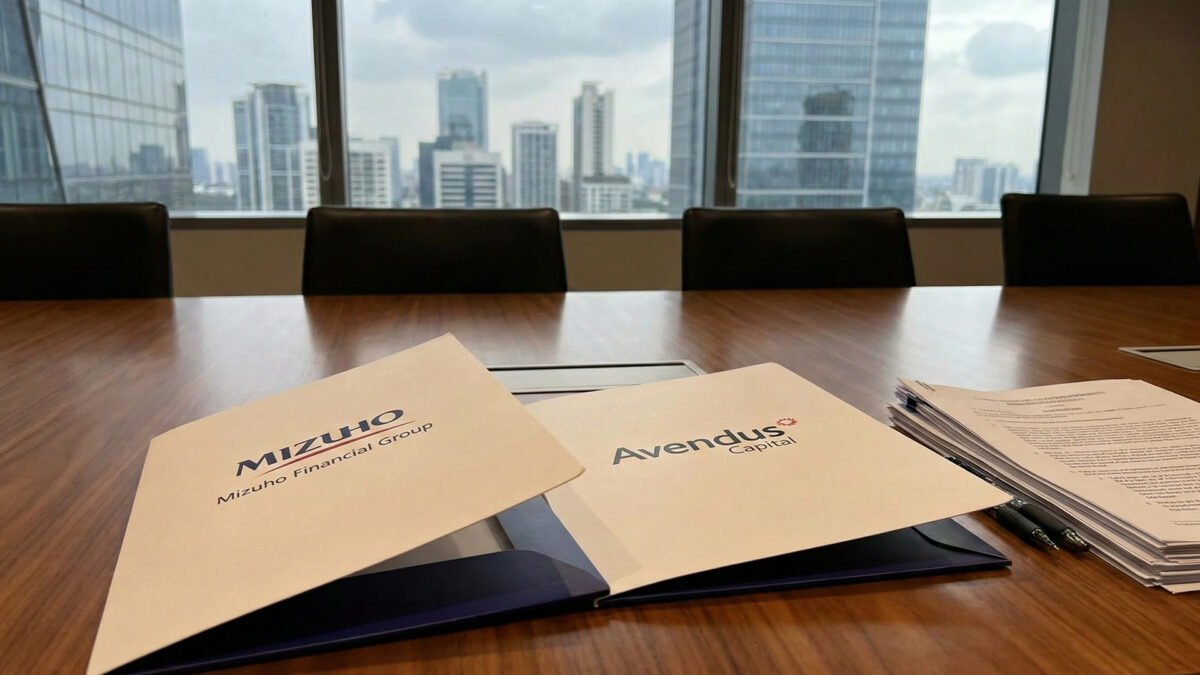
Japanese bank Mizuho nears ₹5,900 cr Avendus acquisition

Japanese banking group Mizuho Financial is on the verge of completing its acquisition of a majority stake in Avendus Capital, one of India’s leading investment banks. The deal, valued at around ₹5,900 crore, is expected to be finalized this week, marking one of the largest foreign investments in India’s financial services sector.

The transaction involves KKR and other early investors exiting their holdings in Avendus. Post-acquisition, Mizuho is expected to hold approximately 65–70% of the company, while the remaining shares will stay with Avendus’ founders and a few local investors. Despite the change in majority ownership, the existing leadership at Avendus will continue managing day-to-day operations, ensuring business continuity. Mizuho will, however, gain significant influence through board representation and strategic input on the firm’s growth plans.

Discussions on the deal have been underway for several months, with both parties working closely to finalize terms, including valuation, governance, and management continuity. The Avendus board is expected to meet shortly to approve the transaction, clearing the final regulatory and corporate approvals needed for closure.

This acquisition forms a key part of Mizuho’s strategy to expand its footprint in India, a market it sees as high growth for investment banking, wealth management, and capital markets. By acquiring Avendus, Mizuho aims to strengthen its capabilities in advisory services, private equity, and asset management, leveraging the expertise and established client base of the Indian firm.

Industry experts note that the deal signals increasing confidence of foreign banks in India’s financial sector and reflects the growing trend of international investors seeking stakes in domestic investment banking firms. Once completed, this acquisition will not only enhance Mizuho’s presence in the country but also support Avendus’ growth ambitions, enabling it to compete more effectively with global and domestic peers.

Also Read: Prodocs Solutions lists at 4% premium on BSE SME

Categories
Corporate

SpaceX hits $800 billion valuation ahead of 2026 IPO

SpaceX, the private aerospace company founded and led by Elon Musk, has taken a significant step toward becoming a publicly traded company. A recent insider share sale has valued SpaceX at around $800 billion, highlighting strong investor confidence as the company prepares for an initial public offering (IPO) expected in 2026.

The share sale allows existing and new investors to purchase SpaceX stock at $421 per share, a price that reflects the company’s rapid growth and ambitious plans. Analysts suggest that the IPO could raise more than $25 billion, potentially pushing SpaceX’s valuation even higher, depending on market conditions. If the company executes its plans successfully, it could become one of the largest IPOs in history.

SpaceX’s soaring valuation is largely supported by its Starlink satellite internet business, which has been expanding quickly. Starlink currently provides internet services in multiple countries and is now planning direct-to-mobile connectivity, which could open a major new revenue stream. In addition, the company continues to make progress on its Starship rocket program, designed for ambitious missions to the moon, Mars, and potentially beyond. These innovations are key drivers behind the company’s strong market interest.

Despite the excitement, SpaceX executives have emphasized that the timing and final valuation of the IPO remain uncertain. Factors such as global market conditions, regulatory approvals, and the company’s operational milestones could influence the final launch. The insider sale, however, demonstrates a clear commitment to preparing the company for public investment.

Elon Musk’s leadership and vision have been central to SpaceX’s growth, from reusable rockets to global satellite internet. Going public would not only provide a new capital influx but also mark a historic moment in financial markets. For investors, the IPO represents a rare chance to participate in a company that is shaping the future of space travel and connectivity.

With its record valuation, technological innovations, and ambitious expansion plans, SpaceX is positioning itself to become a dominant force in both aerospace and the broader tech sector, attracting attention from investors and industry watchers worldwide.

Also Read: Elon Musk confirms SpaceX IPO in 2026

Categories
Corporate

Sensex down 260 points, Nifty slips near 25,950 in weak start

The equity benchmarks opened lower on Monday, reflecting a cautious start to the trading session. Both the Sensex and the Nifty slipped in early trade as investors reacted to weak global cues and avoided aggressive buying.

The Sensex declined by around 260 points, while the Nifty traded close to the 25,950 level. Selling pressure in key heavyweight stocks weighed on the benchmarks, keeping the overall market sentiment subdued during the early hours.

Weak global trends played a major role in shaping domestic market movement. US markets ended the previous session lower, while Asian stocks also traded in the red. This dampened risk appetite among investors and led to cautious trading in Indian equities.

On the stock-specific front, Shriram Finance, Asian Paints and Tech Mahindra were among the notable gainers, supported by selective buying. However, their gains were limited and insufficient to lift the broader indices.

On the losing side, ONGC, Cipla, Apollo Hospitals, Max Healthcare and Bharti Airtel faced selling pressure and emerged as key drags on the benchmarks. Losses in these large-cap stocks pulled the Sensex and Nifty further into negative territory.

Overall, the market mood remained cautious, with investors closely watching global cues and institutional flows for further direction during the session.

Also Read: Venezuela oil exports drop after US tanker seizure

Categories
Corporate

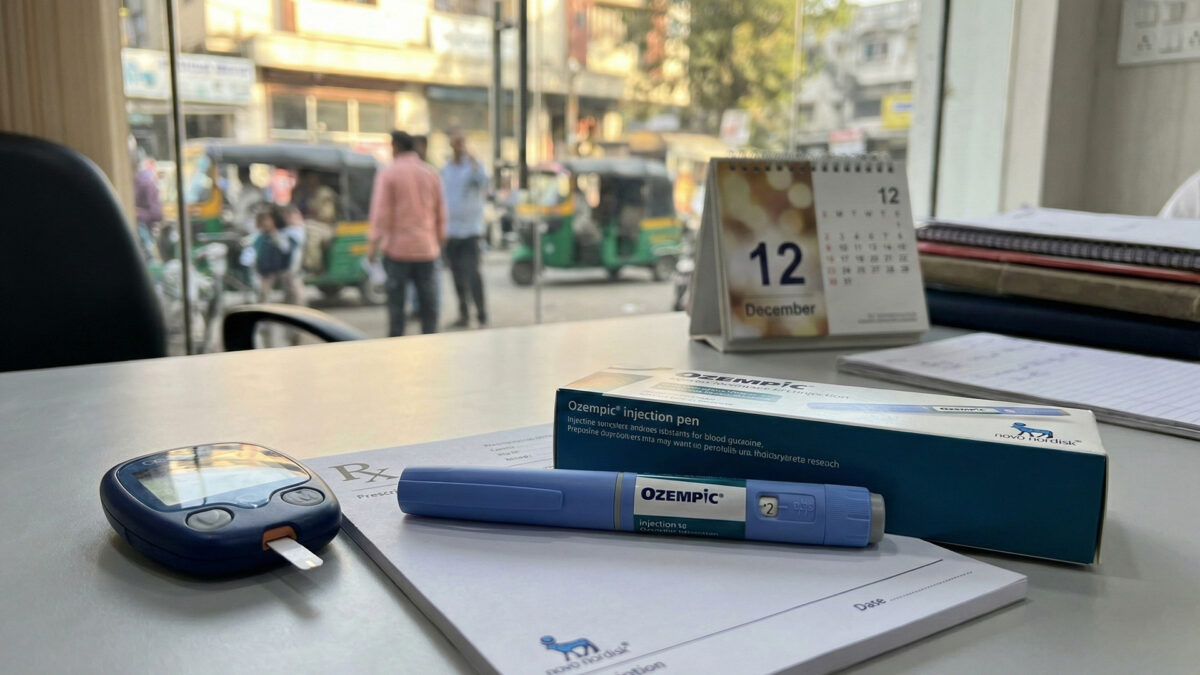
Ozempic debuts in India for type 2 diabetes

Global pharmaceutical company Novo Nordisk has launched Ozempic, a once-weekly injectable medicine for Type 2 diabetes, in India, expanding treatment options for millions of patients struggling to manage blood sugar levels. The drug contains semaglutide, a next-generation therapy already widely used in several countries.

Ozempic works by mimicking a natural hormone that helps the body release insulin when blood sugar levels are high. It also reduces the amount of sugar produced by the liver and slows digestion, leading to better glucose control. In addition, the medicine acts on the brain’s appetite centres, helping patients feel full for longer. While this effect has drawn attention globally for weight reduction, in India the drug has been approved specifically for managing Type 2 diabetes.

One of Ozempic’s key advantages is its once-a-week dosing, delivered through a pre-filled injection pen. Doctors say this can make treatment easier for patients who find daily injections difficult to maintain. The treatment begins with a 0.25 mg starter dose, mainly to help the body adjust. Depending on the patient’s condition, the dose may later be increased to 0.5 mg or 1 mg, strictly under a doctor’s guidance.

The starting dose costs about ₹2,200 per week, or roughly ₹8,800 per month, with higher doses priced above this level. Medical experts point out that affordability could be a concern for long-term use, especially since diabetes is a chronic condition requiring sustained treatment.

India has one of the world’s largest populations living with diabetes, and the number continues to rise due to sedentary lifestyles, dietary habits, and obesity. Specialists believe Ozempic could benefit patients whose blood sugar levels remain uncontrolled despite standard oral medicines or insulin therapy.

Doctors, however, stress that Ozempic is not a standalone solution. It must be used alongside lifestyle changes such as healthy eating, regular physical activity, and routine monitoring of blood sugar. Some patients may experience side effects like nausea or stomach discomfort, particularly in the early weeks of treatment, making medical supervision essential.

With the launch of Ozempic, India’s diabetes care space is seeing a shift towards advanced injectable therapies. While the drug brings new hope for improved disease control, experts emphasise responsible prescribing and informed patient use to ensure both safety and long-term benefits.

Also Read: Rupee falls 9 paise, hits record low of ₹90.41