Categories
Corporate

Bajaj Housing shares dip 3% as 25% lock-in ends

Shares of Bajaj Housing Finance saw a decline after the end of a key lock-in period, which has now allowed a large number of shares to be traded freely in the market.

With the lock-in expiry, nearly 25% of the company’s total shares—worth over ₹17,000 crore—have become available for trading. This sudden increase in supply has made investors cautious, as it could lead to selling by early investors and large shareholders.

Even though not all shareholders may sell immediately, the possibility itself has affected market sentiment. As a result, the stock price slipped as investors reacted to the increased supply of shares.

Lock-in periods are common after a company goes public. During this time, certain investors are restricted from selling their shares. Once the period ends, those shares can be traded, often leading to short-term ups and downs in stock prices.

Despite the recent dip, the company’s overall business performance remains strong. Bajaj Housing Finance has shown steady growth in its loan business and continues to expand its presence in the housing finance sector.

However, some analysts believe the stock is priced on the higher side compared to others in the same industry, which is adding to investor caution.

Another point of attention is the promoter stake. The promoters still hold a significant share in the company, and any future stake sale to meet regulatory norms could further influence the stock.

Also Read: Delhi Metro upgrades old trains with new features
Categories
Beyond

Delhi Metro upgrades old trains with new features

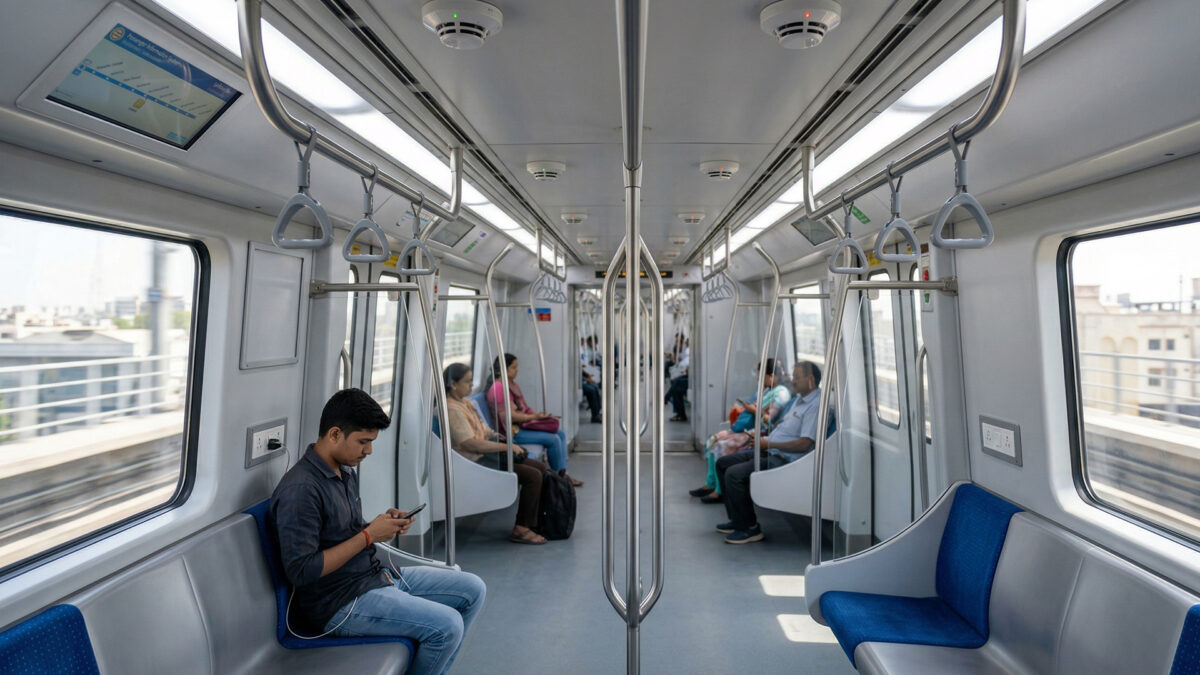
Delhi Metro is giving a fresh upgrade to some of its oldest trains, making daily travel safer and more comfortable for passengers. The revamp mainly focuses on trains running on the Blue and Red Lines, many of which have been in service for nearly 20 years.

As part of this upgrade, the Delhi Metro Rail Corporation (DMRC) is refurbishing around 70 trains in phases. Several trains have already been upgraded, and the work is expected to continue over the next couple of years.

One of the biggest changes is in safety. The trains are being fitted with modern fire detection systems that can quickly identify smoke or heat. CCTV cameras are also being added inside coaches to improve security and help keep a closer watch on passenger safety.

The upgrade is not just about safety, it also focuses on making travel more convenient. New mobile and laptop charging points are being installed, which will be useful for daily commuters. Passengers will also benefit from improved digital displays and announcement systems that provide clearer and more accurate travel information.

The interiors of the trains are also getting a makeover. Worn-out parts are being repaired or replaced, and both passenger areas and driver cabins are being refreshed to give the trains a cleaner and more modern look. Electrical systems are also being upgraded to ensure smoother operations and reduce technical issues.

Officials say the aim is to extend the life of these trains while bringing them up to current standards. With millions of people using the metro every day, these improvements are expected to make a noticeable difference in overall travel experience.

Once the work is complete, passengers can expect a journey that feels not only safer but also more comfortable and better suited to today’s needs.

Also Read: Aavas financiers eyes leadership change

Categories
1 Minute-Read

Aavas financiers eyes leadership change

Aavas Financiers is likely to see a change in leadership, with its current CEO expected to step down. The move comes as its majority investor, CVC Capital Partners, pushes for stronger growth and better performance.

Manu Singh from Kotak Mahindra Bank is being seen as the leading candidate to take over the role. The company has been under pressure due to slower business growth and weak stock performance in recent months.

The expected leadership change is aimed at bringing fresh direction to the company. It is likely to focus on expansion, improving performance, and strengthening its position in the housing finance market.

Categories
Beyond

Oil prices cross $100 after US Iran blockade

Global oil prices have jumped sharply, crossing the $100 mark, after the United States announced a naval blockade targeting Iran. The move has raised fresh concerns about tensions in the Middle East and their impact on global energy supplies.

The focus of the crisis is the Strait of Hormuz, a narrow but crucial waterway through which a large portion of the world’s oil is transported. Any disruption in this region can quickly affect global markets, and the latest developments have already caused prices to rise significantly.

The US decision comes soon after peace talks with Iran failed to produce any agreement. With diplomacy stalled, the situation has become more uncertain, and markets are reacting to the possibility of supply disruptions. Analysts say even the fear of limited oil flow through the strait is enough to push prices higher.

Following the announcement, oil prices rose by around 7–8%, reflecting concerns that exports from the region could be affected. Higher oil prices could eventually lead to increased fuel costs for consumers and add to inflation pressures worldwide.

The impact is not limited to energy markets. Global stock markets have also shown signs of nervousness, as investors worry about the wider economic effects of rising tensions. At the same time, shares of energy companies have seen gains due to expectations of higher profits.

Iran has responded cautiously but warned that any blockade could lead to further escalation. This has added to fears that the situation could worsen, potentially affecting not just oil supplies but also overall stability in the region.

Also Read: TCS Nashik case sparks outrage over harassment claims

Categories
Beyond

Rupee opens weak at 93.28 against dollar

Rupee started the week on a weak note, opening 55 paise lower at 93.28 against the US dollar on April 13, 2026. The sharp fall reflects growing pressure on the currency due to rising crude oil prices and global uncertainty.

The main trigger behind the decline is the sudden jump in crude oil prices, which crossed $100 per barrel. This comes after tensions in the Middle East escalated, raising concerns about possible disruptions in oil supply. Since India depends heavily on oil imports, any increase in prices directly impacts the economy and weakens the rupee.

At the same time, the US dollar strengthened in global markets as investors shifted towards safer assets. This “risk-off” sentiment led to weakness across emerging market currencies, including the rupee.

Foreign institutional investors (FIIs) have also been pulling money out of Indian markets in recent sessions. This outflow of funds has added further pressure on the currency. Weakness in domestic equity markets also contributed to the negative sentiment.

In early trade, the rupee continued to hover near its lowest levels, with limited support from exporter dollar sales. Market participants are also cautious due to rising bond yields globally, which tend to attract investments away from emerging markets.

Also Read: Gold Around ₹1.52 Lakh, Silver Slides to ₹2.38 Lakh

Categories
Corporate

Sensex drops over 1200 points, Nifty slips Below 23,600

Indian stock markets saw a sharp decline on April 13, 2026, with benchmark indices coming under heavy pressure amid weak global cues. The Sensex dropped over 1,200 points to hover around 73,000, while the Nifty 50 slipped below 23,600, reflecting a broad-based sell-off across sectors.

The downturn was mainly triggered by rising geopolitical tensions in the Middle East after talks between the United States and Iran broke down. This pushed crude oil prices above $100 per barrel, raising concerns for India, which relies heavily on oil imports. Higher oil prices increase inflation risks and can impact corporate earnings, making investors cautious.

Heavyweight stocks such as Reliance Industries, HDFC Bank, and ICICI Bank were among the biggest losers, pulling the indices lower. Selling pressure was visible across banking, financial, and energy stocks, while only a few defensive names showed some resilience, particularly in IT and FMCG spaces.

Foreign institutional investors (FIIs) continued to offload Indian equities, adding to the negative sentiment. The sustained outflows in recent sessions have weighed heavily on market momentum. At the same time, the Indian rupee weakened against the US dollar, further dampening investor confidence.

Signals of a weak start were already visible before the market opened, with GIFT Nifty falling more than 300 points. Rising bond yields and profit booking after last week’s gains also contributed to the decline.

The broader market followed suit, indicating that the sell-off was not limited to large-cap stocks. Midcap and smallcap stocks also faced pressure as investors turned risk-averse.

Categories
Technology

OpenAI launches $100 ChatGPT Pro

OpenAI has launched a new ChatGPT Pro plan priced at $100 per month, designed for users who need more power than the standard Plus subscription but do not require the top-end tier. The plan mainly targets developers and heavy users who rely on OpenAI’s Codex tool for coding tasks.

The Pro tier offers significantly higher usage limits, around five times more than the Plus plan, allowing longer and more complex coding sessions without interruptions. This makes it more suitable for professional and intensive workflows.

In India, the plan costs approximately ₹10,699 per month. It is part of a broader pricing structure that now includes a free tier, a low-cost “Go” plan, Plus, and Pro, giving users more flexibility based on usage needs.

Alongside the launch, OpenAI has also adjusted usage limits for Plus subscribers, indicating a reshuffling of resources as demand for AI tools continues to grow. The company appears to be balancing system load while expanding access to higher-performance options.

The move comes amid increasing competition in the AI coding space, with rivals also offering premium developer-focused tools. OpenAI’s new pricing strategy aims to retain advanced users while capturing a wider segment of the market.

Also Read: Unilever builds 300,000-strong Influencer network


Categories
Corporate

Unilever builds 300,000-strong Influencer network

Unilever is changing how it connects with consumers, moving away from traditional advertising and focusing more on influencers and everyday voices.

Over the past two years, the company has grown its influencer network from around 10,000 people to nearly 300,000 worldwide. This marks a major shift in strategy, as Unilever looks to rely less on conventional ads and more on recommendations from real people.

According to CEO Fernando Fernandez, consumers today are more likely to trust individuals than brand messaging. Advertisements are often seen as less reliable, while opinions shared by influencers, experts, or even regular users feel more genuine and relatable.

Unilever’s approach is not limited to social media influencers alone. It includes a wider group of people, such as content creators, professionals, and everyday consumers, who share their experiences with products within their own communities. This reflects a growing trend where trust and authenticity matter more than big-budget campaigns.

The company is also increasing its investment in marketing, with spending rising from about 13% of revenue to over 16%. Much of this is being directed toward digital platforms and social-first strategies, where engagement is more direct and personal.

At the same time, Unilever continues to maintain its presence in retail stores and large events, ensuring it reaches consumers through multiple channels. It is also working with specialised agencies to manage and expand its influencer network across different regions.

Also Read: UK backs Tata EV battery plant with $510 mn

Categories
Beyond

UK backs Tata EV battery plant with $510 mn

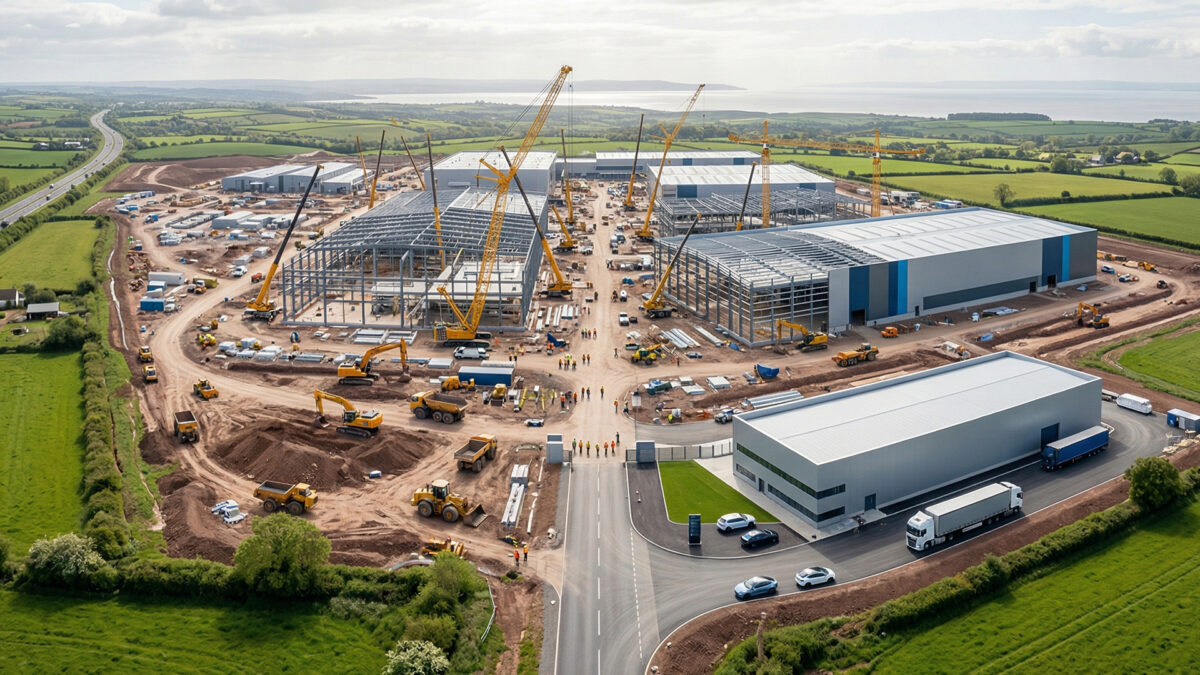
The UK government has announced a major funding boost of $510 million (£380 million) for Agratas, the battery arm of the Tata Group, to build a large electric vehicle (EV) battery plant in Somerset.

The new facility, often called a “gigafactory,” will manufacture batteries for electric cars and is expected to become one of the largest of its kind in the UK. Once fully operational, it will have the capacity to produce enough batteries to power hundreds of thousands of vehicles each year.

A major part of the production will supply Jaguar Land Rover, which is also owned by Tata Group. In the future, the plant could also cater to other carmakers, helping to strengthen the UK’s electric vehicle supply chain.

The funding is part of the UK’s wider plan to move towards cleaner energy and reduce reliance on imports for key technologies like EV batteries. By supporting domestic production, the government aims to make the country more competitive in the fast-growing electric vehicle market.

Officials say the project will also create thousands of jobs, both directly at the factory and indirectly through related industries. It is expected to bring investment into the region and support long-term economic growth.

The Somerset gigafactory is seen as a key step in the UK’s efforts to become a global hub for electric vehicle manufacturing. As demand for EVs continues to rise worldwide, countries are investing heavily in battery production to secure supply chains and stay ahead in the transition to cleaner transport.

For Tata Group, this project marks an important expansion of its global footprint in both the automotive and clean energy sectors. It also reflects the company’s growing focus on electric mobility.

Also Read: Wipro shares jump 3% on buyback buzz

Categories
1 Minute-Read

Wipro shares jump 3% on buyback buzz

Shares of Wipro rose about 3% after the company announced its board will consider a share buyback on April 16, alongside quarterly results. This would be its first buyback in three years, drawing strong investor interest.

The stock has declined over 20% this year, so the potential buyback is seen as a step to support prices and improve sentiment. While details such as size and price are yet to be disclosed, market expectations are building around a sizable offer. Analysts say the move could boost confidence amid ongoing weakness in the IT sector.