Categories
Corporate

Sensex jumps over 1,300 points, Nifty surges past 24,200 on global cues

Indian stock markets witnessed a strong rally on April 15, 2026, as benchmark indices surged sharply in early trade and sustained gains throughout the session. The upside was driven by positive global cues, easing geopolitical tensions, and a decline in crude oil prices, which boosted investor risk appetite across sectors.

The GIFT Nifty signalled a firm gap-up opening, which was reflected in domestic markets as both the Sensex and Nifty opened significantly higher. The Sensex surged by more than 1,300 points during intraday trade, while the Nifty 50 climbed above the 24,200 mark, maintaining a strong upward trajectory through the session.

Market sentiment improved following renewed hopes of US–Iran peace negotiations, which led to Brent crude slipping below the $100 per barrel level. This easing in oil prices helped reduce inflation concerns and improved expectations of stable corporate earnings. Additional support came from steady foreign institutional investor inflows and positive global equity trends.

Sector-wise, buying was broad-based, with financial services, banking, IT, metals, and PSU banks leading gains. Realty and auto also saw healthy traction, while FMCG and some defensive sectors lagged slightly amid profit booking. Mid-cap and small-cap stocks outperformed large caps, reflecting strong participation from retail investors.

Heavyweight stocks such as HDFC Bank, Reliance Industries, ICICI Bank, Infosys, and NTPC were among the key contributors to the index rally. However, some profit booking was seen in select auto and financial names.

According to market data, HDFC Life, Adani Enterprises, ICICI Bank, NTPC, and Tata Motors Passenger Vehicles were among the top gainers on the Nifty. On the other hand, stocks like Maruti Suzuki, Eicher Motors, Reliance Industries, Bajaj Finance, and InterGlobe Aviation were among the major laggards during the session.

Also Read: IBM settles US case over DEI practices

Categories
Technology

Microsoft to end Outlook Lite app

Microsoft has decided to discontinue its Outlook Lite, with the service set to shut down on May 25, 2026, as part of its broader strategy to streamline products.

Outlook Lite was built as a low-resource alternative for emerging markets, offering essential email features with minimal data usage. Its discontinuation signals a shift toward a unified app ecosystem centred around the main Outlook Mobile platform.

Microsoft has been gradually phasing out the app, including halting new downloads and encouraging existing users to migrate. Post shutdown, the Lite app will no longer support any functionality.

The company says the transition will not affect user data, as all information remains cloud-based and accessible via the primary app. The move highlights Microsoft’s focus on enhancing performance, security, and feature integration through a single, standardised application.

Also Read: Travel platform data breach exposes user details

Categories
Beyond

Fuel, fertiliser prices to stay high

Global prices of fuel and fertilisers are likely to stay high for a longer period, according to a joint warning by the International Monetary Fund (IMF), World Bank, and International Energy Agency (IEA).

The agencies said recent tensions in the Middle East have disrupted energy supplies, pushing up the cost of oil, gas, and fertilisers. These increases are already affecting economies around the world, especially countries that rely heavily on imports.

They cautioned that even if key shipping routes like the Strait of Hormuz return to normal, prices may not fall quickly. Supply chains take time to stabilise, and any damage to infrastructure or delays in production could keep costs elevated.

The impact is likely to be felt more in developing and low-income countries, where higher fuel prices can strain budgets and increase the cost of living. Rising fertiliser prices are also a concern, as they can make farming more expensive and affect food production.

This could lead to higher food prices, adding to the financial pressure on households. Businesses that depend on fuel and fertilisers may also face rising costs, which could slow down economic growth.

The agencies said they are working with governments to manage the situation, offering support and guidance where needed. However, they also stressed that uncertainty remains high, and global markets are still adjusting to the disruptions.

Also Read: Adani cargo shift plan draws US scrutiny

Categories
Corporate

ICICI Pru AMC profit at ₹763 cr in Q4

ICICI Prudential Asset Management Company reported a mixed set of results for the January–March quarter, with strong revenue growth but a decline in profit compared to the previous quarter.

The company posted a net profit of ₹763 crore in Q4. While this is higher than the same period last year, profit fell by around 16–17% compared to the previous quarter, reflecting some pressure from changing market conditions.

On the positive side, revenue saw a strong jump of about 23% year-on-year. This growth was driven by steady inflows into mutual funds and increased participation from retail investors. More people investing in equity and other funds helped boost the company’s earnings during the quarter.

The firm also saw improvement in its overall operations, with profit before tax crossing the ₹1,000 crore mark. This indicates that the core business remains strong despite short-term fluctuations.

Another highlight was the announcement of a dividend of ₹12.4 per share, signalling confidence in its financial health and future outlook.

The company has been benefiting from a growing interest in mutual funds across India, as more investors look beyond traditional savings options. This trend has helped increase its assets under management and supported steady revenue growth.

However, the quarter-on-quarter dip in profit shows that the business is still influenced by market movements and investor behaviour, which can change over short periods.

Also Read: IKS healthcare in talks for $600 mn TruBridge acquisition

Categories
Corporate

IKS healthcare in talks for $600 mn TruBridge acquisition

IKS Healthcare, a health-tech company backed by the family of late investor Rakesh Jhunjhunwala, is in talks to acquire US-based TruBridge for around $600 million. The potential deal, if finalised, would be one of the largest moves by the company as it looks to grow its presence in the United States.

IKS Healthcare provides technology and administrative support services to healthcare providers, helping them manage operations like billing and patient data. By acquiring TruBridge, the company hopes to strengthen its offerings, especially in serving hospitals and healthcare systems in the US.

TruBridge is known for providing healthcare IT solutions and revenue cycle management services, particularly to smaller and mid-sized hospitals. The acquisition could help IKS expand its client base and build a more comprehensive range of services by combining the strengths of both companies.

Reports suggest that IKS is planning to fund the deal through an all-cash transaction and is in discussions with global banks to raise financing. The funds would likely be used not only for the acquisition but also to manage TruBridge’s existing debt.

However, the deal is not yet final. IKS has clarified that discussions are ongoing and that no binding agreement has been signed so far. This means the acquisition is still subject to negotiations, regulatory approvals, and other conditions.

The move reflects a broader trend in the healthcare technology sector, where companies are expanding through acquisitions to scale up and stay competitive. For IKS, entering deeper into the US market could open up new growth opportunities and strengthen its position globally.

If the deal goes through, it would mark a significant milestone for the company and highlight the growing ambitions of Indian health-tech firms on the global stage.

Also Read: PPF plan builds ₹1 crore, ₹61,000 income

Categories
Beyond

PPF plan builds ₹1 crore, ₹61,000 income

The Public Provident Fund (PPF) continues to be one of the most trusted savings options in India, especially for those looking for safe and steady returns. A disciplined investment strategy in PPF can potentially help investors build a corpus of over ₹1 crore and generate a monthly income of around ₹61,000 in the long run.

PPF is backed by the government, making it a low-risk option. It currently offers an interest rate of 7.1% per year. While the returns may not be very high compared to market-linked investments, the real strength of PPF lies in consistency and compounding over time.

If an investor contributes the maximum allowed ₹1.5 lakh every year, the savings can grow significantly. After the initial 15-year lock-in period, the corpus can reach around ₹40 lakh. By extending the account in blocks of five years and continuing the same yearly investment, the total amount can grow to about ₹1 crore in 25 years.

Once this milestone is reached, the strategy shifts from saving to income generation. Instead of withdrawing the full amount, investors can keep the ₹1 crore in the account. At a 7.1% interest rate, this amount can generate roughly ₹7.3 lakh annually. This works out to nearly ₹61,000 per month, offering a steady income stream while keeping the main investment intact.

However, it’s important to understand that PPF does not provide monthly payouts. Withdrawals are allowed only once a year, so investors need to plan how they manage this income for monthly expenses.

Another major advantage of PPF is its tax benefits. Investments, interest earned, and maturity proceeds are all tax-free, making it especially attractive for conservative investors planning their retirement.

While future interest rates may change and inflation can affect real returns, PPF remains a reliable option for those who prefer stability over risk. With patience and regular contributions, it can serve as a strong foundation for long-term financial security.

Also Read: Gold at ₹93,400, Silver near ₹2.5 lakh

Categories
Beyond

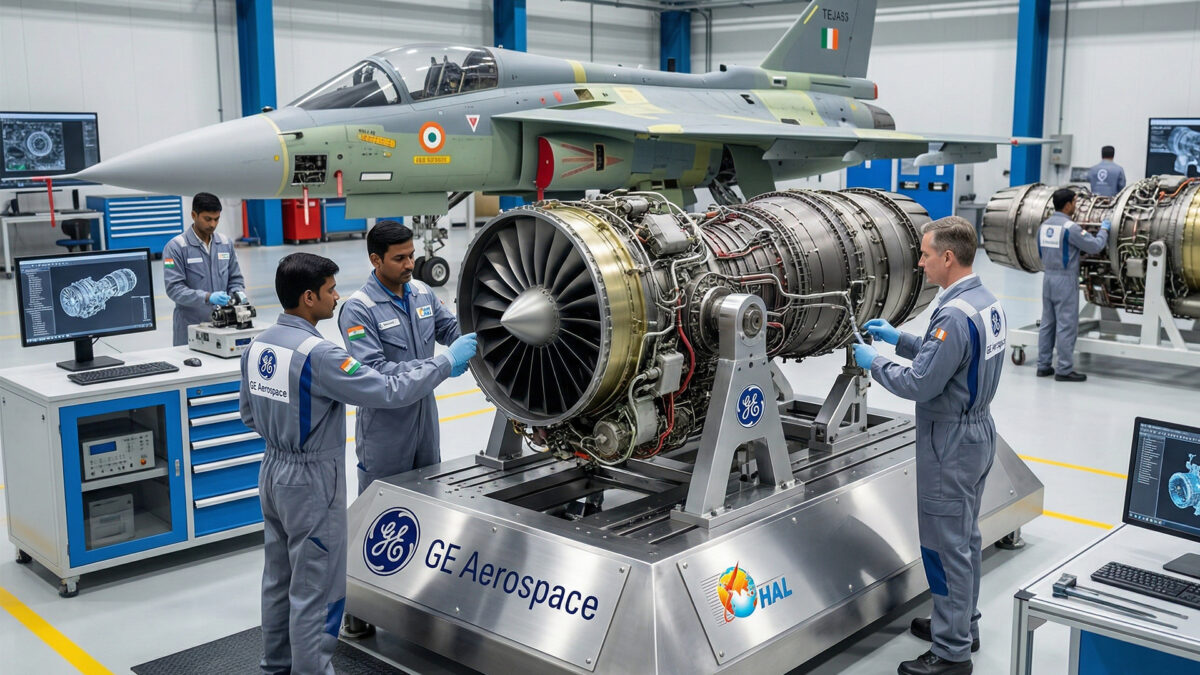
GE–HAL F414 jet engine deal nears final stage

GE Aerospace and Hindustan Aeronautics Limited (HAL) have wrapped up key technical discussions on the F414 fighter jet engine programme, bringing the long-pending deal a step closer to final approval.

The agreement is expected to support production of engines for India’s Tejas Mk2 fighter aircraft. Officials say the technical groundwork is now largely done, and both sides will next focus on pricing, approvals, and signing the final contract, which is likely later this year.

The deal is expected to involve co-production of around 99 F414 engines in India. A major part of the agreement is technology transfer, allowing HAL to manufacture several critical components locally, including advanced engine parts that are usually difficult to produce.

The programme is seen as a boost for India’s “Make in India” push in defence manufacturing. Jet engines are among the most complex technologies in aerospace, and local production is considered a significant step toward reducing dependence on imports.

The engines will power the Tejas Mk2, a more advanced version of India’s light combat aircraft designed to strengthen the Indian Air Force’s fleet. The aircraft is seen as important for closing gaps in squadron strength as older fighters are phased out.

Officials view the completion of technical talks as a key milestone that removes one of the main hurdles in the project. The focus now shifts to finalising commercial terms and securing government clearances.

Also Read: HSBC sees strong upside in ACME Solar, Clean Max

Categories
Corporate

Sensex falls below 700 points, Nifty below 23,900

Indian equity markets ended sharply lower on April 13, 2026, with benchmark indices extending losses amid weak global cues, rising crude oil prices, and continued foreign investor selling.

The Sensex dropped around 700 points, while the Nifty slipped below the 23,900 level, reflecting broad-based selling pressure across sectors. Market breadth stayed weak, with declining stocks far outnumbering gainers.

Sector-wise, FMCG, IT, energy, auto, and oil & gas stocks were among the major losers, each slipping around 1% or more. Heavyweight stocks in these sectors dragged the indices lower, adding to overall market weakness. Mid-cap and small-cap stocks also declined, showing that selling pressure was widespread and not limited to large-cap names.

On the other hand, select banking stocks and a few auto counters managed to hold up better, offering limited support to the market, though not enough to offset the broader decline.

Market sentiment was pressured by rising global uncertainty, particularly concerns around geopolitical tensions and their impact on crude oil prices. Higher oil prices raised worries about inflation and potential tightening in financial conditions.

Foreign institutional investors (FIIs) remained net sellers, continuing their recent trend of outflows from Indian equities. This sustained selling added further pressure on already fragile market sentiment.

Currency movements and bond yields also stayed under watch, with a weaker rupee and firm yields contributing to cautious trading behaviour among investors.

While earlier sessions had seen intermittent recoveries led by banking and IT stocks, the broader trend remains volatile as global risks continue to dominate sentiment.

Also Read: XChat to launch on iOS

Categories
Technology

XChat to launch on iOS

Elon Musk’s social media platform X is preparing to launch a new messaging service called XChat for iPhone and iPad users. The app is expected to go live later this month and is already listed for pre-order on Apple’s App Store.

XChat is being built as a separate messaging app from the main X platform, designed to focus purely on conversations. The idea is to give users a cleaner, more private space for messaging without the distractions of a social feed.

Privacy is a major selling point. The app is expected to use end-to-end encryption, meaning only the sender and receiver can read messages. It will also include features like disappearing messages, the ability to edit or delete sent texts, and options to block screenshots in chats.

XChat will also support larger group conversations, reportedly allowing hundreds of participants in a single chat. Voice and video calling will be included too, and users won’t need to share a phone number to connect.

Another key aspect is cross-device use, letting people switch smoothly between iPhone and iPad while continuing their chats. Reports also suggest the app will be ad-free and won’t track user activity, positioning it as a privacy-first alternative in the messaging space.

There are also hints that X’s AI assistant, Grok, may be integrated to help users inside chats, although some of those features may not work within encrypted conversations.

With XChat, the company is clearly aiming to move beyond traditional social media and build a more complete communication platform focused on private, secure interactions.

Also Read: Musk post reignites debate on COVID vaccine safety

Categories
Beyond

China, Iran use economy as tool in US rivalry

A new report highlights how China and Iran are increasingly using the global economy itself as a tool to counter US influence, showing how modern geopolitical tensions are moving beyond traditional warfare.

Instead of direct military confrontation, both countries are reportedly using trade, energy supplies, and critical resources to apply pressure on the United States and its allies. This approach reflects a growing trend where economic systems are being used as instruments of power.

China, for example, holds a strong position in the global supply of rare earth minerals, which are essential for electronics, electric vehicles, and defence equipment. By controlling or restricting access to these materials, it can influence global supply chains and affect industries that depend heavily on them.

Iran, on the other hand, has used its strategic location near the Strait of Hormuz, one of the world’s most important oil routes, to create uncertainty in global energy markets. Even the threat of disruption in this narrow waterway has previously led to sharp rises in oil prices and global concern.

The report suggests that these strategies mark a shift from conventional conflict to what experts describe as “economic warfare,” where financial systems, trade routes, and commodities become tools of influence.

The United States, which has long used sanctions and its financial system as a source of global leverage, is now facing similar tactics being used against it. This growing balance of economic pressure is reshaping how countries compete and respond to each other.

The effects are already being felt worldwide. Energy prices have become more volatile, supply chains are under strain, and businesses are facing rising costs. These pressures are eventually passed on to consumers, affecting everyday prices.

Also Read: Bajaj Housing shares dip 3% as 25% lock-in ends