Categories
Leaders

Fibrebond CEO gives $240 mn to employees as bonus

Fibrebond, a manufacturing company in Minden, Louisiana, has made headlines after CEO Graham Walker arranged $240 million in bonuses for employees as part of its $1.7 billion sale to Eaton. Unusually, none of the workers owned company stock, yet they will benefit directly from the deal.

Walker insisted that a portion of the sale proceeds be reserved for full‑time employees. As a result, 540 staff members will receive payouts averaging about $443,000 each, with long‑serving employees getting larger sums. Payments will be distributed over five years, provided employees remain with Fibrebond.

The bonuses are a reward for staying with the company through difficult times, including a factory fire, layoffs, salary freezes, and other challenges. Employees said they were shocked and grateful for the unexpected gift, using the funds for homes, debt repayment, education, and savings.

Fibrebond’s growth and sale were boosted by its move into modular power enclosures for data centres, which became highly sought after due to cloud computing and AI expansion.

Graham Walker’s approach stands out as a rare example of a CEO prioritising employee loyalty over stock ownership, sparking discussions about how companies can share success more broadly.

Also Read: WhatsApp status gets AI photo makeover

Categories
Technology

WhatsApp status gets AI photo makeover

WhatsApp is preparing to roll out AI-powered tools that allow users to creatively edit photos shared in their Status updates. With Meta AI integration, these features aim to make photo editing seamless and more imaginative, eliminating the need for third-party apps.

Currently, the tools are being tested in WhatsApp beta versions on both Android and iOS. Selected users can access an upgraded editing interface within the Status creation screen. Unlike traditional filters or stickers, the AI tools offer advanced transformations that can completely restyle or modify images.

The feature includes artistic themes such as Anime, Comic, Clay, Painting, 3D, and Kawaii. Instead of simply applying an overlay, the AI recreates the photo in the selected style. Users can also tap a “Redo” button to generate multiple variations until they find the preferred effect.

In addition to visual styles, the AI editor supports prompt-based editing. Users can type instructions to add or remove objects, tweak backgrounds, or enhance specific elements. The system fills in missing areas naturally, ensuring the edited photos look polished and realistic.

Another feature under testing is photo animation. Static images can be transformed into short animated visuals, adding movement and making Status updates more dynamic and engaging. This allows users to highlight moments in a lively, expressive way.

The rollout is gradual, starting with beta testers and eventually expanding to wider audiences after feedback and adjustments. Some users on stable app versions may also get early access in phases.

When fully launched, these Meta AI tools are expected to make WhatsApp Status a more creative space, enabling users to share and personalize photos effortlessly without leaving the app.

Also Read: Andhra Pradesh clears Vedanta’s 20 onshore wells

Categories
Corporate

E to E Transportation IPO opens with ₹164‑₹174 price band

E to E Transportation Infrastructure Ltd has launched its initial public offering (IPO) on December 26, 2025, aiming to raise around ₹84 crore through the NSE SME Emerge platform. The company, which specialises in engineering and system integration services for railway and transit infrastructure projects, has set its price band at ₹164‑₹174 per share.

The IPO includes a fresh issue of 48.4 lakh equity shares. Retail investors can apply for a minimum of 2 lots (1,600 shares), requiring an investment of approximately ₹2.78 lakh at the upper end of the price band. Non-institutional and high-net-worth applicants have slightly higher minimum subscription requirements. The subscription window will remain open until December 30, 2025.

Investor interest appears strong even before the IPO opens. The grey market premium (GMP) is around 75%, indicating positive sentiment and expectations of a strong listing. Informal trading suggests that the stock could debut near ₹300 per share, although grey market figures can fluctuate and do not guarantee actual listing prices.

Prior to the public offering, anchor investors were allotted 13.77 lakh shares on December 24, 2025, raising nearly ₹24 crore. Of these, 50% of shares are locked in for 30 days, while the remaining shares are under a 90-day lock-in period, helping stabilize the stock in the initial trading phase.

The company is promoted by Mukul Agrawal, who holds a 19.37% stake. The proceeds from the IPO will be primarily used to fund working capital requirements and general corporate purposes, supporting the company’s ongoing projects and operations.

The listing on the NSE SME platform is scheduled for January 2, 2026, and early investor activity suggests a potentially positive debut.

Also Read: Andhra Pradesh clears Vedanta’s 20 onshore wells

Categories
Corporate

Andhra Pradesh clears Vedanta’s 20 onshore wells

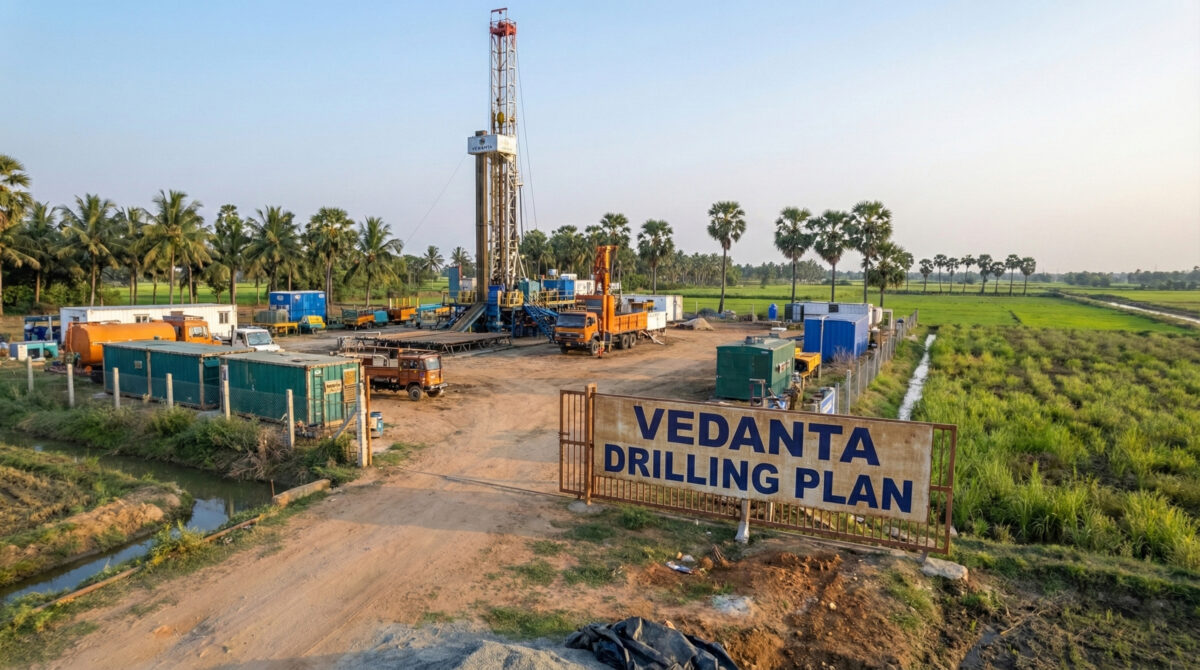
The Andhra Pradesh government has granted a conditional No Objection Certificate (NOC) to Vedanta Ltd for drilling 20 onshore oil and gas wells in Krishna district. The clearance has been issued to Cairn Oil & Gas, Vedanta’s oil and gas arm, under the Centre’s Discovered Small Field (DSF) Policy, which aims to boost domestic energy production.

Vedanta had originally proposed drilling at 35 locations in the region. However, after detailed scrutiny by the state’s irrigation and water resources departments, approval was limited to 20 sites. Officials said the decision was taken to ensure that oil and gas exploration does not affect the Krishna Delta’s extensive irrigation network, which supports thousands of farmers.

The NOC comes with strict safeguards. Vedanta has been clearly instructed not to draw water from canals, reservoirs, drainage systems, ponds or any other irrigation-linked water bodies for its drilling activities. Authorities have underlined that protecting water availability for agriculture remains a top priority, especially in canal-fed areas like Krishna district.

The state government also clarified that this NOC is only related to irrigation concerns. Vedanta must still obtain all other mandatory approvals, including environmental clearances, pollution control permissions and local administrative consents, before starting drilling operations. Any violation of the conditions could lead to withdrawal of the approval, officials warned.

The move reflects Andhra Pradesh’s effort to strike a balance between supporting energy exploration and safeguarding critical natural resources. Onshore oil and gas blocks developed under the DSF policy are seen as quicker and more economical to develop compared to offshore fields. They also align with India’s broader objective of reducing dependence on imported crude oil and gas.

Vedanta’s Cairn Oil & Gas is one of India’s largest private-sector oil producers and plays a significant role in domestic energy supply. With the conditional clearance now in place, the company can move forward with preparatory work, while closely adhering to the safeguards laid down by the state.

The government has said it will closely monitor the project to ensure compliance and protect the interests of farmers and local communities as exploration progresses.

Also Read: DGCA submits probe report on IndiGo disruptions

Categories
Beyond

DGCA submits probe report on IndiGo disruptions

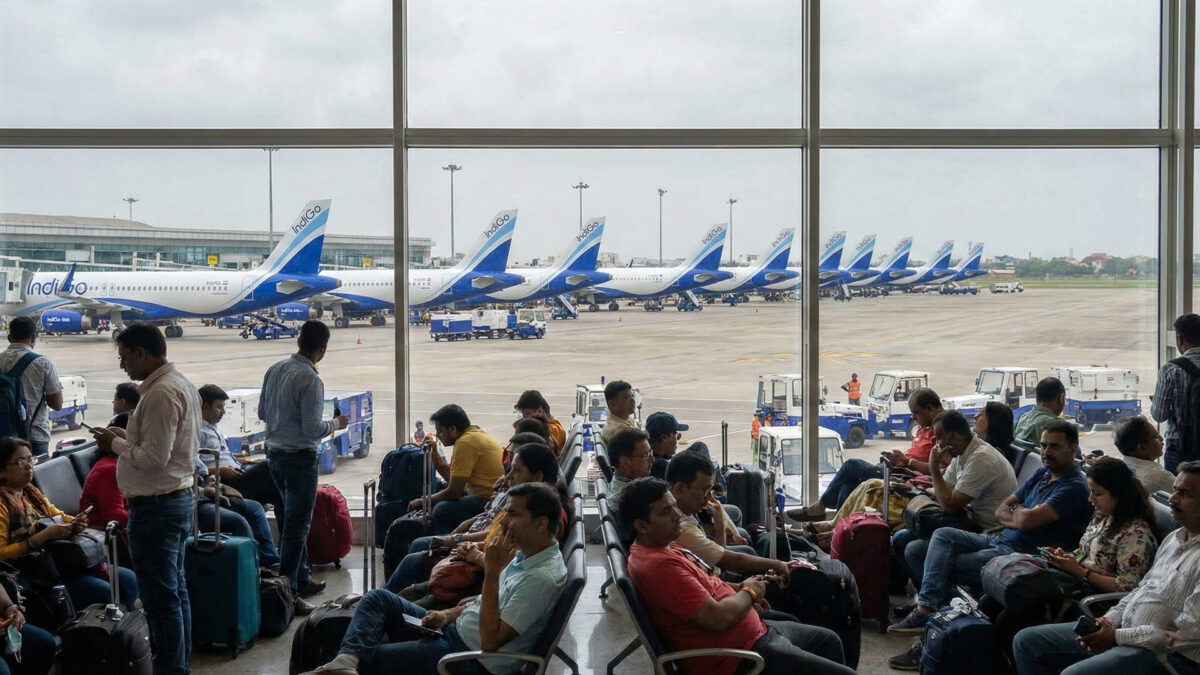
The Directorate General of Civil Aviation (DGCA) has submitted its investigation report into the recent large-scale flight disruptions at IndiGo to the Ministry of Civil Aviation. The report follows weeks of scrutiny after thousands of passengers were affected by widespread cancellations and delays across the airline’s domestic network earlier this month.

A four-member committee was set up by the aviation regulator on December 5 to examine what led to the operational breakdown. The panel reviewed IndiGo’s crew planning systems, roster management, compliance with revised Flight Duty Time Limitation (FDTL) norms, and overall preparedness for schedule changes during the busy travel season. The findings of the report have been kept confidential while the government studies the recommendations.

IndiGo, India’s largest airline by market share, faced severe disruption when a large number of flights were cancelled within a short period, followed by prolonged delays over several days. The airline informed the regulator that challenges in forecasting pilot and cabin crew availability, along with training and rostering gaps, contributed to the crisis. These issues reportedly escalated after new duty time rules came into force.

In response to the situation, the DGCA had earlier ordered a temporary reduction in IndiGo’s winter schedule and issued show-cause notices to senior executives, including top management, seeking explanations for the failures. The regulator also stressed that airlines must ensure full operational readiness before implementing schedule expansions.

With the probe report now submitted, officials have indicated that strict action could follow. Possible measures include financial penalties, tighter regulatory oversight, and directions to strengthen internal systems to prevent recurrence. The government has signalled that accountability will be enforced to protect passenger interests and ensure operational discipline.

Also Read: Gujarat Kidney IPO subscribed 5×, allotment due

Categories
Leaders

Elon Musk rewrites Tesla mission for more joy

Tesla CEO Elon Musk has once again drawn attention to the power of words by announcing a change in how the company describes its long-term mission. The phrase “Sustainable Abundance” is being replaced with “Amazing Abundance,” a move Musk says is intended to bring more joy and emotional warmth to Tesla’s vision of the future.

The update was shared in a short post on Musk’s platform X, where he explained that while sustainability remains central to Tesla’s philosophy, the word amazing better reflects the excitement and possibility he associates with technological progress. The message was simple, but it quickly sparked discussion about how companies communicate purpose in an era shaped as much by emotion as by innovation.

The revised wording ties into Tesla’s Master Plan Part IV, its latest long-term roadmap that looks far beyond cars. The plan outlines ambitions spanning clean energy, artificial intelligence, robotics, and automation, all aimed at improving quality of life while reducing environmental harm. In that context, “Amazing Abundance” suggests not just efficiency or responsibility, but a future that feels aspirational and rewarding.

Importantly, Tesla’s official mission statement remains unchanged: accelerating the world’s transition to sustainable energy. There are no new targets, products, or policy shifts attached to the wording change. Instead, it appears to be a reframing exercise, one that places emphasis on how the destination feels, not just how it is achieved.

Some analysts view the move as a reflection of broader trends in corporate leadership, where purpose-driven storytelling plays a growing role in motivating employees and connecting with the public. Others see it as Musk responding to a challenging moment for the global EV industry, marked by rising competition, cautious consumers, and tighter scrutiny of big tech leaders.

The shift also highlights a subtle tension in modern innovation narratives. While sustainability speaks to responsibility and restraint, abundance suggests growth, access, and opportunity. By choosing “amazing,” Musk may be trying to bridge that gap—presenting a future that is not only cleaner, but also exciting and emotionally compelling.

This change may not alter Tesla’s strategy, but it reshapes the story it tells. And in a company built as much on vision as on engineering, that story can be nearly as influential as the technology itself.

Also Read: North Korea reveals first nuclear submarine

Categories
Corporate

Bharat Taxi promises higher driver earnings

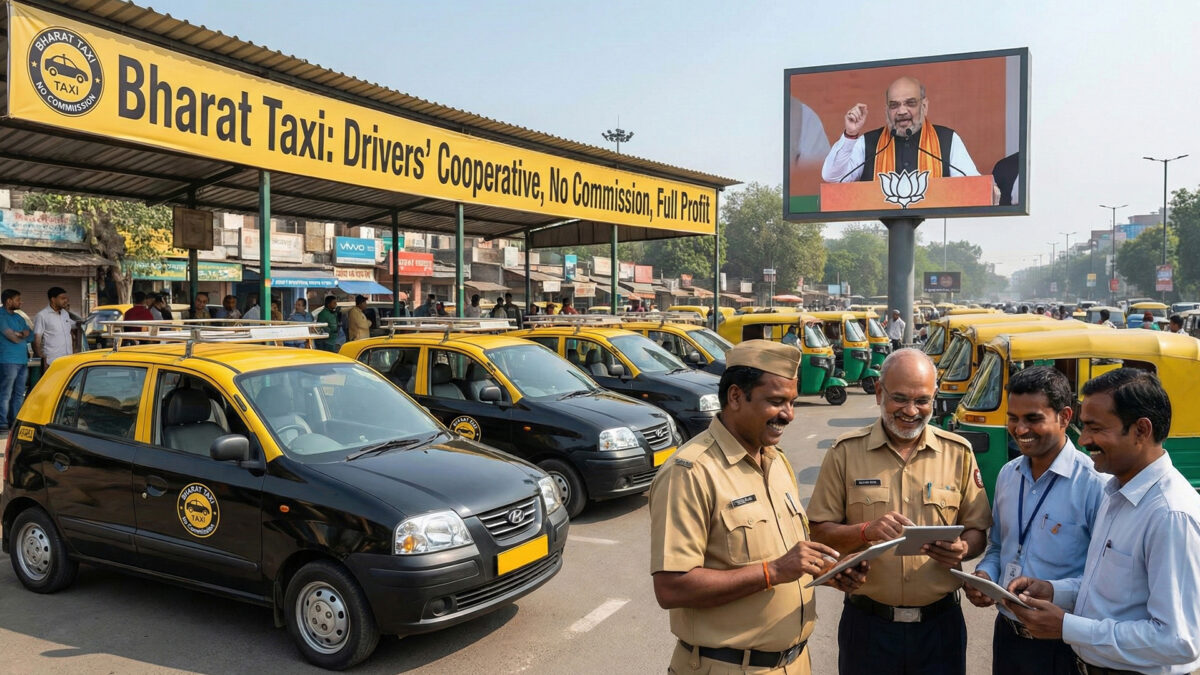
The  government is gearing up to launch a new ride-hailing service, Bharat Taxi, aimed at empowering taxi drivers and providing them a fairer share of ride earnings. Announcing the initiative, Union Home and Cooperation Minister Amit Shah said the platform will operate under a cooperative model, ensuring drivers retain most, if not all, of the profits from their trips.

Unlike existing private taxi apps such as Uber and Ola, where the platform takes a significant commission, Bharat Taxi is designed to reduce drivers’ dependence on corporate firms. “Every penny of profit will go to the drivers,” Shah emphasized during an event in Panchkula, Haryana. The platform is managed by the Sahakar Taxi Cooperative Ltd, a multi-state cooperative registered under the MSCS Act.

The service is expected to boost incomes for cab drivers, providing not only higher earnings but also benefits like insurance coverage. Officials highlighted that the cooperative structure allows drivers to be stakeholders in the platform, giving them more control over pricing, operations, and decision-making.

Bharat Taxi will operate across multiple vehicle segments, including cabs, motorcycles, and autorickshaws, expanding job opportunities while making affordable transport more accessible to the public. Pilot operations have already begun in select cities, and a full nationwide rollout is anticipated in the coming months.

Experts say this initiative could transform India’s ride-hailing ecosystem, offering an alternative to corporate apps while prioritizing driver welfare. With its cooperative framework, Bharat Taxi is expected to attract thousands of drivers seeking better financial stability and working conditions.

The government hopes this platform will become a model for future driver-owned services, promoting economic inclusion and sustainable livelihoods for taxi operators across the country.

Also Read: Infosys hikes fresher pay up to Rs 21 lakh

Categories
Corporate

Coforge shares fall on $1billion deal talk

Shares of Indian IT firm Coforge slipped in early trade on Friday as investors monitored reports of a potential $1 billion acquisition and an upcoming fundraising decision. The stock opened lower on the National Stock Exchange, trading around Rs 1,724.3, down 0.77 percent. Over the past five trading sessions, Coforge shares have fallen about 6.5 percent, underperforming some mid-tier IT peers amid investor caution regarding possible equity dilution from fresh capital raising.

Reports suggest Coforge is in advanced discussions to acquire US-based digital engineering company Encora, a firm backed by private equity investor Advent International. Though neither company has confirmed the deal, sources indicate the proposed transaction could be valued at over $1 billion. If completed, the acquisition is expected to strengthen Coforge’s presence in cloud, data, and product engineering, while expanding its footprint in key international markets, particularly in the US.

Alongside the potential acquisition, Coforge has scheduled a board meeting on December 26 to consider a fundraising proposal. While the company has not explicitly tied the capital raising to the Encora deal, analysts note that a fresh infusion of funds could provide financial flexibility for strategic acquisitions. Investors are drawing parallels to a similar move in 2023, when Coforge raised Rs 2,240 crore through a Qualified Institutional Placement (QIP) to fund its purchase of Cigniti Technologies.

Despite short-term market jitters, Coforge’s fundamentals remain robust. The company has been among the faster-growing mid-tier IT firms in India, with consistent revenue growth and a focus on expanding key verticals such as banking, insurance, and travel. Analysts suggest that the stock’s near-term performance will likely hinge on updates regarding the Encora deal and the board’s fundraising decision.

Market watchers are also keeping an eye on broader IT sector trends and investor sentiment, noting that while acquisitions often bring long-term growth potential, they can also lead to temporary volatility in share prices. For Coforge, the next few days could prove pivotal in shaping both investor confidence and stock performance.

Also Read: India tests long-range submarine K‑4 missile

Categories
Corporate

Infosys hikes fresher pay up to Rs 21 lakh

Infosys has significantly increased entry-level salaries for fresh graduates, offering packages of up to Rs 21 lakh per annum for specialised technology roles. The move is part of the company’s strategy to attract top talent in advanced digital and AI-related fields and positions it as a market leader in entry-level IT pay.

The company’s new salary structure is tiered to reward expertise in high-demand digital domains. Specialist Programmer L3 (Trainee) roles now offer Rs 21 lakh, L2 roles offer Rs 16 lakh, L1 roles Rs 11 lakh, and Digital Specialist Engineer positions start at Rs 7 lakh per annum. These packages are aimed at graduates from BE, BTech, ME, MTech, MCA, and integrated MSc programmes in computer science, IT, electronics, and related engineering streams.

Shaji Mathew, Infosys Group Chief Human Resources Officer, said the revised packages reflect the company’s commitment to building a workforce capable of delivering cutting-edge digital and AI solutions. “We are expanding our campus and off-campus hiring drives to bring in digitally skilled graduates under the specialist track, aligning talent acquisition with our AI-First strategy,” he added.

This revision marks a significant departure from the traditionally flat starting salaries in India’s IT sector, which often failed to keep pace with inflation or the rising demand for digital expertise. By offering differentiated pay for specialised roles, Infosys aims to attract graduates with the skills required to support its growing focus on artificial intelligence, cloud computing, and other emerging technologies.

The pay hike comes amid steady hiring momentum at Infosys, which onboarded around 12,000 freshers in the first half of fiscal 2025–26 and is targeting 20,000 graduates for the year. Other IT peers, including Tata Consultancy Services and HCLTech, have also introduced specialised pay tracks, but their top-tier offers remain below Infosys’s new benchmarks.

Also Read: North Korea reveals first nuclear submarine

Categories
Beyond

India tests long-range submarine K‑4 missile

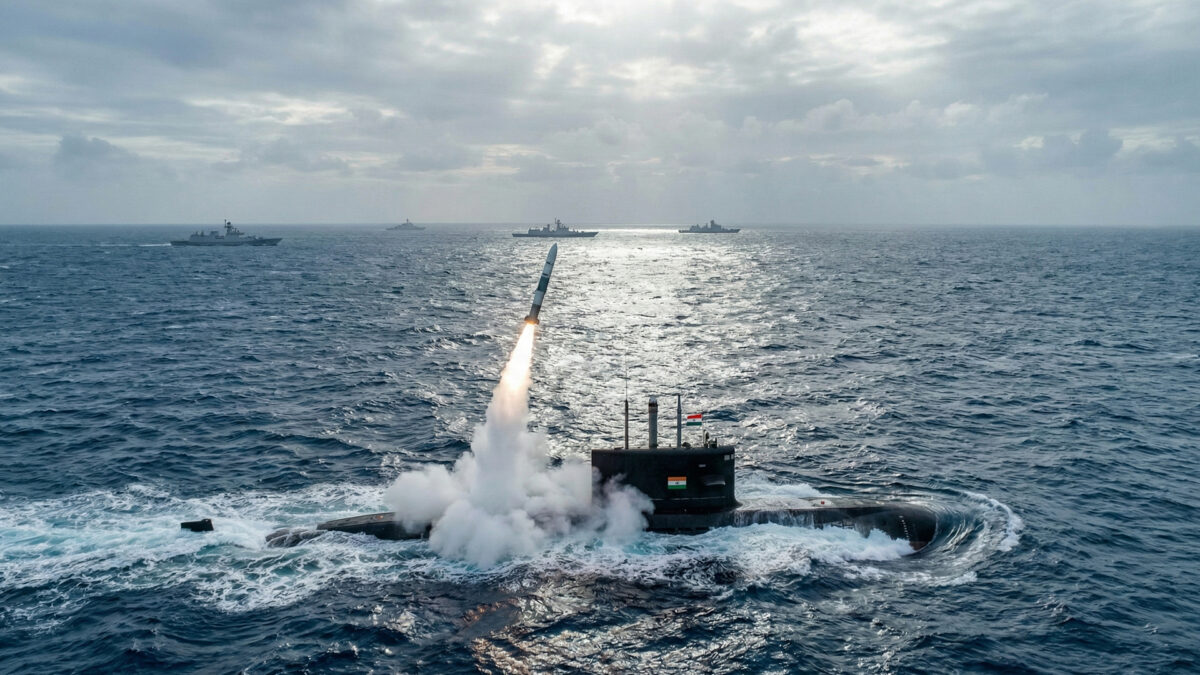
India has successfully test-fired its K‑4 submarine-launched ballistic missile (SLBM) from the nuclear-powered submarine INS Arighaat in the Bay of Bengal. The missile, with a range of 3,500 kilometres, represents a major step forward in strengthening India’s sea-based nuclear deterrence.

The launch was conducted under the supervision of the Strategic Forces Command. Defence analysts describe it as a significant move in boosting India’s “second-strike” capability, ensuring that the country retains the option to respond even if faced with a nuclear attack. The test underlines India’s progress toward operationalising a credible nuclear triad – the ability to deploy nuclear weapons from land, air, and sea.

Developed by the Defence Research and Development Organisation (DRDO), the K‑4 missile is a solid-fuel, intermediate-range weapon. It can carry a nuclear warhead of up to 2.5 tonnes. Designed for underwater launch, the missile exits the submarine, rises through the water, and then ignites its rocket motor to reach distant targets.

Previously, India’s submarines carried K‑15 missiles with a shorter range of around 750 km. The K‑4 dramatically extends the reach of India’s sea-based strategic forces, allowing for more flexible deployment and greater deterrence.

INS Arighaat, commissioned in August 2024, is India’s second nuclear-powered ballistic missile submarine. Its integration with the K‑4 missile marks a key milestone in strengthening the operational readiness of India’s strategic submarine fleet.

Although the Defence Ministry has not released an official statement, analysts say the test signals India’s growing strategic capabilities. With this achievement, India joins a small group of countries capable of firing long-range nuclear missiles from submarines, enhancing regional security posture and deterrence.

Also Read: North Korea shows first nuclear submarine