Categories
Beyond

India’s January retail inflation at 2.75%

India’s retail inflation for January 2026 rose to 2.75% year-on-year, according to the first reading from the updated Consumer Price Index (CPI) series with base year 2024. This marks the debut of a new methodology aimed at better reflecting modern household spending patterns. The previous CPI series, based on 2012 data, is now replaced to include more goods and services and updated weights for different items.

The new CPI also reduces the weight of food and beverages, which historically caused high volatility in overall inflation. Experts say this makes the new series a more accurate measure of current consumer price trends, helping policymakers and analysts better track inflation dynamics.

Food prices, which had seen declines for the past seven months, returned to positive territory in January, rising 2.13%. While food inflation has moderated, prices of housing and services saw slight increases, contributing to the overall CPI. Despite these shifts, the 2.75% figure remains comfortably within the Reserve Bank of India’s 2–6% target range, signalling that price pressures are moderate and unlikely to spur immediate policy changes.

Economists note that comparisons with historical CPI figures should be made cautiously due to the base-year revision. However, the updated methodology is expected to provide a realistic picture of how households spend today, capturing a broader range of goods, services, and lifestyle-related expenses.

The government’s move to revise the CPI reflects an effort to modernize statistical reporting and improve the reliability of economic indicators. This change will help in more informed decision-making for monetary policy, wage adjustments, and planning of social welfare programs.

Also Read: Citigroup CEO Jane Fraser’s $42 mn pay sparks debate

Categories
Leaders

Citigroup CEO Jane Fraser’s $42 mn pay sparks debate

Citigroup has increased the total compensation of its CEO Jane Fraser to $42 million for 2025, marking a significant rise from the previous year.

The bank’s board approved the higher pay after a strong year for the company’s stock and financial performance. Citi’s share price surged sharply over the past year, outperforming several other major Wall Street banks. The board said the increase reflects confidence in Fraser’s leadership and her efforts to strengthen the bank’s long-term position.

Fraser’s compensation package includes a base salary, cash incentives, and a large portion in stock awards tied to performance. Much of the payout depends on how well the bank continues to perform in the coming years.

However, the pay hike comes at a time when the bank is undergoing major restructuring. Citi has been cutting jobs as part of a broad turnaround strategy aimed at simplifying operations and reducing costs. The company has already reduced its workforce and is expected to eliminate thousands more roles as part of its multi-year transformation plan.

Fraser has been leading efforts to streamline the bank’s global operations, exit non-core businesses, and focus on key markets. The restructuring is designed to make Citi more competitive and improve profitability after years of lagging behind some of its peers.

The contrast between executive compensation and job cuts has drawn attention, but the board maintains that the pay package is performance-based and aligned with shareholder returns.

Citi says the restructuring will ultimately create a stronger and more efficient bank, positioning it for sustained growth in the future.

Also Read: Muthoot Q3 profit jumps 95%, stock slides 10%

Categories
1 Minute-Read

ONGC posts 16% rise in standalone Q3 profit

Oil and Natural Gas Corporation (ONGC) reported a 16% year-on-year rise in its standalone net profit for the October–December quarter.

The company posted a profit of ₹8,372 crore compared to the same period last year. However, revenue from operations saw a slight decline due to softer crude prices. ONGC’s consolidated net profit rose sharply, supported by improved performance from subsidiaries.

The board also announced a second interim dividend of ₹6.25 per equity share, with February 18 set as the record date. Stable crude production and better gas realisations helped the company maintain strong financial performance during the quarter.


Categories
Corporate

Hindalco Q3 profit slumps 45% on one-time hit

Hindalco Industries reported a sharp decline in its third-quarter profit, even as its revenue showed healthy growth. The company’s consolidated net profit fell 45% year-on-year to ₹2,049 crore for the December quarter, mainly due to a large one-time expense.

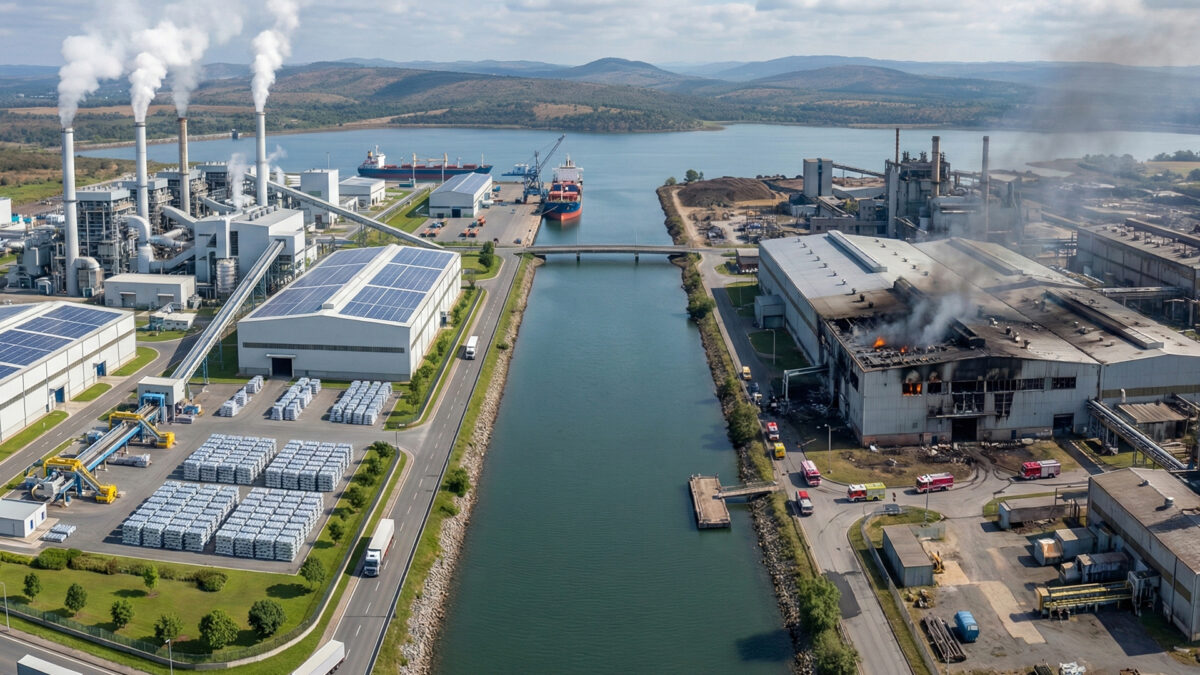
The drop in earnings was caused by an exceptional charge of ₹2,610 crore linked to disruptions at its Oswego aluminium facility in the United States. The plant is operated by Hindalco’s subsidiary Novelis, which faced fire-related disruptions during the quarter. This significantly affected overall profitability.

Despite the fall in net profit, the company’s operational performance remained steady. Revenue from operations rose 14% year-on-year to ₹66,521 crore, supported by improved realisations and stable demand across its aluminium and copper businesses.

When adjusted for the one-time impact, Hindalco’s underlying profit before exceptional items actually increased compared to the same period last year, indicating resilience in its core business operations.

The India business continued to perform well, benefiting from better metal prices and cost efficiencies. The copper segment also contributed positively during the quarter.

The results reflect a mixed quarter for the metals major, strong revenue growth and stable core operations on one hand, but a significant one-off setback affecting reported profit on the other.

Also Read: AI jitters trigger global stock market selloff

Categories
Beyond

AI jitters trigger global stock market selloff

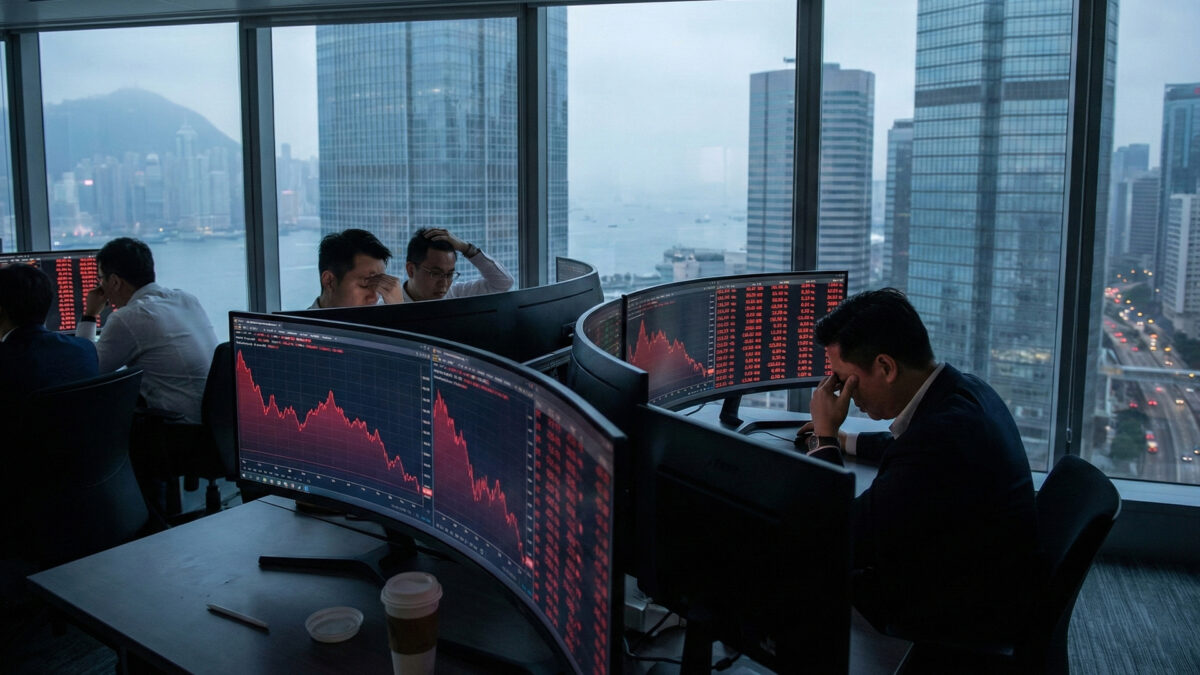
In the United States, major indices closed lower. The S&P 500 dropped around 1.6%, while the tech-heavy Nasdaq 100 fell nearly 2%. Investors became worried that heavy spending on AI may not quickly translate into strong profits for companies, especially large technology firms.

The weakness in the US affected Asian markets the next day. The MSCI Asia Pacific Index slipped about 0.7%, with shares in Japan and South Korea among the biggest losers. Technology stocks were hit the hardest, as global investors reduced exposure to riskier assets.

Back in India, markets also reacted to global cues. The Sensex and the Nifty 50 saw notable declines, mainly due to selling in IT and tech-related stocks. Broader market sentiment remained weak as traders tracked international developments.

Apart from AI concerns, investors are also watching US economic signals closely. A strong jobs report has reduced expectations that the Federal Reserve will cut interest rates aggressively this year. Higher interest rates generally make investors more cautious, especially toward growth stocks.

Also Read: Rolls-Royce bets bigger on India after PM Modi meet

Categories
Corporate

Rolls-Royce bets bigger on India after PM Modi meet

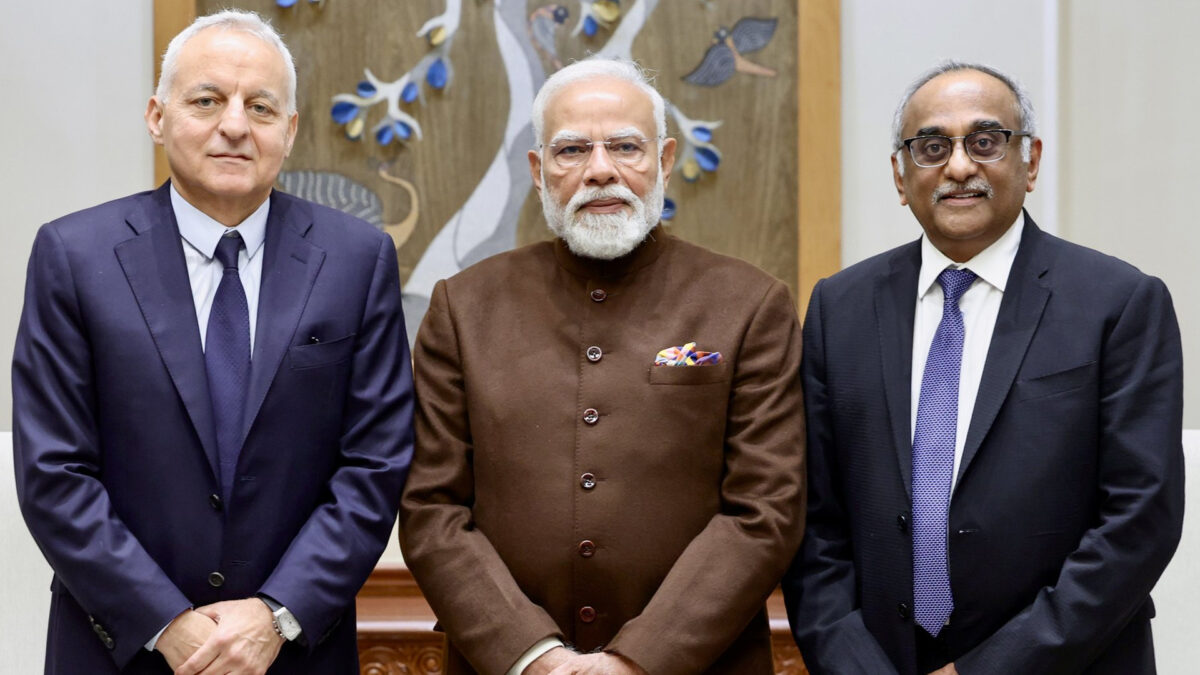
A day after meeting Prime Minister Narendra Modi, British engineering powerhouse Rolls‑Royce announced an ambitious plan to deepen its presence across India’s air, land and sea defence sectors.

The company’s CEO Tufan Erginbilgic outlined a roadmap that goes beyond business expansion, it signals a long-term bet on India’s talent and industrial strength. Rolls-Royce plans to more than double its India workforce from around 4,000 to nearly 10,000 employees in the coming years. It also aims to sharply increase sourcing from Indian suppliers, creating fresh opportunities for MSMEs and local manufacturing partners.

At the heart of the expansion is defence collaboration. Rolls-Royce has proposed co-developing a next-generation combat jet engine in India with full transfer of technology, including intellectual property rights and this aligns with India’s push for self-reliance in critical defence technologies. The proposal could play a key role in powering India’s future fighter aircraft programmes.

The company is no stranger to India’s defence ecosystem. More than 1,400 Rolls-Royce engines already power key Indian military platforms, from Jaguar fighter jets and Hawk trainer aircraft to naval vessels and even the Arjun battle tank. The new expansion aims to build on this decades-long partnership.

Beyond defence, Rolls-Royce is looking at strengthening its footprint in civil aerospace, power systems and digital engineering. Its Global Capability and Innovation Centre in Bengaluru is expected to become a hub for advanced engineering and research.

Also Read: Global tech leaders gather for India AI Summit

Categories
Beyond

Gold ₹1,54,800, silver ₹2,41,800, prices bounce back

Gold and silver prices in India recovered on Friday after a recent slump, driven by bargain hunting from investors. On the Multi Commodity Exchange (MCX), gold for April delivery rose about 1.3% to ₹1,54,800 per 10 grams, while silver for March delivery climbed around 2.2% to ₹2,41,800 per kilogram. Traders said the rebound reflects buying at lower levels after the sharp sell-offs earlier this week.

Despite the recovery, silver remains roughly 42% below its peak, highlighting the continuing volatility in the market. Analysts say the recent upswing is short-term, largely fueled by investors looking to seize value after prices dipped.

Global markets mirrored this trend. Spot gold rebounded nearly 1% to around $4,966 per ounce, while spot silver gained over 2%, recovering from earlier losses. However, strong US economic data, particularly employment figures, tempered hopes of imminent interest rate cuts, keeping precious metals under some pressure.

Market experts note that while prices are volatile, the long-term outlook for both gold and silver remains positive. Central bank buying and safe-haven demand continue to provide support. Additionally, inflows into gold and silver exchange-traded funds (ETFs) indicate steady investor interest.

For buyers, the current situation presents both opportunity and caution. Bargain hunting has fueled recent gains, yet overall prices are still far below previous highs, emphasizing the need for careful, measured investing in these metals.

Also Read: Sensex drops 750+ points, Nifty slips below 25,600

Categories
Corporate

Sensex drops 750+ points, Nifty slips below 25,600

Markets opened sharply lower on Friday, February 13, 2026, with the BSE Sensex dropping over 750 points and the NSE Nifty50 slipping below 25,600. Weak global cues and a heavy sell-off in IT stocks led the steep decline, creating broad-based bearish sentiment across Dalal Street.

The IT sector bore the brunt of the selling. Large-cap technology names, including Infosys, Tata Consultancy Services, and Wipro, were among the top losers, as investors grew concerned about slowing global demand and pressure on margins. This dragged the broader market lower, with all major indices trading in the red.

In contrast, banking and financial stocks showed relative resilience. Shares of State Bank of India, HDFC Bank, and ICICI Bank gained, providing some cushion to the market. Defensive stocks in sectors such as FMCG also saw minor gains, reflecting investors’ cautious rotation into safer bets amid volatility.

Analysts attributed the fall to multiple factors. Global markets were weaker, particularly in the tech space, following disappointing U.S. data and softer cues from Asian markets. Investors also remain watchful of domestic indicators and sector-specific headwinds, including regulatory developments and corporate earnings reports.

The sharp market slide wiped out significant wealth from investor portfolios, with estimates suggesting multi-lakh-crore losses across the indices. Traders advised caution, noting that the market could remain volatile in the coming sessions as it absorbs both domestic and global developments.

Also Read: Adani Power launches unit to enter nuclear energy

Categories
Corporate

Google offers exit to staff not ready for AI shift

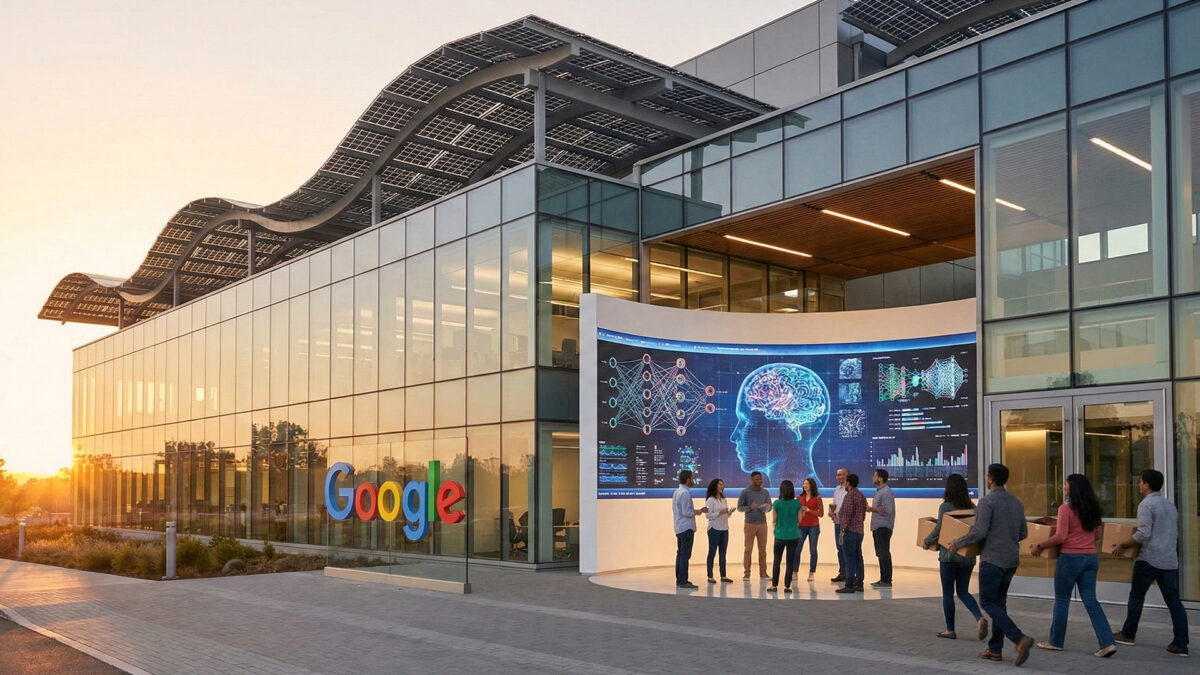
Google is giving some employees the option to leave the company voluntarily as it focuses more on artificial intelligence (AI). Staff who feel they cannot keep up with the company’s AI plans or are not fully committed can take severance packages to help them transition out.

The offer is mainly for employees in the Global Business Organisation (GBO), including teams in sales support, corporate development, and solutions. However, large customer-facing sales teams in the US and some frontline staff are not included, to avoid affecting clients.

Philipp Schindler, Google’s Chief Business Officer, told staff that the company started 2026 in a strong position but needs everyone to be fully engaged with AI to stay competitive. He emphasized that the technology world is changing fast, and Google wants employees who are “all in” on AI.

This is not the first time Google has done this. Over the past year, similar exit options were offered to teams in engineering, Android, Core, and YouTube as part of reorganizing around AI and productivity.

Industry experts say this is part of a broader trend in big tech. Companies like Amazon, Meta, and Microsoft are also reshaping teams and offering incentives or restructuring to focus on AI.

For employees, the program is a chance to leave voluntarily with financial support if they feel their skills or interests don’t match Google’s AI direction. For the company, it allows a smoother transition to an AI-first workforce without major layoffs.

Also Read: Zomato founder flooded with 8,000 emails

Categories
1 Minute-Read

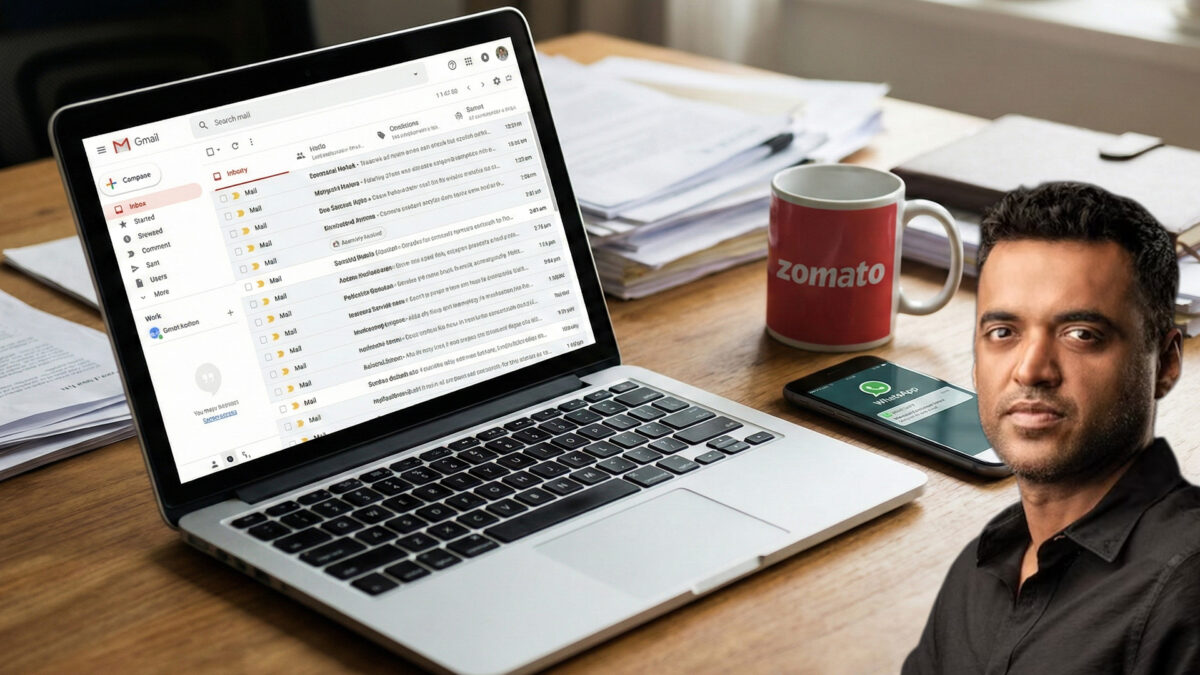
Zomato founder flooded with 8,000 emails

Zomato founder Deepinder Goyal said he received over 8,000 emails after reaching out to former employees via a dedicated email.

About half were from past staff, the rest from hopeful new joiners, many sharing personal stories.

Calling the responses “full of emotions and honesty,” Goyal said it’s hard to reply to all quickly and suggested those who know him well to contact him via WhatsApp for faster responses.