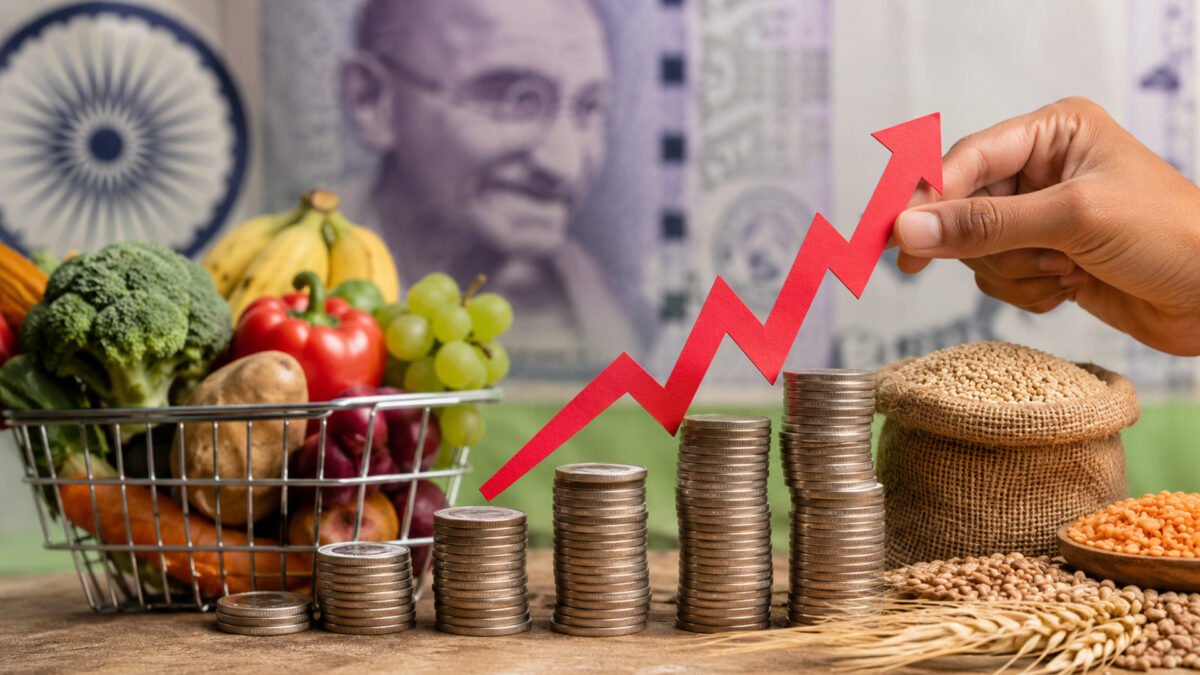
India’s retail inflation rose to 4.45% in July, marking a second consecutive month above the Reserve Bank of India’s (RBI) 4% medium-term target and pointing to renewed pressure on household budgets. The latest Consumer Price Index (CPI) reading was higher than the 4.38% recorded in June, with food prices emerging as the main driver of the increase.
The July inflation figure, released by the Ministry of Statistics and Programme Implementation (MoSPI), remains comfortably within the RBI’s broader tolerance band of 2% to 6%. However, it is the highest reading recorded under the new 2024-base-year CPI series, making the latest data important for policymakers as they assess the direction of prices and interest rates.
For ordinary households, the biggest concern continues to be food inflation. The Consumer Food Price Index (CFPI) rose to 5.52% in July from 5.32% in June. The increase was linked to higher prices of several food items, including ginger, garlic and onions. Tomato prices, however, moved in the opposite direction and helped limit the overall rise in food prices.
The latest numbers also show a noticeable difference between rural and urban consumers. Rural inflation increased to 4.84% in July, while urban inflation stood at 3.96%. The gap suggests that price pressures remain more pronounced in rural India, where food and essential commodities account for a larger share of household spending.
The government data showed that the rise in headline inflation was not limited to food. Higher prices were also recorded in categories such as personal care and social protection, restaurants and accommodation services, food and beverages, and intoxicants. Among individual items, precious-metal jewellery, including silver, gold, diamond and platinum jewellery, recorded some of the highest inflation rates.
At the other end of the scale, some products recorded relatively low inflation or price declines. Potato, motor cars and jeeps, lady’s finger, peas and tomatoes were among the items with lower inflation rates in July. The mixed movement across individual products highlights how changes in prices are affecting different sections of the consumer basket in different ways.
The July data also puts the spotlight on the monsoon. Reuters reported that weaker rainfall contributed to higher prices of ginger, garlic and onions. A recovery in rainfall could help improve supplies and ease food inflation in the coming months. At the same time, weather-related risks remain an important factor for the inflation outlook, particularly because agricultural supply has a direct impact on food prices.
Energy prices are another concern. India remains heavily dependent on imported crude oil, making domestic inflation sensitive to movements in international energy markets. Reuters reported that global crude prices remained elevated in July despite a temporary easing in the conflict-related pressure on oil markets. Domestic fuel prices did not undergo significant additional changes during the month, limiting the immediate impact on consumers.
Transport inflation nevertheless edged higher to 4.43% in July from 4.31% in June. This matters because transport costs can eventually feed into the prices of goods and services by raising logistics and distribution expenses. Any sustained increase in fuel and transportation costs could therefore create wider inflationary pressure.
The latest inflation reading is unlikely to immediately change the RBI’s interest-rate stance. The central bank kept its benchmark policy rate unchanged at its latest meeting, choosing to wait for clearer evidence on whether price pressures were becoming broad-based. Since the July CPI reading remains within the RBI’s 2%-6% tolerance range, economists do not expect an immediate rate hike.
Still, policymakers will be watching the trend closely. Reuters cited economists who expect inflation to move above 5% from September if price pressures persist. One estimate pointed to the possibility of a 25-basis-point rate hike in December if inflation becomes more persistent and begins influencing expectations.
Core inflation, which excludes volatile food and fuel prices, was estimated at 3.9% in July. That figure is significant because it suggests that underlying price pressures remain more contained than the headline CPI number indicates. India does not publish an official core inflation measure; economists calculate it using detailed CPI data.
The RBI has already revised its inflation outlook for 2026-27, cutting its headline inflation forecast by 10 basis points to 5%. The central bank will now have to balance the need to support economic growth with the risk that higher food, fuel and service prices could keep inflation above its 4% target for longer.