Categories
Technology

Indian AI channel ‘Bandar Apna Dost’ tops YouTube

An India-based YouTube channel, Bandar Apna Dost, has become the world’s most-viewed channel producing AI-generated “slop” content, earning an estimated $4.25 million (₹35–38 crore) a year, according to a recent global study.

The finding is part of a report by video-editing platform Kapwing, which analysed nearly 15,000 popular YouTube channels worldwide to track the rise of low-effort, automated content. Such videos are typically created using AI tools with minimal human input and are designed mainly to maximise clicks, watch time, and advertising revenue.

Bandar Apna Dost topped the global list with over 2 billion views and several million subscribers. The channel features short animated videos centred on a cartoon monkey and a muscular, superhero-like character, placed in exaggerated, humorous situations. The videos are simple, repetitive, and easy to produce at scale.

The report identified 278 fully AI-driven channels on YouTube. Together, they have generated more than 63 billion views and attracted over 220 million subscribers, underlining how quickly AI-based content is expanding on the platform.

Kapwing’s analysis also pointed to the role of YouTube’s recommendation system. Around 20 percent of videos suggested to new users fall into the AI slop category. On YouTube Shorts, this share rises to nearly one-third, indicating that such content is strongly favoured by algorithms focused on engagement.

Industry observers say the success of channels like Bandar Apna Dost shows how AI has dramatically reduced the time, cost, and skill required to build a large online audience. At the same time, critics warn that the growing dominance of automated content could reduce visibility for original, human-created videos and reshape incentives for creators.

The rise of this Indian channel highlights a broader shift in digital media, where algorithm-friendly, AI-generated videos are becoming a major driver of views and revenue on global platforms.

Also Read: Warner Bros. Discovery set to reject Paramount’s $108bn bid

Categories
Leaders

PM Modi to inaugurate India AI Impact Summit

India is gearing up to host the India AI Impact Summit 2026 in New Delhi from February 15 to 20, 2026, with Prime Minister Narendra Modi set to inaugurate the event. The summit aims to position India as a global hub for AI dialogue, focusing on ethical, economic, and social implications of artificial intelligence.

The summit has confirmed participation from representatives of more than 100 countries, including 15–20 heads of state and over 50 government ministers. The event highlights a strong representation from the Global South, reflecting India’s vision for inclusive global cooperation in AI.

Industry participation will be extensive, with over 100 CEOs of leading tech companies confirmed. Notable attendees include Bill Gates, Nvidia’s Jensen Huang, DeepMind’s Demis Hassabis, Adobe’s Shantanu Narayen, Salesforce’s Marc Benioff, and Anthropic CEO Dario Amodei. Discussions are ongoing to involve additional leaders from OpenAI, Microsoft, Intel, and other technology giants.

The summit programme includes a leaders’ plenary, a CEO roundtable, and a Prime Minister-hosted official dinner, alongside the 8th ministerial council meeting of the Global Partnership on Artificial Intelligence. An Innovation Festival and AI Impact Expo will showcase cutting-edge AI solutions for healthcare, agriculture, governance, and education.

Seven dedicated working groups have been set up to focus on key areas like AI for economic growth and social good, safe and trustworthy AI, inclusive technology access, human capital development, and democratizing AI resources. These groups aim to develop actionable frameworks for responsible and ethical AI use.

Organisers emphasise that the summit will produce tangible outcomes, including collaborative statements and governance guidelines, reinforcing a shared approach to AI innovation, safety, and global cooperation. The event is expected to strengthen India’s role as a global leader in shaping the future of artificial intelligence.

Also Read: India moves up to 4th spot in global economy rankings

Categories
Corporate

Warner Bros. Discovery set to reject Paramount’s $108bn bid
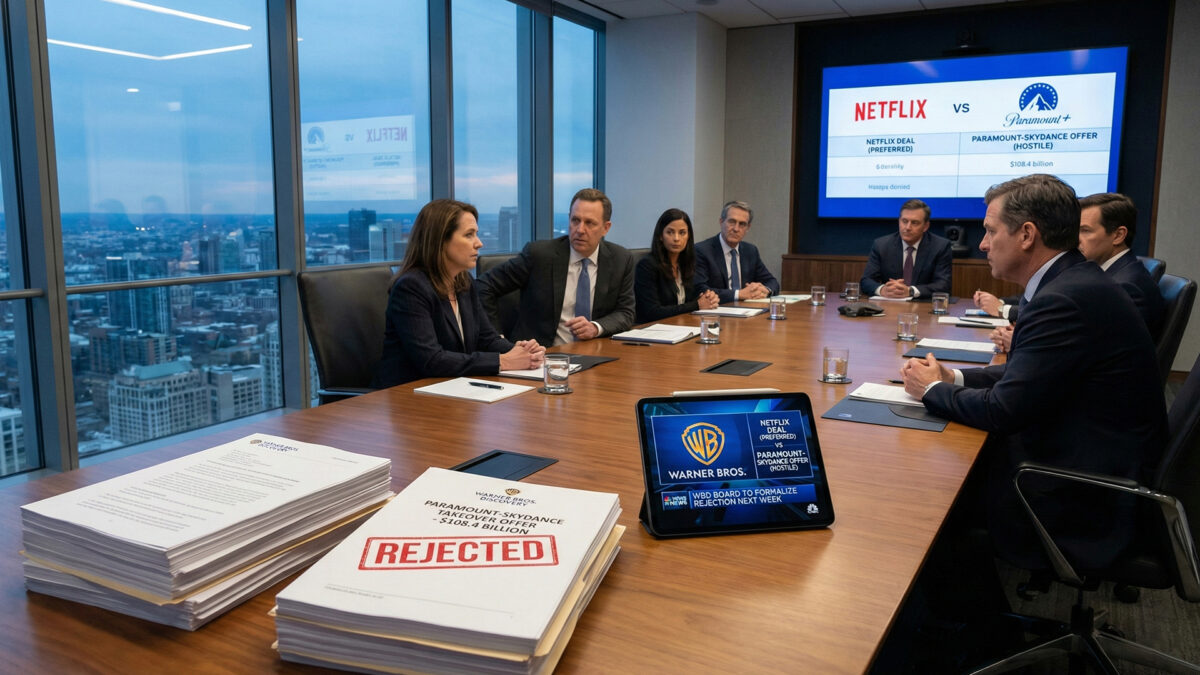
Warner Bros. Discovery is expected to turn down Paramount Skydance’s $108 billion takeover bid next week, according to sources. The board has repeatedly rejected Paramount’s offers, even after amendments intended to make the deal more attractive.

Paramount’s revised proposal included $30 per share in cash, backed by Oracle co‑founder Larry Ellison’s personal guarantee covering $40.4 billion of funding. The bid also increased the breakup fee to match terms of Warner Bros.’ existing Netflix agreement.

Despite these changes, Warner Bros. Discovery’s board believes the Netflix deal offers more certainty and better long-term conditions. Under that agreement, Netflix would acquire Warner Bros.’ studio and streaming assets for about $82.7 billion, while networks like CNN and TNT would be spun off into a separate company.

Insiders say the board has concerns about Paramount’s ability to handle Warner Bros.’ debt and complete the deal smoothly. Terminating the Netflix agreement would also incur a significant breakup fee.

If Warner Bros. formally rejects Paramount, the bidder may need to improve its offer or explore other options. For now, the board seems set on the Netflix path, prioritizing stability over a higher cash offer.

The upcoming decision will influence the future of Warner Bros. Discovery and Hollywood’s media landscape.

Also Read: SoftBank completes $40 bn investment in OpenAI

Categories
Corporate

SoftBank completes $40 bn investment in OpenAI

SoftBank has completed its $40 billion investment in OpenAI, making it one of the largest private tech deals in history. The Japanese conglomerate, led by CEO Masayoshi Son, finalized the last part of the investment in December, completing a multi-stage funding plan announced earlier in 2025.

The investment was made in phases. SoftBank first contributed about $7.5 billion in April through its Vision Fund 2. Later, it raised around $10 billion from co-investors. The final payment of roughly $22–22.5 billion now completes the deal, giving SoftBank an ownership of around 11 percent in OpenAI.

This $40 billion deal initially valued OpenAI at about $300 billion, although secondary transactions have increased its broader market value closer to $500 billion. SoftBank funded part of this investment by selling $5.8 billion in Nvidia shares to free up cash.

OpenAI, known for developing ChatGPT and other leading AI tools, has become a major focus for investors amid the global AI boom. SoftBank’s backing is expected to support the company’s expansion in AI research and infrastructure.

Some of the investment will fund a long-term project called “Stargate,” a partnership with Oracle and other stakeholders to build AI infrastructure and data centers. This will help OpenAI handle more advanced AI applications in the future.

SoftBank’s completed investment shows its strong commitment to AI and positions the company as a key player in the growing artificial intelligence sector. It also reflects the increasing interest from global investors in AI technologies and the infrastructure needed to support them.

With this deal, SoftBank is betting on AI as a strategic area for growth, signaling confidence in the future of the technology and its potential impact on businesses and society.

This investment highlights the rapid rise of AI and the large-scale funding that companies like OpenAI are attracting to drive innovation worldwide.

Also Read: India slaps 3 year safeguard duty on steel imports

Categories
Beyond

India moves up to 4th spot in global economy rankings

India has climbed to fourth place among the world’s largest economies, overtaking Japan in terms of nominal Gross Domestic Product (GDP), according to the government’s latest assessment. With its economy now valued at around USD 4.18 trillion, India stands behind only the United States, China, and Germany, marking a key moment in the country’s growth story.

The government attributed this rise to strong and steady economic expansion despite global challenges such as slowing trade, high inflation in advanced economies, and geopolitical uncertainties. India continues to be the fastest-growing major economy, supported mainly by robust domestic demand, higher consumer spending, and sustained public investment.

Recent economic data shows a sharp improvement in growth during the second quarter of the current financial year. Strong performance in manufacturing, services, and infrastructure activity has helped accelerate overall output. Policy reforms, digital transformation, and efforts to improve the ease of doing business have also played an important role in strengthening economic activity.

International agencies have responded positively to India’s progress. Institutions such as the International Monetary Fund and the World Bank have projected that India’s economy will grow at over 6 per cent annually in the coming years, well ahead of most large economies. These forecasts underline India’s growing role as a major contributor to global growth.

Looking ahead, the government said India is expected to surpass Germany and move into third place within the next two to three years if current growth trends continue. By the end of the decade, India’s economy is projected to expand significantly, driven by a young population, a rising middle class, and increased investment in manufacturing, technology, and infrastructure.

Economists, however, note that challenges remain. While the economy’s overall size has increased rapidly, per capita income levels remain relatively low, pointing to the need for inclusive growth, job creation, and stronger outcomes in health, education, and skills.

Still, India’s rise in the global economic rankings highlights its growing influence and long-term potential on the world stage.

Also Read: Gold at ₹1,36,190 per 10g, Silver slips to ₹2,39,900/kg

Categories
Corporate

Sensex gains 250 points, Nifty ends above 26000

The markets opened for the final trading session of 2025 on a cautious but steady note, with the Sensex and Nifty 50 ending near flat after recovering from early losses. The benchmarks managed to snap a four-day losing streak, supported by selective buying in metal, PSU banking, and energy stocks, even as foreign fund outflows continued to cap gains.

Markets opened marginally higher, tracking positive cues from GIFT Nifty, but volatility persisted through the session as investors engaged in year-end portfolio adjustments. Buying interest was seen in metal stocks on hopes of stable global demand, while PSU banks gained on expectations of improved balance sheets and steady credit growth. FMCG and IT stocks, however, traded mixed, reflecting concerns over valuations and global growth uncertainty.

Broader markets showed mild strength, with midcap and smallcap stocks outperforming the frontline indices. Several individual stocks witnessed sharp moves on company-specific developments, indicating active participation despite thin year-end volumes.

On the commodities front, gold and silver, which delivered strong returns in 2025, saw some profit booking in the final session of the year. Crude oil prices remained range-bound, offering limited direction to energy stocks.

Market sentiment was also influenced by macro signals, including the Reserve Bank of India’s assessment pointing to improved asset quality and profitability in the banking sector. Analysts remain cautiously optimistic about 2026, citing expectations of stable earnings growth, policy support, and lower inflation, while flagging risks from global slowdown and continued FII selling.

Overall, the last trading day of 2025 reflects a market balancing caution with selective optimism as investors look ahead to key triggers in the new year.

Also Read: Sensex slips 20 points, Nifty ends below 25,950 on year-end caution

Categories
1 Minute-Read

India’s industrial output jumps 6.7% in November

India’s industrial production rose sharply by 6.7% in November, recording its fastest growth in over two years, according to official data.

The surge was mainly driven by a strong recovery in manufacturing output, which grew around 8%, supported by higher production of automobiles, pharmaceuticals, metals and consumer goods.

Mining activity also showed improvement, reflecting steady demand. However, electricity generation remained weak, showing a slight contraction during the month.

The sharp rise in the Index of Industrial Production (IIP) marks a significant rebound from October’s muted performance and signals improving economic momentum amid festive demand and rising consumption.

Categories
Corporate

Sensex slips 20 points, Nifty ends below 25,950 on year-end caution

The markets closed almost flat on Tuesday, with BSE Sensex slipping 20 points to close at 84,675, while the NSE Nifty 50 ending marginally lower at 25,938, staying below the 25,950 mark. Thin volumes and profit-booking marked the session, typical of year-end trade.

Market sentiment remained muted through the day as participants avoided taking fresh positions ahead of the new calendar year. Persistent selling by foreign institutional investors (FIIs) also weighed on benchmarks, even as domestic investors provided some support at lower levels.

Sectoral performance was mixed. Auto and select financial stocks showed resilience, helping limit losses in the headline indices. Mahindra & Mahindra gained around 2 per cent, emerging as one of the top Sensex gainers, supported by positive outlook on demand and margins. Bajaj Finserv also advanced, outperforming the broader market despite weak overall sentiment.

On the downside, IT and cement stocks faced selling pressure. Infosys and HCL Technologies declined, tracking weakness in global technology stocks and cautious guidance expectations. UltraTech Cement also ended lower, adding to the drag on the Sensex. Losses in these heavyweights offset gains seen in autos and select financials.

The broader market reflected similar caution. Mid-cap and small-cap indices closed marginally lower, indicating a lack of strong risk appetite. Traders largely stayed on the sidelines, with many opting to lock in gains after a strong performance in earlier parts of the year.

Global cues offered limited direction. Asian markets were largely flat, while US futures traded mixed, providing no clear trigger for Indian equities. European markets also remained subdued during Indian trading hours.

Meanwhile, stock-specific activity remained in focus due to quarterly Nifty index rebalancing, which led to adjustments in select stocks. In the debt market, a few corporate bond issuances were reported, though overall activity was muted.

Market experts said Indian equities may remain range-bound in the near term, with investors awaiting fresh triggers such as corporate earnings, macroeconomic data and global policy signals in early 2026.

Also Read: Sensex drops 346 points, Nifty 25,942

Categories
Technology

OpenAI offers Rs 5 crore AI safety job

OpenAI CEO Sam Altman has raised concerns about the safety of advanced AI models, saying that AI systems are becoming more capable and could cause problems if not carefully managed. He highlighted that some AI models are now starting to find weaknesses in systems, which could potentially be misused.

To tackle these challenges, OpenAI is hiring a “Head of Preparedness”, a top-level role aimed at making AI safer. The company is offering around Rs 5 crore (USD 555,000) plus equity for this position. Altman himself described it as a “stressful job,” given the high responsibility involved.

The person chosen for this role will look for risks in AI systems, plan ways to reduce those risks, and make sure AI behaves safely as it becomes more powerful. They will also track potential threats, like AI being misused in cyber attacks or other dangerous scenarios. This role will be part of OpenAI’s broader Safety Systems team.

Altman stressed that while it is relatively easy to measure what AI can do, it is much harder to predict how AI could be misused. The role will require careful planning, monitoring, and quick decision-making to prevent possible harm.

This move shows that OpenAI is taking AI safety seriously, not just focusing on creating new technologies. As AI grows more advanced, experts like this will be crucial to ensure the technology is used responsibly.

Altman’s public statements also reflect a wider concern in the tech industry: as AI becomes more capable, companies need to balance innovation with safety to avoid unintended consequences.

OpenAI’s job opening and Altman’s warnings highlight that keeping AI safe is now as important as developing it, and the company is looking for top talent to take on this challenge.

Also Read: Reliance rejects $30bn government claim over KG-D6 gas

Categories
Corporate

Reliance rejects $30bn government claim over KG-D6 gas

Reliance Industries Limited (RIL) has rejected recent media reports claiming that the Government of India is seeking $30 billion in compensation from it and partner BP over underproduction from the KG‑D6 deepwater gas field in the Krishna Godavari basin. RIL described these reports as “factually incorrect, inappropriate, and irresponsible” in a statement to stock exchanges.

The company clarified that no $30 billion claim exists against it or BP. The actual claim relates to about $247 million, a figure that has been fully disclosed in audited financial statements, consistent with disclosure requirements.

The dispute traces back over a decade and concerns costs the government allegedly disallowed for recovery during development and production of the KG‑D6 block’s D1 and D3 gas fields. Under the production sharing contract, companies can recover specific costs before profit sharing with the government. Media reports had suggested that lower gas output due to operational choices, including fewer wells, prompted the government to demand large compensation.

RIL and BP maintain they complied with all contractual and legal obligations, and geological factors limited field output. They stressed that the matter is sub judice, meaning it is under active judicial review, and any resolution will follow India’s legal process, including potential appeals up to the Supreme Court.

The company criticised reports relying on unnamed sources and misrepresenting facts. RIL reiterated its confidence in transparency and compliance with legal and contractual standards, asserting that the exaggerated claim misleads the public and investors.

Also Read: RBI flags rising bank competition