Categories
Leaders

Geoffrey Hinton warns 2026 could trigger major AI job shock

Geoffrey Hinton, widely known as the “Godfather of AI,” has cautioned that 2026 could become a turning point for global employment as artificial intelligence systems rapidly grow more powerful. Speaking in recent interviews, Hinton said the speed at which AI is advancing has surprised even experts and could lead to large-scale job displacement across multiple sectors within the next year.

Hinton explained that AI tools are no longer limited to handling simple, repetitive tasks. Systems that once completed work taking a few minutes can now manage tasks lasting an hour or more. At this pace, he believes AI could soon take on complex assignments, such as advanced programming, analysis, and problem-solving, that traditionally require months of human effort. As a result, many existing roles could become redundant.

According to Hinton, this technological shift is fundamentally different from earlier industrial changes. Past revolutions mainly reduced the need for physical labour, while creating new types of work. The current AI wave, however, targets cognitive and knowledge-based jobs, including clerical work, customer support, data analysis, and some professional roles. This raises the risk of a “jobless productivity boom,” where companies grow more efficient without increasing their workforce.

The warning has sparked debate among economists and business leaders. Some agree that AI-driven productivity gains could weaken the traditional link between economic growth and job creation. Others argue that while certain jobs will disappear, new roles will emerge, especially in AI development, engineering, oversight, and leadership. Surveys of global CEOs suggest many expect hiring to continue in specialised and entry-level positions, even as job profiles change.

Hinton has also stressed that society is not fully prepared for the scale or speed of this transformation. He believes governments and institutions need to rethink education, reskilling, and social safety nets to help workers adapt. Without timely policy responses, the benefits of AI could be unevenly distributed, widening income inequality and social divides.

While acknowledging AI’s potential to transform healthcare, science, and education positively, Hinton maintains that ignoring its impact on jobs would be a serious mistake. His 2026 warning adds urgency to discussions on how economies and workers should prepare for an AI-driven future.

Also Read: India’s rare earth reserves high, production still low

Categories
1 Minute-Read

Gujarat Kidney IPO lists at 6% premium

Shares of Gujarat Kidney and Super Speciality Ltd made a steady debut on the stock exchanges, listing at a 6 per cent premium over the IPO price. The stock opened at around ₹120–121, compared to the issue price of ₹114, indicating healthy investor appetite.

The IPO received strong overall subscription, led by retail investors, reflecting confidence in the company’s healthcare-focused business model. Funds raised through the public issue will be used for expansion, hospital acquisitions, and purchase of medical equipment. The positive listing highlights continued interest in healthcare stocks despite mixed market conditions.

Categories
Corporate

L&T wins contract for Hyderabad Greenfield radial road project

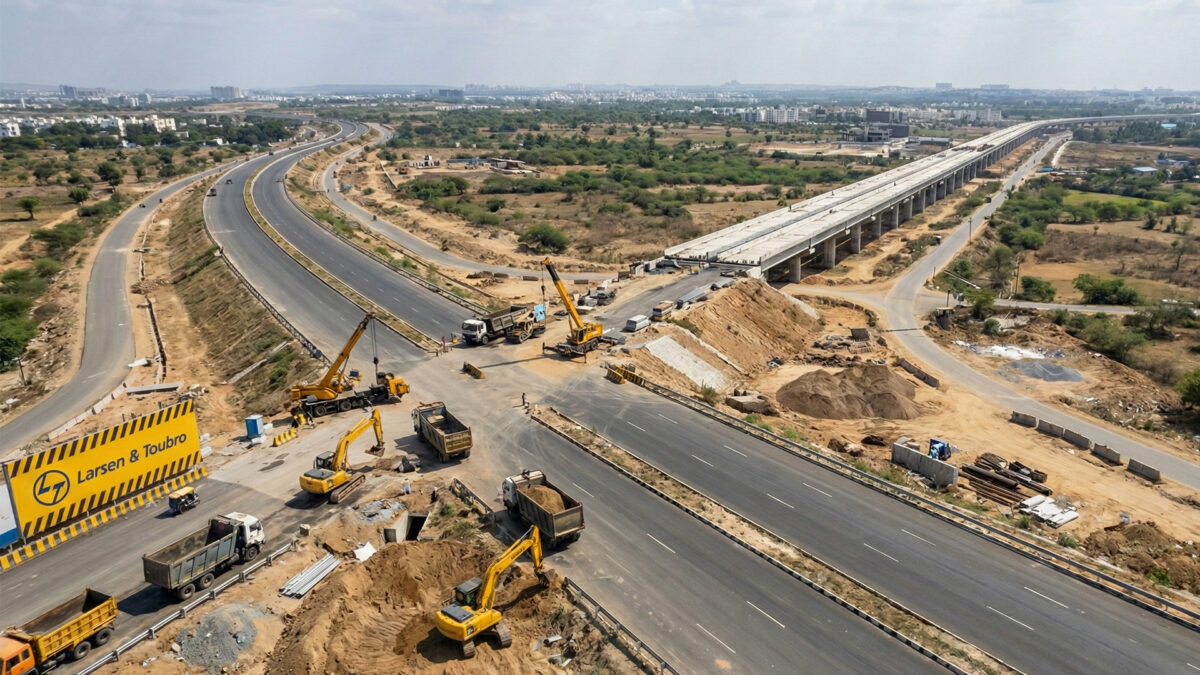
Larsen & Toubro (L&T) has secured a significant infrastructure contract for Phase-2 of the Hyderabad Greenfield Radial Road project, reinforcing its strong presence in India’s transportation infrastructure sector. The project is located in Ranga Reddy district, Telangana, and has been awarded to L&T’s Transportation Infrastructure business.

According to the company’s regulatory filing, the order is categorised as a “significant” contract, with an estimated value ranging between ₹1,000 crore and ₹2,500 crore. The project involves the construction of a 22.3-km long, access-controlled radial road designed to improve connectivity between Hyderabad’s Outer Ring Road (ORR) and the proposed Regional Ring Road (RRR), which is expected to play a key role in decongesting the city and supporting regional growth.

The road will be built with three lanes on each side and is intended to allow smooth, high-speed traffic movement. A major component of the project is the construction of a 3.6-km long viaduct, along with several minor bridges and underpasses. The scope of work also includes the development of service roads, drainage systems, footpaths, cycle tracks, and landscaping, making the corridor more commuter-friendly and sustainable.

The Hyderabad Greenfield Radial Road project is part of a broader urban infrastructure plan aimed at improving last-mile connectivity, reducing travel time, and facilitating better movement of people and goods. By linking the ORR with the upcoming RRR, the road is expected to ease traffic pressure on existing routes and support the expansion of residential, commercial, and industrial hubs around Hyderabad.

L&T stated that the project will be executed within the stipulated timeline as per contract conditions. The order win highlights the company’s continued success in securing large public infrastructure projects and reflects ongoing government focus on road development and urban mobility.

With Hyderabad witnessing rapid urbanisation and increased traffic volumes, the completion of this radial road is expected to significantly enhance regional connectivity, boost economic activity, and contribute to the city’s long-term infrastructure growth.

Also Read: India’s rare earth reserves high, production still low
Categories
Beyond

India’s rare earth reserves high, production still low
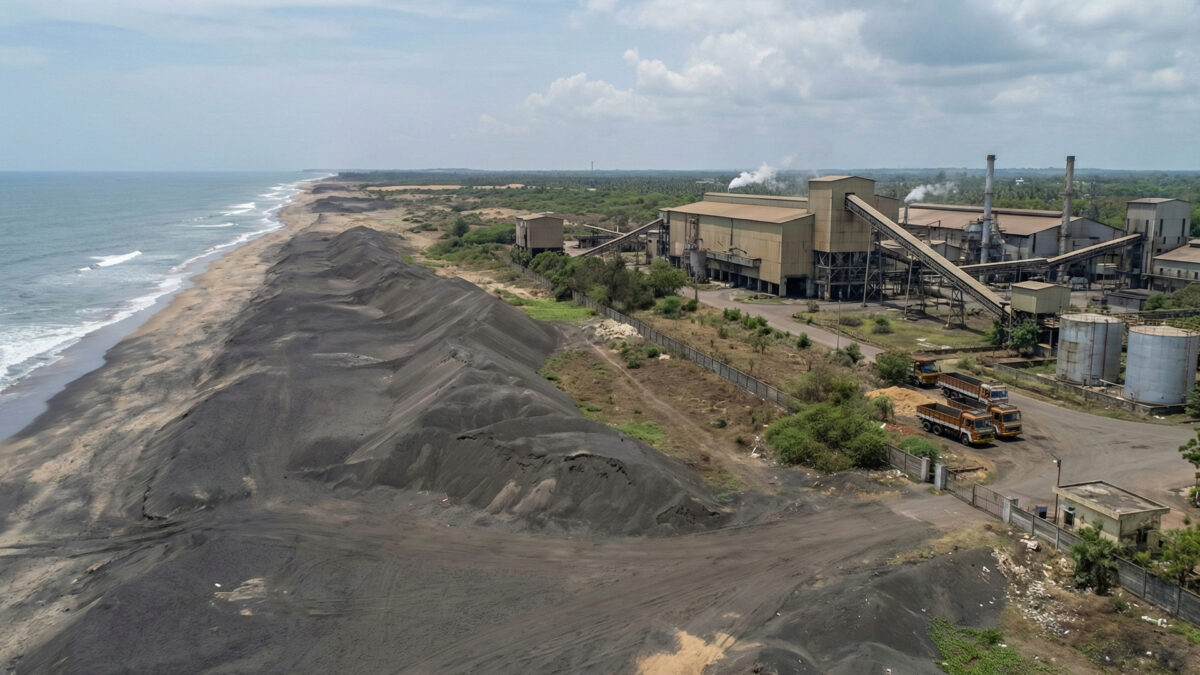
India ranks third globally in rare earth reserves, with approximately 6.9 million tonnes of rare earth oxides (REO), trailing only China and Brazil. Despite this, the country’s actual production is extremely low, highlighting a wide gap between its resource potential and output.

In 2024, India produced just 2,900 tonnes of rare earth elements (REEs), placing it seventh in global production rankings, far behind China, which produced about 270,000 tonnes, and the United States at roughly 45,000 tonnes. Other moderate producers include Myanmar, Australia, Thailand, and Nigeria, each producing around 13,000 tonnes. India’s global share in rare earth production is below 1%, despite accounting for 6–7% of global reserves.

The report identifies several factors behind this underperformance. Most of India’s reserves are in monazite-rich coastal sands, which contain thorium, a radioactive element. This has led to strict regulatory controls, slowing exploration and extraction. Historically, rare earth mining was largely conducted by Indian Rare Earths Limited (IREL), where rare earths were treated as by-products rather than strategic resources, limiting focused development.

Another major constraint is processing capacity. Global rare earth refining is dominated by China, which controls around 90% of processing capacity, particularly for heavy rare earths used in advanced technologies. India lacks sufficient processing infrastructure, meaning most extracted material cannot be refined domestically. This dependence on imports limits value addition and prevents India from establishing a complete REE value chain.

Some steps are being taken to improve the situation. For instance, a Japan-linked joint venture in Visakhapatnam aims to develop rare earth processing capabilities. However, industry experts note that progress remains slow.

Analysts emphasize that without regulatory reform, investment in refining, and a comprehensive domestic value chain, India will continue to underutilize its large reserves. Unlocking the potential of rare earths is seen as crucial for India’s technological self-reliance and competitiveness in global high-tech industries, including electric vehicles, renewable energy, and electronics.

Also Read: BEL bags Rs. 569 cr defence orders

Categories
Corporate

BEL bags Rs. 569 cr defence orders

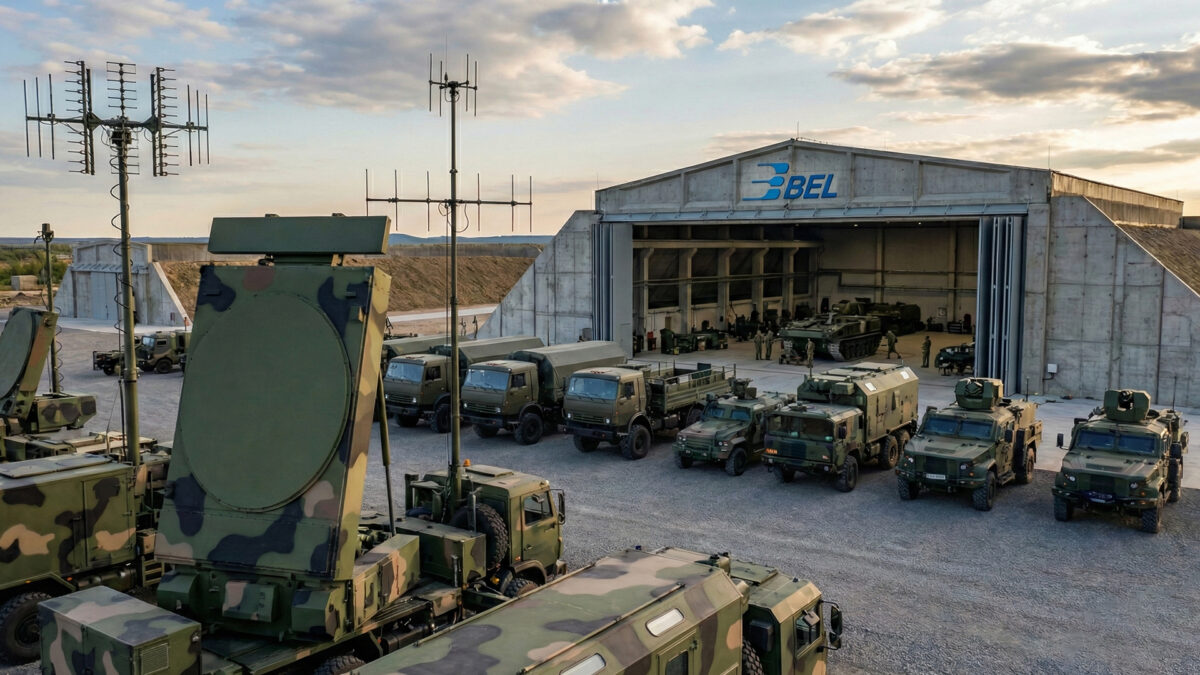
Bharat Electronics Limited (BEL), a Navratna PSU under the Ministry of Defence, has secured new defence orders worth Rs. 569 crore since its last disclosure on December 12, 2025, according to stock exchange filings. These orders span a wide range of defence equipment and services, further expanding BEL’s order book and reinforcing its position in India’s defence sector.

The contracts cover radars, tank overhaul projects, communication devices, fire control systems, simulators, antenna stabilization systems, security software, spare parts, and related services. This underscores BEL’s diversified capabilities in battlefield communication, electronic warfare, and equipment maintenance for the Indian Armed Forces.

BEL’s shares have seen strong investor interest, reflecting confidence in the company’s growth potential. The stock recently touched Rs. 396.90 on the BSE, marking notable gains this year despite broader market fluctuations.

These orders align with ongoing initiatives by the Defence Acquisition Council (DAC), which recently approved capital procurement proposals worth around Rs. 79,000 crore, expected to further boost demand for domestic defence manufacturers.

BEL has consistently received contracts in recent months, including for counter-unmanned aerial systems and software-defined radios, highlighting the government’s focus on indigenisation and technology-driven solutions.

Financially, BEL continues to perform well, with recent quarterly results showing growth in revenue and profits year-on-year. Analysts expect continued market focus on the company’s execution capabilities and future order inflows.

The Rs. 569 crore order win strengthens BEL’s strategic role in India’s defence ecosystem and highlights growing momentum in domestic defence manufacturing.

Also Read: Hindustan Copper up 67%, Hindustan Zinc up 35% in Dec.

Categories
1 Minute-Read

Hindustan Copper up 67%, Hindustan Zinc up 35% in Dec.

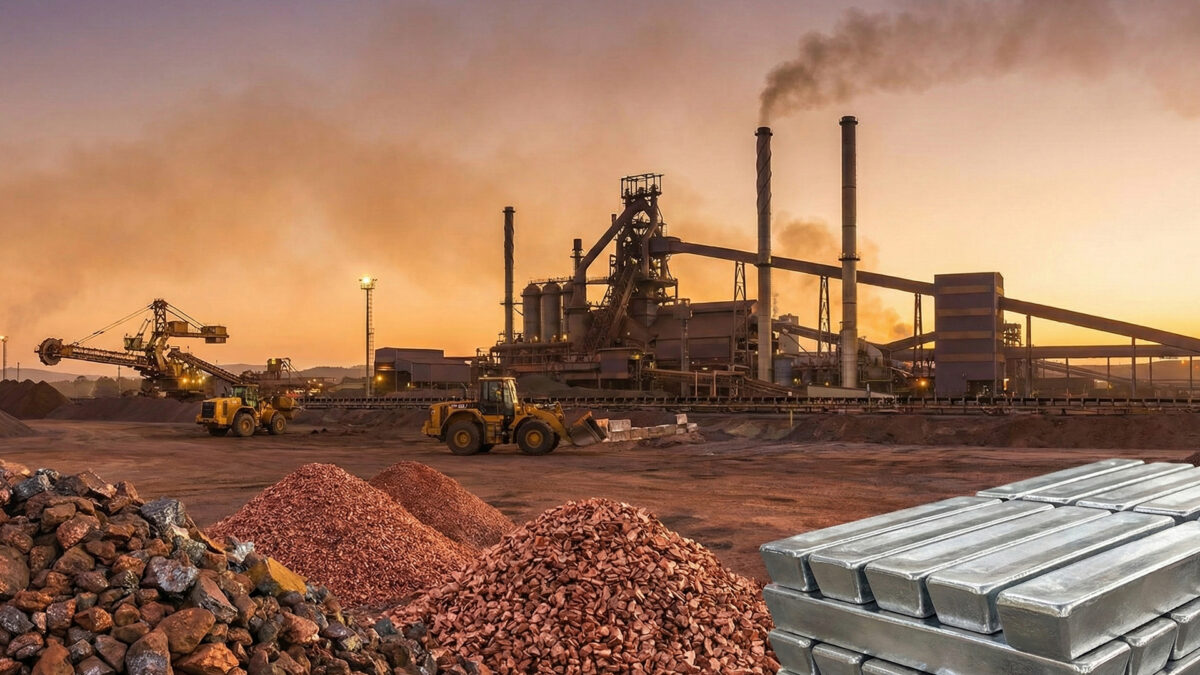
Hindustan Copper surged up to 67% in December, hitting a 15-year high before trimming some gains, while Hindustan Zinc rose around 35%, driven by strong global copper and silver prices.

The metals rally has bolstered investor sentiment, reflecting optimism about base metals amid robust demand. Analysts, however, advise caution, noting that both stocks appear overbought at current levels.

While long-term prospects remain positive due to steady commodity demand and supportive market trends, short-term volatility could persist. Investors are recommended to assess risk and consider waiting for a potential correction before entering.

Categories
Beyond

2026 shows Gold near ₹1.5 lakh, Silver at $70

Gold and silver, which witnessed an unprecedented rally in 2025, are expected to remain firm in 2026, supported by strong global demand and favourable macroeconomic trends. Market experts believe that while prices may not rise at the same pace as this year, the broader outlook for precious metals continues to be positive.

In 2025, gold prices surged over 70 per cent globally, while silver recorded an even sharper rise of nearly 170 per cent, hitting multiple record highs. Domestic prices in India also moved sharply higher, driven by global cues, currency movements and strong investment demand. The rally was fuelled by geopolitical uncertainty, rising global debt, heavy central bank buying, and increased interest in safe-haven assets.

Looking ahead to 2026, analysts expect gold prices in India to move towards ₹1.5 lakh per 10 grams over the medium term. Globally, gold may trade at elevated levels as central banks continue to diversify reserves and investors seek protection against economic and geopolitical risks. Expectations of interest rate cuts by major central banks could further support prices.

Silver is also expected to stay strong, backed by both investment and industrial demand. The metal’s use in solar power, electric vehicles and electronics is rising steadily, which could keep demand robust. Price forecasts suggest silver could trade in the range of $48 to $70 per ounce, with chances of sharper moves if industrial activity improves.

However, experts caution that volatility is likely after such a steep rally. Factors such as a stronger US dollar, higher real interest rates, or improving risk appetite in equity markets could lead to short-term corrections. Analysts advise investors to view any price dips as opportunities for long-term accumulation rather than signs of a trend reversal.

Also Read: Sensex drops 346 points, Nifty 25,942

Categories
Corporate

Sensex drops 346 points, Nifty 25,942

The markets fell sharply on Monday, 29 December 2025,  BSE Sensex dropped over 300 points, while the Nifty 50 slipped below 25,942, reflecting weak market sentiment and ongoing foreign fund outflows. Low trading volumes typical of the holiday season added to the volatility.

The decline was broad-based, with most sectors ending in the red. Consumer durables and realty stocks were hit hardest, dragging the market lower. The IT and financial services sectors also saw selling pressure, contributing further to the fall in benchmark indices.

However, a few stocks bucked the trend. Tata Steel, Titan, Sun Pharma, and Mahindra & Mahindra emerged as top gainers, showing resilience despite the overall market weakness. On the other hand, heavyweight companies such as PowerGrid, Adani Ports, HCL Tech, Infosys, and TCS were among the biggest losers, weighing on the indices.

Sectors like PSU banks and media stocks managed modest gains, but the positive impact was not enough to offset broad selling. Market breadth remained negative, with declining stocks outnumbering advancing ones, signaling caution among traders.

 Analysts expect trading to remain volatile in the final week of 2025, with selective stock-specific movements likely to drive gains.

Also Read: Sensex falls over 100 points, Nifty below 26,050 at open

Categories
1 Minute-Read

$240 mn tech, GCC investments flow into Mangaluru

Mangaluru has attracted investments and acquisitions worth $240 million in the Global Capability Centre (GCC) and technology sectors over the last four years, according to a state government report.

The data shows growing interest from national and international companies in areas such as fintech, regulatory technology, digital services and IT operations.

Officials say the city is emerging as a preferred alternative to major metros due to its skilled talent pool, improving infrastructure and lower operational costs. The steady inflow of investments has strengthened Mangaluru’s position as an upcoming technology and innovation hub in Karnataka.

Categories
Beyond

Scindia flags security, pricing delays in satellite internet rollout

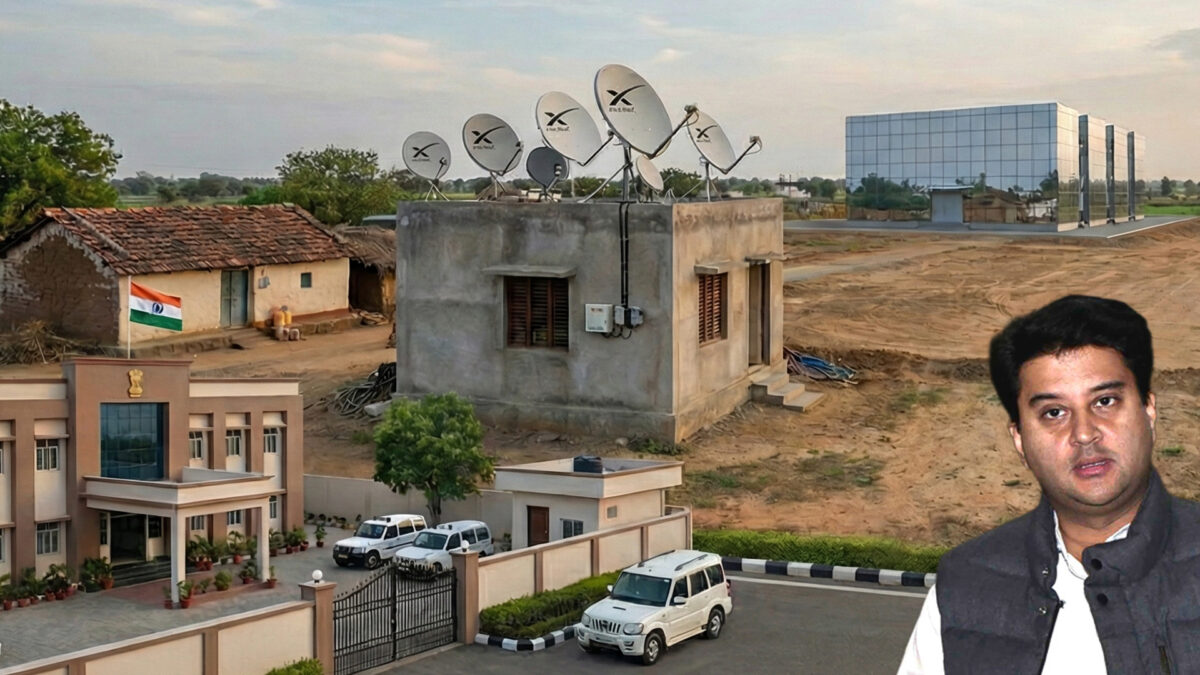
Satellite internet services in India have not yet begun commercial operations due to pending security approvals and unresolved spectrum pricing, Union Telecom Minister Jyotiraditya Scindia has said.

Companies such as Starlink, OneWeb and Jio Satellite Global Services have already received licences to operate in the country. However, Scindia clarified that services can start only after all regulatory and security conditions are fully met.

The minister said satellite communication companies must demonstrate compliance with national security norms. These include setting up lawful interception systems for security agencies, ensuring secure handling of Indian user data, and establishing approved international gateways. Security agencies must be satisfied with these arrangements before giving the final clearance.

To support this process, the government has allotted provisional spectrum to the companies so they can test their systems and prove compliance. Final spectrum allocation will be granted only after security requirements are fulfilled.

Another key factor delaying the launch is spectrum pricing. The Department of Telecommunications and the Telecom Regulatory Authority of India are still discussing the pricing framework for satellite internet services. Issues such as the method of charging spectrum fees and the overall cost structure are yet to be finalised.

Differences between the regulator and the department on certain pricing elements have slowed the decision-making process. The final pricing policy is expected to be cleared by senior government bodies, including the Digital Communication Commission and, if required, the Cabinet.

Scindia said the government is keen to promote satellite internet services, especially for improving connectivity in remote and underserved regions. However, he stressed that security and regulatory safeguards remain a priority.

Once security clearances are completed and spectrum pricing is approved, satellite internet services are expected to be rolled out in a phased manner across India.

Also Read: Zepto IPO to test quick‑commerce profitability