Categories
Corporate

Sensex jumps 500 points, Nifty crosses 24,150

Indian equities extended their rally on Thursday, with the Sensex rising more than 500 points and the Nifty 50 moving firmly above 24,150 as softer crude prices and better global cues lifted sentiment across Dalal Street.

The biggest support came from a sharp drop in oil prices. Brent crude slipped below $73 a barrel after fears of supply disruption in the Middle East eased and shipping through the Strait of Hormuz returned closer to normal. For India, a major oil importer, that is welcome news because lower crude usually helps cool inflation, supports the rupee and eases pressure on the fiscal deficit.

Buying was visible across banking and information technology stocks, which continued to lead the market higher. LIC, IRFC, Infosys and HDFC Bank were among the names that drew strong interest, while Hindustan Unilever, Nestle India and Sun Pharma were among the laggards as investors rotated into cyclical and rate-sensitive counters.

Traders also took comfort from a stronger tone across Asian markets and hopes that global trade talks may make progress. The mood improved further as worries around the Iran-related conflict faded, reducing the risk premium that had recently weighed on equities and commodities.

If crude stays calm and overseas selling pressure continues to ease, domestic equities could keep their upward bias.

Also Read: IRFC shares tumble 5% after Centre announces stake sale

Categories
Corporate

IRFC shares tumble 5% after Centre announces stake sale

Shares of Indian Railway Finance Corporation (IRFC) fell sharply on Wednesday after the government announced plans to sell up to a 2% stake in the state-owned railway financier through an Offer for Sale (OFS).

The Centre has offered an initial 1% stake, with an option to sell another 1% if demand remains strong. The floor price has been fixed at ₹91 per share, nearly 8% below the stock’s previous closing price, making the offer attractive for institutional and retail investors.

The proposed divestment is expected to help the government raise more than ₹2,300 crore. The OFS opened for non-retail investors on Wednesday, while retail investors will be able to bid on the following day.

Following the announcement, IRFC shares dropped around 5% during trade as investors reacted to the discounted pricing and the increased supply of shares in the market. Analysts said such stake sales often create short-term pressure on stock prices, although they can improve liquidity and broaden the shareholder base over the long run.

IRFC plays a crucial role in financing Indian Railways’ expansion and infrastructure projects. As the dedicated financing arm of the national transporter, the company raises funds from domestic and international markets to support railway development across the country.

Market experts said investor response to the OFS will be closely monitored, especially given the strong interest in railway and public sector stocks over the past year. While the discounted offer may attract buyers, near-term sentiment could remain cautious until the share sale process is completed.

Also Read: Tata Motors bets on value-led passenger vehicle growth

Categories
Corporate

Sensex surges 790 points, Nifty closes above 24,000

The markets staged a strong comeback on Wednesday, with the Sensex soaring nearly 791 points and the Nifty closing above the crucial 24,000 mark as easing geopolitical concerns, falling crude oil prices and renewed buying in banking stocks boosted investor sentiment.

The BSE Sensex ended the day at 76,991.22, up 790.54 points or 1.04%, while the NSE Nifty50 gained 197.55 points, or 0.83%, to settle at 24,021.65. The rally came after recent uncertainty linked to developments in the Middle East and reflected improving confidence among domestic and foreign investors.

Banking stocks emerged as the biggest drivers of the market’s advance. HDFC Bank and ICICI Bank rose around 2.5% each, helping lift benchmark indices. Investors welcomed comments from Reserve Bank of India Governor Sanjay Malhotra, who indicated that discussions around interest rate hikes were premature as broad inflation pressures remain under control.

Lower crude oil prices also supported market sentiment. Oil prices have declined sharply since signs of easing tensions between the United States and Iran, reducing concerns about inflation and import costs for India. Expectations of progress in India-US trade discussions further added to the positive mood on Dalal Street.

Among the day’s top gainers were HDFC Bank, ICICI Bank, Trent and several information technology stocks including Infosys and Tech Mahindra. Textile shares also witnessed strong buying interest on hopes of stronger export demand.

On the losing side, Vedanta remained under pressure after a major promoter stake sale through a block deal worth more than ₹2,100 crore. Some energy-related stocks also saw limited gains as investors assessed the impact of softer commodity prices.

Broader markets also participated in the rally, with mid-cap and small-cap indices ending higher. Analysts said improving foreign fund flows, easing oil prices and supportive central bank commentary helped drive the recovery.

Also Read: Oracle cuts 21,000 jobs amid aggressive AI push

Categories
1 Minute-Read

Oracle cuts 21,000 jobs amid aggressive AI push

Oracle has cut about 21,000 jobs, or 13% of its global workforce, as it reshapes operations around artificial intelligence and cloud growth.

The company said its headcount fell to roughly 141,000 in fiscal 2026 from 162,000 a year earlier. Restructuring costs, including severance, rose to $1.84 billion. Even as it trims staff, Oracle is spending nearly $70 billion this year on data centres and cloud infrastructure.

The company has also won major AI-related deals with OpenAI and Meta, showing how quickly the technology is changing both business plans and workplace needs for companies and workers alike across the global tech industry today.

Categories
1 Minute-Read

Flipkart minutes hits 1,000 stores in expansion push

Flipkart has crossed a major milestone in India’s fast-growing quick commerce market, with its instant delivery service Flipkart Minutes expanding to 1,000 micro-fulfilment centres in less than two years. The achievement highlights the company’s aggressive push to strengthen its presence in a sector that has become one of the fiercest battlegrounds in Indian e-commerce.

The Walmart-owned company said the rapid expansion has been driven by rising demand for quick deliveries across both large cities and smaller towns. Unlike many rivals that initially focused on metros, Flipkart has increasingly targeted consumers in Tier-2 and Tier-3 markets, where online shopping adoption continues to grow rapidly. Around 70% of its fulfilment network is now concentrated in these smaller cities.

Flipkart Minutes, which promises deliveries within minutes, has emerged as one of the fastest-growing businesses in the company’s portfolio. According to company data, order volumes have increased fivefold over the past year, while sales from smaller towns have surged dramatically as more consumers embrace quick commerce for groceries, daily essentials and other products.

The company now operates across more than 130 cities and plans to continue expanding. Reports indicate that Flipkart aims to increase its network to around 1,500 fulfilment centres in the coming months as competition intensifies.

India’s quick commerce market has witnessed explosive growth, with players such as Blinkit, Zepto and Swiggy Instamart investing heavily in warehouses, logistics and customer acquisition. Global giants including Amazon and Flipkart have also accelerated their efforts to capture a larger share of the rapidly expanding sector.

Also Read: Vedanta promoter trims stake through ₹2,149 cr block deal

Categories
1 Minute-Read

China leads supercomputer rankings after 9 years

China has reclaimed the top spot in the global supercomputer race for the first time in nearly a decade, marking a significant milestone in the country’s efforts to build advanced computing systems without relying on American technology.

The latest rankings show China’s new supercomputer has surpassed the fastest machines in the United States, ending a nine-year period during which American systems dominated the global performance charts. The achievement is being viewed as a major boost for China’s technological ambitions at a time of growing competition between the world’s two largest economies.

What makes the breakthrough particularly noteworthy is that the Chinese system was built using domestically developed processors and components. The development comes after years of US export restrictions aimed at limiting China’s access to advanced semiconductors and high-performance graphics processing units (GPUs).

Supercomputers play a crucial role in scientific research, weather forecasting, drug discovery, national security and artificial intelligence. Their performance is often seen as an indicator of a country’s technological and industrial strength.

Chinese researchers involved in the project described the achievement as proof that the country can continue advancing despite restrictions on access to Western hardware. The result has also fuelled discussions about the effectiveness of export controls imposed by the United States in recent years.

The United States remains a major force in high-performance computing, with several world-class systems supporting research institutions, government agencies and technology companies. However, China’s latest success highlights the increasingly competitive nature of the sector and the rapid pace of technological development taking place across Asia.

Countries are investing billions of dollars to secure leadership in advanced computing technologies that are expected to shape future economic growth and national competitiveness.

Also Read: Meta, EssilorLuxottica unveil AI glasses with new designs

Categories
Technology

Meta and EssilorLuxottica’s new AI glasses

Meta has expanded its push into wearable technology with the launch of a new range of AI-powered smart glasses developed in partnership with eyewear giant EssilorLuxottica. The new product line, simply called Meta Glasses, starts at $299 and is aimed at bringing smart eyewear to a wider audience.

The launch marks an important step for Meta as it seeks to strengthen its position in the fast-growing smart glasses market. Unlike previous products developed under the Ray-Ban and Oakley brands, the new glasses carry Meta’s own branding while still benefiting from EssilorLuxottica’s expertise in eyewear design and manufacturing.

The collection debuts with 26 style options across different frame shapes, colours and lens combinations. Customers can also choose prescription lenses, making the devices suitable for everyday use. The lineup includes three main designs — Adventurer, Fury and a slim oval model created in collaboration with celebrity Kylie Jenner.

At the heart of the glasses is Meta AI, powered by the company’s latest Muse Spark technology. Users can interact with the AI assistant through voice commands, ask questions, receive contextual information and access hands-free assistance throughout the day. The glasses also feature built-in cameras, microphones and open-ear speakers, allowing users to capture photos and videos, make calls and listen to audio without needing headphones.

Meta says future software updates will add more advanced capabilities, including real-time language translation and turn-by-turn navigation. The company believes smart glasses could become one of the most important consumer AI devices in the coming years by offering assistance without requiring users to constantly look at a smartphone screen.

The launch comes as competition in AI-powered wearables intensifies. Rivals including Google, Apple and Snap are all investing heavily in smart eyewear, seeing it as a potential successor to traditional mobile devices. With a lower starting price and a strong focus on fashion, Meta hopes its latest glasses will help bring AI technology into everyday life for millions of consumers.

Also Read: Realme India CEO Michael Guo resigns

Categories
Beyond

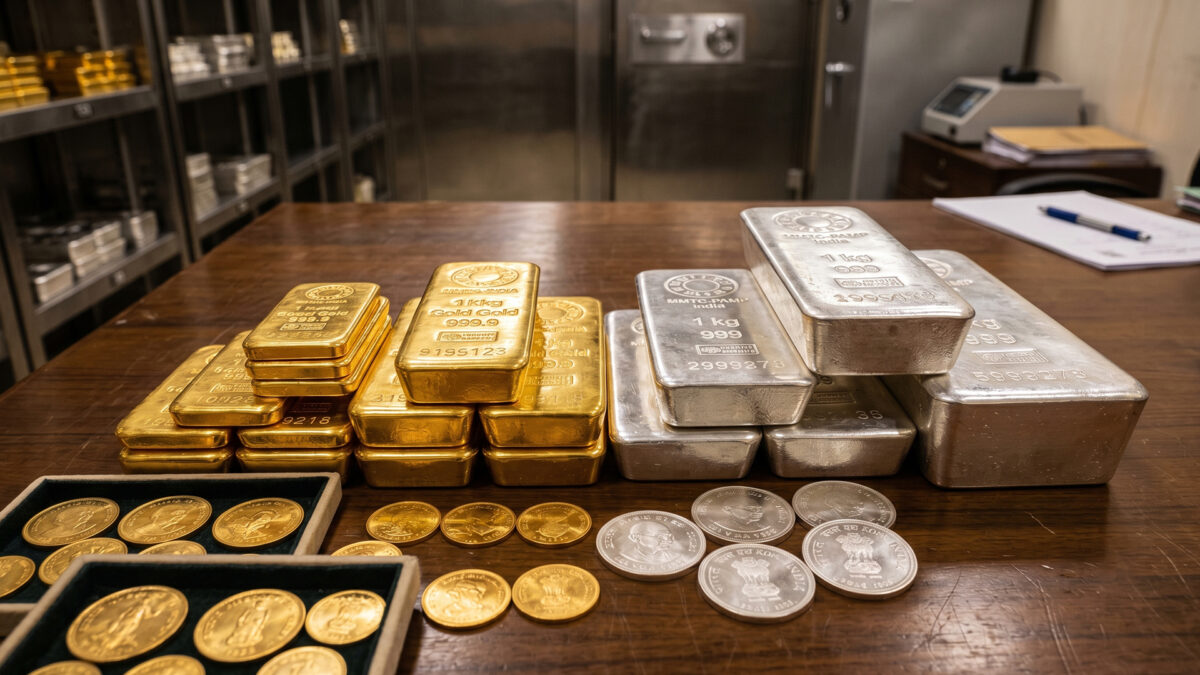
Gold slips to ₹1,44,590, silver eases to ₹2,44,900

Gold and silver prices edged lower on Wednesday, with bullion continuing to face pressure from weak global trends and a firm US dollar.

In the domestic market, gold prices dipped by ₹10 to ₹1,44,590 per 10 grams, while silver slipped ₹100 to trade at ₹2,44,900 per kilogram. The decline comes after a stretch of volatility in precious metals, as investors weighed global economic signals and shifting expectations around interest rates.

The softer tone in bullion markets was largely driven by a stronger dollar, which makes gold more expensive for buyers holding other currencies. At the same time, hopes of tighter monetary policy in the US have reduced the appeal of non-yielding assets such as gold and silver.

Silver has seen sharper swings than gold in recent sessions, reflecting both investment demand and its industrial use. Traders say that makes the metal more sensitive to changes in global growth outlook, factory activity and commodity market sentiment.

Even so, jewellers and retail buyers are still watching the correction closely. For many households, lower prices are seen as a chance to buy for weddings, festivals or long-term savings. Some analysts believe physical demand could improve if prices stay at these levels or soften further.

Market participants also pointed to easing geopolitical worries and improved risk appetite in equity markets, which have taken some shine off safe-haven buying. When investors feel more comfortable taking risks, demand for precious metals often cools.

Also Read: Sensex rallies over 650 points, Nifty tops 24,000

Categories
Corporate

Sensex rallies over 650 points, Nifty tops 24,000

Markets staged a strong comeback on Wednesday, with the Sensex rallying more than 650 points and the Nifty crossing the 24,000 mark after a sharp selloff in the previous session. The rebound came as lower crude oil prices, steady buying in banking stocks and improved risk appetite helped lift investor sentiment.

The recovery followed Tuesday’s steep decline, which had erased nearly ₹5.8 lakh crore in market value amid weak global cues, foreign fund outflows and heavy selling in IT counters. On Wednesday, however, buyers returned to the market, helping benchmark indices recover a large part of the lost ground.

A key support for the market was the continued softness in global crude prices. With supply concerns easing and more oil shipments moving through the Strait of Hormuz, crude hovered near four-month lows. That brought relief to India, which depends heavily on imported oil, and eased worries about inflation and the current account deficit.

Banking stocks led the rally, while auto and metal shares also saw healthy buying. On the other hand, IT and FMCG stocks remained under pressure, making them the main laggards in an otherwise upbeat session. Investors also kept an eye on stock-specific moves in names such as Vedanta, Honasa Consumer, IRCTC, Tata Motors and Bajaj Auto.

Bajaj Auto, however, stayed in focus for the wrong reasons after the company disclosed a ransomware attack affecting both the firm and its technology subsidiary. The development weighed on the stock even as the broader market recovered.

The rupee slipped slightly against the US dollar despite the fall in crude prices, reflecting caution among traders and a stronger greenback globally. Market participants also continued to track signals from the US Federal Reserve, where expectations of further rate hikes have kept global markets on edge.

Also Read: Renault begins exporting India-made Duster to South Africa

Categories
Leaders

Fed legend Alan Greenspan dies aged 100

Alan Greenspan, the former US Federal Reserve chairman whose words could move markets, has died at the age of 100. Reports said he died from complications linked to Parkinson’s disease. For decades, he was one of the most closely watched figures in global finance.

Greenspan was born in New York City in 1926. His early path was unusual for a central banker. Before turning to economics, he studied music and played jazz professionally. He later earned economics degrees from New York University and built a reputation as a serious thinker long before he reached the Fed.

He led the Federal Reserve from 1987 to 2006. That made him one of the longest-serving central bank chiefs in US history. He served under four presidents and guided the economy through major shocks. These included the 1987 stock market crash, the Asian financial crisis, the dot-com boom and bust, and the aftermath of the September 11 attacks.

During his tenure, Greenspan was often credited with helping keep inflation low and growth steady through much of the 1990s. His calm style and careful language gave him enormous influence. Investors, bankers and policymakers around the world watched his every remark. He became known as “The Maestro.”

Before becoming Fed chair, Greenspan had already held senior roles in Washington. He served as chairman of the Council of Economic Advisers under President Gerald Ford. Ronald Reagan later appointed him to the Fed in 1987. He was then reappointed by George H.W. Bush, Bill Clinton and George W. Bush. That rare cross-party support reflected his standing in public life.

But his legacy was not without controversy. After the 2008 global financial crisis, critics said his support for deregulation and low interest rates helped fuel the housing bubble. Greenspan later admitted he had placed too much faith in the ability of financial institutions to manage risk on their own.

Outside economics, he was known for his marriage to journalist Andrea Mitchell and for his guarded public style. That mystery only added to his reputation. Tributes have now begun to pour in from across the financial world, closing the chapter on a long and closely debated life.

Also Read: Renault begins exporting India-made Duster to South Africa