Categories
Corporate

L&T bags ₹5,000–10,000 cr Riyadh metro extension order

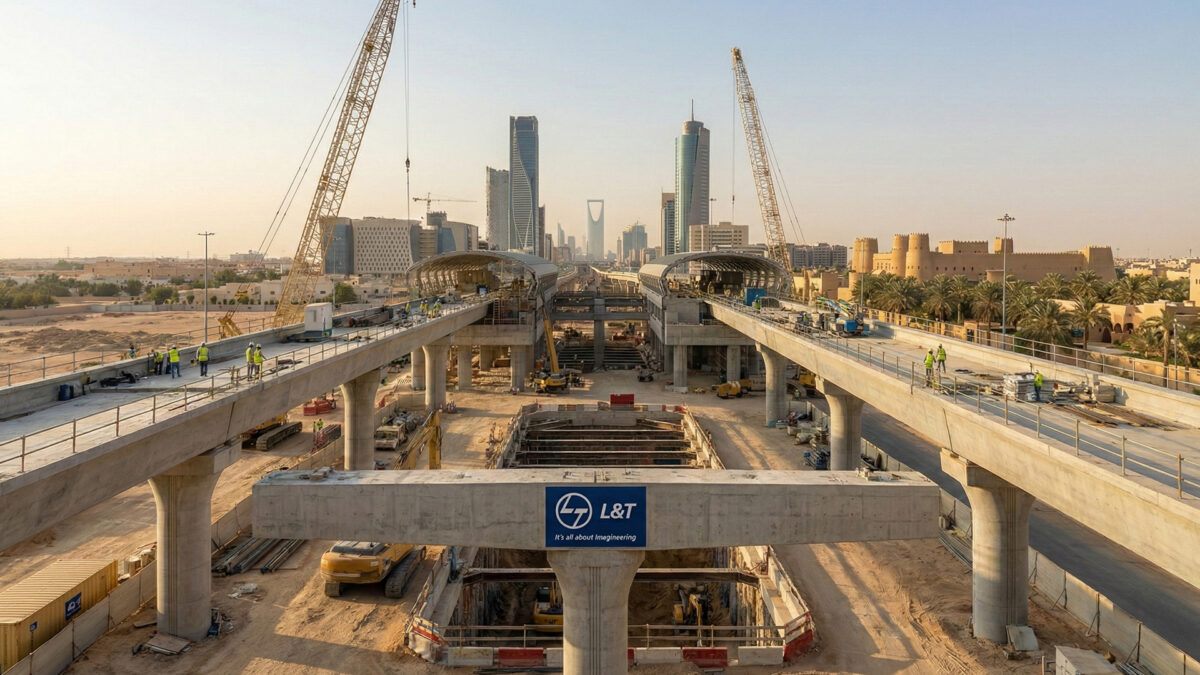
Larsen & Toubro (L&T) has secured a major international infrastructure contract worth between ₹5,000 crore and ₹10,000 crore for the extension of the Riyadh Metro in Saudi Arabia. The project has been awarded by the Royal Commission for Riyadh City and marks another significant overseas win for the Indian engineering and construction major.

The order relates to the extension of the Red Line of the Riyadh Metro and will be executed by L&T’s Heavy Civil Infrastructure business. Under the contract, L&T will be responsible for the design and turnkey construction of the new metro corridor. The project will be carried out as part of a global consortium that includes international and regional partners.

The metro extension will span 8.4 kilometres and include a combination of underground and elevated sections. The project will also feature five new metro stations, aimed at improving public transport access and easing traffic congestion in the rapidly growing Saudi capital. Once completed, the extension is expected to enhance connectivity across key parts of Riyadh and support the city’s long-term urban mobility plans.

The Riyadh Metro is one of the largest public transport projects in the Middle East and forms a core part of Saudi Arabia’s efforts to modernise its infrastructure under its broader economic diversification strategy. The Red Line is a crucial corridor in the network, and the extension will further strengthen the system’s reach and efficiency.

L&T has a strong track record in executing large metro and rail infrastructure projects both in India and overseas. The company’s growing presence in the Middle East has helped it secure several high-value contracts in recent years, contributing significantly to its international order book.

Following the announcement, L&T shares moved higher in early trade, reflecting positive investor sentiment around the company’s robust project pipeline and continued global expansion. The order also comes at a time when the company is preparing to announce its quarterly financial results, with analysts expecting steady performance driven by strong infrastructure demand.
Also Read: Maruti Suzuki Q3 net profit up 4% at ₹3,879 cr

Categories
Corporate

Maruti Suzuki Q3 net profit up 4% at ₹3,879 cr

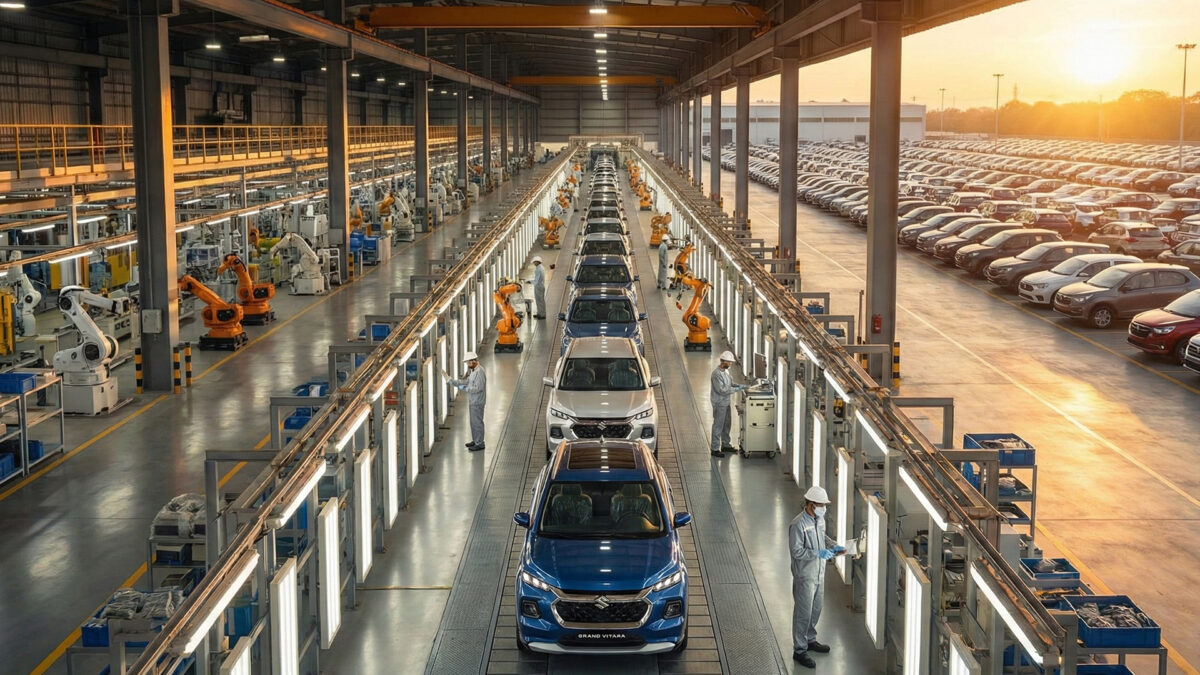
Maruti Suzuki India Ltd, the country’s largest passenger car maker, reported a 4 per cent rise in net profit for the third quarter of FY26, reaching ₹3,879 crore, up from ₹3,726.9 crore in the same period last year. The company’s standalone profit was ₹3,794 crore, reflecting steady growth despite a one-time exceptional charge of ₹594 crore related to the implementation of new labour codes.

The company’s revenue from operations jumped 29 per cent to around ₹49,900 crore, driven by strong domestic demand and a rebound in consumer sentiment. Maruti Suzuki recorded its highest-ever quarterly domestic sales, with 564,669 units sold, up sharply from 466,993 units a year ago. Including exports, total sales reached 667,769 units, supported by continued demand across different car segments and overseas shipments.

The small car segment contributed significantly to growth, benefiting from the lower 18 per cent Goods and Services Tax (GST) rate. Operating performance remained healthy, with EBITDA rising around 10 per cent, although higher commodity costs and employee expenses slightly compressed margins.

Despite the positive top-line and volume growth, Maruti Suzuki’s shares saw a dip after the results, as investors considered the impact of the one-time labour code provision and ongoing cost pressures.

Also Read: Meta to spend $135 bn on AI in 2026

Categories
Beyond

Fed holds rates steady despite Trump pressure

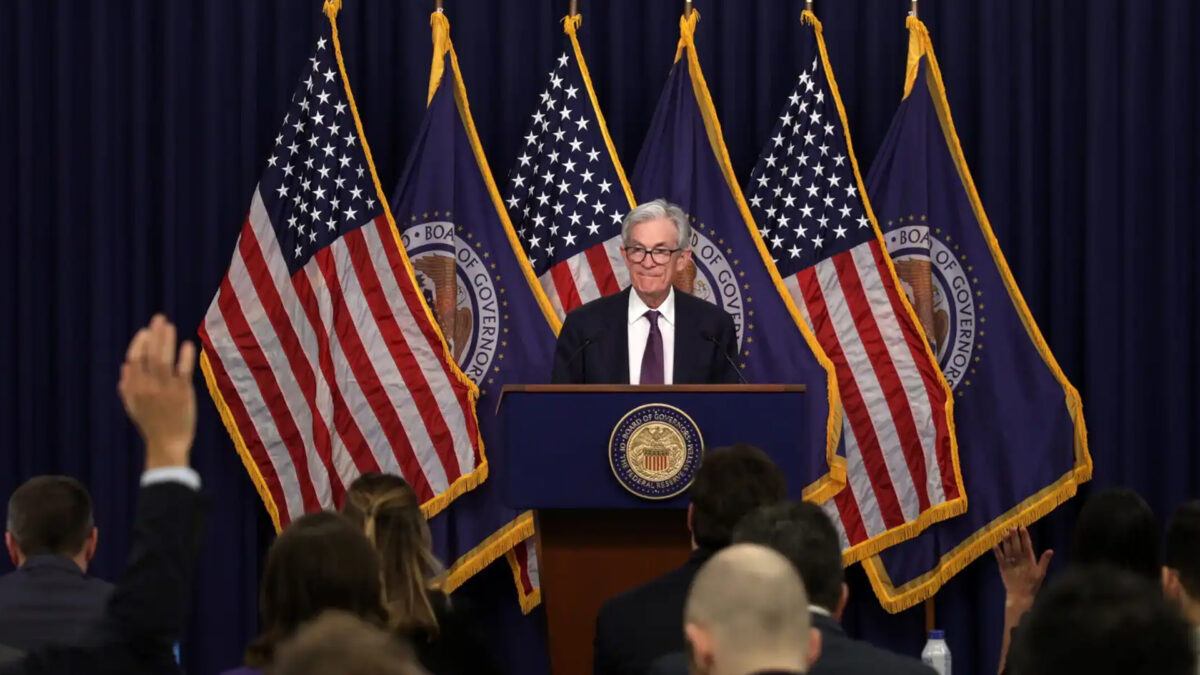
The Federal Reserve has decided to keep interest rates unchanged, even as President Donald Trump urges rate cuts. The move shows the Fed is focused on controlling inflation while supporting economic growth.

The Fed’s main policy group, the Federal Open Market Committee, voted to keep rates at their current level after months of increases meant to slow rising prices. Officials said inflation has eased but is still above the Fed’s 2 percent target and cutting rates too soon could make prices rise again.

“Keeping rates steady gives us time to watch the economy and keep inflation under control,” a Fed spokesperson said Economists say the decision helps prevent market surprises and shows the central bank is acting based on data, not politics.

Trump has repeatedly called for lower rates, arguing that high borrowing costs hurt businesses and consumers. His comments have sparked debate about the Fed’s independence but officials insist decisions are guided by economic conditions rather than political pressure.

Some investors welcomed the steady rates while others hoped for cuts to boost growth. Stock prices moved slightly after the announcement as traders weighed the Fed’s outlook.

By keeping rates steady, the Federal Reserve signals caution and a focus on long-term stability. The central bank also said it will keep watching economic trends and adjust policy if needed to support growth and protect financial stability.

Economists say the decision balances the need to keep the economy growing with the need to control inflation. Consumer spending and jobs are holding up, but global market changes and political tensions could create challenges.

Also Read: India’s industrial growth rockets 7.8% in December

Categories
Beyond

Gold at ₹1,67,090, Silver trades at ₹3,80,100

Gold and silver prices in India registered marginal gains in early trade, reflecting stable demand and firm trends in global markets. According to market data, the price of 24-carat gold rose by ₹10 to trade at ₹1,67,090 per 10 grams. 22-carat gold also saw a similar increase and was priced at ₹1,53,160 per 10 grams.

Silver prices moved up slightly as well. The metal gained ₹100, taking the rate to ₹3,80,100 per kilogram in major Indian markets. The modest rise comes after recent volatility in precious metal prices, driven by global economic concerns and fluctuations in currency markets.

Market experts say gold and silver continue to attract investor interest as safe-haven assets amid uncertainty around global growth, interest rate outlooks, and geopolitical developments. Internationally, gold prices have remained near elevated levels, supported by steady demand from investors and central banks, while silver has also benefited from industrial demand alongside its role as a hedge asset.

Despite the gains, analysts note that price movements remain cautious, with traders closely tracking cues from global markets, including US economic data and movements in the dollar. Any sharp changes in interest rate expectations or global risk sentiment could influence prices in the near term.

In India, gold prices also factor in import duties, taxes, and local demand, which can cause variations across cities. Silver prices similarly vary based on industrial demand and global supply conditions.

Also Read: Sensex down 400 points, Nifty under 25,250

Categories
Corporate

Sensex down 400 points, Nifty under 25,250

Indian equity markets saw a sharp bout of selling on Thursday as the BSE Sensex slipped over 400 points, while the Nifty 50 dropped below the 25,250 level, reflecting nervous sentiment on Dalal Street after recent gains.

The mood was subdued right from the opening bell, tracking weak global cues. Asian markets traded lower, and GIFT Nifty had already signalled a negative start, setting the tone for the session. Investors chose to pare risk amid uncertainty around global interest rates and lingering geopolitical concerns.

One of the major overhangs was the US Federal Reserve’s decision to keep interest rates unchanged. While the move was widely expected, the absence of clear signals on near-term rate cuts dampened risk appetite across global equities, including India. Traders opted for profit-booking after the market’s recent rally.

Adding to the pressure was the Indian rupee slipping to record lows against the US dollar. The weaker currency raised concerns around capital outflows and imported inflation, weighing on overall market confidence. Although a soft rupee typically supports export-oriented stocks, it failed to offset broader selling pressure.

Sectorally, IT and metal stocks were among the laggards, while select FMCG and defensive names offered limited support. Stocks such as ITC and Vedanta remained in focus amid stock-specific developments and earnings-related chatter. Broader markets also mirrored the weakness, with midcap and smallcap stocks trading lower.

In contrast to equities, gold and silver prices moved higher, as investors sought safety amid volatility. The rise in precious metals highlighted the shift towards defensive assets during uncertain market conditions.

Market participants are also staying cautious ahead of important domestic cues, including upcoming economic data, quarterly earnings, and the broader policy outlook as the Union Budget approaches.

Also Read: India’s industrial growth rockets 7.8% in December

Categories
Beyond

India’s industrial growth rockets 7.8% in December

India’s industrial sector showed a strong revival in December 2025, with industrial output rising 7.8% year-on-year, marking the fastest growth in over two years, according to official data released on January 28. This growth rate exceeds analysts’ expectations and signals a broad-based improvement across industry.

The Index of Industrial Production (IIP), which measures the performance of manufacturing, mining, and electricity sectors, revealed that manufacturing led the expansion, growing by 8.1%. Key segments such as computers, electronics, optical products, and motor vehicles contributed significantly to the uptick.

Mining output also improved, rising 6.8%, while electricity production rebounded with a 6.3% increase, reversing the slight decline seen in November. Together, these sectors helped drive overall industrial growth and indicate robust industrial activity across the economy.

On a use-based basis, infrastructure and construction goods led the growth, supported by strong performance in consumer durables, capital goods, and intermediate goods. This indicates healthy domestic demand as well as ongoing investment activity in the industrial space.

Compared to November’s growth of 7.2%, December’s figures show a clear acceleration, underlining the momentum in factory production and industrial output toward the end of 2025. However, cumulative growth for the April–December period remains lower than the same period last year, reflecting uneven activity earlier in 2025.

Economists see December’s strong growth as a positive signal for India’s economic momentum in early 2026. The data suggest that industrial production is rebounding, supported by robust manufacturing and improving infrastructure-related activity, which could further boost employment and investment in the sector.

Also Read: Elon Musk hits back at Vinod Khosla over racism claims

Categories
Corporate

Sensex jumps 487 points and Nifty tops 25,300

Markets surged on Wednesday, January 28, 2026, with Sensex gaining 487 points to end strong and Nifty50 closing above 25,300. Investor optimism was fueled by the recently announced India-EU Free Trade Agreement (FTA), positive global cues, and broad buying across metals, energy, and real estate sectors.

Leading the gains were Vedanta, Hindustan Zinc, ONGC, and Vodafone Idea, reflecting strong sectoral momentum and positive corporate developments. Metals and energy stocks benefited from rising commodity prices, while Vodafone Idea edged higher after posting a narrower Q3 loss and improved operating metrics. Realty stocks also saw increased buying interest, boosting mid and small-cap indices.

On the other hand, some defensive sectors witnessed profit-taking. IT and FMCG stocks underperformed, as investors rotated funds into cyclical and value-oriented stocks, highlighting a sectoral shift in market sentiment.

Analysts noted that a stronger Indian rupee and favorable global trends further supported the bullish trend. The market rally added significant capitalization and reinforced investor confidence ahead of upcoming corporate earnings.

Also Read: Sensex up 300+ points, Nifty crosses 25,250

Categories
Technology

WhatsApp adds ‘Strict Account Settings’ for user safety

Scrolling through WhatsApp, most of us expect a safe space to chat with friends and family. But in today’s world, even messaging apps can expose users to scams, spam, and cyberattacks. To address this, WhatsApp has introduced Strict Account Settings, a new feature that gives users more control over who can contact them and what content reaches their chats. The update is gradually rolling out on Android and iOS.

When enabled, the feature applies the strictest privacy settings automatically. Messages, media, and calls from unknown contacts are restricted, while suspicious links and previews are blocked. This means fewer chances of encountering scams or harmful content. While it’s optional, WhatsApp says the mode is especially useful for high-risk users such as journalists, activists, or public figures, but anyone concerned about privacy can turn it on.

To activate it, users can go to Settings > Privacy > Advanced > Strict Account Settings. WhatsApp reassures users that all chats remain end-to-end encrypted; the feature simply adds an extra layer of protection by limiting interactions with unknown contacts and potentially harmful content.

Experts believe this feature is a step in the right direction. They believe that giving people more control over their accounts helps reduce risks from cyberattacks and harassment.

Also Read: Meta to test paid perks on Instagram, Facebook, WhatsApp

Categories
1 Minute-Read

Air India hints at ordering more Boeing Dreamliners

Air India is considering ordering additional Boeing 787 Dreamliners to expand its long‑haul fleet, CEO Campbell Wilson said.

The first custom 787‑9 is set to begin commercial operations on February 1, flying the Mumbai–Frankfurt route. By 2027–28, the airline expects a major upgrade, with at least 20 Dreamliners joining its fleet.

One 787‑9 has already been inducted, while older 787‑8s are being retrofitted with new interiors. Since privatisation, Air India has placed orders for 570 aircraft, reflecting its ambitions for global growth and modernisation.

Categories
Corporate

Reliance, ONGC partner to share offshore energy assets

Reliance Industries Ltd (RIL) and state-run Oil and Natural Gas Corporation (ONGC) have entered into a strategic partnership to share offshore oil and gas resources, marking a major step towards improving efficiency and boosting India’s domestic energy production. The two companies signed a memorandum of understanding (MoU) during India Energy Week 2026.

The agreement focuses on sharing infrastructure, services and expertise across offshore exploration and production projects, particularly in deepwater and ultra-deepwater areas. Key regions covered under the pact include the Krishna-Godavari (KG) Basin on the east coast and the Andaman offshore blocks, where both RIL and ONGC operate adjoining or nearby fields.

As part of the collaboration, the companies will jointly use high-value assets such as drilling rigs, offshore platforms, processing facilities, pipelines, power systems, and marine infrastructure including platform supply vessels and multi-support vessels. The arrangement also covers specialised services such as well logging, project execution support and other technical operations required in offshore fields.

The primary objective of the partnership is to reduce operational costs, avoid duplication of infrastructure and improve asset utilisation in capital-intensive offshore projects. By sharing resources, both companies expect faster project execution, better logistical coordination and improved safety standards in challenging offshore environments.

ONGC said the MoU is in line with recent policy reforms, including the Oilfields (Regulation and Development) Amendment Act, 2025, which allows greater flexibility for operators to share facilities and infrastructure. The regulatory changes are aimed at encouraging collaboration, attracting investment and accelerating exploration and production activity in India’s oil and gas sector.

The partnership is also expected to strengthen emergency response mechanisms and operational resilience by enabling quicker access to vessels, equipment and technical support during critical situations.

Also Read: Hindalco to invest ₹21,000 cr in Odisha expansion