Categories
1 Minute-Read

India to miss $1trillion export goal

India’s exports for FY26 are projected at around $850 billion, falling short of the $1 trillion target, according to the Global Trade Research Initiative (GTRI).

Sluggish global demand, especially from the US and EU, and rising protectionism are limiting merchandise export growth. While India has signed 18 free trade agreements, GTRI notes that more effort is needed to make them effective.

Expanding export products and markets, along with improving competitiveness, will be crucial. Services exports may help offset shortfalls, but without strategic action, the $1 trillion milestone remains out of reach.

Categories
Beyond

North Korea reveals first nuclear submarine

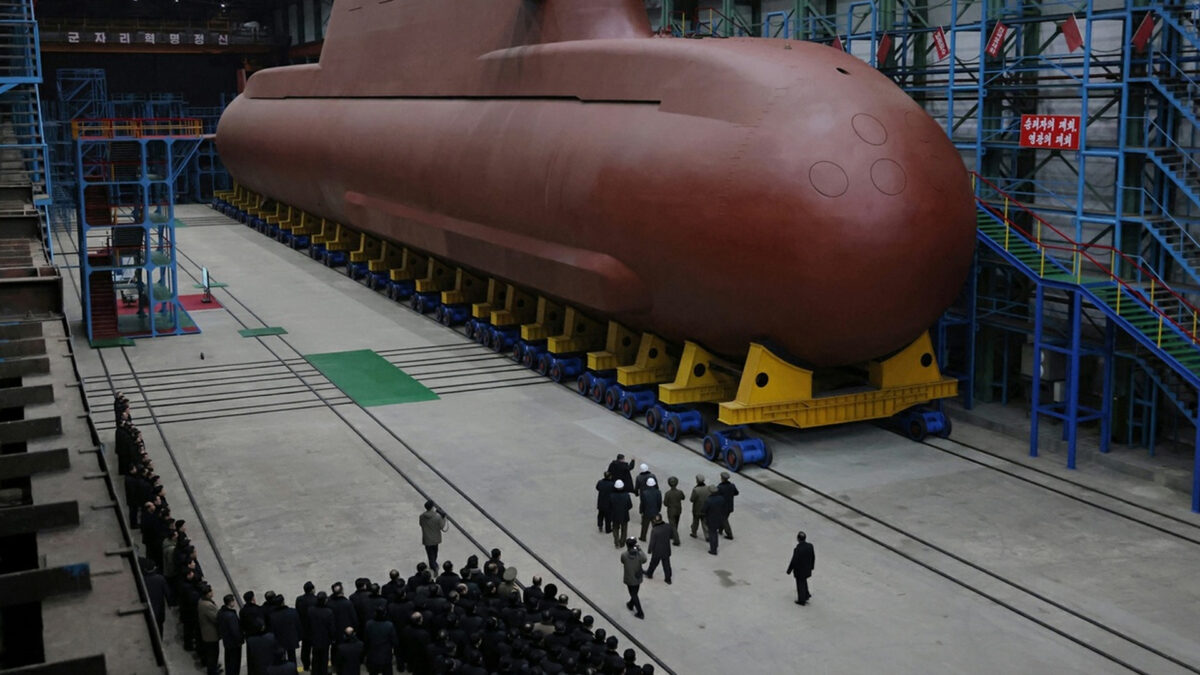
North Korea has unveiled significant progress on its first nuclear-powered submarine, displaying an 8,700-ton vessel at a shipyard and signaling a major step in its naval modernization efforts. State media released images of leader Kim Jong Un inspecting the submarine, which is described as a “strategic guided missile submarine” meant to enhance the country’s nuclear deterrent.

The photos, published by the Korean Central News Agency (KCNA), show the submarine’s hull inside an assembly hall, suggesting that key internal systems, possibly including the nuclear reactor, may be nearing completion. Analysts note that while the hull is advanced, operational readiness—including sea trials and weapons testing—could take years. Some experts speculate about external technical assistance, potentially from Russia, though this has not been independently confirmed.

During the inspection, Kim Jong Un was accompanied by senior officials and his daughter, Ju Ae, whose rising public presence has drawn attention. Kim criticized South Korea’s plans, backed by the U.S., to develop nuclear-powered submarines, calling them a “threat” and a violation of North Korean sovereignty.

State media described the submarine as an “epoch-making” achievement, part of Pyongyang’s broader push to strengthen its military, which includes advances in ballistic missiles and long-range air defense systems.

International observers caution that a fully functional nuclear submarine remains years away, given the technical challenges and ongoing sanctions on North Korea. No independent verification has confirmed the vessel’s nuclear propulsion or weapons systems.

The unveiling comes amid rising tensions on the Korean Peninsula, with both North and South Korea pursuing advanced submarine and missile technology. Analysts warn this could trigger an arms buildup in East Asia, raising regional security concerns.

Pyongyang’s display underscores its continued focus on military self-reliance and the development of a credible sea-based nuclear deterrent, further complicating diplomatic efforts to reduce tensions in the region.

Also Read: Adani bags ₹80,000 cr in deals since 2023

Categories
1 Minute-Read

IndiGo cancels 67 flights as fog disrupts operations

IndiGo cancelled 67 flights across multiple airports as dense fog and adverse winter weather disrupted operations.

The airline said most cancellations were due to forecasted low visibility, with only a few linked to operational reasons. Airports affected included Chandigarh, Dehradun, Agartala, Varanasi, and Bengaluru. The disruptions come during the official fog season, when early-morning visibility often drops sharply.

IndiGo has faced operational pressure in recent weeks, prompting closer monitoring by the aviation regulator, DGCA. The airline advised passengers to check flight status regularly and plan for delays, stressing that safety remains its top priority.

Categories
Corporate

Sensex down 200 points, Nifty slips under 26,100

Indian equity markets opened lower on Thursday, December 26, as benchmark indices faced selling pressure in thin year-end trade. At the opening bell, the BSE Sensex slipped more than 200 points, while the Nifty 50 fell below the 26,100 level, reflecting cautious investor sentiment after the Christmas holiday.

Early trade was marked by subdued volumes, with investors largely staying on the sidelines in the absence of fresh domestic or global triggers. Market participants appeared reluctant to take aggressive positions ahead of the upcoming corporate earnings season and the close of the calendar year.

On the losing side, financial and consumption-linked stocks weighed on the benchmarks. Bajaj Finance declined about 1 per cent in early deals, emerging as one of the top drags on the Sensex and Nifty. Eternal also slipped around 1 per cent, while select banking and FMCG stocks traded lower, adding to the weak opening.

In contrast, some stocks showed resilience despite the broader market weakness. Railway-related counters such as Rail Vikas Nigam Ltd (RVNL) and Indian Railway Finance Corporation (IRFC) opened higher, supported by expectations of continued government focus on infrastructure spending. Select midcap and smallcap stocks also edged up, indicating selective buying at lower levels.

Sector-wise, IT, pharma and financial stocks opened in the red, while consumer durables and infrastructure stocks showed relative strength in early trade. Analysts said the mixed sectoral trend highlights a stock-specific market rather than broad-based selling.

Market experts noted that the much-anticipated year-end rally has remained muted so far, with indices consolidating near record levels. They expect markets to stay range-bound in the near term, with direction likely to emerge only after clearer cues from earnings announcements and macroeconomic data in early 2026.

Also Read: Bharti, Warburg Pincus take 49% in Haier India

Categories
Leaders

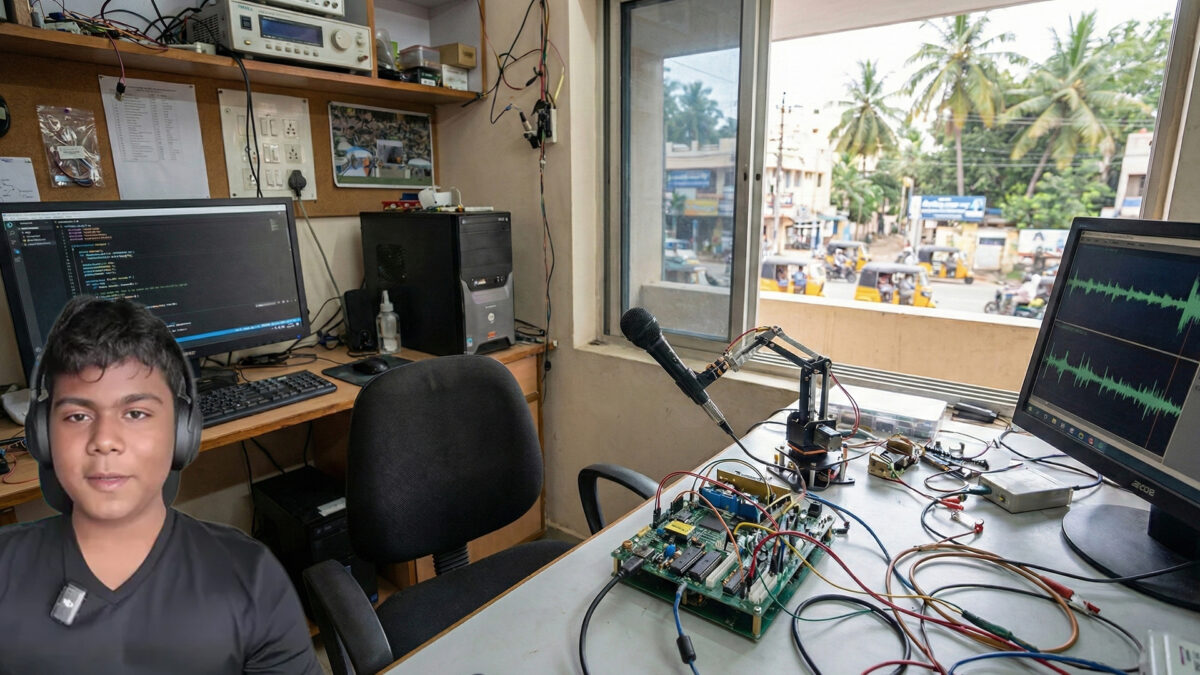
Chennai teen builds voice-based Tool for Hardware

At an age when most teenagers are focused on exams and college choices, Harish Ashok, a 17-year-old from Chennai, is quietly rethinking how hardware is built. His innovation, a voice-based assistant called Zenith, aims to make hardware development as easy and intuitive as writing software, simply by speaking.

Hardware prototyping is often slow, technical, and intimidating. Developers must write firmware, install libraries, map pins, upload code, and debug errors manually. Harish experienced these hurdles first-hand while working on electronics projects. Instead of accepting them as inevitable, he decided to solve the problem.

Zenith works like a smart companion for hardware builders. Users can speak instructions such as changing a sensor, checking a datasheet, or generating code. The assistant then takes care of the background tasks, from writing and uploading firmware to managing serial communication, libraries, and documentation. The result is a smoother, faster journey from idea to working prototype.

In demonstrations shared online, Harish showed how Zenith could build a practical project: an OLED display that reads temperature and humidity when motion is detected. Tasks that would normally take hours of setup and troubleshooting were completed quickly, using simple voice commands. For makers, students, and robotics enthusiasts, this could be a game-changer.

Harish’s vision is clear,  to remove the friction that often discourages people from experimenting with hardware. By making the process conversational and accessible, he hopes more creators will feel confident turning ideas into real-world devices.

Zenith is not Harish’s first invention. Earlier, he worked on a smart home energy-saving platform that optimised electricity usage, as well as a colour-scanning device that converts real-world colours into hex codes for web designers. Each project reflects his interest in blending practical needs with clever technology.

The young innovator credits mentors, early supporters, and collaborative tech communities for helping him refine his ideas. He continues to invite feedback as Zenith evolves, signalling his openness to learning and improvement.

Also Read: Bharti, Warburg Pincus take 49% in Haier India

Categories
Corporate

Bharti, Warburg Pincus take 49% in Haier India

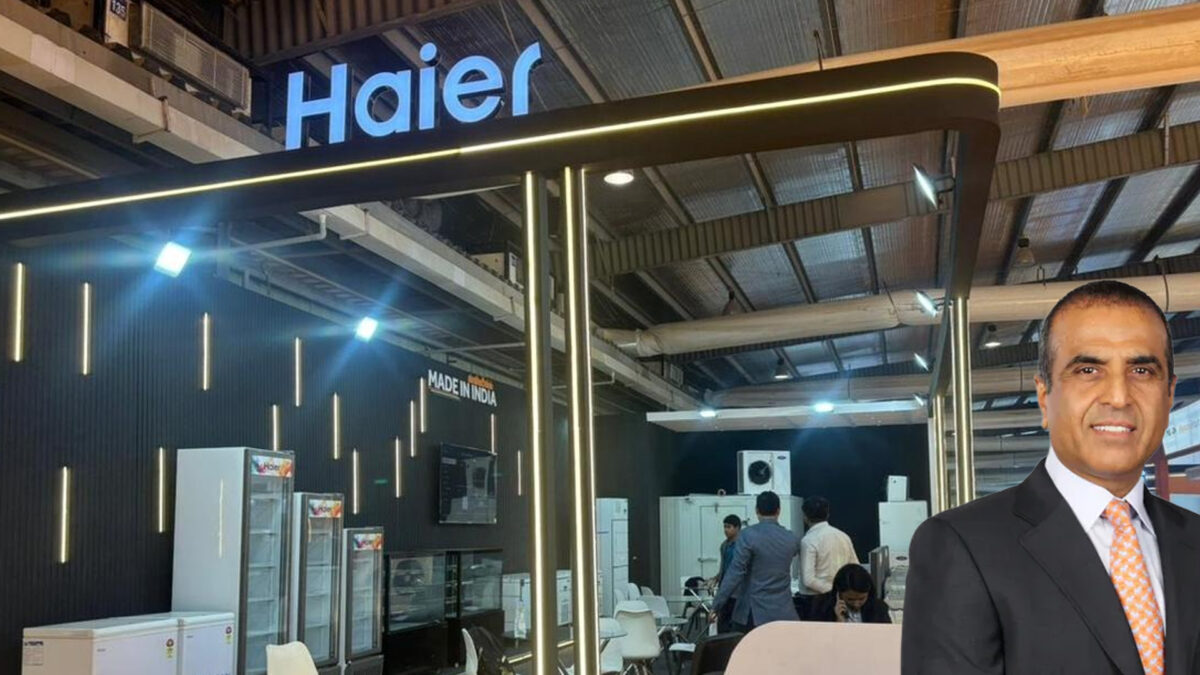
Sunil Mittal‑led Bharti Enterprises and US-based private equity firm Warburg Pincus have agreed to buy a 49 percent stake in Haier India, a leading home appliances company. The deal, announced on December 24, 2025, is a strategic move to strengthen Haier India’s presence in the growing consumer electronics and appliance market.

Under the agreement, Bharti and Warburg Pincus will jointly hold 49 percent, the Haier Group will retain 49 percent, and the remaining 2 percent will stay with Haier India’s management. The financial details have not been officially shared, but industry experts estimate Haier India’s value at around ₹15,000 crore (roughly $1.8–2 billion).

Haier India makes products like air conditioners, refrigerators, TVs, washing machines, and kitchen appliances. It has manufacturing units in Pune (Maharashtra) and Greater Noida (Uttar Pradesh). In recent years, the company has grown steadily, with annual growth rates around 25 percent, showing strong demand for appliances across India.

The new partnership aims to expand local manufacturing and sourcing while bringing in new products and technologies. Bharti Enterprises’ extensive domestic network and Warburg Pincus’s expertise in scaling businesses are expected to help Haier India reach more customers and innovate faster.

Experts see this move as a sign of confidence in India’s consumer appliance market, which is growing due to higher incomes, changing lifestyles, and increasing use of home appliances. The collaboration also highlights cross-border partnerships, as an Indian company and a foreign investor back the local arm of a major Chinese brand.

With this deal, Haier India is set to strengthen its position against competitors like Samsung and LG. The combined support of Bharti, Warburg Pincus, and Haier Group is expected to help the company expand faster and serve more customers across India in the coming years.

Also Read: Navi Mumbai Airport opens with first flights

Categories
1 Minute-Read

Jaipur Masala IPO Sees ₹25,300 cr bids

Jaipur-based Shyam Dhani Industries’ ₹38.5 crore SME IPO received bids worth ₹25,300 crore, making it the most subscribed SME issue of 2025.

The three-day offer, priced at ₹65–70 per share, drew around 6.22 lakh applications. Anchor investors oversubscribed their portion 70 times.

The company, known for its “SHYAM” spice brand, aims to use the proceeds for working capital, loan repayment, marketing, and solar rooftop installation.

Share allotment will be finalised on December 26, with listing expected on December 30. Strong retail and institutional demand signals robust investor confidence in SMEs.

Categories
Beyond

Reliance gets one-month US nod for Russian oil

Reliance Industries Ltd (RIL) has received a one-month concession from the United States that allows it to continue receiving crude oil cargoes supplied by Russia’s state-owned oil major Rosneft. The temporary approval comes even as the US tightens sanctions on Russian energy companies following the Ukraine conflict.

The concession enables Reliance to take delivery of oil shipments that were contracted before fresh sanctions came into force. These are not new purchases but cargoes linked to existing agreements that are being gradually wound down in line with regulatory requirements, according to sources familiar with the matter.

In October, the US imposed sanctions on major Russian oil producers, including Rosneft and Lukoil, and asked companies to end transactions with them by November 21. However, the one-month waiver allows Reliance to continue receiving some Rosneft supplies beyond that deadline. Since November 22, the company has reportedly received around 15 cargoes of Russian crude under earlier commitments.

Reliance has a long-term supply agreement with Rosneft for about 500,000 barrels of crude oil per day. This oil is mainly used at its Jamnagar refining complex in Gujarat, which has a total capacity of about 1.4 million barrels per day and is among the largest refinery hubs in the world.

To manage sanctions compliance, Reliance has adjusted how it processes Russian crude. The company has said that Russian oil received after November 20 is being refined at its domestic-focused refinery unit. Fuel exports, especially to Europe, are being produced using non-Russian crude to meet European Union rules.

From January 21, the EU will not accept fuel made at refineries that have processed Russian crude within the previous 60 days. To avoid disruption to exports, Reliance has stopped using Russian oil at its export-oriented refinery in the Jamnagar Special Economic Zone and is sourcing alternative crude grades.

India has been a major buyer of Russian oil since the start of the Ukraine war, taking advantage of discounted prices. However, India’s imports of Russian crude are expected to decline in December as refiners respond to tighter sanctions and changing trade rules.

The US Treasury has not officially commented on the concession granted to Reliance.

Also Read: L&T bags major BPCL order worth up to ₹10,000 cr

Categories
Leaders

Satya Nadella skips managers to hear engineers on AI

Microsoft Chief Executive Officer Satya Nadella has introduced a new way of running discussions around artificial intelligence (AI) at the company. He has started weekly meetings focused only on AI, where senior managers are not allowed to present. Instead, Nadella wants to hear directly from Microsoft’s engineers and technical teams who are building AI products.

The idea behind this move is simple: Nadella believes that important information often gets delayed or softened as it passes through layers of management. By speaking directly to engineers, he hopes to get honest, real-time updates on what is working, what is not, and what needs urgent attention. These meetings are meant to cut through internal bureaucracy and help Microsoft move faster in the highly competitive AI space.

According to reports, these sessions are more informal than traditional leadership meetings. Engineers are encouraged to speak openly about challenges, unfinished work, and technical roadblocks. There are no polished slide decks or rehearsed presentations. Nadella has also created a dedicated internal communication channel so that conversations about AI can continue beyond the meetings.

This approach reflects Nadella’s belief that AI is central to Microsoft’s future growth. The company is investing heavily in AI across products such as cloud services, productivity tools, and enterprise software. With rivals like Google, OpenAI partners, and other tech giants moving quickly, Nadella wants Microsoft to stay agile and responsive.

The new meeting structure is also part of a broader cultural shift at Microsoft. Over the past few years, Nadella has focused on breaking down silos, encouraging collaboration, and empowering employees closer to the actual work. By giving engineers a direct voice, he is signalling that technical expertise matters more than hierarchy when it comes to AI decisions.

Industry experts see this move as a practical step to speed up innovation and improve decision-making. It highlights Nadella’s hands-on leadership style and his view that listening to people on the ground is essential in a fast-changing technology environment.

Also Read: Adani Ports completes Australia NQXT deal

Categories
1 Minute-Read

L&T bags major BPCL order worth up to ₹10,000 cr

Larsen & Toubro has won a major engineering, procurement, construction and commissioning order from Bharat Petroleum Corporation Limited, valued between ₹5,000 crore and ₹10,000 crore.

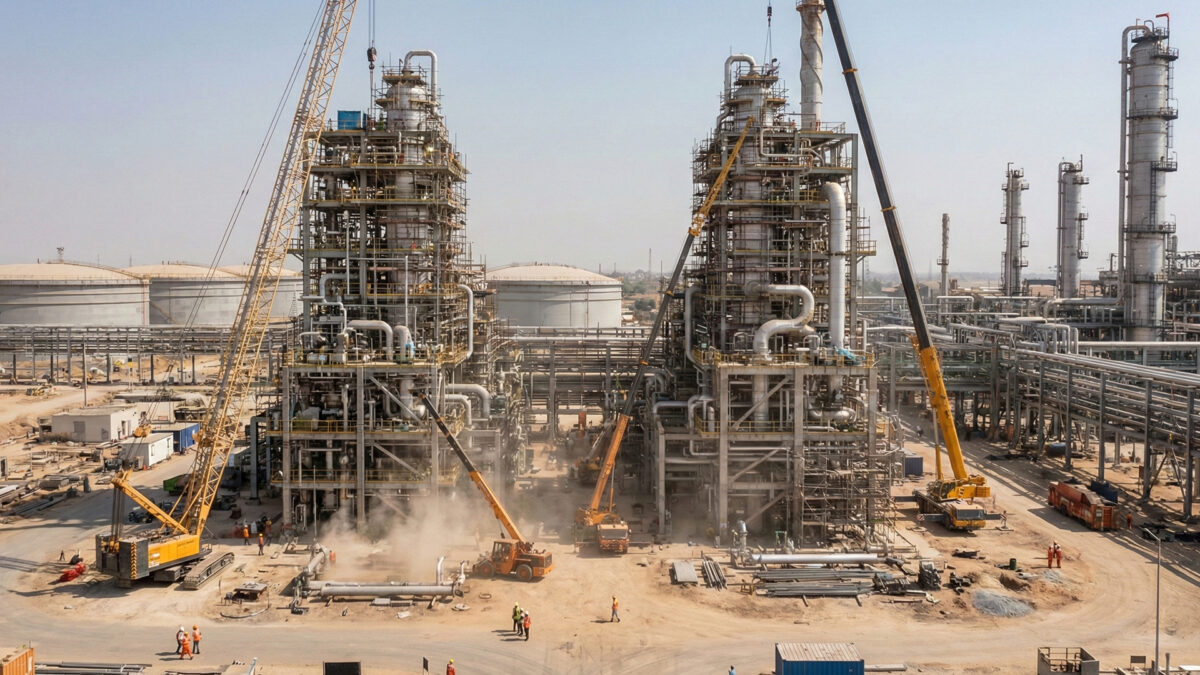
The contract will be executed by L&T’s Hydrocarbon Onshore business on a lump-sum turnkey basis. It involves building a Linear Low-Density Polyethylene and High-Density Polyethylene swing unit at BPCL’s Bina refinery in Madhya Pradesh.

The project is part of BPCL’s refinery and petrochemical expansion plan. Once completed, the unit will strengthen India’s domestic polymer production capacity and reduce import dependence.