Categories
1 Minute-Read

NPCI rolls out UPI wallet for Global AI Summit visitors

The National Payments Corporation of India (NPCI) has introduced its UPI One World wallet service for international attendees of the India AI Impact Summit 2026 in New Delhi.

Visitors from over 40 countries can make seamless, real-time payments across India without needing an Indian bank account or mobile number. Funds can be loaded via international debit or credit cards, and payments can be made by scanning standard UPI QR codes.

The service is active at Delhi airport and the summit’s NPCI pavilion, simplifying transactions for global delegates.

Categories
Corporate

Air India–Lufthansa deal to make Europe trips smoother

In good news for travellers, flying between India and Europe is set to become easier and more seamless. Air India and the Lufthansa Group have joined hands to deepen their partnership, a move that will eventually allow passengers to access more destinations, better-timed flights and hassle-free connections under one coordinated network.

The plan is simple in intent but significant in impact: give passengers more choice, shorter travel times and smoother transfers. Once the agreement receives regulatory approvals, the two airline groups will be able to align flight schedules, coordinate routes and sell seats together — allowing travellers to book their entire journey on a single ticket even when flying across multiple airlines.

The collaboration brings several European carriers into closer cooperation with Air India, including Lufthansa, SWISS, Austrian Airlines, Brussels Airlines and ITA Airways.

For travellers, this could mean better-timed connections, fewer separate bookings and more flexibility in choosing routes. Someone flying from a smaller Indian city to a European destination, for instance, may soon be able to move between flights within the same network without the usual hassle of multiple check-ins and baggage reclaims.

The two groups already share flights on a large network linking several Indian and European cities, and this is expected to grow further as demand rises for tourism, education, business and family travel.

For Air India, the agreement supports its ongoing transformation and global expansion. With new aircraft on order and more long-haul routes planned, the airline is rebuilding its international presence. For Lufthansa Group, India remains one of its most important and fastest-growing long-haul markets.

Also Read: Adani Ports ties up with Marseille Fos for IMEC corridor

Categories
Corporate

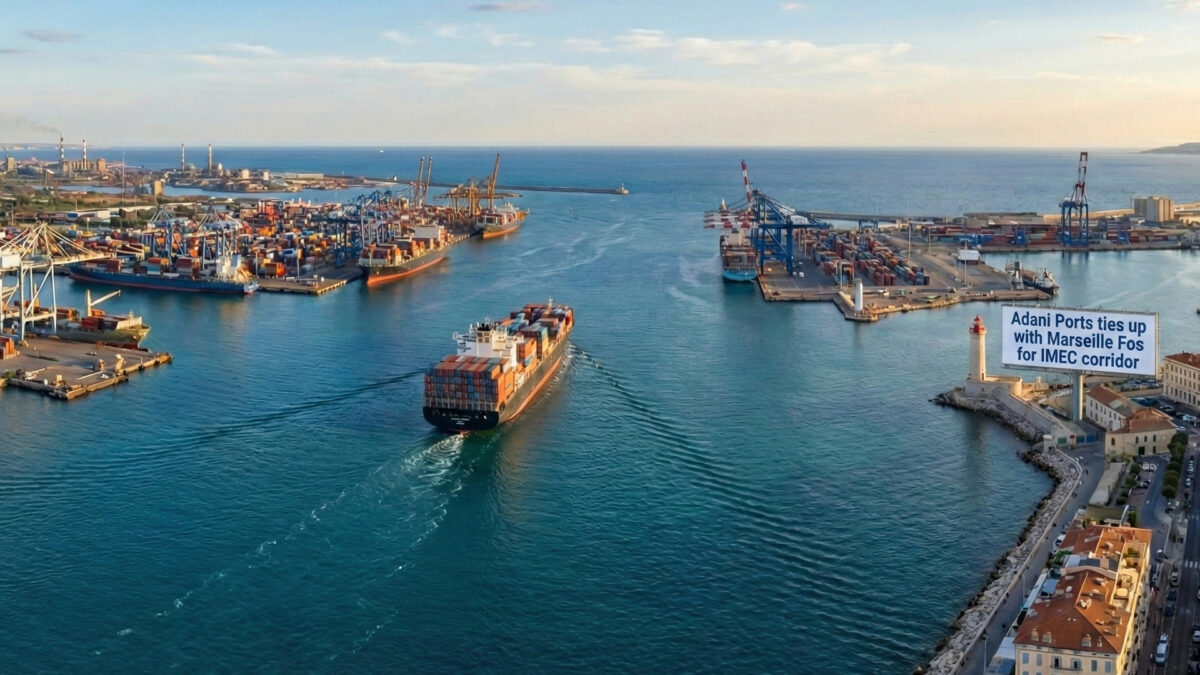
Adani Ports ties up with Marseille Fos for IMEC corridor

Adani Ports and Special Economic Zone Ltd has signed an MoU with Port of Marseille Fos to strengthen cargo connectivity between India and Europe and support the India–Middle East–Europe Economic Corridor (IMEC).

The partnership links India’s largest private port operator with France’s biggest maritime gateway and is aimed at creating faster, more reliable supply chains for bilateral and global trade. By improving port-to-port coordination, the two sides plan to reduce transit time and enhance cargo movement for Indian exporters entering European markets.

The agreement covers logistics integration, digital port solutions, knowledge exchange and joint efforts in sustainable shipping. Both ports will also explore projects in decarbonisation, alternative fuels and energy-efficient operations as the global maritime sector moves towards greener standards.

For Adani Ports, the pact strengthens its international network and positions it as a key player in the emerging IMEC trade route, which will connect India to Europe through the Middle East using a mix of sea, rail and logistics infrastructure. The corridor is expected to diversify supply chains and offer an alternative to traditional trade routes.

Marseille Fos, a major Mediterranean hub, provides direct access to southern and central Europe, making it a strategic entry point for Indian cargo. The collaboration is also seen as part of the broader India–France push to deepen cooperation in infrastructure, clean energy and resilient trade systems.

Also Read: Adani Group unveils $100 bn plan for AI data centres

Categories
Corporate

Sensex drops 100 pts, Nifty slips below 25,700

As the markets opened on Wednesday, the BSE Sensex fell over 100 points while the NSE Nifty 50 slipped below the 25,700 mark in a volatile session dominated by sector-specific action. Weakness in frontline technology stocks such as Infosys, TCS and HCLTech weighed the most on the indices, reflecting persistent concerns over the sector’s growth outlook amid the rapid shift towards artificial intelligence-led business models.

However, losses were partially capped by strong buying in metal counters. Tata Steel and JSW Steel emerged among the top gainers after positive global cues linked to steel and aluminium tariffs improved sentiment for the sector. Gains in banking stocks, led by State Bank of India, also helped prevent a sharper fall.

The broader market mirrored the cautious mood, with mid-cap and small-cap indices trading on a flat-to-negative note. Most sectoral indices ended in the red, highlighting the lack of broad-based momentum.

Global cues remained mixed. Asian markets traded with mild gains, while investors continued to track the US interest-rate trajectory and movements in global technology stocks. The uncertainty kept domestic traders from taking large directional positions.

Stock-specific action continued in the infrastructure and capital-goods space on the back of fresh order wins, while select FMCG and tobacco stocks saw buying interest after price hike expectations.

Also Read: Adani Group unveils $100 bn plan for AI data centres

Categories
Corporate

Sensex up 174 points, Nifty above 25,700

The benchmark BSE Sensex climbed 174 points, settling around 83,450, while the NSE Nifty50 closed near 25,700, extending gains for the second consecutive session. The markets erased early weakness on Tuesday to finish with broad‑based gains, reflecting renewed investor confidence after a tentative start.

Sector performance: Information Technology and PSU bank stocks led the rally, with notable gains in TCS, HCL Tech, and SBI. Conversely, FMCG and pharma shares saw profit‑booking, with Nestlé, Hindustan Unilever, and Sun Pharma among the laggards. Midcap and smallcap indices also participated in the upswing, though with less intensity.

Early weakness was driven by negative signals from GIFT Nifty, which traded below the previous close, hinting at cautious risk appetite. Global cues remained subdued as Asian markets traded with thin volumes, and commodity prices such as gold eased on a stronger US dollar.

Market breadth improved as investors returned to equities after recent volatility, supported by stronger valuations in financials and optimism around corporate earnings.

Also Read: Anthropic launches Bengaluru office, expands India partnerships

Categories
Leaders

Elon Musk’s $850 bn fortune nears trillion mark

Elon Musk is edging closer to a milestone no individual has ever reached, a personal fortune of one trillion dollars. With his net worth now estimated at around $850 billion, the entrepreneur’s financial rise reflects not just the success of a single company, but the combined momentum of electric vehicles, space technology and artificial intelligence.

The sharp surge in wealth has been driven largely by the soaring valuations of his biggest ventures. Tesla continues to command strong investor attention, while privately held SpaceX has seen its value climb as commercial launches and satellite services expand. The growing buzz around xAI has added another powerful layer to Musk’s financial story, turning his AI ambitions into a major wealth engine.

Despite the staggering figure, most of this fortune exists on paper. Musk’s wealth is tied to his ownership in these companies rather than cash in the bank, meaning daily market movements and fresh funding rounds can dramatically change the total. That also explains how his net worth has leapt by hundreds of billions within a relatively short span.

What sets this moment apart is the scale of his lead over other billionaires. The gap between Musk and the rest of the world’s richest has widened so much that the trillion-dollar conversation now feels less like speculation and more like a question of timing.

For observers, the story is also about how future-facing industries are reshaping global wealth. Electric mobility, reusable rockets, satellite internet and AI are no longer experimental ideas, they are high-value businesses capable of creating unprecedented personal fortunes.

Also Read: Infosys climbs 3% after AI deal with Anthropic

Categories
Corporate

Sensex slips 100 pts, Nifty near 25,700

Indian benchmark indices staged a strong recovery on Tuesday. The BSE Sensex and NSE Nifty opened on a weak note, tracking profit booking and mixed global cues. The indices slipped in early trade, with the Nifty briefly moving below the 25,700 level and the Sensex falling over 100 points. However, a steady recovery in technology stocks during the second half of the session trimmed the losses and pushed the benchmarks into a narrow range by the close.

IT majors Infosys, TCS and HCLTech were among the top gainers on the Nifty. The sector saw value buying after last week’s sharp correction, and sentiment improved following deal-related optimism in the artificial intelligence space. The Nifty IT index ended as the top sectoral performer.

In contrast, index heavyweight Reliance Industries declined and capped the upside. Financial stocks also remained under pressure, with ICICI Bank and HDFC Bank among the key laggards. Weakness in metal stocks, including Tata Steel, further weighed on the market.

In the broader market, mid-cap and small-cap indices outperformed the benchmarks, indicating continued stock-specific buying. Defence-linked Cochin Shipyard surged after emerging as the lowest bidder for a major contract, boosting sentiment in capital goods stocks.

Shares of newly listed AI-focused Fractal Analytics saw a muted trend after a weak debut, reflecting valuation concerns despite strong interest in the artificial intelligence theme.

Also Read: KPMG partner fined for AI ethics cheat

Categories
Corporate

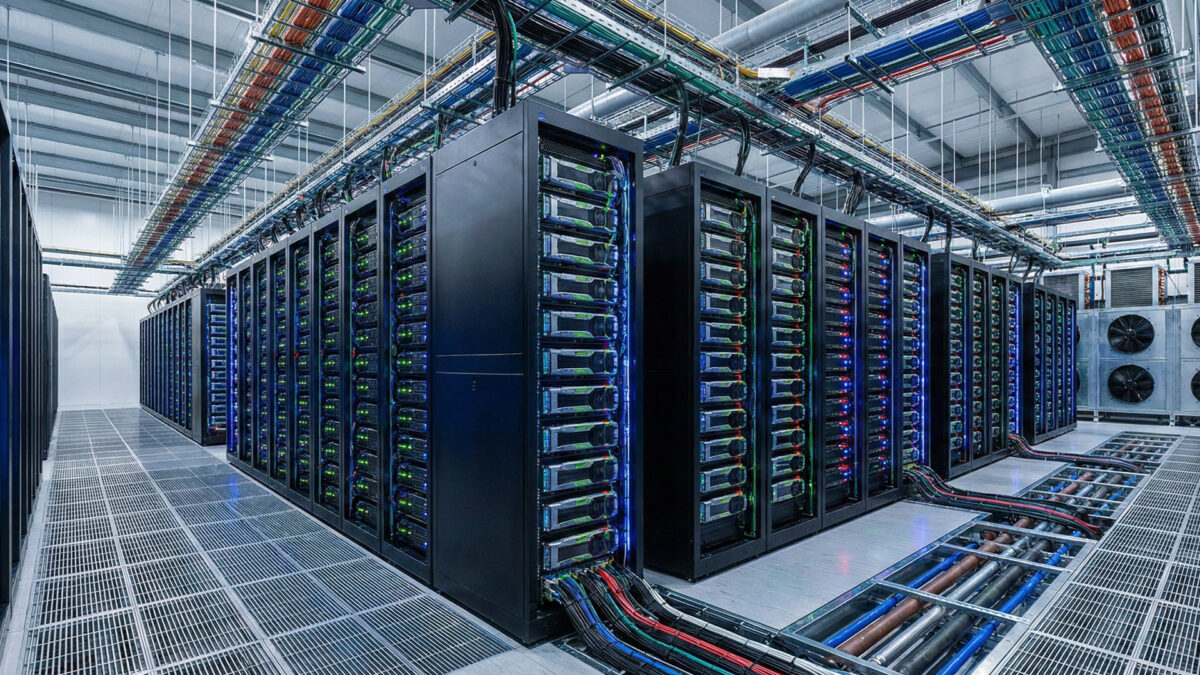
Blackstone backs Neysa’s $1.2 bn AI cloud expansion

Indian AI cloud platform Neysa is set to receive $1.2 billion from private equity firm Blackstone and other investors. The funding includes $600 million in equity and plans for $600 million in debt.

Founded in 2023 by Sharad Sanghi, Neysa provides GPU‑based AI infrastructure for enterprises, government bodies, and research labs. The new capital will help expand its GPU network across India, supporting AI development while ensuring data sovereignty.

Participating investors include Teachers’ Venture Growth, TVS Capital Funds, 360 ONE Assets, and Nexus Venture Partners. Blackstone will become the majority shareholder once the deal closes.

The funding strengthens India’s AI ecosystem, enabling local organisations to train and deploy AI models domestically. Neysa plans to scale its GPU capacity significantly, serving startups, hyperscalers, and large enterprises more efficiently.

Sanghi said the move aligns with India’s broader AI goals, offering secure, cost-effective compute solutions. Blackstone views the investment as part of its strategy to back critical digital infrastructure in growing AI markets.

Prior to this round, Neysa had raised around $50 million from early investors including Matrix Partners India and Nexus Venture Partners.

Also Read: Fractal Analytics IPO opens softly, lists 3% below price

Categories
Beyond

India powers ahead with 50 GW growth in FY26

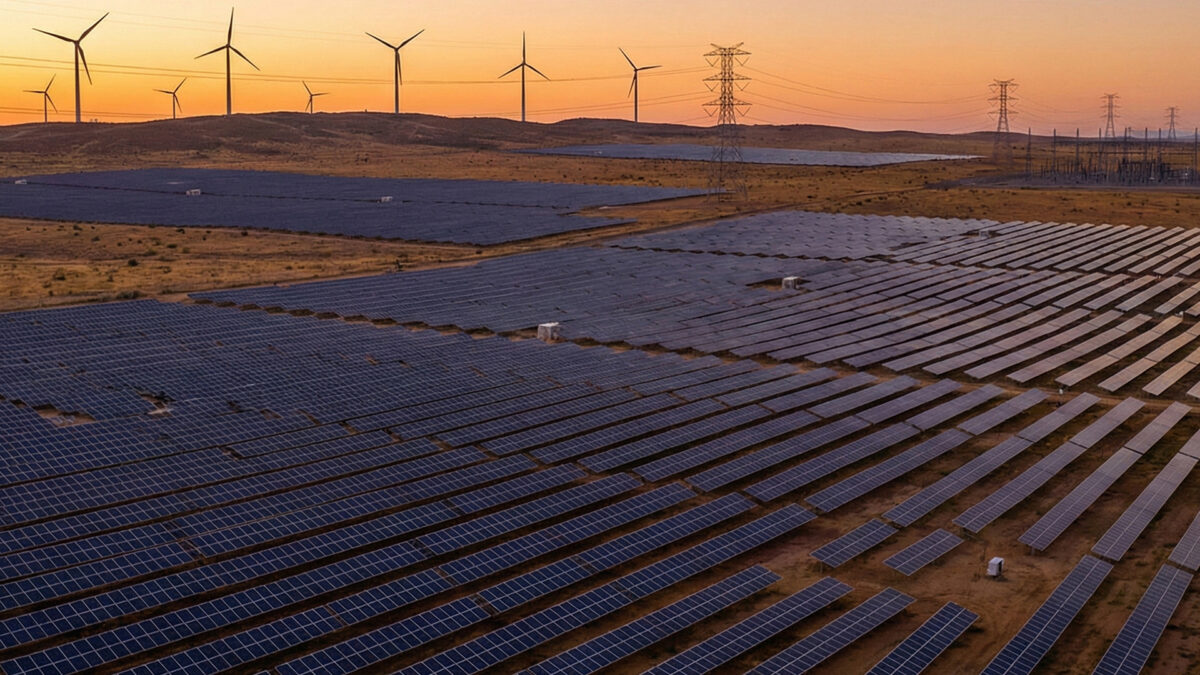
India has added more than 50,000 MW (50 GW) of power generation capacity during the current financial year, marking the highest-ever annual increase in the country’s history. The rapid expansion reflects rising electricity demand and a strong push towards cleaner energy sources.

A major share of the new capacity has come from renewable energy, with solar power contributing the largest portion, nearly 35 GW. Wind energy additions have also gathered pace, while thermal, large hydro and nuclear projects accounted for the remaining capacity. The strong renewable growth means non-fossil fuel sources now form a larger share of India’s total installed power capacity.

With the latest addition, India’s overall installed power capacity has crossed 520 GW, strengthening the country’s ability to meet peak demand from industry, infrastructure, urbanisation and the fast-growing digital economy. The capacity addition represents a significant year-on-year increase and highlights the speed at which new projects are being commissioned.

The record build-out has been supported by policy measures, faster project execution, improved transmission networks and rising investments in clean energy. Government schemes promoting solar parks, rooftop solar and manufacturing of renewable equipment have played a key role in accelerating installations.

The expansion is also crucial for India’s long-term energy transition goals. The country has set ambitious targets to increase the share of non-fossil fuel capacity in its energy mix, reduce carbon emissions and ensure reliable power supply for sustained economic growth.

At the same time, the addition of thermal and hydro capacity is helping maintain grid stability and meet base-load requirements, ensuring that the shift to renewable energy remains balanced.

Also Read: India AI Impact Summit greets skills, tech, leaders

Categories
Corporate

Bengaluru gets Nothing’s first India flagship outlet

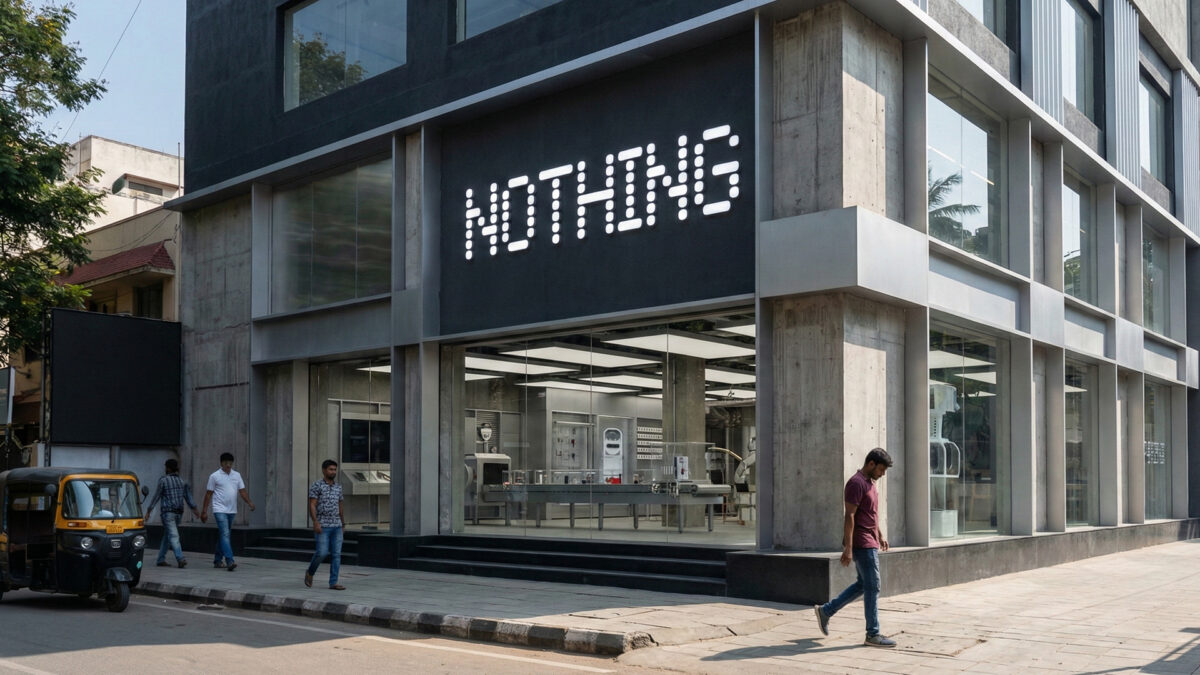
Consumer technology brand Nothing has strengthened its presence in India with the launch of its first flagship retail store in Bengaluru, signalling a clear shift towards offline expansion in one of its most important global markets. The store, located at Indiranagar’s 100 Feet Road, was inaugurated by co-founder and CEO Carl Pei along with India president Akis Evangelidis.

The Bengaluru outlet is the company’s second flagship store worldwide after London and has been designed as a large experiential space where customers can explore and interact with the brand’s full product ecosystem. Spread across two floors, the store allows visitors to try out Nothing smartphones, audio devices, CMF products and accessories through dedicated demo zones.

Moving beyond the traditional retail format, the space focuses on community engagement and immersive product experience. It features areas for content creation, product personalisation and merchandise, reflecting the brand’s digital-first identity and strong creator-led marketing strategy. The store’s industrial design, inspired by assembly lines, uses raw textures and bold visual elements to mirror Nothing’s transparent and minimalist product philosophy.

The opening saw enthusiastic response from fans, with long queues and strong footfall on day one. The outlet will be open to customers throughout the week, offering hands-on support, service assistance and exclusive merchandise.

India continues to be a key growth market for Nothing, both in terms of sales and manufacturing. The company has been steadily expanding its retail footprint through partners and is now investing in flagship spaces to build deeper connections with its user community. The Bengaluru launch is part of a broader global plan to open similar stores in major cities.

Also Read: Big Tech like ‘East India Company’, says Zoho’s Sridhar Vembu