
Categories
Beyond

Gold eases at ₹1.53 lakh, silver trades at ₹2.61 lakh

Gold and silver prices eased on Monday, September 14, giving festive buyers some relief as Ganesh Chaturthi celebrations began across Maharashtra. Precious metals remained under pressure as rising crude oil prices increased inflation concerns and strengthened expectations that the US Federal Reserve could maintain a tighter interest-rate stance.

The latest rates showed 24-carat gold at ₹1,52,990 per 10 grams, while 22-carat gold stood at ₹1,40,241 per 10 grams in Mumbai, Pune, Nagpur and Nashik. The 999 fine silver rate was ₹2,34,260 per kg in all four cities.

The rates are particularly significant for buyers in Maharashtra, where Ganesh Chaturthi is one of the biggest festivals of the year. Gold purchases are traditionally considered auspicious during the festive period, with families often buying jewellery, coins or other precious-metal products.

Gold prices have been moving lower in recent sessions. The decline comes after bullion recorded its third consecutive weekly fall, with investors becoming increasingly cautious about the outlook for US interest rates.

Around the morning trading session, the broader domestic gold rate was ₹1,53,260 per 10 grams, while 999 silver was trading at ₹2,34,690 per kg. On the Multi Commodity Exchange, or MCX, gold was down 0.08% at ₹1,52,655 per 10 grams, while silver futures were about 0.04% lower at ₹2,34,886 per kg.

The difference between these figures and city-wise retail rates is important for consumers. Retail gold prices can vary based on the source, location and pricing methodology. Jewellery buyers also need to account for making charges and taxes, which can push the final purchase price above the quoted bullion rate.

One of the biggest factors weighing on gold is the sharp rise in crude oil prices. Higher oil prices can add to inflationary pressures, particularly in major economies. This has raised concerns that central banks may have less room to reduce interest rates or may maintain higher rates for longer.

Gold is often viewed as a hedge against inflation, but it does not provide interest income. When interest rates rise or are expected to remain high, investors can shift towards interest-bearing assets, reducing the relative appeal of non-yielding bullion.

The US Federal Reserve is scheduled to hold its policy meeting on September 15 and 16. Investors are watching the meeting closely for signals about the future direction of US interest rates. Any indication of a more hawkish policy stance could put additional pressure on gold and silver prices.

The US dollar is another important factor. International gold prices are denominated in dollars, meaning a stronger US currency can make gold more expensive for buyers using other currencies. This can affect demand and put pressure on global bullion prices.

Spot gold was down around 0.5% at approximately $4,327.80 an ounce, while US gold futures for December delivery fell nearly 1% to about $4,368.60 an ounce. The international decline followed the metal’s third consecutive weekly fall.

The recent weakness does not necessarily mean the longer-term gold story has changed. Goldman Sachs continues to see upside potential and has retained its forecast for gold to reach $4,900 an ounce by the end of 2026, although it expects considerable price volatility along the way.

Global movements are only one part of India’s gold price equation. Domestic rates are also influenced by the rupee-dollar exchange rate, import costs, international bullion prices and local demand. These factors can cause Indian prices to move differently from global gold prices on some days.

Silver is facing similar pressure but has additional factors influencing its price. Unlike gold, silver has significant industrial demand. It is widely used in electronics, solar panels and several other technologies. This gives the metal a different demand profile and can make its price more sensitive to expectations about global economic growth.

The latest silver price today in the four Maharashtra cities stands at ₹2,34,260 per kg for 999 fine silver. The metal has also seen considerable volatility in recent weeks, making it important for buyers to check the latest rate before making a purchase.

The festive season could provide some support to domestic gold demand even as international markets remain uncertain. A fall in prices may encourage buyers who had been waiting for a more favourable entry point.

Still, consumers should avoid looking only at the headline gold rate today. The purity of the metal, making charges, GST and other costs can significantly affect the final jewellery bill. Two jewellers quoting similar gold rates can therefore offer different final prices.

Investors, meanwhile, will be watching the Federal Reserve meeting, crude oil prices, the US dollar and upcoming US economic data for clues about the next move in bullion.

Ganesh Chaturthi is bringing a fresh wave of festive demand, and buyers may welcome the recent easing in prices. Global economic and policy factors, however, continue to drive the market, keeping both gold and silver vulnerable to further swings in the coming days.

 

Categories
Beyond

Gold at ₹1,54,240, silver rises to ₹2,42,820

Gold and silver prices remained in focus in Indian markets on Saturday, September 12, with both precious metals continuing to see sharp movements amid global economic and geopolitical uncertainty. Gold was priced at around ₹1,54,240 per 10 grams, while silver stood at approximately ₹2,42,820 per kg.

The latest rates come after a week of considerable movement in the bullion market. Investors have been closely tracking international gold prices, crude oil, the movement of the rupee against the US dollar and expectations around US interest rates. These factors have kept domestic gold and silver prices volatile.

Gold continues to attract attention as investors look for relatively safer assets during periods of uncertainty. However, its price has also been affected by changing expectations about the US Federal Reserve’s monetary policy. Interest-rate decisions are particularly important for gold because the precious metal does not provide regular interest income.

When expectations of higher interest rates strengthen, investors may move towards interest-bearing assets, putting pressure on gold. On the other hand, expectations of lower rates can support demand for bullion.

The US dollar is another major influence on the precious metals market. International gold is generally traded in dollars, so movements in the currency can have a direct impact on prices. For Indian buyers, the rupee-dollar exchange rate is particularly important because India imports a large part of its gold requirement.

A weaker rupee can make imported gold more expensive in the domestic market. Even if international gold prices remain steady, a decline in the rupee can push up the price paid by Indian consumers.

Crude oil has emerged as another important factor for Indian markets. Oil prices have risen amid heightened tensions in West Asia, raising concerns about inflation and India’s import bill. Since India imports most of its crude oil, a sustained rise in global oil prices can put pressure on the rupee and influence domestic commodity prices.

The combination of geopolitical tensions, crude oil movements and currency fluctuations has therefore created an uncertain environment for bullion investors.

Silver has also experienced significant volatility. Unlike gold, silver has an important industrial role and is widely used in electronics, solar equipment and several other manufacturing applications. This means its price is influenced by both investment demand and expectations for industrial activity.

The latest silver price today of around ₹2,42,820 per kg reflects the continued strength of the metal despite recent fluctuations. Silver has recorded substantial price swings in recent sessions, making it one of the closely watched commodities in the domestic market.

For consumers planning to buy jewellery, the distinction between 24-carat and 22-carat gold is also important. 24K gold is the highest-purity form commonly traded and contains about 99.9% gold. It is generally used for investment products, coins and bars because pure gold is relatively soft.

22K gold, which contains about 91.6% gold, is more commonly used for jewellery. Other metals are mixed with gold to make the finished jewellery stronger and more suitable for everyday use.

However, the headline gold rate today should not be treated as the final amount a customer will pay at a jewellery store. Retail jewellery prices can be higher because of GST, making charges and other applicable costs. Rates can also vary slightly between cities, bullion markets and individual jewellers.

For investors, the recent price swings highlight the importance of watching the broader market rather than reacting to a single day’s movement. International bullion prices, US monetary policy, the dollar, crude oil and geopolitical developments can all influence gold and silver in a short period.

The outlook for precious metals is therefore likely to remain sensitive to global developments. Any change in expectations about US interest rates could quickly affect investor demand for gold. Similarly, further movements in crude oil or the rupee could influence domestic bullion prices.

For Indian households, gold remains more than an investment. It is closely linked to weddings, festivals and traditional savings. Silver also continues to have strong consumer demand, particularly during festive periods.

With gold at around ₹1,54,240 per 10 grams and silver at ₹2,42,820 per kg, buyers are likely to keep a close watch on prices before making fresh purchases.

The current market also serves as a reminder that precious-metal prices can change rapidly. Consumers looking to buy jewellery should compare the final billed price rather than relying only on the advertised rate for gold or silver.

For investors, the next major moves in gold prices and silver prices will depend largely on global interest-rate expectations, currency movements, crude oil prices and geopolitical developments. Until these factors become clearer, volatility is likely to remain a key feature of the bullion market.


Categories
Corporate

Sensex falls 120 points, Nifty ends below 23,400

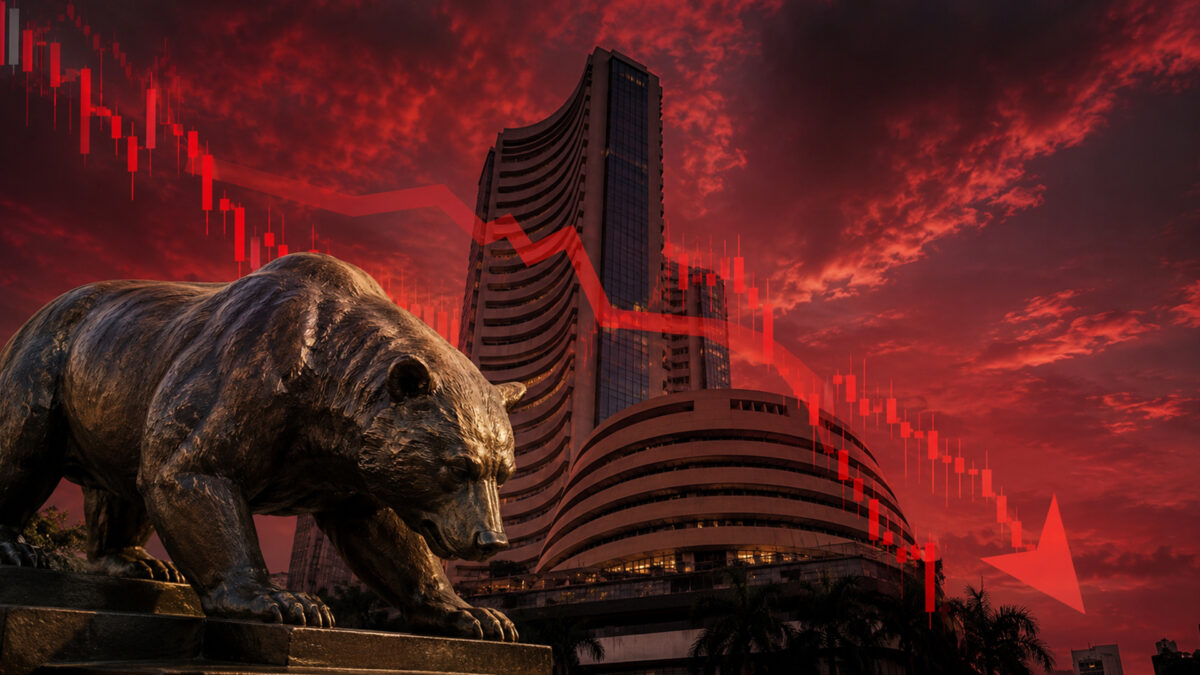
Indian stock markets ended lower on Friday as rising crude oil prices, weak global cues and continuing tensions in West Asia kept investors cautious. The Sensex fell 120.83 points, or 0.16%, to close at 74,781.76, while the Nifty 50 declined 79.70 points, or 0.34%, to settle at 23,398.10.

The decline came after a highly volatile session. The benchmarks opened sharply lower, with the Sensex falling more than 700 points and the Nifty dropping below 23,250 in early trade. The market later recovered much of the morning losses as buying emerged in selected heavyweight stocks.

Friday’s fall extended the recent weakness in the Indian stock market. Both benchmark indices recorded their fifth straight weekly decline. The Nifty ended the week more than 2% lower, while the Sensex also lost over 2%. Over the past five weeks, both indices have fallen nearly 4.8%, reflecting the growing pressure from global risks and expensive crude oil.

The biggest concern for investors remained crude oil. Brent crude prices rose sharply during the week and moved above $100 a barrel as tensions in the Middle East disrupted supply expectations. The latest rise followed attacks and threats affecting shipping routes around the Strait of Hormuz and the Red Sea.

Higher crude prices are particularly worrying for India because the country imports a large share of its oil requirements. A prolonged increase in oil prices can raise India’s import bill, put pressure on the rupee and increase inflation risks. It can also squeeze the profits of companies that depend heavily on fuel and other energy inputs.

The impact was visible across several sectors. Metal stocks came under pressure as investors worried about higher input costs and weaker global economic conditions. Tata Steel was among the biggest Sensex losers, falling 1.67%. Reliance Industries declined 1.33%, while Sun Pharmaceutical Industries, Bajaj Finance and NTPC also ended lower.

HDFC Bank was the strongest performer among Sensex stocks, gaining 2.02%. Tech Mahindra rose 1.38%, while HCL Technologies advanced 0.85%. Eternal also finished higher. The gains in these stocks helped the broader market recover from its steep early decline.

Among Nifty stocks, HDFC Life Insurance, Power Grid Corporation, ONGC, Bharti Airtel and Tech Mahindra were among the notable gainers. On the other side, HCL Technologies, Hindalco Industries, Tata Steel, Adani Enterprises and Mahindra & Mahindra were among the leading losers.

The IT sector remained under pressure during the week. The Nifty IT index recorded a sharp weekly decline as investors worried that higher US inflation and bond yields could limit the Federal Reserve’s room to ease monetary policy. The sector fell about 5.8% for the week, making it the weakest major sectoral index.

Financial stocks also faced pressure. The Nifty financial services sector declined during the week, while HDFC Bank and ICICI Bank remained under watch. HDFC Bank had fallen for six consecutive weeks before Friday’s recovery, with investors also tracking uncertainty surrounding its future leadership.

The broader market was not spared either. Small-cap and mid-cap stocks recorded weekly losses as investors reduced exposure to riskier assets. Fourteen of the 16 major sectors recorded losses during the week, showing how widespread the selling pressure had become.

The rupee also added to market concerns. The Indian currency recorded its sharpest weekly decline since May, falling about 1% against the US dollar. A weaker rupee can make imported crude oil more expensive, adding another layer of pressure on India’s inflation and current account outlook.

Bond yields have also risen as investors assess the inflation impact of higher oil prices. The rise in global yields has made equities less attractive and increased concerns that central banks may keep interest rates higher for longer.

Foreign investor activity remains another concern for Dalal Street. Foreign institutional investors sold shares worth ₹438.24 crore on Thursday, while domestic institutional investors bought equities worth ₹1,025.85 crore. The domestic buying provided some support but was not enough to completely offset the broader negative sentiment.

Investors are now closely watching crude oil prices, developments in the Middle East and upcoming US inflation data. The US data could influence expectations around the Federal Reserve’s next interest-rate decision and, in turn, determine the direction of global markets.

With the Sensex and Nifty already coming off five consecutive weekly losses, investors are likely to remain cautious. Any easing in geopolitical tensions or crude prices could provide relief, but another spike in oil prices could put fresh pressure on Indian equities.

Indian markets will remain closed on Monday for a local holiday, giving investors an additional day to assess global developments before trading resumes.


Categories
Beyond

OPEC cuts oil demand forecast as Saudi output falls

OPEC has cut its forecast for global oil demand growth this year, even as the market faces a much bigger concern on the supply side. The latest report comes as Brent crude climbs above $100 a barrel, with attacks and shipping disruptions across the Middle East making it harder for oil producers to get supplies to international markets.

The Organisation of the Petroleum Exporting Countries now expects global oil demand to grow by 380,000 barrels per day (bpd) in 2026, down from its previous estimate of 580,000 bpd. This is the fifth consecutive downward revision to its demand-growth forecast.

OPEC has taken a relatively less pessimistic view of oil consumption than the International Energy Agency (IEA). While OPEC still expects demand to rise this year, the IEA now forecasts a decline of 2.5 million bpd in global oil demand in 2026 as high fuel prices and supply disruptions weigh on consumers and businesses.

The latest OPEC report has arrived at a difficult time for the oil market. Brent crude moved above $100 this week for the first time since July and briefly climbed above $107. The rise reflects fears that the disruption to Middle East oil flows could last much longer than initially expected.

A major part of the problem is coming from Saudi Arabia, OPEC’s largest producer and the world’s biggest oil exporter.

According to figures submitted by Saudi Arabia to OPEC, the kingdom produced about 6.24 million bpd in August. That was down around 1.9 million bpd, or 23%, from July and represented its lowest monthly production level this year.

The decline has been linked to attacks and threats by Iran-backed Houthi forces in Yemen. The group announced a maritime blockade against Saudi ports on the country’s western coast in late July. Attacks on shipping and energy infrastructure have since disrupted one of the alternative routes Saudi Arabia was using to move crude after the Strait of Hormuz became increasingly difficult to use.

Saudi Arabia had been relying more heavily on its East-West pipeline to move crude from its oil-producing areas to Yanbu on the Red Sea. The route was meant to reduce the country’s dependence on shipments through the Gulf. But the growing threat around the Red Sea and Bab el-Mandeb has made that alternative route increasingly difficult as well.

The impact has been visible in Saudi crude exports. Shipments fell to around 3.1 million bpd in August from about 5.1 million bpd in July, according to shipping data cited in the latest reports. That was the lowest level since at least 2013.

The IEA has offered an even more severe assessment of the disruption. It estimates that Saudi Arabia’s actual crude supply fell to around 6 million bpd in August, the lowest level in more than three decades. The agency has also cut its 2026 forecast for Saudi crude supply by 885,000 bpd because it expects the recovery of Middle East production to take longer.

The wider OPEC picture is mixed. Total crude production from OPEC members increased by about 346,000 bpd in August to 24.08 million bpd, helped by higher Iraqi output. But Iranian production fell by around 399,000 bpd to 2.1 million bpd amid restrictions on shipments.

This means the global oil market is dealing with two opposing forces. Demand is weakening, which would normally put downward pressure on crude prices. But supply disruptions are proving powerful enough to push prices higher.

That tension is also visible in the difference between OPEC and IEA forecasts. OPEC expects demand to grow modestly in 2026 and sees a stronger recovery next year, raising its 2027 demand-growth forecast to 2.36 million bpd from 2.16 million bpd earlier.

The IEA is much more cautious. It expects global oil supply to fall by 5.7 million bpd in 2026, around 6%, while global demand is expected to decline by 2.5 million bpd. Global inventories also fell sharply in August, adding another layer of risk if supply disruptions continue.

The immediate concern for consumers is the price of fuel. Crude oil is only one part of the final price paid for petrol, diesel and other petroleum products, but a prolonged rise in crude can eventually feed into transportation, manufacturing and logistics costs.

Oil-importing countries such as India are particularly exposed. Higher crude prices can increase the import bill, put pressure on the rupee and make it harder to contain inflation. Companies with high fuel and transportation costs may also see their profit margins come under pressure.

Financial markets are watching the situation closely because expensive oil can complicate central-bank decisions. If higher energy prices keep inflation elevated, investors may reduce expectations for interest-rate cuts. That can affect bonds, equities and currencies at the same time.

The supply situation could become even more important if attacks continue around the Red Sea and Gulf shipping routes. The IEA now expects a normalisation of Middle East oil flows to stretch into 2027, rather than returning quickly.

Oil prices could therefore remain volatile even if global demand slows. A reduction in geopolitical tensions could bring prices down quickly, but another major disruption could push Brent higher.

The latest OPEC report ultimately highlights a difficult oil-market reality: weaker demand is no longer enough to guarantee lower prices. With Saudi production sharply reduced and important export routes under threat, the market is increasingly focused on how much crude can actually reach consumers.

That makes the next developments in the Middle East crucial for oil prices, inflation and the broader global economy.


Categories
Beyond

Gold falls to ₹151,610, silver slips to ₹230,670

Gold and silver prices moved lower on Friday, September 11, as investors remained cautious ahead of key US economic data. Higher interest-rate expectations, movements in the US dollar and continued geopolitical tensions influenced trading in precious metals.

On the Multi Commodity Exchange (MCX), gold futures were trading at around ₹1,51,610 per 10 grams, lower than the previous levels. Silver futures also declined, with prices falling to around ₹2,30,670 per kg during the session.

The latest movement comes after a period of sharp swings in the precious metals market. Gold has remained at elevated levels, but investors have recently booked profits as expectations around US monetary policy changed.

International gold prices were also under pressure during the week. Spot gold remained around the $4,300-an-ounce level, while the metal was headed towards a weekly decline. Investors have been closely watching US inflation data for clues about the Federal Reserve’s next interest-rate decision.

A stronger-than-expected inflation reading could reduce expectations of quick rate cuts. That could support the US dollar and government bond yields, both of which can put pressure on gold because the metal does not offer regular interest income.

A softer inflation reading could have the opposite effect. Lower inflation may increase expectations of easier monetary policy, potentially supporting gold prices as investors look for assets that can protect wealth during uncertain periods.

Silver prices have seen wider swings than gold in recent sessions. The metal is influenced by both investment demand and industrial activity, making it sensitive to expectations about global economic growth.

MCX silver futures slipped to around ₹2,30,670 per kg on Friday. The decline came as investors remained cautious about the outlook for global markets and interest rates.

Silver is widely used in industries such as electronics, solar equipment and manufacturing. Any expectation of weaker industrial demand can therefore affect prices. At the same time, strong demand from investors can provide support when markets become uncertain.

Retail gold prices in India vary between cities because of local taxes, transportation costs, demand and other charges. The final price paid by a jewellery buyer can also be higher than the quoted bullion rate because of GST and making charges.

24-carat gold represents high-purity gold and is generally used as a benchmark for bullion prices. 22-carat gold is commonly preferred for jewellery because it contains other metals that make it harder and more suitable for everyday use.

Buyers should also check the purity marking before purchasing jewellery. The final bill can differ considerably from the basic gold rate once making charges, taxes and other costs are included.

The Indian rupee is another key factor influencing domestic gold prices. India imports most of its gold, meaning currency movements can have a direct impact on local prices.

A weaker rupee can make imported gold more expensive even when international gold prices remain unchanged or fall slightly. A stronger rupee can provide some relief to domestic buyers.

Geopolitical tensions continue to keep investors interested in gold as a safe-haven asset. Gold often attracts buying during periods of uncertainty because investors view it as a store of value when riskier assets become volatile.

However, safe-haven demand is currently competing with pressure from interest rates and the US dollar. This has created a volatile environment in which gold prices can move sharply in either direction.

Silver is facing a similar situation, although its strong industrial links make its price movements somewhat different from those of gold.

US inflation data will remain a major trigger for precious metals. Investors are looking for signs that could influence the Federal Reserve’s interest-rate path.

Any indication of easing inflation could increase expectations of lower US interest rates and support gold and silver. Strong inflation data could push bond yields and the dollar higher, creating fresh pressure on precious metals.

Domestic buyers will also need to watch the rupee and international bullion prices. A weaker rupee could limit any fall in Indian gold prices even if global rates decline.

The latest decline therefore does not necessarily signal a long-term change in the gold and silver market. Both metals remain sensitive to interest rates, currency movements, geopolitical developments and investor demand.

Gold is currently trading near ₹1.52 lakh per 10 grams, while silver is around ₹2.31 lakh per kg in the domestic futures market. The next major moves will depend largely on global economic data and developments in the geopolitical environment.


Categories
Corporate

Sensex climbs 130 points, Nifty settles above 23,450

Indian stock markets managed to break a three-session losing streak on Thursday, September 10, as buying in key heavyweight stocks helped the benchmarks recover from a weak afternoon session. The Sensex ended 138.36 points, or 0.19%, higher at 74,902.59, while the Nifty 50 gained 46.30 points, or 0.20%, to close at 23,477.80.

The session was far more volatile than the final numbers suggested. The Sensex and Nifty moved between gains and losses through most of the trading day as investors remained cautious about rising crude oil prices and continued geopolitical tensions. The real turnaround came during the closing auction session, when heavy buying pushed both indices sharply higher before they settled with modest gains.

The Sensex had slipped around 135 points and the Nifty was down more than 40 points shortly before the closing auction. The sharp late recovery was particularly notable because Thursday also marked the weekly derivatives expiry for the Sensex, adding to intraday volatility and sudden swings in stock prices.

Power Grid emerged as the top Sensex gainer, rising 1.82%. Tech Mahindra followed with a gain of 1.14%, while Bharti Airtel advanced 0.85% and Axis Bank added 0.61%. State Bank of India, ITC and Infosys were also among the stronger names during the session.

HDFC Life was another notable gainer, with its shares rising around 2%. The broader market also saw interest in several individual stocks. Molbio Diagnostics climbed 16% during the day, extending its two-day gain to nearly 30%. IRB Infrastructure also advanced after reporting a 25% year-on-year increase in August toll revenue, while Dilip Buildcon gained after receiving a letter of intent for a major petroleum pipeline project.

On the losing side, Tata Steel was the biggest Sensex laggard, falling 1.62%. IndiGo declined 1.27%, while ICICI Bank slipped 1.01%. Mahindra & Mahindra, Adani Ports, Reliance Industries, Sun Pharma, InterGlobe Aviation and Bharat Electronics also featured among stocks under pressure at different points during the session.

The recovery in Indian equities came despite continued pressure from the global crude oil market. Brent crude remained above the $100-a-barrel mark and crossed $102 during the day, as concerns over supply disruptions linked to the Iran-US conflict continued to weigh on investor sentiment. Higher oil prices are particularly important for India because the country relies heavily on imports to meet its energy needs.

A sustained rise in crude can put pressure on India’s inflation outlook, corporate margins and the rupee. The Indian currency had already weakened to around ₹95.08 against the US dollar on Wednesday, adding another concern for investors.

Global markets also remained cautious. Asian equities fell during the morning session, with Japan’s Nikkei and South Korea’s Kospi coming under pressure. Wall Street had also ended lower in the previous session as rising oil prices revived worries about inflation and interest rates. Investors are now watching upcoming US inflation data, including the Producer Price Index and Consumer Price Index, for clues about the Federal Reserve’s next policy move.

The previous day’s heavy sell-off had left investors on edge. On Wednesday, the Sensex had plunged 813.35 points to 74,764.23, while the Nifty dropped 203.60 points to 23,431.50. IT stocks were among the worst hit, with HCL Technologies, Infosys, Tech Mahindra and TCS posting sharp declines. The fall came as crude crossed $100 and tensions in West Asia intensified.

Thursday’s rebound therefore offered some relief, but it did not completely change the cautious mood in the market. The Nifty remains below key levels seen earlier in the year, while the Sensex has also faced repeated selling pressure in recent sessions.

Foreign investors have remained a source of pressure. On Wednesday, foreign institutional investors sold Indian equities worth ₹583 crore, while domestic institutional investors bought shares worth ₹1,509 crore. The stronger domestic buying provided some support to the market amid continued foreign selling.

Another development during Thursday’s session was a brief outage at the BSE. The exchange said an issue affecting one partition of the cash segment began around 9:42 am and was resolved by 10:08 am, while other parts of the exchange continued to operate normally.

The market is now heading into another session with crude prices, geopolitical developments, global bond yields and US inflation data likely to remain key drivers. Thursday’s late recovery showed that buyers are still willing to step in after sharp declines, but the sharp swings also underline how sensitive Indian equities remain to global risks.

With oil above $100 and September already proving difficult for equities, investors are likely to remain selective.


Categories
Corporate

Volkswagen eyes JSW tie-up to boost India growth

Volkswagen is exploring a partnership with JSW Group to strengthen its business in India, where the German carmaker has struggled to gain a bigger share of the passenger vehicle market.

The two companies have signed a non-binding memorandum of understanding (MoU) to explore a possible joint venture. The proposed partnership could cover vehicle development, manufacturing, sales and exports in India and overseas.

The move comes as Volkswagen looks for a stronger strategy in India. The company has been present in the country for more than 20 years, but its market share remains around 2%. That is small compared with major players such as Maruti Suzuki, Hyundai, Tata Motors and Mahindra.

A partnership with JSW could give Volkswagen a better understanding of the Indian market and help it expand more quickly. The German company would bring its global automotive technology and brands, while JSW would bring its local business experience and manufacturing capabilities.

The proposed partnership is expected to include the Volkswagen and Skoda passenger vehicle businesses in India. Discussions could cover a wide range of vehicles, including petrol and diesel cars, electric vehicles, hybrids and plug-in hybrids. This means the proposed alliance is not limited to electric cars.

One of the main goals is to increase local sourcing. Using more components made in India could help lower production costs and make Volkswagen and Skoda cars more competitive.

The companies are also looking at sharing vehicle platforms and increasing production capacity. A larger manufacturing base could help them serve Indian customers as well as export vehicles to other markets.

A proposed 51:49 joint venture structure has been discussed, with JSW expected to hold the larger share. However, this is not final. The two sides still have to agree on valuation, taxes, ownership and other important terms. They are aiming to complete a binding agreement by the end of 2026.

The partnership would also expand JSW’s role in India’s automobile industry. The group entered the passenger vehicle business through its partnership with SAIC Motor, which sells MG-branded cars in India.

That experience could prove useful in a relationship with Volkswagen. JSW has already gained experience in areas such as vehicle manufacturing, sales and electric mobility.

Volkswagen could also benefit from JSW’s knowledge of local suppliers and the Indian market. Building a stronger supply chain inside the country could help the company control costs and respond faster to changes in customer demand.

India is becoming increasingly important for global carmakers. Vehicle sales have grown over the years, while demand for SUVs, electric cars and other new models continues to rise.

Competition, however, is intense. Local companies have strong customer bases, while global manufacturers such as Hyundai, Toyota and Kia have also built sizeable businesses. New electric vehicle players are adding further pressure.

Volkswagen’s challenge has been to find the right balance between its international technology and the price-sensitive Indian market.

The proposed JSW partnership could help address that problem by giving the company greater local scale.

India could also become an export hub for the Volkswagen Group under the proposed arrangement. Cars made in India could potentially be shipped to international markets, giving local factories a larger role in the company’s global operations.

The timing is important for Volkswagen. The German automaker is facing pressure to reduce costs and improve profitability worldwide. It is dealing with weaker sales in China, growing competition from Chinese carmakers and other challenges in major markets.

Volkswagen has also announced a major restructuring programme as it works to cut costs and improve efficiency. The company is reducing jobs and simplifying its operations as competition in the global automobile industry increases.

A stronger India business could help Volkswagen diversify its global operations and build a larger presence in a market with long-term growth potential.

The company is also dealing with a major tax dispute in India. Indian authorities have demanded about $1.4 billion from Volkswagen over alleged import tax violations. The company has challenged the demand and maintains that it followed Indian laws.

The tax matter will be one of the issues that needs attention as discussions over the proposed partnership continue.

The MoU does not guarantee that the joint venture will happen. Several details still need to be worked out, and the final agreement could differ from the current proposal.

The possible alliance nevertheless shows that Volkswagen is taking a fresh look at its India strategy.

After years of limited market share, the company is looking for a way to become more local, reduce costs and increase production. JSW could provide the local strength Volkswagen needs, while Volkswagen could bring global technology and a wider range of vehicle platforms.

The partnership could also give JSW a stronger position in India’s rapidly changing automobile industry, particularly as the market moves towards electric vehicles, hybrid technology and connected cars.

Much will depend on what the two companies eventually agree on and how quickly they can turn the proposed partnership into actual products and sales.

If completed, the Volkswagen-JSW alliance could give both companies a bigger opportunity in India. Volkswagen would gain a stronger local partner and potentially a larger manufacturing and export base, while JSW would deepen its presence in one of the world’s most competitive automobile markets.


Categories
Beyond

Gold touches ₹1,54,240 low, Silver falls to ₹2,42,820

Gold and silver prices moved lower in India on Thursday as investors turned cautious ahead of key US inflation data that could influence the Federal Reserve’s next interest-rate decision. Gold prices remained near record-high levels, but the market lacked a clear direction as rising crude oil prices, geopolitical tensions and shifting expectations around US rates kept investors on edge.

On the Multi Commodity Exchange (MCX), gold futures were trading around ₹1,54,240 per 10 grams, down 0.03% in morning trade. Silver futures were also under pressure, falling around 0.49% to ₹2,42,820 per kg. The movement came as investors waited for fresh inflation signals from the US before taking larger positions in precious metals.

In the retail market, the latest gold rate today showed some variation across major cities. In Delhi, 24-carat gold was priced at ₹1,53,610 per 10 grams, while 22-carat gold stood at ₹1,40,809. In Mumbai, 24-carat gold was at ₹1,53,880 and 22-carat gold at ₹1,41,057 per 10 grams.

In Kolkata, the 24-carat gold price stood at ₹1,53,670 per 10 grams, while 22-carat gold was available at ₹1,40,864. Chennai recorded one of the higher rates, with 24-carat gold at ₹1,54,470 and 22-carat gold at ₹1,41,598 per 10 grams.

For silver price today, the 999-fine rate was around ₹2,41,860 per kg in Delhi and ₹2,42,280 in Mumbai. Kolkata’s rate stood at ₹2,41,960, while Chennai recorded ₹2,42,990 per kg. Rates can vary between cities depending on local taxes, dealer margins and other charges.

The precious metals market is being pulled in different directions. On one side, a weaker US dollar is supporting gold because dollar-denominated bullion becomes relatively cheaper for buyers holding other currencies. On the other, higher crude oil prices are raising concerns about inflation and could keep interest rates higher for longer.

Spot gold was around $4,396.69 per ounce in early Thursday trade, while US gold futures for December delivery were at about $4,440.80. The metal has remained sensitive to developments in the Middle East as investors continue to look for safety during periods of geopolitical uncertainty.

Gold is traditionally viewed as a safe-haven asset, meaning investors often turn to it when financial markets or the global economy become uncertain. However, gold does not generate interest income. That makes it less attractive when interest rates and bond yields rise, as investors can earn better returns from interest-bearing assets.

This has become particularly important because markets are reassessing the Federal Reserve’s policy outlook. Traders have been closely watching the possibility of a US rate hike even as economists surveyed by Reuters largely expect the Fed to keep rates steady at its September 15-16 meeting.

The next major trigger for gold and silver prices is likely to come from the US inflation data. Investors are awaiting the producer price index on Thursday, followed by consumer price inflation data on Friday.

The numbers could influence expectations about the Federal Reserve’s interest-rate path. If inflation comes in hotter than expected, markets could increase bets on higher interest rates, potentially putting pressure on gold. A softer inflation reading, meanwhile, could strengthen expectations of easier monetary policy and support bullion prices.

The dollar is another important factor. A weaker US currency has recently provided support to gold, while a stronger dollar could make bullion more expensive for buyers outside the US and limit demand.

The ongoing conflict involving the US and Iran has added another layer of uncertainty to the precious metals market. Rising tensions in the Middle East have pushed crude oil prices higher, with Brent crude moving above $100 a barrel.

That creates a complicated situation for gold. Geopolitical tensions can increase demand for safe-haven assets, supporting gold. At the same time, higher oil prices can fuel inflation and increase expectations that central banks will keep interest rates elevated, which can weigh on bullion.

This tug-of-war has kept gold price today movements volatile rather than allowing the metal to follow a clear trend.

Silver has also been volatile, but its price is influenced by both investment demand and industrial use. The metal is widely used in electronics, solar panels and several manufacturing applications, meaning its outlook is linked not only to inflation and interest rates but also to expectations for global economic activity.

On Wednesday, domestic silver prices had risen sharply, with the All India Sarafa Association reporting a ₹2,300 increase to ₹2,43,400 per kg. International spot silver also gained nearly 1% to around $66.25 an ounce. Thursday’s softer domestic futures therefore come after a recent rise rather than a prolonged one-way decline.

Investors and buyers are likely to remain cautious. The direction of the gold rate in India and silver prices over the next few sessions will depend heavily on US inflation figures, Federal Reserve expectations, the movement of the dollar and developments in the Middle East. With several of these factors moving at once, precious metals are likely to remain sensitive to every major global economic and geopolitical signal.


Categories
Corporate

Sensex fluctuates, Nifty trades below 23,450

The Indian stock market struggled to find a clear direction on Thursday as investors weighed soaring crude oil prices, geopolitical tensions and fresh global inflation concerns. The Sensex swung between gains and losses in early trade, while the Nifty 50 slipped below the 23,450 level, extending the cautious mood after Wednesday’s sharp sell-off.

The market opened on a mildly positive note, with the Sensex gaining 61.86 points to 74,826.09 and the Nifty rising 14.80 points to 23,446.30. However, the early gains quickly faded. By around 9:36 am, the Sensex was almost flat at 74,759.54, while the Nifty stood at 23,429.25.

The weakness followed a difficult session on Wednesday, when the Sensex plunged 813.35 points to 74,764.23 and the Nifty fell 203.60 points to 23,431.50. Both benchmarks have now declined in seven of the past eight sessions, losing around 3.1% during that period.

The biggest worry for investors continues to be the sharp rise in crude oil prices. Brent crude moved above the $100-a-barrel mark, with prices around $101-$102, as the escalating US-Iran conflict raised fears of further disruptions to global oil supplies.

The situation around the Strait of Hormuz has added to those concerns. Any prolonged disruption in the region could keep energy prices elevated and increase pressure on countries such as India, which relies heavily on crude imports.

Higher oil prices are a concern for the Indian economy because they can increase the import bill, weaken the rupee and add to inflationary pressure. They can also raise operating costs for companies and squeeze profit margins if businesses are unable to pass on the higher costs to consumers.

The rupee also remained under pressure, trading around the ₹95.30-per-dollar level. The combination of expensive crude and a weaker currency has made investors more cautious about the near-term outlook for Indian equities.

Despite the broader caution, buying was visible in selected stocks. On the Sensex, Axis Bank, Bajaj Finserv and Larsen & Toubro were among the early gainers. Tech Mahindra and State Bank of India also traded higher.

On the other side, Mahindra & Mahindra emerged as the biggest laggard in the early session, while BEL, Tata Steel and UltraTech Cement also faced selling pressure.

In the broader market, Shakti Pumps attracted strong buying after securing an order worth around ₹236 crore from Maharashtra State Electricity Distribution Company for supplying 10,000 solar-powered water pumps. Its shares jumped more than 10% during Thursday’s trade.

Enviro Infra Engineers was another notable gainer, rising after receiving a letter of intent from Tata Power Renewable Energy for the development of a 180 MW wind power project in Maharashtra. The stock gained around 4.4% in early trade.

Oil producers also benefited from the rise in crude prices. ONGC and Oil India gained as higher oil prices are expected to support revenues and margins for upstream producers.

IT stocks continued to remain under pressure after the Nifty IT index suffered a sharp 3.2% fall in the previous session, its steepest single-day decline in three months.

The sector has been facing pressure from concerns over the outlook for technology spending, global economic conditions and the direction of US interest rates. Since Indian IT companies earn a large portion of their revenue from overseas markets, particularly the US, changes in global growth and interest-rate expectations can quickly affect investor sentiment towards the sector.

The weakness in IT added to the pressure on the broader market, even as some banking, energy and infrastructure stocks managed to attract buyers.

The Indian market is also taking cues from weakness across global equities. Asian markets were largely lower on Thursday, while US stocks had ended lower for a third consecutive session.

Investors are now looking ahead to key US inflation data. The figures could influence expectations around the Federal Reserve’s interest-rate decision next week. A higher-than-expected inflation reading could make investors rethink expectations of easier monetary policy and potentially keep global bond yields elevated.

For Indian equities, this comes at a difficult time as the market is already dealing with higher crude prices, a weaker rupee and sustained foreign investor selling pressure.

The Nifty is now being closely watched around the 23,400 level after falling below 23,450. A sustained recovery above the recent resistance zones could provide some relief, while continued weakness in crude oil and global markets could keep selling pressure alive.

The immediate outlook for the Indian stock market will largely depend on how crude oil prices behave and whether geopolitical tensions show signs of easing. A prolonged rise in oil prices could put additional pressure on inflation, the rupee and corporate earnings, particularly for sectors that are heavily dependent on fuel and imports.

Investors will also track upcoming US inflation data for clues about the Federal Reserve’s next interest-rate decision. For the domestic market, the Nifty’s ability to hold key support levels will be crucial after its recent decline.

With several external risks still in play, traders are likely to remain selective. Thursday’s early swings underline the fragile mood in the market, where any fresh development on oil, geopolitics or global interest rates could quickly change the direction of the Sensex and Nifty.


Categories
Corporate

Arcil raises ₹220 cr as ₹733 cr IPO opens

Arcil, one of India’s established asset reconstruction companies, has entered the public market with a ₹733-crore initial public offering (IPO), after securing nearly ₹220 crore from institutional investors through its anchor book.

The three-day IPO opened for subscription on Wednesday, September 9, and will remain open until September 11. Arcil has fixed the price band at ₹132 to ₹139 per share, giving the issue a valuation of nearly ₹733 crore at the upper end.

The anchor response has given the issue a positive start. Arcil allotted 1.58 crore shares to 21 anchor investors at ₹139 apiece, raising ₹219.89 crore. More than half of the allocation went to mutual funds, while global names including Goldman Sachs and Bank of America were among the institutional investors participating in the round.

The Indian IPO market is witnessing a particularly busy spell, with several companies coming to the primary market at the same time. Investors therefore have plenty of issues to choose from, making institutional participation an important early signal of interest.

Arcil’s IPO, however, is different from a typical fund-raising exercise. The entire issue is an Offer for Sale (OFS), meaning the company itself will not receive money from the shares being sold. Instead, existing shareholders are using the IPO to sell part of their holdings.

A total of 5.27 crore shares are being offered. Among the shareholders selling shares are Avenue India Resurgence, State Bank of India, Lathe Investment and Federal Bank. Since it is an OFS, the proceeds will go to these selling shareholders rather than into Arcil’s business.

Arcil’s business is closely connected to India’s banking system. The company buys stressed or troubled loans from banks and financial institutions and then works to recover value from those assets. Such companies are commonly known as asset reconstruction companies (ARCs).

The business has become increasingly relevant as Indian banks focus on keeping bad loans under control and cleaning up their balance sheets. Arcil, recognised as India’s first asset reconstruction company, operates across areas including corporate, small and medium enterprise and retail stressed assets.

For investors, the IPO therefore offers exposure to a specialised part of India’s financial services sector. But the company’s business also comes with its own set of challenges, particularly around recovering stressed assets, regulatory changes and the time required to realise value from distressed loans.

Retail investors can bid for a minimum of 107 shares. At the upper price of ₹139, one lot would require an investment of ₹14,873. The IPO has reserved 50% of the shares for qualified institutional buyers, 15% for non-institutional investors and 35% for retail investors.

The anchor investment has naturally attracted attention because it includes well-known institutional investors. However, anchor participation should not be seen as a guarantee of listing gains or future performance. Investors will still need to look closely at Arcil’s financial performance, recovery record and the risks associated with its asset reconstruction business.

The IPO is also arriving during an unusually crowded week for primary markets. Several mainboard issues are competing for investor money, with 10 IPOs open for subscription on September 9, collectively seeking more than ₹7,200 crore.

That competition could make investor allocation decisions more difficult. Retail and institutional investors are likely to compare Arcil with other offerings on factors such as valuation, business outlook, financial performance and potential listing returns.

Arcil’s IPO is scheduled to move towards allotment around September 15, with shares expected to be credited to successful applicants on September 16. The stock is likely to make its debut on the NSE and BSE on September 17.

The company’s public debut will also give investors a market-based valuation for a business that has operated for years in the relatively specialised world of stressed-asset recovery.

The IPO provides a route to unlock part of their investment, for existing shareholders,. For new investors, it offers a chance to participate in a company whose fortunes are closely linked to the health of India’s banking and credit ecosystem.

With nearly ₹220 crore already committed by anchor investors, attention now shifts to the response from retail investors and other institutional buyers. The next two days will show whether that early confidence translates into strong overall demand.