Categories
Beyond

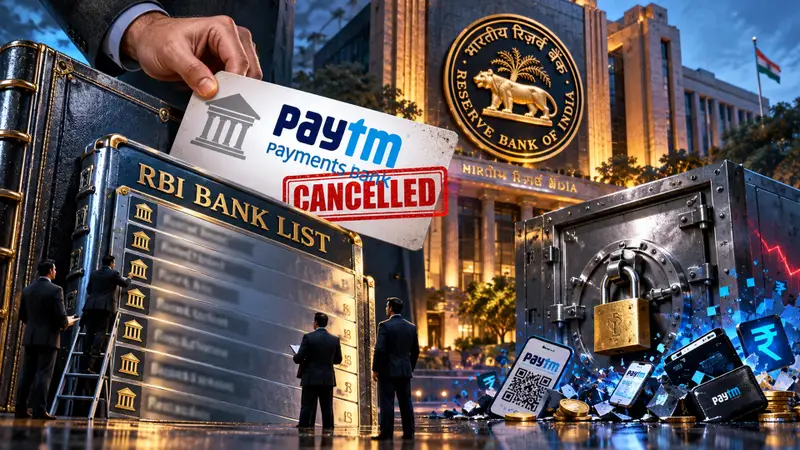
RBI removes Paytm Payments Bank from bank list

The Reserve Bank of India (RBI) has formally removed Paytm Payments Bank Limited (PPBL) from the list of scheduled banks, completing another key step in the lender’s closure.

The RBI said Paytm Payments Bank has been excluded from the Second Schedule of the Reserve Bank of India Act, 1934. The exclusion was made through a notification dated July 31, 2026, which was subsequently published in the Gazette of India on September 7.

The development comes months after the central bank cancelled PPBL’s banking licence and the Delhi High Court ordered the winding up of the bank. The latest move is therefore largely part of the formal regulatory process surrounding the closure of Paytm Payments Bank.

The Delhi High Court, through orders passed in July, directed that PPBL be wound up under the Banking Regulation Act and the Companies Act. Girikumar M Nair, a former State Bank of India executive, was appointed as the Official Liquidator to oversee the process.

What led to the action

Paytm Payments Bank had been under RBI scrutiny for several years before its banking licence was cancelled.

In March 2022, the RBI stopped PPBL from onboarding new customers, citing material supervisory concerns. The bank was also directed to appoint an IT audit firm to conduct a comprehensive review of its information technology systems.

Further restrictions followed in January and February 2024. The RBI barred the bank from accepting fresh deposits, credits or top-ups in customer accounts, prepaid instruments and wallets. These restrictions significantly reduced the role of PPBL in Paytm’s digital payments ecosystem.

The RBI eventually cancelled the bank’s licence with effect from the close of business on April 24, 2026. At the time, the regulator said the affairs of PPBL had been conducted in a manner detrimental to the interests of the bank and its depositors and that the institution had not complied with conditions attached to its payments bank licence.

Paytm services continue

The latest RBI decision does not mean that Paytm as a company has stopped operating.

Paytm’s parent company, One97 Communications, had already separated its core payments business from Paytm Payments Bank after the regulatory restrictions began. Its UPI services now operate through a multi-bank model rather than depending on PPBL.

The Paytm app, UPI payments, QR-based merchant payments, Soundbox and other payment services continue to operate through banking partners. Paytm has previously said that its broader services would remain unaffected by action against the payments bank.

This distinction is important for customers. The RBI’s latest action concerns Paytm Payments Bank, not the entire Paytm platform.

Depositors and winding-up process

The closure of PPBL now moves into a more detailed liquidation phase. The RBI had said when cancelling the banking licence that the bank had sufficient liquidity to repay its entire deposit liability during the winding-up process.

The winding-up is expected to involve a large number of customers, creditors and other stakeholders. A Delhi High Court order in August noted that PPBL had more than 14 crore customers, including depositors and wallet holders, while also having more than 200 other creditors and vendors. EY Restructuring LLP was appointed as a process advisor to assist the Official Liquidator with the winding-up exercise.

The process involves verifying claims, managing depositor balances, protecting assets, settling creditors and handling regulatory and legal requirements.

Another setback for Paytm’s banking ambitions

The removal from the scheduled banks list marks the latest stage in the end of Paytm’s banking ambitions.

PPBL was once an important part of Paytm’s business model and digital payments ecosystem. Its regulatory troubles, however, forced Paytm to restructure its operations and build a payments model based on partnerships with other banks.

The latest development also had an immediate impact on investor sentiment. Shares of One97 Communications fell as much as 10% in early trading on October 8 following the RBI announcement.

For Paytm, the focus is now firmly on its fintech operations rather than running a banking subsidiary. The company’s ability to maintain customer confidence, expand UPI and merchant payments, and grow its financial services business will determine how effectively it moves beyond the long-running Paytm Payments Bank episode.

The RBI’s action also serves as a reminder of the importance of compliance and governance in India’s fast-growing fintech industry. What began as a regulatory intervention has ultimately resulted in the formal closure of one of the country’s most prominent payments banking ventures.
 

Categories
Beyond

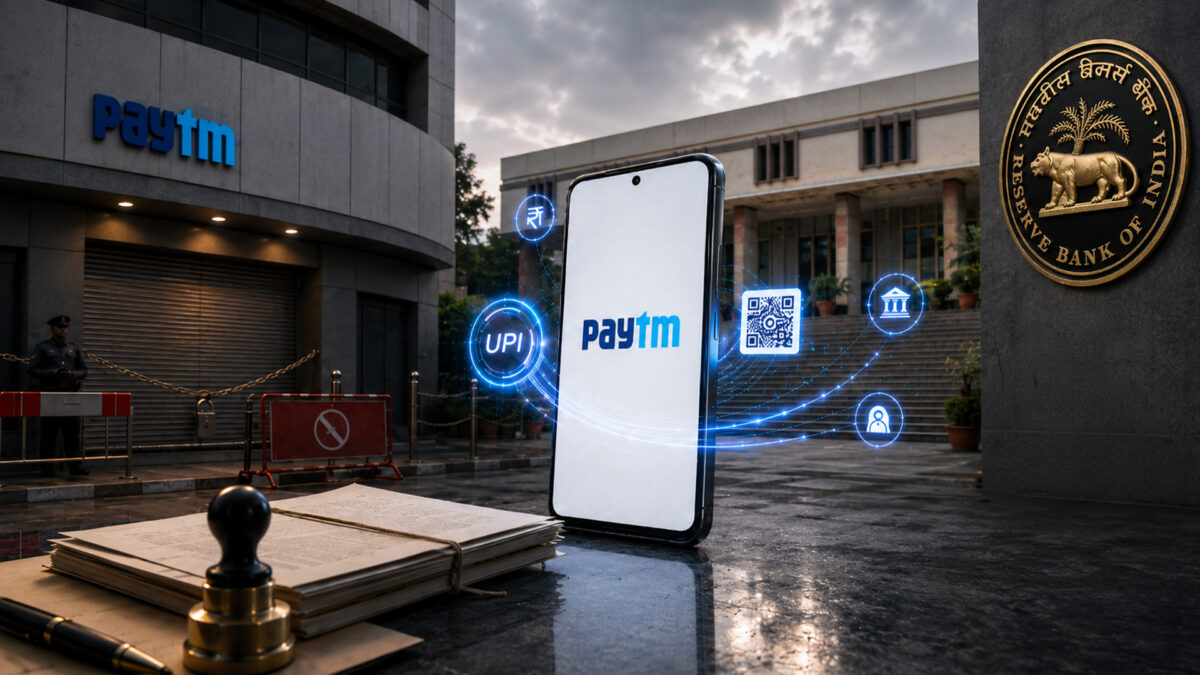
Paytm Payments Bank faces final closure

The Delhi High Court has ordered the winding up of Paytm Payments Bank Limited (PPBL), bringing the troubled banking entity closer to its final closure after years of regulatory scrutiny and compliance concerns.

The Reserve Bank of India (RBI) said the High Court, through orders dated July 8 and July 22, 2026, directed that PPBL be wound up under the Banking Regulation Act, 1949, read with the Companies Act, 2013. The court has appointed Girikumar M Nair, a former Chief General Manager of the State Bank of India, as the Official Liquidator.

The liquidator will oversee the winding-up process and exercise the powers assigned under the relevant banking and company laws. According to the RBI, those powers will include taking charge of the affairs of the bank and handling the process of settling its remaining obligations.

The latest court order follows the RBI’s decision on April 24, 2026, to cancel the banking licence of Paytm Payments Bank under Section 22(4) of the Banking Regulation Act.

The RBI said the licence was cancelled because PPBL had failed to comply with regulatory requirements and that its affairs had been conducted in a manner detrimental to the interests of the bank and its depositors. The cancellation took effect from the close of business on April 24.

The central bank had also announced that it would approach the High Court to initiate winding-up proceedings.

At the time, the RBI said PPBL had sufficient liquidity to repay its entire deposit liabilities during the winding-up process. This was an important assurance for customers who still had money associated with the payments bank.

The closure is the culmination of a regulatory process that began several years ago.

In March 2022, the RBI directed Paytm Payments Bank to stop onboarding new customers, citing material supervisory concerns. Restrictions were subsequently tightened after further examinations and compliance reviews.

In January 2024, the RBI ordered PPBL to stop accepting fresh deposits, credit transactions and top-ups in customer accounts, prepaid instruments, wallets, FASTags and National Common Mobility Cards. The deadline for these restrictions was later extended to March 15, 2024.

The RBI’s action effectively separated many of the services customers associated with Paytm from the banking entity itself.

The winding up of Paytm Payments Bank does not mean that the Paytm app itself is being shut down. One 97 Communications, which operates Paytm, has said that its digital payment services continue to operate and that Paytm UPI works through a multi-bank arrangement with other partner banks.

This distinction is important. Paytm and Paytm Payments Bank are separate entities. The RBI’s action is directed at PPBL’s banking licence and does not cancel Paytm’s ability to operate as a digital payments platform.

Paytm has said that services including Paytm UPI, QR payments, Soundbox, card machines, payment gateway, bill payments, recharges, Paytm Gold and Paytm Money remain operational.

For users making UPI payments through Paytm, the money is routed through the bank account linked to their UPI service rather than being held by Paytm Payments Bank.

Customers who still have balances or claims connected to PPBL will have their interests handled through the liquidation process.

The RBI had earlier stated that the bank had adequate liquidity to meet its entire deposit liability while being wound up. The appointment of an official liquidator now provides a formal mechanism for dealing with the bank’s assets, liabilities and customer claims.

The Deposit Insurance and Credit Guarantee Corporation (DICGC) had also cancelled PPBL’s registration as an insured bank following the RBI’s licence cancellation on April 24, 2026.

Customers should therefore distinguish between money held with Paytm Payments Bank and money held in another bank account linked to the Paytm app for UPI transactions.

Paytm Payments Bank was once a major part of India’s fast-growing digital payments ecosystem. Its licence and subsequent restrictions had already forced Paytm to move much of its payments infrastructure away from the bank.

The latest High Court order therefore represents the formal end of the banking entity rather than the end of Paytm‘s broader digital payments business.

For ordinary users, the practical message is relatively simple: Paytm UPI and the Paytm app continue to function, but Paytm Payments Bank itself is being wound up. Customers with old PPBL accounts, wallets or other balances should follow communications from the official liquidator and the RBI regarding settlement and withdrawals.

The case also serves as a reminder that rapid growth in fintech and digital payments does not reduce the importance of KYC compliance, banking regulations, corporate governance and depositor protection. For Paytm, the winding-up order closes one of the most consequential chapters in its evolution from a digital wallet pioneer into a broader financial-services platform.