Categories
Counterpoint

Adani’s US cases end — but with a judicial rebuke

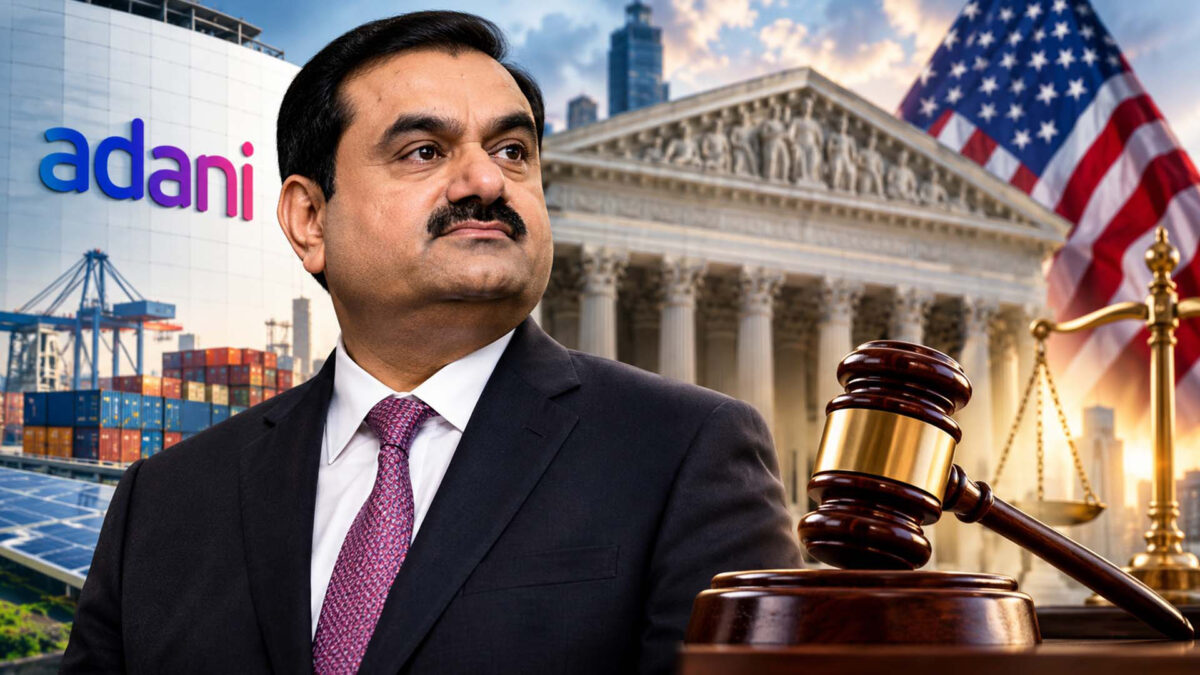
Indian billionaire Gautam Adani, one of the world’s leaders in energy, transport and logistics, has won the judicial outcome that matters most to him: the US criminal and civil cases, filed against him by US Department of Justice and the US Securities and Exchange Commission, are over. Yet the US court’s 47-page order is less a clean bill of health than a clear rebuke about how the case was dismantled and what could still follow. Adani’s reaction was immediate and public.

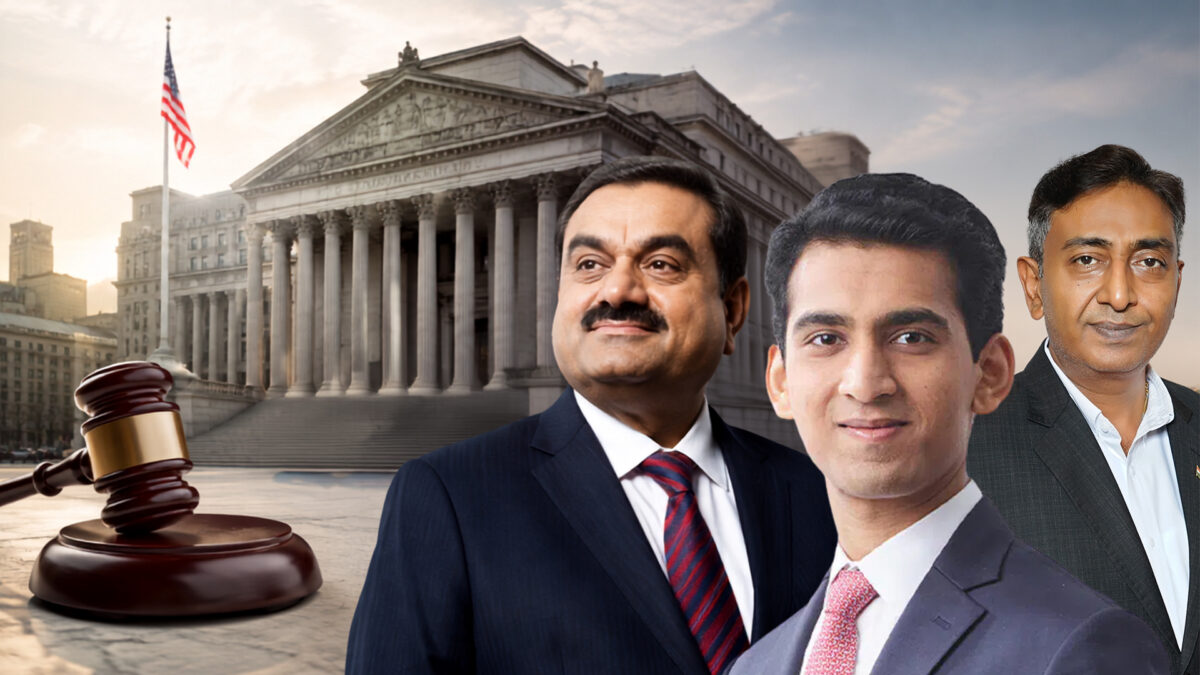
On August 10, Judge Nicholas Garaufis of the Eastern District of New York dismissed with prejudice the securities-fraud and wire-fraud counts against Adani — and also against his nephew Sagar Adani and Adani Green Energy director Vneet Jaain. The US DOJ cannot simply refile those counts. For a conglomerate whose access to global capital and overseas projects has been clouded by governance controversies, the US judicial orders provide both substantial relief and clear corporate vindication. In 2024, the Adani Group had immediately termed the DOJ and SEC allegations “baseless”.

But this is where the easy headline ends. The judge did not acquit the three men. He did not find the 2024 allegations to be false. He did not endorse the DOJ’s decision to retreat. In fact, he went out of his way to say precisely that.

Also, on the same day, Gautam Adani and Sagar Adani resolved the US SEC’s parallel civil case by accepting permanent antifraud injunctions and agreeing to pay $18 million in penalties — without admitting the allegations in the complaint. This is certainly a legal victory. However, it is not a judicial vindication.

What the court actually dismissed

The original indictment covered eight defendants and three alleged schemes. US prosecutors claimed that executives connected to Adani Green Energy and Azure Power had participated in a plan involving roughly $265 million in promised bribes to Indian officials, concealed the alleged conduct while raising billions from US and international investors, and later obstructed American investigations. The Adani Group has consistently denied wrongdoing.

One detail has been blurred in much of the coverage: Gautam Adani, Sagar Adani and Vneet Jaain were charged in Counts Two, Three and Four — with securities-fraud conspiracy, wire-fraud conspiracy and securities fraud. The Foreign Corrupt Practices Act conspiracy in Count One was charged against other defendants. So was the obstruction conspiracy in Count Five.

Judge Garaufis dismissed the three fraud counts against the Adani executives permanently. But he only granted the Justice Department’s motion “in part.” The FCPA count against Ranjit Gupta, Cyril Cabanes, Saurabh Agarwal, Deepak Malhotra and Rupesh Agarwal—and the obstruction count against four of them—remain before the court for now.

The judge ruled that the department must supply better reasons for dismissing those counts by August 31. The five defendants must also put their consent to dismissal on the record. The wider indictment, therefore, has not yet disappeared.

A win wrapped in a judicial rebuke

Courts generally give the executive branch wide latitude over whom to prosecute. What was unusual was how little the Justice Department initially offered to justify its decision — and how sharply the judge reacted.

The department’s May motion was only a paragraph long. The later explanation came from senior DOJ official R. Trent McCotter, who became the central decision-maker after reviewing extensive defence submissions. Adani’s lawyers said they delivered about 600 pages of analysis, expert reports and presentations over ten weeks.

Judge Garaufis said the process appeared “highly unusual.” He noted that McCotter seems to have reached his decision largely through engagement with defence counsel, without meaningful input from the FBI and SEC agents who investigated the case or the prosecutors who brought it. The judge described the irregularities as “concerning” and accused McCotter of showing a lack of respect for the judiciary by resisting the requirements of Rule 48(a), which requires a court’s permission to dismiss an indictment.

More strikingly, the court found much of DOJ’s reasoning wanting. Claims that India had found no actionable conduct, that investors suffered no loss, that the case would be unusually difficult to prosecute and that the indictment was a politically motivated “name and shame” exercise were, in the judge’s analysis, inadequately supported or contradicted by the record.

For the three fraud counts, one rationale survived scrutiny: the possibility that the anti-bribery language cited by prosecutors was too general or aspirational to sustain a securities-fraud case.

In other words, the strongest route to dismissal was not proof that nothing improper happened, but doubt over whether the statements to investors were legally actionable rather than corporate “puffery.” That distinction may not move share prices. It will matter to lawyers, lenders and compliance teams.

The $10-billion shadow

Then there is the issue that will follow this outcome far beyond Brooklyn. Three weeks after October 24, 2024, when the grand jury returned the indictment under seal, and a few days before the indictment was unsealed and publicly announced on November 20, 2024, Gautam Adani publicly pledged that his group would invest $10 billion in US energy security and infrastructure, potentially creating 15,000 jobs. During later settlement discussions, his lawyers raised the possibility that the investment could form part of a broader resolution.

Adani said under oath that he knew of no agreement exchanging anything for dismissal. His lawyer said US officials expressly refused to consider the investment in deciding the case. McCotter and the US attorney also denied that it played any role. The judge accepted those sworn assurances.

There is no finding of a quid pro quo. That needs to be stated plainly. Yet the optics remain difficult. A foreign billionaire announced a huge American investment after an indictment had been returned under seal — but before the charges became public; his lawyers later mentioned that investment in resolution talks; a new administration recalibrated foreign-bribery enforcement; and the case was ultimately abandoned through a process the judge called irregular.

Even without an unlawful bargain, the sequence reinforces the perception that access, strategic value and investment promises can enter the atmosphere around American enforcement decisions. If overseas governments or multinational rivals conclude that enforcement is negotiable at the highest levels, US demands for transparency abroad become easier to dismiss as selective.

The SEC case was settled, not thrown out

The civil outcome is another piece many headlines compress too aggressively.

The SEC originally alleged that Adani Green Energy’s September 2021 note offering raised $750 million, including about $175 million from US investors, while offering materials contained misleading statements about anti-bribery controls. Its final judgments did not test those allegations at trial. Gautam Adani and Sagar Adani consented without admitting them, except as to jurisdiction.

But the judgments are not empty paperwork. Gautam Adani must pay $6 million and Sagar Adani $12 million within 30 days. Both men are permanently enjoined from violating the antifraud provisions of Section 10(b), Rule 10b-5 and Section 17(a). The court retains jurisdiction to enforce the orders.

There is also a notable compromise. The SEC’s 2024 complaint sought officer-and-director bars. The final judgments impose no such bars and require no disgorgement. That leaves the two men in place, while giving the SEC an injunction that could make any future US securities violation substantially more dangerous.

The difference is simple: the DOJ walked away from the criminal case against the three men; the SEC closed its case against two of them on negotiated terms.

What changes for Adani—and what does not

Adani Group shares rose by as much as 3% on August 11. The dismissal removes the threat of trial on the three fraud counts, lowers a major headline risk and should make conversations with international banks and project partners easier.

But the rally also shows the limit of the reprieve. By 2026, parts of the group had already regained ratings stability: Moody’s had moved several Adani entities back to stable, Fitch had affirmed an investment-grade rating on an Adani Green restricted group, and S&P later upgraded Adani Ports. The order removes an overhang; it does not create the resilience rating agencies had already recognised.

Nor does it automatically restore opportunities lost after the indictment. Kenya cancelled airport and power-transmission deals worth more than $2.5 billion in November 2024. Those decisions were driven not only by the US charges but also by domestic litigation, protests and procurement concerns. Nairobi has since pursued alternative financing for airport expansion. A Brooklyn dismissal cannot rewind that clock.

Future counterparties will also read the whole record. They will see the dismissal, but also the SEC penalties, permanent injunctions and a judge’s criticism of the process. Due-diligence committees tend to price ambiguity, not press releases.

What lies ahead now

Three things come next.

First, August 31 will determine whether the remaining FCPA and obstruction counts also die. The Justice Department can almost certainly produce a fuller submission, but Judge Garaufis has signalled that conclusory assertions will not do. A second critical order could keep the institutional controversy alive even after Adani himself has exited the criminal case.

Second, Adani will try to turn legal relief into cheaper capital and renewed international expansion. Success will be visible not in a one-day stock bounce, but in bond spreads, lender participation, project awards and the willingness of sovereign partners to proceed without extraordinary protections.

Third, the ruling will become part of a larger argument over Trump-era FCPA enforcement. The administration says enforcement should protect US competitiveness and national security, not punish routine overseas business. Judge Garaufis effectively replied that an alleged nine-figure bribery scheme involving energy infrastructure and concealment is precisely the sort of serious conduct the new guidelines appear to prioritise.

That contradiction may be the most important part of the case. Gautam Adani leaves with the result he wanted. The US government leaves with harder questions about how it got there. And investors are left with a familiar calculation: the legal cloud has lifted, but the governance discount does not disappear merely because the prosecution does.


Categories
Leaders

Gautam Adani gets relief as US graft case ends

A US federal judge has dismissed the criminal bribery and fraud case against billionaire Gautam Adani, bringing an end to one of the most closely watched legal battles involving the Indian business group in the United States.

US District Judge Nicholas Garaufis of the Eastern District of New York approved the US Department of Justice’s request to dismiss the criminal case against Adani, his nephew Sagar Adani and former Adani Green Energy CEO Vneet Jaain, among others. The dismissal was made with prejudice, meaning the same criminal charges cannot be brought again.

The decision follows months of uncertainty after the US Justice Department moved to abandon the prosecution. The case had originally accused the defendants of participating in an alleged scheme involving payments to Indian government officials to secure solar power contracts. The allegations were denied by Adani and the other accused.

The indictment, filed in 2024, alleged that the defendants were involved in a scheme in which about $265 million in bribes were promised to Indian officials. Prosecutors said the payments were intended to help secure power supply agreements connected with major solar energy projects.

The US case also alleged that information about the bribery scheme was concealed from investors. According to the indictment, Adani-related entities had raised billions of dollars from US investors and financial markets.

Adani has consistently denied wrongdoing and rejected the allegations against him.

The dismissal, however, did not come without criticism from the judge. Garaufis questioned the way the Justice Department had handled its decision to withdraw the prosecution and criticised senior DOJ official Trent McCotter over his role in the process. Reuters reported that the judge described aspects of the government’s conduct as highly unusual and expressed concern that established investigative and prosecutorial views appeared to have been bypassed.

The judge had previously refused to immediately approve the government’s request to drop the case, saying the initial explanation from prosecutors was insufficient. The DOJ subsequently provided additional reasons for its decision.

Prosecutors argued that the case involved conduct outside the United States, would be difficult to prove and was not an appropriate use of government resources given the department’s changing priorities. The government maintained that the decision was based on prosecutorial discretion.

Another issue examined by the court was a pledge by Adani to invest around $10 billion in the United States. During the proceedings, questions were raised about whether the proposed investment had any connection with the government’s decision to end the prosecution.

The judge ultimately found that the investment pledge did not influence the government’s decision to seek dismissal, according to the court’s findings reported by Reuters. The court nevertheless questioned the circumstances surrounding the government’s handling of the case and left it to the public to assess the broader implications.

For the Adani Group, the dismissal removes a major criminal case that had remained an important concern for investors and the conglomerate’s international operations since the original indictment.

Adani welcomed the decision, saying his faith in the rule of law had remained firm during the proceedings. He has maintained that the allegations against him were unfounded.

The criminal case should also be distinguished from a separate civil proceeding involving the US Securities and Exchange Commission. That matter has been dealt with separately and should not be interpreted as having disappeared simply because the criminal prosecution has been dismissed.

In May, Adani Green Energy disclosed that the SEC, Gautam Adani and Sagar Adani had sought a final judgment by consent in the civil case. The company also clarified that it was not itself a party to that proceeding.

The latest development therefore represents a significant legal relief for Gautam Adani in the US criminal case, but it does not erase every legal proceeding connected with the broader allegations.

The decision is also likely to be closely watched in Indian financial markets. Adani Group shares gained after news of the dismissal, with several group companies seeing their stocks rise as investors reacted to the removal of the criminal prosecution as a major overhang.

The case had attracted global attention because of the size of the alleged solar bribery scheme, the involvement of one of India’s largest business groups and the questions it raised about corporate governance and cross-border enforcement.

With the criminal indictment now dismissed with prejudice, the immediate US prosecution against Adani has come to an end. The controversy surrounding the original allegations, however, remains significant, particularly because separate civil proceedings and settlements continue to form part of the wider legal picture.

Categories
Corporate

Adani targets 10 GW nuclear capacity by 2035

The Adani Group has unveiled one of its most ambitious energy expansion plans yet, betting heavily on nuclear power while committing trillions of rupees to strengthen its position across India’s fast-growing energy sector.

Addressing shareholders at the group’s Annual General Meeting (AGM), Chairman Gautam Adani laid out a roadmap that reflects the scale of India’s future electricity needs. At the centre of the plan is a target to build 10 gigawatts (GW) of nuclear power capacity by 2035, signalling the conglomerate’s intention to become a major player in a segment that has traditionally been dominated by the public sector.

The announcement comes as India seeks to balance rapid economic growth with the need for cleaner and more reliable energy sources. According to Adani, the country’s rising population, expanding cities and accelerating industrialisation will significantly increase electricity demand over the coming decades, requiring investments across multiple power technologies.

To support this vision, Adani Power plans to invest more than ₹2 trillion over the next five years. The company aims to increase its total power generation capacity to 45 GW, strengthening its standing among India’s largest private electricity producers.

While renewable energy remains a key pillar of the group’s strategy, Adani indicated that conventional thermal power will continue to play an important role in ensuring energy security. The company intends to maintain a diversified energy portfolio that combines thermal, renewable and nuclear power generation.

Beyond electricity production, the group is expanding across the broader energy ecosystem. Gautam Adani highlighted investments in solar manufacturing, power transmission infrastructure, green hydrogen projects and renewable energy developments. The objective, he said, is to create an integrated energy platform capable of supporting India’s long-term growth ambitions.

The nuclear power target is particularly significant because India is increasingly exploring low-carbon energy sources that can provide stable electricity around the clock. Unlike solar and wind power, nuclear plants can generate power continuously, making them an important complement to renewable energy.

Although regulatory clearances and government policy support will be critical for the proposed nuclear programme, the message from the Adani Group was clear: it sees India’s energy demand growing rapidly in the years ahead and wants to be at the forefront of meeting that demand. With major investments planned across multiple sectors, the group is positioning itself for what it believes will be the next phase of India’s energy transformation.

Also Read: Gold slips to ₹141,220, silver falls to ₹211,710

Categories
Leaders

Gautam Adani reclaims title of Asia’s richest person

Billionaire industrialist Gautam Adani has once again become Asia’s richest person after a sharp rise in the market value of Adani Group companies boosted his personal wealth.

According to the latest Forbes Real-Time Billionaires rankings, Adani’s net worth has climbed to approximately $89.2 billion, allowing him to move ahead of Mukesh Ambani and Masayoshi Son in the race for the top spot in Asia. The surge comes after strong gains across several listed Adani Group firms in recent weeks.

The rally has been driven by investor confidence in key group companies, including ports, energy, power and infrastructure businesses. Shares of several Adani firms have recorded notable gains, increasing the combined market value of the conglomerate and significantly adding to the chairman’s fortune.

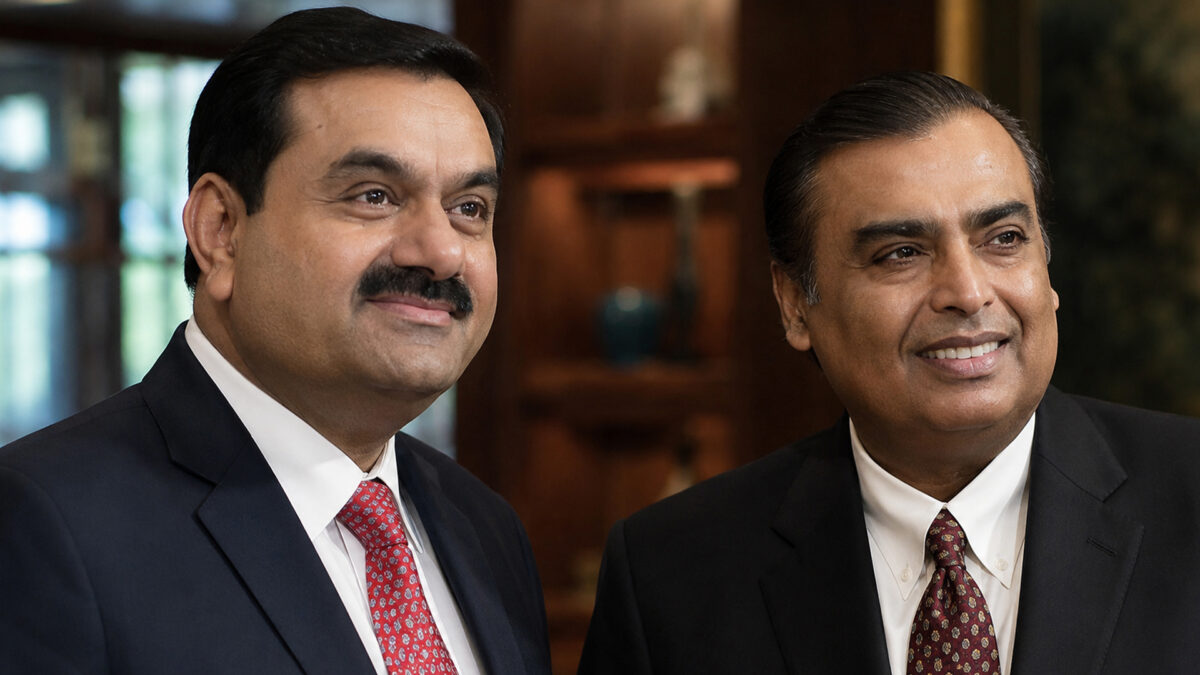
For much of the past few years, the title of Asia’s richest person has shifted between Adani and Ambani, reflecting movements in the stock prices of their respective business empires. More recently, SoftBank founder Masayoshi Son had briefly moved ahead of both Indian billionaires, aided by gains linked to the global artificial intelligence boom. However, market fluctuations have once again altered the rankings.

Adani’s return to the top marks another milestone in the recovery of the Adani Group, which has faced periods of volatility and regulatory scrutiny in recent years. Despite these challenges, the group has continued to expand its presence across infrastructure, renewable energy, logistics and other sectors.

Also Read: Crude oil climbs 4%, extending weekly gains

Categories
Uncategorized

US set to drop fraud case against Gautam Adani

US authorities are moving to end long-running fraud proceedings against billionaire industrialist Gautam Adani, in what could mark a major legal breakthrough for the Adani Group.

According to reports, the US Department of Justice (DoJ) is preparing to drop criminal fraud charges linked to allegations of a large bribery scheme tied to solar power contracts in India. At the same time, the US Securities and Exchange Commission (SEC) is moving toward settling a parallel civil case filed in November 2024.

The SEC settlement is expected to involve a monetary penalty, though without admission of wrongdoing. The exact terms are yet to be finalised and remain subject to court approval.

The case had alleged that Adani and associates were involved in a scheme involving over $250 million in alleged bribes to secure energy contracts, while misleading investors during fundraising in US markets. The Adani Group has consistently denied all allegations.

If the cases are formally closed, it would remove a major legal overhang for one of India’s largest conglomerates, which operates across sectors including ports, energy, infrastructure, and logistics. It would also improve the group’s ability to access international capital markets and pursue expansion plans.

Reports suggest the DoJ may announce withdrawal of charges soon, while the SEC settlement could be concluded with a fine. The developments come after months of legal proceedings, negotiations, and filings in US courts.

Also Read: HCLTech anchors ₹2,800 cr bet on Sarvam AI

Categories
Leaders

Gautam Adani connects AI growth to energy infrastructure

At the CII Annual Summit 2026, Gautam Adani said the next phase of global competition will be driven not by traditional industries but by control over energy systems, computing power, and data infrastructure. He described artificial intelligence as a defining force that will reshape geopolitics and economic strength.

He argued that energy and digital infrastructure are now inseparable, saying reliable power supply is essential for large-scale AI systems and data centres. According to him, countries that secure both clean energy and computing capacity will have a strategic advantage in the future.

Adani highlighted the idea of “compute sovereignty,” where nations develop and host their own AI systems and data infrastructure instead of relying on external providers. He warned that dependence on foreign systems in critical sectors like defence, healthcare, and finance could pose long-term risks.

He also stressed that the growth of AI will require massive expansion in electricity generation, especially from renewable sources. This, he said, makes energy transition not just an environmental goal but a strategic necessity.

The address reflected a broader push in India toward building domestic AI and data ecosystems, with large investments in hyperscale data centres powered by renewable energy.

Also Read: Nvidia CEO tells graduates to learn from failure

Categories
1 Minute-Read

Gautam Adani meets Vietnam President in Mumbai

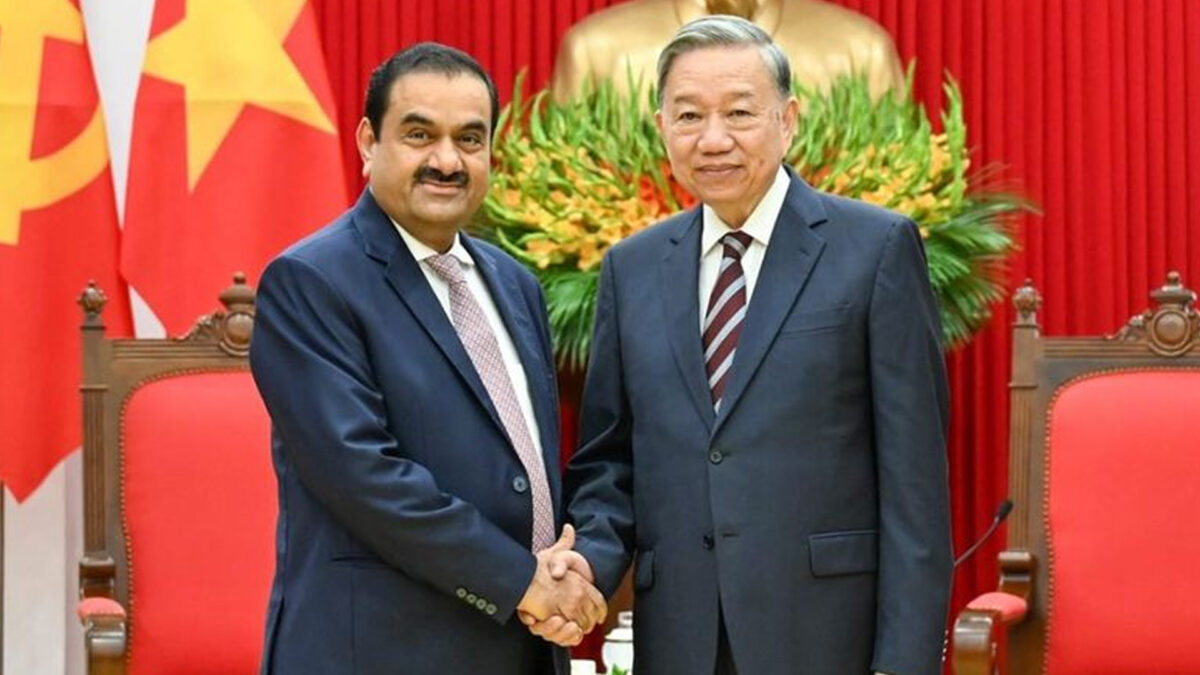
Industrialist Gautam Adani met visiting Vietnamese President To Lam in Mumbai on Thursday in a brief interaction following a major India–Vietnam business forum. The meeting reportedly lasted around 15 minutes and took place at a hotel in south Mumbai. No official details of the discussion were released by either side.

The interaction is being seen as part of broader efforts to strengthen trade and investment ties between India and Vietnam during the President’s official visit. The visit has focused on expanding cooperation in infrastructure, energy, manufacturing, and other key sectors. Adani Group has shown interest in Southeast Asia, including Vietnam, for future investments.

Categories
1 Minute-Read

Gautam Adani launches employee initiative on anniversary

Gautam Adani marked his 40th wedding anniversary by offering prayers at Kedarnath Temple along with his wife, Priti Adani.

The day was special as it coincided with both his anniversary and International Labour Day. The couple prayed for the country’s progress and well-being.

On the same occasion, Adani announced a new employee initiative called “Apni Baat, Apno Ke Saath”. The platform aims to connect with over four lakh employees across the Adani Group and encourage open communication.

In a message, he thanked his wife for her support over the years, calling her a key part of his journey.

The announcement reflects both a personal milestone and a step towards improving employee engagement within the group.

Categories
Beyond

Gautam Adani gets US Court hearing

A US federal court has agreed to hear a plea filed by Indian billionaire Gautam Adani seeking dismissal of a fraud case brought by the US Securities and Exchange Commission (SEC). The move marks an important step in the ongoing legal proceedings involving the Adani Group.

The SEC has accused Adani and his nephew, Sagar Adani, of being part of an alleged bribery scheme connected to business deals involving Adani Green Energy. According to the regulator, the alleged misconduct was not disclosed to investors during a bond issuance in 2021, potentially misleading those who invested in the offering.

During a recent hearing in New York, the court permitted Adani’s legal team to move forward with a pre-motion process. This allows them to formally argue why the case should be dismissed before it proceeds further in court. While this does not mean the case has been dropped, it gives the defence an opportunity to challenge the SEC’s claims at an early stage.

Adani’s lawyers have denied all allegations, stating there is no reliable evidence of wrongdoing. They have also argued that the SEC lacks jurisdiction, claiming the events in question occurred outside the United States and do not fall under US securities laws. Additionally, the defence maintains that neither Gautam Adani nor Sagar Adani played a direct role in the bond issuance tied to the case.

The lawsuit is part of a wider scrutiny of the Adani Group’s financial practices, which has drawn international attention over the past few years. The SEC alleges that critical information related to the alleged scheme was withheld from global investors.

Legal observers note that the court’s willingness to hear the dismissal plea is a routine but significant procedural step. The final outcome will depend on how convincingly Adani’s legal team can challenge both the allegations and the SEC’s jurisdiction.

Also Read: Jubilant shares drop 10% on weak Q4 growth

Categories
Corporate

Gautam Adani inaugurates Sharad Pawar AI Centre in Baramati, Pune

Industrialist Gautam Adani on Sunday inaugurated the Sharadchandra Pawar Centre of Excellence in Artificial Intelligence in Baramati, Pune, marking a significant step toward strengthening India’s AI ecosystem.

The centre, established under Vidya Pratishthan, is designed as a research and training hub to build advanced AI capabilities and create industry-ready talent. Senior leaders, including Sharad Pawar, Supriya Sule, Ajit Pawar, and Sunetra Pawar, were present at the inauguration.

Addressing the gathering, Adani described Sharad Pawar as a mentor of over three decades and credited his leadership for transforming Baramati through education, cooperatives, and rural development. He said the region reflects what focused vision and sustained institution-building can achieve.

Emphasising the growing importance of artificial intelligence, Adani said India’s future growth will depend on its ability to develop indigenous AI models, data systems, and digital infrastructure, cautioning against excessive dependence on foreign technologies. He urged young Indians to take the lead in shaping the “age of intelligence.”

The new centre is expected to support advanced research, skill development, and practical AI applications, with a focus on linking innovation to real-world needs across sectors, including rural and emerging industries. The initiative positions Baramati as an emerging destination for technology-driven education and industry–academia collaboration.

Also Read: Andhra Pradesh clears Vedanta’s 20 onshore wells